REVIEW: “Michael” (2026)

The latest music biopic to come down the pipeline is none other than “Michael”, a film highlighting the King of Pop himself, Michael Jackson. But surprisingly much of the early conversation has revolved around the scathing reception from a cynical segment of fellow critics, who desperately wanted a darker, more incisive character study rather than a celebration of music and artistry that defined an era. That’s certainly their prerogative. But there’s a fine line between critiquing a movie for what it is and for what you want it to be.

That’s not to say “Michael” should be free from criticism or that it isn’t due some. It’s true that the film’s starstruck perspective doesn’t allow much room for a deeper understanding of Michael Jackson the man. And it doesn’t draw clear lines from some of the issues it itself introduces to the root causes of them. But “Michael” is far from the disaster it’s portrayed to be. It’s an engaging and often electrifying tribute that centers on the one thing about Jackson that is undeniable – his music took the world by storm and is still beloved today.

Image Courtesy of Lionsgate

Director Antoine Fuqua doesn’t stray too far from the standard biopic formula. But he energizes it with a strong focus on the timeless music and unforgettable performances that made Michael Jackson a legend. But there is more to “Michael” than just great tunes. Screenwriter John Logan (“Gladiator”, “Skyfall”) hones in on a specific sliver of Michael’s family life. His story tells of a domineering father, a nurturing mother, and a talented son eager to take charge of his own career.

The story begins in 1966 with the blue-collar Jackson family living in Gary, Indiana. That’s where Joseph Jackson (portrayed with uncomfortable intensity by Colman Domingo) brings his five sons together to form a music group he calls the Jackson 5. The youngest is 10-year-old Michael (played by an extraordinary Juliano Krue Valdi), the group’s sweet yet eccentric lead singer who loves Peter Pan and watching movies with his mother, Katherine (Nia Long).

The cold-hearted and abusive Joseph sees the Jackson 5 as his ticket out of the steel mill. So he pushes his sons through a punishing schedule of rehearsals and area gigs until they’re finally noticed and signed by Motown Records. It doesn’t take long for their album to reach the top of the charts and the Jackson 5 quickly becomes a household name. Joseph wastes no time moving his family out of Gary and into a mansion in Encino, California.
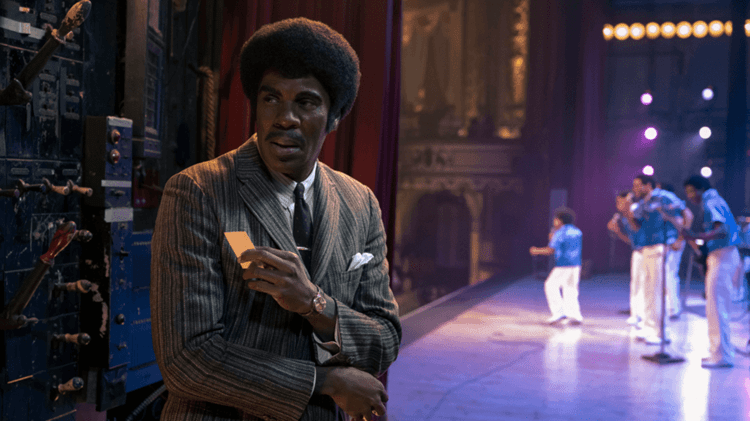
Image Courtesy of Lionsgate

As years go by, the Jackson 5 remain a successful act while growing up on stage for the entire world to see. But by 1978, Michael (now played by MJ’s real-life nephew Jaafar Jackson) had grown tired of Joseph’s suffocating control. So he teamed up with producer Quincy Jones (Kendrick Sampson) to make a solo album. “Off the Wall” was Michael’s chance to reintroduce himself to the world. The album was a smash hit, much to the chagrin of Joseph who only saw himself as the reason for Michael’s success. This sets up the father-son conflict that propels much of the story.

I won’t spoil every stop on the movie’s timeline, but Fuqua hits several key points in Michael’s career, my favorite being the development of the all-time best-selling album, 1982’s “Thriller”. We see the origins of “Beat It”, his close partnership with attorney John Branca (played by Miles Teller), his push to get his videos on MTV, the Pepsi incident, the Don King promoted Victory Tour, and so on. More personally, we’re shown Michael’s insecurities in his “friendship” with animals, in his childlike private life, and in his first cosmetic surgery (“I have to be perfect.”).

But undoubtedly many will be quick to point out what the movie doesn’t include. It’s true that the film avoids the more complicated parts of Jackson’s legacy. We never see the growing tension between Michael and his brothers; nothing about the construction of Neverland; no mention of his whirlwind marriages or his growing health issues; and it never addresses the sexual abuse allegations which he vehemently fought against. But in fairness, “Michael” ends in 1984 before the bulk of the controversies played out. And Fuqua teases there may be more to come by ending his film with an exhilarating recreation of Jackson’s 1988 performance of “Bad” at Wembley Stadium followed by the words “His story continues”.
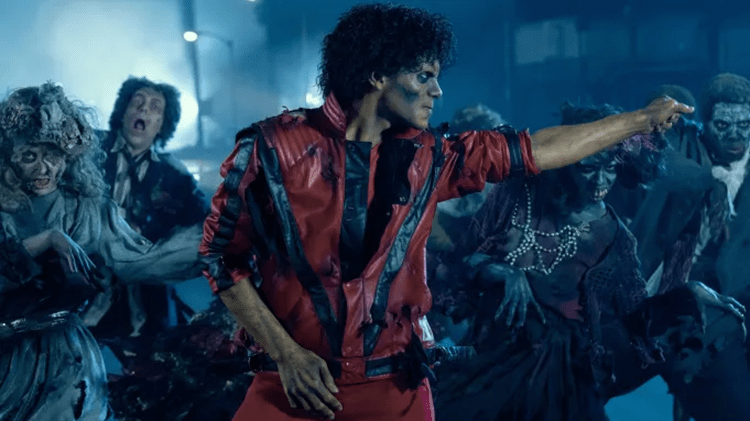
Image Courtesy of Lionsgate

“Michael” is worth seeing for the enduring music alone. But you’ll be just as blown away by the performances that bring the King of Pop to life. Valdi is astonishingly good, fully capturing a younger Michael’s tenderness at home and his magnetic charisma on stage. But most people will be talking about the amazing debut performance from Jaafar Jackson whose uncanny resemblance to his superstar uncle can’t be overstated. From his vocals and mannerisms to his incredible dancing, Jaafar poured years into studying and mastering Michael’s moves. But it’s the added touches of vulnerability that make this more than a mere impression.

You wouldn’t be wrong to say “Michael” was made by Michael Jackson fans for Michael Jackson fans. In that regard, the movie knows what it is and who it’s for. That won’t sit well with those hungry to have certain personal feelings about the singer fed. But it’s a cinematic experience that is sure ramp up the pulses of fans all across the globe. It’s slick and polished entertainment. It’s also nothing short of dazzling. And if you go in with the right expectations, you’ll be tapping your foot, bobbing your head, and fighting the urge to sing for most of the film’s music-filled two hours. I know I was.

VERDICT – 3.5 STARS

REVIEW: “Mike & Nick & Nick & Alice” (2026)

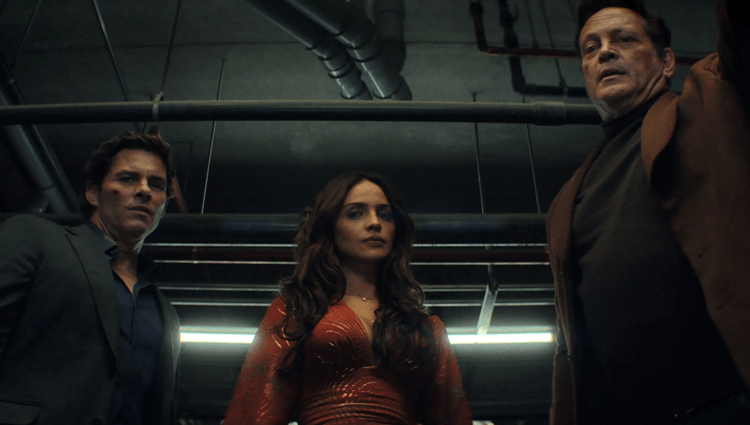
Living up to the zaniness of its title, the new film “Mike & Nick & Nick & Alice” is a proudly bonkers concoction that’s impossible to fit in any single genre box. Originating in the mind of writer-director BenDavid Grabinski, this consistently entertaining mash-up is an action crime comedy seasoned with a dash of science-fiction. But most surprising is the film’s big heart and unexpected charm that turns a silly creation into a strangely endearing experience.

While the movie is lively, inventive, and full of personality, it’s the sparkling chemistry between its central leads that forms the sturdy foundation for everything else. James Marsden, Eiza González, Vince Vaughn, and….Vince Vaughn maintain a terrific rapport that generates a number big laughs while also striking a human chord with the audience. The story is a little messy in spots. But Grabinski never loses his focus or his control, not matter how crazy things get.

Image Courtesy of 20th Century Studios

This high-concept romp introduces us to Nick (Vaughn), a gangster and loan shark who is friends with an enforcer named Mike (James Marsden). Both work for a mob boss named Sosa (the always delightful Keith David) who is throwing a night of wild parties for his dim-witted son Jimmy (Jimmy Tatro) who was just released from prison. Sosa invites his partygoers to have a good time but informs them that he knows who set up Jimmy and they will get their comeuppance.

Sosa’s warning startles the gathering, including Mike and Nick who decide to skip the rest of the festivities. The two friends make an entertaining pair with Vaughn and Marsden bringing a ton of personality to their characters. But one terrible secret could turn the two chums against each other. What’s the secret? Well, Mike is having an affair with Nick’s wife Alice (Eiza González) who has had enough of her husband’s negligence.

Mike and Alice have made the decision to run away together. But just as they’re about to leave, Nick shows up at Mike’s apartment needing help on a job. A nervous Mike is certain he’s about to be put on ice. But instead, Nick needs Mike to help him kidnap a mystery man who turns out to be….Nick. Are you following me so far? Even if you are, you’re probably wondering, “What the heck is Grabinski doing here?

Image Courtesy of 20th Century Studios

Without giving away too much, a version of Nick from the future has traveled back in time to stop present-day Nick from making a mistake he will regret for the rest of his life. It involves both Mike and Alice, and Nick will need their help if he is to have any chance of pulling it off. Now how does time travel fit in? We get some brief backstory involving Alice’s close friend Symon (Ben Schwartz) who takes mob money and secretly builds a time machine. It’s an outrageous sidebar that is more comical than it has any right to be.

From there “Mike & Nick & Nick & Alice” bops along with an almost carefree spirit. As it does Grabinski throws everything into the pot: some good laughs, intense action, crazy side characters, a handful of killer needle drops, and even a touch of heartwarming romance. There’s no way it all should gel as well as it does. Yet it mostly clicks thanks to its lights-out cast, a wacky imagination, and a playful energy that’s only matched by its infectious charm. “Mike & Nick & Nick & Alice” is streaming now on Hulu.

VERDICT – 3.5 STARS
REVIEW: “Miroirs No. 3” (2026)

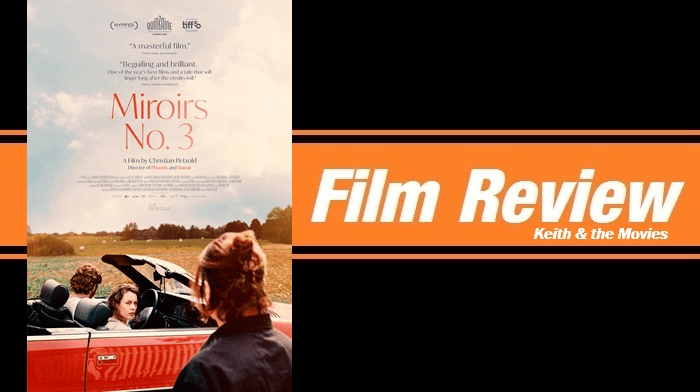
High among my favorite international filmmakers working today is German auteur Christian Petzold. Few in his field have maintained the consistent excellence of Petzold, whose career began in 2000 and has spanned the course of eleven movies. He’s been on an exceptionally good run, starting with 2012’s “Barbara”. It was followed by the superb “Phoenix”, “Transit”, “Undine”, and “Afire”. His latest, “Miroirs No. 3” falls right in line with those quietly alluring gems.

“Miroirs No. 3” sees Petzold following his uniquely compelling formula of utilizing grounded contemporary realism while subtly engaging classic genre conventions. And as before, it results in another richly human yet slyly evasive story with a striking emotional undercurrent. But while political allegories have often been central to his movies, here Petzold brings his steady-handed and economical style to a family drama.

The film pulls much of its strength from its lead, Paula Beer. Equal parts captivating and enigmatic, Beer has long been a perfect fit for Petzold’s storytelling form. “Miroirs No. 3” is their fourth film together. And while it could be considered a minor work compared to their past collaborations, the pair once again find the beguiling harmony that has become a signature of their films.

Beer plays Laura, a piano student from Berlin who reluctantly agrees to join her boyfriend and fellow musician Jakob (Philip Froissant) on a weekend getaway with a producer he hopes to impress. Things take a fatal turn after the couple have a car wreck on a quiet rural road. Jakob is killed and a dazed Laura is found by a older woman named Betty (Barbara Auer) who witnessed the accident.

Betty walks Laura to her nearby home and calls the police. After being examined by paramedics, Laura refuses to go to the hospital. Instead she makes a strange request – she asks if she can stay with Betty. Puzzled yet accepting, Betty agrees which sets up Petzold’s unusual scenario. Similarities between the two begin to surface with both seeming lost and detached. But it’s Betty’s situation that ends up getting thenmost of the attention.

Petzold throws several early clues at us, to the point that we get a sense for what’s going on well before it actually plays out. Betty’s house in various shades of disrepair; the near maternal care she shows for Laura; the strange looks the two get from neighbors passing by. But the biggest pieces of the puzzle come with the appearances of Betty’s son Richard (Matthias Brandt) and their moody adult son Max (Enno Trebs).

I won’t spoil where things go from there, but what starts as a beguiling mystery quickly gives way to a story about grief, healing, and the power of human connection. Again, it turns out to be a nice fit for Petzold’s minimalist yet broadly observant style. The film also shares a similar ambiguity with his past films, although here it leads to a slightly less satisfying ending. But Petzold has never minded opacity. He’s more interested in patiently sorting through the emotional journeys people take. And who better than Paula Beer to be our guide?

VERDICT – 4 STARS

REVIEW: “Midwinter Break” (2026)

A movie that I’m worried might slip under too many radars is “Midwinter Break”, a deeply human adult drama that could sell itself solely on its two stars, Lesley Manville and Ciarán Hinds. And while Manville and Hinds are every bit as wonderful as we expect, there’s so much more to connect with and absorb in Polly Findlay’s extraordinary directorial debut. And it will stick with you well after the credits roll.

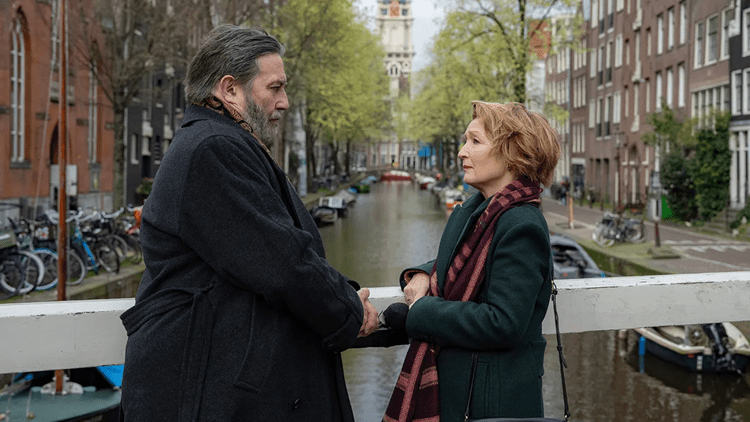
“Midwinter Break” has the look of an easygoing relationship drama, and in a way it is. But it doesn’t take long to realize Findlay has much more on her mind. As we tag along with married couple Stella (Manville) and Gerry (Hinds) on a vacation in Amsterdam, we witness the film’s rich themes making their way to the surface. And as they do, Findlay patiently explores them through the couple’s seemingly sweet relationship as well as their individual struggles, which both have kept buried for years.

Image Courtesy of Focus Features

Based on the 2017 novel of the same name by Bernard MacLaverty. “Midwinter Break” tells a story that’s likely to resonate with anyone who has been married for some time. From one insightful angle, it looks at the long-lasting impact of trauma and how it can set the course for someone’s life. But it also looks at the complexity of relationships. Findlay captures the joy of growing old with someone you love, but also the absolute necessity of communication.

Stella and Gerry have had a long and loving life together. Their early days as an Irish couple was marked by a traumatic incident during The Troubles that could have turned tragic. But they endured, even though the event certainly left some scars. They moved from Belfast to Glasgow where Stella became a teacher and Gerry an architect. They had a son Michael who is now off with his own family, leaving them to enjoy the later years of their lives.

But the more we observe the more we notice details that point to deeper frustrations. For example, Stella is devoutly religious which is quite the contrast to the much more skeptical Gerry who rarely skips a chance to rib her about her faith. Then there is Gerry’s drinking which is much worse than he’s willing to admit. Hoping to give their marriage a jolt, Stella surprises an enthusiastic Gerry with a trip to Amsterdam.

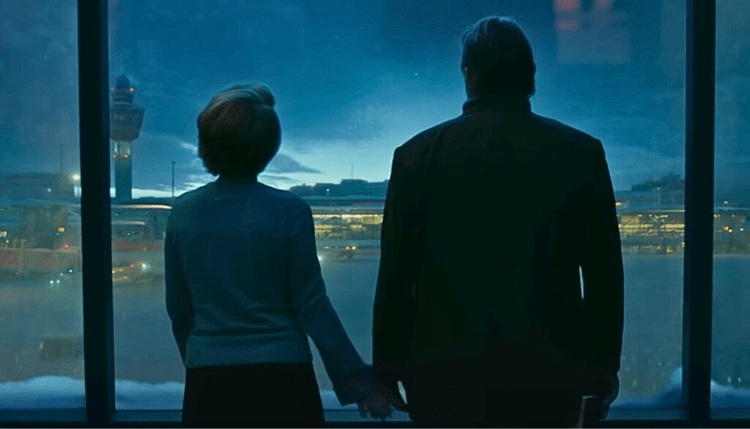
As they enjoy the city’s beautiful sites and unique personality, Stella and Gerry learn they can’t escape their individual internal crisis. It comes to a head once Stella opens up about her feelings, setting up the film’s poignant second half. It’s here that Findlay casts a new light on their relationship which reveals new layers to each character. Manville and Hinds navigate it all with such moving authenticity. There’s not a false note to be found in their performances.

Image Courtesy of Focus Features

Findlay allows it all to play out deliberately and organically to the point that some might consider it slow-moving. But that’s hardly the case. Every scene, no matter how trivial or mundane it may seem on its own, is revealing in some way and is presented with purpose. Findlay reveals so much detail in the ‘small’ moments. And as more plays out before our eyes, the clearer the portrait of their marriage becomes.

I’m married. Although I’m not sure how much marriage we have left in us.” Stella’s heartbreaking confession hits like a ton of bricks, much like “Midwinter Break” as a whole. It’s a movie that’s not afraid to deal earnestly and honestly with its themes, while treating an underserved adult audience the kind of offering they rarely get these days. It’s intimate, nuanced, emotionally textured, and remarkably restrained. Altogether, it makes “Midwinter Break” the first must-see drama of 2026.

VERDICT – 4.5 STARS

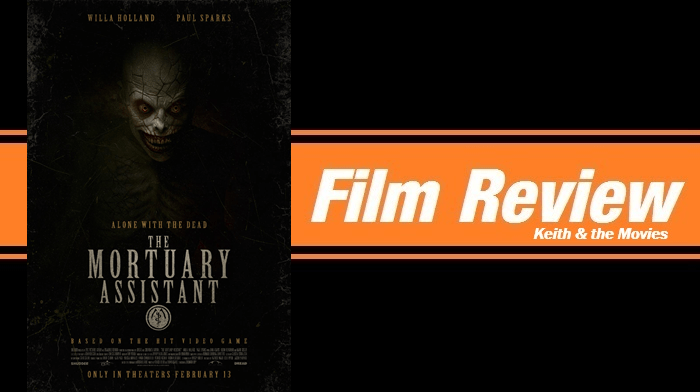
REVIEW: “The Mortuary Assistant” (2026)

“The Mortuary Assistant” attempts to follow in the footsteps of “Five Nights at Freddy’s” and more recently “Iron Lung” by adapting a small indie horror video game to the big screen. While those two films were surprising box office successes, it may be a tougher road for “The Mortuary Assistant” which is expected to get a limited theatrical release before streaming on Shudder starting March 27th.

“The Mortuary Assistant” video game came out in 2022 and was primarily developed by Brian Clarke’s one-person studio, DarkStone Digital. It had a low budget and a small scale, but it was well-received by players and critics. The movie adaptation is somewhat similar – modest budget and small in scope. Director Jeremiah Kipp does some good things with a film that’s certain to register more with fans of the game. Others might struggle to make sense of it all.

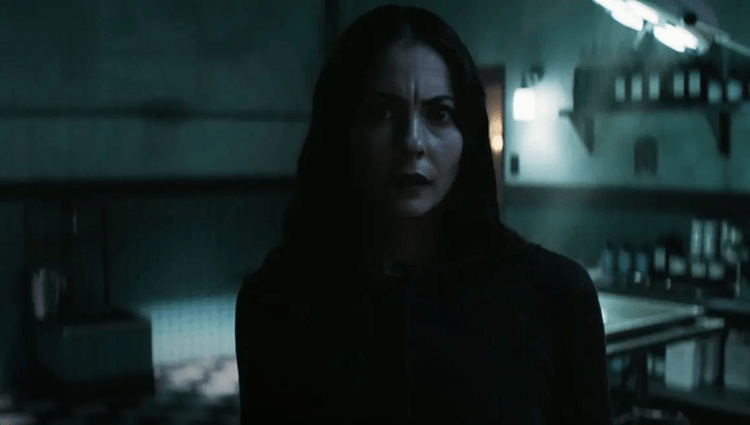
The film’s biggest strength is Willa Holland. She plays Rebecca Owens, a young woman whose life has been marked by trauma. Yet she has found victory in her struggles. She’s a recovering alcoholic who is celebrating one year of sobriety. And she’s nearing the end of an internship for a job she’s surprisingly enthusiastic about – a mortuary assistant. But unfortunately for her, this is a horror movie, which means everything in her world is about to be turned upside-down.

After successfully embalming her final supervised procedure, her boss Raymond Delver (Paul Sparks) welcomes Rebecca to a full-time position at River Fields Mortuary. The peculiarly adamant Raymond assigns her the day shift while he insists on handling nights. But after Raymond calls Rebecca to fill in for him, she finds herself thrust into a terrifying situation, locked inside the mortuary overnight with corpses being reanimated by demonic entities. Yikes.

It’s certainly a promising premise and (to his credit) Kipp squeezes everything he can from it. The fittingly chilling mortuary setting adds plenty of good atmosphere. And it’s helped by the eerie use of light and shadows and some standout practical effects. But the story is plagued by overwritten and sometimes confusing exposition that muddies as much as it reveals. And while much of what we see desperately needs explaining, the info dumps often stymie the suspense.

The same can be said for Rebecca’s clumsily handled backstory. It’s thrown together in pieces, all in an effort to feed an on-the-nose metaphor that becomes too obvious to be effective. Alcoholism and personal loss are worthwhile subjects, and Holland does her best to make them feel central to Rebecca’s story. But they come across as pieces that don’t always fit with the rest of the movie.

“The Mortuary Assistant” starts off with a lot of promise, and you can see all the ingredients for a wickedly entertaining chiller. It certainly has the commitment in its star Willa Holland and the technical know-how from director Jeremiah Kipp. But the too frequent “Let me explain” moments bog things down while the ‘dream versus reality’ aspect grows more repetitive than revelatory. It all undermines the movie’s ambition and leaves us with an experience that can’t quite match the strength of its source material.

VERDICT – 2 STARS

REVIEW: “Mercy” (2026)

The pre-release reactions haven’t been kind to “Mercy”, the latest film from screenlife innovator Timur Bekmambetov. The critical shalacking it’s getting is especially surprising considering the star power of the movie’s two leads, Chris Pratt and Rebecca Ferguson. Both are talented and charismatic performers who almost always make whatever movie they are in better.

The good news is “Mercy” isn’t nearly the unmitigated disaster it has been made out to be. It’s an easily digestible science-fiction thriller that doesn’t require much from its audience. It seems well enough aware of its own outlandishness, yet it takes itself just serious enough that we do too. It results in a movie that’s about as entertaining as it is preposterous.

Image Courtesy of Amazon MGM Studios

But that’s not to say “Mercy” is a great movie or even a memorable one. It’s built around a silly premise that seeks to explore both the potential for good and the dangers of modern technology. Unfortunately its treatment is surface-level at best. Significantly worse is the script which frantically tells a story that hinges on an endless array of conveniences and contrivances. And a late, seemingly random twist only adds to the silliness.

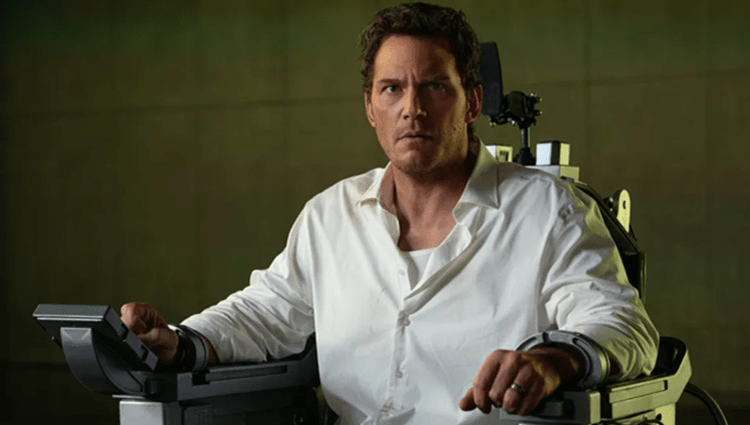
Set in 2029, the movie opens with robbery-homicide detective Chris Raven (Pratt) waking up in a room, strapped to a chair, and alone with Judge Maddox (Ferguson), an artificial intelligence adjudicator for the Mercy Court program. An exposition-heavy first act hurriedly establishes what the Mercy Court is and Raven’s connection to it. Essentially, the Mercy Count is a relatively new way of “quickly and efficiently” judging crimes. It was created to help clean up the crime-ridden Los Angeles, and Raven was one of its biggest proponents.

Here’s how it works: Due to substantial evidence, the accused are assumed guilty and forced to appear before an AI judge where they are given 90 minutes to bring their guilt probability down to 92%. To prove their innocence they’re granted access to a vast amount of digital data gathered through internet trails, social media accounts, surveillance cameras, cell phones, etc. If they fail to reach the threshold by the time the 90 minutes runs out, they will be executed on the spot.

Image Courtesy of Amazon MGM Studios

So why is Detective Raven there? It turns out he has been found guilty of brutally murdering his wife Nicole (Annabelle Wallis) earlier that morning. Overwhelming evidence against him has set his guilt probability to 97.5%. Yet while the events of the last several hours are hazy to him, Chris is sure he didn’t kill his wife. So he begins making his case to Judge Maddox, employing the help of partner Jaq (Kali Reis), his close friend Rob (Chris Sullivan), and his daughter Britt (Kylie Rogers). What he uncovers sends the film careening down an unexpected path.

Most of the story is told using a blend of screenlife and traditional drama. After rushing us through the setup, Bekmambetov slows things down just a tad to let his mystery unfold. Yet even it feels pushed along faster than necessary. Chris turns into a digital super sleuth, parsing through data at lightning speed and making out-of-the-blue connections that often don’t make sense. To its credit, the film holds your interest throughout. But it seems like there is much missing in the buildup and in how it all plays out.

Surprisingly the action really ramps up in the final act as the story’s far-fetched twist opens the way to a far-fetched action sequence. And maybe I had succumbed to the craziness, but the bonkers finish was a lot of fun. Absurd and underdeveloped, but fun nonetheless. And that describes “Mercy” as a whole. The blueprint is there for something a lot better than what we get. It’s not without entertainment value. But the untapped potential leaves us thinking more about what might have been.

VERDICT – 2.5 STARS