REVIEW: “The Royal Tenenbaums”

ROYAL POSTER

Filmmaker Wes Anderson has always loved making movies that deal with family, family dynamics, and family struggles. They often focus on flawed relationships between brothers, children and their parents, or in the case of the 2001 film “The Royal Tenenbaums” an entire family. This was Anderson’s third movie and the first to incorporate one of his big and unique ensemble casts. It’s also the first film of his to fully utilize his peculiar comedic and visual style. You’ll notice it from the opening frame all the way to the end credits.

The story is about the Tenenbaum family. Royal (Gene Hackman) and Etheline (Anjelica Huston) Tenenbaum had three children who were geniuses at a young age. Chas was a business and financial wizard even before high school. Margot was their adopted daughter who was also a young playwright. Richie was a child tennis prodigy and aspiring artist. Eccentricities aside, the three Tenenbaum children had excelled beyond measure in their particular passions. But all of their promise of future success was dashed upon hearing the news that Royal and Etheline were separating.

Royal1

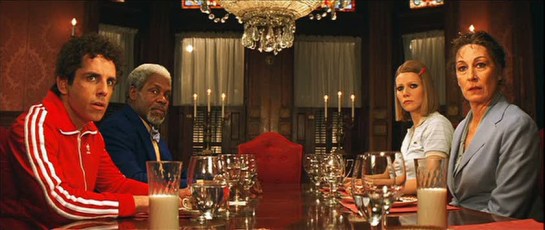
The film then bolts ahead several years. The kids have all faced their share of disappointment and heartache. Chas (Ben Stiller) lost his wife in a plane crash and is now obsessed with the safety of his two young sons. Margot (Gwyneth Paltrow) is unhappily married to a neurologist and author (Bill Murray) and she spends six hours a day locked in the bathroom. Richie (Luke Wilson) shocked the world by retiring from tennis at the age of 26 after a meltdown during an important match. Etheline is a successful archaeologist who is being courted by her accountant Henry (Danny Glover). Royal on the other hand hasn’t spoken with this family in several years. He’s lost his law practice and has just been thrown out of the hotel he has lived in for years. To top it off he has found out that he is dying and he decides that it’s time to make amends with his family.

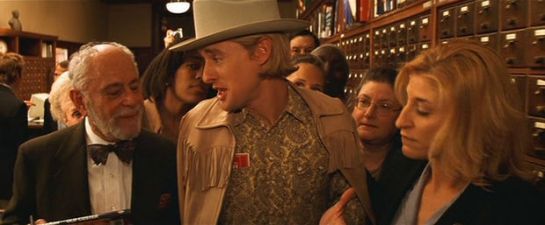
A variety of circumstances brings the Tenenbaum family back together under one roof. All sorts of complicated and strained family dynamics surface. None of the family is happy to see Royal other than Richie who was always the object of his father’s favoritism. Chas hates his father. Margot and Richie have a tension that also involves childhood friend Eli (Owen Wilson). Etheline and Royal have friction particularly over Henry. I could go on and on but you get the point. This is a highly dysfunctional family that was damaged when Royal first left and is now in chaos since he has returned.

ROYAL2

On the surface nothing about what I have described sounds funny does it? But remember, this is a Wes Anderson film. Sprinkled in between the various disagreements and peculiarities are the signature bits of dry and often absurd humor that he brings to his pictures. It’s often times seen in a bit of dialogue or some quirky visual flair. Sometimes Anderson slips his humor into the backdrop or in a particular prop or detail. Little quirks like the matching bushy hair and Adidas jumpsuits that Chas and his sons wear. The reappearing beat up cabs from Gypsy Taxi. Every small line from family friend and servant Pagoda (Kumar Pallana). There are so many bits of Anderson flavor and you’ll probably find something new with each viewing.

But as usual, Anderson mixes his humor with a darker side of the story. Royal is truly a despicable man and father. You can’t help but laugh at some of his antics. On the flipside, his character and the consequences of his actions are much darker realities. The film touches on several other gloomier themes such as depression, alienation, suicide, and drug abuse. And then of course there is the aforementioned examination of family. The film takes a look at numerous facets of family life and difficulties which I believe gives the story more weight. As funny as “The Royal Tenenbaums” is, there are layers upon layers of thematic inflections.

Royal3

And a brief word about the performances. Gene Hackman is fantastic which shouldn’t come as a surprise. He dives right into the role, hamming it up and pulling it back when required. He was a bit reluctant to take the role at first but he is a perfect fit. Everyone else also falls perfectly onto Wes Anderson’s canvas. Whether it’s his reliable favorites such as Murray and the Wilsons, or others such as Paltrow, Glover and Stiller, the characters are a key component to the film and the casting of each role is spot on. Even Alec Baldwin pops up as the unseen narrator.

As you can expect there is an overload of visual style in this picture. If you aren’t keen on Anderson’s odd period style setting and unique camera quirks then you may have a hard time embracing this film. Personally I love the looks of his work. “The Royal Tenenbaums” is a little slow out of the gate but it doesn’t take long before it hits its stride. Things do tidy up a tad too much at the end, but the final scene is priceless and it leaves the movie on just the right note. I couldn’t help but laugh and think to myself that Wes Anderson had done it again.

VERDICT – 4 STARS

REVIEW: “Robocop” (2014)

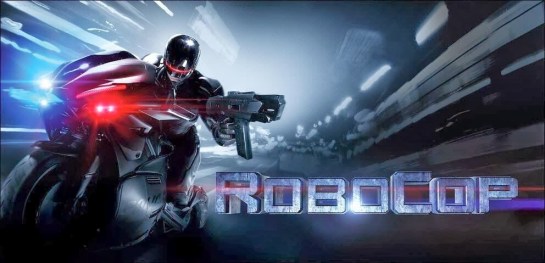
ROBO POSTER

I can’t tell you how many times I watched the original “RoboCop” during my teen years. The 1987 sci-fi action flick was such a wild ride. It had a really cool mixture of wacky humor, slick satire, a great villain, and some insane (and frequently graphic) action sequences. Then I heard that MGM was bringing RoboCop back. Yes, yet another remake of a popular 1980’s movie. Then I see where this new RoboCop film was getting the dreaded February release date. All things pointed to this being a crappy movie.

But what a surprise it was to find this to be a cool and competent action movie. Let me say it again,”RoboCop” is surprisingly good and I am as shocked as anyone. This is essentially a reboot that takes many of the elements from the original film and adds a modern touch. It shuffles up the narrative a bit and it gets a fresh coat of CGI paint. But the core of the film is the same. It falls short of the first film in several areas, but it makes its own satisfying statement in others. Again, I was really surprised.

ROBO1

This “RoboCop” quickly lays out its politically charged landscape. The United States government has handed over its military reins to a multinational corporation known as OmniCorp. These guys have mastered advanced robot technology which allows for mechanical soldiers to replace humans. Their sales pitch points to how many lives have been saved in American military interests around the world. OmniCorp’s next big moneymaking venture is selling their products to local law enforcement. But a group of strong-willed senators and a very concerned public opinion stands in the way. This hodgepodge of political wrangling and big corporate greed is clearly intended as some sort of social satire. Well the message didn’t resonate with me, but it did set up an interesting landscape for the main story.

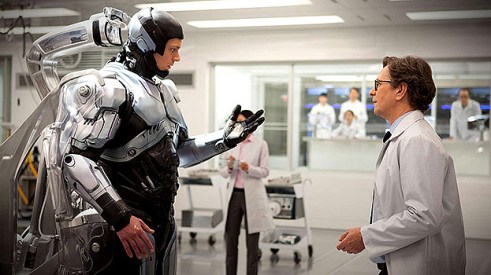
Speaking of the main story, this time around Swedish born actor Joel Kinnaman plays Detroit police detective Alex Murphy. He and his partner have been working undercover to bring down a local crime boss. But as he gets closer to blowing the top off the case, the bad guys get nervous and try to take Murphy out. A car bomb goes off leaving Murphy with severe burns, amputations, and no hope for survival. OmniCorp CEO Raymond Sellars (Michael Keaton) approaches Murphy’s wife Clara (played by the lovely Abbie Cornish) and offers to save her husband’s life by placing him in a permanent robotic suit. Of course Sellars real intent is to put a face on his robot program in hopes of swaying public opinion.

ROBO2

One thing I was looking forward to was the return of Michael Keaton to a larger big screen role. I’ve always loved him dating back to his early madcap comedy style. While he is written to be your standard corporate baddie, Keaton brings a certain slimy panache to the role. It was great to see him back. There was also the casting of Gary Oldman as a scientist who struggles with the moral complexity of the RoboCop project. It’s a great role for Oldman and as you would expect he is fabulous. Then there is Samuel L. Jackson who plays a loud and opinionated cable news talk show host. We only see him via his broadcast and he is funny in spurts. But by his fourth appearance I was tired of him.

The funny thing about this film is that it flirts with a number of satirical themes and the story teases going in several different directions. But it pulls back on a number of occasions choosing to play it safe. There are several interesting turns that really hooked me and I wanted them to go further than they actually do. Still, there was enough in and around the central story to keep me involved. Some of the plot directions are really effective and very well conceived.

ROBO3

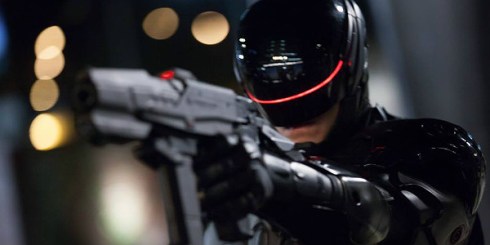
But many people will go to “RoboCop” looking for some good, old-fashioned action. They will definitely get it here. Director José Padilha definitely knows how to shoot action. There are some butt-kicking standout sequences, none better than a wicked shootout in a pitch black gang hideout. It’s stylish, kinetic, and a ton of fun. The technology is cool, the RoboCop suit looks great, and there are several other visual flares that I loved. For example one scene shows what is left of Murphy once he is stripped of his armor. It’s a wild and disturbing special effect that also fuels one of the movie’s bigger emotional moments.

So many of these modern remakes have turned out terrible (I’m looking at you “Red Dawn” and “Total Recall”). The good news is “RoboCop” certainly isn’t terrible. It isn’t as provocative as it wants to be. It isn’t as clever as it tries to be. It isn’t as witty as it needs to be. But it is more fun than I ever expected it to be. There is some great action, some really good performances, and enough depth to the story to make it a worthwhile science fiction romp. Don’t expect a deep cerebral experience. After all this is RoboCop. But I can honestly say, that it had a lot more to offer than I was ever expecting.

VERDICT – 3.5 STARS

REVIEW: “Robot & Frank”

robot-and-frank-Poster

“Robot & Frank” may offer the most unique look at growing old that you’ll find. It touches on several of the age-related elements we’ve seen addressed in other movies, but the key difference here is that it’s looked at through a semi-futuristic lens. This comedy/drama from director Jake Schreier is a smart and well made picture that may not instantly call you back for a second viewing, but it will touch your heart and make you laugh. And on those two merits alone, it’s easy to call “Robot & Frank” a success.

But there is more to the movie than just that. In fact what originally drew me to the picture was that it offered a starring vehicle for Frank Langella. I’ve always been a big fan of his and consider him one of the more underrated actors. At age 75 he’s no longer Hollywood’s prime target age for lead roles (unfortunately) so it was a nice surprise to see him here. He’s joined by Susan Sarandon, James Marsden, Liv Tyler, and Peter Sarsgaard who supplies some really fun voice work.

In the not too distant future, Langella plays an elderly man reasonably named Frank who lives by himself in upstate New York. Frank is starting to see his health deteriorate particularly through early signs of dementia. His son Hunter (Marsden) lives five hours away and he’s grown tired of the weekly trips to see his father. Frank’s daughter Madison (Tyler) is an ‘out there’ activist who occasionally checks on her father via video phone. Their entire family dynamic is fractured due to some past baggage and Frank’s health issues force them all to deal with it. But it takes a little prodding before anyone is willing to do that.

Robot and frank

Hunter’s solution for caring for his father is to provide him with a robot caregiver who will cook, clean, and watch over him. Frank hates the idea and does everything he can to discourage the robot. But he begins to grow fond of it after this man and machine make an interesting connection. Frank begins sharing memories of his past jobs to his robot. Now Frank’s job was no ordinary job. He wasn’t a carpenter, a truck driver, or a lawyer. Frank was a thief and actually spent time in prison for it. Before long he begins to see some new possibilities with his robot friend, possibilities that may not be the wisest.

You may think you know where this movie is going but the path it takes is an unconventional one. That’s what sets it apart from so many other movies that deal with these subjects. Langella is fantastic and he gives us an endearing and genuinely sympathetic character. He grumbles and growls in some scenes while in others he masterfully portrays a man in mental decline. It’s a beautiful performance and he’s the force that really drives this picture. Sarandon appears as a local librarian. She’s very good and I have to say some of my favorite scenes are when she and Langella are sharing the screen together.

“Robot & Frank” is a small movie built around a tight script and Frank Langella’s strong work. It’s humor is often subtle but always effective and the emotionally meaty undercurrent really worked for me. Now, as I mentioned, I wouldn’t say this is a film that I want to rush out and see again. It’s just not that kind of movie for me. But I won’t deny the film of the praise it deserves. It accomplishes a lot by taking a few weighty subjects and taking them on in new creative ways. That’s something I really appreciate and responded to.

VERDICT – 4 STARS

REVIEW: “La Rafle” (“The Round Up”)

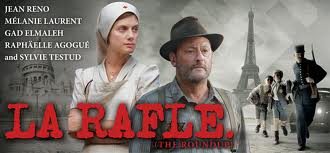
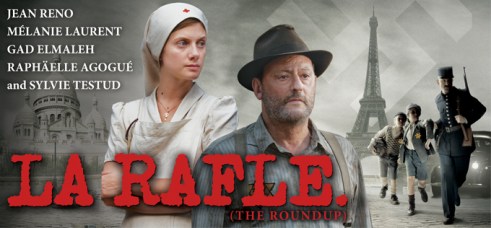
la_rafle_banner

Over the years there have been many movies that have examined the Jewish Holocaust. Some have dealt with the horrors surrounding the Nazi’s brutal and barbaric campaign while others have focused on the individual stories of heroism and survival. Due to the number of these films you would be hard-pressed to find an angle of the Holocaust that hasn’t been covered. But that does nothing to lessen my love for these movies that remind us of what were some of our world’s darkest days.

For me, when a movie about the Holocaust is done well it can be one of the more heartrending film experiences. Even with a familiar subject, if a director can tell a good story and lend their own unique voice to the film, I’m emotionally invested. Such was the case with “La Rafle” which is translated “The Round Up”. Much like “Sarah’s Key” (review coming very soon), a movie that came out the same year, “La Rafle” is set in Paris during the Vel’ d’Hiv Roundup. This was the mass arrest of over 13,000 Jews, mostly women and children, by the French police and secret service. Most were taken to the Vel’ d’Hiv stadium and kept in inhumane conditions before being taken to internment camps. Nearly all were eventually sent to and murdered in Auschwitz by the Nazis.
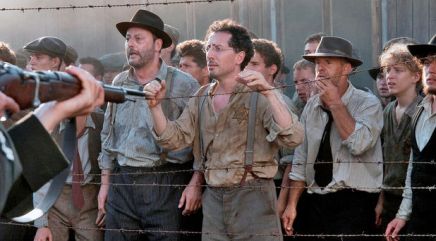
rAFLE1

“La Rafle” starts with a bit of fractured storytelling. It hops back and forth between the different people who we will follow as the story moves forward. The central focus is at first on the Weismanns, a Jewish family living in Paris’ Montmartre district. Schmuel (Gad Elmaleh) is an artist and devoted father. Sura (Raphaëlle Agogué) is a tender and loving mother. They have two daughters – one loves ballet while the other is spunky and outspoken. Then there is 11-year old Jo (Hugo Leverdez), their warm-hearted son growing up in occupied Paris. He’s playful and a bit rambunctious especially when he’s with his pals Simon and Noé. We see a lot of the story through Jo’s young and innocent eyes.

There are also breakaways to a young Protestant nurse named Annette Monod (Mélanie Laurent), a character who becomes a central focus in the second half of the film. But there are also scenes featuring a smug Adolph Hitler carrying on the facade of a family man while secret meetings are taking place at his command – meetings that put the Vel’ d’Hiv Roundup in motion. That leads to the morning of July 16th, 1942 when the French police under Vichy orders do the unthinkable. The film takes us through the horrible arrests and “processing” of that morning and then puts us in Vel’ d’Hiv stadium with the Weismanns and the others we’ve come to know.

la-rafle-still-1-smallAnnette comes to the stadium and volunteers medical help. While she’s there she develops close relationships with Jo and some of the other children. She’s also inspired by a dedicated Jewish doctor named Sheinbaum (Jean Reno). It’s here that the atrocities become real to her and she sets out to do everything she can to help. All of these characters have their paths connected by this one truly horrific event – something that will scar them, the country, and the entire world.

“La Rafle” works because writer and director Roselyne Bosch keeps her focus on the characters. She leaves the graphic depictions of the violence and barbarism to other movies yet its looming reality is always with this film. The tension of the real life events soak every scene even if they aren’t visually depicted. I found that to be very effective. Bosch wants us to connect and invest in the characters and once we do that, the emotion and the intensity flows. Now the movie does feel polished and some have criticized it for its lack of edge. Their are scenes where that criticism is fair but overall I think it misses what Bosch is going for.

Perhaps the most powerful component of the film is that each of its characters were real life people who faced the roundup and what followed. Bosch used their real names and their true stories. For me that just added to the stinging realism. The wonderful costume and set design also worked to draw me in. The shots of Montmartre seems plucked right out of that decade and every person fit perfectly in the period they were representing.

The performances are another strong point. I’ve grown to be a Mélanie Laurent fan. After seeing her in a handful of French and American films, I find her to be an impressive actress. I also really appreciated Raphaëlle Agogué’s work. There’s a subtlety and humble beauty to her performance that really worked for me. I also liked Gad Elmayeh who brings a very believable and well written father to life. I also have to mention the performances from the children. They play a big role in this film and without their solid work the movie would have suffered.
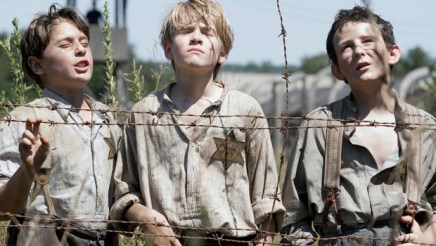
La rafle3

I wish I could say this was a flawless 5 star movie but there were a couple of issues I had with it. The movie seems to assume that the audience is familiar with the subject. Now being a French production I’m sure many of the film’s bigger audiences were very familiar with the history. Having read a decent amount about the events, I was pretty knowledgable as well. But I still found myself unable to follow some of the scenes featuring the planning and the politics between the Vichy and the Nazis. They aren’t all that well constructed which was a little frustrating. I also felt the film slowed down a little too much in the middle. It certainly didn’t kill the film’s effect but it was noticeable. Aside from these gripes, “La Rafle” strikes every chord and tells a truly incredible story.

While in Paris last year my wife and I took time to visit the Shoah Memorial. It was one of the most sobering experiences of my life. This movie reminded me of that visit and of the terrible events faced by the Jewish people in Paris. “The Round Up” is a pretty polished film but its also reverent, sober, and responsible. It’s received some unfair criticism and it’s a film that has went unseen by many here in America. That’s a shame. For me it was wonderfully done and it’s an easy film to recommend.

VERDICT – 4.5 STARS

The Public Movie Defender – “Robin Hood”

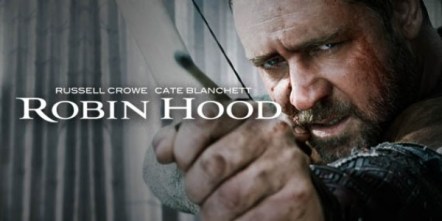
MOVIE DEFENDER ROBIN HOOD

The idea behind The Public Movie Defender is to take up the cause of a particular movie that I believe is better than the majority of reviews it has received. These are movies which I feel are worth either a second look or at least a more open examination considering the predominantly negative opinions of them. The films chosen are ones that I like so therefore I’m taking their case and defending them before the court of negative opinion. Let the trial begin…

DEFENDANT # 1 – “ROBIN HOOD”

ROBIN HOODOccasionally I like to take the time to focus on a particular movie that I really like but many others didn’t. Call it my unnecessary yet obligatory sense of personal duty or some warped affection for getting blasted by my fellow movie fans. Whatever it is, I find it fun defending movies that I appreciate but many others may not. One such film is Ridley Scott’s 2010 period adventure “Robin Hood”. Lingering at an undeserved 43% on Rotten Tomatoes, “Robin Hood” has faced a variety of gripes from its slow, plot-heavy narrative to its historical inaccuracies. These things didn’t bother me at all and the movie went on to be one of my favorite films of that year.
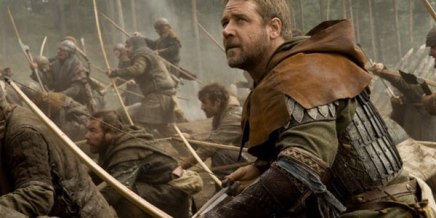
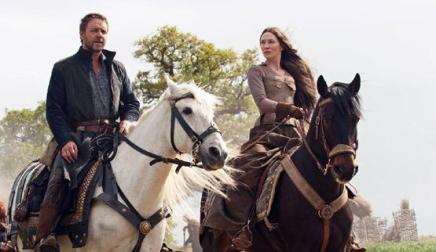
I still remember when I was driving to the theater to first see Ridley Scott’s “Robin Hood”. I couldn’t help but wonder if I had set my expectations so high that it would be impossible for the movie to reach them. After all, this is Ridley Scott and Russell Crowe, the same team who brought us “Gladiator”, a true favorite of mine. Could one of my favorite working actors and one of my favorite working directors come close to matching the success of their previous Oscar winning period film? The answer is yes, for my money they did come close. While overall “Robin Hood” isn’t as grand or as seamless as “Gladiator”, it does well in many of the same areas that made “Gladiator” such a strong film.

This isn’t your standard Robin Hood that we’re all familiar with. This is considered a prequel to the ‘steal from the rich, give to the poor’ story that’s been told numerous times before. It follows Robin Longstride (Crowe) as he goes from being an archer in King Richard’s army to the most wanted man in all of England. Along the way he witnesses the death of King Richard in battle and the rise of King John (Oscar Isaacs), Richard’s younger brother. King John isn’t a likable leader. His arrogant, self-serving approach to governing and his burdensome heavy taxes have turned the people against him and it couldn’t be a worse time for that. An invading French army is knocking on England’s door but the people need unifying.

Robin 1

Meanwhile Robin and his three new but merry men find themselves in Nottingham where secrets to his past may lie. Its here than he runs into the proud and spirited Marion (Cate Blanchett). I won’t give anything away but anyone even remotely familiar with the Robin Hood story knows that they eventually hit it off. But violence and war comes to Nottingham which catapults Robin right into the center of the tumult. The story takes its time getting to this point. It deliberately moves through several plot points and it lays out a lot of story along the way.

This is what turned off a lot people. They found it all flat and plodding. Personally I loved the slow and calculated buildup. I loved the clear focus on the characters, the politics, and the strategies behind the events taking place. I loved that it wasn’t just another period film focused almost exclusively on the action. For me the intentional time spent with character development worked fine and it fed the action sequences giving them more meaning and weight. With the exception of a couple of needless inclusions, I was wrapped up in this story and while it might have been too slow for some, I found its proficient script in the hands of this truly great cast made for some wonderful entertainment.

ROBIN2

Now when it comes to making an epic-scale period piece few can do it better than Ridley Scott. Here his amazing attention to detail, extravagant set pieces, and gorgeous cinematography create a believable and stunning 13th century England. From the film’s opening sequences to it’s furious finish, the realistic feel and old English atmosphere is one of the reasons the film worked so well for me. As alluded to above, Scott also brings just the right amount of action scenes. The frantic, gritty camera work and carefully executed CGI allows for the small battles and huge epic scale war sequences to maintain an undeniable energy. But again the film doesn’t totally rely on them. There’s a very deliberate tale that unfolds in an effort to set up the legend of Robin Hood. Scott takes his time and adds a fresh depth to these very familiar characters.

Then there’s the strong lead performance of Russell Crowe. He has always been able to take a character and combine stength with a genuine humanity. Crowe’s Robin Hood is possibly the most human of any previous portrayals showing a sad but strong man in the dark about his past and uncertain about his future. It isn’t loud or showy work but it fits nicely with the tone that Scott is looking for. I also have to mention the performance of another favorite actor of mine. Mark Strong takes on another “bad guy” role and he’s able to create yet another delightfully despicable villain. He’s such great fun to watch. Cate Blanchett puts together a very different and intriguing Marion. She’s strong and independent and Blanchett certainly holds her own amid the slew of male performances. There’s tons of great supporting work from Max von Sydow, Oscar Isaac, William Hurt and more.

“Robin Hood” is an entirely different look at the classic character that does lend to a more serious telling of his legend. That, mixed with the slower plot-thickened narrative, clearly didn’t work for those with much different expectations for the film. It not only worked for me but it impressed me and I found it easy to be absorbed into the story. I’ll admit there are some moments that could have been cut and there are bits of silliness in the big finale. But they never came close to ruining my experience and after several viewings I still believe this is one of the best films of the Scott/Crowe collaborations. That’s my defense and I’m sticking to it.

THE VERDICT : “ROBIN HOOD” – 4.5 STARS

REVIEW: “Room 237” (2012)

room 327 POSTERI’m not the biggest fan of Stanley Kubrick. He has a couple of movies I really like and a couple that I hate. I recognize his talent and filmmaking skills but I’m not always blown away by this storytelling. “The Shining” is one of his films that I like although not near as much as the obsessives we find in the documentary “Room 237”. While I enjoy “The Shining”, I’m not as smitten with it as many are. But the five people we meet in “Room 237” are beyond smitten. They are consumed with the film.

I had read very little on this unsanctioned documentary prior to watching it. I just knew that it was a look at the deeper meanings of what is perhaps Kubrick’s most recognized film. In its own way that’s what “Room 237” is about. But the documentary doesn’t look at popular theories surrounding some of the film’s bigger questions. It more closely resembles far-fetched conspiracy theories thought up through obsessive analysis. I can’t say I left the picture with any new sense of revelation. To be honest I was a little disappointed. It wasn’t at all what I expected. On the flip side there were some unexpected elements in the movie that I found fascinating.

“Room 237” shows the incredible ability of cinema to open itself to a variety of interpretations. It also shows the amazing love that some people have for movies. That’s certainly the case with the enthusiasts we are introduced to here. Not only do each love “The Shining” but their interpretations wildly differ. It really drove home something I’ve always said – movies often speak to different people in different ways. I love the ability to discuss a film and present my interpretation to someone who sees it differently. Movies that give us that have done us a great service.

room 237

But there is a such thing as letting your obsession run wild and that’s what we get here. One person goes through detailed analysis of how the film is about the “white man’s” genocide of the American Indians. Another firmly believes that the entire film is about the Jewish Holocaust. Yet another believes that Kubrick uses the movie to expose his participation in the faking of the Apollo 11 moon landing video footage. Perhaps the funniest theory is that the film is loaded with subliminal messages that support a subtext involving haunted phantoms and demons who are sexually attracted to humans. Yes, someone actually believes that.

Their impassioned defenses of their theories can be interesting especially when they break the film down frame by frame to offer evidence. But honestly it’s hard to take a lot of their ideas seriously. Their entire argument may hinge on a typewriter, the number 42, or a carpet pattern. They often times point to interesting oversights found in the movie. But their relevance to the theories they’re purporting can be pretty flimsy. That’s where the movie falls a bit short. I can appreciate the passion and near fanaticism that the movie features. But the fact that none of these theories carry much weight makes the documentary feel lightweight. Yes I was entertained, but I was left wanting more.

Close to the end of “Room 237”, a gentleman speaks of his life becoming “The Shining”. He talks about his plans to move his family to a secluded part of the country where he can continue to study the film. What an example of a man’s creepy monomania. These infatuations and enthusiasms are what this documentary is really about. Some are intriguing, most are preposterous. Yet there is still something to be said about this kind of love for a movie. For some of us a movie can deeply stir us and a special love for that film can arise. I think “Room 237” shows that you can take that a tad too far. I just wish this documentary gave me a little more to chew on.

VERDICT – 3 STARS