

I still remember my first time seeing Jean-Luc Godard’s French New Wave classic “Breathless”. It was right after discovering Francois Truffaut’s sublime “The 400 Blows” (a movie that has remained an all-time favorite of mine). I instantly wanted to dig deeper into La Nouvelle Vague and “Breathless” was the logical next choice. Within seconds I was drawn to the enchanting presence of a young American woman selling newspapers on the Champs-Élysées. It was of course Jean Seberg.
For Seberg, what started as a Cinderella story ended in heartbreak and tragedy. As an 18-year-old from Marshalltown, Iowa she was discovered in a talent search for a lead role in an Otto Preminger picture. But it was Godard’s “Breathless” that made her an international sensation with a promising career ahead. She became a target of Hoover’s FBI for her large donations to civil rights groups and alleged affairs with black militants. The FBI began a vile smear campaign to “cheapen her in the eyes of the public.” Their relentless pressure pushed her over the edge. Only a few years later she would be dead of an apparent suicide, her body found decomposing in the back seat of a car. She was only 40-years-old.
As you can tell there is plenty of material for a thoughtful and compelling biopic about this troubled life. “Seberg” from director Benedict Andrews could have been that movie, but its vision ends up being too narrow and certain creative choices, specifically from Joe Shrapnel and Anna Waterhouse’s script, leaves the complex actress and fashion icon sadly short-changed.

Photo Courtesy of Amazon Studios
It doesn’t take long to notice the film’s chief goal. “Seberg” is oddly focused on martyrdom over illumination. To accomplish that, Seberg’s artistry is tossed aside for politics making this a very one-dimensional look at her life. Her career work and creative talents are all but ignored, only occasionally referenced in passing comments. The film skips past the early details of her life, even her star-making work with Godard. There’s simply no interest in Seberg the actress.
Instead the filmmakers make their movie all about her activism. It settles in once Seberg (Kristen Stewart) meets a black revolutionary named Hakim Jamal (Anthony Mackie) on a flight from Paris to Los Angeles. She’s immediately attached to his cause but with no real burgeoning conviction. Seberg was certainly an activist, but here it comes across as spontaneous and out-of-the-blue. Her motivations are simplistic and often muddled making some of her later rhetoric toothless and hard to buy.
Jean and Hakim begin a torrid affair despite both of them being married. It’s one of several bad choices Jean makes that puts her in the crosshairs of a crooked and relentless FBI. At the time Hoover was looking to quell any possible black uprising either peaceful or militant. Jean’s financial support of such groups mixed with her celebrity platform leads to her being deemed “a threat to the protective organs of the body politic.” In response the Bureau begins a vicious and destructive campaign to turn the public against Jean Seberg.

Photo Courtesy of Amazon Studios
From there the movie turns into a psychological thriller of sorts as paranoia sets in and Jean slowly comes unraveled. But through it all it seems like Seberg is competing for time in her own biopic. That’s because a lot of time is given to a young FBI agent played by Jack O’Connell. He’s a fictional concoction whose only purpose seems to be to add some semblance of humanity to the FBI. His struggles with his conscience and the strain his job puts on his marriage. It’s all handled well enough, but it pulls too much time away from Seberg and adds practically nothing to HER story.
As for Stewart, she definitely has the chic blonde pixie girl hair and stylish verve. But there’s only so much she can do when major qualities of her character are this thinly sketched. She gives a performance of commitment and compassion, but it’s hardly a fully realized portrayal. There are good supporting turns from Mackie, O’Connell, Yvan Attal, and Vince Vaughn. Meanwhile Margaret Qualley and Zazie Beetz get what amounts to throwaway roles, relegated to playing little more than jealous wives.
“Seberg” taps into the enigma that was Jean Seberg but doesn’t go much further than that. So much of what made her fascinating is either shortchanged or simply not addressed at all. What’s left is a well-meaning misfire that gets too caught up in its message, leaving the audience to still pose the question “Who is Jean Seberg?”
VERDICT – 2 STARS


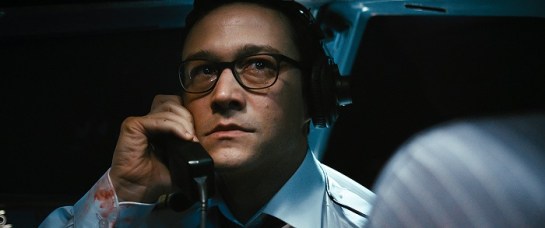





 International diplomats tend to go largely unnoticed, but Sérgio Vieira de Mello was as close as they come to being a celebrity. The Brazilian born de Mello rose through the United Nations ranks due to his humanitarian efforts, his tireless quest for peace and his steady advocacy for those trapped in war-torn regions. On August 19, 2003 a truck loaded with explosives drove up to the UN headquarters in Baghdad and detonated. Sérgio Vieira de Mello was among the 22 people killed.

 “Swallow” is a frustrating movie that by the end will be seen as a battle cry for some and completely off-putting to others. It’s listed as a psychological thriller but I’m not sure the movie does enough to earn that title. It certainly has some of those elements, but it could just as easily be called a domestic drama, body horror, a twisted black comedy, or an on-the-nose political allegory. This identity crisis ends up making the film as a whole a little too hard to (wait for it…) swallow.