REVIEW: “The 400 Blows”

Francois Truffaut heads the list of great directors whose work I’m fairly unfamiliar with. Truffaut was an esteemed French filmmaker who was also a father to the French New Wave of the late 1950’s and 1960’s. He was deeply critical of the state of French cinema in the mid-50’s and eventually begin to make films of his own. His first feature-length picture came in 1959 with “The 400 Blows”. This is my launching point into the films of Truffaut and what a wonderful way to start. “The 400 Blows” is a gripping and deeply penetrating picture that instantly grabbed me with its heartfelt realism and its crisp visual style. And judging by this, his initial effort, there’s a clear reason why Truffaut is heralded as one of the most influential filmmakers in cinema history.

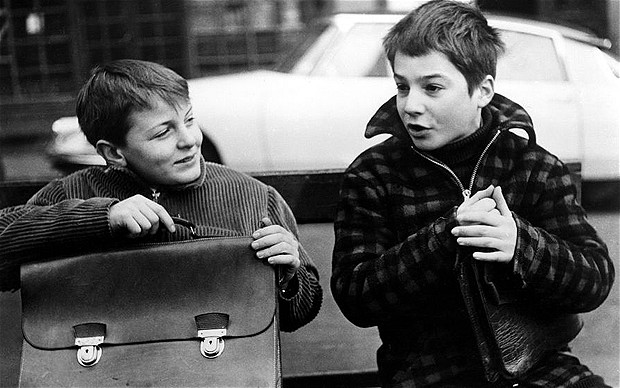
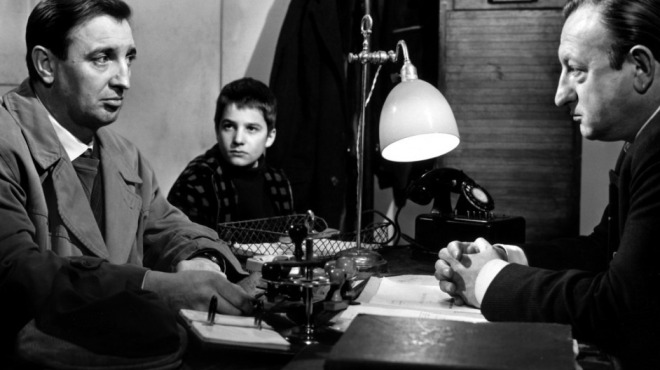
“The 400 Blows” follows 12-year old Antoine (played wonderfully by Jean-Pierre Leaud) and his life in 1950’s Paris. At first Antoine comes across as unruly and rebellious. But as the story unfolds we see that he is inundated with negative influences. His father is a forceful and sometimes pernicious authoritarian who takes the frustrations from his life out on his son. His abusive temper shows itself physically and verbally even to the point of publically humiliating his son . His mother is even more unhappy and discontent and she lets it show through her emotional negligence and general disinterest in her son. It’s only after Antoine catches her in an affair that she begins to show affection for him but even that is grounded in her own arrogant self-interest. Even at school Antoine faces his teacher whose meanness is based on his assumptive judgements that Antoine is and forever will be a bad kid.

Antoine finds refuge on the streets of Paris and in the company of his best friend Rene (Patrick Auffay). Rene is a mischievous type and it’s uncertain whether he’s the best influence either. But the two have a true friendship which Antoine depends on. Some of the movies best scenes are with these two friends walking the streets of Paris talking back and forth. As things break down at home and at school, Antoine sees the streets as his only out and it’s Rene who’s there to help him survive, although not always in the most wise of ways.

At its core, this is really a heartbreaking story. It’s a perfect example of a young boy being a product of his environment yet fighting hard not to be. Those who should be the stable, influential forces in his life utterly fail him. Even the law enforcement system heartlessly mistreat him later in the film. But Antoine just wants to be a little boy. We get to see the childlike yearnings for a stable home with a loving mother and father.

400

There’s a scene where Antoine is at home alone with his father and they are preparing dinner. It’s one of the few instances where his father is being a father. Truffaut elegantly shows Antoine’s love for this father-son moment through the young boys gazes and expressions. There is also another scene where the family goes out to see a movie together. For these few moments we see the happy family that Antoine wants and needs. Sadly, these are anomalies – exceptions to an otherwise dismal life for the 12-year old.

“The 400 Blows” is a powerful movie that will take you through a wide range of emotion. We experience the playfulness and cruelty of life along with the young boy. Before long, we’re rooting for him yet we’re uncertain of what the future holds right up to the last shot. It’s truly a magnificent film that put Truffaut on the map and I can certainly see why it remains influential to this day. It’s gorgeously crafted, deeply moving, and features penetrating performances. Enough with the adjectives. Let’s just say I loved “The 400 Blows” and I can’t wait to dive into more of Truffaut’s work.

VERDICT – 5 STARS

5 STARSs

5STAR K&M

“Taken 2” – 2 STARS

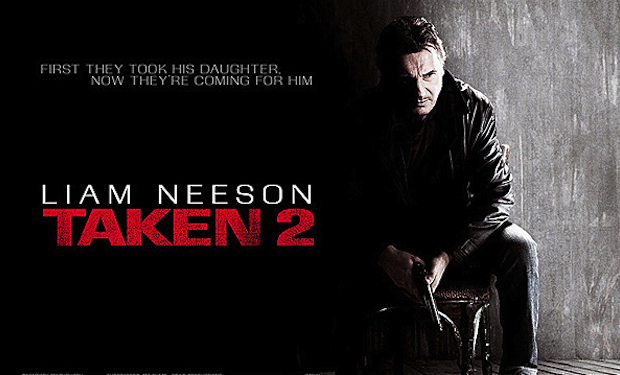
It’s still a little hard to believe that the man who played Oscar Schindler has evolved into a bonafide action movie star. Such is the case with 60-year old Liam Neeson. Neeson’s 2008 action thriller “Taken” was a surprise hit that moved his career in a new direction. And while I enjoyed “Taken” and it was a huge success, it wasn’t a movie that I expected to have a sequel. Yet writer Luc Besson returns with a new story (well, kinda) and with Neeson, Famke Janssen, and Maggie Grace back onboard. Now when watching “Taken 2” you’ll undoubtedly question why it was made (other than the obvious cash in) and it will strike you as very similar to the first movie. But while critics have shelled it, overall I didn’t have the sharp negative reaction to the film that many have had. Still “Taken 2” is a movie that doesn’t do a lot to stand out and ultimately it’s a standard “watch it once and you’re done” kind of film.

This movie is pretty much a direct sequel to the first film. It’s been a year since Neeson’s Bryan Mills killed those evil Albanian mobsters who kidnapped his daughter. Now the head of the mob and father of one of those killed is out for revenge. He puts together a plan to kidnap Bryan, his ex-wife Lenore (Janssen), and daughter Kim (Grace) who are spending time together in Istanbul. After Lenore is taken and with Kim running for her life, it’s up Bryan to kill a bunch more evil Albanians in order to save his family. Luckily he still has that “particular set of skills”, right?

There’s nothing unwatchable about “Taken 2” and it does try to make itself an extension of the first film instead of a rehash. It begins by showing the lives of Bryan and his family since the events of “Taken”. These scenes are fine and I didn’t mind being reacquainted with these characters. But quite honestly they are irrelevant and do nothing to drive the narrative forward. Things do pick up when Bryan goes to Istanbul on some unspecified business. Both his family and the Albanian mob pay him surprise visits which sends the movie careening from action sequence to action sequence. That wouldn’t be a bad thing if “Taken 2” could shake the burdens of predictability and familiarity. It also embraces some pretty conventional action movie techniques that I couldn’t help but shake my head at. But there’s still a degree of fun to the movie and even though it’s not one that will stick with you, it always kept my attention.

But let me say a little bit more about the action. These are some of the most poorly edited action sequences I have ever seen. The fight scenes are made up of rapid-fire quick cuts that make it impossible to know what’s going on. The movie keeps the action toned down enough to get a PG-13 rating but in several instances it hurts the film. There’s almost no edge to the action and even some of the bigger payback scenes at the end are unsatisfying because of this. One more thing, “Taken 2’s” bad guys are some of the dopiest in movie history. Tell me if this sounds like a good idea: You capture your prime target and one of the most deadliest men in the world and you leave him tied up and unattended in a room while you go down the hall to eat and watch soccer on TV. Seriously?

No matter how much I wanted to love “Taken 2” I just can’t. It never had me checking my watch and at a compact 90 minutes it never overstays its welcome. But there are so many flaws with this movie. Sure I love a snarling Liam Neeson and I love watching him bust the heads of bad guys. Unfortunately this movie just gives us more of the same but at a much lower and lazier production level. Even Liam can’t fully overcome that.

REVIEW: “Frankenweenie” (2012)

It’s October so it makes sense that we have a new Tim Burton movie. Burton is one of those filmmakers with an undeniably unique style in both the look and tone of his films as well as the subject matter he dabbles in. But while you can always recognize a Tim Burton film, it is fair to say that he is a polarizing filmmaker. You either like him or you don’t. I happen to appreciate when a filmmaker can inexorably define themselves with their work. But from a purely entertainment point of view, I’m not one you would categorize as a Tim Burton fan. Seldom are his movies as good as advertised and I find he often sacrifices quality storytelling for style. But he definitely has a following which is evident by the loads of money studios are willing to pay for his creations.

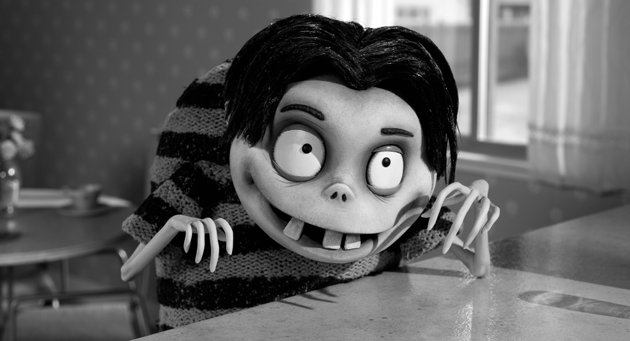
Now we have Burton’s latest concoction, in theaters just in time for Halloween. “Frankenweenie” has its roots in a 30 minute live-action short that Burton did in 1984 before his career took off. Here he adds an hour’s worth of story to make it a feature-length film. He also ditches the live-action and goes with stop-motion animation. This is familiar territory for Burton and you can see his fingerprints from the opening scene to the ending credits. But surprisingly there are some things that separate this movie from Burton’s past efforts – movies that didn’t work for me. More specifically, “Frankenweenie” is a rare film where Burton embraces his style but never allows it to overwhelm his story. Even more, I would go as far as to call this his best film since 1989’s “Batman”.

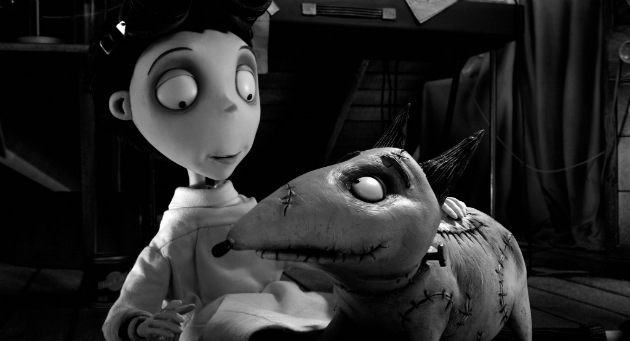
At its core, this is the story of a boy and his dog dressed up as a classic horror movie homage. Victor Frankenstein is a young introvert with an affection for science and movie making. He has no friends to speak of with the exception of his extremely loyal and loving dog Sparky. But one day Victor is devastated after Sparky is hit by a car and killed after chasing a ball into the street. Inspired by his eccentric science teacher and true to his last name, Victor sets out to use the power of electricity to bring his canine companion back to life. He succeeds but he soon learns there are some pretty serious consequences that effect the entire town.

It doesn’t take long to see an almost childlike enthusiasm from Burton that permeates every scene of this movie. There’s a playfulness to both his story and presentation that I’ve never seen from him before. But the movie also has a lot of heart as it deals with topics such as reclusive children and a child facing loss. It’s an incredibly straightforward and honest look as these issues that are comfortably nestled in Burton’s ghoulish and amusing landscape. But I have to admit that I was impressed with his heartwarming narrative and I can see where this film may connect with audiences unlike any of his other pictures.

But don’t think for a minute that “Frankenweenie” doesn’t have the dark, eerie aesthetic and offbeat imagination that you would expect from Burton. It’s very much a light-hearted horror film sprinkled with dashes of humor. There are so many nods to old horror pictures from the original 1931 “Frankenstein” to “Gremlins” to “Godzilla”. And perhaps my favorite tips of the hat comes through the assortment of side characters. There’s the strange girl next door named Elsa Van Helsing. There’s Victor’s creepy (and hilarious) hunchbacked classmate named Edgar E. Gore who sounds just like Peter Lorre. And then there’s my personal favorite Mr. Rzykruski, Victor’s science teacher who’s an animated carbon copy of the great Vincent Price. Another big plus is the gorgeous, crisp stop-motion animation. I’m a big fan of the technique and here it shines especially in Burton’s glorious black and white.

I loved “Frankenweenie”. It’s a compact and well conceived movie that should strike a chord with all ages. I was absorbed in its authentic emotion, clever social satire, macabre sense of humor, and appreciation for the horror classics. I laughed, I jumped, I teared up. What’s most impressive is Burton’s creative self-control which allowed him to create a wonderful story while maintaining his own wacky sense of style. There’s just so much to like about “Frankenweenie” and it’s a particularly pleasurable experience for moviegoers like me who aren’t always fans of Tim Burton’s work. Sure it’s weird, spooky, and goofy. But it’s also beautiful, imaginative, and nostalgic and it’s a prime example of why we go to the movies.

VERDICT – 4 STARS

REVIEW: “Shadow of a Doubt”

Alfred Hitchcock gets a lot of praise for his classic films such as “Vertigo”, “Psycho”, “Rear Window”, and “The Birds” and rightly so. But for those who aren’t familiar with the director’s full body of work, “Shadow of a Doubt” is one of his movies that may be easily overlooked. But to miss out on this wonderful early Hitchcock classic would be to miss out on one of his very best movies. This 1943 thriller has all of trademarks of a Hitchcock film and one of the strongest stories that he has brought to film.

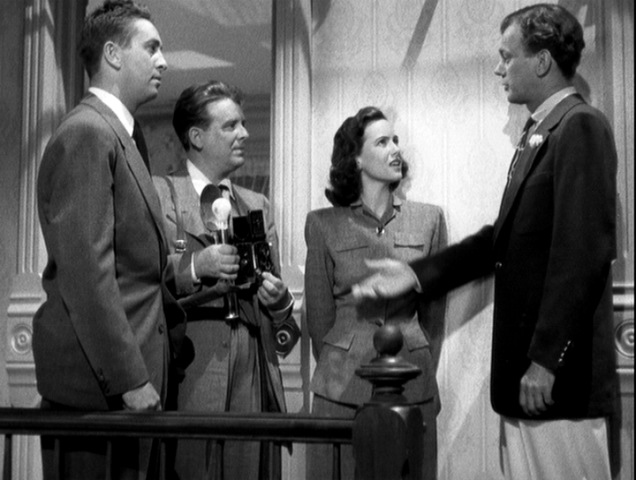
“Shadow of a Doubt” was shot and set in Santa Rosa, California, a location picked for its picture of small town America. Charlie Oakley (Joseph Cotten) arrives in Santa Rosa to pay a visit to his sister Emma (Patricia Collinge) and her family. He hasn’t seen them in years and they receive him with open arms, especially his niece Charley (Teresa Wright) who was named after him. Charley has become bored with her life in her small town and the arrival of her uncle gives her a spark. But her uncle’s visit isn’t without purpose and Charley soon finds out that he is far from the wonderful man she thinks him to be.

The opening scenes let us know that there’s something mysterious going on with Charlie. Later he arrives in Santa Rosa and is doted on by his enamored family. He also draws the attention of and captivates many of the locals from bankers to widows. But he’s also hiding a very dark secret that eventually becomes a key driving force behind the film. In fact, Hitchcock gives us a compelling look at the dark reality of the real world infecting the innocent, idyllic life of a small town. Young Charley soon learns that the world can be a dangerous place and watching Teresa Wright portray Charley and her emotional transformation is a joy. Wright is brilliant. She’s lovely in her innocence and naivity and heart-breaking as we watch her face terrible things and bear huge burdens. I’m being vague and don’t want to spoil things for those who haven’t seen the film, but Charley is a wonderful character and Wright nails the performance.

I also loved Joseph Cotten as her Uncle Charlie. At first we love him just as much as the family does. He’s like that distant uncle who you haven’t seen in forever but you still think he hung the moon. But the problem is that you haven’t seen him therefore you really don’t know him. I bought into Charlie, the nice compassionate man, and was unnerved as he evolved into an entirely different person. This is due to how wonderfully he is written and to Cotten’s brilliant performance.

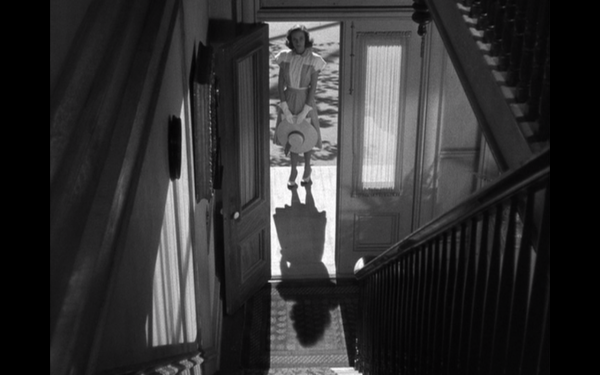
The movie also works due to what has come to be recognized as Hitchcock’s unique visual style. As with every Hitchcock picture, the camera is extremely important to his storytelling. We are treated to some slick camera angles and tricks as well as some clever use of lighting and shadows which helps inject the movie with moments of tension and suspense. Some of the best scenes involve moving cameras or perfectly timed close up shots and overall the visual style is vintage Hitchcock.

“Shadow of a Doubt” is an exceptional thriller built upon a very good story, some pitch-perfect performances, and slick direction. It’s not as well-known as some of Hitchcock’s bigger films but it’s just as good as them and it has certainly earned its spot as a true classic. The story moves at a great pace and it keeps you involved all the way to its startling ending. I really like “Shadow of a Doubt” and its one of those movies that I could watch again and again.

VERDICT – 4.5 STARS

REVIEW: “Looper”


Time travel is one of those fun and intriguing concepts that has found its way into every movie genre. Obviously there is time travel in science fiction films, but it can also be found in the horror, action, drama, comedy, and even romance genres. So there’s an apparent attraction to the idea of time travel and its been explored in a variety of different ways. Therefore the real challenge for a filmmaker is to take this familiar subject and give us something new and fresh – something we haven’t seen before. I’m thrilled to say that’s exactly what writer and director Rian Johnson has done with his mind bending sci-fi action film “Looper”.

As you can guess, “Looper” takes place in the not-to-distant future. Time travel has been realized but by the year 2074 it has been outlawed. The crime syndicates illegally use time travel as a means of executing and disposing of targets, something that has grown increasingly difficult to do in their time. That’s where loopers come in. They are mob killers who execute the targets sent from the future, collect the silver bars sent with the target as their reward, and then dispose of the bodies – no mess and no connections to the mob. Loopers operate out of Kansas City in the year 2044 and are headed by a mobster named Abe (Jeff Daniels). In fact, we learn that Abe is essentially running the entire city.

Joseph Simmons (Joseph Gordon-Levitt) is one of Abe’s most trusted loopers. He’s efficient and by-the-books. But soon Joe is faced with what’s called “closing the loop” – the syndicate’s version of retirement. You see, the looper will be sent the future version of the himself to be executed. No party or shiny plaque. Just a hefty payment in gold bars and a release from their contract. “Good-bye” and enjoy the next 30 years. As we hear in the movie, the looper job doesn’t attract the most forward thinking people. Joe is surprised and unprepared when his latest target turns out to be himself only 30-years older and bald (Bruce Willis). He makes the biggest mistake a looper can make – he hesitates and old Joe jumps him, knocks him out, and then escapes. Soon young Joe has the mob hot on his trail as he’s trying to “make things right” by catching up with and killing old Joe. But old Joe has a mission of his own which really turns everything on its head.

The first half of the movie focuses more on the loopers, on introducing us to Johnson’s world, and setting up Gordon-Levitt’s character. A huge part of any movie like this, especially when dealing with time travel, is creating a believability to what you’re presenting. In other words, we need to buy into what we’re being shown. The concept behind this Rian Johnson futuristic concoction is brilliant and a breath of fresh cinematic air. What’s even more impressive is how well it’s realized on screen. He doesn’t overdo his futuristic landscape so I never felt too disconnected from this world. But there is some cool technology and Johnson clearly has fun with some of it including his ugly green energy dependent cars and the bad cell phone reception. But the city itself is a dirty and unpleasant place filled with poverty and drug use – just what you would expect from a mob-led city.

The second half of the movie takes a slight change in direction. Much of it takes part on a farm outside of town owned by a single mother Sara (Emily Blunt who exchanges her English accent for a country girl one) and her son Cid (Pierce Gagnon). Young Joe’s search for old Joe leads him to the farm where he hopes to find shelter from the syndicate and clues to what his older self is up to. But he quickly learns that there’s more to this farm family than meets the eye. These scenes add some authentic emotional punch to the film. But Johnson also uses this part of the movie to open up several new doors which add more and more layers to the already challenging story. Of course there were a couple of times where I had to stop and process what I had just seen, but I really liked these different directions and as a whole, the complex yet miraculously cohesive script is constructed with such intelligence and precision so that I never felt lost nor did I feel the material ever bogged down.

It’s also worth mentioning the spectacular visuals and no-holds-barred action sequences. It doesn’t take long to recognize Johnson’s skill with framing shots and moving his camera. He uses several unconventional techniques which give the move a unique look. We get several close-ups where Johnson wants the expressions of his characters to tell the story. He also often times places his camera at ground level giving us the feeling we are looking up at them. This is very effective particularly during the buildup to a couple of key action scenes. Speaking of the action, it is incredibly done. It’s a brutal and violent mix of sci-fi and 1980’s gun-blazing action and both work extremely well. Johnson doesn’t skimp on the blood but it feels right at home in this picture.

I also have to talk about the acting. The performances in “Looper” are solid throughout with some being Oscar caliber in my opinion. Joseph Gordon-Levitt continues to prove that he’s a top Hollywood talent. Here he’s armed with heavy makeup, a prosthetic nose, and a Bruce Willis smirk. The funny thing is he channels Willis perfectly from his slouch to his expressions, all while giving a very different performance than Willis. And speaking of Willis, he is excellent here. What stood out was the range that he shows in this performance. For instance there are scenes where he’s a cranky codger, an emotional wreck, and laugh out loud funny. But there were also scenes that reminded me of John McClane from Die Hard – steadily yelling while his machine gun pumps loads of lead. Emily Blunt is fantastic as always, Jeff Daniels just eats up his lines, and Paul Dano plays the same measly, wormy character that he always plays. Then there is young Pierce Gagnon who is phenomenal. He’s such a tender presence but his performance goes well beyond that standard cute kid role. He’s given a lot to do and he really stands out.

I’m sure it’s obvious by now that I really liked “Looper”. But it’s not a perfect movie. While the story is intensely original and thoroughly engaging, there are a few plot holes as well as some pointless throw away scenes in the first half of the movie. For example early on we see young Joe has a relationship with a prostitute. He appears to be quite fond of her even though she’s only in a couple of scenes, one of which seems to be there strictly to add some pointless content to the film. This time could have been spent better elsewhere. I also couldn’t help but ask the question – what type of crime organization would actually hire Paul Dano’s character to be a looper? His performance is fine but I had a hard time believing in him. That said, he did provide us with one of the films very best sequences. I’ll just leave it at that.

I could go on and on about “Looper” but let me just sum it up by saying that it’s the most ambitious and imaginative movie I’ve seen all year. It’s smart and audacious and Rian Johnson actually pulls it all off. It’s completely unpredictable and no matter how hard you try, you never catch up with it. It’s always one step ahead of you. “Looper” takes the familiar device of time travel to new places through a brilliantly original concept. Johnson lays out that concept clearly for the audience. Then he takes it, shakes it, twists it, and contorts it and then challenges the audience to keep up. He dabbles in different genres and themes, examines societies, questions morality, and asks us to take it all in and process it. That’s something I’m happy to do especially when the movie is this good.

VERDICT – 4.5 STARS

“SEEKING JUSTICE” – 3 STARS

Nicolas Cage’s career has been amazing to watch and I don’t necessarily mean that positively. The once promising actor and Academy Award winner is now known more for his current long streak of bad movies. But yet Cage continues to pump out these pictures every year. That brings us to “Seeking Justice”, his latest film co-starring Guy Pearce and January Jones. This action thriller isn’t the sharpest movie you’ll find nor is it one that will stick with you long after watching it. But I found it to be a fairly entertaining picture and definitely better that Cage’s most recent efforts.

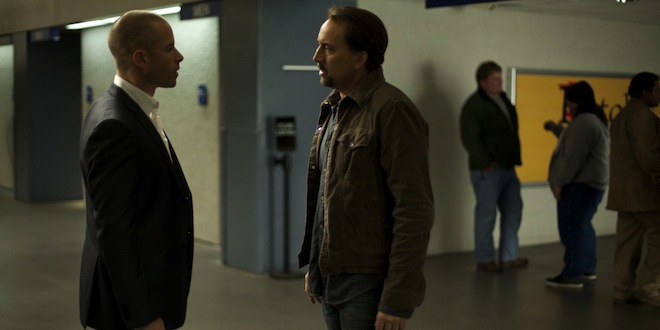
Cage plays Will Gerard, a high school English and literature teacher in New Orleans. He has a great life. He loves his job and he just recently celebrated his wedding anniversary with his lovely wife Laura (Jones). One night as Will is hanging out with his best friend Jimmy (Harold Perrineau), Laura is attacked and raped while walking to her car from a concert. Later, as Will is sitting in the hospital waiting room, he is approached by a mysterious man named Simon (Pearce). Simon tells him he works for an organization that knows who raped Laura and can take care of the rapist in ways the police can’t. In return, Will has to promise to do the organization a small favor at a later date. Will struggles with the decision but ends up saying yes which catapults him into a mess he never anticipated.

The idea behind the story isn’t a bad one and I found myself interested in the whole grief-stricken husband seeking justice from a secret organization thing. Cage actually gives a fairly solid performance as a very ‘anti-action hero’ hero. January Jones is also good individually as his wife. The problem is they have no real chemistry whatsoever and I had a hard time believing in their relationship. Putting that aside, their relationship takes some interesting turns as she copes with her life after such a violent crime and he deals with the decision he made regarding her assailant. Unfortunately these and several other key plot points are never fleshed out. For example, there’s one point in the movie where Laura is just magically over the trauma of her rape. It’s as if the film just decided to drop it altogether. Another example is when Laura finally finds out what Will did. We never see them wrestle over his decision that has put them in such danger. There are several things like this that feel terribly short-changed.

Another issue I had was with the abrupt and almost jarring jumps the movie makes in the first half. This too is related to what feels like shortcuts in the storytelling. There are mammoth emotional holes where the movie skips from one moment to another. And it’s unfortunate because the movie is never boring. There is some good tension and there are some cool twists even though none of them are particularly that surprising. And even though the film ends up taking a pretty conventional path, I still found it kept my interest despite the shortcomings of the script.

I’ve talked about Cage and Jones. Guy Pearce, who is always great, has a lot of fun with his shady Simon character. When I first saw him he reminded me of Paul Newman’s character early on in “The Verdict”. Newman was checking the newspapers for car accident fatalities then attending their funerals where he shamelessly slipped his lawyer business card to the grieving family. Simon hits up Will at the most vulnerable time – an almost predatory approach. Pearce slithers in and out of his scenes and he was the best part of the film even though his character doesn’t have as much mystery behind him as he first leads you to believe.

“Seeking Justice” isn’t a bad movie. In fact it’s a considerable step up for Cage. But is that really saying anything? There are clear issues with the plot and tone and the story ends up with the traditional loud, action-driven finale. But it’s hard to really rail against a movie that did keep my interest throughout and had some really solid moments. Plus Pearce is Pearce which is always a good thing. As I mentioned earlier, “Seeking Justice” isn’t a movie that will stay with you very long, but it does manage to entertain.