“WRATH OF THE TITANS” – 2 1/2 STARS

Apparently I was one of the few who liked 2010’s “Clash of the Titans”, a remake of the 1981 mythological action film. In fact, one of my biggest disagreements with critics centered around their brutal reviews of that movie. I like the remake because it never pretended to be anything other than what it was. It was a fantasy monster picture in the same vein as the first “Clash of the Titans”, “Jason and the Argonauts”, and the “Sinbad” films. In many ways the remake was an homage to that old genre, replacing the classic stop motion animation with computer-generated imagery. The movie wasn’t a deep, intellectual exercise nor was it intended to be. It was a fun popcorn action flick that reminded me of those old films I grew up with.

That brings us to “Wrath of the Titans”, an original sequel that tries to strike the same chords as the first film but ends up falling short. The sequel starts at least 10 years after the ending of the first movie. Perseus (Sam Worthington) has settled down in a small village where he fishes and raises his son Helius (John Bell). Zeus (Liam Neeson) pays him a visit and tells him that the walls of Tartarus are falling and the God’s powers to stop them is limited due to the lack of prayers from the humans. Zeus’ brief words are really the only introduction we get to story. There’s practically no setup at all. Perseus first refuses to get involved choosing to stay and raise his son instead. But when the walls of Tartarus fall, monsters are unleashed across the earth and one attacks Perseus’ village. Of course this gets him immediately involved.

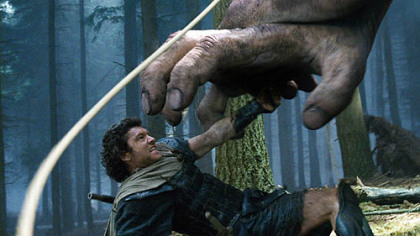
Much like the first film, “Wrath of the Titans” turns into quest movie. Perseus teams up with Queen Andromeda (Rosamund Pike), Agenor (Toby Kebbell), Poseidon’s demigod son, and several token tagalongs to stop the fire monster Kronos from being freed from Tartarus. To do that they will need three weapons that will join together to form the Spear of Triam. Much like “Clash”, the journey takes them to several locations and they encounter several different creatures. But unlike “Clash” the creatures and the battles with them just aren’t that impressive. I still remember the extremely cool scorpion battle sequence and the fight with Medusa from “Clash”. There isn’t a single creature battle here that I’ll even remember a year from now.

It’s not that the creatures look bad. In fact, the CGI special effects are very well done. The creatures look amazing, feature fluid movements, and they blend in perfectly with the environments. The camera often times turns away or jerks at just the right moments to help the scenes look more realistic. The problem is the scenes aren’t choreographed that well. Another problem is that there really weren’t that many new creatures. Every creature in the film was shown in the trailers and I was disappointed that I wasn’t surprised with a few others. But the CGI is exceptional in creating some wonderful environments and landscapes. The group has to make their way through a rubik’s cube-like labyrinth that looks fantastic. Tartarus also looks great and I was really impressed by some of the sweeping overhead shots of some of the battle sequences.
While the story lacks a good introduction, some of the characters lack development. Neither Andromeda or Agenor are developed to the point of feeling like important characters. I think back to Perseus’ fellow journeymen from the first film. There were several of those characters that I liked despite their limited screen time. That’s not the case here. But the movie does ease up on the cheesy lines especially between gods. Ralph Fiennes is back as Hades and his conversations with Zeus as considerably less corny that before. Fiennes and Neeson are actually quite good and I did enjoy the powerless gods angle.

“Wrath of the Titans” does capture some of what I liked in the first film. It’s still a straightforward popcorn action picture that doesn’t try to be anything else. The story is simple but it still manages to provide some fun. The creatures look amazing even if their fight sequences aren’t as exciting as they should be. This Perseus is a kinder and gentler Perseus and in many ways this feels like a kinder and gentler movie. It has some nice eye candy and a few pretty cool moments but it lacks the kick and the grit of the first film. Even with its fun scenes and shiny coat of paint, I just can’t help but see “Wrath of the Titans” as a disappointment.

“CARNAGE” – 3 1/2 STARS

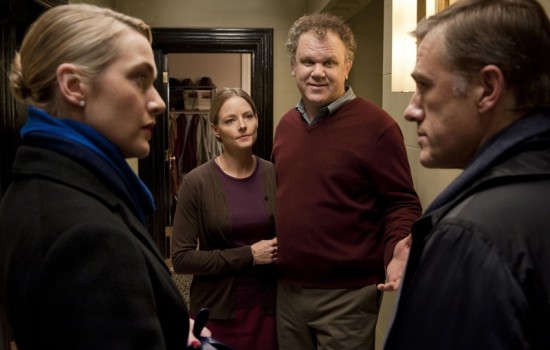
It’s not hard to see that “Carnage” is based on a play. It’s a very stagey and theatrical adaptation of Yazmina Reza’s “God of Carnage”. The play first appeared Paris and London and soon found its way to Broadway where it was a Tony Award winner. Now Roman Polanski brings this confined but energetic story to the big screen and anchors it with four fantastic performers: Jodie Foster, Kate Winslet, Christoph Waltz, and John C. Reilly. It’s a sharply written, often times laugh out loud funny, and occasionally repetitive performance-driven drama.

The movie starts with a wide shot of a playground where two boys are having a disagreement. Things escalate and ends with one striking the other in the face with a stick. The story then skips forward as Nancy and Alan Cowan (Winslet and Waltz), the parents of the boy who had the stick, arrive at the apartment of Penelope and Michael Longstreet (Foster and Reilly), the parents of the boy who was hit. The four are meeting to talk about the incident and find the easiest solution to put it all behind them. Everything starts fairly civil but soon things start to unravel. Small subtle jabs erupt into abrasive personal attacks and things are made even worse once they all get into the Longstreet’s vintage bottle of Scotch.

With the exception of the brief opening scene and the brief final scene, the entire movie takes place inside the Longstreet’s apartment building. But don’t let that scare you. The clever dialogue and the unfolding of these very flawed characters is more than enough to hold your attention. Each have their own peculiarity and shortcoming and before long we even see the spouses turning on one another. The slick dialogue is delivered at an almost frantic pace but it also has a grounded and natural feel to it. The acting is strong and exactly what you would expect from this cast. The actors bounce their lines off each other and for the most part feel authentic. Now there were instances where Reilly falls into his typical over-the-top doofus mode and I did think both Foster and Winslet were brought down a little by the material. It also felt at times the film was a little repetitive. It seemed like some of the arguments were repeated but with slightly different verbal dressing and that lagged things down in the second act.

“Carnage” is an interesting film that offers some genuine laughs and some moments of brilliance. The small cast provides some truly fine performances even though the material hits a few small speed bumps. “Carnage” is a very tight, compact picture that sticks close to its theatrical roots. But even at under 80 minutes it has a little trouble filling it’s time and it may lose some viewers along the way. Yet I think there was enough here and I was entertained throughout. Plus I loved the final shot and felt that it spoke volumes. “Carnage” probably isn’t a movie for everyone, but I found it to be a dark comedy that worked.

“THE WAY” – 4 STARS

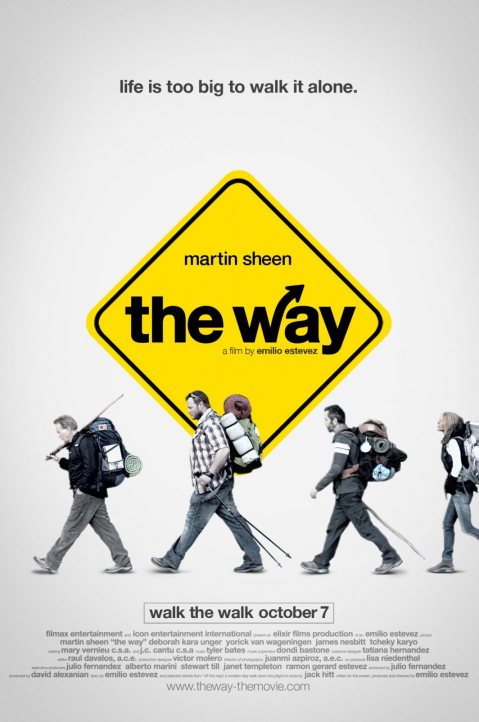
Emilio Estevez was a household name during the 1980’s and early 1990’s. He starred in several popular films such as “The Breakfast Club”, “Young Guns”, and “The Mighty Ducks”. After seemingly disappearing from the business, Estevez turned up behind the camera with “The Way”. He wrote, produced, and directed the film starring his real-life father Martin Sheen. “The Way” isn’t Estevez’s first foray into writing and directing. His first attempt was with 1986’s forgettable “Wisdom”. He later directed 2006’s slightly better “Bobby”. This time Estevez creates a simple but much stronger and more genuine film that I really enjoyed.

“The Way” is a reference to the Camino de Santiago, a spiritual and historical pilgrimage also known as “The Way of St. James”. It’s a long, arduous journey starting in France and ending at the Cathedrel of Santiago de Compostela in the small town of Galicia in northwest Spain. Thousands of individuals travel the Camino’s different routes each with their own personal and/or spiritual purposes. In the movie “The Way”, the Camino provides the main setting for this touching story of reconciliation and personal transformation.

Martin Sheen plays Thomas Avery, an Optometrist with a successful professional life but a troubled family life. Since the death of his wife several years ago, his relationship with his son Daniel (played by Estevez) has soured. While out on the golf course with friends, Thomas recieves a call notifying him that Daniel was killed during a storm in the Pyrenees mountains. Thomas flies to France to identify and bring back Daniel’s body. While there he discovers that Daniel was killed while walking the Camino de Santiago. Struggling to handle not only the death of his son but the strained relationship they shared, Thomas has the body cremated then takes Daniel’s gear and sets off on the Camino in hopes of finishing the journey for his son.

Estevez’s story could have easily evolved into a mushy, run-of-the-mill road picture but it never does. Sure it’s easy to predict and nothing happens that will catch you by surprise. But it’s a very sincere and sensitive film that doesn’t get caught up in overwrought sentimentality. Thomas’ journey feels authentic and personal and I couldn’t help but wonder if the real-life father-son connection had something to do with it. Along the way Thomas runs into several other pilgrims including Joost (Yorick van Wageningen), a Dutchman taking the journey to lose weight for his brother’s wedding, Jack (James Nesbitt) and Irish writer struggling with writer’s block, and Sarah (Deborah Kara Unger), a Canadian who wants to quit smoking. Much like Thomas, each of these characters have more going on under the surface and each find themselves effected in different ways by their pilgrimage.

“The Way” also looks fantastic. Estevez took great effort to portray the Camino de Santiago reverently and authentically. The beautiful scenery and the quaintness of the small Spanish towns fills the movie with life and ambience. Also the ability to capture details of the pilgrimage does just as much to contribute to the atmosphere. Estevez proves to have a good eye and I was surprised at how well he handled the camera. It may not be the most polished example of filmmaking but I was impressed.

As I mentioned, “The Way” is a simple and straightforward story. It’s fairly predictable and it’s only real surprise is in how effective the movie is. It’s a heart-felt and inspirational film and even when the story meanders in the middle, I never felt uninterested or disconnected. It doesn’t shy away from it’s spiritual nature but it doesn’t bludgeon you to death with it either. “The Way” may not work for some people but I was moved by it despite it’s few shortcomings. One thing the movie stresses – the journey is often times more important than the destination and it left me wishing I could take a month off and make my own way to Galicia.

REVIEW: “The Hunger Games”

With this week’s release of the incredibly popular “The Hunger Games” on DVD and Blu-Ray, I had a chance to see it for a second time. I thought it would be fun to share my review of the movie again for those who may be newer to my blog. What are your thoughts on this much talked about picture? Were the odds ever in your favor as you sat down to see what all the hype was about? Here’s my take.

It’s been called the next big thing at the movies. It’s projections point to an opening weekend of around $150 million. Fans are filling theaters with anticipation. With such hype and expectations, how is it that I had never heard of “The Hunger Games” before seeing its first movie trailer? Expected to be the first in a profitable series, “The Hunger Games” is based on a series of novels written by Suzanne Collins. It’s a dystopian science fiction film that’s based on a preposterous premise yet it manages to be strikingly entertaining.

With the “Twilight” series mercifully set to end later this year, “The Hunger Games” is looked at as the next big franchise and has even drawn some misguided comparisons to the romantic vampire versus werewolf films. But there are several things that separate “The Hunger Games” from the “Twilight” series. First, this film opens itself up to a much broader audience. The movie embraces several good sci-fi and action elements that should appeal to a wider variety of moviegoers. ”Twilight” made millions but had a much more restricted target audience. Also “The Hunger Games” made a point to bring in quality performers and it really shows in the finished product. The acting is head and shoulders above the teeth gnashing performances in “Twilight”. In other words, “The Hunger Games” has more to offer than many of the other popular multi-million dollar series.

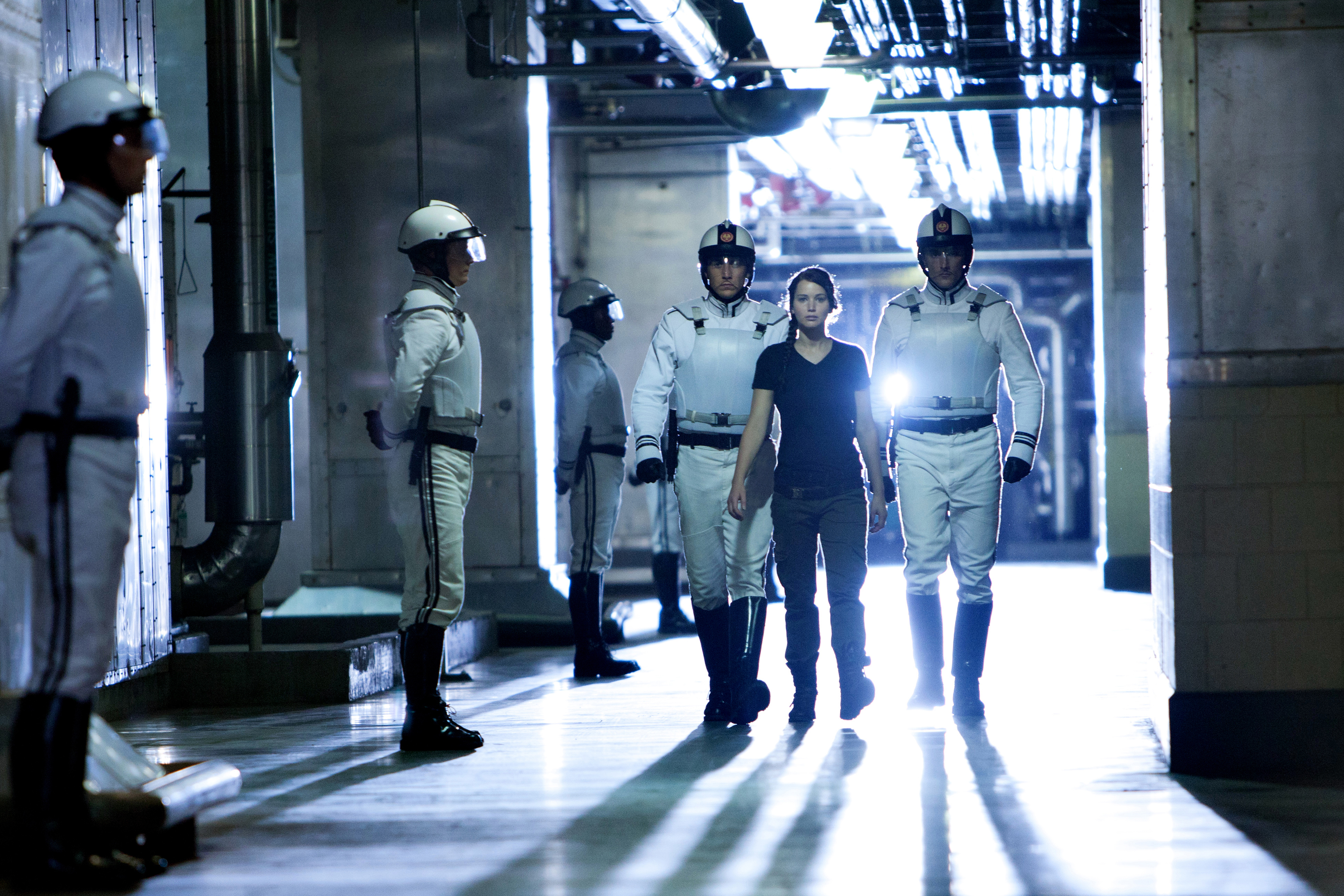
The movie takes place in Panem, a nation broken up into 12 districts. It’s a futuristic world that features a capital city filled with advanced technology surrounded by landscapes that resemble the Ozark or Smokey Mountains. The power and affluence are confined to the Capitol while the outer districts are filled with poverty-stricken villages struggling to survive.  We learn that years ago there was an uprising in the districts that resulted in a strong militaristic response from the Capitol. After quenching the uprising, The Capitol instituted “The Hunger Games”, an annual competition that required each district to provide one boy and one girl between the ages of 12 and 18 to compete against each other in a survival fight to the death. There would be only one winner and that winner would receive fame and glory. The games were intended to serve as a lifelong punishment for the district’s uprising and to show the twisted view of mercy and forgiveness of the Capitol.

To add yet another warped component to the story, The Hunger Games have become a Super Bowl like event. Much like 1987′s “The Running Man”, citizen’s throughout the capital city watch and cheer the games like they would a major sporting event. Special events and talk shows centered around the participants and leading up to the games are soaked up by the heartless and blood-thirsty Capitol crowds. In contrast, those watching in the outer districts do so not out of sport but out of concern for their loved ones. The movie goes all out to show a stark economic and moral difference between the wealthy city people and the poor district citizens. It’s a contrast that looks to play a bigger role in the future films.

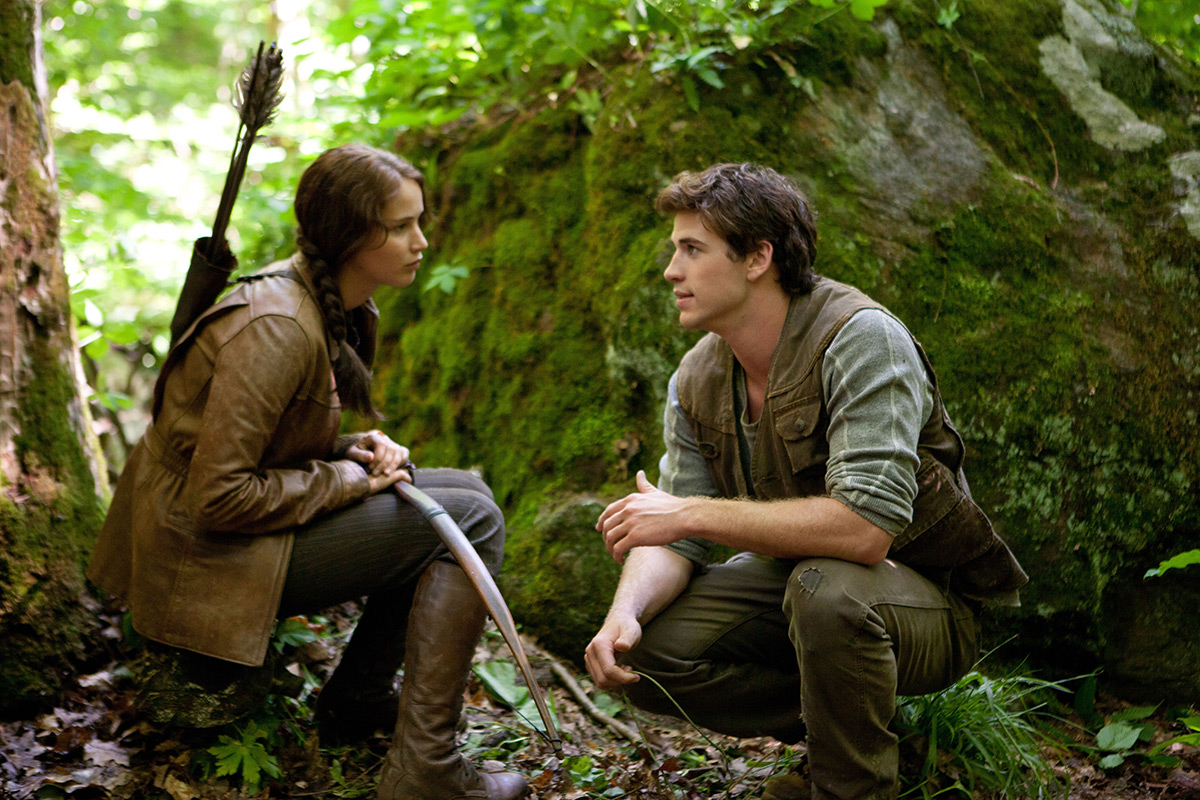
The movie starts inside the very poor District 12. Jennifer Lawrence plays Katniss Everdeen, a tough 16-year old girl forced to take care of her mother and little sister Prim (Willow Shields) after the death of her father. The sisters gather together with the other kids from their district for what’s called “The Reaping”, a random drawing to find out who will represent the district as “tribute” in the year’s games. When a terrified Prim is chosen, Katniss steps in and volunteers in her sister’s place. Joining Katniss from District 12 is a baker’s son named Peeta (Josh Hutcherson). The two are shuttled to the Capitol where they are prepped and paraded around until the day for the games is upon them.

You can’t talk about “The Hunger Games” without talking about Jennifer Lawrence’s performance. A lot of great young actresses tried out for the role including Saoirse Ronan, Chloe Moretz, Hailee Steinfeld, and Shailene Woodley. But Lawrence was chosen and she was the perfect choice. Since I first saw her in her Oscar nominated role in “Winter’s Bone”, she’s been one of my favorite young actresses. Here she gives a strong and committed performance that feels true and authentic. In fact, she often times rises above the material and when the story goes a little off-track she manages to elevate it and carry it on her shoulders. It’s a brilliant performance and she fleshes out every quality of her character that you would expect.

Lawrence is joined by a nice supporting cast including Woody Harrelson as Haymitch, a bumbling boozer who is the only survivor to ever come out of District 12. Stanley Tucci is great as Caesar, the voice of The Hunger Games. He hams it up with his wild blue hair and huge grin but he’s also a bit slimy and disturbing. Elizabeth Banks plays Effie, a Capitol liaison to District 12 and Lenny Kravitz plays a stylist who has the job of making Katniss and Peeta make a good impression. We even get Donald Sutherland delivering his signature overly dramatic but perfectly effective lines as the sinister President Snow. While these supporting performances are quite good, some of the younger actor’s work doesn’t quite measure up.

The story itself captures a lot of what makes for good science fiction. It also does a nice job building up the tension leading up to the start of the games. I also saw myself emotionally caught up in several of the movie’s more heart-felt scenes. The action sequences aren’t as plentiful as some have advertised and the violence is strategically edited to ensure the PG-13 rating. But I did find watching teenagers hack each other up, some with pretty flippant attitudes, to be a bit uncomfortable. I also felt the tributes (the Hunger Games participants) to be inconsistently written. Several are introduced in a way that makes you think they are significant but they meet their demise in fairly meaningless fashion. Better writing could have made the tributes (aside from a small handful) feel more important therefore giving the games themselves a lot more weight.

There were also a few head-scratching moments in the story. Throughout the preparation leading up to the games, everything seemed to focus on making a good impression in order to gain sponsors needed for survival. The wardrobes, the introductions, the interviews – everything was for the purpose of sponsors. But during the games, sponsorship didn’t have much of an impact at all which made all the posturing seem pointless. I also couldn’t help but wonder what a society would find entertaining about kids having a survival fight to the death. Look, I understand that they were sick and morally bankrupt people. But a 12-year old little girl in a competition to the death shouldn’t be that interesting even to the most twisted and perverse individuals.

But even with a story’s occasional clunkiness, there’s something that drew me into the world of “The Hunger Games”. From the very start, I found the film created a futuristic society and sociopolitical environment that was surprisingly realistic even though it’s science fiction. I also felt the film’s fluid pacing helped create several moments of genuine tension that had me on the proverbial edge of my seat. There are also several heart-wrenching and emotional scenes that never felt fake or manufactured. And while the ending was a little underwhelming, it puts in place several intriguing possibilities for the next film. “The Hunger Games” is a movie that could have been better with a little more polished and thought-out script. But it’s also a film that puts together a disturbing yet enthralling world that I was totally caught up in. Combine that with an amazing performance from Jennifer Lawrence and some strong supporting work and you have the groundwork for a very satisfying franchise. May the odds ever be in our favor as this series moves forward.

VERDICT – 3.5 STARS

REVIEW: “The Adventures of Tintin” (2011)

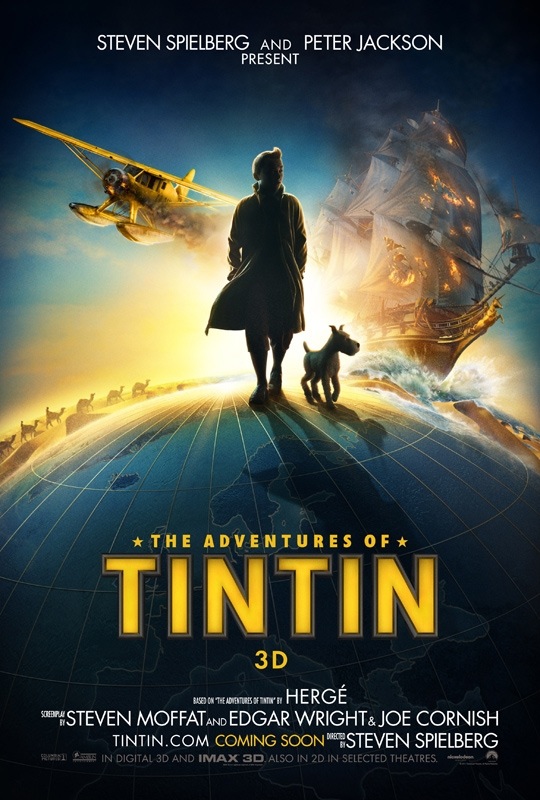
Steven Spielberg and Peter Jackson’s “The Adventures of Tintin” has been in the works for close to 30 years. Spielberg first purchased the rights in 1983 but the main filming didn’t actually begin until 2009. Jackson produced and Spielberg directed this animated motion capture film based on the immensely popular comic book series from Belgian artist Herge. While the Tintin character is most popular in Europe, Spielberg and Jackson hope the broader exposure will result in a least two more films. There’s certainly nothing in “The Adventures of Tintin” that should discourage a sequel. But there’s also several things in the film that keep it from being as good as it could have been.

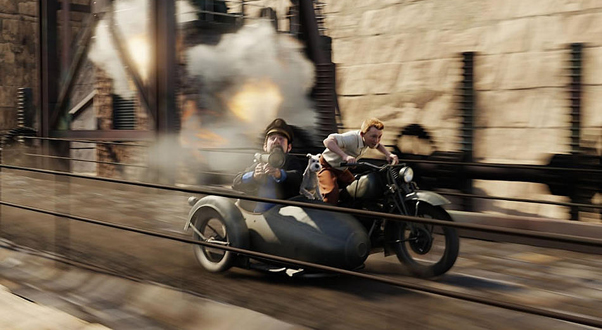
In many ways “The Adventures of Tintin” is an old-fashioned adventure with a shiny modern coat of paint. It’s a classic style, simple and straightforward adventure yarn that at times feels like an Indiana Jones treasure hunt picture. But it’s the cutting-edge motion capture and CGI animation that instantly catches your eye. The character’s gorgeous three-dimensional renderings are incredibly realistic but with just a touch of cartoony style. The animation also features an incredible level of detail. It’s seen in everything from the various around-the-world locations to the fantastic period recreation. “Tintin” is a visual treat and there’s no doubt you’ll enjoy the steady barrage of eye candy found throughout the film.

I mentioned that “Tintin” is simple and straightforward and that’s not necessarily a bad thing. But I did have a few issues with the story. The movie starts with Tintin purchasing a model ship from a vender at an outdoor market. There is practically no introduction whatsoever and it seems like the movie expects you to already be familiar with the character. As someone unfamiliar with Tintin, all I learned is that he’s a journalist and adventurer and his best friend is his white dog Snowy. After buying the ship Tintin is immediately approached by two individuals who try to take it off of his hands. This leads to the discovery that the model ship may hold a clue to the whereabouts of a lost treasure. Upon seeing this, Tintin and Snowy head off on a globe-trotting adventure to find the treasure before a shady character named Sakharine does.

From there the movie launches into a frantic and almost hyperactive action romp. The film seems to move from one elaborate cinematic set piece to another, each filled with that signature well-choreographed Spielbergian action. There’s also just enough story to keep everything interesting. But I did feel the movie start to lag in the middle especially during a long series of flashback scenes intended to tell the history behind the treasure and it’s connection to two of the characters. Speaking of characters, Tintin teams up with Captain Haddock, a drunk who loses control of his ship to Sakharine. While Haddock has a few funny moments he’s also borderline annoying at times especially when he goes off on one of his ramblings. There are also a couple of instances where his attempts at humor seem to clash with the tone of the movie. While the movie hits a few speed bumps in the middle, it quickly picks back up on its way to a wide open ending that clearly points to a sequel.

Overall “The Adventures of Tintin” is a fun time that the entire family can enjoy together. From the start, the movie jumps right into the adventure but don’t expect much of an introduction to Tintin or even any character development to speak of. And while the story is about as basic as you can get, it really only stumbles in a few places. But it’s the movie’s presentation that is the most impressive. The film looks amazing and features some of the most eye-popping CGI and visually stunning action sequences. The John Williams score doesn’t hurt either. When it comes down to it, “The Adventures of Tintin” is like several of Spielberg’s other pictures – light on story but heavy on appearance. It’s not a perfect movie but there is still plenty to latch onto and once you get onboard it’s easy to stay with it all the way.

VERDICT – 3.5 STARS

“MY WEEK WITH MARILYN” – 2 STARS

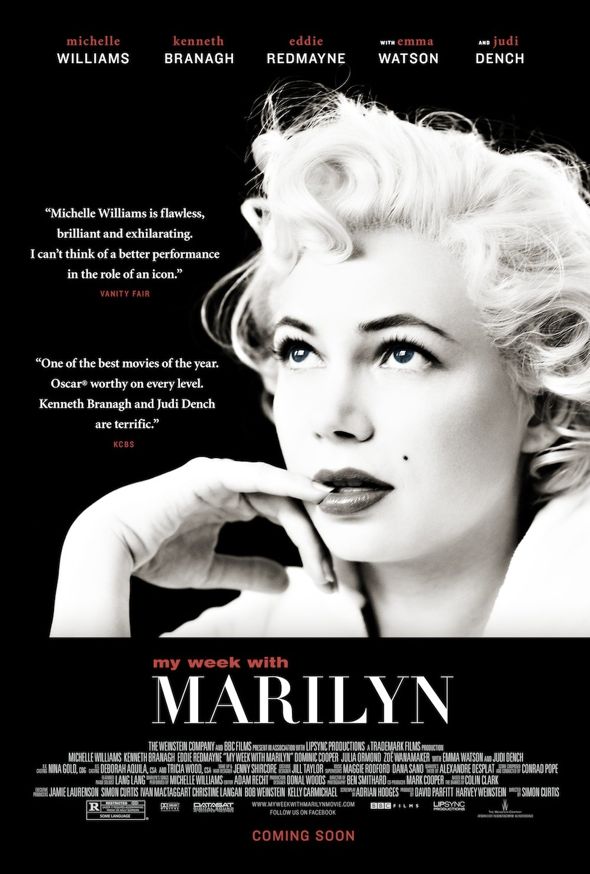
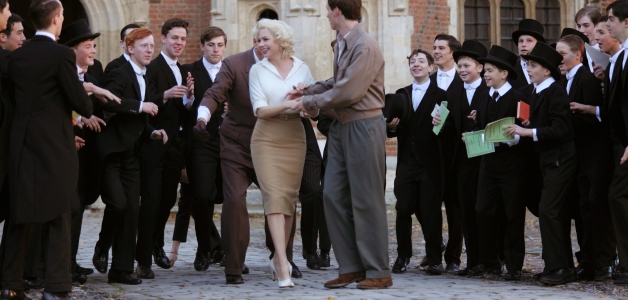
One thing that can be said for “My Week with Marilyn” is that it’s not your run-of-the-mill biopic. The movie is based on Colin Clark’s book about the making of “The Prince and the Showgirl”, a 1957 comedy starring Marilyn Monroe and Laurence Olivier. Said to have been a troubled set, “My Week with Marilyn” gives us an interesting glimpse at what it must have been like. But the movie mainly focuses on Colin Clark’s week-long relationship with Marilyn Monroe during the shoot. We spend a lot of time seeing the different sides of Marilyn through Adrian Hodges screenplay and the Oscar nominated performance of Michelle Williams. But while the film and especially Williams has received high praise, I found the movie lacking and in many ways missing the energy you would expect it to have.

The film starts with Colin Clark (Eddie Redmayne) leaving home in hopes of landing a job in the film industry. He ends up getting on with Laurence Olivier’s (Kenneth Branagh) new movie “The Prince and the Showgirl”. Marilyn Monroe (Williams) will be arriving to work on the picture and Colin’s first job is to find a home for her to stay in while she’s in London. Marilyn and Laurence get off on the wrong foot after she is late to the first script reading. This is a trend that continues throughout the filming of the movie and soon Laurence (who is also directing the picture) reaches his breaking point. Branagh is very good here and it’s quite obvious that he’s having a lot of fun with the role. He’s a likable character but very by-the-books when it’s time to work, something even his lovely but insecure wife Vivien Leigh (Julia Ormand) points out.

It’s during the stressful filming that we see Marilyn as extremely nervous and lacking any confidence in her acting abilities. In fact, she is almost always seen with her acting coach Paula Strasberg (Zoe Wanamaker) who actually serves more as a stabilizing mechanism to keep Marilyn from flying off the rails. Judi Dench plays Sybil Thorndike, a calm and soothing co-star who has sympathy for Marilyn and helps her build her confidence. But Marilyn doesn’t show up to the set one day and Colin is sent to check on her. A few days later Marilyn calls Colin to come over and see her. Colin is warned of Marilyn’s ways but his infatuation with her grows and grows. The relationship between the two is supposed to be unusual but I had a hard time finding any spark between them. Redmayne has the naive puppy dog thing working well but it was almost impossible to buy into their relationship.

I also thought the story, much like Colin and Marilyn’s fling, lacked any energy or vitality. I found my mind wandering during several scenes particularly when Marilyn is mumbling to Colin after taking to many pills. The movie just seems to hit an emotional flatline and I had a hard time staying interested. There were also times when Marilyn comes across as too childlike. I understand that the movie was trying to convey a type of childlike dependency in Marilyn but there were a couple of scenes where the script takes it too far.

But everything in this film comes back to the performance from Michelle Williams. She won a Golden Globe for the role but I have to say that I wasn’t as enamored with her work as most others have been. She certainly gives it everything she’s got and to be fair her biggest problem is that she’s let down by the material. But I never really felt like I was watching Marilyn Monroe. I always felt like I was watching someone play her. Now that may be expecting too much from Williams and it may be unfair. But this film hinges on the audience buying into Williams as Monroe and I only partially could.

When it comes down to it, “My Week with Marilyn” is pretty lightweight. It starts off strong but hits a rut at the midway point and spins its wheels for most of the second half of the film. Williams certainly isn’t bad here but she also isn’t Marilyn Monroe. I can see where if you buy into her performance completely, you’ll probably enjoy this film more than I did. But even with that, I would still have a hard time buying into this week-long lifeless fling. As I said at the beginning, this isn’t your run-of-the-mill biopic. But unfortunately it doesn’t use its uniqueness to create something special.