REVIEW: “Duck Soup”

Classic Movie Spotlight

duck_soup posterI think it would be safe to say that the Marx Brothers had a brand of humor that was uniquely their own. In a variety of ways Groucho, Harpo, Chico, and Zeppo Marx influenced the comedy genre like no others. Their chaotic and anarchic comedy is centered around rapid-fire quips and ingenious slapstick that’s as well choreographed as any fine dance or ballet. Some of today’s audiences haven’t had the same appreciation for the Marx Brothers and many moviegoers raised by modern cinema may be tempted to dismiss their style of humor. But I stand with the many who believe that the brothers were some of the greatest comic geniuses ever to grace the big screen.

Many believe “Duck Soup” to be the Marx Brothers’ greatest film. While my affection for several of their other movies keeps me from emphatically agreeing, I don’t mind saying that “Duck Soup” is right there in the conversation. The movie features two significant finales for the brothers. This was their last movie to include Zeppo Marx and it was their last production for Paramount Pictures. Many consider the Paramount days to be the best for Marx Brothers movies. But serious contract disputes sunk the relationship between the two sides and after “Duck Soup”, the final movie of a five picture contract, the brothers moved to MGM.

As with most of the Marx Brothers movies, summarizing the plot of “Duck Soup” can be an exercise in futility. There’s no dense or intricate narrative in the film. It’s simply a basic story that allows Groucho, Harpo, and Chico to showcase their comedic chaos. Groucho plays Rufus T. Firefly, the appointed leader of a small country named Freedonia. Freedonia is in a vulnerable position due to economic hardships and poor leadership. Why anyone would expect things to change with Firefly in charge is beyond me! Groucho is exactly as you would expect. He hurls sarcasm and insults at Mach 5 speed and his idiocy when it comes to running a country only makes things worse for Freedonia. But what’s worse for them is hilarious for the audience. Groucho is in top form and its a challenge just to keep up with his humor.

DUCK SOUP 1

The neighboring rival country of Sylvania sees blood in water and they believe the time to take control of Freedonia has come. Their ambassador Trentino (Louis Calhern) sends two spies Chicolini (Chico) and Pinky (Harpo) to infiltrate Firefly’s regime. Another dumb move. Obviously the two numbskulls botch the operation and turn things upside down. Before long the two countries have declared war and things go completely insane. In other words, its exactly what you would expect from an effective Marx Brothers picture.

Zeppo appears as Firefly’s secretary chief, Bob Roland. After playing his usual straight man role in the first five Marx Brothers films, he would quit acting after “Duck Soup” to make his fortune in engineering. Also a Marx Brothers favorite Margaret Dumont plays her familiar wealthy, aristocratic widow role. As always she plays the straight face in the middle of the brothers’ madness and she takes the brunt of Groucho’s jabs and insults. Dumont is certainly a supporting character but her roles are always vital to making much of the comedy work. That’s definitely the case in “Duck Soup”.

The film has several signature scenes none more well known than the mirror sequence. In it Harpo, decked out as Groucho, pretends to be his reflection in a busted out mirror. He matches Groucho’s every movement and expression in a scene featuring some mind-blowing choreography. There’s also a fantastic sequence where Chico and Harpo fight it out with a lemonade vendor battling them for sidewalk business. It’s a sequence that could be construed as Marx Brothers cruelty. In fact I’ve heard that argument but I think that’s taking the scene way to seriously. It’s a hysterical part of the film. Then there is Harpo’s penchant for clipping things with his scissors. Whether it’s tuxedo tales or feathered pens, he clips anything he gets a chance to.

I could go on and on about the numerous funny lines and hilarious gags. “Duck Soup” may have more Marx Brothers zaniness than any of their other pictures. For anyone not familiar with these early comic legends this is a great entry point. Just be prepared. The humor is relentless but it keeps me laughing from the opening to the closing credits. The boys made some fantastic films after “Duck Soup” but here they’re at their peak. And for me this 1933 comedy succeeds where the vast majority of modern attempts fail. It’s incredibly funny and it carves out for itself a spot as a true classic.

VERDICT – 5 STARS

5 STARSs

5STAR K&M

REVIEW: “Roman Holiday”

Classic Movie Spotlight

roman_holidayI don’t mean to be repetitive. But at the risk of sounding like a broken record, they just don’t make romantic comedies like this anymore. This 1953 classic from director William Wyler is a beautiful blueprint for a genre that seems to struggle with making quality movies these days. “Roman Holiday” brings together the always good Gregory Peck and the adorable Audrey Hepburn in a film that could almost be considered a fairy tale story. But while the film embraces some of the elements that make a good romantic comedy, it dodges a few of the conventions which have become all too familiar.
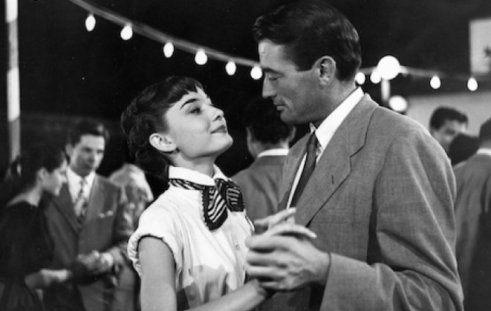
“Roman Holiday” was the star-making role for a young Audrey Hepburn. After appearing in several smaller roles this was a bigger performance that caught the world’s attention. A lot of that attention is because of Gregory Peck. Peck was instrumental in getting Hepburn’s name out there after realizing she was going to be big. Interestingly enough Peck wasn’t Wyler’s first choice. The director first sought after Cary Grant but Grant turned it down after reading the script. Peck once said that anytime he received a comedy script he knew Grant must have turned it down first. Well I don’t think anyone is griping about how things turned out. Peck and Hepburn have a charming chemistry as they explore the unique relationship between their characters.

The story for “Roman Holiday” was written by Dalton Trumbo but it was credited to Ian McClellan Hunter. Trumbo was one of the Hollywood Ten and was blacklisted for his communist ties and failure to cooperate with Congress. It was during that time that he penned the story. To make things even more interesting, “Roman Holiday” won the Academy Award for Best Story (as the category was known at the time). Hunter would accept the award but it was Trumbo who earned it. Only in 2011 was full credit given to Trumbo was his work on the film.

ROMAN1

His story follows Ann (Hepburn), a princess of an unmentioned country who is on a European tour stop in Rome. Ann is young and adventurous and she wants to experience the life outside of her closed in ornate walls. She’s tired of the strict itineraries and stuffy hobnobbing so one night she lets out her frustrations. The royal family doctor gives her a sedative to calm her down but before it can kick in, she sneaks out of the embassy to experience the sites and sounds of Rome. An American reporter named Joe Bradley (Peck) stumbles across Ann sound asleep next to a fountain. He doesn’t recognize her at first but after a comical series of events he learns her identity and sees her as a big story that could eventually land him back in New York.

Joe doesn’t let Ann know that he recognizes her and Ann tries to keep her identity secret. He calls a photographer friend of his Irving Radovich (Eddie Albert) to secretly capture some photographs of Ann for their big story while the three of them spend a playful day exploring Rome. Of course Joe begins to have feelings for Ann. I mean who wouldn’t? This is Audrey Hepburn were talking about. He’s faced with the decision of caring for her or cashing in his feelings for a big payday. It’s such a wonderful story filled with good humor and a lovely romance. Hepburn and Peck light up Rome with Albert playing the tag-along who gets in some good laughs.

“Roman Holiday” was shot in Rome, something that you didn’t see a lot of during that time. Unlike now where on location shoots are the norm, then it was a pretty special thing to have such an extensive shoot especially I’m a city like Rome. It was a brilliant decision. The city and all its beauty is on display throughout the film and Wyler treats Rome like one of the film’s characters. But it’s a supporting character. The city shows itself often but always as a support for the bigger love story. There are several magical scenes with Ann and Joe at some of the city’s major locations. One of my favorites is a playful moment at The Mouth of Truth monument. Peck pretends as if his arm is stuck in the mouth of the monument and he lets out a scream. Hepburn new nothing of this little gag. Only Peck and Wyler were in on it. It genuinely startled Hepburn who let out a loud scream of her own. It was completely spontaneous and Wyler was able to capture it therefore requiring only one take.

ROMAN2

“Roman Holiday” ended up with 10 Academy Award nominations. I mentioned Trumbo’s win but that wasn’t the biggest story. Audrey Hepburn, a relatively unknown actress at the time, would take home the Best Actress Oscar. This catapulted her into the spotlight and opened the door for her to star in several of my favorite classic films. Peck was right with his appraisal of the young beauty and she was always appreciative. They remained close friends for the rest of their lives. Their admiration for each other and their friendship translated into their performances and they give us a truly memorable screen couple.

I still love “Roman Holiday”. It’s a beautifully filmed movie that tells a wonderful story through some top-notch performances. The Rome locations provide such a pleasing sense of place and even in black and white Wyler gives you a very real feel for the city’s allure and vibrancy. It’s also one of those movies with several scenes that you’ll never forget. It’s easy to get lost in “Roman Holiday” and as an avid movie watcher that’s what I want. I want to be swept away by an interesting story about interesting characters. And in a romantic comedy I want to care about what I’m seeing. I want the story to be smart, the humor to be sharp, and the romance genuine. We get all of this and more in “Roman Holiday” which is one reason this great film has stood the test of time.

VERDICT – 4.5 STARS

THE END

“The Raven” – 2 STARS

THE RAVEN POSTER

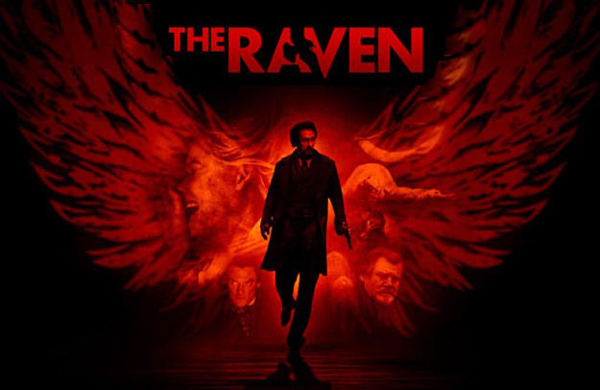
Have you ever had a movie that you didn’t really respond to but you had a hard time pinpointing why? This is the case with me after watching the 2012 period thriller “The Raven”. This is a movie that intrigued me from the start although I did keep it at an arm’s length. While the components for a unique crime thriller seemed to be there, I still never felt myself drawn to hurry up and see it. So as you can see, my fence straddling with “The Raven” started early. Well now I have seen this widely slammed movie. Is it as bad as the vast majority of critics made it out to be? I don’t think so. But unfortunately it’s missing some major pieces that are vital in making this kind of movie work.

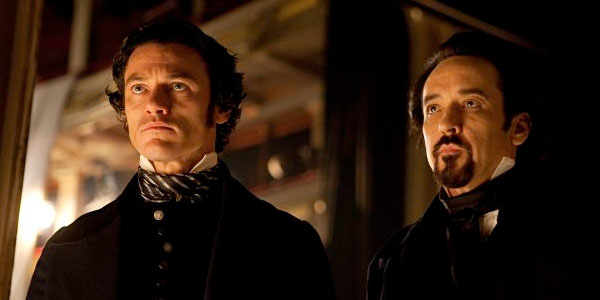
In case you don’t know the story, it’s set in 19th century Baltimore, Maryland. A brutal and grisly double murder puts the police on the trail of a serial killer who patterns his crimes after the short stories of Edgar Allan Poe. Lead Detective Fields (Luke Evans) at first suspects the eccentric Poe (John Cusack) but eventually calls on him to help in the investigation. It’s a cat and mouse game as the two sift through the clues left at every new and horrible crime scene, each tied in to Poe’s writings.

The stakes are raised for Poe after his fiancé Emily (Alice Eve) is kidnapped and used as a pawn by the killer. Now this is a direction the story takes that should give the movie some emotional kick but that’s not the case at all. Poe and Emily’s relationship is cold and lifeless. They try to throw in some tension with Emily’s father (Brendan Gleeson) who despises Poe, but that does little to liven things up. Emily’s capture does lead to some of the movies most intense moments. But the underplayed romance between her and Poe strips the movie of a genuine and much needed sense of urgency.

RAVEN 2

I guess that leads into where my real problems lie with “The Raven”. It moves at a sharp pace. It captures the dark and moody tone that it’s going for. The crime scenes are perfectly unsettling. But in the end so much of the story feels manufactured. The relationships feel manufactured. The urgency feels manufactured. Even the ending feels manufactured (and a bit unsatisfying as well). But perhaps the biggest sin this movie commits is its overall lack of suspense. It’s hard to call a thriller a success if it lacks suspense. “The Raven” desperately tries to muster some but I don’t ever remember feeling it at any point in the movie.

I think “The Raven” is a movie that has some good ideas, but it doesn’t do much with them. It’s not a sloppy or lazy picture. But it also fails to step outside the bounds of conventionality, something that the material afforded them the chance to do. Now it’s decent enough to keep you in your seat, but it never does anything to put you on the edge of it. Again, I guess that’s where my biggest problem lies. There’s nothing suspenseful that grabs you and keeps you glued to the screen. That’s what I want from a thriller and I just didn’t get enough of it here.

“West of Memphis” – 4 STARS

Memphis Poster

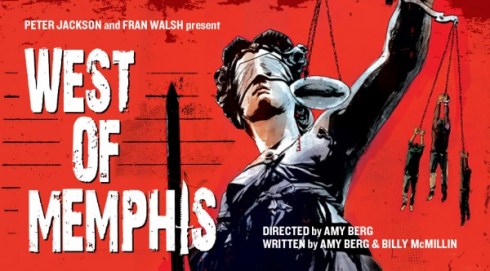
I’ve watched several documentaries over the years but I’m not nearly as well versed in them as I should be. To showcase my negligence even more, I don’t think I’ve ever watched a documentary in the theater. That finally changed with my viewing of “West of Memphis”, a film that looks at the 1993 murders of three 8-year boys in West Memphis, Arkansas. The case has seen a resurgence of media attention, much of it due to the HBO “Paradise Lost” trilogy and now this film. There have also been a vocal group of movie actors, directors, and music stars who have rallied to defend the three men convicted of the murders.

Usually when I see entertainers latch themselves onto high-profile news stories like this, I’m a little skeptical. To be quite honest, seeing Eddie Vedder, Henry Rollins, and the Dixie Chicks chiming in can sometimes do more to push me away than draw my interest. But “West of Memphis” is much more than a group of self-important celebrities posturing for attention (although there is some of that in the film). I found it to be an interesting documentary that had me challenging popular thoughts as well as weighing the wealth of new evidence and theories surrounding the case.

I was a 22 year-old Arkansan when the three young boys, Steven Branch, Christopher Byers, and Michael Moore were found murdered. Their bodies were discovered underwater in a drainage ditch, all three were nude, hog-tied, and showed signs of mutilation and sexual abuse. It was a horrific crime scene and the murders, the investigation, and the court cases captured the attention of the entire state of Arkansas. At the time, the buzz surrounding the events was enormous. And even now, after all these years, I like many other Arkansans who are old enough, still remember the details surrounding the sickening homicides and the highly publicized arrests and convictions that followed.

Memphis 1

The film starts by going back over the case. It uses archived news footage and interviews to lay out the disappearances and subsequent discovery of the three children’s bodies. I found this to be the most impressive and effective part of the entire film. With amazing care and precision, director Amy Berg resets the table for those familiar with the case and gives a history lesson to those who aren’t. She captures the tension and emotion that soaked the entire community during the time. She also does a wonderful job of bringing the audience into this simple blue-collar part of the country. The film instantly refreshed the timeline in my mind and almost immediately my heart was once again heavy for these families that suffered such terrible losses.

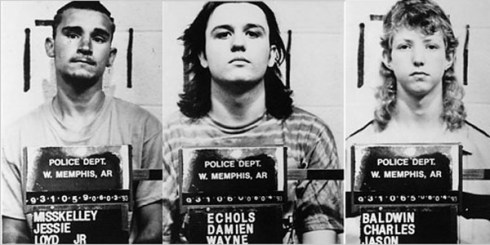
But the documentary quickly shifts to its main focus – the three young men convicted of the murders. Known as the West Memphis Three, Damien Echols, Jessie Misskelley, and James Baldwin were teenagers at the time they were arrested and convicted for the murders. Misskelley and Baldwin would receive life sentences while Echols, the perceived leader of the group, received the death penalty. They would spend 18 years in prison before a movement would arise and promote new evidences that some believe prove their innocence. “West of Memphis” clearly has a slant and a motive behind it. In fact Damien Echols is one of the film’s producers so I was questioning how objective and forthcoming the film would be.

The film’s defense of the West Memphis Three begins with attempts to discredit the police’s questioning of the suspects particularly during a confession made by Misskelley. It then attempts to show mistakes and flaws in the prosecution’s handling of the case as well as forensic incompetence my the state medical examiner. Now some of the filmmaker’s arguments raise some interesting questions, but others don’t seem to hold water. I also found it interesting that the film leaves out some of the more important questions surrounding the three teens, their statements, and their behavior during the investigation and trials. But even though I wasn’t completely sold on the filmmaker’s defense, they do offer up enough compelling questions to cause you to believe there may be a reasonable doubt.

Memphis 2

But then the film takes another interesting turn. It removes the focus from the West Memphis Three and places it on Terry Hobbs, the stepfather of Steven Branch. It begins by linking new forensic evidence to him as well as documenting inconsistencies in his own story. The film also shows several interviews with people who speak of Hobbs’ past, his personality, and of inconsistencies that may implicate him in the murders. This is where I really found myself questioning the credibility of the state and the prosecution of the West Memphis Three. I did find it interesting that the film used some of the same tactics that it confronts the earlier prosecution of using. Uncorroborated statements, out-of-the-blue accusations, and questionable witnesses. But there are also several pieces of fascinating information that bruises Hobbs’ credibility.

All of this leads to the reason I really appreciated this documentary. The filmmakers have a strong and obvious opinion but they lay out enough facts, bits of evidences, and testimonies to allow the audience to decide for themselves. I was thoroughly engaged and constantly found myself moving from one side to the other while trying to deduce what was truth and what wasn’t. I also appreciated how the film moved at a crisp and fluid pace as it went from one investigative premise to another. Well, except for the end where the filmmakers go to great lengths to make heroes out of the West Memphis Three. If they are innocent, they should have never been unjustly convicted. That’s a travesty. But aside from the murder accusations, these weren’t the best of kids especially Echols and to place them on a pedestal felt a bit uncomfortable.

At just under two and a half hours, “West of Memphis” does get a little long-winded. It could have trimmed down the attempts at credibility through celebrity appearances and some of the prison scenes meant to endear Echols to the audience. But these shortcomings did little to hurt the overall effect of the picture. It’s an impressive piece of investigative filmmaking and it had me completely involved. I questioned the prosecution. I questioned the detectives. I questioned family members. I questioned the West Memphis Three. So after all the compelling food for thought, what’s my conclusion? I still don’t know who killed those three little boys. And without a doubt that’s the saddest thing of all.

REVIEW: “Red Dawn” (2012)

Red Dawn

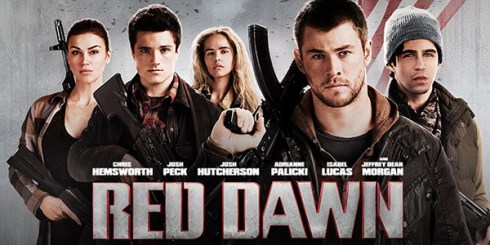
I have no problem saying I was a big fan of 1984’s Red Dawn. And whether it’s the nostalgia, the good action, the interesting storyline, the movie still holds up for me today. Now I grant you the politics are outdated and the cheese may not appeal to newer audiences as it does for many of us who grew up during those days. But I still find it to be a rousing good time despite its occasional silliness. That appreciation for the original film combined with what I saw from the first trailers had me concerned about the 2012 remake. Hollywood doesn’t have the best track record when it comes to remakes and let me just say that this new Red Dawn will do nothing to change that.

Now if you’re unfamiliar with the original story that’s ok. The new version only incorporates the general idea and a few of the names. Most everything else is new but certainly not better. The film starts by introducing Jed Eckert (Chris Hemsworth), a Marine on leave in his hometown of Spokane Washington. We also meet his brother Matt (Josh Peck), a high school football quarterback who doesn’t have the best relationship with his older brother. The movie also chunks in a few more introductions including Matt’s girlfriend Erica (Isabel Lucas), one of Jed’s old schoolmates Toni (Adrianne Palicki), and the boys’ father Tom Eckert (Brett Cullen). All are awakened one morning by an all out military assault on their town. Now don’t even try to use your brain to figure out how the enemy got that many planes, ground forces, and Humvees in the area undetected. The explaination is laughable. In fact, it’s best just to turn your brain off at the opening scene. I mean it seems like the filmmakers certainly did when they were putting together this crappy concoction of errors.

Red Dawn1

This Red Dawn attempts to modernize the politics and the characters while telling the same basic story. Instead of Cuba and Russia from the 1984 film, this time North Korea is the occupying force that attacks the United States with a little help from Russia although how they’re associated is never adequately explained. In fact all we get is news footage during the opening credits which supposedly sets the deteriorating political climate of the world. Aside from that, the invading army is nothing more than a nameless, faceless force showing nothing in terms of motivation or incentive. They just supply our group of young heroes with people to kill. Their arrival causes chaos in the city but Jed, Matt and a few of their friends are able to escape up into the mountains. From there they form into a group of rebels that wages guerrilla war against their occupiers.

I know this sounds silly but the original movie actually did this quite well. It took a small group of scared young people, fleshed them out, and over several seasons turned them into pesky guerrilla fighters mainly focused on survival. This film takes an uninteresting group with practically no personality, zips them into combat, and soon has them carrying out complex missions in the middle of occupied Spokane. No training and very little trial and error. And in this film the North Korean army has to be the worst occupying force ever in the history of cinema. Jed and company are able to waltz right into town at their leisure, detonate C4 explosives wherever the wish, and walk right out of town with their AK47’s tucked under their jackets. And this is just for starters. Throughout the movie you’ll find huge gaps in logic, glaring plot holes, and numerous moments where all you can do is bury your face in your hands.

If I wasted time singling out every stupid moment and ridiculous inconsistency this review would go on forever. Instead let’s just give discredit where discredit is due. Carl Ellsworth and Jeremy Passmore’s script is bad. NOTHING that they’ve added, from the new character twists to the annoying profanity, is an improvement or even on par with the original Red Dawn. It’s one of the most amateurish and laughably bad scripts you’ll find and that’s unforgivable considering it’s a remake of a movie that I felt was well written and highly entertaining. This mess is anything but that.

Red Dawn 2

And then there’s the dialogue and the performances. I was astonished at some of the ridiculous lines crossing the lips of the actors in this movie. Several times I just sat there with my jaw dropped trying to figure out how some of these scenes could have made the final cut. Whether it’s the pseudo-toughness of the kids or the rare moments where they’re trying to show emotion, the film is littered with corny and brainless dialogue. The most laughably bad scenes come with the arrival of Jeffrey Dean Morgan and his two fellow Marines. Their embarrassing attempts at macho military talk left me speechless, particularly Matt Gerald. I swear he may have given one of the worst and most cringe-inducing performances I’ve ever seen. You’ll literally root for his character to be killed just to ease the assault on your ears.

Ok, enough of this. I could say so much more about this movie but I’m already sick of talking about it. In summary, Red Dawn is an unmitigated disaster from start to finish. About the only positives I can come up with are the explosions look good and Chris Hemsworth is decent. But even he is eventually buried by his poorly written character and the shallowness of his lines. Red Dawn ends up being another incompetent remake that shouldn’t even exist. It has virtually nothing in common with the original and it shreds everything that the first film did so well. I can’t see anyone who even slightly appreciated the 1984 film to find anything worthwhile in this remake. But then again I can’t see anyone who appreciates good movies to find anything worthwhile either. It’s that bad!

VERDICT – 1 STAR

For a much better version, please check out my review of the original Red Dawn (1984) .

“Safe Haven” – 3 STARS

SAFE-HAVEN poster

There are several things that you automatically expect when your watching any movie based on a Nicholas Sparks novel. You know you’re going to get an overloaded plot, the characters are going to be bombarded with tragedy, a main character will probably die, and whether its rain, a pond, or the ocean, you’re going to get a lot of scenes involving water. Now the water thing doesn’t bother me. I’m sure there’s a nice little story as to why water is so prominent in these films. But the other stuff along with a history of bad performances have made the other Sparks adaptations almost unbearable to watch. So I guess the question is why on earth would I watch his latest endeavor “Safe Haven”? More importantly, would it be able to avoid the habitual weaknesses of the other movies?

Well let me start off by saying that Sparks almost had me with “Safe Haven”. In fact he came incredibly close. “Safe Haven”a flirts with being a really good movie mainly because it steers clear of those crippling stumbling blocks that killed every other Sparks production. Much of the credit for this goes to Gage Lansky and Dana Stevens. Their screenplay keeps things simple, grounded, and focused, that is right up until the very end. It’s there that the story undermines everything it had done up to that point by tossing in a clunky action sequence and an off-the-wall twist that had me slapping my a forehead.

safe haven 1

Julianne Hough plays Katie, a young woman with a big secret. We first see her in a bus station where she hurriedly hops on a bus heading to Atlanta. Right on her heels is police officer Kevin Tierney (David Lyons) who narrowly misses catching her. Katie flees, in search of a place where she will feel “safe” Officer Tierney issues an all-points bulletin and continues to search for her. We know Katie is involved in something bad but the movie never tells us what it is all at once. Instead we are fed bits of information through a series of flashbacks.

Katie’s bus stops briefly at a sleepy little North Carolina town called Southport that sits at the mouth of the Cape Fear River. She decides to stay. She buys an old fixer-upper house isolated in the woods and lands a low-key job as a waitress in a fish restaurant. She also reluctantly starts making connects in town including catching the eye of the conveniently widowed Alex (Josh Duhamel). It doesn’t take a Rhodes scholar to guess that the two eventually fall for each other. Hough and Duhamel are actually quite good together. Hough is beautiful and fairly believable and her acting was a surprise. She did have some rough patches but overall she was much better than I expected. Duhamel is a very likable actor but I’ve yet to see him really relay emotion. He gives a good enough performance here but it’s nothing that will grab your attention. But the main thing is that they do have a nice chemistry and we get plenty of scenes with these two pretty people together. But you can only run from the law for so long and Katie’s past could eventually destroy her new life.

I was curious to see how director Lasse Hallström was going to handle this movie. He’s got an interesting résumé that includes some really good films such as “Chocolat”, “What’s Eating Gilbert Grape”, and last year’s “Salmon Fishing in the Yemen”. But he also made the Nicholas Sparks disaster “Dear John”. Well thankfully this is no “Dear John”. Hallström never let’s things get out of control and he’s able to keep his characters entertaining and interesting. He does get close to falling into eye-rolling sappiness at times but he actually succeeds in making this a fairly enjoyable romantic drama, something that can’t be said about the previous Sparks productions.

safe-haven2

Now “Safe Haven” does use some of the standard clichés that you see in a lot of these type of pictures. We get the super cute little kid doing and saying super cute little things and there are certain moments in Katie and Alex’s romance that were taken straight out of the Hollywood handbook on formulaic romance scenes. But I have to say that these things are at a minimum and they never overtake the film. There’s also the water. I mean there’s water everywhere. Of course Alex and Katie have to get caught in a rain storm and there’s a lot of scenes that include the Cape Fear River. There’s even a reoccurring bottled water that has significance. That Nicholas Sparks, he sure loves his water.

So while “Safe Haven” can be a little sappy, a little cliché, and too convenient, those aren’t its biggest offenses. Even with the surprising control and restraint that we see in the majority of the film, the ending blows most of it out of Sparks’ beloved water. There’s an early twist that I actually thought was pretty well done. But it leads to an action sequence that felt terribly out of place. It just suddenly throws too much at you and it felt pretty cheap. But then the story gets back on track with a really touching final sequence. The only problem is the filmmakers don’t leave it alone and they toss in a twist that left me shaking my head. I don’t know, if I watch it again I might feel differently, but it seemed to me that they ruined a really good ending by trying to be too crafty. Sometimes you have to recognize a good thing and let it play out.

So what’s my final take on “Safe Haven”? I’ve slammed every Nicholas Sparks production that I’ve reviewed and I was expecting to do the same here. But as I consider the film as a whole I can’t help but recommend it, even if it’s a slight recommendation. Hough is lovely and Duhamel as likable as always, and even though they’re not the most polished performers, their chemistry sold me. I’m still not one to say I now look forward to Nicholas Sparks movies, but for me this was a step in the right direction.