“THE 3 STOOGES” – 2 STARS

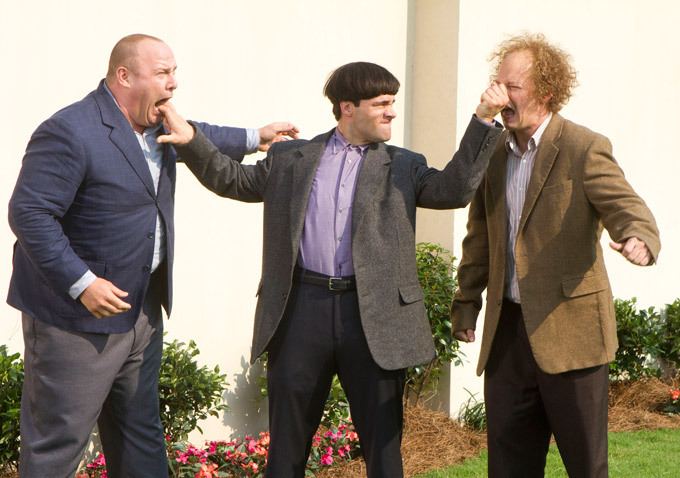
I have to admit, I avoided the Farrelly brothers new movie “The 3 Stooges” for a while. It was a prime example of a film that seemed utterly unnecessary and I had no confidence, knowing the state of modern comedy, that any director would be able to capture what made the original Stooges so beloved. After finally catching up with the film, I have to admit that I was pretty surprised at just how well the Farrelly brothers channelled the Stooges unique brand of humor. This is actually a comedy with some pretty good laughs. But it also feels like an imitation and a little of these Stooges goes a long, long way.

“The 3 Stooges” is unabashed slapstick silliness that covers everything from the Stooges’ trademark belly punches, eye pokes, and face slaps to their knuckleheaded way with words. It’s relentlessly rambunctious and completely juvenile, yet this lighthearted story has some success and it’s mainly due to some incredibly committed performances from its three leads. The transformation of Chris Diamantopoulos (Moe), Sean Hayes (Larry), and Will Sasso (Curly) into these three classic comedy characters is nothing short of amazing. And it’s not just their impeccable physical resemblances. Their voices, mannerisms, and of course their slapstick antics are unmistakably Stooge-like. But perhaps what’s best about their performances is that they never stop and wink at the audience. They each play their roles straight and it really helps the film.

The movie is broken into three clever “episodes”. The story itself is about as simple as it gets. The orphanage the Stooges were raised in has fallen on tough economic times and is being forced to shut their doors. That is unless they can get $830,000. Our lovable buffoons, who still live at the orphanage and have been completely sheltered from social interaction and any modernities, take it on themselves to head out into the world and get the money to save their home. Of course their sheltered lives and natural idiocy lead to a series of wacky ‘fish out of water’ scenes and several off-the-wall encounters. Some of the moments work really well and generate some genuine laughs. But as the movie progresses it seems to lose more and more of its energy and interest.

I mentioned above that a little of these Stooges goes a long way and that’s one of the real problems with the movie. Yes, the three leads do an amazing job of portraying the 3 Stooges. But over time their shtick runs headfirst into a wall of repetition. The gags become increasingly generic and less and less funny. And even worse, there were times when it seemed either the movie was running short on material or the Farrelly’s just felt the need to include it, but it resorts to your standard modern-day urine and fart jokes. I just couldn’t help but feel that the movie was running out of gas and that did make it harder to overlook the other more obvious faults with the story.

Even with its faults, “The 3 Stooges” did surprise me. It has some really weak spots in the writing and it may have a hard time holding the attention of anyone over 12 years old. But it certainly has it’s funny moments particularly in the first half of the film. And there’s no way you can discount the really good performances from Diamantopoulos, Hayes, and Sasso. But even with their tremendous efforts this still felt like a really good Elvis impersonator. They look like Elvis. They sound like Elvis. They shake like Elvis. But they aren’t Elvis. But you know, a lot of people like Elvis impersonators and enough is done right in “The 3 Stooges” to earn it an audience. Personally, I just needed a little bit more.

REVIEW: “THE EAGLE” (2011)

There have been several movies about Rome’s powerful Ninth Legion and their annihilation in the British territories in the 2nd century. The newest addition is “The Eagle”, adapted from the novel “The Eagle of the Ninth” by Rosemary Sutcliff. Channing Tatum plays Marcus Aquila, a young Roman centurion taking his first command in a dangerous and isolated part of Britain. Aquila seeks to restore the honor of his father who was leader of the powerful Ninth Legion when they mysteriously disappeared along with the sacred golden Eagle of Rome. After their fort is attacked, Aquila gains the trust and admiration of his legion by leading them to victory but is injured in the battle resulting in his honorable discharge. But with his father’s name still held in contempt and the Eagle still missing, he sets out on a quest past the Northern Wall, accompanied only by his newly acquired slave Esca (Jaime Bell), to find the Eagle and redeem his father’s reputation .

While “The Eagle” does start off promising, it’s an inconsistent and uneven film that falls into mediocrity. The first act is encouraging. The attack on the fort features the film’s best action sequences. They are furiously shot and edited and bring reminders of films like “Gladiator”. Later, as we’re introduced to Esca, the relationship between wounded Roman hero and Rome-hating slave offers up potential even though it’s built upon pretty familiar grounds. But it never goes very far. Nonetheless the movie still has some pretty decent moments early on.

But then the picture bogs down in numerous scenes of tedious exposition and a quest that lacks any real sense of urgency or peril. These problems can be traced back to a very lackluster script. Other than a few bits of text in the opening, there’s no real effort to develop the film’s historical setting. There is no real explanation of the importance of the Eagle other than “The Eagle is Rome”. The relationship between Aquila and Esca is underdeveloped and hard to buy into. The ending is flat and lacks any real punch or emotion. These are all issues that could be resolved with better writing.

Channing Tatum does a better acting job than in many of his previous films but the verdict is still out for me. He gives a good effort but he just can’t carry a picture like this. His scenes involving interaction with his soldiers early on are his best but he struggles elsewhere. Then you have Donald Sutherland who is laughably bad and terribly miscast as Marcus’ uncle. He appears to be just going through the motions and he’s impossible to take seriously. Jamie Bell gives the better performance of any but even he is handcuffed by the weak screenplay.

“The Eagle” is a very “ok” movie. It’s best parts are experienced early then the movie falls off considerably. It starts off as a poor man’s “Gladiator” which isn’t necessarily a bad thing. But then it loses it’s identity and heads off into a different direction becoming a very mediocre action picture. The characters and the story are underdeveloped and in a movie like this you have to buy into the quest and the stakes must be high. The stakes weren’t that high and I was never sold enough on the story to really invest in it.

VERDICT – 2 STARS

REVISITING A CLASSIC: “Citizen Kane” (1941)

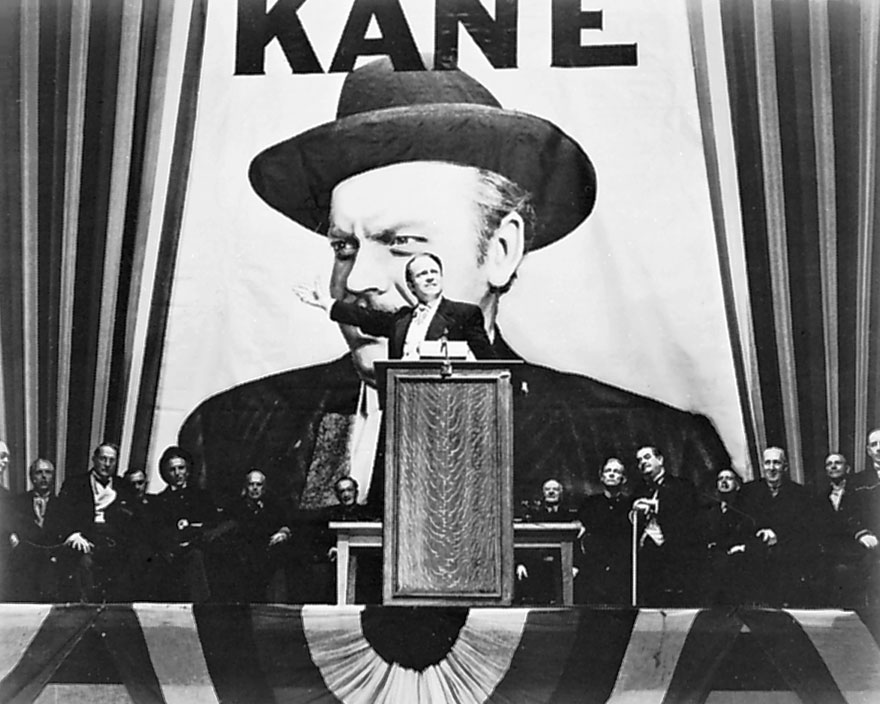
You may have heard by now that Sight & Sound Magazine recently announced the results of their The Greatest Films of All Time poll. If you’re unfamiliar with the poll, it’s a worldwide survey of critics that has been conducted every 10 years dating back to 1952. Since 1962 “Citizen Kane” has been at the top of this pretty prestigious list, at least until this year. Alfred Hitchcock’s “Vertigo” has dethroned “Citizen Kane” which has launched a ton of great discussions on both of these films. Personally, “Vertigo” isn’t the greatest film of all time. In fact, for me it isn’t even the best Hitchcock film. And for my money, even though I like “Vertigo” a great deal, it can’t beat “Citizen Kane”, a movie that is a lesson in quality filmmaking starring, directed, and co-written by Orson Welles.

Last night I had the opportunity to revisit this cinema classic and it’s amazing how it truly seems to get better with each viewing. “Citizen Kane” is a film that has aged like the finest wines and there are so many reasons for it. The more I watch the movie the more I can appreciate the skilled filmmaking and risks taken to bring the movie to life. The film certainly had its share of struggles particularly when trying to find an initial audience. William Randolph Hearst, the American newspaper giant who is the clear inspiration for the movie’s main character, was infuriated by the movie and took huge measures to keep “Citizen Kane” from reaching an audience. Fear of his power kept the film out of many newspapers and out of many theaters. But after all these years, it’s the movie that has come out with the better reputation.

While there has been some controversy over who was the driving force behind the movie’s screenplay, Orson Welles and Herman Mankiewicz are credited with its authorship. It tells the story Charles Foster Kane, an immensely wealthy newspaper mogul, who lies on his deathbed, alone within the closed isolation of his mammoth Florida estate known as Xanadu. We watch as Kane utters his final word “Rosebud” and then dies. This opening event catapults the entire story forward. In fact, the entire narrative is driven by one incredibly clever device – “Rosebud”. Kane’s final word becomes a huge topic of interest especially for investigative reporter Jerry Thompson (William Alland). Thompson is convinced that there is a deeper secret meaning to Kane’s final word and he sets out to uncover it by looking into Kane’s past and interviewing those closest to him.

This points to one of the things that makes this movie so special. There’s no straight-line, uninterrupted narrative. Instead the story is told through well placed flashbacks from the points of view of several different people. Through their eyes we learn about Kane’s impoverished childhood. We learn about his leap of faith into the newspaper business at a young age. We see his political ambitions. But we also see the story of a man whose motivations fester into those of power and self-promotion. We watch as his ego and self-indulgence destroys every nonmaterial thing in his life. He’s the epitome of gaining the whole world but losing all that’s important. It’s a fascinating study of a man who, regardless of his wealth, power, and influence, is unable to overcome the greatest obstacle to true happiness – himself. This all unfolds through the words of Kane’s guardian, ex-wife, business partner, butler, and best friend. Now as someone who isn’t always attracted to the use of flashbacks, I’m really impressed at just how well they work here. Welles is truly laying out a man’s life before us and I was enthralled not only in his story but also with the small question behind it all – just who or what is “Rosebud”?

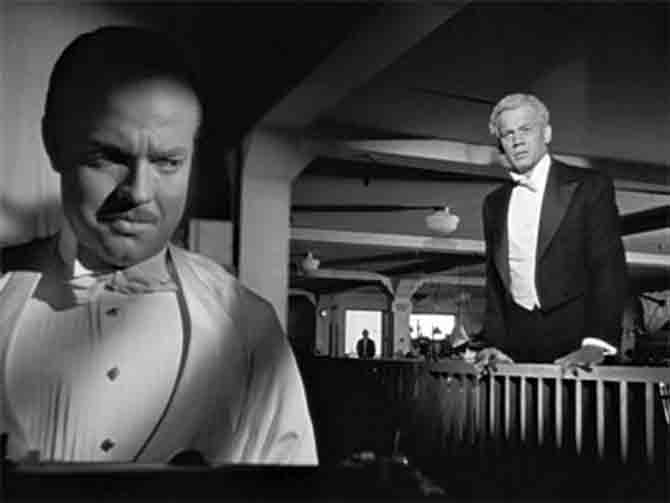
While many love the story and the storytelling behind “Citizen Kane”, it is equally or maybe even better known for its ambitious visual presentation and stylistic techniques. Welles was given tons of liberties from RKO Pictures when it came to making the film and that’s all the more surprising considering that this was his first feature film. He took his creative control and mixed it with a young man’s enthusiasm that resulted in a visual style significantly different from anything else in Hollywood. I can still name numerous carefully framed shots and brilliantly conceived camera tricks. There’s also Welles’ penchant for placing his camera at ground level and shooting up at his characters. This is ever so effective particularly in one extended take featuring a crucial conversation between Kane and his long-time friend Jedediah Leland (played wonderfully by Joseph Cotton). There are several other cool camera techniques and special effects along with some impressive makeup work that still influences a host of modern filmmakers.

I worry that newcomers or even those who haven’t seen “Citizen Kane” in years will approach the film from the “So this is the greatest film of all time?” perspective. That’s a bad way to approach any film especially considering how subjective these lists are anyway. Instead, this movie should be approached as its own creation – enjoyed and measured within those bounds. Welles’ accomplishment with the film cannot be overstated. The direction is brilliant, the screenplay is fantastic, and he gives a thundering performance and all within what was his first feature film. “Citizen Kane” was a critical success at its time but struggled to gain a huge following. But as years have passed, the movie has risen to be appreciated as a monumental film in cinema history. I tend to agree. And while “Citizen Kane” wouldn’t be my personal “greatest movie of all time”, there’s no denying it’s inventiveness, it’s influence, and its overall excellence.

VERDICT – 5 STARS

5 STARSs

5STAR K&M

REVIEW: “BERNIE” (2011)

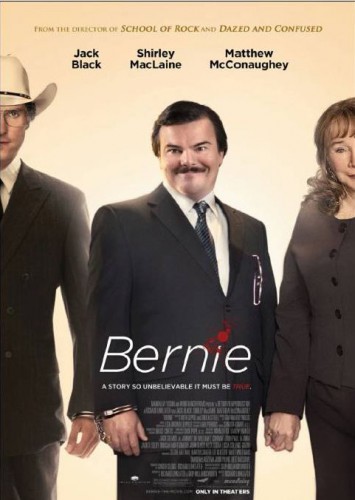
I can honestly say I’ve always been mixed on Jack Black. So it’s safe to say that it wasn’t Jack Black that drew me to “Bernie”. But the movie has several other things going for it that spurred my curiosity. First, “Bernie” was directed and co-written by Richard Linklater, a filmmaker I have recently grown to appreciate especially after seeing “Before Sunrise” and “Before Sunset”. Then there’s the whole “based on a true story” thing about a funeral director in a small southern town. It sounded quirky and unusual yet featured several things that hit pretty close to home. Throw in what looked like a really peculiar looking role for Matthew McConaughey and I knew I needed to check this film out. I’m glad I did.

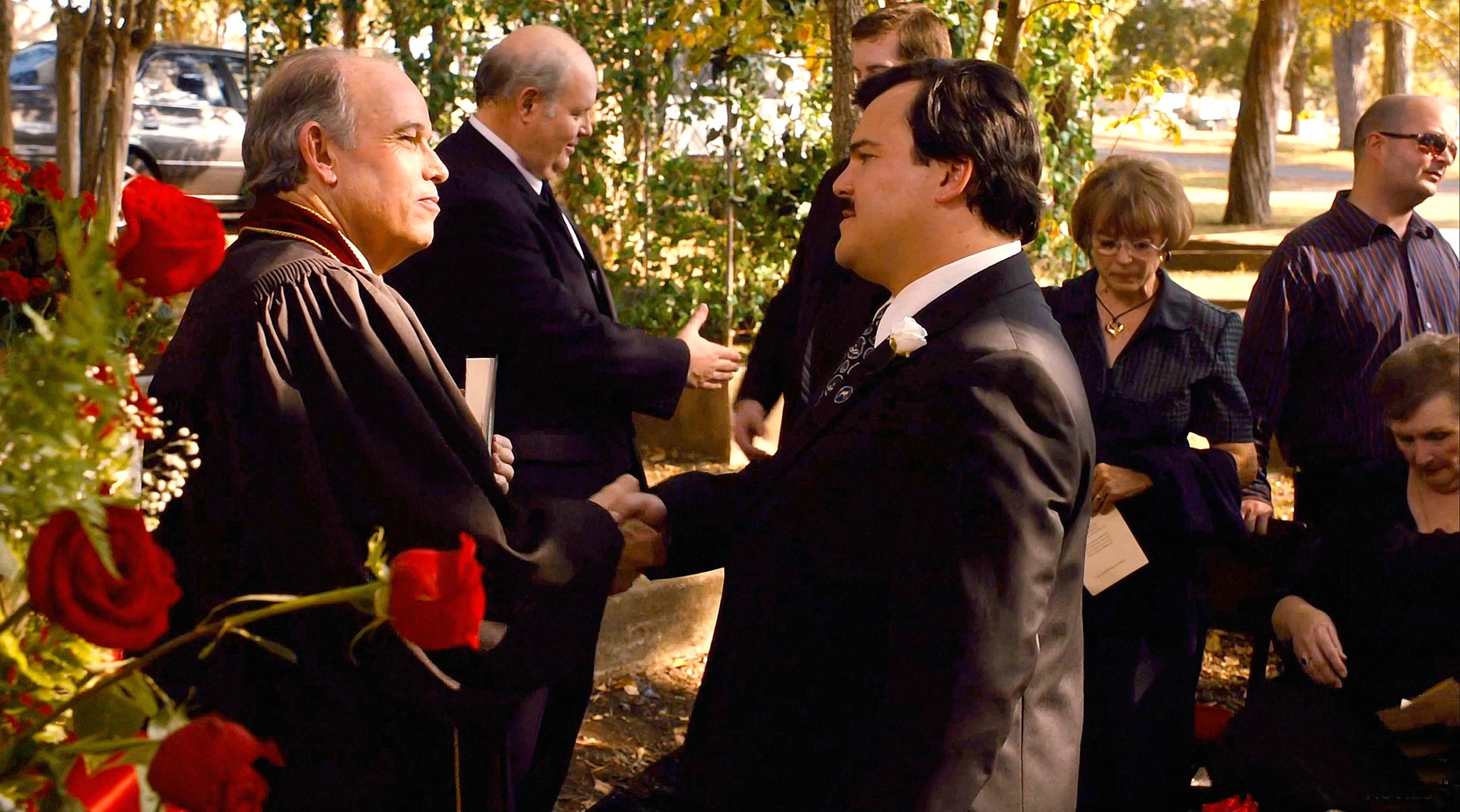
I wasn’t familiar with the real story of Bernie Tiede but I knew it was a highly unusual one. Jack Black plays Bernie, a funeral director in the small town of Carthage, Texas. In the first few scenes we notice that Bernie is, shall I say, a very different individual. Yet despite his many eccentricities, he is adored by the small community. He sings in the local church choir, helps locals with their taxes, coaches little league baseball, and is known for the amazing attention and care he gives grieving families at the local funeral home, particularly the widows. Linklater employs a very effective and often times hilarious method of storytelling. The movie is constructed like a documentary and we are introduced to and learn about Bernie through snippets of interviews with the Carthage locals. Some of the locals are played by lesser known actors but sprinkled in are interviews with real citizens of Carthage who are familiar with the real Bernie and the situation that he found himself in. It’s quickly evident that the locals truly loved him.

Bernie befriends a mean, crusty old widow named Marjorie Nugent (Shirley MacLaine). Marjorie is an extremely wealthy woman but she’s hated by the community and her family. She hits it off with Bernie after he handles her husband’s funeral and the two soon become inseparable. He takes her to dinner, helps her manage her affairs, and takes trips with her all over the world. Even as she grows more abrasive and abusive, Bernie is loyal and supportive. Again, Linklater tells us all of this through interviews with the town folks who aren’t a bit shy about sharing their opinions of Marjorie and of her friendship with Bernie. This is also where we meet Danny Buck Davidson (McConaughey), the area district attorney who some locals feel is more interested in staying in office that doing any real good. McConaughey is fantastic with his cowboy hat hair, oversized glasses, and funky inner mouth prosthetic. He fits perfectly in this zany cast of characters and he steals most of the scenes he’s in.

There is so much that works with this film. It shocks me to be able to say this but Jack Black is really good here. This is a quirky character that fits right into his limited comfort zone. He sells Bernie wonderfully and he leaves the audience questioning how we should understand and respond to his character. The movie also packs a lot of genuinely funny moments. Even when the story takes a more twisted turn it stills manages to sideswipe you with some unexpected hilarious scenes. But while it certainly didn’t ruin the movie, the later shift in the movie’s tone wasn’t seamless. There were a few moments in the film where it felt like Linklater struggled in mixing his humor with the more serious elements of the story. It’s impossible to go any further into detail without getting into spoiler territory but I did find myself questioning what kind of movie Linklater was making a few times in the third act.

But don’t let that small gripe scare you away from this picture. “Bernie” is one of the bigger surprises of the year. It’s a comedy that’s actual funny. It’s intelligent and creative and it doesn’t use the normal modern comedy gimmicks that are so prevalent today. Linklater does a brilliant job of taking a serious true story and wrapping it up in very unique humor and the results are fantastic. Black is really good, McConaughey is great, and the entire assortment of interviewed locals are guaranteed to make you laugh. I had a blast with “Bernie” and it’s a movie that I simply can’t wait to check out again.

VERDICT – 4 STARS

REVIEW: “The Deep Blue Sea”

“The Deep Blue Sea” is a British drama written and directed by Terence Davies and based on a play of the same name by Terence Rattigan. It’s an interesting character-driven story about a struggling woman who’s wedged between a passionless marriage and a passion-fueled romance. It’s not a bold or extravagant picture but it’s a good one mainly due to two incredible performances by its leads.

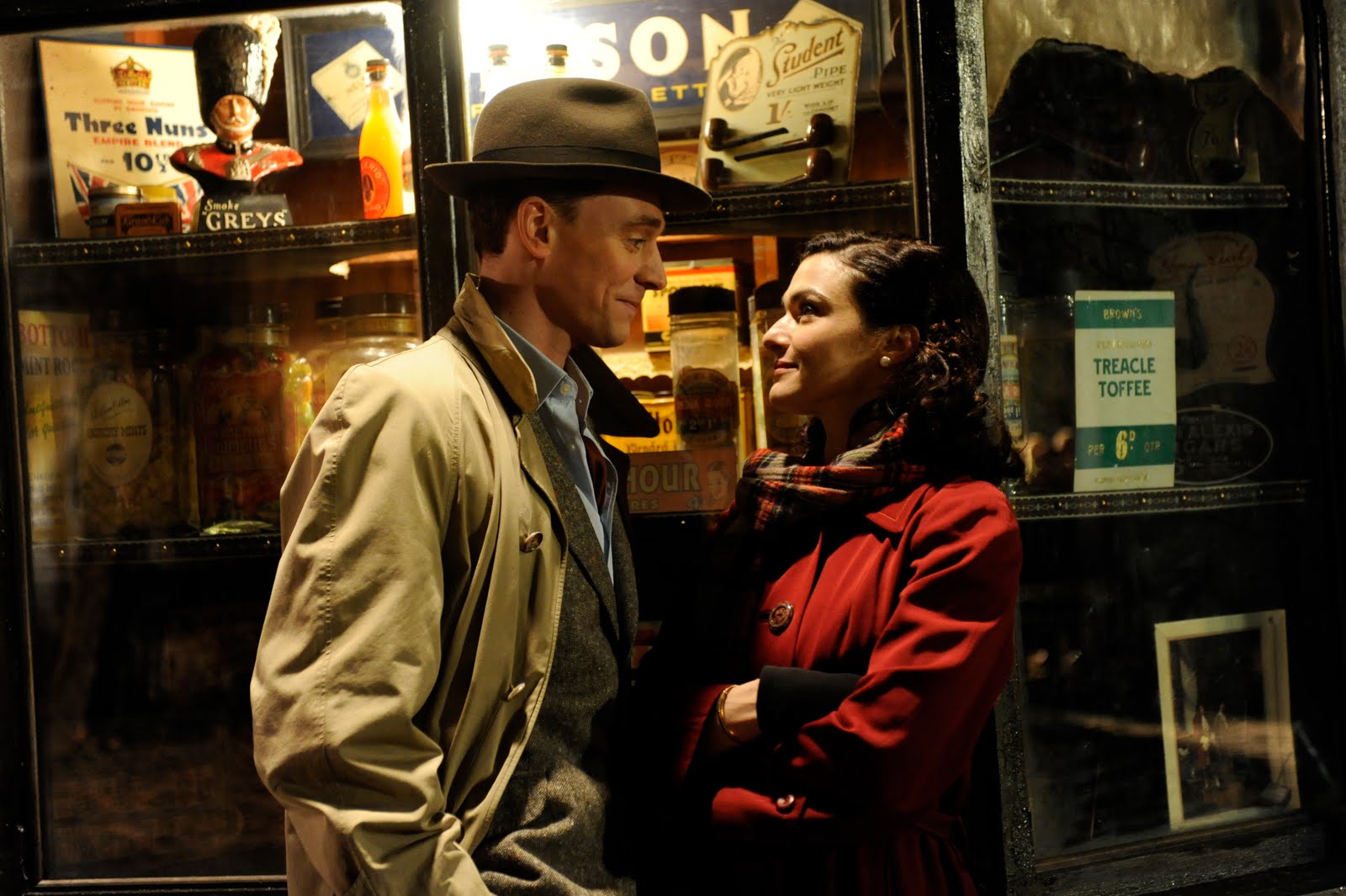
The story takes place sometimes “around 1950”. The movie opens with Hester (Rachel Weisz), a troubled and depressed woman, attempting to take her own life. From there the story unfolds through a series of flashbacks sprinkled throughout. They tell the story of Hester’s lifeless marriage to a devoted but passionless Court Judge (Simon Russell Beale) and her eventual fling with Freddie Page (Tom Hiddleston), a pilot and war hero. Hester is a quiet and reserved woman with a genuine affection for her husband. But there is an emotional disconnect between the two which is most evident during a visit with his domineering mother. In a different flashback we see her meeting and eventually falling for the charismatic Freddie. In an almost puppy-love way, she’s struck by his vivacity and ‘live for the moment’ mentality which leads her to make a costly decision.

I like how the film doesn’t portray infidelity in a light-hearted way. Hester’s choice is costly and most certainly has consequences. I don’t want to give away too much but there are clear ramifications to her actions both physically and emotionally. Rachel Weisz is very good as Hester and she handles the character extremely well. When asked what drew her to the role, Weisz spoke of her attraction to playing someone who had fallen so hopelessly in love and completely humiliated herself in the process. I found Hester to be a frail and sometimes childlike character whose poor choices are rooted more in new emotions and new passions than a true understanding of love.

Tom Hiddleston is fantastic as Freddie. I’ve become a huge Hiddleston fan as he seems to have a natural ability when it comes to acting. Whether he’s portraying a classic literary figure or a comic book supervillain, Hiddleston commands the screen and never seems to struggle with the material he’s given. Here he sells us completely on Freddie’s free-spirited energy. But he shows us another side of the character which causes us to question not only him but his motivations.

“The Deep Blue Sea” moves and feels like a play. The performances drive the movie and the two leads give top-notch work. The sets also capture a compressed but precise 1950’s vibe that is perfectly fitting for a story so ill-advised and taboo. I do think the movie would have better served by a smarter and more fluid use of the flashbacks. There were a few instances where I thought the jumps did more to hinder the storytelling than help it. I also struggled a bit with Beale’s character. While Beale’s performance is solid, I never could wrap my mind around his character. He was sympathetic but yet seemed emotionally inconsistent. These gripes don’t kill the movie by any means, but they do hold it back.

VERDICT – 3.5 STARS

3-5-stars

5 Phenomenal Movie Haircuts (that are so bad, they’re good)

I had a tough time putting this list together. First off you have the iconic haircuts – haircuts that aren’t exactly bad but have an iconic status in cinema. But then you have those that are just so bad that they’re good – those wacky haircuts that defy common sense. But even though these are some pretty goofy hair styles, you just gotta love them. Now considering that goofy is on the scalp of the beholder, I wouldn’t go as far as to call this the definitive list. But there’s no denying that these five movie haircuts, which are so bad that they’re good, are phenomenal.

#5 – Gary Oldman – “Dracula”

Ok, how on earth do you even begin to describe Gary Oldman’s hair in Frances Ford Coppola’s telling of “Dracula”. It’s almost like receding Princess Leia buns turned gray. Oldman has had several movies that have featured truly atrocious haircuts. But there’s something so crazy about his Dracula “do” that I had to include it on this list.

#4 – Jim Carrey – “Ace Venture: Pet Detective”

Jim Carrey’s Ace Ventura haircut is like Ed Grimley’s on steroids. The big looping front come to a point and is completely over-the-top. But as ridiculous as it is, somehow it perfectly fits this nutty character that Carrey came up with.

#3 – Jon Heder – “Napolean Dynamite”

“Napoloen Dynamite” is one of those movies where at least three or four different characters have hairdos that could qualify for this list. Napoleon’s stands out mainly because it hasn’t met a comb in weeks. But again, just like with Ace Ventura, the goofy haircut perfectly fits this goofy character.

#2 – Nicolas Cage – “Raising Arizona”

One of my favorite Coen brothers movies is one of their earliest, “Raising Arizona”. Nicolas Cage’s character H.I. “Hi” McDunnough is as goofy looking as he is dumb and that’s largely due to his crazy, wild hair. I’m not 100% sure how they made it do what it does, but his hair seems to have a life of its own. In a film full of laughs, it says something when some of those great laughs revolve around this awful hairdo!

#1 – Javier Bardem – “No Country for Old Men”

What is it with the Coen brothers and bad hair? In “No Country for Old Men”, Bardem plays one of the most memorable villains in cinema. He’s brutal, scary, and menacing and he pulls it all off with one of the most hideous haircuts I have ever seen. “No Country for Old Men” is one of my personal favorite movies and Anton Chigurh, hair included, is one of my personal favorite villains.

That’s a lot of hair! So who did I miss. Take time and let me know a wonderfully awful movie mop that would have made your list!