REVISITING A CLASSIC: “Citizen Kane” (1941)

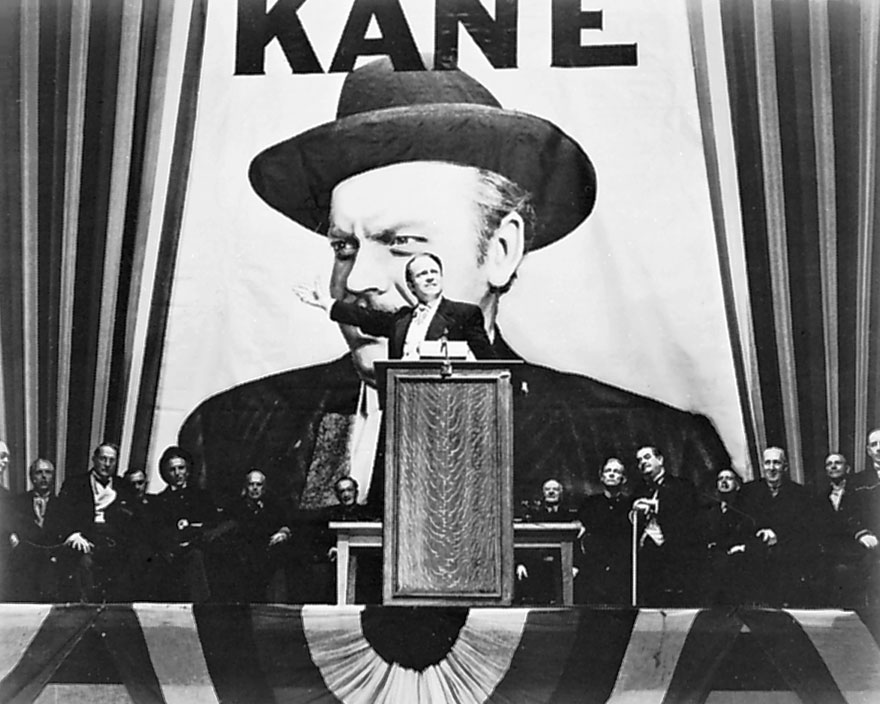
You may have heard by now that Sight & Sound Magazine recently announced the results of their The Greatest Films of All Time poll. If you’re unfamiliar with the poll, it’s a worldwide survey of critics that has been conducted every 10 years dating back to 1952. Since 1962 “Citizen Kane” has been at the top of this pretty prestigious list, at least until this year. Alfred Hitchcock’s “Vertigo” has dethroned “Citizen Kane” which has launched a ton of great discussions on both of these films. Personally, “Vertigo” isn’t the greatest film of all time. In fact, for me it isn’t even the best Hitchcock film. And for my money, even though I like “Vertigo” a great deal, it can’t beat “Citizen Kane”, a movie that is a lesson in quality filmmaking starring, directed, and co-written by Orson Welles.

Last night I had the opportunity to revisit this cinema classic and it’s amazing how it truly seems to get better with each viewing. “Citizen Kane” is a film that has aged like the finest wines and there are so many reasons for it. The more I watch the movie the more I can appreciate the skilled filmmaking and risks taken to bring the movie to life. The film certainly had its share of struggles particularly when trying to find an initial audience. William Randolph Hearst, the American newspaper giant who is the clear inspiration for the movie’s main character, was infuriated by the movie and took huge measures to keep “Citizen Kane” from reaching an audience. Fear of his power kept the film out of many newspapers and out of many theaters. But after all these years, it’s the movie that has come out with the better reputation.

While there has been some controversy over who was the driving force behind the movie’s screenplay, Orson Welles and Herman Mankiewicz are credited with its authorship. It tells the story Charles Foster Kane, an immensely wealthy newspaper mogul, who lies on his deathbed, alone within the closed isolation of his mammoth Florida estate known as Xanadu. We watch as Kane utters his final word “Rosebud” and then dies. This opening event catapults the entire story forward. In fact, the entire narrative is driven by one incredibly clever device – “Rosebud”. Kane’s final word becomes a huge topic of interest especially for investigative reporter Jerry Thompson (William Alland). Thompson is convinced that there is a deeper secret meaning to Kane’s final word and he sets out to uncover it by looking into Kane’s past and interviewing those closest to him.

This points to one of the things that makes this movie so special. There’s no straight-line, uninterrupted narrative. Instead the story is told through well placed flashbacks from the points of view of several different people. Through their eyes we learn about Kane’s impoverished childhood. We learn about his leap of faith into the newspaper business at a young age. We see his political ambitions. But we also see the story of a man whose motivations fester into those of power and self-promotion. We watch as his ego and self-indulgence destroys every nonmaterial thing in his life. He’s the epitome of gaining the whole world but losing all that’s important. It’s a fascinating study of a man who, regardless of his wealth, power, and influence, is unable to overcome the greatest obstacle to true happiness – himself. This all unfolds through the words of Kane’s guardian, ex-wife, business partner, butler, and best friend. Now as someone who isn’t always attracted to the use of flashbacks, I’m really impressed at just how well they work here. Welles is truly laying out a man’s life before us and I was enthralled not only in his story but also with the small question behind it all – just who or what is “Rosebud”?

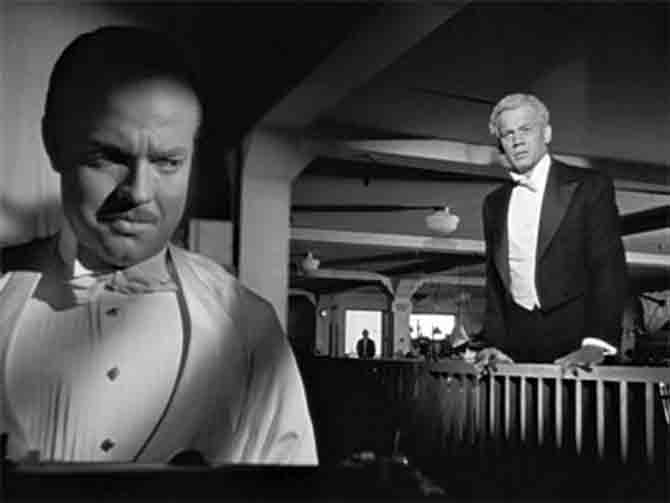
While many love the story and the storytelling behind “Citizen Kane”, it is equally or maybe even better known for its ambitious visual presentation and stylistic techniques. Welles was given tons of liberties from RKO Pictures when it came to making the film and that’s all the more surprising considering that this was his first feature film. He took his creative control and mixed it with a young man’s enthusiasm that resulted in a visual style significantly different from anything else in Hollywood. I can still name numerous carefully framed shots and brilliantly conceived camera tricks. There’s also Welles’ penchant for placing his camera at ground level and shooting up at his characters. This is ever so effective particularly in one extended take featuring a crucial conversation between Kane and his long-time friend Jedediah Leland (played wonderfully by Joseph Cotton). There are several other cool camera techniques and special effects along with some impressive makeup work that still influences a host of modern filmmakers.

I worry that newcomers or even those who haven’t seen “Citizen Kane” in years will approach the film from the “So this is the greatest film of all time?” perspective. That’s a bad way to approach any film especially considering how subjective these lists are anyway. Instead, this movie should be approached as its own creation – enjoyed and measured within those bounds. Welles’ accomplishment with the film cannot be overstated. The direction is brilliant, the screenplay is fantastic, and he gives a thundering performance and all within what was his first feature film. “Citizen Kane” was a critical success at its time but struggled to gain a huge following. But as years have passed, the movie has risen to be appreciated as a monumental film in cinema history. I tend to agree. And while “Citizen Kane” wouldn’t be my personal “greatest movie of all time”, there’s no denying it’s inventiveness, it’s influence, and its overall excellence.

VERDICT – 5 STARS

5 STARSs

5STAR K&M

REVIEW: “BERNIE” (2011)

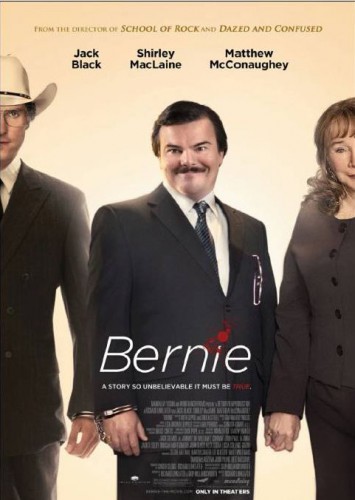
I can honestly say I’ve always been mixed on Jack Black. So it’s safe to say that it wasn’t Jack Black that drew me to “Bernie”. But the movie has several other things going for it that spurred my curiosity. First, “Bernie” was directed and co-written by Richard Linklater, a filmmaker I have recently grown to appreciate especially after seeing “Before Sunrise” and “Before Sunset”. Then there’s the whole “based on a true story” thing about a funeral director in a small southern town. It sounded quirky and unusual yet featured several things that hit pretty close to home. Throw in what looked like a really peculiar looking role for Matthew McConaughey and I knew I needed to check this film out. I’m glad I did.

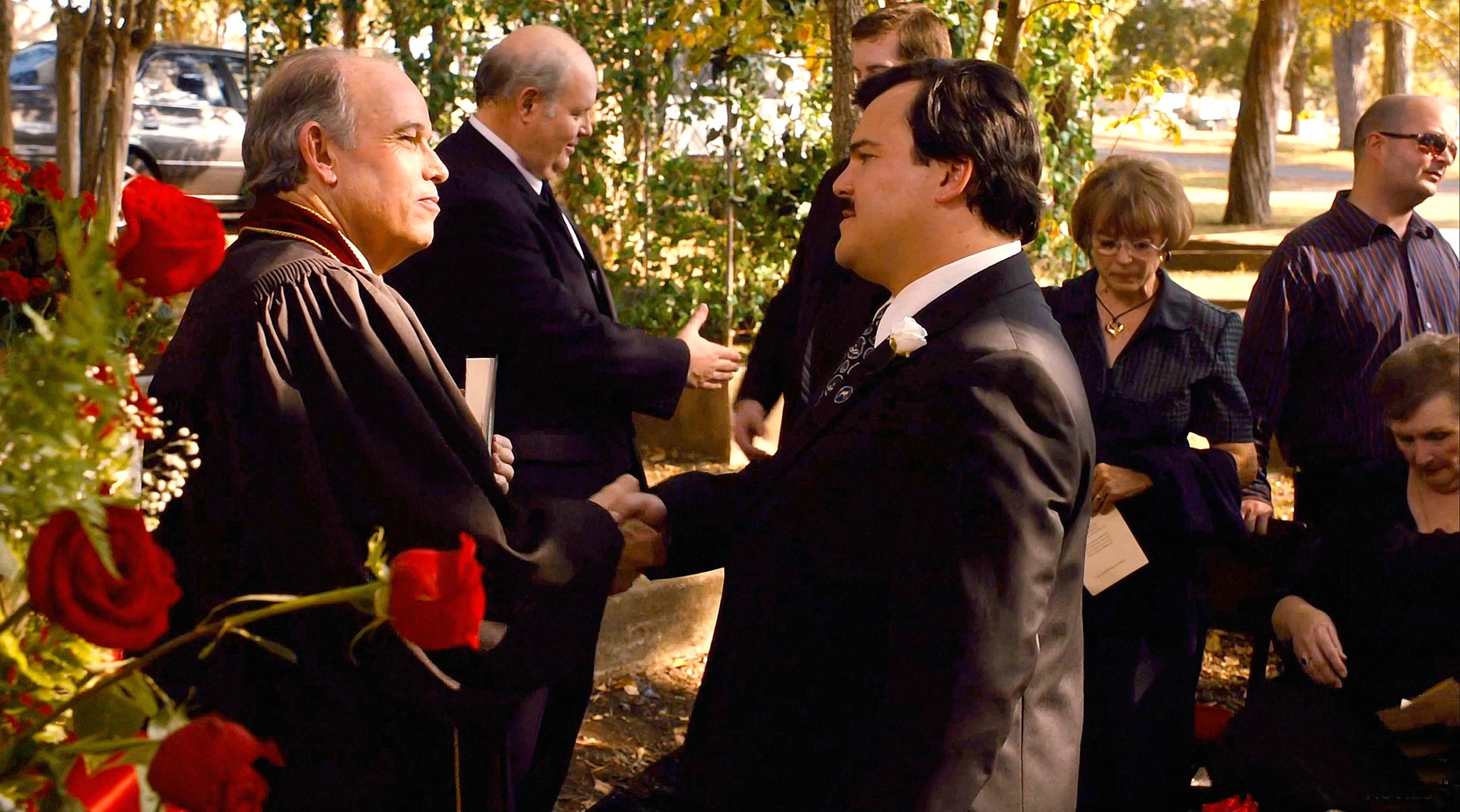
I wasn’t familiar with the real story of Bernie Tiede but I knew it was a highly unusual one. Jack Black plays Bernie, a funeral director in the small town of Carthage, Texas. In the first few scenes we notice that Bernie is, shall I say, a very different individual. Yet despite his many eccentricities, he is adored by the small community. He sings in the local church choir, helps locals with their taxes, coaches little league baseball, and is known for the amazing attention and care he gives grieving families at the local funeral home, particularly the widows. Linklater employs a very effective and often times hilarious method of storytelling. The movie is constructed like a documentary and we are introduced to and learn about Bernie through snippets of interviews with the Carthage locals. Some of the locals are played by lesser known actors but sprinkled in are interviews with real citizens of Carthage who are familiar with the real Bernie and the situation that he found himself in. It’s quickly evident that the locals truly loved him.

Bernie befriends a mean, crusty old widow named Marjorie Nugent (Shirley MacLaine). Marjorie is an extremely wealthy woman but she’s hated by the community and her family. She hits it off with Bernie after he handles her husband’s funeral and the two soon become inseparable. He takes her to dinner, helps her manage her affairs, and takes trips with her all over the world. Even as she grows more abrasive and abusive, Bernie is loyal and supportive. Again, Linklater tells us all of this through interviews with the town folks who aren’t a bit shy about sharing their opinions of Marjorie and of her friendship with Bernie. This is also where we meet Danny Buck Davidson (McConaughey), the area district attorney who some locals feel is more interested in staying in office that doing any real good. McConaughey is fantastic with his cowboy hat hair, oversized glasses, and funky inner mouth prosthetic. He fits perfectly in this zany cast of characters and he steals most of the scenes he’s in.

There is so much that works with this film. It shocks me to be able to say this but Jack Black is really good here. This is a quirky character that fits right into his limited comfort zone. He sells Bernie wonderfully and he leaves the audience questioning how we should understand and respond to his character. The movie also packs a lot of genuinely funny moments. Even when the story takes a more twisted turn it stills manages to sideswipe you with some unexpected hilarious scenes. But while it certainly didn’t ruin the movie, the later shift in the movie’s tone wasn’t seamless. There were a few moments in the film where it felt like Linklater struggled in mixing his humor with the more serious elements of the story. It’s impossible to go any further into detail without getting into spoiler territory but I did find myself questioning what kind of movie Linklater was making a few times in the third act.

But don’t let that small gripe scare you away from this picture. “Bernie” is one of the bigger surprises of the year. It’s a comedy that’s actual funny. It’s intelligent and creative and it doesn’t use the normal modern comedy gimmicks that are so prevalent today. Linklater does a brilliant job of taking a serious true story and wrapping it up in very unique humor and the results are fantastic. Black is really good, McConaughey is great, and the entire assortment of interviewed locals are guaranteed to make you laugh. I had a blast with “Bernie” and it’s a movie that I simply can’t wait to check out again.

VERDICT – 4 STARS

REVIEW: “The Deep Blue Sea”

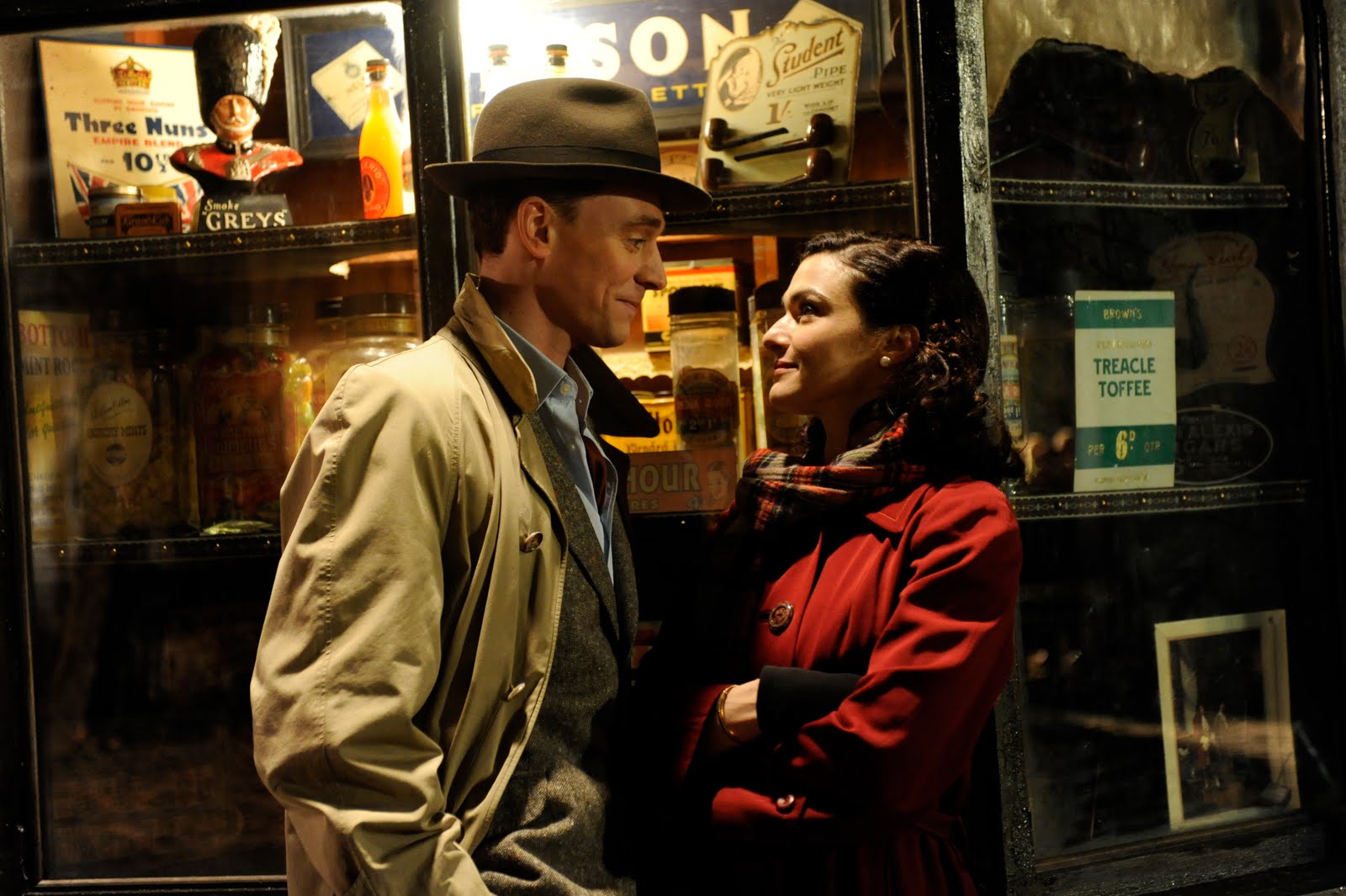
“The Deep Blue Sea” is a British drama written and directed by Terence Davies and based on a play of the same name by Terence Rattigan. It’s an interesting character-driven story about a struggling woman who’s wedged between a passionless marriage and a passion-fueled romance. It’s not a bold or extravagant picture but it’s a good one mainly due to two incredible performances by its leads.

The story takes place sometimes “around 1950”. The movie opens with Hester (Rachel Weisz), a troubled and depressed woman, attempting to take her own life. From there the story unfolds through a series of flashbacks sprinkled throughout. They tell the story of Hester’s lifeless marriage to a devoted but passionless Court Judge (Simon Russell Beale) and her eventual fling with Freddie Page (Tom Hiddleston), a pilot and war hero. Hester is a quiet and reserved woman with a genuine affection for her husband. But there is an emotional disconnect between the two which is most evident during a visit with his domineering mother. In a different flashback we see her meeting and eventually falling for the charismatic Freddie. In an almost puppy-love way, she’s struck by his vivacity and ‘live for the moment’ mentality which leads her to make a costly decision.

I like how the film doesn’t portray infidelity in a light-hearted way. Hester’s choice is costly and most certainly has consequences. I don’t want to give away too much but there are clear ramifications to her actions both physically and emotionally. Rachel Weisz is very good as Hester and she handles the character extremely well. When asked what drew her to the role, Weisz spoke of her attraction to playing someone who had fallen so hopelessly in love and completely humiliated herself in the process. I found Hester to be a frail and sometimes childlike character whose poor choices are rooted more in new emotions and new passions than a true understanding of love.

Tom Hiddleston is fantastic as Freddie. I’ve become a huge Hiddleston fan as he seems to have a natural ability when it comes to acting. Whether he’s portraying a classic literary figure or a comic book supervillain, Hiddleston commands the screen and never seems to struggle with the material he’s given. Here he sells us completely on Freddie’s free-spirited energy. But he shows us another side of the character which causes us to question not only him but his motivations.

“The Deep Blue Sea” moves and feels like a play. The performances drive the movie and the two leads give top-notch work. The sets also capture a compressed but precise 1950’s vibe that is perfectly fitting for a story so ill-advised and taboo. I do think the movie would have better served by a smarter and more fluid use of the flashbacks. There were a few instances where I thought the jumps did more to hinder the storytelling than help it. I also struggled a bit with Beale’s character. While Beale’s performance is solid, I never could wrap my mind around his character. He was sympathetic but yet seemed emotionally inconsistent. These gripes don’t kill the movie by any means, but they do hold it back.

VERDICT – 3.5 STARS

3-5-stars

5 Phenomenal Movie Haircuts (that are so bad, they’re good)

I had a tough time putting this list together. First off you have the iconic haircuts – haircuts that aren’t exactly bad but have an iconic status in cinema. But then you have those that are just so bad that they’re good – those wacky haircuts that defy common sense. But even though these are some pretty goofy hair styles, you just gotta love them. Now considering that goofy is on the scalp of the beholder, I wouldn’t go as far as to call this the definitive list. But there’s no denying that these five movie haircuts, which are so bad that they’re good, are phenomenal.

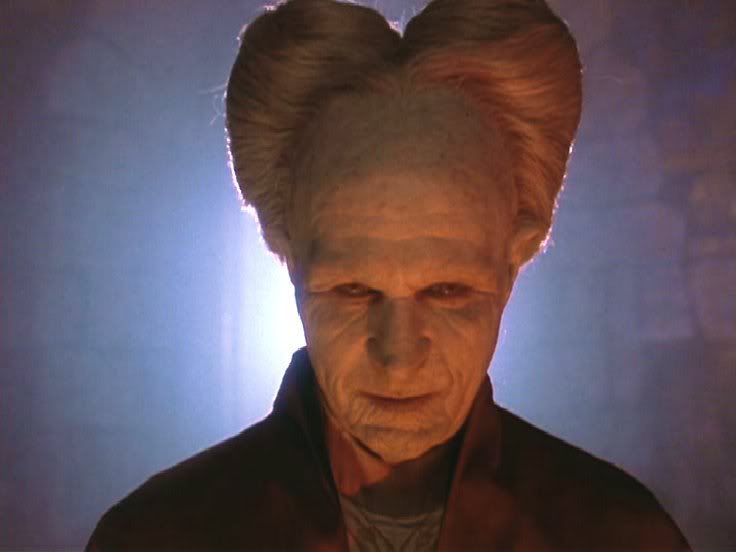
#5 – Gary Oldman – “Dracula”

Ok, how on earth do you even begin to describe Gary Oldman’s hair in Frances Ford Coppola’s telling of “Dracula”. It’s almost like receding Princess Leia buns turned gray. Oldman has had several movies that have featured truly atrocious haircuts. But there’s something so crazy about his Dracula “do” that I had to include it on this list.

#4 – Jim Carrey – “Ace Venture: Pet Detective”

Jim Carrey’s Ace Ventura haircut is like Ed Grimley’s on steroids. The big looping front come to a point and is completely over-the-top. But as ridiculous as it is, somehow it perfectly fits this nutty character that Carrey came up with.

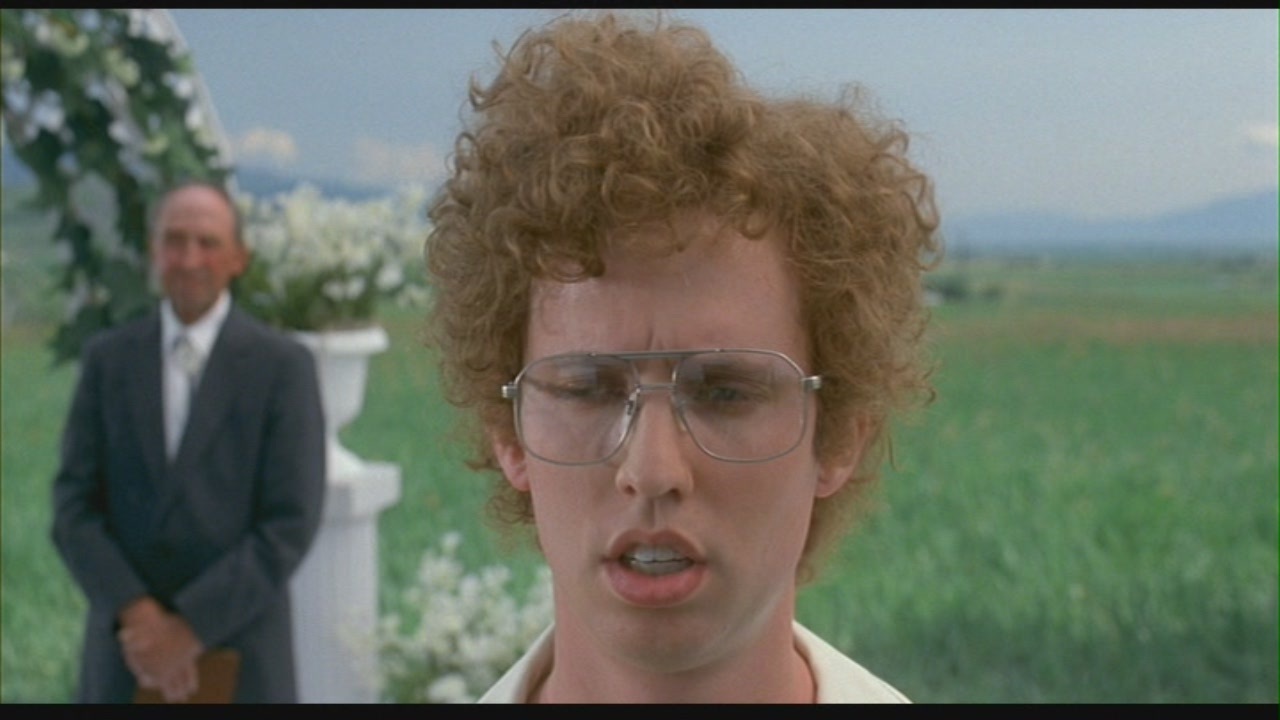
#3 – Jon Heder – “Napolean Dynamite”

“Napoloen Dynamite” is one of those movies where at least three or four different characters have hairdos that could qualify for this list. Napoleon’s stands out mainly because it hasn’t met a comb in weeks. But again, just like with Ace Ventura, the goofy haircut perfectly fits this goofy character.

#2 – Nicolas Cage – “Raising Arizona”

One of my favorite Coen brothers movies is one of their earliest, “Raising Arizona”. Nicolas Cage’s character H.I. “Hi” McDunnough is as goofy looking as he is dumb and that’s largely due to his crazy, wild hair. I’m not 100% sure how they made it do what it does, but his hair seems to have a life of its own. In a film full of laughs, it says something when some of those great laughs revolve around this awful hairdo!

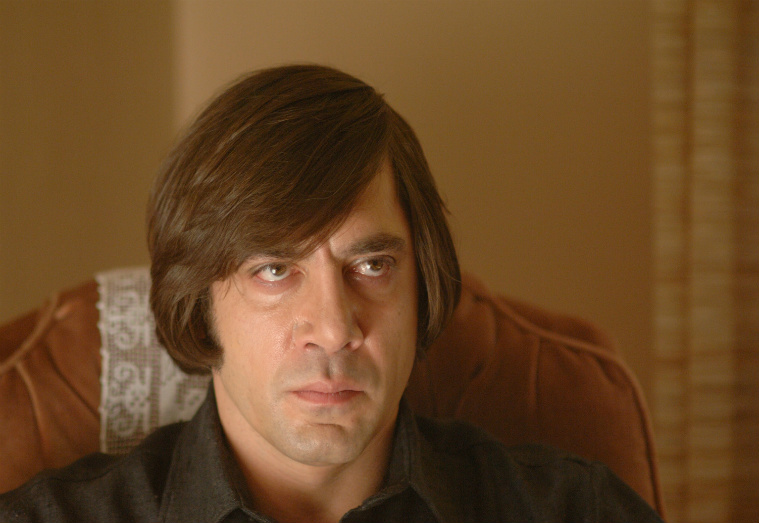
#1 – Javier Bardem – “No Country for Old Men”

What is it with the Coen brothers and bad hair? In “No Country for Old Men”, Bardem plays one of the most memorable villains in cinema. He’s brutal, scary, and menacing and he pulls it all off with one of the most hideous haircuts I have ever seen. “No Country for Old Men” is one of my personal favorite movies and Anton Chigurh, hair included, is one of my personal favorite villains.

That’s a lot of hair! So who did I miss. Take time and let me know a wonderfully awful movie mop that would have made your list!

“THE EXPENDABLES 2” – 4 STARS

Ok, let’s get one thing out of the way first. Anyone who is going into “The Expendables 2” expecting a deep, penetrating narrative and Oscar caliber performances are clearly going for all the wrong reasons. This sequel to Sylvester Stallone’s 2010 film is bigger, louder, and for my money better than the first picture and it’s an unashamed 80’s action movie homage that had me hooked from the first moment. Is this an exercise in challenging and complex filmmaking? Far from it. But it is an honest and unapologetic movie that knows exactly what target it’s aiming for and hits it dead center. Does that mean it’s a perfect movie? Most certainly not. But it’s a ton of fun for those knowing what to expect and I defy fans of these “Who’s Who” of action movie heroes to walk out without a smile on your face.

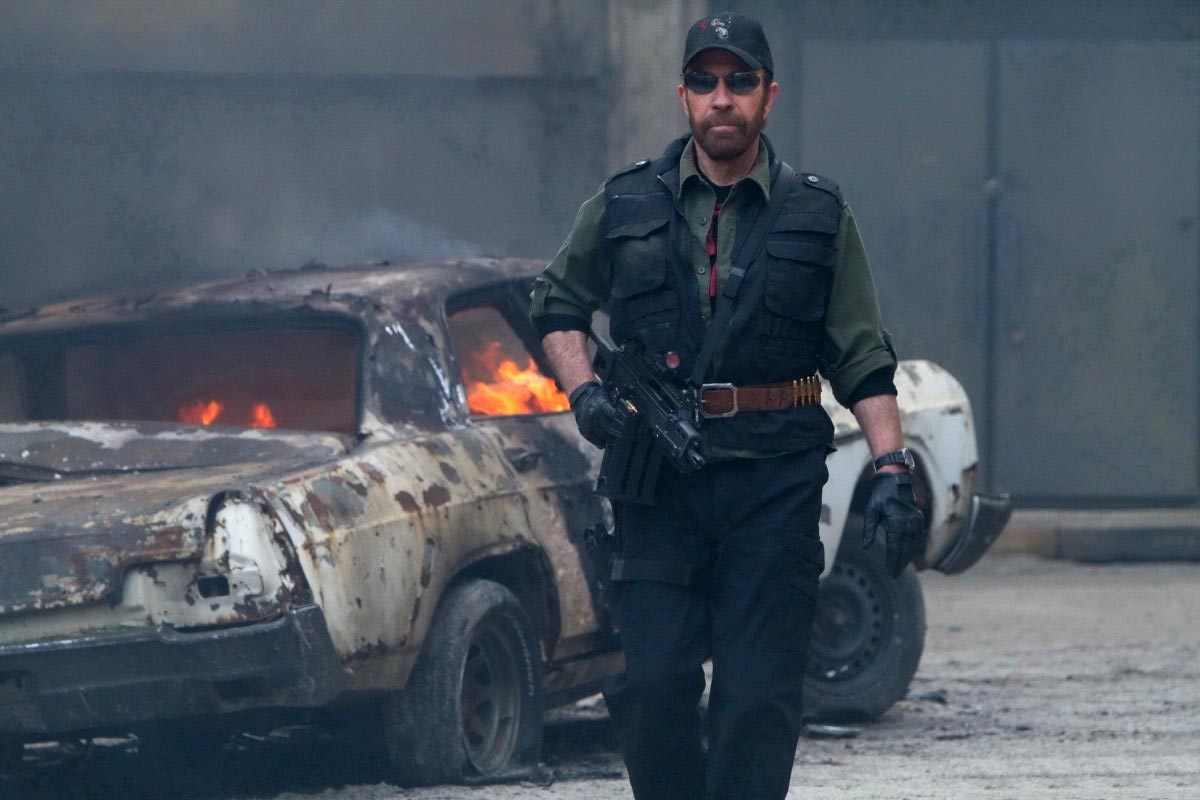
Sly Stallone co-wrote and stars in “The Expendables 2” but this time he passes the directing duties to Simon West. This contributes to what I think is one of the biggest differences between this and the first film. The first movie had its share of salutes to the classic action pictures but overall its tone was much more serious. The sequel is much lighter with lots of playful camaraderie, intentional cheesy one-liners, and a self-deprecating humor that’s woven from start to finish. What’s really great is that all of this works so well. The movie and it’s actors constantly poke fun at themselves and at many of the things that were commonplace during the 80’s action craze. The old guys constantly makes fun of their age. They spoof each other’s famous one-liners. Even Chuck Norris tells a Chuck Norris joke. And their names are a hoot. Aside from Stallone’s rather tame Barney Ross, you have Lee Christmas (Jason Statham), Booker (Norris), Trench (Arnold Schwarzenegger), Mr. Church (Bruce Willis), Gunner Jensen (Dolph Lundgren), Hale Caesar (Terry Crews), Toll Road (Randy Couture), and Yin Yang (Jet Li). While it sounds like a G.I. Joe roster, it classic 80’s cheese. But could any of the names be better than that of the movie’s antagonist, Jean Vilain (Jean-Claude Van Damme)?

But while there is a lot of humor throughout the film, this is a straight-forward, in your face, action movie filled with bullets, blades, and blood. The movie starts out with a bang – a really, really loud bang. Director Simon West lets the audience know right away what they’re in store for. The team is reintroduced via a thundering rescue mission soaked with gunfire, huge explosions, and machismo. Afterwards, Barney is approached by the shady Mr. Church to carry out a simple retrieval mission. But things go terribly wrong when Barney and company cross paths with Jean Vilain. After Vilain gets away, the team sets out on a revenge-fueled, save the world mission that doesn’t pull a single punch. They shoot, punch, and knife their way through hordes of baddies on their way to the big final showdown that we know from the start is coming.

The movie takes you on a ride from one extravagant action set piece to another so there’s plenty of opportunities for the huge cast to get their moment in the sun. They all kick a lot of butt each with their own unique style of buttkicking. And while the body count is huge and there is plenty of blood, West keeps the extremely graphic violence seen in the first film mostly in check. But action movie junkies get more than their money’s worth. The action sequences are furious and intense and while they do dabble in the absurd, it never goes off the rails enough to lose the audience. In fact, it’s those few moments of absurdity that were for me the most nostalgic. The action scenes are cleverly constructed and edited and they’re clearly the film’s bread and butter.

I’ve mentioned a couple of times already that the cast is having a lot of fun. Everyone fits in nicely and the back and forth banter and old school “I got your back” virility never grows old. The characters each have their own personalities that we get to enjoy despite the almost nonexistent character development. Stallone and Statham are best buddies. Lundgren straddles the line between heroic and insane. Crews and Couture are the muscles of the bunch. Then you have Schwarzenegger, Willis, and Norris who are basically…well…Schwarzenegger, Willis, and Norris. But I don’t think I enjoyed anyone more than Van Damme as the cold-blooded villain. He’s clearly having a blast and he nails his character. I loved every scene he had and yes, he can still do the flying spin kick.

It’s been a lot of fun reading critics guiltily try to explain why they enjoyed “The Expendables 2”. Me, on the other hand, I’m not ashamed to give a movie praise that entertained and excited me. And look, I could easily spend time harping on the plot points that didn’t work, it’s extreme predictability, and some of the sub par performances. But instead, I recognize exactly what “The Expendables 2” intends to be. It clearly won’t be a movie for everyone. Those with no connection to or interest in the 80’s action genre or the actors probably won’t connect or be interested in this picture. But I get back to one key thing – I had a lot of FUN. I grew up on these guys and this movie took me back. I laughed, I was wow’d, but most of all I left the theater knowing I had gotten what I came for. Maybe that’s why the flaws are so easy for me to overlook.

Visiting the Locations of “Midnight in Paris”

It was only a little over a month ago that my wife and I made our first visit to Paris, France. Obviously this amazing city has tons of history and culture to offer and its sheer beauty, natural vibrancy, and great food make it a destination that shouldn’t be missed. But as a movie fan, and in this case a huge fan of Woody Allen’s “Midnight in Paris”, I saw our visit as an opportunity to see some of the locations he chose for his film (as well as several other Paris movies). We wandered all over the city from Montmartre to the Latin Quarter, from the upscale 7th arrondissement to Les Marais, and along the way I ran into several of Allen’s spots. So I thought it would be cool to share them here, not just as another way to drool over Paris (something I could easily do), but as a chance to share the great experience I had as a movie fan.

MUSEE RODIN

Early in the film we get our first real glimpse into Paul’s true pseudo-intellectual self absorption as they visit The Rodin Museum. As the four are admiring Rodin’s popular sculpture “The Thinker”, Paul flexes his faux knowledge of Rodin until he is corrected by the guide as well as Gil. Paul will have none of it and goes as far as to argue with the guide. Gil later returns to ask the guide for a favor.

I loved our visit to Musee Rodin. The inside collection was fabulous but for me the true treasures were in the beautiful gardens and wonderfully placed sculptures none better than “The Thinker”. While much smaller in scale than the Louvre or the Orsay, the Rodin Museum still managed to be a favorite spot of mine in all of Paris.

PLACE DAUPHINE

In one of the most romantic scenes in the movie, Gil and Adriana take a nighttime stroll and end up on the terrace at Restaurant Paul’s in Place Dauphine. It’s here that Gil gives her the earrings and then pours his heart out to her before a carriage comes to transport them back even further in time.

The cool thing is that Restaurant Paul isn’t a fictional place. It sits right in the cozy Place Dauphine. Unfortunately due to the time of day the restaurant was closed but we did get a chance to take pictures and admire the cool setting for what was one of my favorite scenes in the film.

SHAKESPEARE AND COMPANY

There’s a brief scene in “Midnight in Paris” that shows Gil walking out of Shakespeare and Company. It’s certainly not a pivotal scene but it shows Gil on one of his strolls admiring the city that he truly loves.

I loved Shakespeare and Company! We stumbled on it after walking around the Latin Quarter. There is such a great feel of history as you approach the cool English bookstore. The narrow aisles inside house an amazing assortment of titles and going upstairs takes you right back to the days of Hemingway, Joyce, and Sylvia Beach. I bought a copy of “The Great Gatsby” and got my Shakespeare and Company stamp on the inside. I left one happy traveler.

QUAI DE BOURBON

After Gil is picked up by the old-time classic car, it takes him back in time to a  lively party on Quai de Bourbon. It’s at this party that Gil notices Cole Porter singing and playing the piano. It’s here that he also meets Zelda and F. Scott Fitzgerald. In the film we see the street as the car drives up and this was Gil’s first taste of the Roaring Twenties.

Quai de Bourbon winds around the tip of Ile Saint-Louis. We crossed over from the Notre Dame cathedral and came across the street by mistake. In fact at the time I didn’t remember the name but I most certainly recognized it from the film. It was a great moment of discovery and I couldn’t help but reflect back on the film as we walked down the street.

QUAI DES ORFEVRES

Quai des Orfevres appears in the movie on two different occasions. One of the scenes has Gil walking along the Seine clearing his mind and soaking up the city. Later in the movie it’s here that Gil and Adriana comes across a distraught Zelda threatening to jump into the Seine.

We came across this lovely location on a number of occasions. It was a gorgeous cobblestone walk along the river lined with trees and featuring some beautiful views of Paris. When you see it, it’s so easy to see why Woody Allen chose to include this particular location in his film.

SQUARE JEAN XXII

After buying an old book written by Adriana at a riverside book seller, Gil convinces the guide from the Rodin Museum the translate it for him. The two sit on a bench at Square Jean XXIII with Notre Dame standing tall in the background. It’s here that Gil finds out that there is a true connection between him and Adriana.

After visiting Notre Dame we spent a little time in the lovely Square Saint Jean. It’s here that you get the best views of Notre Dame’s buttresses and really highlights the Gothic architecture. The park is lined with benches, trees, and play areas for children. They also have bathrooms that you have to pay to use! No thanks.

PONT ALEXANDRE III

While it also appears in Woody Allen’s opening montage, the bridge known as Pont Alexandre III is also in the final scene of the film. Gil has broken up with Inez and is wandering around the city when he bumps into Gabrielle again on Pont Alexandre III. It’s here he tells her he’s staying and Paris. He offers to walk her home just as the rain starts to fall. It’s a wonderful ending.

After leaving Les Invalides we made our way to Pont Alexandre III. The beautiful ornate bridge was a sight. Tourists were snapping photos and brides were having wedding pictures made. We walked under it and over it admiring the River Seine and the wonderful architecture of the bridge itself.

There are so many wonderful locations in the city of Paris and Woody Allen takes advantage of so many. We visited several other places that you can see in the movie and missed out on some as well. Looks like we already have our excuse to head back to what I believe may be the world’s greatest city.