REVIEW: “Blue Caprice”

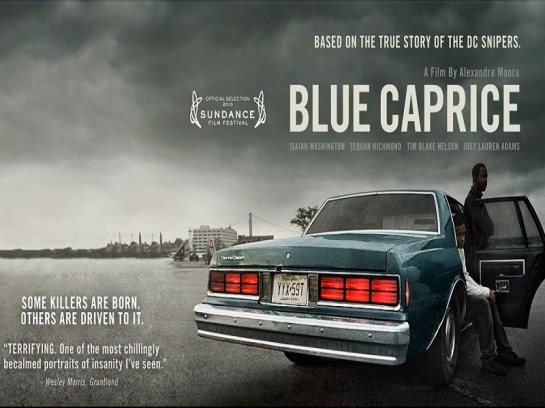
BLUE CAPRICE POSTER

If you remember the Beltway sniper attacks in October of 2002 you remember the terror that it brought to the Virginia, Maryland, and Washington D.C. areas. The sheer random nature of the killings made them all the more unsettling. “Blue Caprice” is the directorial debut of Alexandre Moors and it gets its name from the 1990 Chevrolet Caprice that killers John Allen Mohammed and John Lee Malvo used throughout their killing spree. It’s an impressive debut for Moors as he veers away from so many of the usual trappings that we sometimes get with pictures like this.

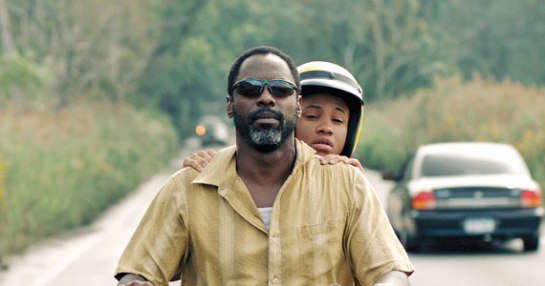
“Blue Caprice” puts its focus on the relationship between Mohammed and Malvo. It takes a few odd liberties with their stories, but it also effectively gets into their heads and tells things from their twisted points of view. It shows them first meeting in Antigua. Malvo is shown to be a lonely boy. Left alone by his mother, he is taken in by Mohammed who is first perceived to be a loving father of three. But we get hints that he is not what he seems. The film skips ahead to Mohammed and Malvo arriving in the Tacoma, Washington area. It’s here that the film peels back the layers of Mohammed’s insanity and Malvo’s emotionless violence.
Blue CAPRICE1

Moors does so much right with this film. It’s raw filmmaking which perfectly serves the story and the perspectives. It’s also undeniably atmospheric and the film maintains a cloud of chilling discomfort as we witness a slow mental collapse. Mohammed and Malvo are men fueled by hate and seeking to avenge their self-viewed victim status on the world around them. The entire film builds upon these two damaged psyches and the suspense burns hotter as we know exactly where their anger will end up taking them.

Another huge reason the film works so well are the two lead performances. Isaiah Washington is nothing short of brilliant in his depiction of Mohammed. He never goes too far or pushes the boundaries. He’s always in perfect sync with the film’s deliberate pace and steady tone. It’s a great performance. I also really liked Tequan Richmond as Malvo. It’s a more understated performance and it could be argued that he isn’t asked to do a lot. But Richmond tells so much of his character’s story in his silent moments. It also helps that he works extremely well with Washington.

“Blue Caprice” is a bit of a slow burn and that may turn off some people. Personally I think that works in the film’s favor. There are a couple of moments where I questioned the movie’s intention and I wanted more from the ending, but ultimately “Blue Caprice” succeeds because of its great direction, two strong central performances, and an atmosphere and tone that does the story justice. It grabbed me early on and never let me go.

VERDICT – 4 STARS

The Public Movie Defender – “Clash of the Titans” (2010)

MOVIE DEFENDER

The idea behind The Public Movie Defender is to take up the cause of a particular movie that I believe is better than the majority of reviews it has received. These are movies which I feel are worth either a second look or at least a more open examination considering the predominantly negative opinions of them. The films chosen are ones that I like so therefore I’m taking their case and defending them before the court of negative opinion. Let the trial begin…

DEFENDANT #3 – “Clash of the Titans” (2010)

CLASH POSTERWhen I first came up with the idea for this fun little thing called The Public Movie Defender there were several movies that immediately came to mind for inclusion. Some are personal favorites that I am deeply passionate about and others are simply movies that I feel are good yet that get pounded a bit unfairly. Some aren’t that difficult to defend while others are a REALLY hard sell. 2010’s remake of “Clash of the Titans” is one of those hard sells. And while I wouldn’t categorize it as a personal favorite, I do think it’s a good movie that doesn’t deserve the level of disdain it has received.

“Clash of the Titans” had its work cut out for it. It’s a remake of a cult classic from 1981 that featured a wonderful fantasy adventure as well as the final work of stop-motion special effects master Ray Harryhausen. This time advanced makeup and a ton of CGI would serve to bring the world to life and that in itself was quite the task. While my deep affection for Harryhausen’s brilliance trumps the new computer effects, this “Clash of the Titans” features some fantastic effects that easily overshadows the few visual hiccups that we get.

And then there’s the story. There were two different approaches that the remake could have taken. The film could have taken a grittier and more serious look at the material or it could try and capture many of the nostalgic elements of the original. By that I mean the over-the-top language, the massive cheese, the classic fantasy movie plot dynamics. The filmmakers made a deliberate choice to modernize the story a bit but also tip their hat and incorporate a lot of these late 1970’s and 1980’s approaches to fantasy storytelling.

CLash 1

I think this is what alienated some people. I think this clashed with people’s familiarity with modern filmmaking and current cinematic storytelling that we get today. Personally I ate it up. The stilted and uber cheesy dialogue along with several old school plot mechanics brought back memories of the “Sinbad” films, “Ice Pirates”, “Conan”, and “Kull”. These are films that I grew up watching and I clearly see how the movie uses and embraces them. The great actors Liam Neeson and Ralph Fiennes ham it up as Zeus and Hades. Are they cheesy? Yes, more so than a pizza. But they are supposed to be. I completely understand if that doesn’t work for some people, but I don’t see it as a deep flaw in the movie itself. I responded to it with a nostalgic smile and appreciation.

Now it’s not like everything in the movie imitates the original. A tightly shorn Sam Worthington replaces a mop headed Harry Hamlin as Perseus. Some have had issue with Worthington’s character and performance. Not me. I like this grittier and more solemn turn. Considering all that his character faces I can understand him being a bit angry and coarse. I think Worthington brings a toughness and physicality to the role that I welcomed. Add to that an interesting and fun supporting cast of traditional survival-fantasy characters (again a tip of the hat to those old-school flicks). None are better than the great Mads Mikkelsen as the gruff and tough Draco, captain of the King’s Guard.

Clash of the Titans

The movie features the classic fantasy tale. A quest is in place which takes Perseus and crew on a ‘who will survive’ adventure. Along the way they face threats such as witches, Medusa, and of course giant scorpions. And what a scene it is when the giant scorpions appear. Incredible visuals and a beautifully filmed sequence. And then there’s the Kraken. There’s perhaps nothing in this film ridiculed more than Liam Neeson’s command to “Release the Kraken”. And while I wouldn’t call it the equivalent of a great thespian’s oration, it’s not that bad of a line. Sure it’s absolute cheese, but the mockery was really fueled by the the line’s use in the trailers and TV spots. The Kraken itself looks cool and Neeson’s over-the-top unleashing fits in perfectly.

I believe that your opinion of this film will be dictated by expectations and preferences. It’s worth recognizing what the filmmakers are doing and the type of movie they’re making. I think they set a cool nostalgic target and hit it dead center. Now to be clear, I’m not saying this is a perfect film. But I really like what they did. It took me right back to those movies that I would lay in the floor and watch on Saturday afternoons. That made this a fun and entertaining experience and when considering the film in that light I see it as a success. The sequel was a massive disappointment, but for my money “Clash of the Titans” was a blast.

VERDICT: “CLASH OF THE TITANS” – 4 STARS

REVIEW: “The Raid 2”

Raid poster

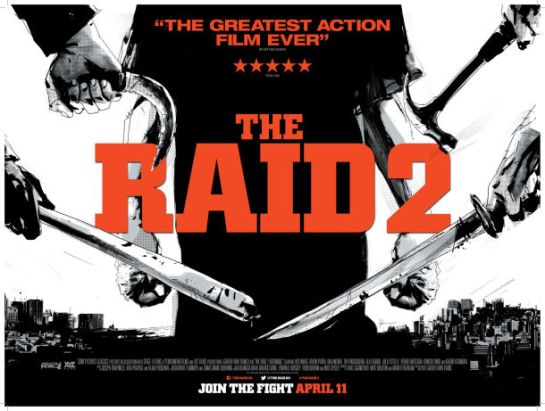
I’m not sure if anyone expected “The Raid: Redemption” to be such a worldwide success, but that’s exactly what happened with the 2011 Indonesian martial arts picture from writer and director Gareth Edwards. Now we get “The Raid 2”, a sequel armed with a bigger budget and much more ambition. This first film was built around minimal story but a very interesting premise. This film greatly expands the story while featuring the same entertaining, high-octane, and sometimes brutal action that energized its predecessor.

“The Raid 2” moves beyond the closed confines of a tenement and quickly develops itself as something bigger. SWAT Team member Rama (Iko Uwais) returns, and this time he finds himself in a web of two rival mob gangs and corrupt police officers. After his brother is killed by one of the gangs, Rama is persuaded to join a secret task force set on infiltrating the gangs and exposing the crooked cops. He befriends the ambitious but overzealous son of one the mob bosses which gives him an inside track. But as you may guess, things aren’t nearly as easy as Rama would like.

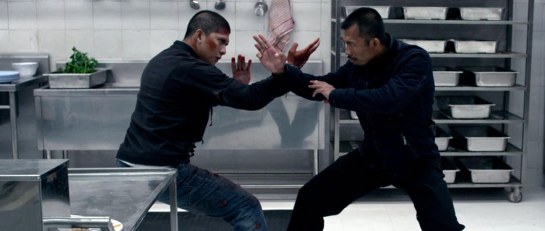
“The Raid 2” pulls from numerous classic crime films and mob movies. You can’t help but notice it throughout the entire story. If you’re familiar with some of these plot points you’ll know exactly how things are going to play out. While that did take away any sense of curiosity or surprise for me, Edwards still handles it very well and it’s the injections of action (a very unique style of action) that very much separates this film from the gangster movies it otherwise emulates. There are plenty of wickedly choreographed martial arts sequences, but there are also some insanely good shootouts and one particular car chase sequence that blew my mind.

RAID 2

That’s really what “The Raid 2” is all about. It’s a full blown action picture and that is where it makes its money. And let me just say that some of it isn’t for the faint of heart. Blood splashes, arteries are severed, limbs are broken. After all this is the movie that gives us characters simply known as Hammer Girl and Baseball Bat Man. Now obviously she didn’t get her name because of her carpentry skills and he didn’t get his because of his high batting average. Both characters are outrageous but they are also good examples of how much fun the movie is.

“The Raid 2” is a film that will definitely be appreciated by fans of the first movie. It remembers what made its predecessor successful and it builds upon it. Surprisingly there is a lot more story this time around which isn’t necessarily original but it is entertaining. The acting is adequate, but no one is looking at this film for Oscar-winning performances. Most people will be coming to it for action and they will get plenty of it. And it’s no joke either. It’s exhilarating, violent, and jaw-dropping and it will unquestionably satisfy the thirst of any true action movie fan.

VERDICT – 3.5 STARS

REVIEW: “The Immigrant”

IMMIGRANT POSTER

Whenever the topic of greatest working actress pops up Meryl Streep so often finds her name at the top of the list. I do belief Streep can be really good, but I believe a strong case could be made for Marion Cotillard. She is a sensational actress who has proven herself with every role she has tackled. She does it again in James Gray’s new film “The Immigrant”. This period drama was a very personal project for Gray. In an interview with Variety he said “It’s 80% based on the recollections from my grandparents, who came to the United States in 1923.” We see this personal connection running throughout the entire film.

The story starts in 1921 as Ewa (Cotillard) arrives at Ellis Island with her sister Magda (Angela Sarafyan). The two have left their home country of Poland, which has been ravaged by World War I, in hopes of starting new lives. But during the processing, Magda is quarantined for a suspected lung disease and Ewa is set to be deported due to some questionable immorality that took place on the boat to America. But she catches the eye of a man named Bruno (Joaquin Phoenix) who uses his money and influence with a particular guard to free Ewa and save her from deportation.

IMMIGRANT1

With no place to go, Ewa accepts Bruno’s offer to work for him in hopes that she can earn enough money to get her sister the medical care she needs. The problem is Bruno runs a ‘gentleman’s show’ and the women he employs are prostitutes. Bruno is charming and persuasive but he also exploits Ewa’s desperation. Ewa is torn between the moral consequences of her actions and her desire to help her sister. Things are complicated even more as Bruno develops an infatuation with her which brings with it jealousy, rage, and even violence.

The movie centers itself on its characters and the different plights of each. Ewa’s circumstances are obviously difficult and the dream of a new life seems practically unattainable. Bruno is often a despicable and detestable man, but at times we see glimpses of compassion. The reasons behind his occasional generosity is a puzzle. Is it due to a genuine love he has for Ewa or is it in the interest of making money? Jeremy Renner plays a struggling magician named Orlando. He is a cousin to Bruno but the two haven’t been close in years. He too is drawn to Ewa and he looks to be a more gentle and loving alternative. But even he shows glimpses of instability making us question who he really is inside.

These characters are magnetic of themselves but they are even richer due to the brilliant cast. Phoenix is always good and while this role doesn’t ask him to dive as deep into the character as some of his previous work, he still has moments where he just takes over a scene. Renner is also very good and he often offers some needed changes in tone which he has no problem handling. But the true standout is Marion Cotillard who once again completely immerses herself in a role. Watching her dissect her character and give her such strong emotional form is akin to watching a fine artist. It’s heavy material and Cotillard expresses it with an emotional precision that we rarely see. She also has a classic-styled radiance that fits this type of movie well and translates beautifully with the camera. Cotillard is brilliant and this is my favorite performance of the year so far.

DSC_1034.NEF

James Gray’s story is engaging and heartbreaking. His characters are interesting and compelling. But there is also a perfectly realized 1920s New York City that plays a major role in the film. Gray’s vision combined with Darius Khondji’s cinematography creates shades of the city which sometimes look bustling and vibrant but often times looks cold, harsh, and unwelcoming. It’s a portrait that walks hand-in-hand with the characters and their situations.

There are a few things in “The Immigrant” that could be picked apart and a case could be made that it has a few lulls. But for me the selling point here are these characters who I happened to latch onto instantly. It’s also a period film featuring a master class in acting by Marion Cotillard who I believe is one of our finest. She absolutely owns the screen and she leaves nothing behind. That alone makes “The Immigrant” worth seeing.

VERDICT – 4.5 STARS

REVIEW: “Funny Games” (1997)

funny games poster

Michael Haneke has a reputation for torturing the characters in his movies as well as his audiences. I’ve found this critique to be a bit harsh, but after seeing his 1997 Austrian psychological thriller “Funny Games”, it’s a little easier to see where people are coming from. Haneke’s signature style and filmmaking techniques are all employed here, but what separates this film from others of his I’ve seen is the gruesome and torturous ordeal that we have to endure. Granted, there are varying elements to this in many of Michael Haneke’s movie but nothing quite like this. But that doesn’t mean this is a bad film. It’s an unsettling but riveting movie that never let’s go of you. But be warned, it’s not an easy movie to digest especially for more sensitive audiences.

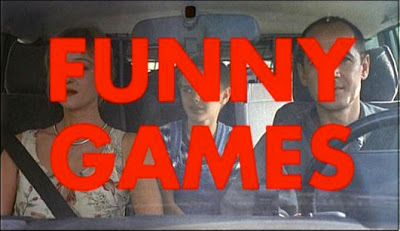
The movie begins with Georg (Ulrich Mühe), his wife Anna (Susanne Lothar), and their son Georgie (Stefan Clapczynski) heading to their lakeside vacation home. Upon arrival they greet their strange acting next-door neighbor who is accompanied by two unfamiliar preppy young men. The family goes on to their lake house where they begin to settle in. Georg and Georgie head down to the lake to get their boat ready for sailing while Anna prepares dinner. That’s when the two young men, Peter (Frank Giering) and Paul (Arno Frisch) show up and begin giving Anna a hard time. After Georg and Georgie return things turn really bad and Peter and Paul put the family through a hellish game of psychological torture that goes beyond cruel.

FUNNY GAMES1

There’s no need to go further into the story because it would unquestionably spoil things. Let’s just say “Funny Games” evolves into a voyeuristic and often times uncomfortable experience. But to be honest that’s exactly what Michael Haneke is trying to create and it is most effective. I found myself squirming in my seat several times and Giering and Frisch are quite menacing but in a very different way that we usually see. Haneke and his two young actors are able to sell us on uncertainty and we have a hard time reading and a harder time predicting the actions of Peter and Paul. Frisch gives a stand-out performance as the more talkative and calculated of the two. Surprisingly his fantastic work didn’t lead to a bigger career. Giering is also very good as the quieter and seemingly more subservient Peter. It was at the time considered a breakout performance. Sadly he would die only a few years later after bouts with alcoholism and severe emotional issues.

I alluded earlier to Haneke’s specific filmmaking techniques including using still cameras and letting his scenes play out. It’s heartily employed here. So often Haneke strategically sets his cameras and then requires us to watch as his characters go through a variety of different situations. In “Cache” it was through the video camera of a mysterious and unknown provocateur. In his most recent film “Amour” we often times are forced to observe the difficulties and indignities of an elderly couple trying to manage a crippling illness. But it’s at an entirely different level in “Funny Games”. We watch a nice middle-class family being psychologically terrorized and in a sense we are enduring it too. It’s not an easy watch and there doesn’t seem to be an ounce of mercy coming from script or the camera.

FUNNY GAMES2

But perhaps the most fascinating thing about “Funny Games” are the numerous references to movies, movie plots, and movie structures made by Paul and Peter. Then there is Paul’s obvious awareness that he is in an actual movie. I don’t intend to go any further because it’s something better experienced than told about. But these little additions do more to make the audience feel like observers which gets to the big point Haneke is making with this picture – the fascination with violence in the media. In fact there’s one point where Peter even says “We mustn’t forget the importance of entertainment”. The line fits perfectly in the situation, but it’s also directed at us. Haneke attempts to prove that very point by exposing the audience and I have to say he got me.

You certainly can’t call “Funny Games” a fun movie and its not the type of film that you’ll want to watch over and over. It’s a disturbing thriller that I found to be smart and compelling but also brutally painful and sometimes emotionally unbearable. As someone growing more and more appreciative of Haneke’s work, I did find “Funny Games” to be a mesmerizing film. Sure it’s unsettling but it intends to be and it does make some interesting points in very sly and crafty ways. I certainly wouldn’t call this a film for everyone, but its unconventional and unashamed boldness really impressed me. It’s another winner from Haneke. Just be aware of what you’re getting into.

VERDICT – 4.5 STARS

REVIEW – “Life Itself”

LIFE ITSELF POSTER

A countless number of aspiring couch critics have spoken of the role that Gene Siskel and Roger Ebert played in nurturing their desire for film criticism. The various incarnations of their groundbreaking and one-of-a-kind movie review program entertained, broadened, and inspired generations of film fans. Siskel and Ebert became synonymous with film criticism and while they weren’t the only talented and knowledgeable movie critics during their day, they were instrumental in bringing it to the mainstream and creating a wider appreciation for it as a whole.

I was one of those kids they influenced. It was during the early 1980s that I was first exposed to their weekly television show. I watched them any opportunity I had and I made them part of my weekend. To say I was obsessed would be an understatement and almost instantly I wanted to be a movie critic. Eventually I began to favor Gene Siskel and the way he talked about movies. But over time my appreciation for Roger Ebert and his unmatched knowledge and passion for movies grew tremendously. While we were sometimes at odds concerning things outside the world of cinema, I considered him a wealth of information and his reviews were like fascinating lessons that increased my understanding of movies and of the people of make them. That’s one reason his passing last year had such an effect on so many people.

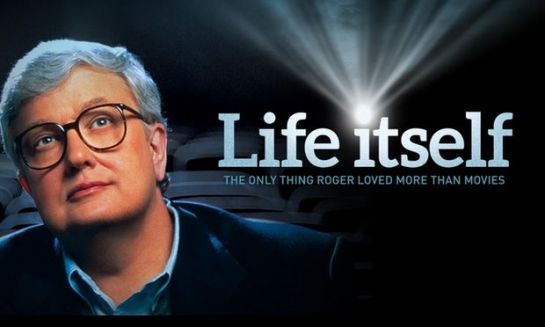
“Hoop Dreams” director Steve James brings the life of Roger Ebert to the big screen in “Life Itself”, a documentary based on Ebert’s memoirs. It’s a unique but heartfelt mixture of biographical information and poignant emotions. James began his documentary before Ebert’s death and when the beloved film critic passed away James pledged to the family that he would finish his joint venture with Roger.

LIFE ITSELF

“Life Itself” follows Ebert during what turned out to be his final months. We spend a lot of time with him in rehabilitation centers following his debilitating battles with cancer and a fractured hip. Some of what he is going through is sobering and uncomfortable but, as he conveyed to Steve James, to omit the reality would be to do a disservice. His wife Chaz serves as his rock and it is impossible not to be moved by her love and dedication to her husband. I also appreciated the truth that she shares in so many of the interview bits we get.

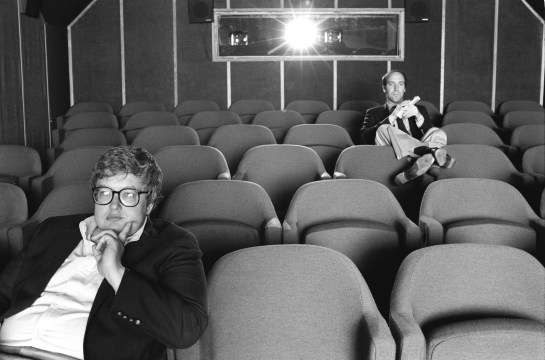
Throughout the film we get many breaks that look into Ebert’s past. We learn a little about his family and his early forays into the newspaper business. And of course we see his jump into film criticism for the Chicago Sun-Times and eventually alongside his local rival Gene Siskel of the Chicago Tribune. The film has a genuine sense of honesty which shows itself in its dealings with Ebert’s past struggles with alcohol and his off-putting arrogance. But it also reveals deep passions that he possessed and how is life was forever altered for the better when he met Chaz. Personally I was drawn to his relationship with Siskel which was far more competitive and combative in its early stages that I realized. Watching the evolution of their relationship shined a new light on two men who I watched so religiously for so many years.

“Life Itself” is a solid documentary that will certainly appeal to anyone who appreciated Roger Ebert’s work and his contributions to motion pictures. I do think Steve James loses his rhythm midway through the film and his jumps to different events in Roger’s past are jarring due to a lack continuity. But the last act gets back on track and it leaves you with a lump in your throat and an even greater appreciation for a man who meant so much to movies and the art of film criticism. As the final credits scrolled across the screen I reclined in my chair and shook my head. I just can’t believe both Roger and Gene are gone.

VERDICT – 4 STARS