REVIEW: “Jay Kelly” (2025)

File Noah Baumbach under ‘Filmmakers I’ll Watch No Matter What’. I have been drawn to his unique body of work since his early Wes Anderson collaborations. And I have enjoyed most of the films he has directed from high-spirited indies à la “Frances Ha”, to serious-minded dramas such as “Marriage Story”, to utterly bizarre concoctions like “White Noise”. I just love his eccentric style, off-beat perspective, and rich dialogue.

His latest is “Jay Kelly” and it’s very much a Noah Baumbach movie. Yet at the same time, it distinctly stands out in a number of interesting ways. Unlike Baumbach’s tightly focused settings, this one plays out on a noticeably grander scale. And rather than tell something more intimate, this time he broadens his story significantly. Even the filmmaking feels different, using a style that calls back to classic Old Hollywood productions.

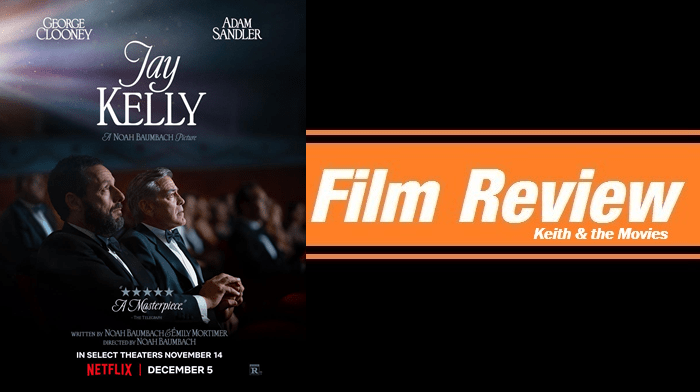
In a nifty bit of casting, George Clooney plays the titular Jay Kelly, a celebrated actor whose existential crisis forces him to reevaluate what matters most in his life. The movie opens with Jay wrapping his latest film, “Eight Men From Now”. Jay’s hard-working and intensely loyal manager Ron (a terrific Adam Sandler) already has his famous client’s next feature lined up. But Jay throws Ron a curveball when he announces he’s pulling out of his next movie and taking a trip to Europe.

Image Courtesy of Netflix

Jay’s out-of-the-blue decision puts his handlers in a panic as they scramble to make sense of his actions. Ron is forced to set aside his own family plans and join Jay and his entourage on a plane bound for Paris. There he plans on surprising his youngest daughter Daisy (Grace Edwards), who’s traveling abroad with friends. Afterwards he plans on hopping a train for Tuscany where he’s to accept a career achievement award that he had previously declined.

Ron’s main job is to coddle his star client while convincing him not to quit his next movie. But the blasé Jay is more interested in mingling with adoring fans and tracking down Daisy, who would rather be with her traveling companions. It all frustrates Jay’s handlers, especially his volatile publicist Liz (Laura Dern). But amid the chaos, we begin to see the real reason for Jay’s inward sabbatical. He begins reflecting on his life, from his career successes to his failings as a father.

In his melancholy, Jay begins weighing his past choices which forces him to reckon with their consequences, mostly involving his two daughters. While he at least has some connection with the younger Daisy, his relationship with his oldest daughter Jessica (Riley Keough) has soured. The fallout from prioritizing himself and his career has left a divide that she’s not ready to bridge. Keough only gets a couple of scenes, but she provides the story’s most heart-wrenching moments.

Image Courtesy of Netflix

Baumbach also gives time to Jay’s relationship with Ron which plays a key role in the star’s journey. Clooney and Sandler have terrific chemistry and consistently find humanity and humor in the scenes they share. Clooney slides right into Jay’s skin, at times so convincingly that you could interpret it as him playing a version of himself. Meanwhile Sandler gives one of the best supporting performances of the year and one of the best performances of his career. In many ways he’s the beating heart of the story, embodying the many things Jay has lost sight of in the name of success.

Early on, Jay makes the revealing statement, “All my memories are movies.” Could it mean that he has invested so much of his life to movies that it’s hard to find a memory that’s not in front of a camera? Or does he mean he has no memories of his own; that his memories are movies – scripted, directed, and produced for others to relish? Both can be true, and both add to Jay’s overwhelming feeling of regret.

Baumbach’s soulful script (which he co-wrote with Emily Mortimer) has us accompany Jay Kelly on a painful personal journey of self-reflection. But to Baumbach and Mortimer’s credit, they don’t turn it into a clean-cut redemption story. While they do find empathy for Jay, there’s no tidy reprieve from the personal consequences or the collateral damage he has left behind. Together with its rich, nuanced performances, lush cinematography, and Baumbach’s vibrant direction, “Jay Kelly” resonates as both a contemplative character study and a meaningful cautionary tale.

VERDICT – 4 STARS

REVIEW: “Mistress America”

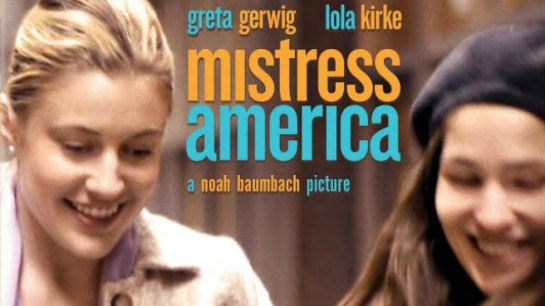
MISS POSTER

Noah Baumbach has a unique fascination with telling stories of high-strung eccentric chatterboxes who aren’t always the most likable people to be around. Some are airy and naive. Others are astringent and self-absorbed. But despite each of their quirks, annoyances, or repellent personalities, I’ve always found myself fascinated with Baumbach’s strange and often self-destructive creations.

Enter “Mistress America”, an unusual amalgamation of all of the above. It features most of the normal Baumbach signatures – neurotic and/or insecure people, a ton of hip rapid-fire dialogue, and a bustling New York City backdrop. As with every other film of his, a big part of your reaction will be influenced by your opinions of the characters and your tolerance levels for them.

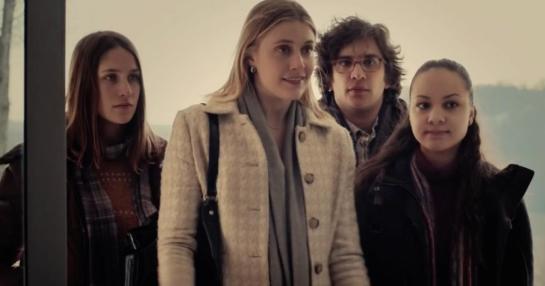
MISS1

Baumbach’s favorite muse and girlfriend Greta Gerwig co-wrote the story and gets top billing, but the film is really about a girl named Tracy struggling to find her niche during her freshman year at college. She’s played by Lola Kirke who was very good in last year’s “Gone Girl”. Tracy feels like an outcast and can’t fit in with any of the typical college groups. Even the nerdy intellectuals pay her no attention except for a fellow writer named Tony (Matthew Shear). But even that relationship isn’t without its complexities.

Sensing her daughter’s melancholy, Tracy’s mom (Kathryn Erbe) encourages her to call up and connect with her soon-to-be stepsister Brooke (Gerwig). Tracy is instantly smitten with Brooke’s panache and lively New York City lifestyle (stating in one scene “I can’t imagine the city without you”). Brooke talks a good game and seems to have her toe dipped in many of the city’s coolest waters. But as with many of these characters, there is reason for us to wonder if her life is truly all sunshine and roses.

MISS2

For the most part “Mistress America” succeeds on the exact same level as most of Baumbach’s pictures. The characters are interesting even in their peculiar states and the story could be called a simple platform for their idiosyncratic philosophizing, witty banter, and self reflections. Dialogue is always a focus and most of it works as quirky intellectual comedy and drama. But this also feeds into a couple of the film’s issues. There are moments where the back-and-forths between characters feel too scripted. Other exchanges work noticeably hard to be intellectually cool. I’m also not sold on some of the comedy angles we get later in the film.

Embracing Noah Baumbach means dealing with certain blemishes and minor frustrations. At the same time his unique characters, rich dialogue, and sharp wit is more than enough to make up for them. This particular dive into the fashionable problems of big city millennials may not measure up with Baumbach’s best. Yet it still manages to capture what I enjoy about his films and the uniqueness of his formula is always satisfying.

VERDICT – 3.5 STARS

3.5 stars

REVIEW: “While We’re Young”

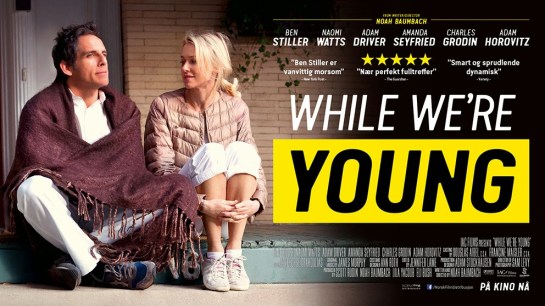
YOUNG POSTER

Noah Baumbach has made a career out of making movies about unlikable or generally unhappy characters. Many of his walking human complexities exist in various stages of lethargy, denial, or dissatisfaction. But at the same time the characters he creates drip with humanity and they are fascinating to watch. Yet with all of that being said, I don’t always fully go for his movies.

“While We’re Young” is another of Baumbach’s mixed bags. It is a sincere and genuinely human comedy that connects due to its observational honesty and its willingness to address real emotional struggles. But like a few other Baumbach projects, it doesn’t fully see its promise through and the final act of the film wanders away from what makes the story initially so compelling.

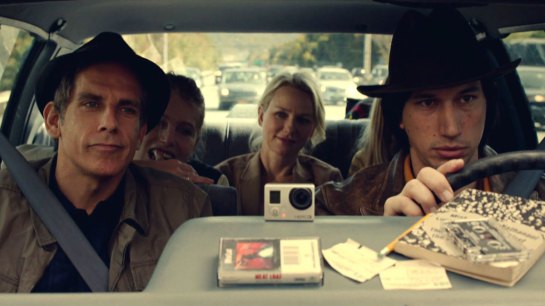
YOUNG1

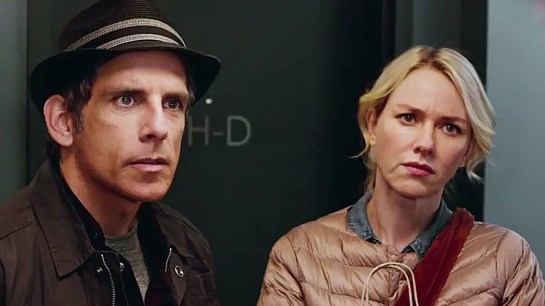
Ben Stiller and Naomi Watts play Josh and Cornelia Schrebnick, a middle-aged couple living in New York City. Their past difficulties in having a baby are highlighted with the birth of their best friends’ daughter. Josh and Cornelia attempt to brush aside their feelings of disappointment and unfulfillment by focusing on the freedoms they have as a family of two. But even that is effected by the plain ol’ fact that they are just getting old.

Josh is a movie documentarian who has been stuck in the rut of an eight year film project that shows no signs of nearing completion. After teaching a continuing education class at a local college he is approached by young twenty something couple Jamie and Darby Massey (Adam Driver and Amanda Seyfried). The Massey’s invite Josh and Cornelia to dinner where we learn Jamie is an aspiring documentarian and a huge fan of Josh’s first film.

Josh and Cornelia grow infatuated with their new young hipster friends and their exaggerated retro styles. They feel young and energetic whenever they are around Jamie and Darby and they begin feeling a disconnect with their old friends. But is this simply a refuge from their insecurities about getting older, or is the old adage correct – you’re only as old as you feel?

For most of the film Baumbach explores that question through a number of smart and witty conversations and situations. We see the Schrebnick’s, particularly Josh, open up and embrace new things. He puts aside some of his closed-minded, exclusionist perspectives and sees creativity and life in general through a new lens. But at the same time Baumbach is shrewdly pointing a finger, not at Josh but at the Masseys; asking compelling questions about the younger generation.

YOUNG2

Baumbach’s film works on so many levels but it also has its flaws. Stiller and Watts each convincingly play their individual parts. Yet there are moments where I couldn’t quite buy into them as a couple. There are also a few moments where the normal sharp wit gives way to the juvenile. For example, an Ayahuasca scene leads to a running vomit gag that never seems to end. I mean who doesn’t laugh at vomit, right? And the biggest problem is in the last act when the story loses its focus a bit and ventures off in a direction that simply wasn’t that interesting.

Baumbach is a unique filmmaker who tells unique stories. His tales rarely venture outside of his confined view of life, love, and relationships but that’s what provides his films with their own flavor. “While We’re Young” gives its audience things to ponder and to chew on while also being deftly funny and unflinchingly human. It just can’t quite see its strengths through till the end. It’s still a good film. Not “Frances Ha” good but hey…

VERDICT – 3.5 STARS

3.5 stars