
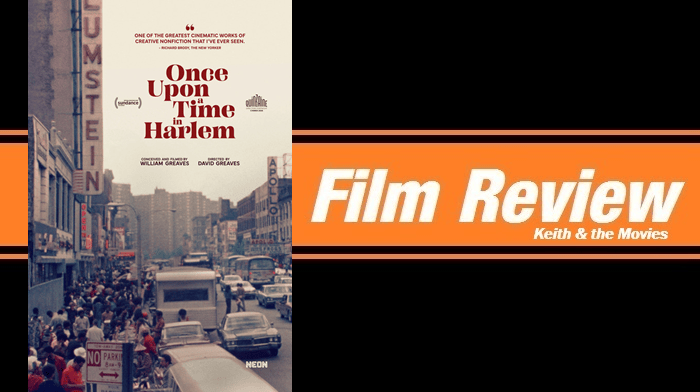
So far 2016 has been a fascinating year for documentaries. And while one prominent film is getting most of the attention, energy, and chatter, it’s hard to believe there will be a better documentary this year than the sublime “Once Upon a Time in Harlem”. Shot in 1972 by filmmaker William Greaves, the movie is a collection of footage gathered during a party for surviving participants in the Harlem Renaissance. And I was enthralled from the very start.
The Harlem Renaissance was an explosion of artistry and intellectualism born out of the African American experience. It was a movement during the 1920s and 1930s that saw the black community taking control of their stories and expressing them through visual art, music, literature, journalism, and activism. For many it was an awakening that laid the groundwork for major cultural events to come. And Harlem was the epicenter.
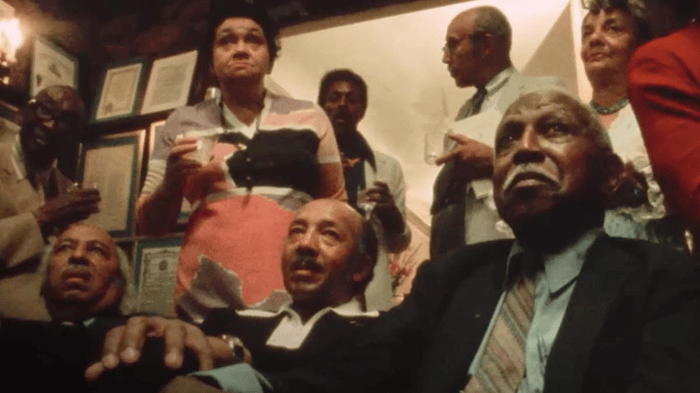
In August of 1972, documentarian William Greaves sent out invitations to a cocktail party at the home of legendary composer Duke Ellington. His goal was to gather the living luminaries of the Harlem Renaissance for an afternoon of reminiscing, reflection, and perhaps even a little debate. Greaves and his small crew would be there to capture it all on film. Sadly, William Greaves died in 2014 before ever finishing the project.
Twelve years after his death, William Greaves’ son David, who served as a cameraman during the 1972 gathering, revisited his father’s footage. With the help of his daughter Liani, David was able to see William’s vision brought to life in “Once Upon a Time in Harlem”. It’s a transfixing father-son collaboration that contextualizes a significant moment in American history. It’s also an illuminating and transporting cinematic experience that appeals to both mind and senses.
The film begins as a Who’s Who list of prominent figures from the Renaissance arrive at Ellington’s Harlem townhouse. Among the many distinguished guests are poet Arna Bontemps, painter Aaron Douglas, composer and pianist Eubie Blake, journalist George Schuyler, activist Louise Thompson Patterson, photographer James Van Der Zee, actor and founder of the Negro Actors Guild Leigh Whipper, librarian Regina Andrews, theatrical producer Irvin C. Miller, writer and painter Richard Bruce Nugent, prominent socialist, Richard B. Moore, historian John Henrik Clarke, and more.
It’s very much a melding pot of thought, insight, and creativity. But the special ingredient that makes it so invigorating is the casual setting Greaves was able to create. It opens the door for much freer and livelier exchanges. The lack of restrictions add a level of comfort that immediately pays off. The guests waste no time telling old stories, sharing good and bad memories, and engaging in a few passionate yet respectful back-and-forths.
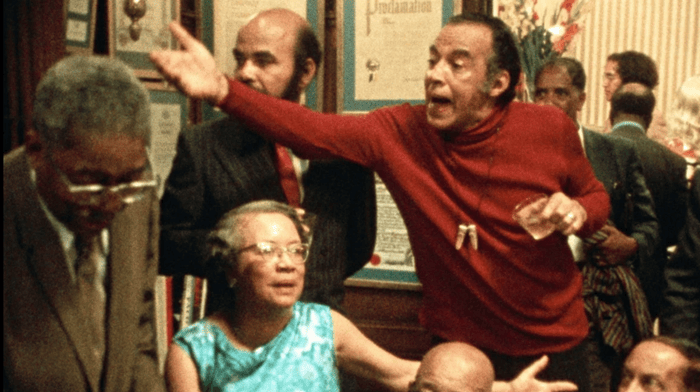
Another key strength lies in the film’s ability to make us feel as if we’re there, slipping from room to room, listening in on conversations and absorbing the laidback one-and-one interviews. What we witness is both compelling and eye-opening: painful recollections of the past, observations on the economic, political, and artistic development of Harlem, hearty disagreements on the positions of Marcus Garvey, and so much more.
Just the access to this unfiltered party footage would be enough to make “Once Upon a Time in Harlem” a must-watch. But Greaves also incorporates a number of archival photographs, stock images from newspapers, and more that add context and perspective. When considered together, the film becomes both an essential historical artifact and engrossing entertainment. Rarely has being a fly on the wall felt this enlightening.
VERDICT – 4.5 STARS


