REVIEW: “Rebel Moon – Part One: Director’s Cut” (2024)

The genesis of Zack Snyder’s epic space opera “Rebel Moon” dates all the way back to 1997. In the years that followed, Snyder would pitch his idea to LucasFilm as a new Star Wars installment. Later he attempted to turn it into a video game. And even later, he considered developing it as a television series. He would eventually make a deal with Netflix, but it came with an agreement that (so far) has led to some pretty mixed returns.

That agreement was that Snyder would be given the creative freedom to fully realize his vision for “Rebel Moon”. It would come in the form of director’s cuts that would offer longer and R-rated dives into his world and its rich mythology. But in order to get the green light, Snyder had to agree to also make a neutered PG-13 version in hopes of it having a broader blockbuster appeal. The two-part PG-13 cut earned big viewership numbers for Netflix but mostly bad reviews from critics.

To be honest, reading reactions to Zack Snyder movies can be a challenge. Viewers are often broken into two groups – the Snyder loyalists who adore anything he does regardless of its quality and the poorly veiled haters who bristle at the mere mention of his name and are as feral in their disdain for his movies as any doting Snyder fanboy. After weeding out all of the noise, the PG-13 product turned out to be entertaining. But it was clearly just a slice of something bigger and potentially better.
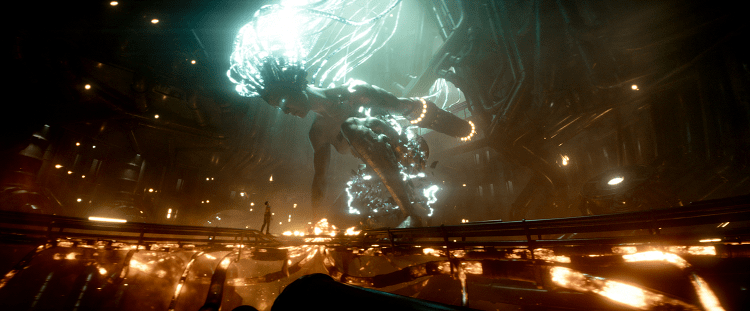
Image Courtesy of Netflix

Part One of Snyder’s director’s cut adds 70 minutes and gets a new title. “Chalice of Blood” essentially covers the same ground as its significantly shorter PG-13 version, but adds new layers to the overarching story, recontextualizes several character arcs, and gives the film a darker edge through its deeper world-building and amped-up brutality. Also, Snyder’s influences are clearer and better utilized. He’s made it known that “Star Wars”, “Seven Samurai”, and “Heavy Metal” magazine were among his many inspirations. Here they’re more obvious yet better realized.

Among the strengths of “Chalice of Blood” is how it sheds much needed light on several characters and their stories. Chief among them is Jimmy (voiced by the great Anthony Hopkins), one of the last remaining members of a race of sentient robotic knights. In the shortened film version, very little about his character made sense. In this cut we see his journey of self-discovery as he searches for a new sense of purpose. We get to witness the evolution of Jimmy leading to him becoming one of the young franchise’s most compelling players.

Another character to benefit from more attention is Aris (Sky Yang), a young soldier with the Imperium who sides with the villagers on Veldt. We’re shown a side of his story that adds much-needed context to the character’s actions. As for the film’s big baddie, the sadistic Admiral Atticus Noble (Ed Skrein), he’s seen as even more cold-blooded in his psychopathic loyalty to the Motherworld. As for the main protagonist, Kora (Sofia Boutella), we get a clearer understanding of the pain that haunts yet drives her. It’s mostly thanks to the flashbacks which are better realized this time around.

Image Courtesy of Netflix

Despite a runtime of 3 hours and 24 minutes, there is still that lingering sense that Snyder is trying to cover too much ground. It still feels as if there is so much more to be told. For example, the motivations for nearly every warrior who joins Kora’s group could still use more explanation. Their backstories are alluded to more than explored, leaving them too thinly sketched. Still, Djimon Hounsou, Bae Doona, and Staz Nair all make compelling heroes even if their individual backgrounds get shortchanged.

And of course the action gets a welcomed makeover via the movie’s bigger and bloodier set pieces. Those prone to push back on Snyder’s distinct style are almost certain to roll their eyes at the elaborate canvases he creates. But his visual flair fits these movies and could even be called refreshing. Take his signature use of slow-motion. At a time when so many action scenes are hacked to the point of being indecipherable, Snyder’s technique is satisfying its own stylishly indulgent way. And this time there are no constraints with the violence. It’s fittingly graphic, sometimes excessive, but often thrilling.

It’s easy to see how the director’s cut of “Rebel Moon” provides a more fully formed expression of Zack Snyder’s ambitious vision. The visuals are more eye-popping, certain scenes have more impact, and the overall stakes are higher. A few nagging problems from the PG-13 cut remains. And things occasionally veer into the gratuitous, whether it’s a gush of digital blood or a superfluous early sex scene. But for the most part Snyder keeps his focus on developing this vibrant and diverse world, this time taking us beyond a mere sample size and offering us something more established and engaging. The “Rebel Moon” director’s cuts are now streaming on Netflix.

VERDICT – 4 STARS

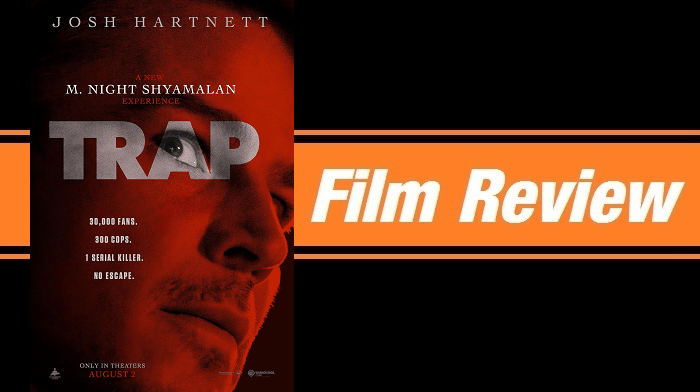
REVIEW: “Trap” (2024)

M. Night Shyamalan’s new thriller “Trap” finds itself in an unenviable position. It’s releasing at a time that immediately puts it against box office juggernauts like the immensely fun disaster romp “Twisters” and the MCU’s fan-pandering cash cow “Deadpool & Wolverine”. But hopefully Shyamalan’s latest can find an audience because it offers more fresh and fun entertainment from a filmmaker who plays with big original ideas during a time when Hollywood seems short on them.

Shyamalan’s filmography is littered with several big hits and a handful of misses. But the writer-director nearly always offers something distinctly his own. Not every movie of his lands, but when they do (and they often do, to various degrees) he leaves you feeling as if you’ve been treated to something unlike anything else showing at your local multiplex. “Trap” continues that trend while at the same time falling somewhere between the filmmaker’s greater and lesser movies.

The film stars Josh Hartnett whose big screen resurgence really kicked into gear last year with Guy Ritchie’s rambunctious “Operation Fortune: Ruse de Guerre” and of course Christopher Nolan’s Academy Award winning epic “Oppenheimer”. To no surprise, “Trap” is a much different movie but Hartnett is equally good in it. He plays Cooper, a seemingly ordinary dad who surprises his daughter Riley (Ariel Donoghue) with concert tickets to see her favorite pop superstar, Lady Raven (Saleka Shyamalan). We’re talking legitimate ‘Father of the Year’ stuff, right?

Image Courtesy of Warner Bros. Pictures

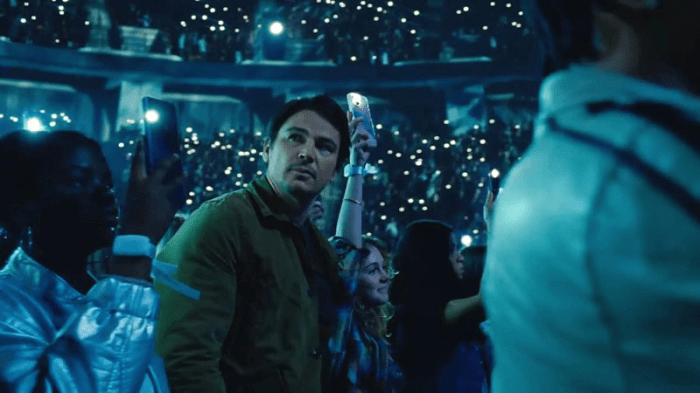
Set in Philadelphia, the story picks up with Cooper and Riley on their way to the arena. As they ride, Cooper enjoys his daughter’s Swiftie-like enthusiasm which only intensifies once they arrive and find their seats. Before long 30,000 screaming girls and their chaperone parents are greeted by Lady Raven and the massive stage show begins.

But in one of the film’s wackier yet enjoyable turns, the entire concert is revealed to be a trap set by police to apprehend a brutal serial killer known as the Butcher. Local law enforcement and federal agents by the hundreds converge on the arena and begin setting up a perimeter. Led by a seasoned profiler, Dr. Grant (Hayley Mills), the authorities cover every exit and start scoping the crowd for their suspect. And to make things crazier, we learn in the first 15 minutes or so that Cooper is the Butcher. Scratch that ‘Father of the Year’ bid.

From there a big chunk of the story focuses on the crazy chess match between Cooper and the cops. They don’t know The Butcher’s real identity but they know he’s at the concert. Cooper discovers their trap and has to find a way to escape without being exposed. And all while hiding it from his daughter. It leads to several moments of real tension, some unexpected dark humor, and other scenes that are utterly preposterous.

Image Courtesy of Warner Bros. Pictures

The cat-and-mouse game in the arena is the movie at its most diverting. But it’s somewhat shortchanged by Shyamalan’s heavy promotion of his daughter’s music (Saleka composed 14 original songs for the movie). The concert setting is brilliantly captured and strikingly authentic. And Saleka is certainly a talented musician. But Shyamalan’s focus on her ‘show within the show’ eats up time that could have went towards making things more thrilling and plausible. And later, both Saleka and the movie struggles once he thrusts her into an acting role.

I’m betting most of the criticisms with revolve around the movie’s final 30 minutes. No spoilers here, but Shyamalan overextends his story into some surprisingly conventional directions. And as a thriller, the further it goes the less effective it becomes. To its credit, “Trap” has an undeniably delightful Hitchcockian flavor and Josh Hartnett is lights-out fantastic in the film’s maniacal lead role. It’s the scattershot script that holds the film back.

“Trap” doesn’t fall among Shyamalan’s best works largely because its story hinges on too many glaring conveniences, contrivances, and confounding character actions. At the same time, maybe it unfair to expect each of his movies to be another “Signs”, “The Sixth Sense”, or “Split”. “Trap” is best received as a straight popcorn movie – one full of big ideas that it can’t quite see through to the end. That proved to be more than enough to hold my attention, even if it left me wanting something more. “Trap” opens today exclusively in theaters.

VERDICT – 2.5 STARS

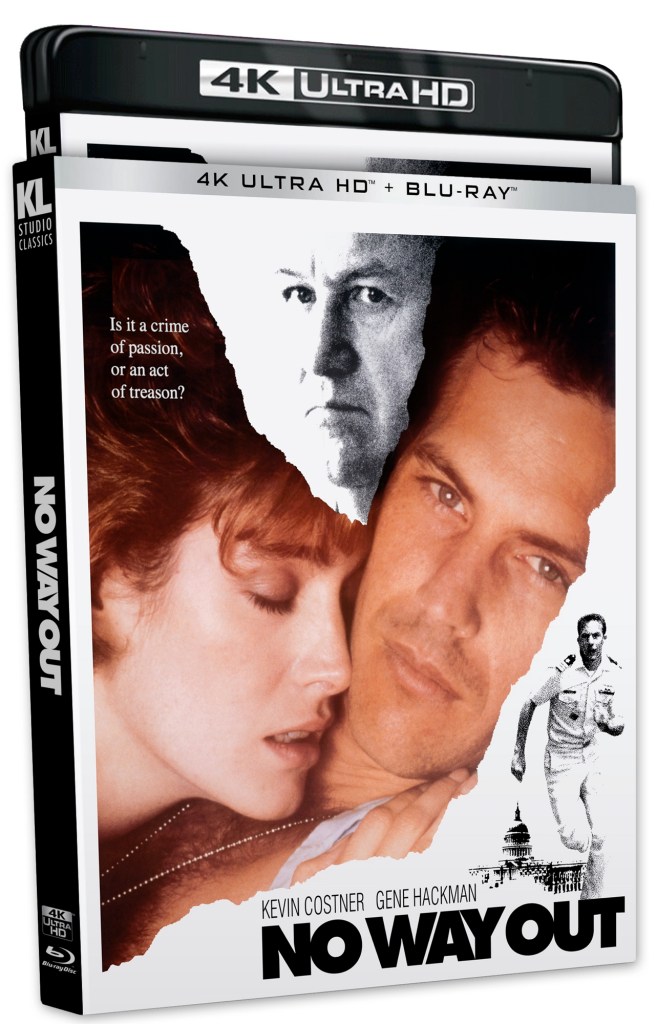
New on Home Video: “No Way Out” 4K Ultra HD + Blu-ray

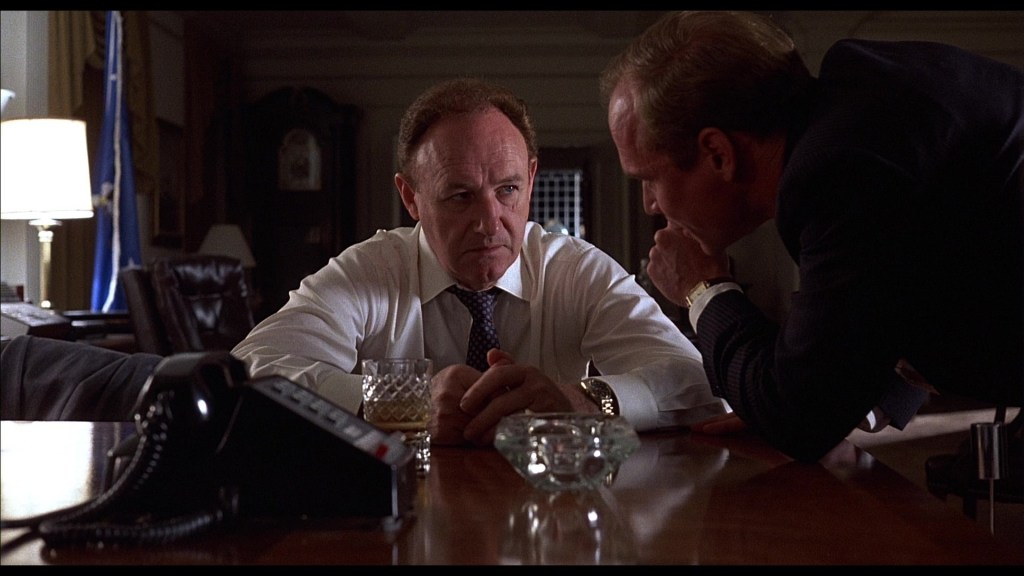
Kino Lorber Studio Classics continues their support of physical media with the release of “No Way Out” on 4K Ultra HD for the very first time. This terrific edition features a new HDR/ Dolby Vision master, taken from a 4K scan of the original 35mm camera negative. Skillfully directed by Roger Donaldson, “No Way Out” is a suspense-soaked political thriller that’s based on Kenneth Fearing’s 1946 novel “The Big Clock”. The film features an extraordinary cast including Kevin Costner who delivers a star-making performance.

This 4K Ultra HD edition of “No Way Out” also includes the film on Blu-ray and is available to purchase right now. See below for a full synopsis and release information including special features.

About the Film:

Year: 1987

Runtime: 114 Minutes

Director: Roger Donaldson

Screenwriter: Robert Garland

Cast: Kevin Costner, Gene Hackman, Sean Young, Will Patton, Howard Duff, Iman, George Dzundza, Jason Bernard, Fred Thompson, David Paymer, Michael Shillo, Robert Kerman

Rating: R

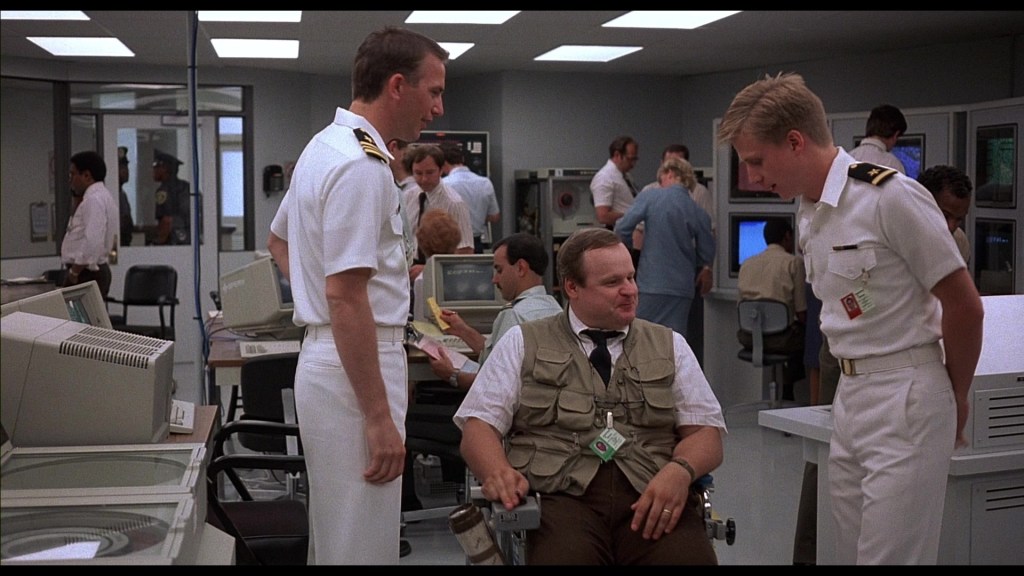
Charged with high-voltage tension and suspense, the electrifying thriller “No Way Out” is a tightly wound tale of intrigue set in the political whirl of Washington and the inner corridors of the Pentagon. In this ’80s box-office smash, Kevin Costner (“The Untouchables”, “Revenge”) stars as naval hero Lieutenant Commander Tom Farrell, the new CIA liaison for Defense Secretary David Brice, a high-ranking master of political maneuvers played by the dynamic Gene Hackman (“The Package”, “Narrow Margin”). Sexy Sean Young (“Blade Runner”) is a gorgeous party girl who plays politics herself as Brice’s mistress and Farrell’s secret lover. And Will Patton (“Desperately Seeking Susan”) is the Secretary’s ruthless aide, architect of a cover-up scheme that protects his boss, but entraps Farrell, putting his life in danger.

With its serpentine plot twists, narrow escapes and true-to-life Pentagon setting, “No Way Out” is the harrowing story of an innocent man caught in a complex web of romance and murder, power and corruption. Stylishly directed by Roger Donaldson (The Bounty, Species) from Kenneth Fearing’s classic noir novel, The Big Clock. The stellar supporting cast includes Howard Duff (“Shakedown”), George Dzundza (“Basic Instinct”) and Fred Thompson (“Die Hard 2”).

Special Features:

Bonus Content for “No Way Out” includes:

DISC 1 (4KUHD): 

  • Brand NEW HDR/Dolby Vision Master – From a 4K Scan of the 35mm Original Camera Negative
  • NEW Audio Commentary by Filmmaker/Historian Steve Mitchell and Writer/Actor Richard Brewer 
  • Audio Commentary by Director Roger Donaldson 
  • 5.1 Surround and Lossless 2.0 Audio 
  • Triple-Layered UHD100 Disc 
  • Optional English Subtitles 

DISC 2 (BLU-RAY): 

  • Brand NEW HD Master – From a 4K Scan of the 35mm Original Camera Negative 
  • NEW Audio Commentary by Filmmaker/Historian Steve Mitchell and Writer/Actor Richard Brewer
  • FILM STORIES’ Simon Brew Interviews Director Roger Donaldson
  • Audio Commentary by Director Roger Donaldson 
  • Theatrical Trailer 
  • 5.1 Surround and Lossless 2.0 Audio 
  • Dual-Layered BD50 Disc 
  • Optional English Subtitles

RETRO REVIEW: “Bloody Mama” (1970)

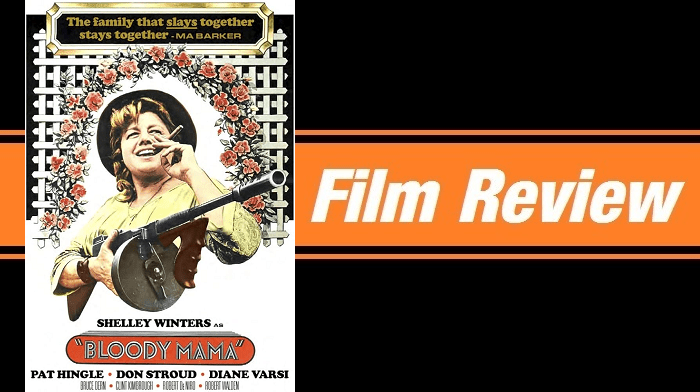
Roger Corman’s exploitation crime thriller “Bloody Mama” was the filmmaker’s second-to-last feature for American International Pictures and it was a far cry from his best. Though moderately successful, the film was handcuffed by Corman’s steadfast desire to milk the recent success of Arthur Penn’s Oscar-winning “Bonnie and Clyde”. His efforts in “Bloody Mama” were so apparent that it prompted Los Angeles Times film critic Charles Champlin to label it “Mommie and Clyde“.

While the film was lambasted by critics, it earned enough of an audience to inspire Corman to fund “Boxcar Bertha” and hire a young Martin Scorsese to direct it. But that doesn’t mean “Bloody Mama” is a good film. Despite its wealth of young on-screen talent, the movie struggles under the weight of its own inconsistency. While Corman’s inspiration is clear, it doesn’t seem like he’s at all sure about the kind of movie he wants to make. His tonal hodgepodge is maddening, hopping from lighthearted to dark on a whim and unwisely mixing such things as rape, murder, and incest with elements of comedy.

“Bloody Mama” is very loosely based on the antics of Kate “Ma” Barker. While Barker’s reputation as a hardened crime matriarch have been debated over the years (J. Edgar Hoover called her “vicious” and “dangerous” while those who knew her said she had no role in her sons’ many crimes). Corman sticks with the pop culture interpretation, even taking it further by portraying Ma barker as an absolute monster. She’s played by a tempestuous Shelly Winters who fully commits to the role.

Set and filmed in rural Arkansas, “Bloody Mama” takes place during the Depression as Ma Barker leaves her husband George (Alex Nicol) and takes her gaggle of unruly twenty-something sons with her. Her pack consists of the unhinged Herman (Don Stroud), the more reserved Arthur (Clint Kimbrough), the masochistic Fred (Robert Walden), and the drug-addicted Lloyd (Robert De Niro). The five set out on a crime spree across 1930’s Arkansas, picking up a few tag-alongs and killing more than a few along the way.

There isn’t much in the way of character development as Corman is far more interested in the luridly violent exploitation that helped solidify his legacy. The lone exception may be De Niro’s Lloyd, the troubled outcast of the backwoods brood whose inner turmoil resonates the most realistically. He’s very much a part of the family, and his sociopathic bend takes him down some rather sinister paths. But he also comes across as alienated and alone which only fuels his self-destruction. Stroud doesn’t get nearly as much to work with, but he does make the psychotic Herman a terror.

As for Ma Barker, she mostly comes across as a collection of character types. We get some early flashes to her incestuous and abusive childhood which somewhat explains her own vile deviancy. But the bulk of the film sees Winters as a blustering swirl of anger and resentment. Her Ma Barker lives up to the sensationalized portrayal that has found its way into many movies, songs, and stories. It’s a performance that’s both fascinating and frustrating, much like “Bloody Mama” as a whole.

VERDICT – 2 STARS

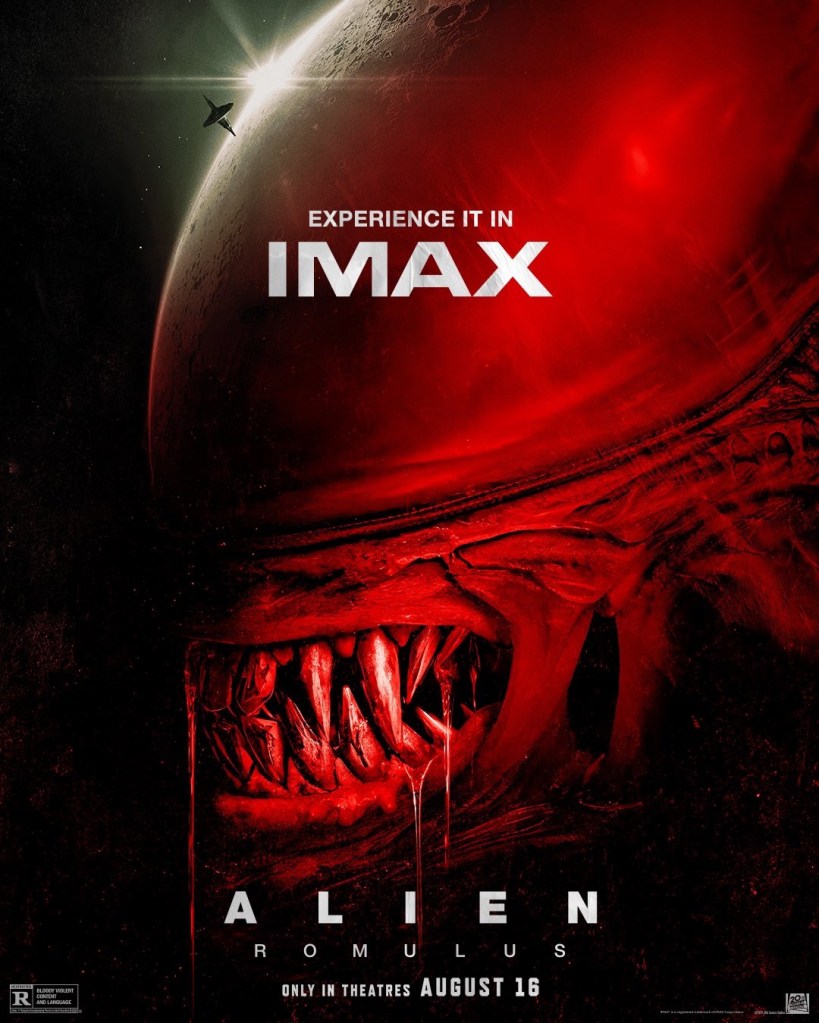
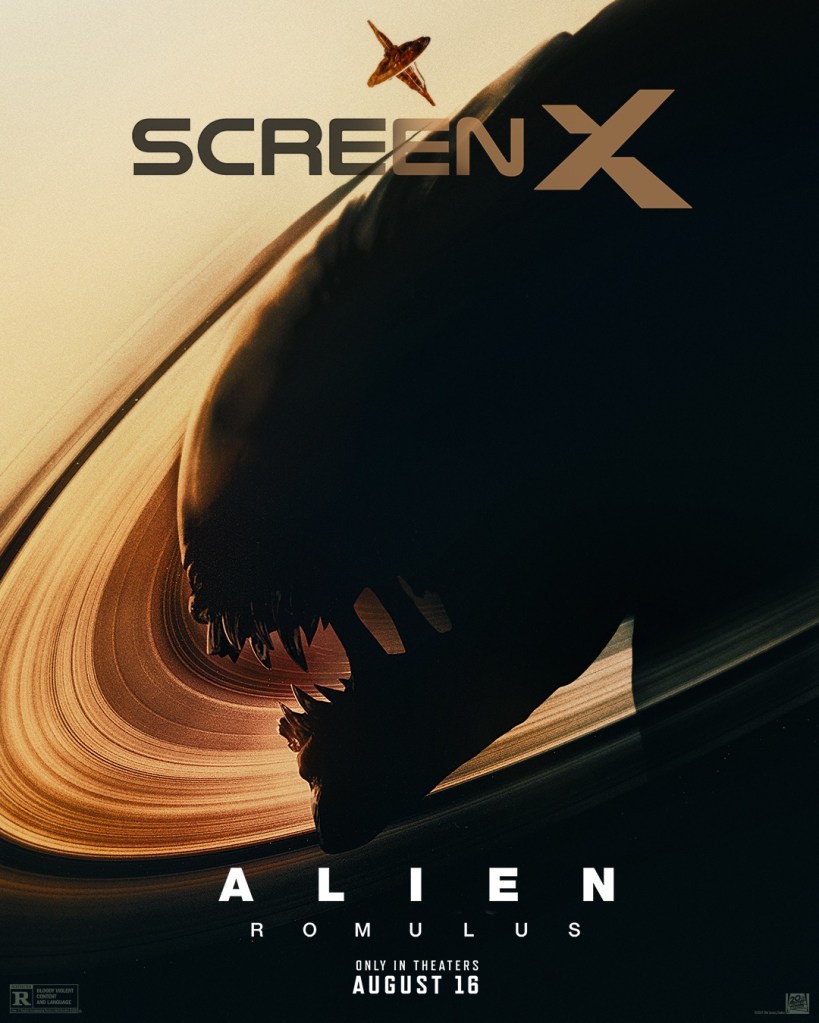
The “Alien: Romulus” Movie Poster Campaign Continues to Build Excitement

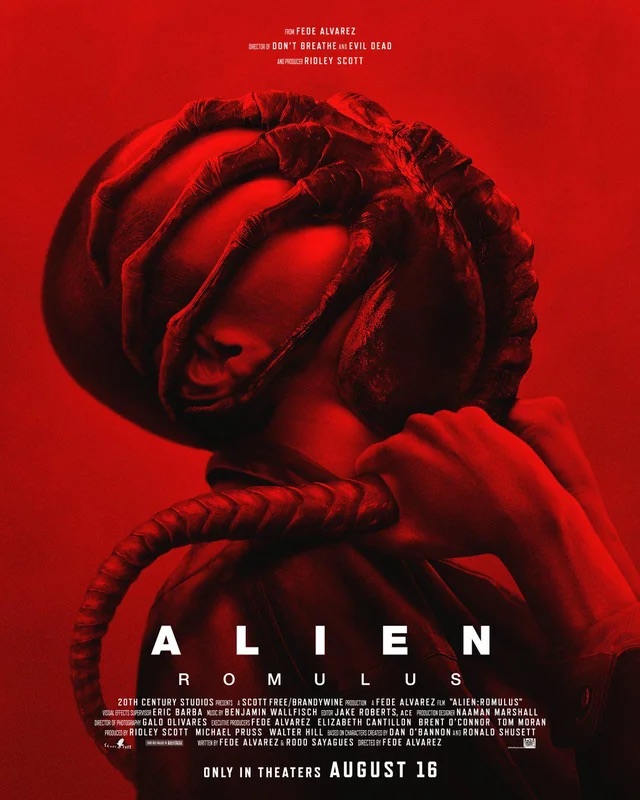
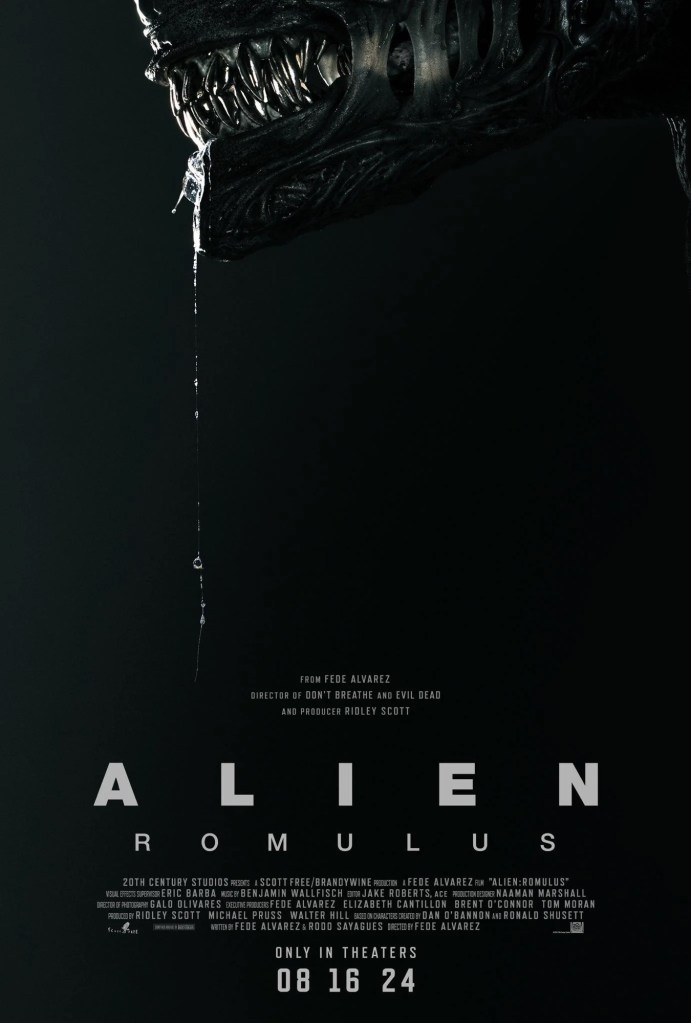
From their earliest announcement that “Alien: Romulus” was on the way, 20th Century Studios has delivered one killer movie poster after another. And they haven’t slowed down, as evident by the release of several eye-popping new sheets today. A collection of incredibly talented artists have helped put together one of the better promotional campaigns for a movie in some time.

Check out the poster art for “Alien: Romulus” below. It is the seventh installment in the Alien franchise which began in 1979 with Ridley Scott’s original space horror classic. “Alien: Romulus” releases exclusively in theaters on August 16th.

REVIEW: “Sting” (2024)

With “Sting”, writer-director Kiah Roache-Turner uses one of the most common fears shared by people of all shapes, sizes, ages and colors. For many it’s a petrifying fear that trumps all others. I’m talking about the fear of spiders. My own family isn’t immune from it (neither my wife or daughter would stay in the room after hearing what “Sting” was about). So right off the bat, Roache-Turner has the kind of material that will automatically get reactions.

But “Sting” isn’t some lazy attempt at cheap scares. It’s a self-aware creature feature that knows its audience and caters to their appetites with plenty of skin-crawling frights and nearly as many laughs. It’s a movie that wears its inspirations on its sleeve and tips its hat to several easy to spot properties (fans of James Cameron’s phenomenal 1986 classic “Aliens” will see its influence all throughout “Sting”).

Image Courtesy of Well Go USA Entertainment

Roache-Turner wastes no time kicking things off. As a meteor passes dangerously close to New York City, a tiny fragment crashes into a rundown brownstone apartment building. The small egg-like fragment hatchets a tiny spider which is discovered by an unruly 12-year-old named Charlotte (Alyla Browne). She puts the spider in a Mason jar and names it Sting. From there she slips her new pet into her bedroom, hiding it from her loving mother Heather (Penelope Mitchell) and her hardworking step-father Ethan (Ryan Corr).

Over the next few minutes we’re introduced to several other tenants who will soon find themselves in a B-movie nightmare. Among them is Helga (Noni Hazlehurst), Charlotte’s elderly grandmother who is struggling with dementia; Heather’s battle-axe great aunt, Gunter (Robyn Nevin); a grieving young window, Maria (Silvia Colloca); and a nerdy biology student, Erik (Danny Kim). Throw in a local exterminator named Frank (Jermaine Fowler) who adds some well-tuned comic relief.

As Charlotte feeds Sting a heavy diet of cockroaches, the spider begins growing at an alarming rate. Before long it has busted out of its jar and made its way into the building’s vents. And as its appetite grows, the massive space arachnid goes from munching on roaches to feasting on people. Its insatiable craving for flesh and blood leads to some squirm-inducing scenes that are sure to have people with spider phobias covering their eyes.

Image Courtesy of Well Go USA Entertainment

The movie does struggle to maintain a consistent tone. In between the gory creature kills and comic self-awareness is a family drama that has its poignant moments but never quite has the impact it clearly wants to have. It leads to some tender interactions and it manages to add some emotional weight to the film’s big finish. But sometimes it feels at odds with what the rest of the film is going for.

Still, Roache-Turner deserves a lot of credit for both recapturing and poking fun at the throwback creature features of old. He’s able to have us laughing one minute while making our skin crawl the next. And the wizards at Wētā Workshop do a superb job with the creature effects, making something that is effortlessly terrifying whether spiders scare you or not. “Sting” in available on VOD and home video.

VERDICT – 3.5 STARS