EDFF REVIEW: “Scrap”

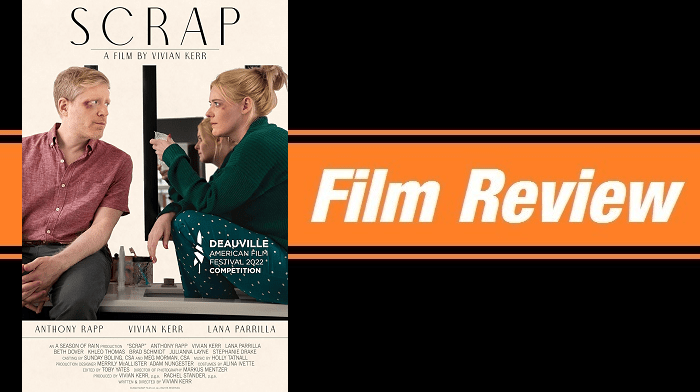
Writer-director Vivian Kerr brought her short film “Scrap” to the El Dorado Film Festival in 2019. In 2022 she adapted it into a feature film and has since been screening it on the festival circuit, winning several awards along the way. Now “Scrap” returns to the EDFF as a thematically rich and emotionally grounded feature-length drama anchored by strong character-driven storytelling and three fantastic performances.

With “Scrap”, Kerr has offered up thoughtful and genuine examinations of a number of resonating themes. Among them are brother-sister relationships, maneuvering through life’s trials, coming to grips with the hand you’ve been dealt, and taking responsibility. At the same time issues of homelessness, single motherhood, infertility, and disillusionment are woven into the fabric of Kerr’s story, all handled honestly and thoughtfully.

In addition to working behind the camera, Kerr also stars in the film, playing a single mother named Beth who was recently laid off from her well-paying corporate job due to downsizing. As a result she has lost her home and now finds herself at a crossroads. In the meantime, Beth’s adorable young daughter, Birdy (Julianna Layne) has been staying with her brother Ben (Anthony Rapp of “Dazed & Confused” and “Rent” fame) and his wife Stacy (a scene stealing Lana Parrilla).

Beth has Ben and Stacy believing that she’s away on business trips. In reality she’s desperately running from one highly sought job interview to the next during the day while spending her nights parked in upscale Los Angeles neighborhoods sleeping in her car. As we watch Beth’s routine, it’s hard to miss the desperation, the heartbreaking moments of shame, and most notably the denial. That last one is the basis for the impressive but crumbling facade she has constructed.

Ben and Stacy suspect something is going on with Beth. But they are having a crisis of their own. They’re a loving and successful couple – she’s an attorney and he’s an author of a popular series of fantasy novels. They have done very well for themselves. Now they’re ready to have a child, but infertility has made it difficult. They have taken treatments, but with every unsuccessful outcome more stress is added to their marriage.

In many ways Ben and Stacy are the antithesis of Beth. They are stable, established, and dependable people. They witness how irresponsible and careless Beth is with her daughter and it frustrates them, especially as a couple desperately wanting a child of their own. This really affects Stacy who has a difficult time hiding her aggravation. It creates a palpable tension between the two women.

Despite her faults, Beth is never portrayed as a bad person. Quite the opposite. She sincerely loves her daughter and wants what’s best for her. But far too often her obsession with reclaiming her former status blinds her to her responsibilities to Birdy. It leads to several bad choices that only make her situation worse. And her unwillingness to be truthful with a genuinely concerned Ben risks alienating the one person willing to help her.

There is some really good brother-sister chemistry between Beth and Ben as seen in the pointed arguments, the warm encouragements, and the playful insults. As more context is given, we begin to see their relationship as more layered and textured. Kerr’s direction is key, but even more crucial are the performances. Though a touch stilted at times, she and Rapp have an organic rapport that sells us on every exchange. Even better is Parrilla who is able to make Stacy the most nuanced and sympathetic character in the film.

“Scrap” is an impressive feature film debut from director, writer, and producer Vivian Kerr. From the very start she shows such good control of the material, throwing in a handful of good laughs and some tender moments while never losing sight of the the more serious slice-of-life drama that gives the movie its punch. It’s a well-paced film, propelled by (mostly) richly developed characters and fleshed out relationships, both of which are critical to the movie’s success. “Scrap” recently screened at the El Dorado Film Festival.

VERDICT – 3.5 STARS

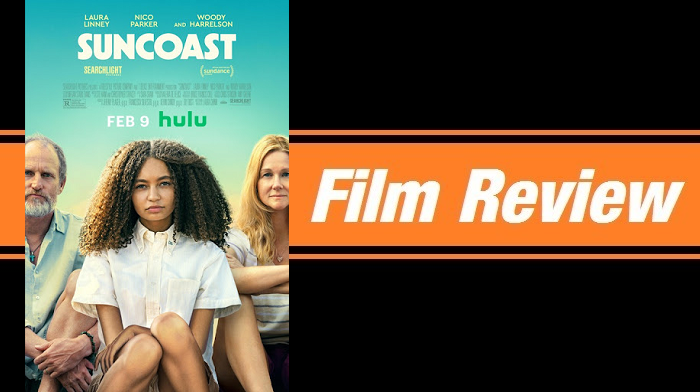
REVIEW: “Suncoast” (2024)

While Sundance Film Festival attendees got an early first look, others won’t have to wait long to see “Suncoast” which is set to premiere on Hulu February 9th. And trust me, it’s a movie you’ll want to see. It’s a semi-autobiographical and deeply personal story from first-time writer-director Laura Chinn. Made in the memory of her own late brother, “Suncoast” is a film certain to resonate with a number of people in a variety of different ways.

Aside from Chinn’s assured direction and her (mostly) absorbing script which is an endearing combination of heart and humor, “Suncoast” thrives thanks to the utterly delightful breakout performance from Nico Parker. The 19-year-old star brings a fresh and nuanced perspective to the coming-of-age drama, navigating a handful of irksome tropes and still relaying an emotional richness and authenticity that often evade movies like this.

Image Courtesy of Sunlight Pictures

Parker plays Doris, a shy and sheepish 17-year-old who spends most of her time helping care for her brother Max (Cree Kawa) who is dying of brain cancer. Ever since her father passed away Doris’ mother, the brash and impertinent Christine (wonderfully played by Laura Linney), has worked long hours to be able to support her family. That’s left Doris to watch over Max, who is immobile and unable to communicate, sacrificing her own teenage experience in the process.

As Max’s health worsens and the end draws closer, Christine admits him into a hospice care center in hopes of making his last days as comfortable as possible. Meanwhile her relationship with her daughter has steadily deteriorated. Regardless of her efforts, nothing Doris does is good enough for her mom. Adding to it, Christine’s preoccupation with Max has led to an unwitting neglect of Doris. Chinn’s measured handling of this mother-daughter tension is crucial. And no matter how hard Christine is on Doris, she’s never presented as a villain. It’s all a byproduct of repressed grief which she refuses to deal with.

At Clearwater Christian High School Doris makes friends with an annoying gaggle of air-headed preppies after offering to host a party at her house while her mom is away. The tired teen antics and shallow drama we get is by far the movie at its weakest. Far more interesting and entertaining is the unexpected friendship that springs up between Doris and a local activist and grieving widower named Paul (a perfectly cast Woody Harrelson). Some of the film’s most organically funny and heartfelt moments are when the two are together.

Image Courtesy of Searchlight Pictures

But the key relationship in the movie remains between Doris and Christine. Linney will have you laughing the hardest with her no-filter directness and quite possibly tearing up the most as she inevitably comes to terms with her grief. Meanwhile Parker delivers such a perfect melding of vulnerability, frustration, and angst. She keenly captures the essence of a teenager forced to grow up too fast yet still yearning for the experience she has missed out on.

Chinn’s affections for her characters comes through in every scene as does her personal connections to key elements of her story. There’s an honesty in her approach and even the most emotionally-charged moments feel truthful. Again, the overly conventional teen stuff get old and can sometimes weigh the movie down. But it doesn’t overshadow the film’s many strengths nor does it take too much away from what is a truly marvelous debut from Laura Chinn. Sign me up for whatever she does next. Premieres February 9th on Hulu.

VERDICT – 4 STARS

REVIEW: “Out of Darkness” (2024)

If the idea of a Stone Age survival horror thriller sounds up your alley you won’t want to miss “Out of Darkness”. This moody and tension-soaked feature from director Andrew Cumming had its world premiere two years ago at the BFI London Film Festival. This past year the film received five nominations at the British Independent Film Awards and this week it’s set for its North American release via Bleecker Street.

Written by Cumming and Ruth Greenberg, “Out of Darkness” tells a dark and gritty tale that fully immerses us in its prehistoric setting. Set 45,000 years ago, the story follows a group of six early people searching of the proverbial promised land but finding themselves fighting for their lives instead. On its surface there is a simplicity to the story, yet it remains gripping throughout thanks to the provocative themes at its core and Cumming’s brilliant visual storytelling. More on that in a moment.

Image Courtesy of Bleecker Street

The film opens with the six arriving in a new world. The group consists of their determined leader Adem (Chuka Modu), his sickly pregnant wife Ave (Iola Evans) and their young son Heron (Luna Mwezi). There’s Adem’s loyal little brother Geirr (Kit Young), the clan’s ever skeptical elder Odal (Arno Lüning), and a “stray” named Beyah (Safia Oakley-Green). Unable to survive on their homeland, Adem has led the group across the sea to a place he claims is marked by tall mountains, fertile valleys, warm caves for shelter, and an abundance of wildlife for food.

But what they find is considerably different. On top of the incessant chilling winds, they discover the earth to be barren. Even worse there are no animals to hunt. Cold, starving, and exposed, Adem leads the desperate group across the harsh, arid land towards the distant foothills in hopes of finding shelter. But on the journey they quickly learn they’re not alone. Something lurks in the night – its bloodcurdling screeches echoing through the pitch-black darkness. And then everything turns after Heron is snatched in the night, sending the unhinged Adem on a hunt that puts everyone in danger.

As the story takes its seemingly inevitable darker turn, Cumming digs deeper into the uglier sides of human nature. His message becomes pretty obvious, but it remains compelling right through to its fitting and impactful finish. Along the way he says a lot through his characters who mirror people-types in a number of subtle but thought-provoking ways. Their actions are often motivated by a number of factors which shrewdly speak to issues that (for better or for worse) remain a part of the human DNA.

Image Courtesy of Bleecker Street

And then there is the incredible detail from the fabulous costume design to the camerawork. The way Cumming and DP Ben Fordsman use various forms of light and eerie darkness; the way they shoot the stunning yet forbidding environments (the movie was filmed in the Scottish Highlands) – it’s all crucial to the storytelling. Cumming even used the guidance of a linguist and an archaeologist to develop an entirely new spoken language specifically for the film.

Though clocking in at under 90 minutes, “Out of Darkness” packs impressive vision and craft into its lean running time. Cumming makes a number of smart choices, none better than keeping the terrifying threat a secret until the final act. Amplified by haunting visuals, tension-soaked atmosphere, some gnarly makeup/effects, and a brooding score by Adam Janota Bzowski, “Out of Darkness” is an absorbing and well-executed horror thriller set within a grim, unwelcoming, yet fascinating hellscape. And it marks the scintillating feature length debut for an exciting new filmmaker. Opening in theaters February 9th.

VERDICT – 4 STARS

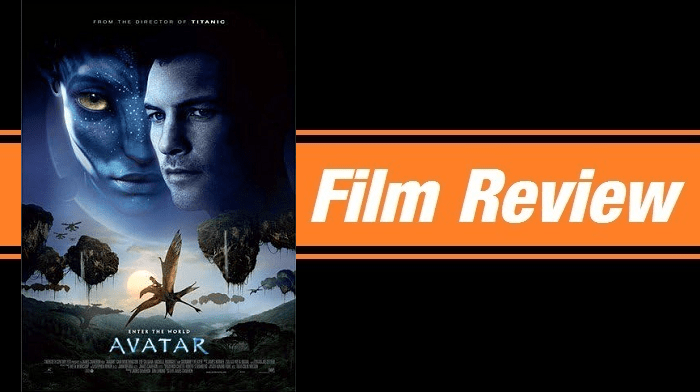
Revisiting “Avatar” (2009)

I’ve had an interesting relationship with James Cameron’s “Avatar”. Without question the 2009 science-fiction epic was a landmark box office achievement. It took theaters by storm, earning its first billion dollars in only 19 days on its way to becoming the highest grossing movie of all time. “Avatar” shattered numerous records, many of which it still holds today. It was a global phenomenon, accompanied by a vast marketing campaign, several companion books, and even its own Disney World attractions.

As for the movie itself, there’s no denying it was cutting edge moviemaking. Cameron made the most of his massive budget in creating one of the most visually breathtaking worlds ever put on screen. But it was the story that I had trouble getting past. I ended up having three main complaints – the copy-and-paste plot, the heavy-handed messaging, the over-the-top characterizations. They drew too much attention away from the extraordinary technical wonder that was “Avatar”.

Over the years and several watches later I’ve softened up on my criticisms of “Avatar”. The most recent call to reevaluation came after seeing the long-awaited 2022 sequel “Avatar: The Way of Water”. It’s a terrific follow-up that (for me at least) shined a new light on the first film. I’ve actually rewatched “Avatar” three times since “The Way of Water” released and have seen my perspective and opinion evolve. Yes, I still think it borrows liberally from other films (“Dances With Wolves” always comes to mind). It’s still a bit clumsy in its messaging. And there are absolutely some exaggerated characterizations.

Image Courtesy of 20th Century Studios

But after a lengthy reconsideration, I’ve come to some unexpected conclusions. For starters, I think using “copy-and-paste” to describe Cameron’s story is reductive and frankly unfair. He’s clearly pulling inspiration from a number of places. The idea of a foreign invaders persecuting an indigenous people is nothing new. In this case it’s humanity who have depleted Earth’s natural resources. Now they’ve arrived on Pandora to mine a valuable mineral to send back home. The operation is ran by the Resources Development Administration (RDA), an oppressive corporation who force their will on the Na’vi, the blue-skinned humanoid inhabitants of Pandora who live in harmony with nature.

Again, the general outline for the story is familiar, but there’s so much originality in Cameron’s vision, from the world he imagines to the Na’vi culture he creates. Both are key in taking a well-used framework and shaping it into something that pulsates with new creative life. You can’t help but be enamored with Pandora and it’s variety of wildlife, fascinating array of flora, towering waterfalls, and floating mountains. It’s not only an incredible work of imagination, but also visualization. There’s never a moment where Cameron and his VFX wizards aren’t giving us something to take in that’s both stunning and transporting.

As for the messaging, it’s still pretty on-the-nose with Cameron spelling out his numerous stances with varying degrees of effectiveness. His views on the environment, big corporations, and even the military are most impactful when he allows the natural flow of the story to do the talking for him. But there are still lines of dialogue so awkwardly blunt that you can’t help but roll your eyes and laugh. Interestingly, they’re not as noticeable to me as in earlier viewing. But they’re still there.

Image Courtesy of 20th Century Studios

And then there are the characterizations. In my earliest viewings, Stephen Lang’s Colonel Miles Quaritch, the RDA’s head of security, was the epitome of a ridiculously over-the-top character. He’s a military meathead made even more absurd by Lang’s exaggerated performance. Yet over time I’ve warmed up to the character and the performance. Yes he’s silly to the point of caricature. But Lang has a blast as the chief antagonist and delivers some really good laughs. I can’t say the same for Giovanni Ribisi’s Parker Selfridge, the corporate head of the RDA mining operation. He too is cartoonishly over-the-top, but without a hint of humanity or humor. He’s impossible to take seriously.

Still Cameron gives us a number of great characters including the film’s lead. Sam Worthington plays Corporal Jake Sully, a former Marine and a paraplegic sent to Pandora to take part in the Avatar program. It’s where scientists genetically match a human operator to a Na’vi body. Whether as his human self or in motion-capture, Worthington is terrific in conveying Jake’s frustrations, conflict, and courage. Matching him scene for scene is Zoe Saldaña as Neytiri, the daughter of a local Na’vi clan leader. In many ways she’s the film’s heart and soul.

In addition to building an imaginative world and compelling mythology, Cameron packs a surprising amount of emotion into his story. And of course there is the inevitable final showdown – an edge-of-your-seat thrilling and visually stunning spectacle built around some well developed stakes. Yes, it still has some nagging issues. But over the years I’ve found them to be less pronounced and far less distracting. And even with them, “Avatar” remains a transporting experience – an entertaining blend of old-fashioned adventure and technological wonder.

VERDICT – 4 STARS

REVIEW: “The Settlers” (2023)

In the revisionist Western “The Settlers”, director Felipe Gálvez sits us down in 1901 Tierra del Fuego, Chile during the Selk’nam genocide. That’s when land-hungry sheep ranchers backed by large livestock companies and protected by the Chilean and Argentine governments carried out the systematic extermination of native tribes that populated the area. It was yet another dark and vile stain on human history.

Gálvez begins by introducing us to a young Chilean mestizo named Segundo who is our eyes and ears for much of the harsh and uneasy 90 minutes that follow. Segundo (played with such quiet yet pained intensity by Camilo Arancibia) works in the fields under the cold-hearted Alexander MacLennan (Mark Stanley), a former British lieutenant who is now a foreman for a wealthy rancher named José Menéndez (Alfredo Castro).

Image Courtesy of MUBI

The haughty Menéndez claims that the local indigenous tribe, the Onas, are killing and stealing his sheep. So he sends MacLennan on a lengthy expedition across his land. It’s under the guise of scouting a path for him to safely move his sheep to the Atlantic Ocean. In reality there is something far more sinister behind it – a secret agenda at the heart of the mission.

MacLennan orders Segundo to come along without letting him in on the details of their expedition. They’re joined by Bill (Benjamin Westfall), a ruthless, racist, and borderline cartoonish American mercenary who is Menéndez’s right-hand man. The three head out on horseback across the vast open territory eventually arriving at the base of the snowcappeed Andes Mountains.

Along the journey, Gálvez and his co-screenwriter Antonia Girardi give us a clear sense of who these three men are. This is especially true when the trio happen upon a small camp of Ona. The sheer barbarism at the hands of MacLennan and Bill along with their cold and calloused indifference is hard to stomach. Meanwhile the mostly silent Segundo is horrified by what he witnesses but is too frightened to try and stop it. His feelings of complicity torture him through the rest of the film.

The story is broken down into chapters tagged with ever so slightly pretentious headings like “The King of the White Gold”, “The Half-Blood”, and “The Ends of the Earth”. Yet it gives us a harrowing and unflinching dive into Chile’s colonial past, offering a piercing and fittingly uncomfortable critique. And all to the backdrop of DP Simone D’Arcangelo’s stunning John Ford-esque canvas.

Image Courtesy of MUBI

Gálvez makes a bold choice for the final 30 minutes – a turn that’s both mesmerizing and frustrating. It sees the story suddenly bolt forward seven years. In these scenes an envoy of the Chilean president named Vicuña (Marcelo Alonso) confronts Menéndez about the massacres across his land in an effort to make amends with what remains of the indigenous people. It’s utterly engrossing and ends the movie with a morally repugnant gut-punch. But that jump in time leaves a big gap full of questions that never get satisfying answers.

Even with that conflicting miscalculation, Gálvez has his points to make and he does so by handling his material in a manner that you wouldn’t expect from a first-time filmmaker. He shows a willingness to take risks and makes choices that may not completely work as intended, but that show confidence and vision. And for a movie like this one, that’s the kind of approach that proves to be invaluable.

VERDICT – 4 STARS

Sundance Review: “Brief History of a Family” (2024)

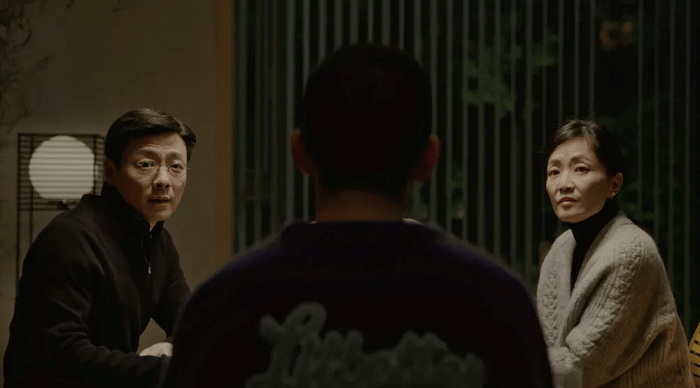
From the earliest moments of “Brief History of a Family” first-time feature filmmaker Jianjie Lin has his audience in the palm of his hand. And he keeps us in his hand, along with our instincts and expectations, until late into the film where he loosens his grip and suddenly has us second guessing nearly everything we thought we knew. That’s just one part of the genius of this smart and crafty movie.

“Brief History of a Family” is a strikingly assured debut for Lin who writes and directs this absorbing thriller set in China following the 2016 rescission of the government’s one-child policy. The setting adds a sociopolitical layer to the story that mostly exists in the background yet looms over much of the story. But Lin’s interests go well beyond that. This becomes evident once he begins digging into the complex dynamics of an upper middle-class family following the arrival of an enigmatic young guest into their lives.

From the first moment we first see 15-year-old Yan Shuo (Xilun Sun) he’s a mystery. He’s quiet and reserved; a bit of an outcast. At school he gets beaned in the head with a ball by the more athletic Wei (Muran Lin). Feeling guilty, Wei invites Yan Shuo to his house to play video games. A little later, Wei’s parents ask Yan Shuo to stay for dinner. This sets in motion a story with all the markings of a family infiltration thriller. But are things really what they seem to be?

It takes no time for Lin to raise our suspicions and have us questioning Yan Shuo. Who is he? What are his intentions? Is he being truthful with this family? Xilun Sun’s performance adds to the mystery. He’s unreadable and impenetrable which prompts us to suspect him more. Wei and his parents attempt to learn more about him by asking about his family. But all they get are cryptic responses about his deceased mother and hard-drinking father. It’s enough to earn their sympathies and Yan Shuo becomes a regular at their home.

The subtle thriller elements become more pronounced the deeper Yan Shuo penetrates the family’s encapsulated lives. He wins the affections of Wei’s mother, Mrs. Tu (Ke-Yu Guo) by simply showing interest in her, listening to her stories, and helping in the kitchen. He wins over the stern Mr. Tu (Feng Zu) with his admiration of Bach and his academic drive. And he wins over Wei by keeping his parents off his back. As it all plays out, deep secrets and buried tensions surface. Feelings of disillusionment and disappointment as well as sorrow and regret shed more light on the family and where the story is going.

As the story percolates Lin’s visual creativity and technique is essential in creating tension and unease. Everything from his precise framing to his use of light and shadows to the sleek modernist architecture – it all helps Lin guide his audience to certain conclusions. There is a thematic correlation with some of the imagery. Other instances reveal a cunning filmmaker using imagery like a carrot on a stick. It’s a testament to Lin’s vision and DP Jiahao Zhang’s ability to realize it through his camera.

With “Brief History of a Family” Jianjie Lin subtly yet effectively speaks to a variety of political, cultural, and domestic issues. At the same time, he plays around with genre in some unexpected and crafty ways. Better yet, his handling of the material, character work, tone management, and visual imagination show a filmmaking acuity usually found in the more seasoned and accomplished. It’s a big reason why Lin should be on everyone’s ‘to-watch’ list.

VERDICT – 4 STORY