“Boy Kills World” comes out this weekend and lets just say if you’re a fan of classic kung-fu, video games, and graphic novels then first-time director Moritz Mohr has made a film just for you. I’ve seen the movie (my review drops tomorrow) and was surprised by how much I responded to it. It’s a funny, ultra-violent, and all out bonkers action film that’s full of energy and soaked in a very particular style that is shaped by the movie’s many pop culture influences.
Just a taste of that kinetic style comes through in the killer character posters released a few weeks back. Check them out and let me know what you think. Then stop back by tomorrow to read my full review.
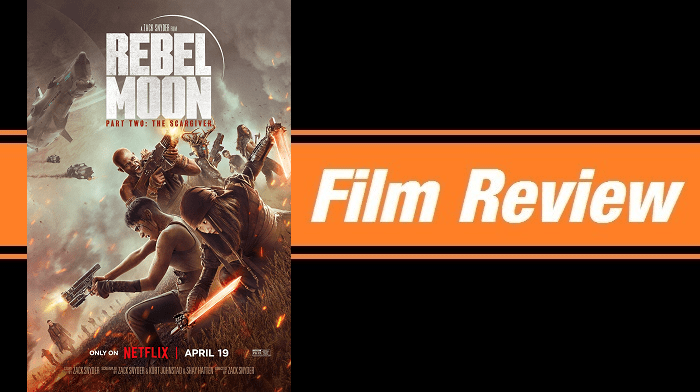
The first film in Zack Snyder’s original two-part space opera “Rebel Moon” was met with the ever so predictable panning, much of it from those who seem triggered by the mere mention of the director’s name. The movie wasn’t nearly as bad as fashionable sentiment declared and it did a good job setting the next film which Netflix was onboard to release as part of their exclusive deal with the strangely polarizing filmmaker.
But in fairness, “Rebel Moon – Part One” was far from a flawless film in large part due to a particular demand in Netflix’s deal with Snyder. It seems Snyder had always envisioned “Rebel Moon” to be epic in scale and R-rated. Netflix agreed to let him fully realize his vision but demanded that he first release a shortened PG-13 cut of both films. This led to “Part One” feeling shortchanged in some key places including its character development and even the action.
Image Courtesy of Netflix
That problem is even more pronounced in “Rebel Moon – Part Two: The Scargiver”, a movie that eventually gets to the big showdown both films have been building towards but that feels as though large chunks are missing. To no surprise it’s a visual feast and the performances bring these characters to life. But the action, while often beautifully shot, is once again pruned as evident by noticeable camera zooms and awkward cutaways to avoid violence that may push to an R-rating. And then there is the story which (in this version) tries to get by on the bare basics. You can tell there’s much more than what we get.
“Part Two” begins with Kora (Sofia Boutella) and Gunnar (Michiel Huisman) returning to their village with the warriors rounded up in “Part One” who have agreed to help the villagers defend themselves against the oppressive Imperium. Those warriors are a former Imperium general Titus (Djimon Hounsou), a cyborg swordmaster Nemesis (Doona Bae), a prince-turned-blacksmith Tarak (Staz Nair), and a young rebel fighter Millius (Elsie Duffy).
What they didn’t realize is that the ruthless Admiral Atticus Noble (Ed Skrein), who Kora killed in the first film, has been resurrected and is now set to lead his forces on a siege of their village. So Kora and the warriors quickly begin training the inexperienced farmers in order to mount some kind of defense against Noble’s army. The full final hour of the movie is dedicated to the epic battle as it unfolds in the air and on the ground.
But getting to that final hour is a little rocky. That’s because “Part Two” takes too long to get going. The first hour has its moments and Snyder takes the time to give his characters more to do than just fight. But there’s not enough compelling drama and lengthy exposition is no substitute. I hate to beat a dead horse, but it’s another case where it feels like segments are missing. Again, it’s trimmed down to the bare basics with only a handful of scenes that actually feel as though they’re adding anything of value to the characters or the overall story.
Image Courtesy of Netflix
But then the second hour kicks in and Snyder gets down to doing what he does best. The glacial pacing of the first 60 minutes gives way to an action-packed second half that’s full of exciting set pieces and cool combat in spite of its obvious PG-13 edit. Snyder’s creativity really shines as he turns a farmland into war zone and even more so when the fight is taken to Noble’s massive starship hovering in orbit. And the inevitable second round between Kora and Noble is nothing short of jaw-dropping.
“Rebel Moon – Part Two: The Scargiver” directly continues the story of the first film in such a way that it’s hard to see it as its own movie. For many (like me) that’s hardly a dealbreaker. But if you didn’t like “Part One” it’s hard to imagine this one will change your mind. Most of the same limitations remain but to a greater degree. This is especially true with the characters who get the worst end of the PG-13 edit (take Jimmy, a robot knight voiced by the great Anthony Hopkins who is all but forgotten for most of the film). Snyder still nails his strengths. We’ll just have to wait to his director’s cuts to experience his full vision. “Rebel Moon – Part Two: The Scargiver” is now streaming on Netflix.
Warner Brothers Discovery Home Entertainment is releasing Martin Scorsese’s Academy Award winning “The Departed” on 4K Ultra HD for the very first time. Sparked by a star-studded ensemble cast that included Leonardo DiCaprio, Jack Nicholson, Matt Damon, Mark Wahlberg, Martin Sheen, Ray Winstone, Vera Farmiga, and Alec Baldwin, Scorsese’s gritty crime thriller deservedly won four Oscars including Best Picture and Best Director. This killer new collectible steelbook edition includes a 4K Ultra HD disc and digital copy. It’s a must for fans of the film.
This 4K Ultra HD steelbook edition of “The Departed” arrives in stores on April 23rd. See below for a full synopsis and release information including special features.
About the Film
Year: 2006
Runtime: 151 Minutes
Director: Martin Scorsese
Screenwriter: William Monahan
Cast: Leonardo DiCaprio, Jack Nicholson, Matt Damon, Mark Wahlberg, Martin Sheen, Ray Winstone, Vera Farmiga, Alec Baldwin, James Badge Dale, Mark Rolston, Anthony Anderson, David O’Hara, Amanda Lynch, Kevin Corrigan
Martin Scorsese directs an all-star cast in this action-packed thriller set in Boston, where a long-simmering hostility between the police department and an Irish American gang led by Frank Costello is primed to explode. The fuse is lit when a gangster is chosen to infiltrate the police force – a young cop goes undercover within the gang. Now, when the two moles uncover each other’s identity, the battle begins.
Theprestigious ensemble cast stars Academy Award winner Leonardo DiCaprio (“The Revenant”, “The Wolf of Wall Street”) , Academy Award winner Matt Damon (“Good Will Hunting”, “The Martian”), three time Academy Award Winner Jack Nicholson (“One Flew Over the Cuckoo’s Nest”, “Terms of Endearment”, “As Good as it Gets”), and Academy Award nominee Mark Wahlberg (“The Fighter”, “Boogie Nights”), with Emmy Award winner Martin Sheen (television’s “The West Wing,” “Apocalypse Now”), BAFTA nominee Ray Winstone (“That Summer”, “Nil by Mouth”), Academy Award nominee Vera Farmiga (“Up in the Air”), Academy Award nominee Alec Baldwin (“The Cooler”), Emmy nominee Anthony Anderson (television’s “Black-ish,” “Hustle & Flow”), and James Badge Dale in supporting roles.
Directed by Scorsese, the screenplay is by Academy Award Winner William Monahan and is based on the 2002 Hong Kong action thriller “Internal Affairs” by Alan Mak & Felix Chong. The film was produced by Brad Pitt, Brad Grey, and Graham King.
Special Features:
“The Departed” Ultra HD Blu-ray disc and Digital contains the following new and previously released special features:
Guilt and Betrayal: Looking into “The Departed” (new)
Stranger than Fiction: The True Story of Whitey Bulger, Southie, and The Departed
Crossing Criminal Cultures
9 Deleted Scenes with introductions by Martin Scorsese
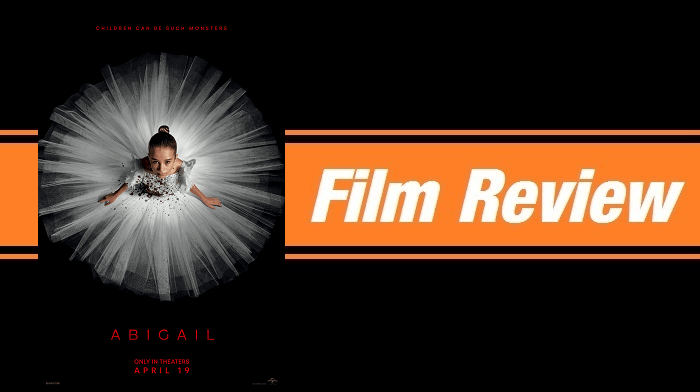
Genres collide in “Abigail”, the insanely bloody and equally bonkers new film from co-directors Matt Bettinelli-Olpin and Tyler Gillett (“V/H/S”, “Scream VI”). The duo’s latest effort mixes action, survival, vampire horror, and black comedy into one grisly B-movie cocktail that should have been a lot better than it actually is. What we end up with is an unfortunate misfire built on the misguided notion that if you throw enough blood and f-bombs at your audience they won’t notice the flaws.
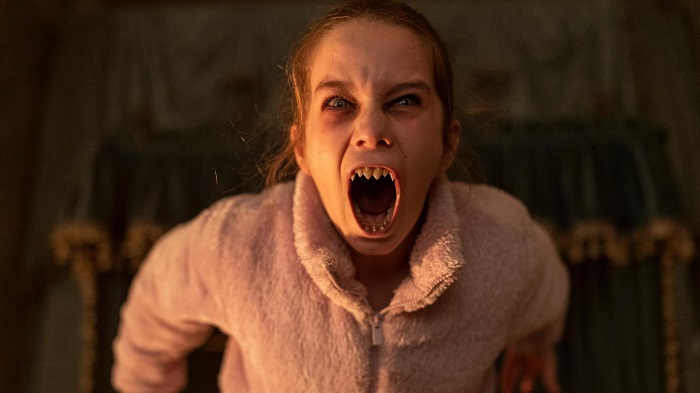
The movie’s biggest draw may be its fun and all-in cast. Melissa Barrera, Dan Stevens, Kathryn Newton, Kevin Durand, and even the great Giancarlo Esposito all have parts in its killer ensemble. But the cast member many people will be talking about is 14-year-old Alisha Weir. She plays the film’s titular character and let’s just say her performance has some bite to it. But a good cast can only do so much especially when they’re frequently left to get by on nothing but their own charm and charisma.
Image Courtesy of Universal Pictures
In this case the chief culprit is the script. Written by Stephen Shields and Guy Busick, the premise is simple enough and perfect for lots of fun genre indulgences. They have all sorts of cool inspiration they’re pulling from. And (again) there’s that cast who all seem fully committed to whatever they’re asked to do. When all considered, this should have been a sure-thing. But the paper-thin characters and the shallow dialogue starts to wear on you. Unfortunately for us the film doesn’t veer from its formula. So we’re left with more arguing, more f-bombs, and less brain cells.
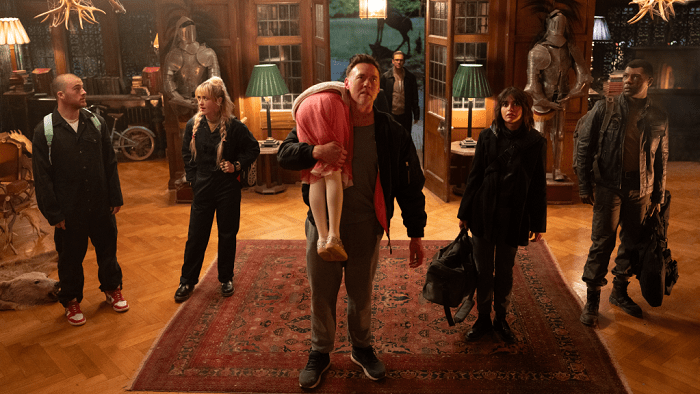
“Abigail” opens by introducing us to a group of kidnappers, each with broadly defined specialties and even broader personalities. They’re complete strangers to each other but handpicked by their employer. There’s the hard-nosed leader Frank (Stevens), the medic Joey (Barrera), the dense but lovable muscle Peter (Durand), the ditzy young hacker Sammy ( Newton), the zoned-out getaway driver Dean (the late Angus Cloud), and Rickles (William Catlett), the team sniper because what team doesn’t need a sniper?
Their job is to kidnap a young girl named Abigail (Weir) as she returns home from ballet practice. They pull it off with remarkable precision and then drive the girl out to an abandoned mansion in the middle of nowhere where their handler named Lambert (Esposito) is waiting. When they arrive Lambert informs them that they are to stay at the mansion and watch Abigail for 24 hours while he retrieves the hefty ransom from her wealthy yet mysterious father. After he returns they’ll all get paid and can go their separate ways.
As the six settle in for the next several hours the movie tries to open up their characters through some back-and-forths that don’t really add much depth at all. They mostly argue and insult each other which makes them more insufferable than interesting. There are a couple of exceptions. Newton is by far the most entertaining, possessing an infectiously wacky energy that I kinda loved. Durand has some really funny lines but the writers overplay the ‘dumb’ card. And Catlett is the least offensive only because his character is the most thinly-sketched of them all.
And that leads to the film’s big reveal (it’s early on and in all the advertising so not really a spoiler). Abigail isn’t the sweet innocent little girl fearing for her life. She’s actually….a vampire and her six kidnappers are what’s on the menu. It’s a crazy turn of events that gives a little more context to the film’s hilarious tagline “Children can be such monsters”.
Image Courtesy of Universal Pictures
From there “Abigail” follows the six as they try to survive while sealed inside a sprawling mansion with a literal bloodthirsty vampire. Again, it’s a premise that should be a slam-dunk. But the movie uses all of its tricks early. And then rather than try some new ones it just uses the old ones over and over again. The humor dries up pretty quick and there’s not a scare to be found anywhere. And the one swing at an emotional payoff doesn’t land and isn’t earned at all.
I don’t want to sound like there’s nothing to like about “Abigail”. Again, the cast is a fun one with Newton being the brightest light. The oceans of blood can be quite fun early on. And there are a smattering a genuinely funny lines (Abigail uttering “I like to play with my food” remains my favorite). But in this case the good can’t outweigh the bad and my brain had already checked out before the seemingly never-ending final battle arrived. “Abigail” is in theaters now.
Packing a cracking cast and one hilariously ungainly title, “The Ministry of Ungentlemanly Warfare” is in many ways a Guy Ritchie flick through and through. Like so many of his movies, it features Ritchie’s signature style, swagger, and offbeat sense of humor. For some that’s a strong selling point; for others it may be a turn-off. Either way, Ritchie remains an interesting filmmaker who’s able to get big studio support and big names to star in his films. I can understand why.
His latest is based on Damien Lewis’ 2014 nonfiction book “Churchill’s Secret Warriors: The Explosive True Story of the Special Forces Desperadoes of WWII” and focuses specifically on Britain’s 1942 clandestine mission dubbed Operation Postmaster. Ritchie takes a more embellished approach to the event, nailing down the historical basics and then creating his own proudly cheeky and joyously violent genre movie. In this case it’s like a spaghetti western in World War II dressing.
To no surprise, the brazenly self-aware “Ungentlemanly Warfare” is colored with the style and energy of its creator. There is plenty of wit and a number of bloody and bombastic action sequences to take in. But Ritchie surprises with stretches of unexpected restraint that allows the more serious elements of history to filter through. It’s an important touch that calls back to other classic men-on-a-mission movies while showing that Ritchie’s interests go beyond just checking his own boxes.
Image Courtesy of Lionsgate
With German U-boats prowling the Atlantic, cutting off vital supply chains and keeping the United States from joining the war, Churchill (a not-so-convincing Rory Kinnear) green-lights a covert operation as a last-ditch effort to avoid surrendering to the Nazis. The Prime Minister’s liaison known as “M” (Cary Elwes) is tasked with putting together a team. Not of everyday soldiers, but of ruthless men who have no issue with breaking the rules in order to complete their task.
“M” immediately calls for the one man who can pull off such a job – Gus March-Phillipps (played by an utterly delightful Henry Cavill, sporting a curly mustache, shaggy beard, and charm to spare). Gus is brought in from prison (yep, prison) and briefed. He’s told that a merchant ship called the Duchessa d’Aosta will be docking in Fernando Po, a small Spanish island in the Gulf of Guinea. Once there it will be loaded with essential Nazi supplies that are to be distributed to the U-boats. The mission – blow up the ship and the supplies, ultimately crippling the U-boats in the Atlantic.
Gus agrees to take on the “unsanctioned, unofficial, unauthorized” mission but only if he brings his own team. A desperate “M” agrees. So Gus summons his band of highly skilled rogues, each with their own reason for wanting to kill Nazis. They include the brawny Swedish brute Anders Lassen (Alan Ritchson), explosives guru Freddy Alvarez (Henry Golding), and expert sailor Henry Hayes (Hero Fiennes Tiffin). And they’ll need to make a stop in the Canary Islands to save an old friend and master tactician Geoffrey Appleyard (Alex Pettyfer) who’s being held at a Nazi base (the rousing rescue sequence is the film at its finest).
Image Courtesy of Lionsgate
As Gus and his team sail towards Fernando Po, two secret operatives, Marjorie Stewart (Eiza González) and Heron (Babs Olusanmokun), arrive early by train to begin preparations. Marjorie is tasked with seducing Heinrich Luhr (Til Schweiger), the sadistic Nazi officer who oversees the port. Heron is the Rick Blaine of Fernando Po – a well-connected club owner who will setup diversions so that Gus and his men can sail in and do their duty. But in the movies things rarely go as planned and the teams will have to navigate some harrowing hurdles to pull off their mission.
Everyone from the charismatic cast to Ritchie himself seems to be having a blast and it certainly carries over to us. The chemistry, the playfulness, the panache – it all clicks. Not everything is lighthearted fun. We get instances that bring us back to earth and remind of the true story’s stakes. Just not many of them. That’s because this movie is much more about our unsavory yet likable antiheroes killing LOTS of Nazis in a number of ungentlemanly ways while thumbing their noses at the weak-kneed Admirals cowering back in London. Who wouldn’t love that?
For the most part “Ungentlemanly Warfare” bops along at a good pace, only lagging a bit in the second half before picking back up on its way to an action-fueled payoff. There’s a reasonable amount of suspense, some humorous dialogue, and well-shot action that swings between savage and comical. And all of it plays to the pulpy rhythms of composer Christopher Benstead’s toe-tapping score. I doubt there will be a sequel. But if Churchill were to once again come calling, I would happily follow Cavill and company on another Nazi-slaying adventure.
M. Night Shyamalan’s latest venture looks to be steering away from the supernatural and otherworldly (although with MNS you can never really tell). “Trap” has more of a crime mystery look to it although it still has the kind of wild premise which Shyamalan is known to enjoy. The film stars Josh Hartnett which is nice to see and the first trailer sees him taking on a rather unexpected role. I’ll let you watch it and see for yourself.
I will say that Hartnett plays a father taking his ecstatic daughter to see her favorite singer in concert, Lady Raven (played by Shyamalan’s oldest daughter Saleka). But it turns out that the packed arena is really a trap laid by police to catch a brutal serial killer believed to be in attendance. Again, it’s a crazy idea made even crazier by a particular reveal in the trailer. I don’t know what to expect, but its wild enough to pique my interest.
“Trap” lands exclusively in theaters on August 9th. Check out the trailer below and let me know if you’ll be seeing it or giving it a pass.