Steven Spielberg is returning to a genre that helped solidify him as a household name. “Disclosure Day” sees the revered filmmaker revisiting the world of alien encounters that birthed such classics as “Close Encounters of the Third Kind”, “War of the Worlds”, and of course “E.T. the Extra-Terrestrial”. The first trailer for the film sets up something that could be pretty special. Besides having Spielberg back in the director’s chair, the trailer also teased an exceptional cast led by Emily Blunt, Josh O’Connor, Colin Firth, and Colman Domingo.
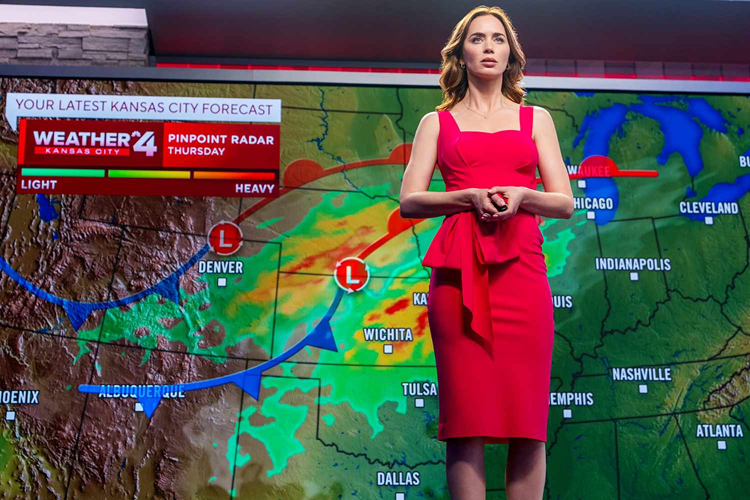
The trailer is wonderfully cryptic which is exactly what you want for a movie like this. In it we see Emily Blunt who suddenly seems possessed by an alien entity during a live weather report. Apparently the strange message she relays catches the attention of millions watching. Meanwhile Josh O’Connor seems to know what’s going on and he’s prepared to share it to the world. Crop circles, strange animal behavior, Colin Firth connected to some strange body-control machine – Spielberg and screenwriter David Koepp throw in a lot of compelling ingredients to a movie poised to be a summer hit.
“Disclosure Day” invades theaters on June 12, 2026. Check out the trailer below and let me know if you’ll be seeing it or taking a pass.
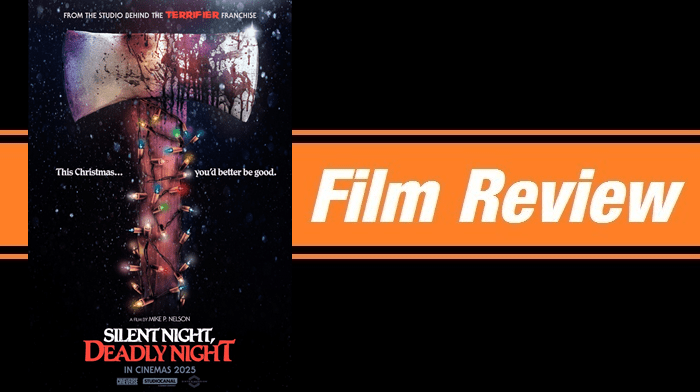
The original “Silent Night, Deadly Night” released in 1984 to significant controversy. Groups criticized the film for its graphic violence at the hands of a killer decked out in a Santa Claus suit. But over time it would gain a cult following which led to four mostly straight-to-video sequels and a loose 2012 remake. Now the psychological slasher is getting a fresh reboot just in time for the holiday season.
Writer-director Mike P. Nelson puts a new spin on the 1984 original film. He takes several of the same characters and completely reinvents their stories starting with his main character, Billy Chapman (Rohan Campbell). When Billy was eight-years-old he witnessed the brutal murder of his parents by a deranged man in a Santa Claus suit named Charlie (Mark Acheson). Billy’s mother manages to mortally wound Charlie. As the killer is dying, Billy comes in contact with him which has some alarming consequences.
Now years later, Billy is a drifter who moves from town to town at the behest of the voice of Charlie living in his head. Even more disturbing, the voice leads him to kill one person a day during the 24 days of Christmas as part of some grisly ritual connected to a macabre advent calendar. To make it even more twisted, Billy kills his targets while wearing a blood-stained Santa Claus suit. “Naughty boys get punished”, the creepy voice tells him.
Image Courtesy of Cineverse
The movie takes a surprise turn when Billy arrives in the small town of Hackett. While in a diner, an attractive local named Pamela Sims (a very good Ruby Modine) catches his attention. He follows her to a Christmas trinket shop owned by her father (David Lawrence Brown). By this point, Nelson has tuned our minds to expect a blood bath. Instead, Billy gets a job at the shop and quickly falls for Pamela. But as their romance blooms, the voice of Charlie reminds Billy of his serial-killing duties.
It would be criminal to spoil where the story goes. Let’s just say Nelson takes some mammoth swings in his efforts to weave romance and horror into something cohesive and entertaining. Believe it or not he pulls it off, not perfectly, but to a degree you may not be expecting. We get several meaningful reveals and a couple of crazy turns that completely reshape everything we thought we knew. The romance works because Nelson invests time in his two characters. The horror works because he doesn’t shortchange slasher fans when it comes to gory kills.
While “Silent Night, Deadly Night” is unexpectedly entertaining, I don’t want to oversell it. It’s not likely to become a perennial holiday favorite. The story takes a few shortcuts and some characters are underdeveloped. But it’s not throwaway rubbish either. Nelson isn’t just rehashing some tired formula. He offers his own unique take on the story, tossing in plenty of gruesome kills, a warm romance, some pitch-black humor, and a strong sense of self-awareness.
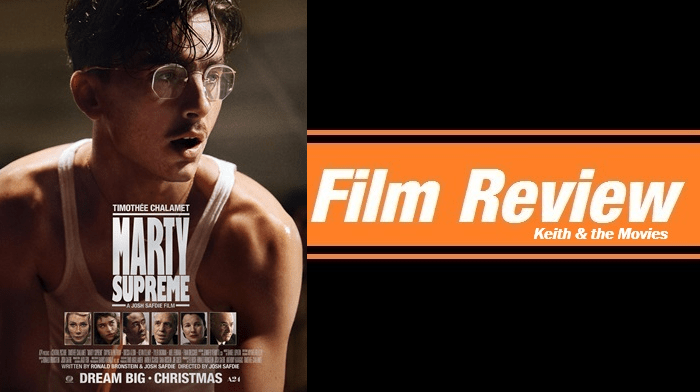
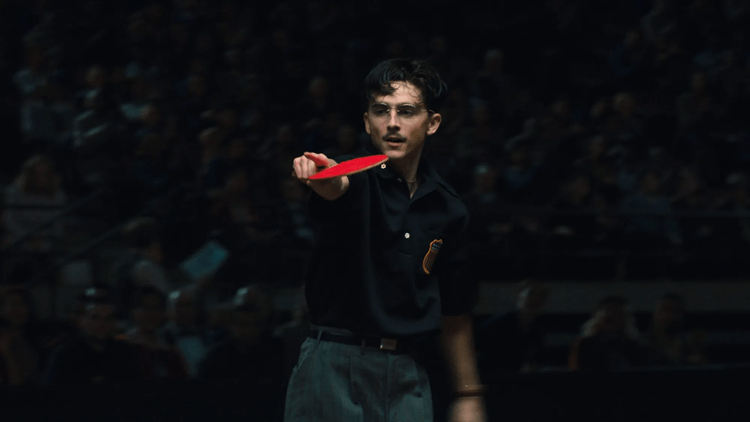
Timothée Chalamet has been doing some incredible work lately. If you don’t believe me, just ask him. Chalamet lets it fly in his latest feature “Marty Supreme”, a whirlwind dramedy from director and co-writer Josh Safdie. It’s a movie where everything revolves around Chalamet’s full-throttle performance – a frenetic turn that sees the 29-year-old star working hard to keep up with his director’s furious pacing.
“Marty Supreme” is fueled by a chaotic energy that keeps us glued to every wild, unpredictable moment. At the same time, that very manic propulsion rarely slows down enough for Chalamet to find the humanity in his character. Make no mistake, his performance is electric. But the character goes from borderline charming in his arrogance and self-absorption to utterly loathsome and insufferable. It’s only at the very end that we get a different shade of him, but by then it’s too late to matter.
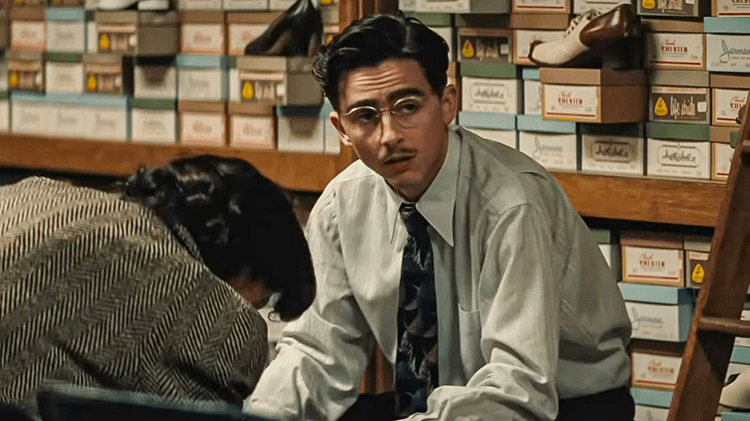
Chalamet plays 23-year-old Marty Mauser, a character loosely inspired by American table tennis player Marty Reisman. Set in 1952, Marty is a scrawny, bespectacled New Yorker with an unquenchable confidence in his own perceived greatness. Marty sells shoes at his uncle’s shoe store, but he sees it as beneath him. Instead, he believes he’s destined to be on a Wheaties box as the best table tennis player in the world.
While Marty may be a tremendous table tennis player, it quickly becomes evident he’s a terrible person. In Marty’s world he is most important, and getting what he wants is all that matters, no matter who he crushes in the process. He’s a narcissist and a shameless self-promoter who uses people to his own advantage, whether they’re his mother, his best friend, or a young married woman named Rachel (Odessa A’zion) who’s carrying his baby. They’re all tools Marty uses to get what he wants.
The first leg of Marty’s run towards greatness begins in London at the table tennis British Open. There he sets his eye on the tournament favorite, Endo (Koto Kawaguchi), Japan’s table tennis champion. But Marty is never out of selling mode, and he begins shopping himself around as the next big thing. In the process he woos Kay Stone (Gwyneth Paltrow), a retired actress trapped in an unhappy marriage to a wealthy businessman named Milton Rockwell (Kevin O’Leary). Marty manages to get Kay in his bed, but doesn’t do as well getting money out of Milton.
After disappointment in London, Marty’s whole world becomes about getting to the World Championship in Tokyo. He spends the summer performing halftime acts for the Harlem Globetrotters. But he will need more money if he’s going to make the trip to Japan. And Marty shows he’s willing to do anything to make that happen, no matter how reckless, underhanded, or cruel it may be.
As Safdie ushers Marty from one rambunctious situation to another, his antics get more outrageous and treacherous. Yet as they do, a nagging question kept coming to mind. How can so many people (either emotionally or professionally) buy into such a glaringly obvious self-obsessed fraud? Clearly Safdie and his co-writer Ronald Bronstein want us to see Marty as a cunning salesman and a slick con artist. But too often characters fall for his manipulation in such ways that make them look like buffoons.
Perhaps the biggest casualties of this are the two key women in the story. A’zion gives a superb performance as possibly the only sympathetic character in a movie full of bad people. But the script strips her of any agency and turns her into a loyal puppy dog who will do anything Marty wants, no matter how horrible he treats her. Kay is just as maddening despite a terrific Gwyneth Paltrow turn. Her relationship with Marty is never convincing mainly because she too has to appear hapless for Marty to get what he wants.
Thankfully some of the blindness subsides later in the second half as a handful of characters catch on to Marty’s flagrant nonsense. It adds some welcomed tension and needed conflict to a story that moves so fast that we rarely get a moment to process things. Still, you can’t help but be drawn to the chaos as relayed through Safdie’s kinetic direction and Chalamet’s aggressive theatrics. It keeps us locked into every crazy turn the story takes. Yet it’s also a big reason Marty’s final act conversion doesn’t quite work. After over two hours of despicable actions, he needs more than the final ten minutes to earn our sympathy.
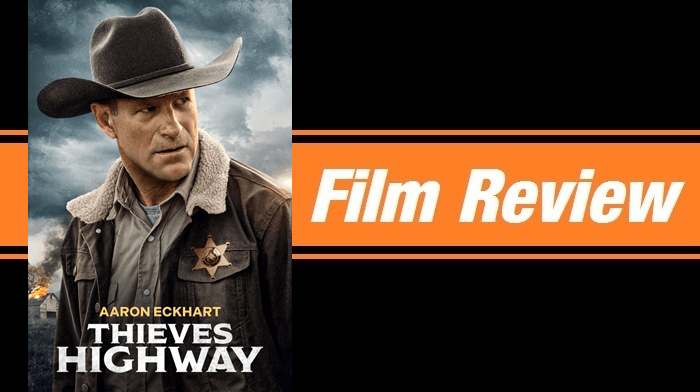
It’s been too long since the underrated and undervalued Aaron Eckhart has been in a major big screen movie. People may forget, but Eckhart has a pretty stellar résumé, having worked with such heavy-hitting directors as Oliver Stone, Steven Soderbergh, Ron Howard, John Woo, Brian De Palma, Christopher Nolan, and Clint Eastwood. But while he waits for Hollywood to remember his name, Eckhart continues to work, having starred in a run of straight-to-video action thrillers.
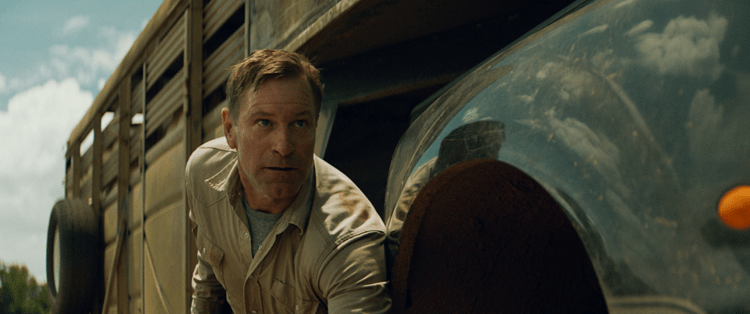
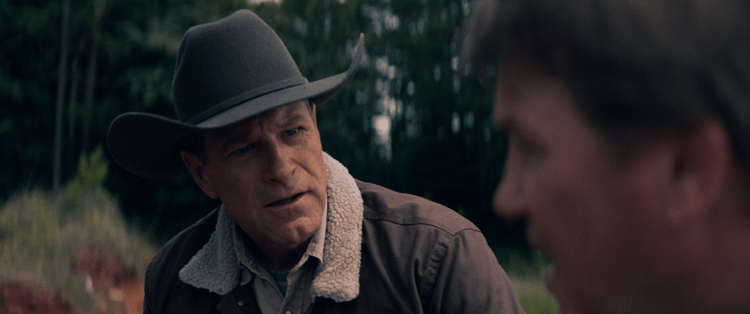
His latest thriller is “Thieves Highway”, a feature strengthened by its interesting setting yet frustratingly hampered by a formulaic plot. Written by Travis Mills, the story is set in rural Oklahoma where a sharp spike in livestock theft has cost ranchers and the industry millions of dollars. Eckhart plays the grizzled Frank Bennett, a “cow cop” with the Oklahoma Department of Agriculture who tracks and apprehends modern day cattle rustlers.
Frank’s job has gotten tougher of late. Not only are the cattle thefts on the rise, but the rustlers have become more ruthless, as evident by Frank’s friend and fellow lawman (Johnny Messner) being left permanently paralyzed after a recent encounter. Yet Frank pushes on, mainly because he has nothing else to fall back on after the death of his wife. But we see a spark when he bumps into an old acquaintance named Sylvia (Brooke Langton). Unfortunately their undercooked meet-cute doesn’t lead to anything we can’t see coming.
Equally predictable is the fate of Frank’s partner, Bill (Lochlyn Munro). After sharing his plans to retire and spend more time with his family, Bill insists on accompanying Frank in confronting a gang of rustlers outside of town. To no surprise, Bill is gunned down while Frank manages to escape. From there, a stranded yet determined Frank looks for a way to catch the criminals who killed his partner. Meanwhile the gang hunts for Frank, led by Jones (Devon Sawa), a deranged sociopath wielding a World War II Thompson submachine gun.
Most of the film sees director Jesse V. Johnson setting up a game of cat and mouse between the outgunned but resourceful Frank and Jones, along with his colorful band of thugs. Frank is left stranded with no vehicle and no cell service. But he finds an unexpected ally in an off-the-grid hermit named Axsel (Tracy “The D.O.C.” Curry). Elsewhere a plucky waitress named Peggy (Lucy Martin) finds herself playing a meaningful role in the chaos.
“Thieves Highway” moves along at a fairly crisp pace while streamlining its storytelling within a lean 87-minute runtime. At the same time, the movie could have fleshed out and filled out more if given an extra fifteen minutes or so. As it is, “Thieves Highway” travels down a fairly predictable path. Johnson and Mills do some fun maneuvering with their characters and Eckhart is a sturdy enough lead. But the storytelling takes too many shortcuts and the overall lack of suspense keeps us one step ahead.
DC Studios has released the first trailer for “Supergirl”, the second feature film in James Gunn’s DC Universe. It follows on the heels of the frustrating yet mostly popular “Superman”, which ended with an awkward cameo of Milly Alcock’s Kara Zor-El, aka Supergirl. Though not written or directed by Gunn, the new trailer shows a movie that’s following his brand to a tee. The angsty attitude, a lazy needle drop, desperate toilet humor, more shameless deconstruction – typical Gunn traits that fans will love and detractors will hate.
It’s hard to know what to expect from “Supergirl”. The trailer portrays Kara as a liquored-up party girl who runs afoul of some unsavory characters while jaunting around in space. We see her share some moments with her CGI dog Krypto and she talks about her home world of Krypton, which Gunn casually ruined in his Superman movie. About the only exciting bit is a two-second glimpse of Jason Momoa as Lobo. The rest looks like a typical James Gunn movie, even if he isn’t seated in the director’s chair.
“Supergirl” releases exclusively in theaters on June 26th. Check out the trailer below and let me know if you’ll be seeing it or taking a pass.
File Noah Baumbach under ‘Filmmakers I’ll Watch No Matter What’. I have been drawn to his unique body of work since his early Wes Anderson collaborations. And I have enjoyed most of the films he has directed from high-spirited indies à la “Frances Ha”, to serious-minded dramas such as “Marriage Story”, to utterly bizarre concoctions like “White Noise”. I just love his eccentric style, off-beat perspective, and rich dialogue.
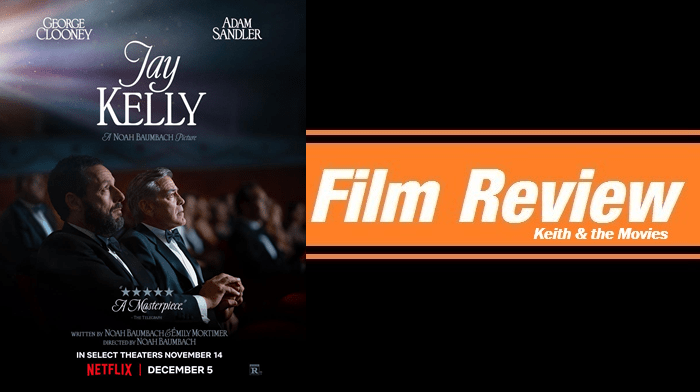
His latest is “Jay Kelly” and it’s very much a Noah Baumbach movie. Yet at the same time, it distinctly stands out in a number of interesting ways. Unlike Baumbach’s tightly focused settings, this one plays out on a noticeably grander scale. And rather than tell something more intimate, this time he broadens his story significantly. Even the filmmaking feels different, using a style that calls back to classic Old Hollywood productions.
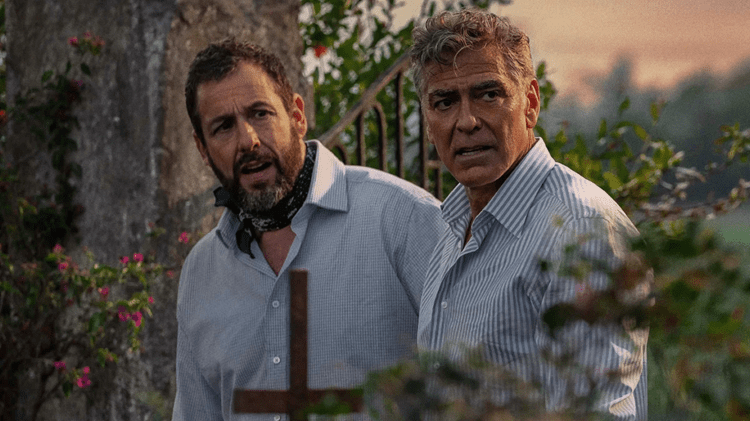
In a nifty bit of casting, George Clooney plays the titular Jay Kelly, a celebrated actor whose existential crisis forces him to reevaluate what matters most in his life. The movie opens with Jay wrapping his latest film, “Eight Men From Now”. Jay’s hard-working and intensely loyal manager Ron (a terrific Adam Sandler) already has his famous client’s next feature lined up. But Jay throws Ron a curveball when he announces he’s pulling out of his next movie and taking a trip to Europe.
Image Courtesy of Netflix
Jay’s out-of-the-blue decision puts his handlers in a panic as they scramble to make sense of his actions. Ron is forced to set aside his own family plans and join Jay and his entourage on a plane bound for Paris. There he plans on surprising his youngest daughter Daisy (Grace Edwards), who’s traveling abroad with friends. Afterwards he plans on hopping a train for Tuscany where he’s to accept a career achievement award that he had previously declined.
Ron’s main job is to coddle his star client while convincing him not to quit his next movie. But the blasé Jay is more interested in mingling with adoring fans and tracking down Daisy, who would rather be with her traveling companions. It all frustrates Jay’s handlers, especially his volatile publicist Liz (Laura Dern). But amid the chaos, we begin to see the real reason for Jay’s inward sabbatical. He begins reflecting on his life, from his career successes to his failings as a father.
In his melancholy, Jay begins weighing his past choices which forces him to reckon with their consequences, mostly involving his two daughters. While he at least has some connection with the younger Daisy, his relationship with his oldest daughter Jessica (Riley Keough) has soured. The fallout from prioritizing himself and his career has left a divide that she’s not ready to bridge. Keough only gets a couple of scenes, but she provides the story’s most heart-wrenching moments.
Image Courtesy of Netflix
Baumbach also gives time to Jay’s relationship with Ron which plays a key role in the star’s journey. Clooney and Sandler have terrific chemistry and consistently find humanity and humor in the scenes they share. Clooney slides right into Jay’s skin, at times so convincingly that you could interpret it as him playing a version of himself. Meanwhile Sandler gives one of the best supporting performances of the year and one of the best performances of his career. In many ways he’s the beating heart of the story, embodying the many things Jay has lost sight of in the name of success.
Early on, Jay makes the revealing statement, “All my memories are movies.” Could it mean that he has invested so much of his life to movies that it’s hard to find a memory that’s not in front of a camera? Or does he mean he has no memories of his own; that his memories are movies – scripted, directed, and produced for others to relish? Both can be true, and both add to Jay’s overwhelming feeling of regret.
Baumbach’s soulful script (which he co-wrote with Emily Mortimer) has us accompany Jay Kelly on a painful personal journey of self-reflection. But to Baumbach and Mortimer’s credit, they don’t turn it into a clean-cut redemption story. While they do find empathy for Jay, there’s no tidy reprieve from the personal consequences or the collateral damage he has left behind. Together with its rich, nuanced performances, lush cinematography, and Baumbach’s vibrant direction, “Jay Kelly” resonates as both a contemplative character study and a meaningful cautionary tale.








 Keith & the Movies