REVIEW: “28 Years Later: The Bone Temple” (2026)

Last year’s “28 Years Later” was Danny Boyle’s return to the bleak and harrowing zombie hellscape he first introduced with 2002’s “28 Days Later”. That world was further explored in 2007’s “28 Weeks Later” and then again in 2025. In the third film, Boyle and screenwriter Alex Garland picked things up 28 years after the second outbreak of the Rage Virus, adding a host of new characters and just as many old references that fans of the apocalyptic horror franchise enjoyed.

My issues with “28 Years Later” wasn’t with its presentation. Boyle nailed the grim representation of a collapsed society and the horrors that exist within its remnants. Instead, the problems were with the lack of cohesion in the rushed final act. Even worse was its preposterous and tone-shattering finish that did more to hurt the film than to set the table for another one.

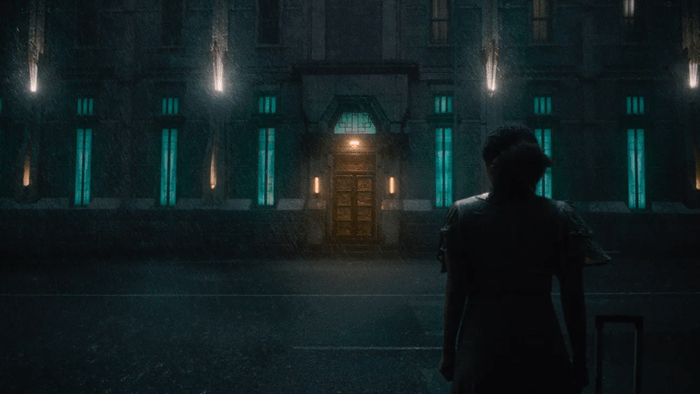
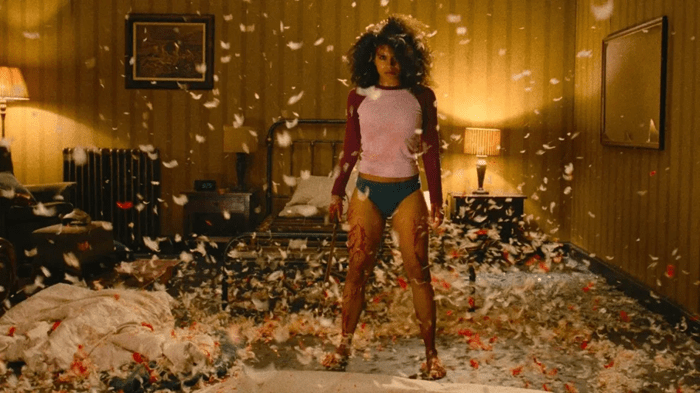
But some of the best sequels have made the movie that came before it better. Unfortunately that’s not the case with “28 Years Later: The Bone Temple”. Nia DaCosta takes over directing duties and she proves to have her finger firmly on the pulse of this dark and forbidding world. Unfortunately she’s repeatedly undermined by Garland’s script which keeps her handcuffed to two competing storylines that inevitably merge but not in the most satisfying of ways.

Image Courtesy of Sony Pictures Releasing

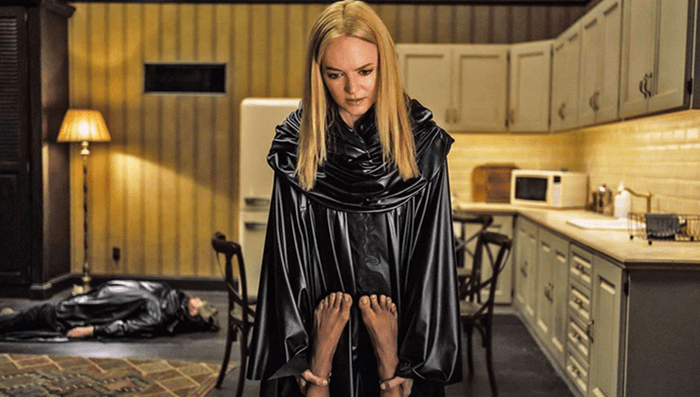
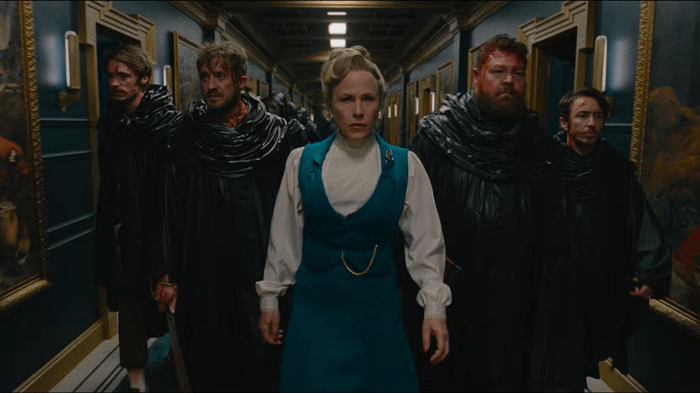
The previous film ends with 12-year-old Spike (Alfie Williams) being ‘rescued’ by a pack of blonde wigged tracksuit satanists with Power Ranger agility. This film picks up their story as the group’s maniacal leader, Sir Lord Jimmy Crystal (Jack O’Connell) is forcing Spike to fight one of his lackeys to the death, all to earn a spot in his cult. Spike manages to survive and reluctantly joins their ranks. He quickly learns these are violently deranged people who gruesomely torture and “sacrifice” anyone they come across.

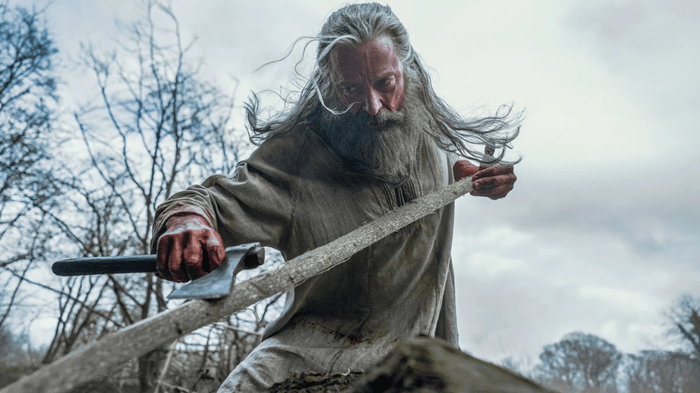
Elsewhere, we get more of the previous film’s most fascinating character, Dr. Ian Kelson (Ralph Fiennes), a reclusive former doctor who had dedicated his life to memorializing the victims of the virus through his haunting Bone Temple. But now, when not jamming out to his Duran Duran records, he’s getting high on morphine with an area Alpha he’s named Samson (Chi Lewis-Parry). This is the same Alpha that was ripping heads off of people in the previous movie. Now he’s the doctor’s test subject and hangout buddy.

Garland’s script bounces back and forth between these two arcs, with neither feeling all that significant to the overall story. Spike’s parade with The Jimmy’s is especially confounding. They’re basically psychopathic killers driven by a blind allegiance to a clownish charlatan. And frankly, they aren’t all that interesting. Even worse, Spike often gets lost in cult’s chaos, leaving his coming-of-age drama stuck on the back burner.

Image Courtesy of Sony Pictures Releasing

As for DaCosta, she is given the unenviable task of turning Garland’s tuneless story into something meaningful and cohesive. One of her biggest challenges is sorting through the tonal confusion that plagues the majority of the film. Things can switch from grimly serious to comically absurd in a matter of seconds. DaCosta also has to find a way to keep us from asking some glaringly obvious questions. For example, what about the community of survivors on Lindisfarne? What about Spike’s father who was last seen painfully screaming his son’s name. Apparently he wasn’t anguished enough to go out searching.

“The Bone Temple” also seems to forget about the infected (minus Samson). They aren’t the same terrifying threats who kept us on the edges of our seats during the last film. Gone is the nerve-shredding tension of simply walking through the forest. Instead the infected mainly pop up whenever the story needs them to. And when they do, DaCosta simply can’t quite match Boyle’s intensely kinetic style of framing and shooting the action.

Thematically, “The Bone Temple” touches on inhumanity and the nature of evil while single-mindedly skewering the concept of faith. But like much in the movie, its themes are so confined that they don’t really go anywhere. Similarly, the two parallel stories feel restricted to different worlds until finally intersecting at a strangely opportune juncture. We’re left with the sense that very little in the film is moving towards a particular narrative goal. The tonal hopscotch, numbing sadism, and off-balance storytelling only make things worse.

VERDICT – 2 STARS

REVIEW: “Dead Man’s Wire” (2026)

Gus Van Sant returns with “Dead Man’s Wire”, the director’s first feature film in nearly eight years. His latest is a crime thriller that’s inspired by the real-life Indianapolis hostage crisis involving Tony Kiritsis. On February 8, 1977, a desperate and deranged Kiritsis entered Meridian Mortgage Company after falling behind on his real estate mortgage payments. After a clash with mortgage broker Richard O. Hall, Kiritsis pulled out a sawed-off 12-gauge shotgun, wired it to the back of Hall’s head, and demanded $5 million and immunity for being cheated by the company.

The incident and the subsequent 63-hour standoff forms the backbone of “Dead Man’s Wire”. Written for the screen by Austin Kolodney, the story is an interesting blend of old-fashioned suspense thriller, crime drama, and pitch-black comedy. It takes this bonkers real-life story, which was captured live and in color, and gives it the Sidney Lumet “Dog Day Afternoon” treatment. Van Sant and Kolodney play around with the facts in an effort to draw some current-day connection. You could say it turns the true story on its head, and not in the best of ways.

Image Courtesy of Row K Entertainment

A fiercely committed Bill Skarsgård plays Tony Kiritsis, an aspiring businessman with a bone to pick with the heads of Meridian Mortgage Company. The Tony we meet is a rather unremarkable fellow – tall and lanky with a fairly plain haircut and a thinly drawn mustache. He’s jittery and wild-eyed yet unassuming in his light green polyester shirt and brown corduroy jeans. About the only thing standing out as he walks into Meridian’s office building is the sling supporting his arm and the long, narrow cardboard box he’s carrying.

Tony makes his way to the fourth floor where he’s scheduled to meet with Meridian’s president, M.L. Hall (a comically vile Al Pacino). But Tony is informed that M.L. is off on a last-minute “business” trip and instead he’s to meet with the president’s son, Richard (Dacre Montgomery). Forced to play the hand he’s dealt, Tony pulls wire out of his sling and a sawed-off shotgun out of his box and takes Richard hostage. Tony rigs his gun to Richard with the wire so that it will discharge if he’s shot. He then sets out to let the world know how the company has wronged him.

Things quickly evolve into a truly crazy scenario as Tony marches Richard out into the busy Indianapolis street as cops converge and the media broadcasts it to the world. Tony’s demands are to the point. He wants his debt forgiven, full immunity, and a public apology from Richard’s father. It all leads to an extended standoff at Tony’s apartment building and an eventual crackpot ending that fits well with this stranger than fiction story.

Image Courtesy of Row K Entertainment

Aside from Skarsgård, Montgomery, and Pacino, “Dead Man’s Wire” is accented by an array of other intriguing characters who are realized through some fun and wily performances. Colman Domingo plays the silky voiced Indianapolis disc jockey Fred Temple (Colman Domingo), who’s based on the real-life radio personality Fred Heckman. An unrecognizable Cary Elwes plays Detective Michael Grable, an acquaintance of Tony’s who is first on the scene. And Myha’la gets some good scenes as a local TV reporter determined to get the scoop.

Unfortunately, the movie skips over one of the more fascinating elements of the true story – the trial and its subsequent verdict. Instead, all we get is a brief tacked-on scene at the end. But that falls in line with what Van Sant is going for. He is more interested in making a movie brimming with anti-institutional sentiment. He packages it within a classic crime thriller framework that’s soaked in a richly detailed 1970s aesthetic. It can also be darkly funny, often at the most surprising times, adding levity to an already gonzo true story that you have to see to believe.

VERDICT – 3.5 STARS

REVIEW: “Night Patrol” (2026)

“Night Patrol” shouldn’t be confused with the 1984 comedy of the same name that could be called a “Police Academy” knockoff if the two films hadn’t released mere months apart. No, this is a much different animal – a movie that defies categories. It’s as if you threw multiple genres and sub-genres into a blender and out came “Night Patrol”. Regardless of how you categorize it, this wild confection will still find ways to surprise you.

Directed by Ryan Prows, “Night Patrol” features equal helpings of supernatural horror, pitch-black comedy, social commentary, graphic gore, family drama, exploitation excess, and more. The story (written by Prows, Shaye Ogbonna, Tim Cairo, and Jake Gibson) comes packed with a wealth of themes that involve police corruption, racial injustice, gang violence, fractured families, economic disparity, and more. And they’re accompanied by no shortage of blood-spraying and gut-slinging.

Image Courtesy of RLJE Films

The movie begins with Wazi Carr (RJ Cyler) sitting in an interrogation room at the LAPD police station, bleeding from the jagged black shard protruding from his side. As the questioning begins, Prows uses Wazi’s telling of events to frame his gonzo story. A fun ensemble fills it out, playing a medley of colorful characters that includes police officers, gangbangers, family members, and neighbors.

Much to the chagrin of his family, Wazi’s big brother Xavier (Jermaine Fowler) is an ambitious LAPD cop who’s hungry to climb the ladder. He’s jealous of his partner Ethan (played by scream king Justin Long) who was recently invited to join an elite anti-gang task force called Night Patrol. Not much is revealed about Night Patrol other than they’re intensely exclusive and they have their run of the police department. Oh, and they’re also secretly vampires.

Lest you feel that last sentence was a spoiler, Night Patrol’s identity is revealed pretty early on. It’s their ultimate goal that’s the bigger mystery. Prows uses Ethan’s initiation to plunge us into the dark, twisted, and zany world of Night Patrol. Overseeing the group’s operations is a street-tough cop called Deputy (Phil Brooks aka wrestling’s CM Punk). He reports to the organization’s mysterious leader referred to as “Sarge” (Dermot Mulroney). It only gets crazier (and bloodier) from there.

Things ratchet up pretty kick, especially after Wazi witnesses the brutal murder of his prospective girlfriend, Primo (Zuri Reed) at the hands of Night Patrol. The killing draws the attention of two rival gangs, both neighborhood offshoots from the Bloods and the Crips. The comically superstitious Bloods are led by Bornelius (Freddie Gibbs) and are always on the watch for demons, shapeshifters, and lizard people with acid tongues. The local Crips are headed by Wazi and Xavier’s mother, Ayanda (Nicki Micheaux), a Zulu mystic who always seems to know more than she’s letting on.

Image Courtesy of RLJE Films

Everything ultimately propels us forward to an inevitable showdown at the Colonial Courts housing project. It’s there that secrets are revealed, new alliances are formed, and gallons of blood is shed. On the way there the pacing is a little wobbly, but it’s undeniably fun regardless of how bonkers things get. Visually, Prows gives his film a gritty and grainy texture. And the choice to employ practical effects ends up paying huge dividends.

“Night Patrol” tackles more themes than you can count on two hands with most handled surprisingly well. It also employs just as many metaphors, some of which start strong but get sillier over time, and others that veer close to heavy-handedness. Still, the film maintains a self-awareness that keeps things fun. And Prows’ clear love for exploring genres produces an infectious energy and a go-for-broke uniqueness that gives the movie an identity all its own.

VERDICT – 3 STARS

New on Home Video: “Rental Family” on 4K UHD Digital and Blu-ray

Searchlight Pictures is bringing the heartwarming “Rental Family” to home video. Directed and co-written by Hikari, the film sees Brendan Fraser in a role he was meant to play. The touching yet warmly comical premise has Fraser playing a struggling American actor living in Japan who gets a peculiar job that gives him a new outlook on himself and life. Fraser is joined by a terrific cast who give dramatic weight to this quirky yet deeply moving comedy-drama.

“Rental Family” is available NOW in 4K Ultra HD on digital platforms. It will release physically on Blu-ray on February 17th. See below for a full synopsis of the film as well as a list of the special features from both the digital and physical releases.

About the Film:

Year: 2025

Runtime: 110 Minutes

Director: Hikari

Screenwriter: Hikari, Stephen Blahut

Cast: Brendan Fraser, Takehiro Hira, Mari Yamamoto, Shannon Mahina Gorman, Akira Emoto

Rating: PG-13 for thematic elements, some strong language, and suggestive material

Set in modern-day Tokyo, Rental Family follows an American actor (Brendan Fraser) who
struggles to find purpose until he lands an unusual gig: working for a Japanese “rental family”
agency, playing stand-in roles for strangers. As he immerses himself in his clients’ worlds, he
begins to form genuine bonds that blur the lines between performance and reality. Confronting
the moral complexities of his work, he rediscovers purpose, belonging, and the quiet beauty of
human connection.

Special Features:

Bonus Features

  • Featurette: Rental Family Revealed — Go behind the scenes with Brendan Fraser,
    director HIKARI and the Japanese cast as they explore friendship, culture, found family,
    and filming in Japan in this intimate look at the making of Rental Family.
  • Deleted/Extended Scenes:
    o Columbus
    o Crying Session
    o Apology
    o Aiko’s First Client
    o Clearbright
    o Tickets
    o Audition
    o Phone Call
    o Final Montage

REVIEW: “Relentless” (2026)

Writer-director Tom Botchii serves up a genre smorgasbord with his new film, “Relentless”. It’s fun to even consider the various thrillers it qualifies as. For starters it’s an action thriller, a revenge thriller, a psychological thriller, even a home invasion thriller. It dips its toe into exploitation cinema. It sometimes plays like a bruising character study. At other times you’ll swear you’re back in the grindhouse theaters of the late 1970s.

Whatever you consider it to be, far more important is that Botchii keeps things entertaining. “Relentless” might not live up to its name, and it certainly has its flaws, some of which become noticeable early on (more on them later). But Botchii’s vision and inspiration, helped by two firmly committed lead performances, keeps the audience engaged, even as the story struggles to fill its lean 93 minutes.

Image Courtesy of Saban Films

“Relentless” is a tightly focused two-hander that begins with introductions to its main characters. Teddy (Jeffrey Decker) is a homeless man living out of his car. We meet him as he’s listening to old voicemails from his ex-wife before going to sleep in his cramped backseat. Elsewhere, Jun (Shuhei Kinoshita) sits in his ultra-modern two-story home, enjoying a nice meal of fine sushi. He pecks away on his laptop before climbing into his warm comfy bed for the night.

Their two paths cross the next evening when Teddy shows up at Jun’s home posing as a salesman. After Jun brushes him off, Teddy forces his way inside with a sawed-off shotgun, stalking Jun like his prey. After a brief brawl, Jun grabs his precious laptop and flees into the night with Teddy in pursuit. Jun manages to get away but loses his laptop in the process. Determined to get it back, he follows Teddy to a gas station only to be knocked unconscious and kidnapped.

Jun wakes up tied to a chair in an old abandoned house with Teddy sitting across from him. From there the two men have a verbal standoff, with Jun swearing he doesn’t know who Teddy is and Teddy insisting he does. Botchii lets the mystery linger, leaving us with a number of consequential questions. Who are these two men? What is their connection? And what’s on this laptop that both seem fixated on? It makes for an intriguing setup with Botchii maneuvering Decker and Kinoshita like chess pieces until he’s ready to reveal more.

Image Courtesy of Saban Films

The eventual revelations catapult the story into an ultra-violent mano-a-mano showdown that isn’t afraid to let the blood gush. At the same time, the characters are never as fully-formed as they could be. Their individual pasts are merely referenced through exposition which doesn’t allow the story’s themes to resonate as they should. And it’s attempt at social commentary is wobbly at best, with certain motivations playing like wild swings rather than meaningful considerations.

As mentioned, “Relentless” does struggle to find enough story to fill its already lean 93 minutes. Botchii eats up some of the time with stylish visual flourishes that look good but are otherwise weightless and repetitive. Still, this is a solid sophomore effort from an ambitious filmmaker with an interesting vision. Botchii may not hit all of his marks, but he squeezes everything he can out his modest budget and two sturdy lead performances. And to his credit, he’s not afraid to take chances in the process.

VERDICT – 2.5 STARS

Random Thoughts: The 2026 Golden Globe Awards

Last night the Hollywood Foreign Press brought us the 83rd Golden Globes Awards. 2025 was a peculiar year for movies and that translated to the Globes broadcast. Sadly, we once again have one invincible movie being pushed through every awards show. Along with it comes several winners that were just as easy to predict. But thankfully the show wasn’t without a few big surprises to go along with its more obvious moments. And that’s how these things often go.

As I do every year, here are a few random thoughts on this year’s Golden Globes awards...

  • When it comes to the big winner of the night, there was no drama at all. The frustratingly flawed yet wildly revered “One Battle After Another” has been ushered through awards season as this year’s darling. So it’s no surprise it won Best Picture – Musical or Comedy at the Globes. Unfortunate but predictable.
  • As for the best movie of the year, “Train Dreams”, the Hollywood Foreign Press couldn’t even bring themselves to nominate it for Best Picture or much of anything else. Whatever.
  • The first award of the night was Best Supporting Actress which went to Teyana Taylor for “One Battle After Another”. It was unexpected, but knowing the fashionable adoration for the movie, it shouldn’t have surprised anyone.
  • Taylor’s win means Amy Madigan went home empty-handed. It’s a shame considering how tremendous (and deserving) she was in “Weapons”. Suddenly her Oscar chances have dipped.
  • Speaking of no surprise, Paul Thomas Anderson wins Best Director for “One Battle After Another”. Like Best Picture above, it was one of the most sure-thing wins of the night. PTA winning had been etched in stone since the movie first released.
  • “One Battle After Another” also won Best Screenplay despite easily being the weakest of the six nominees. But OBAA love knows no bounds. And the more deserving nominees this year were simply out of luck.
  • Then there’s “Hamnet” which won the final award of the evening, Beat Picture – Drama. I really thought “Sinners” had it in the bag. But it was “Hamnet” getting the big win that I wasn’t expecting. It now stands as a legit contender for second place in the Oscar Best Picture race.
  • Jessie Buckley appears to be in the driver’s seat for Best Actress after winning the award at The Critic’s Choice and now the Golden Globes. She was phenomenal in “Hamnet” delivering a performance that is 100% worthy. It’s great seeing her win and equally great seeing her reactions.
  • It wasn’t an especially great night for “Sinners”. While it did take home a couple of statues including the worthless Box Office Achievement award, it lost out on the biggies. I wonder why? Was it the rabid OBAA obsession? Or was it the age-old bias against horror movies which has long plagued these awards shows?
  • When announcing the nominees, couldn’t the Globes have shown actual clips from the movies or shows instead of just pinning where they were sitting in the room? It was such a bizarre and uneventful choice.
  • Nikki Glaser returned to host and she opened the show with several strong jokes. She basically followed the routine from her many celebrity roasts which means everybody was fair game.
  • Possibly my favorite from Glaser: “Sean Penn, you’re such an original. Everyone in this town is obsessed with looking younger; meanwhile, Sean Penn is like, “What if I slowly morph into a sexy leather handbag?
  • Playing Mark Morrison’s “Return of the Mack” as Macaulay Culkin came out to present was kind of hilarious.
  • The very best moment of the night came in the Best Supporting Actor category. Stellan Skarsgård gave the best supporting performance of the year in “Sentimental Value” and it was great to see him win. It’s especially satisfying considering SAG didn’t even nominate him for their upcoming Actor Awards.
  • Sadly, “Sentimental Value” wouldn’t win another award. It’s such a shame and a big miss for the Hollywood Foreign Press.
  • “The Secret Agent” wins Best Non-English Language Motion Picture. It’s a good choice although “Sentimental Value” would have been my pick. Especially with the unfortunate absence of “Nouvelle Vague” from the nominees.
  • Timothée Chalamet wins Best Actor in a Musical/Comedy Film for “Marty Supreme”. It was certainly one of the biggest performances of the year. Nevertheless, Chalamet will be entering Oscar night in a really good position.
  • Ludwig Göransson wins Best Score for “Sinners” and it was very well deserved. Frustratingly, for some reason the Globes chose to cut it from their broadcast.
  • If the producers really wanted to show Göransson’s win they could have cut Judd Apatow’s rambling never-ending presentation of Best Director in half and had plenty of room. Unfortunately…
  • Wagner Moura wins Best Actor – Drama for “The Secret Agent”. He gave an a terrific performance, no doubt. But of these nominees, it should have went to Michael B. Jordan. What he did in “Sinners” was next level.
  • Side Rant: The fact that Daniel Day-Lewis hasn’t been nominated ANYWHERE for Best Actor this entire awards season puts a big asterisk next to this entire category.
  • Rose Byrne winning Best Actress – Musical or Comedy for “If I Had Legs I’d Kick You” was a nice moment and it was great to see her so appreciative. It was a powerful performance.
  • Glaser closing out the show wearing a Spinal Tap cap was a nice tribute to the late Rob Reiner. RIP.

And those are a few Random Thoughts from this year’s Golden Globes awards. Overall it was a fun enough show, although it’s hard to get too excited when there’s such a lack of drama in key categories. Now it’s onto Oscar night.