
REVIEW: “Safe House” (2025)

2025’s “Safe House” shouldn’t be confused with or considered connected to the 2012 Denzel Washington and Ryan Reynolds action thriller of the same name. They do fall into the same genre, but that’s about as far as the similarities go. This recent film features a much different story, and director Jaimie Marshall tells it within an impressively lean and efficient 90 minutes.

Penned by screenwriter Leon Langford, “Safe House” maneuvers us through a handful of contrivances and an occasional trope or two on its way to delivering a propulsive action movie that’s just as much a tightly-wound thriller. It does an amazing amount within its fairly modest budget and the ensemble make good fits, often adding more to their characters than the script itself.
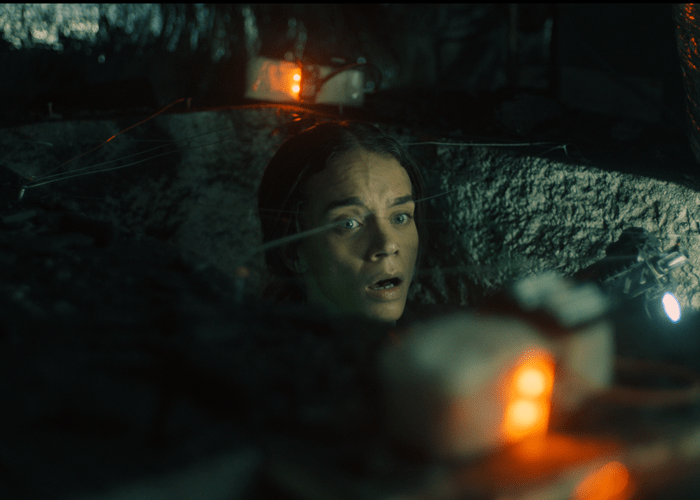
Image Courtesy of Vertical

The film opens in downtown Los Angeles as a convoy is transporting the Vice President of the United States to a gala being held at City Hall. Suddenly the convoy is hit with high-grade explosives only a few blocks from its destination. At the same time, a bomb is detonated in front of City Hall, releasing a chemical agent into the heart of the city. As unknown gunmen rain down bullets, five federal agents scramble to a high-security federal safe house operated by a “housekeeper” named Anderson (Lucien Laviscount).

With barely any connections between them, the six key characters find themselves locked in a safe house with fellow agents they barely know, if at all. Aside from Anderson, we meet Special Agents Owens (Hannah John-Kamen) and Reeves (Michael Bradway) from the Department of Defense, the secretive Agent Choi (Lewis Tan) who was among the VP’s security detail, the trigger-happy Agent Sorello (Ethan Embry) from Homeland Security, and the grizzled Agent Halton (Holt McCallany) from Langley.

Still shaken from the terrorist attacks, the six agents must navigate their suspicions and work together if they want to survive. But that becomes increasingly difficult after the safe house is contacted by General Marshall (Brett Cullen). He informs the agents that the signal from the detonator used in the bombing has been traced to their building. Believing one of the agents to be the bomber, Marshall remotely seals the safe house until the identity of the bomber is discovered.

Most of the film follows the six rats in a cage who are not only fighting to survive threats from terrorists breaking in from the outside, but also the potential threat from a traitor already among them. Fear and frustration soon leads to paranoia. And the characters, with their distinct personalities and tightly held secrets, begin to clash. As for the audience, we’re left to take it all in – studying the agents and weighing the variables, all in effort to figure out who is or isn’t the person they claim to be.
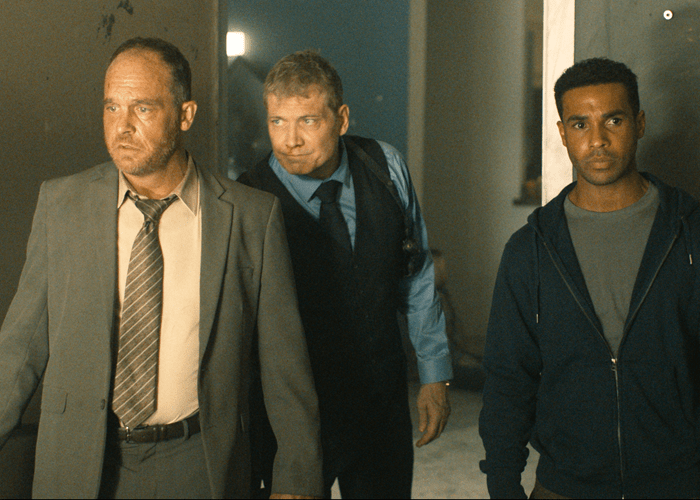
Image Courtesy of Vertical

As the mystery is playing out, the filmmakers break it up with several kinetic action sequences as the terrorists begin penetrating the fortified building. If you look close, there are clues to spot in the hectic shoot-outs and bone-cracking brawls. But these scenes are mostly about the well-choreographed action. It’s intense, fast-paced, and thrilling in large part due to Marshall’s crisp approach and the skillful lensing from cinematographer Michael Merriman.

The biggest problem with “Safe House” is a frustrating one. It’s found in the movie’s big reveal which unfortunately goes the more obvious route. Not only is the culprit’s identity fairly predictable, but their revelation rushes the movie to an underwhelming finish that’s capped off with a cliffhanger meant to set up a sequel. But the unexceptional ending doesn’t undermine the taut powder-keg story that leads to it. Marshall shrewdly keeps us invested by steadily propelling things forward and raising the stakes every step of the way. His steady screw-tightening and bursts of furious action makes “Safe House” an entertaining watch.

VERDICT – 3.5 STARS

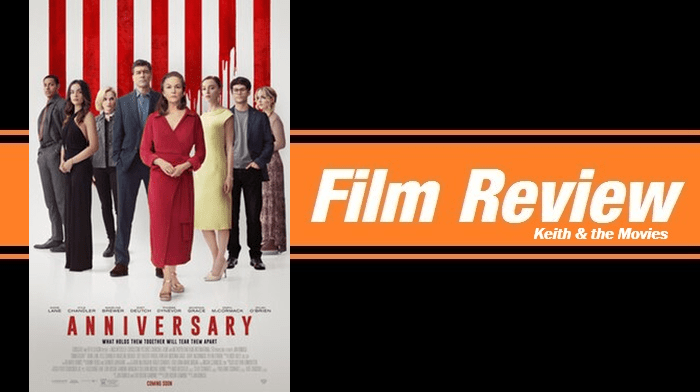
REVIEW: “Anniversary” (2025)

“Anniversary” travels a pretty crazy path. It begins as a domestic thriller before flirting with becoming a psychological thriller and ultimately ending as something resembling a dystopian thriller. It’s a movie filled to the brim with clever ideas, some of which sizzle with intrigue and tension while others have a hard time connecting to everything else we see. Ultimately, I love that “Anniversary” takes some wild swings, even if it doesn’t hit everything it swings at.

“Anniversary” comes from director Jan Komasa who’s working from a screenplay written by Lori Rosene-Gambino. The film sports a terrific ensemble that features Diane Lane, Kyle Chandler, Zoey Deutch, Phoebe Dynevor, Dylan O’Brien, McKenna Grace, Madeline Brewer, and Daryl McCormack. All play characters caught up in a whirlwind of family dysfunction. Some stems from buried issues from their pasts. But most come with the introduction of a new person into their lives.

Image Courtesy of Lionsgate

The movie opens with the Taylor family gathering to celebrate the 25th wedding anniversary of Ellen (Lane), a Georgetown University professor, and Paul (Chandler), a restaurant owner. Joining the honored couple are their children, Cynthia (Deutch), a stuffy environmental lawyer who brought her disillusioned husband Rob (McCormack), Anna (Brewer), a provocative stand-up comedian, Josh (O’Brien), a smarmy and angsty struggling writer, and their geeky science-loving youngest, Birdie (Grace).

But it’s an outsider brought into their fold who swiftly turns things upside down. Accompanying Josh is his new girlfriend Liz (Dynevor). Josh is smitten with Liz and from all indications she feels the same way about him. But Liz is nervous about meeting his family. We see why once Josh introduces her to his mother. It turns out Ellen and Liz have some bad history dating back to an incident at the University. The sheepish yet cryptic Liz says it’s all behind them while a skeptical and cautious Ellen believes it’s no coincidence that Liz has attached herself to her son.

This first segment sees Komasa planting several narrative seeds as he sets up this complicated family dynamic. From there he jumps ahead eight years, and then two years, and so on. At each stop on the timeline we revisit the Taylors and witness another phase of their deterioration. Ellen’s frustrations with Liz festers, Cynthia battles depression as her relationship with Rob sours. Anna has a violent encounter at one of her shows. And the observant Birdie quietly soaks it all in.

But what about Josh and Liz? The couple marry and soon have twins. Later, Liz writes a controversial book called “The Change” which becomes a cultural phenomenon. The radically political manifesto sells over 10 million copies, making Liz and Josh a wealthy and powerful couple. The success of Liz’s book not only tightens the tension within the Taylor household. It lays the groundwork for an authoritarian dystopia which ends up affecting the story in ways we never see coming.

Image Courtesy of Lionsgate

From the very start there’s no denying the movie’s mammoth ambition. It’s melding of domestic and sociopolitical chaos is bold, but it’s a bit too much for it to handle. Still, the steady screw-tightening creates the kind of ever-intensifying, anxiety-riddled drama that keeps you glued to every harsh word and hateful stare. Meanwhile Komasa opens up a wealth of themes which he examines with the subtlety of a sledgehammer. He doesn’t hide his provocative prodding or his blunt-force messaging which overall works for and against his film.

As the film zips from point to point, certain family troubles escalate too quickly and without much explanation. Others feel oddly disconnected from the bigger story. But Komasa steadily propels his story forward, leaving us with little time to dwell on the negatives. He also lets his cast go for the jugular leading to some savory performances. Lane gets one of her meatiest roles in years. Chandler is a stabilizing force. O’Brien exudes detestability. Dynevor is a mystery who never tips her hand. They are all crucial ingredients that make this enthralling, swing-for-the-fences effort work.

VERDICT – 3 STARS

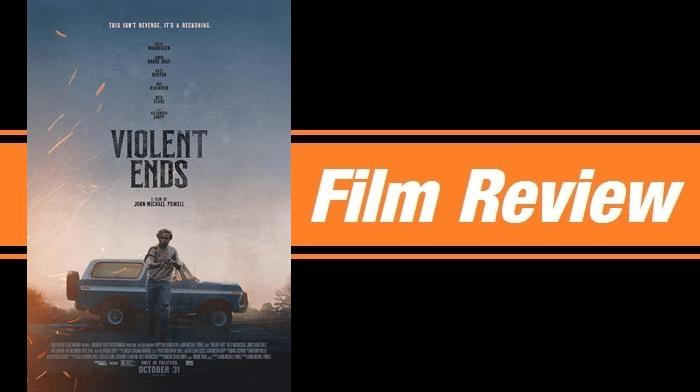
REVIEW: “Violent Ends” (2025)

Writer-director John-Michael Powell has conceived and crafted one of the best rural crime thrillers in recent years with “Violent Ends”. Shot in Northwest Arkansas with the Ozark Mountains as its backdrop, the film offers a markedly clear-eyed perspective on cycles of violence and the devastating consequences to families caught within them. And though his film is a work of fiction, Powell grounds his story in a rich and visceral authenticity.

“Violent Ends” is an independent film through and through. In addition to its financing and production, this gripping indie tells a uniquely compelling story that’s pulled from a very specific region. It’s a movie more interested in layered storytelling than splashy spectacle. And it remains focused on grounded characters whose lives are molded by the complexity of their circumstances. At the same time, Powell shows an affection for genre which significantly enriches this Southern Gothic revenge thriller.

The film opens with a quote from William Shakespeare’s “Romeo and Juliet”. It reads “These violent delights have violent ends“, a reference to the tragic fate of the play’s doomed lovers. The story itself kicks off in the hills of Northwest Arkansas. It takes place in 1992 as rural communities are still recovering from a crippling farming crisis. Seeing an opportunity, the Frost family grew into a powerful crime organization by trafficking cocaine and meth up the Arkansas river, preying on the desperate and despondent.

The Frost family’s operation is ran by three brothers. Ray and Donny oversee the cocaine business while Walt is in charge of the meth trade. The opening scene introduces us to Lucas Frost (Billy Magnusson) as he’s entering the state penitentiary to visit his incarcerated father Ray (Matt Riedy). Lucas shares news that he is about to marry his girlfriend Emma (Alexandria Shipp) and he’s leaving the family business. The news enrages Ray, but Lucas finds support in his mother Darlene (Kate Burton), a sheriff’s deputy caught between caring for her family and covering for them.

Meanwhile, just getting out of prison is Walt’s son, Sid. He’s played by the underrated James Badge Dale who gets a savory villain role he can really sink his teeth into. Sid is a cold menacing presence with a bad haircut and out-of-control ambitions that soon ignite a civil war within the Frost family. It begins with Sid and his brothers robbing a scrapyard as Emma happens to be delivering some checks. In the chaos, Sid’s antsy little brother Eli (Jared Bankens) shoots and kills Emma. It’s a mistake that has a violent ripple effect across the entire family.

Powell uses Emma’s murder to jumpstart his story’s revenge angle as a devastated Lucas sets out to discover who killed his fiancé. And once he follows the trail to Eli, it leads to an explosive chain of events that sees Lucas reeled back into the very life he wanted to escape. As the story careens down its inevitable path to violence, Powell subtly underscores the individual and family tragedies, both of which fuel his film’s powerful thematic core. And by the time we’re done with his tension-soaked final act, the brutal cost of violence has been made painfully clear.

From beginning to end, Powell emerges us in his assiduously defined Southern setting. He and cinematographer Elijah Guess vividly capture rural Arkansas through their carefully chosen locations and keen attention to some of the smallest details. Equally important are the richly textured and lived-in performances from Magnusson, Burton, and Dale, along with strong turns from Nick Stahl and the always great Ray McKinnon.

“Violent Ends” is an inspired sophomore feature from an exciting filmmaker with his finger firmly on the pulse of the story he’s telling. John-Michael Powell’s fresh voice and sharp perspective helps to energize his storytelling while the evocative themes he explores unfold with unsettling clarity and a deep emotional resonance. An intensely focused narrative, great performances, and a splash of genre grit – it all gives “Violent Ends” the kind of kick that will stick with you well after the end credits roll. “Violent Ends” opens in theaters on October 31st.

VERDICT – 4.5 STARS

REVIEW: “Springsteen: Deliver Me From Nowhere” (2025)

Bruce Springsteen is an interesting specimen. There is no denying his status as a rock ‘n’ roll legend. And while I’ve never been his biggest fan, he had a series of hits during the early to mid-1980s that I still love to this day. Yet Springsteen (affectionately known as The Boss) has always seemed like a regional favorite. For instance he remains much beloved in the Northeast but doesn’t have the same kind of following in the South.

Nonetheless, the 76-year-old Springsteen has released a total of 21 studio albums and sold over 140 million records worldwide. In addition, The Boss has won 20 Grammy Awards, two Golden Globes, and even an Academy Award. Those numbers alone speak volumes about the New Jersey native’s magnificent run. And now (as so often happens) he has his own music biopic. Unfortunately it doesn’t do justice to Springsteen’s life story or music career.

Based on the 2023 book of the same name by Warren Zanes, “Deliver Me From Nowhere” is a strangely unfocused sketch of Springsteen’s life. Writer-director Scott Cooper hones in on a specific time in the singer-songwriter’s history. It’s a compelling period that’s perfect for a ‘slice of life’ music biography. But instead of tightening its focus, the movie is frequently glancing back at another part of Springsteen’s life. Sadly we end up with a movie that’s hampered by two out of sync and underdeveloped stories competing for screen time.

Image Courtesy of 20th Century Studios

In one respect “Deliver Me From Nowhere” is about Bruce (Jeremy Allen White) in his early thirties fresh off the enormous success of his multi-platinum double album “The River”. After his final show of his year-long tour, Bruce informs his loyal and supportive manager Jon Landau (a terrific Jeremy Strong) that’s he’s going back home to New Jersey to “slow things down a bit”. While at Asbury, Bruce reconnects with his past which inspires him to start writing and recording a collection of new songs.

Bruce ends up writing several sure-fire hits. But instead of releasing them, his heart leads him towards something more personal. So he records a series of acoustic folk songs that would form his sixth album, “Nebraska”. But his record label wants to take full advantage of his popularity with a new album full of chart-toppers. An acoustic folk album is not what they had in mind. Still Bruce persists. And making it an even tougher sell is his insistence that there be no press, no singles, and no tours.

The creative tensions between Bruce staying true to his convictions and the desire of record executives to capitalize on his fame is when the movie is at its best. But there is another story that attempts to explore the more personal themes of generational trauma and depression. It consists of a series of flashbacks sprinkled throughout the movie that focuses on Bruce’s complicated relationship with his abusive alcoholic father (Stephen Graham).

Image Courtesy of 20th Century Studios

The father-son angle begins in 1957 during Bruce’s childhood and ends with a surprisingly tidy finish. The problem is we’re missing so many details that would better explain Bruce’s feelings towards his father. Even worse, their troubled relationship seems to haunt Bruce leading to bouts of depression. But his internal conflict doesn’t translate well to the screen. For much of the time we don’t know what’s wrong with Bruce. It isn’t until later that we get something resembling an explanation.

While the script bounces him back and forth between stories, White pours every bit of himself into portraying Springsteen. There are moments where the resemblance is uncanny both in his look and mannerisms. Other moments aren’t quite as convincing. Strong offers up another strong biographical supporting turn. And Odessa Young is very good as a single mother who becomes Bruce’s love interest. Unfortunately Young’s character is undercut by the muddied handling of Bruce’s mental state.

There’s no denying Bruce Springsteen is worthy of his own biopic. “Deliver Me From Nowhere” offers a mere glimpse of his creative journey rather than a celebration of it. Instead it attempts to balance music with a more personal story of strained family relationships and mental health. Cooper’s intentions are noble and he delivers some energetic scenes and enlightening moments (such as Bruce jamming with friends at The Stone Pony or his growing discomfort with fame). But it all feels curated to a fault, and there’s too much surface-level treatment to do justice to this music legend’s life and career.

VERDICT – 2.5 STARS

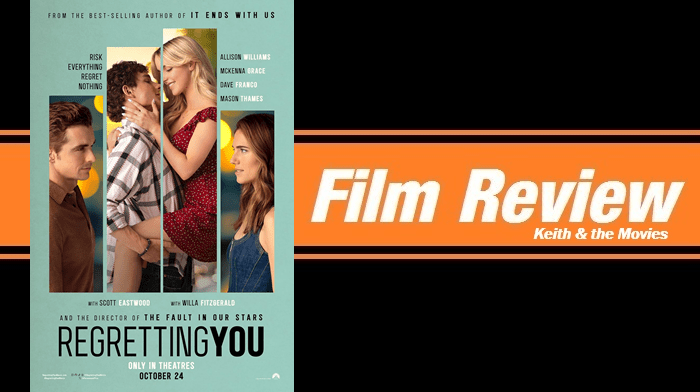
REVIEW: “Regretting You” (2025)

We’re not far from being able to christen Colleen Hoover and the new Nicholas Sparks. Like Sparks, the Texas-born Hoover has made it big as a novelist with a very passionate fanbase. And like Sparks, Hoover’s novels have become a favorite in Hollywood. She’s still a ways away from Sparks’ eleven film adaptations. But Hoover is making up ground quick with a movie last year, one this year, and two scheduled to release in 2026.

“Regretting You” is an adaptation of Hoover’s 2019 novel of the same name. It’s from director Josh Boone who previously helmed the solid romantic drama “The Fault in Our Stars” and the disastrous dead-on-arrival superhero movie “The New Mutants”. Here he works with screenwriter Susan McMartin to try and unpack Hoover’s soapy story. Admittedly I haven’t read the book. But it’s hard to imagine it’s as melodramatically messy as its big screen offspring.

It doesn’t help that the movie is built upon an eye-rolling premise that the mostly capable cast can’t save. They certainly put in the effort, each fully committing to the material no matter how schmaltzy or even strange it gets. But McMartin’s script doesn’t make it easy for them. The story often feels at odds with itself as it ushers its characters through scenes of devastating grief and cheesy teen romance. It’s a tsunami of clashing tones with streaming tears and out-of-tune humor often occupying the same space.

Image Courtesy of Paramount Pictures

Sisters Morgan (Allison Williams) and Jenny (Willa Fitzgerald) are polar opposites. Since they were kids, Morgan was the stable and reliable one while Jenny was all about having a good time. Their lives took a turn in high school following Morgan’s unexpected pregnancy with her boyfriend Chris (Scott Eastwood). The two end up getting married while Jenny splits with her geeky boyfriend Jonah (Dave Franco) who actually had the hots for Morgan but left town once she and Chris got married. But now Jonah’s back, just long enough to have a baby with Jenny and get engaged. Did you get all that?

While Jonah and Jenny have their newborn, Morgan and Chris have 17-year-old Clara (Mckenna Grace), a bright and sweet senior in high school with big plans to attend drama school. Even more, Clara has a crush on “the coolest guy in school“, Miller Adams (Mason Thames). Miller is a good kid who loves movies while living with and taking care of his ailing grandfather (Clancy Brown). To no surprise the two start to connect in ways that utilize most teen romance tropes.

But movies like this feed on tragedy and it’s no different in “Regretting You”. Morgan and Jonah get the shocking news that Jenny and Chris were killed in a car accident while secretly together. Naturally this prompts some troubling questions while leading to some predictable fallout. As Morgan and Jonah learn some heartbreaking truths, they make a pact not to tell Claire the truth knowing it would devastate her. But that seems like an impossible secret to hide from a 17-year-old, especially for anyone not living off the grid. Nonetheless…

Image Courtesy of Paramount Pictures

From there the story becomes a swirl of emotional breakdowns, heated arguments, and cutesy puppy love. The actors navigate the tonal chaos the best they can, but their characters are the biggest victims. They’re also hurt by some baffling creative choices. Take the decision to digitally de-age Morgan, Jenny, Chris, and Jonah in a brief prologue and a wonky flashback scene. Not only is the airbrushed effect noticeable, it’s comically distracting.

As for the characters themselves, they’re trapped in a movie where the adults often act like children and the kids like adults. But Clara (who is the centerpiece of the story) has her moments of petulance as well. She also makes some bizarrely rash decisions that don’t do her any favors. Yet Grace overcomes much of it with a mostly charming performance that earns our empathy. Williams finds some good beats in the slightly frustrating Morgan. Fitzgerald is the most in-sync with her character. Eastwood is stuck in a character type while a bespectacled Dave Franco seems miscast and struggles to find chemistry with Williams.

Somewhere inside of “Regretting You” is a thoughtful story about a mother and daughter trying to navigate their grief. The movie is filled with sincerity and good intentions. But the erratic script, uneven characters, and overall wobbly execution keep the story perpetually off-balance. Sadly it doesn’t work as weepy tearjerker or a cheesy YA romance. “Regretting You” is in theaters now.

VERDICT – 2 STARS

REVIEW: “A House of Dynamite” (2025)

Kathryn Bigelow’s highly anticipated and long awaited next movie has finally arrived via Netflix. It’s “A House of Dynamite” and it’s Bigelow’s first feature film since her 2017 historical crime drama “Detroit”. This is another audacious swing from the Oscar-winning director who delivers a harrowing ‘what-if’ nail-biter that’s infused with a sobering sense of urgency. It’s one of the best films of the year.

“A House of Dynamite” is a riveting thriller that can also serve as a pressing wake-up call to the ever-present danger of living in this new nuclear age. Written for the screen by Noah Oppenheim, the story plays like a hardcore military/political procedural laced with 1990s thriller vibes. But it’s Bigelow’s striking efficiency and razor-sharp precision that makes the movie’s engine hum. She maintains such control of the story’s many moving parts while keeping her audience firmly in her grip for the duration.

Bigelow is helped by a star-studded ensemble who fill out this three-pronged story. The narrative structure follows one significant event but tells it from three distinct yet interconnected perspectives. It begins at the 49th Missile Defense Battalion at Fort Greely, Alaska. Major Daniel Gonzalez (Anthony Ramos) and his unit pickup an unidentified ballistic missile in the air. At first they believe it’s a test. But by failing to detect the launch’s point of origin, they don’t know for sure.

Image Courtesy of Netflix

Fort Greely informs the White House situation room in Washington DC where Captain Olivia Walker (Rebecca Ferguson) and her team monitor potential threats to the country. Experts soon inform Walker that the missile is not a test and is only 19 minutes away from striking the continental United States. Multiple agencies spring into action, making efforts to intercept the missile while narrowing down its impact zone. As the clock counts down, fear and anxiety sets in.

We then hop back in time to when the missile was first detected but shift our focus to Offutt Air Force Base in Nebraska where General Anthony Brady (Tracy Letts) leads the US Strategic Command and Control. Brady’s team is able to determine the missile’s target to be Chicago and its 9.2 million people. With a nuclear attack seeming imminent, Brady pushes for the President to immediately consider a counter attack. But Deputy National Security Advisor Jake Baerington (Gabriel Basso) disagrees, insisting they get more information before thrusting the world into a nuclear war.

The movie transports us back once more, this time focusing on the President of the United States (played by an impressively grounded Idris Elba). We follow him as he gets word about the inbound missile and works under immense pressure to decide the best course of action. Does he follow Brady’s recommendation and counterattack before their window closes? Or does he listen to Baerington and wait, despite the dangers of doing so?

Image Courtesy of Netflix

The cast is full of other supporting players who have their own roles in the story. Jason Clarke plays the senior Situation Room officer and Walker’s boss. Greta Lee plays an intelligence agent with the NSA. Moses Ingram plays a FEMA official. Jared Harris plays the Secretary of Defense. Renée Elise Goldsberry plays the First Lady. Jonah Hauer-King plays the President’s retaliatory adviser. These are just some of the characters serving as key pieces in the story, who either provide vital information that moves the plot forward or add needed humanity to the chaos.

“A House of Dynamite” wastes no time lighting its fuse and it steadily burns right up to the film’s gutsy finish. It’s a near certainty that some viewers will be upset with where Bigelow pulls the plug. But I can’t imagine a more effective ending for the kind of impression she wants to leave. The palpable fear, the unnerving uncertainty, the sobering real-world relevance – it all hits like a hammer in the film’s final shots which Bigelow lands just as intended.

With “A House of Dynamite” Bigelow reminds us of how close we are to annihilation and how helpless we would be once those dominoes started to fall. At the same time, her film maintains its human pulse, never losing sight of the personal stakes for many of the people involved. The changes in viewpoints work surprisingly well within the ticking clock formula in large part thanks to Bigelow’s laser-focused execution. The urgency is emphasized in Barry Ackroyd’s documentary-style cinematography while the tone resonates through the ominous groan of Volker Bertelmann’s score. It all creates a tension-fueled movie that offers a prescient warning for our current day. “A House of Dynamite” premieres October 24th on Netflix.

VERDICT – 4.5 STARS