Without a doubt, my most anticipated movie of 2023 is Christopher Nolan’s “Oppenheimer”, a biography of J. Robert Oppenheimer who became known as the “Father of the Atomic Bomb” due to his work on the Manhattan Project. Seeing Nolan tackle a period biopic with this type of subject matter is really exciting, and I’m anxious to see what he brings to a movie like this. We still have a while to wait, but we did get a nice treat earlier today – the film’s latest poster. It’s a simple yet great design and very fitting. I can’t wait to see and learn more from “Oppenheimer” leading up to its release next year. So what do you think of the new poster?
DIRECTOR – Christopher Nolan
WRITER – Christopher Nolan
STARRING – Cillian Murphy, Emily Blunt, Matt Damon, Robert Downey Jr., Florence Pugh, Benny Safdie, Rami Malek, Josh Hartnett, Dane DeHaan, Jack Quaid, Matthew Modine, Alden Ehrenreich, Kenneth Branagh, Gary Oldman, Scott Grimes, Casey Affleck, James D’Arcy
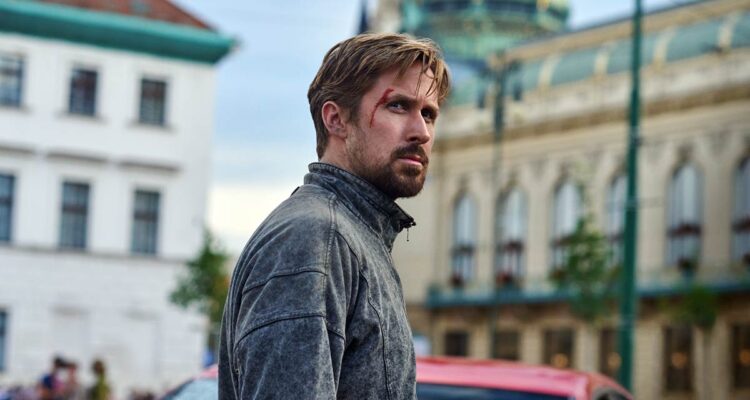
Among the biggest (and most expensive) Netflix movies of 2022 is “The Gray Man”. The big-budgeted star-studded action whopper from the Russo brothers sports a hefty $200 million budget. With Ryan Gosling, Chris Evans, and Ana de Armas highlighting its star power, “The Gray Man” is a major investment for the streaming platform which has suffered its share of losses recently. Netflix needs this blockbuster to work, and for what it’s going for, it actually does.
Anthony and Joe Russo became pretty high-profile filmmakers thanks to the Marvel Cinematic Universe. To their credit, they were behind four of the MCU’s very best films; each were massive box office successes. Since moving away from superheroes, the brothers have taken aim at making films for streaming platforms. It’s an interesting choice that they’ve been quick to defend (see Joe’s recent bizarre slamming of those who hold the theater experience in high regard).
The Russos’ first post-MCU venture was the not-so-great Tom Holland film “Cherry”. Now they give it another whirl with “The Gray Man”, a movie co-written by their frequent MCU collaborators, Christopher Markus and Stephen McFeely. The film is based on author Mark Greaney’s 2009 debut novel about a former CIA operative who suddenly finds himself targeted by his own government.
Image Courtesy of Netflix
The movie opens in 2003 at a Florida state prison where inmate Court Gentry (Gosling) is visited by federal agent Donald Fitzroy (Billy Bob Thornton). After a few pleasantries, Fitzroy tells Court that he’s there on behalf of the government to commute his sentence. Of course there is one pretty significant condition. Court must join the covert CIA Sierra program where he’ll be trained to kill bad guys. “And since you’ve already killed one it shouldn’t be too difficult,” Fitzroy reasons. As you can probably guess, Court agrees.
Jump ahead 18 years. Court (aka Sierra Six) is a seasoned Sierra operative and working a mission in Bangkok with field agent Dani Miranda (de Armas). Things take a turn after he discovers their target is a fellow government assassin designated Sierra Four (Callan Mulvey). In his dying words, Four warns Six that the shifty CIA Chief Denny Carmichael (Regé-Jean Page) is crooked and intent on erasing anyone who can prove it. He gives Six a memory drive with incriminating evidence against Carmichael and a number of other high-ranking feds.
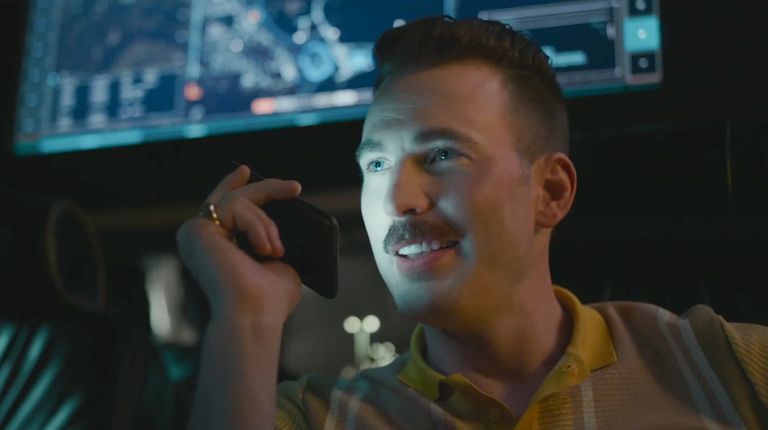
Realizing he’s probably next on his government’s kill list, Six skips his extraction and goes off the grid. He contacts his old handler Fitzroy who was pushed into early retirement by Carmichael. Fitzroy reaches out to some old friends to help Six escape. In the meantime, Carmichael grows more nervous and impatient. He calls on Lloyd Hansen (Evans, dressed as if he’s been plucked out of a 1960’s sit-com), a sociopathic contract killer known for his brutal and unhinged methods.
As you can imagine, the injection of Lloyd into the equation leads to violence and chaos. He immediately goes after Fitzroy for leverage, even kidnapping his niece Claire (Julia Butters – the chatty scene-stealer from Tarantino’s “Once Upon a Time in Hollywood…”) to help lure Six out. Lloyd then puts out a huge bounty on Six’s head and sends it out to hit teams and safe houses around the globe. Sounds like a full-proof approach. But Six proves to be a lot harder to kill than the egotistical Lloyd expected.
Despite Joe Russo’s strange attempt at devaluing the theater experience, there’s no denying that “The Gray Man” would have popped on the big screen. The globetrotting to locations like Vienna, London, Hong Kong, Berlin, and Croatia among others is fun, and the energetic camera of DP Stephen F. Windon gives us plenty of cool shots to enjoy. But the action scenes are the film’s bread-and-butter and the Russos, Windon, the visuals effects team, and the sound designers give us some real bangers that scream for the largest screen possible. The best is an over-the-top yet insanely fun action sequence through the streets of Prague. It’s a blast.
Another plus is how “The Gray Man” handles its villains. Carmichael isn’t another narcissist obsessed with world domination or a lunatic set on global destruction. Instead, he represents something more chilling – the secret lengths our own government protectors might go to hide their abuse of the public’s trust. Murdering police officers, gunning down innocent civilians, dispatching a government-sanctioned psychopath – all acceptable in their efforts to cover their dirty tracks. Granted, the movie isn’t out to make a particularly profound point about it. But it’s a welcomed change from the normal antagonists who populate these kinds of films.
Image Courtesy of Netflix
Performance wise, the movie features some pretty good ones. Gosling ratchets down on the emotionless poker-faced persona he has developed over a handful of other grittier action movies but let’s a little humor slip through now and then. And he certainly has the physical chops. Ana de Armas is given a lot more to do here than in her recent James Bond adventure and she makes the most of it. She slips into the background a little too much, but whenever she re-emerges it’s usually with a bang. And I enjoyed seeing Thornton back on screen. He’s a great presence, as is Alfre Woodard who’s terrific in the few moments she’s given.
On the villain side, Page is just the kind of detestable baddie the film needs. He’s never over-the-top and he has this kind of self-serving callousness that makes you hate his guts. Chris Evans gets the film’s showiest role. Outside of Captain America, there’s not a lot on Evans’ resume to get excited about. That said, there is one character type he has always excelled at – the brash, smart-mouthed wise-cracker. It was his signature in films like “The Fantastic Four”, “The Losers”, and even “Knives Out”. Here Evans hams it up in a variation of that role. But there’s a key reason the performance works so well. Rather than let Lloyd turn into a clown, the Russos know when to dial back the silliness and let Evans take the character down some more sinister paths. Without that restraint, Lloyd could have become an annoyance. Instead he’s a formidable antagonist.
The biggest knock on the film is that the story’s entire framework is undeniably simple and familiar. Even with the slightly different flavor of villains, “The Gray Man” is too by-the-books. Rather than take some narrative big swings, the story is content with keeping it conventional. But for those hungry for fast-paced grand-scaled action, the Russos have you covered. The energy is high and the set pieces are massive. Add to it a charisma-rich cast and you have a popcorn movie that may not reinvent the wheel storywise, but that delivers just the kind of fun adrenaline jolt action lovers crave. “The Gray Man” premieres tomorrow (July 22nd) on Netflix.
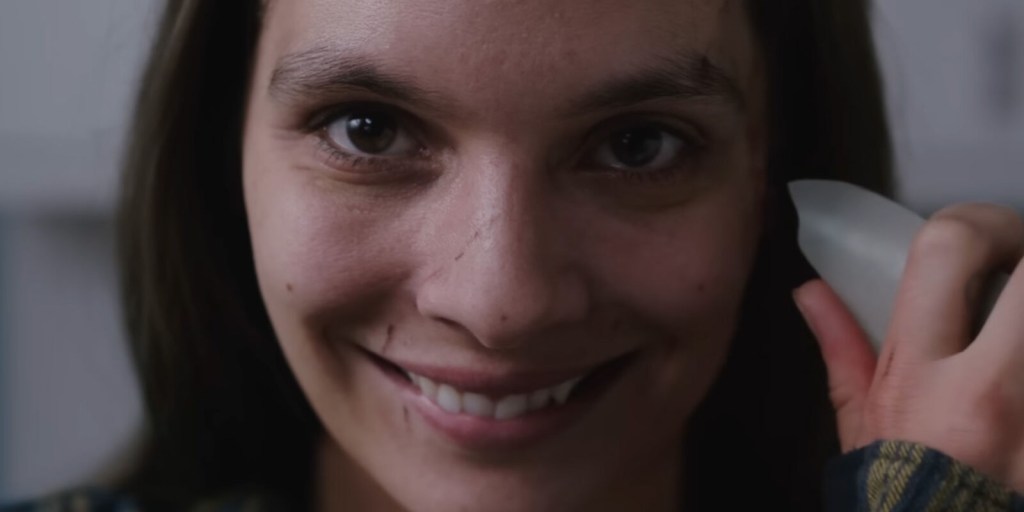
A rather cryptic yet unnerving brief teaser for “Smile” hit theaters a few weeks ago. A few days later, Paramount gave us the first full trailer for this creepy looking horror movie from writer-director Parker Finn. This is the feature film debut for Finn who is adapting his own 2020 film short titled “Laura Hasn’t Slept”. His new trailer is an interesting mix of the familiar and the fresh. I’m anxious to see how the movie actually turns out.
Built around a still mysterious premise, this New Jersey-set chiller looks to center around a doctor named Rose (Sosie Bacon) who begins witnessing eerie behavior from her patients. Before long, she begins to wonder if it’s her own mind that’s playing tricks on her. The trailer features lots of creepy laughing and a few unexpected angles that could make this a surprising little horror film. Oh and that jolt at the end…well done!
“Smile” hits theaters September 30th. Check out the trailer below and let me know if you’ll be seeing it or taking a pass.
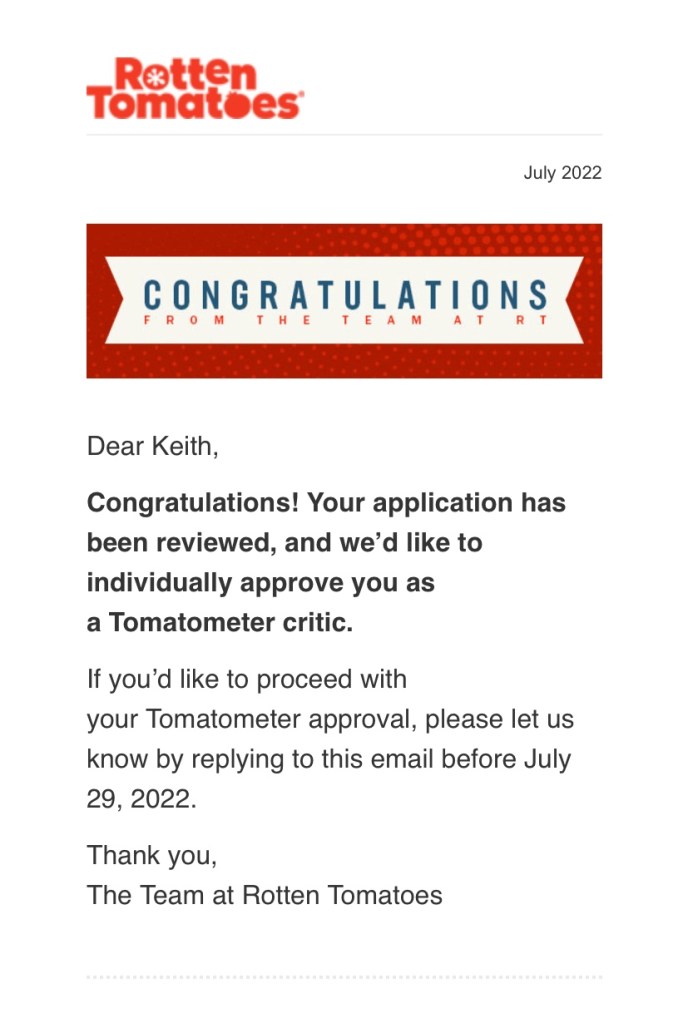
As I lay here mending from COVID-19 that I was unlucky enough to pick up during our Disney World trip, I received a really nice surprise via email. Rotten Tomatoes sent me a message telling me I’m now individually approved as a Tomatometer critic. All of my reviews for our newspaper were already included on RT. But individual certification means that even reviews from this little old website we be part of the Rotten Tomatoes meter. It was a nice bit of news.
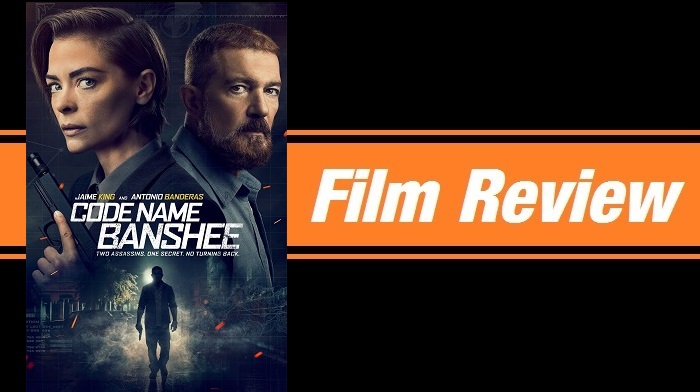
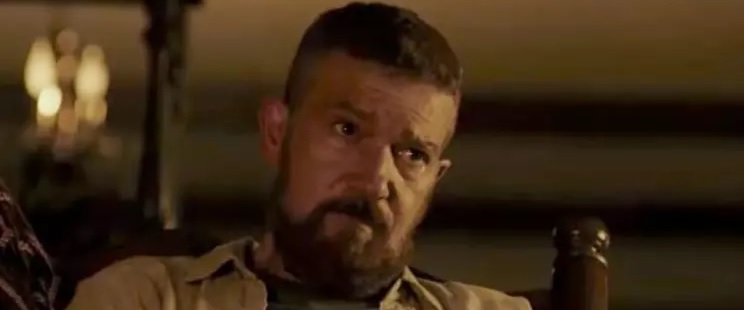
Antonio Banderas has that special something. Sure he’s a great actor with an incredible range. Yes he’s a natural at drama, comedy, action, you name it. But there’s something about him that always grabs my attention. He’s effortlessly suave and charismatic and it’s hard not to be drawn to his characters, even in smaller movies like his latest, “Code Name Banshee”. But despite his special sauce, Banderas can’t save every movie. Such is the case for this decent yet unremarkable action thriller.
Despite its rather bland title, the Jon Keeyes directed “Code Name Banshee” has its high points. There’s some well-shot action and that above-mentioned Banderas allure is certainly present. But the whole thing is extremely straightforward. There are no twists, no turns, no surprises. The story just plays out exactly as it tells us it will. Even the “big” final act showdown (because we have to have a final act showdown) lacks pizzazz. And the movie dips whenever Banderas is off screen, which is more often than I expected.
Image Courtesy of Screen Media Films
Storywise, the main character is Banshee (Jaime King), an assassin who works high-paying contracts with the help of her computer hacker friend and veritable ‘eyes and ears’, Kronos (Aleksander Vayshelboym). She’s your typical movie assassin type – quiet, lethal, and laser-focused on the job at hand. She never asks questions about her targets, “I’m the executioner, not the judge.”
I an a roundabout way we learn that Banshee’s father and his best friend and black ops partner Caleb (Banderas) have been branded traitors by the CIA. Caleb has vanished off the grid. Banshee’s father is believed to be dead, killed by a ruthless mercenary named Anthony Green (Tommy Flanagan).
Banshee and Green have a face-to-face when he beats her to one of her contracts. Green informs her that Caleb has a $10 million bounty on his head and he intends to collect it. Green offers her $1 million if she’ll give up Caleb’s whereabouts. Rather than accept, she blasts through Green’s goons and sets out to warn her former mentor and maybe recruit him to help her kill the man who may have axed her father.
Image Courtesy of Screen Media Films
For someone described as a “ghost”, Caleb turns out to be hilariously easy to find. These days he’s a bar owner in New Jersey who lives with his daughter, Hailey (Catherine Davis). With the help of Kronos, Banshee pinpoints Caleb’s location and pays him a surprise visit. After reassuring him she’s not there to kill him, Banshee tells Caleb that Green and his henchman are on their way. After dealing with some old baggage, the two realize that they have a chance to take out their mutual enemy. But it’ll take putting aside their past differences and a lot of bullets.
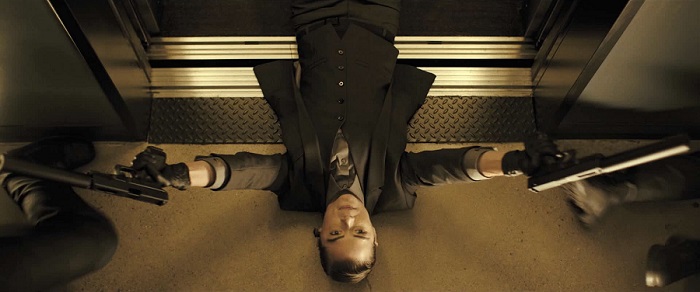
To no one’s surprise, there is quite a bit of John Wick-inspired gunplay. Some of it is pretty fun with headshots galore, each accompanied by a computer-generated spray of blood. There’s also some pretty good fight choreography, the best involving Banderas. King has a splashy scene or two, particularly in the early moments of the film. But it’s all things we’ve seen before. And the movie’s ultimate inability to maintain its energy makes it a hard one to latch onto. “Code Name Banshee” is out now in select theaters and on VOD.
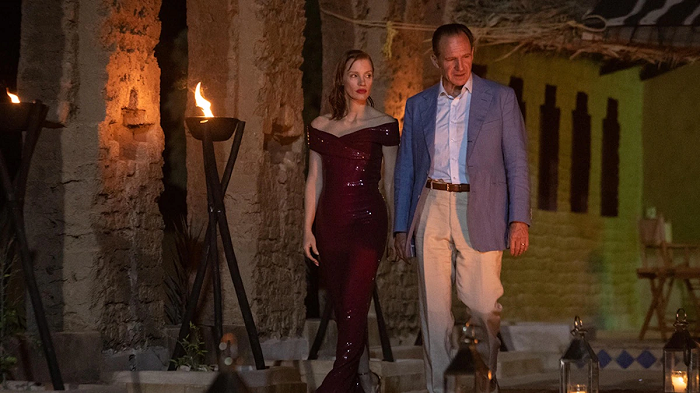
Ralph Fiennes and Jessica Chastain make for a captivating duo in John Michael McDonagh’s new drama “The Forgiven”. McDonagh, the man behind 2014’s exceptional “Calvary”, has a knack for digging deep into individual human complexity and examining the dark side of human nature. In “Calvary” is was through a troubled Catholic priest. Here, it’s a married couple whose relationship has soured beyond repair. McDonagh uses their toxicity and disillusionment as a means to explore a range of themes. Unfortunately the movie never quite gels, and McDonagh’s good intentions often feel more patronizing than insightful.
“The Forgiven” uncoils over a weekend near the High Atlas Mountains of Morocco. It follows the consequences of one lone incident and its ripple effect on the lives of several people from dramatically different walks of life. The premise is promising especially when you have actors the caliber Fiennes and Chastain. But this sordid morality play never rises above its promise, and it skirts around the edges of its themes rather than deal with them in a meaningful way.
Fiennes and Chastain play David and Jo Henninger. He’s a physician fresh off a malpractice suit. She’s a children’s author who hasn’t written a new book in eight years. They’re a privileged couple who spend more time sniping at each other than showing any signs of actual affection. Their conversations are littered with condescending put-downs such as him calling her a “harpy” and “shrill“ or her mocking him as “highly functioning alcoholic”. They are a picture of misery, wrapped up in fake smiles and elegant clothes.
After arriving in Morocco, David and Jo head out on a road-trip to a garish desert villa belonging to their wealthy friend Richard (Matt Smith) and his neurotic partner, Dally (Caleb Landry Jones). Once there the Henningers, along with a few more of Richard’s European and American hedonistic chums, are to enjoy a weekend-long bacchanalia of rich people excess.
But on the way, a drunk and distracted David barrels down a dark desert road, not noticing a local teen named Driss (Omar Ghazaoui) who steps out into his path. He runs over the boy, killing him instantly. While it’s ultimately an accident, the couple’s response speaks volumes. Rather than feel remorse, David and Jo are more annoyed by the inconvenience. They throw the boy’s body in the backseat of their car and drive to Richard and Dally’s estate. Richard pays off the local police and they start the party as if nothing had happened.
Image Courtesy of Roadside Attractions
But the next morning they’re surprised when a jeep carrying three Moroccan Berbers come to retrieve the body, one being the boy’s father, Abdellah (Ismael Kanater). The father’s lone request is that David accompany him to his village deep in the desert for the boy’s burial. It’s their custom, or so we’re told. Seeing no other way out, a worn-down David reluctantly agrees. He loads up with the three men and is driven off into the night to whatever fate awaits him. It’s one of the film’s better moments and it injects the story with some much-needed suspense.
Jo stays behind as Richard nonchalantly cranks his party back up. Rather than worry about her husband, the guilt-free Jo lets her hair down. She guzzles alcohol, snorts coke, and openly flirts with one of the other guests, a slyly off-putting financial analyst named Tom (Christopher Abbott). While Tom is far from fleshed out, there’s a little more to him than the rest of the insufferable party-goers. McDonagh wants us to despise them (and we do). But it’s hard to see anything other than boozy, coked-up Westerners. They’re paper-thin caricatures whose inflammatory blabber comes across as manufactured more so than authentic.
The scenes with David and the Berber locals have a little more to offer. But while McDonagh is clearly sympathetic towards the indigenous people, it always seems like he’s viewing them through a first-world lens. The film paints their plight with such broad strokes and often speaks to their circumstances in crude generalities. It’s unfortunate because the movie obviously wants to say something. But it does so at the expense of the victims whose individual stories would have been far more interesting than watching the benders of some hedonistic elitists.
Aside from some good scenes at Abdellah’s village, the film is helped by Fiennes and Chastain. Fiennes is so convincingly vile that we can’t help but view any tiny emergence of a conscience with skepticism. Chastain doesn’t get as much to work with, but makes her scenes count. But the two can only do so much with a film this unsure of itself. Its messages are clear, but the shaky conveying of those messages leaves “The Forgiven” less of a sharp-edged critique and more of a well-meaning misfire. “The Forgiven” is now playing in select theaters.







 Keith & the Movies