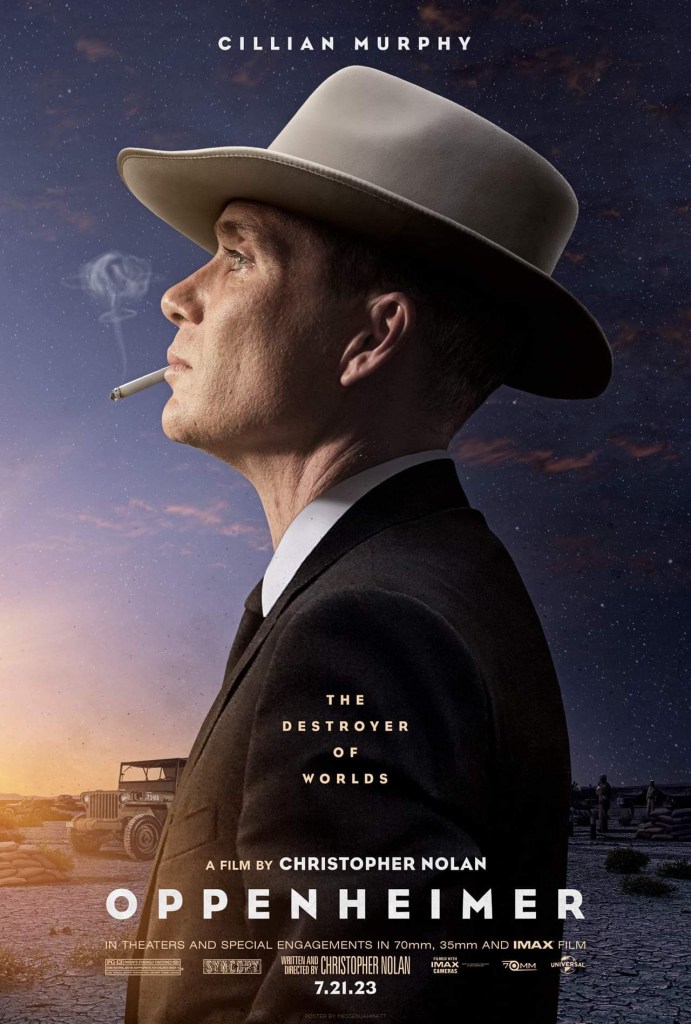
Easily one of my most anticipated movies of 2022 (barring another frustrating delay) is Matt Reeves’ “The Batman”. Warner Brothers has already dropped several top-notch trailers. Now they’ve released the film’s new poster and it’s pretty amazing. Though it uses a very familiar movie poster template, I love the design. It fits exactly what I’m expecting this movie will be. Check it out and tell me what you think.
DIRECTOR – Matt Reeves
WRITER – Matt Reeves, Peter Craig
STARRING – Robert Pattinson, Paul Dano, Zoe Kravitz, Jeffrey Wright, John Turturro, Colin Farrell, Andy Serkis, Peter Sarsgaard
If its title didn’t grab your attention the film’s two co-stars should. The always great (and in this case perfectly cast) Regina Hall and Sterling K. Brown play a megachurch power couple in the upcoming “Honk for Jesus. Save Your Soul”. It marks the directorial debut for Adamma Ebo who gives us a biting and often hilarious critique of pseudo-Christianity and megachurch corruption. It’s a snarky satire that uses a mockumentary style to lambaste the lavish self-serving absurdity at the heart of these rackets.
From its opening moments, those familiar with the megachurch phenomenon will immediately notice the spot-on detail. Ebo has clearly done her research and she uses it to expose these wealthy scam-artists who put price tags on righteousness and sell their version of salvation for profit. And of course she delivers plenty of laughs, always at the hucksters’ expense. But Ebo’s craftiness shows in the glimmers of humanity she brings out of her characters, even amid their glaring over-the-top chicanery.
Lee-Curtis Childs (Brown) is the pastor of Wander to Greatest Paths Baptist Church in Atlanta (how’s that for a name?). It was once a prominent megachurch with an estimated 25,000 congregants. He and his wife Trinitie (Hall), who’s proudly flaunts the haughty, self-aggrandizing title “First Lady” (not uncommon in these circles), live a opulent lifestyle complete with matching Ferraris, a helicopter, a palatial mansion, closets full of expensive dresses and designer suits, all in the name of the Lord’s service of course.
Image Courtesy of Sundance
You won’t find words like “humility” “moderation” or “contentment” in this couple’s vocabulary, with Lee-Curtis excusing his high-priced indulgences as “divine additions” while Trinitie buys $2000.00 hats at a boutique called Bathsheba’s Bonnets (the irony is both obvious and hilarious).
And then came the fall. Lee-Curtis found himself embroiled in a sexual misconduct scandal which rocked his cash-cow empire, resulting in a mass exodus of church members and the eventual closing of the church. But rather than bowing out and slithering away in shame, Lee-Curtis and Trinitie are prepping for their big comeback, marking down Easter Sunday for their church’s grand re-opening. And to help capture the occasion (and to shamelessly get as much publicity as possible), they’ve brought in a film crew to shoot a documentary.
And so we get the movie’s come-and-go mockumentary style which begins one month before their big Easter event. Ebo has her faux filmmakers follow Lee-Curtis and Trinitie over the next several weeks as they share their “vision” for the future of WGPBP. But instead of demonstrating remorse and repentance, we get the same two charlatans, still decked in Prada and still finding ways to rationalize their sin.
Though a bit uneven, the mockumentary conceit allows for many of the film’s funniest moments. Such as the various times the couple inadvertently expose their true selves in front of the camera. Or in the rivalry we see between the Childses and Keon and Shakira Sumpter (Nicole Beharie and Conphidance), the husband and wife co-pastors of the bustling Heaven’s House Baptist Church. There are some shakier scenes where the movie drifts away from its whole mockumentary framing (one particularly cringy rap-song sing-a-long being a prime example). But it never takes it long to get back on track.
While the humor is a real strength, the movie often feels at odds with itself when it steers away from straight satire and ventures into more serious drama. That’s when its intentions get a little muddied, especially in its portrayal of Trinitie. At times it seems to paint her as both a hero and a victim. Not totally unlike last year’s “The Eyes of Tammy Faye”, another film examining a corrupt couple living large in the name of ministry. In that film, most of Tammy Faye Bakker’s wrongdoings were scrubbed clean in an effort to make her more saintly. Here we actually see many of Trinitie’s sins firsthand which makes embracing her as a victim lot harder.
Image Courtesy of Sundance
While she is clearly a victim of Lee-Curtis’ insatiable self-centeredness, Trinitie is no weak powerless damsel nor is she witless or gullible. In fact, you could say she’s the brains and the backbone of the outfit. So rather than a victim, this plays better as a redemption story of a woman who stood by her disgraced husband in order to protect her life of luxury. But as the only Childs with a sliver of conscience, she’s had enough and is ready to finally own up to her part in the hustle. I think that reading gives a more honest and cohesive image of Trinitie. I’m just not sure the movie itself agrees.
Of course the real victims are those who are swindled by these prosperity gospel peddlers who turn shepherding into a performance art and rake in the cash while doing so. Ebo uses some hilariously outrageous antics (which aren’t that far removed from reality) to pose the question, “Who would ever buy what these people are selling?”
Though a little messy, “Honk for Jesus. Save Your Soul” holds together thanks to a filmmaker’s keen understanding of her subject and two pitch-perfect leads. Hall especially shines, shrewdly navigating some sketchy character work to give us some semblance of a rooting interest. And while the film asks us to overlook much of what we’ve seen in order to feel a certain way about her character, Hall (miraculously) finds a way to not only earn our respect for Trinitie but also our sympathy.
First time feature director Abi Damaris Corbin tells the heartbreaking real-life story of Lance Corporal Brian Brown-Easley in her new film “892” which just had its premiere at Sundance 2022. Jonathan Majors was originally slated to star but had to leave due to his obligations to the Marvel Cinematic Universe. Enter Jon Boyega (“Star Wars”, “Small Axe”) who plays the former Marine and war veteran who loses all hope after his disability check fails to come through from Veterans Affairs. Faced with the possibility of homelessness, Brian makes a desperate decision with tragic consequences.
Corbin also co-wrote the script alongside Kwame Kwei-Armah. In addition to Boyega, the film features the final performance from the late Michael K Williams. It also stars Nicole Beharie, Connie Britton, Jeffrey Donovan, and Olivia Washington. All do a good job filling out this character-driven thriller which drags a bit in the middle, but never loses sight of the important issue its tackling.
Full disclosure: I’ve always been a bit on the fence when it comes to Jon Boyega. It’s not that I think he’s a bad actor. I’ve just had a hard time connecting with his performances. Well, call me a Boyega convert. Everything about his performance in “892” clicks. Every line he delivers comes with conviction. Every emotion he gives us feels true. It’s a heavy role and the 29-year-old Brit pours every bit of himself into it.
Set in Atlanta, “892” wastes no time getting things underway. When we first meet Brian, he is already in a bad place. We learn via flashbacks that he was working two jobs to make ends meet, but due to his health he was forced onto veteran’s disability. But after Veteran’s Affairs find what they deem to be an outstanding debt, they use Brian’s benefits to cover the past-due amount. He insists it’s a mistake and pleads with the VA rep to help him. But instead of getting his $892.00 disability check, Brian is handed a pamphlet on homelessness.
Image Courtesy of Sundance
Reasonably frustrated and seemingly out of options, Brian decides to do something drastic; something that will send a strong message to the VA and expose their poor treatment of its vets. After calling his precious young daughter Kiah (London Covington) and his ex-wife, Cassandra (Olivia Washington), Brian walks to Wells Fargo Bank. Once inside, he slides a handwritten note to a teller named Rosa (Selenis Leyva) that reads “I have a bomb.” The only words the paralyzed Rosa can utter is “What do you want me to do?” Brian’s response is unexpected, “Trigger the alarm.”
As the rest of the movie unfolds, Corbin treats her audience to a suspenseful thriller but also a relevant and deeply affecting drama. She takes her time unpacking her main character, showing Brian Brown-Easley to be a kindly yet troubled soul. There are scenes showing his bouts with PTSD following two tours in Iraq. But we also get plenty of revealing moments of gentleness and compassion (there’s a great scene where he takes a message from a bank customer calling about their 401(k)). Corbin’s keen attention to the emotional details earns our empathy and makes the journey we take all the more heartbreaking.
In addition to Boyega, the rest of the cast is strong top to bottom. Nicole Beharie is terrific as the able and resourceful bank manager Estel, one of Brian’s two hostages. Michael K Williams is also good playing a police officer doing everything in his power to get Brian out alive. And Connie Britton gets some good scenes playing a television reporter caught between the big scoop and journalistic ethics.
“892” shines a much-needed spotlight on the VA’s failures in its treatment of America’s military veterans. Corbin doesn’t sugarcoat the issue, but she never gets heavy-handed with it either. She maintains a good and steady balance with it and the handful of other social issues she brings to light. The film loses some of its steam in the middle as the police are slowly building their presence outside of the bank and Brian waits to some kind of response from the outside. But it still packs an emotional gut-punch, and Abi Damaris Corbin proves herself to be a filmmaker to watch.
Sundance is no stranger to highly anticipated directorial debuts. This year it’s Jesse Eisenberg with his new film “When You Finish Saving the World”. The movie is based on Eisenberg’s own award-winning 2020 audio drama of the same name which revolves around a mother and her son separated by the ever widening generational gap between them. Starring the always terrific Julianne Moore and rising star Finn Wolfhard, this was one of the most intriguing films on the Sundance program.
Already backed by A24, “When You Finish Saving the World” has an interesting premise and features the kind of snappy wry humor you would imagine coming from Jesse Eisenburg. At the same time, there’s a toxicity to this small yet well conceived drama that will make it a tough watch for some audiences. Most of our time is spent with two characters who can be endearing but are almost always insufferable.
In fairness, that doesn’t make “When You Finish Saving the World” a bad movie. It gets back to that age-old discussion about the necessity of “likable” characters. I’ve said it before, I’ve never demanded “likable” characters. Doing so would dramatically limit the kinds of stories I allow myself to be told. But Eisemberg’s characters, Evelyn (Moore) and Ziggy (Wolfhard) aren’t one-note and they aren’t easily categorized. They have layers. It’s just that peeling them back isn’t particularly pleasant.
To be so at odds, Evelyn and Ziggy have several things in common. They’re just from two completely opposite worlds. They’re both condescending and narcissistic. Both are stubborn and strong-willed to a fault. And neither can understand the other nor do they put much effort into trying.
Image Courtesy of Sundance
Evelyn has a poorly veiled obsessive personality and she believes her way of doing things is THE right way. She loves classical music and relishes her position as the head of a domestic abuse shelter. To Evelyn, she’s doing the kind of work that “matters”. Ziggy is brash, self-centered and impertinent, often lashing out at his parents in ways that would have left me grounded for a decade. He writes and plays his own songs which he describes as “classic folk rock with alternative influences”. He then livestreams them for his 20,000 followers on a YouTube-like platform called High-Hat.
Eisenberg puts a lot of effort into showing this daughter/son clash of ideals and values. But while they live in their own generational bubbles, there are attempts on both parts the bridge the gap. Ziggy seeks his mom’s help with impressing a left-wing activist classmate named Lila (Alisha Boe). Evelyn invites her son to come do some part-time work at her shelter. Neither attempt goes well.
The movie is helped along by a collection of interesting performances, particularly from its two leads. Moore wonderfully portrays a woman doing everything she can to hide her unhappiness. She puts up a facade of confidence and fulfillment, but it cracks and crumbles as the movie progresses. Wolfhard nicely juggles Ziggy’s many contradictions. He’s cocky and obnoxious at home, but elsewhere he’s awkward and often oblivious. We also get a scene-stealing Jay O. Sanders as the husband and father who often finds himself caught in the middle of Evelyn and Ziggy’s warfare.
There’s a lot to like about “When You Finish Saving the World”. You can tell that Eisenberg has a good sense for creating characters and telling their stories. With splashes of satire mixed with deep human drama, his behind-the-camera debut is both intimate and ambitious. Yet there’s that lingering toxic element that always keeps the two lead characters at arms length. It makes it hard for us to feel either empathy or sympathy. And by the time their repressed charm and compassion finally comes into view, the caustic back-and-forths have taken their toll.
Mimi Cave holds nothing back in her gnarly directorial debut “Fresh”, an upcoming thriller written by Lauryn Kahn and produced by Adam McKay. The film just had its premiere at Sundance and has already been snatched up by Searchlight Pictures who plan on streaming the film via Hulu starting March 4th. So you don’t have long to wait.
“Fresh” isn’t the easiest movie to review. It’s a movie that demands you go into it knowing as little as possible. It’s a movie guaranteed to completely upend any expectations you may have. It’s a movie that ends in a very different place than it begins. And it’s a movie that goes places that words like “dark”, “twisted”, and “grotesque” can’t adequately describe.
This scathing critique of modern dating culture comes packaged with bites of “Promising Young Woman”, “American Psycho”, and “Get Out”. Yet Cave delivers a full course meal with a taste all her own. Her film is brimming with relevant themes, cutting satire, and even some B-movie flavor particularly in the last act where things come dangerously close to unraveling. But Cave holds it all together, ending with a fitting and satisfying knock-out punch.
Image Courtesy of Sundance
The film gets off on the right note with its casting. A fabulous Daisy Edgar-Jones (Hulu’s “Normal People”) plays Noa and to say she hates dating is an understatement. She hates the ritual. She hates the awkwardness. She hates the questions and answers. She hates the projections of perfection. She hates the humiliation and the disappointment. She’s starting to wonder if it’s even worth the effort. “I’ve been alone so long,” she says at one point, “I’m actually pretty good at it.“
Yet deep down she’s still a romantic, and her appetite for companionship is what keeps her browsing a dating app called Puzzle Piece. That’s where she meets and sets up a date with Chad (Brett Dier), a goof with a deep affection for scarves. The two sit down for dinner at a cheap cash-only Chinese restaurant where Chad rambles on about his acid reflux and about how the older generation of women cared more about their appearance (it’s a direct shot at Noa’s baggy jeans and frumpy sweater). It’s no wonder Noa hates dating.
Just as she’s about to hangup the whole dating thing, she meets a sweet good-looking plastic surgeon named Steve (Sebastian Stan) in of all places the supermarket produce section. The hunky Texas transplant has all the ingredients for the perfect guy – humble, undeniably charming, a glowing smile. At first Noa is hesitant, but after such a sweet old-fashioned meet-cute she decides to go for it and the two begin dating.
Not long after, Steve surprises Noa and asks her to go away with him for the weekend. His plan is for them to stay at his place for the night and then get an early start the next morning to a surprise destination. Noa surprises herself and agrees, much to the concern of her brutally honest best friend Mollie (Jojo T. Gibbs) who’s worried things are moving too fast. Steve picks up Noa and drives her to his house, cozily nestled in the woods well outside of the city. And of course there’s no cell phone service. Talk about a recipe for something bad.
All of above plays like its own 38-minute romantic comedy. AND THEN we get the actual title screen. That’s when the meaning of Cave’s grisly parable comes boiling to the surface. I won’t dare spoil the big twist (too many have done that over social media), but Cave cleverly lays out numerous hints, many of which won’t come into focus until after you see the movie. But suffice it to say, “Fresh” takes its audience to some appalling depths, sprinkling in pinches of pitch-black humor with horror that can range from eerily suggestive to shockingly explicit.
Image Courtesy of Sundance
Daisy Edgar-Jones is astonishingly good in a role that pulls her in several different directions. Certain points of the film need her to be witty and charming. Other times illusive and cunning. Some scenes demand vulnerability and terror while others require strength and resilience. Edgar-Jones not only fully commits, but delivers on every layer. But her biggest challenge may be acting next to Sebastian Stan. Together the two have an effortless chemistry. But while Edgar-Jones’ job is more complex, Stan is a propulsive force, quickly shedding his character’s ‘good guy’ facade to reveal a sinister maniacal side. Stan gets to go BIG, even getting an utterly outrageous dance number to Animotion’s 1984 synth-pop song “Obsession”. It’s an incredible scene that people will forever link to his career.
It also helps that the movie looks incredible. Cave develops a rich unsettling visual style that makes for an exhilarating (and at times horrifying) sensory experience. The strategic uses of colors, closeups, and angles; the gruesome imagery shot with a stomach-churning elegance. It makes sense considering the cinematographer is Pawel Pogorzelski whose credits include “Hereditary” and “Midsommar”. But it’s also Jennifer Morden’s exceptional production design which really shines in the final hour.
Hopefully I’ve danced around the details enough to leave you intrigued yet still in the dark. Without question that’s the best way to approach this wickedly unsettling horror thriller. Be warned: “Fresh” is not for the squeamish and it earns every morsel of its R-rating. But if you can endure its disturbing macabre elements, you’ll find a sickly satisfying chiller with more on its mind that you might think. It doesn’t always make sense, and there are moments where it veers a little too close to all-out absurdity. But Cave covers most her bases and delivers a dish that’s as savory as it is vile.
A young couple moves into a new apartment in Bucharest, Romania just as news of a serial killer sweeps across the city. That’s the surface level setup for director and co-writer Chloe Okuno’s “Watcher”. But underneath its genre exterior is a clever and shrewdly made exploration of fear, isolation, and a woman’s need to be heard and believed. Those are the things Okuno is most interested in bringing to light.
This psychological slow-burn stars Maika Monroe as Julia, a former actress who leaves New York City and follows her husband Francis (Karl Glusman) to Bucharest following his recent job promotion. While she puts on a good show, you can’t help but sense Julia’s anxiety as she tries to adjust to her new surroundings. It’s a piece of cake for Francis who knows the language and plugs right in at work. But it’s harder for Julia, who doesn’t know anyone in Bucharest and doesn’t speak Romanian.
While Francis works long hours at his new job, Julia spends most of her time alone. She tries getting out and exploring the city. But without fail, the language barrier always comes into play. She can’t talk with her loud and abrasive landlady. She can’t understand the television reports of a suspected serial killer on the loose. Even standing in a group with Francis and his Romanian-speaking colleagues leaves her feeling like an outsider.
Among Okuno’s many good choices was the decision not to use subtitles. Romanian is spoken a lot in the film, and every word of it is subtitle-free. It’s a smart move that goes hand-in-hand with Okuno’s desire to put us in Julia’s headspace; to enable us to feel what she feels. For Okuno, the film’s visual language is essential to representing Julia’s state of mind. There are some clever tricks with the lensing and framing that create vast, seemingly empty spaces that emphasize Julia’s growing feelings of isolation. There are also interesting uses of color to convey mood and an increasing sense of dread.
The more time Julia spends alone, the more she withdraws. Fear and paranoia set in after she begins noticing a man from the apartment building across the street watching her from his fifth floor window. All she can see is a silhouette, but she’s soon convinced her watcher is the same man as the one who has been creepily following her around town (played by the always captivating Burn Gorman). Her fears are exacerbated after a woman is found murdered in their neighborhood – a death that is later attributed to the serial killer known as “The Spider”. A shaken Julia shares her suspicions with Francis who quickly brushes it off as “stress”.
Another of Okuno and her co-writer Zack Ford’s good choices was the decision not to paint Francis as the proverbial ‘bad guy’. In fact he’s quite the opposite. He genuinely loves and cares for Julia. At the same time, you want to hurl your shoe at the screen each time he attempts to explain away her unease. And he doesn’t even know he’s doing it. You could say he’s oblivious to his own condescension.
But Julia wants answers and before long she becomes the watcher, determined to connect the man stalking her to the shadowy figure in the window. This is where inspirations like Hitchcock, Polanski, and Lynch really come into focus. Yet even as the movie begins playing more with genre in the second half, it keeps us firmly planted in Julia’s head. It’s a tricky balance which works in large part thanks to Monroe who offers the right mix of vulnerability and fortitude.
“Watcher” is an eye-opening and artful directorial debut for Chloe Okuno who uses her deceptively simple premise to challenge those quick to doubt and dismiss female victims. Shot on location in Bucharest, the film uses the city’s beauty as both inviting and terrifying. DP Benjamin Kirk Nielsen, production designer Nora Dumitrescu, and composer Nathan Halpern all work in unison to ensure that we feel the same loneliness and dread as Julia. Ultimately that’s the key. Okuno wants her audience to enjoy the thriller genre dressing. But it’s the moody reflective psychodrama she wants us to sink our teeth into.