REVIEW: “Tin Soldier” (2025)

Scott Eastwood stars, Jamie Foxx baffles, and Robert De Niro cashes a check in “Tin Soldier”, one of the most confounding features to reach a screen this year. While it’s technically an action thriller, finding a fitting category for it is a challenge. That’s because this confection is all over the map, attempting to be a little bit of everything but ultimately landing nowhere.

It’s hard to believe this ever looked good on paper, but something about “Tin Soldier” drew Eastwood and two Academy Award winners. The film is directed by Brad Furman who is helming his first feature since 2018’s “City of Lies”. He does everything he can to make something at least slightly cohesive. But even at under 80 minutes, his film has a difficult time generating or sustaining any momentum. That’s because the script (written by the trio of Furman, Jess Fuerst, and Pablo Fenjves) fails to develop into anything compelling or narratively functional.

Image Courtesy of Samuel Goldwyn Films

Seventeen years prior, a decorated naval officer named Leon K. Prudhomme (Foxx) founded a PTSD treatment center for veterans. He called it THE PROGRAM. But a secret FBI investigation discovered Prudhomme was actually forming a heavily armed anti-government cult. He reinvented himself as a charismatic (and unintentionally goofy) revolutionary called The Bokushi. And all indications point to his cult stockpiling chemical weapons.

Out of fear that a domestic terror attack is imminent, the FBI begin planning a raid on the Bokushi’s remote mountain compound (think Waco, 1993). But before they do, a covert tactical team organized by Emmanuel Ashburn (De Niro) is secretly organizing an unsanctioned mission to infiltrate the compound and take out the Bokushi before things escalate.

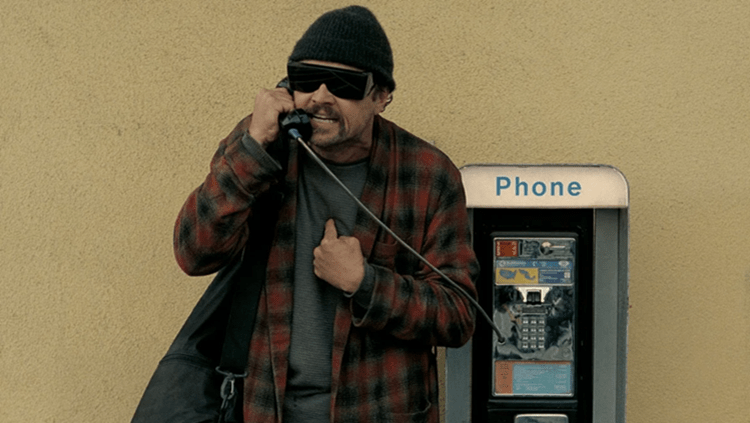
To guide his team, Ashburn approaches Nash Cavanaugh (Eastwood), a disheveled military vet and former member of Prudhomme’s cult. Nash struggles mightily with PTSD, a result of his time at war and in the Bokushi’s outfit. Nash wants no part of Ashburn’s mission. But when he hears his wife Evoli (Nora Arnezeder), who was presumed killed during his escape, may actually be alive, Nash agrees to join the operation with hopes of rescuing his wife.

From there the movie moves forward in the most mechanical way imaginable. It jumps from point to point with very little buildup and even less emotion. Furman makes an effort to break things up, but it mostly comes through instances of awkward narration and jarring flashbacks, none of which add much the story (there’s one unintentionally bonkers flashback of Foxx giving a musical performance that plays like an “In Living Color” sketch). Meanwhile other actors like John Leguizamo and Shamier Anderson do little more than add some familiar faces.

Image Courtesy of Samuel Goldwyn Films

Not that it was ever fully together, but things completely fall apart in the final act where any attempt at an explosive finish gives way to utter absurdity. We get a laughably easy infiltration, a goofy cult ritual, and a hysterically bad monologue. And if that wasn’t enough, the story wraps up with a preposterous showdown in….a gladiator arena.

To its credit, there are a few striking locations, flashes of clever cinematography, and a couple of decent action sequences. But overall, “Tin Soldier” features more bad haircuts than good scenes. And no amount of effort can make this AI-quality creation remotely entertaining or inspired. “Tin Soldier” is in select theaters now and releases on VOD September 30th.

VERDICT – 1 STAR

REVIEW: “The Lost Bus” (2025)

It’s hard to believe, but 45 years ago this month my father and three other men suffered serious injuries while fighting a dangerous forest fire. I was really young at the time yet I still remember my upset mother dropping me off with my grandparents before heading to the hospital to meet the ambulances. For that reason, seeing news stories and even movies dealing with wildfires register a little differently for me.

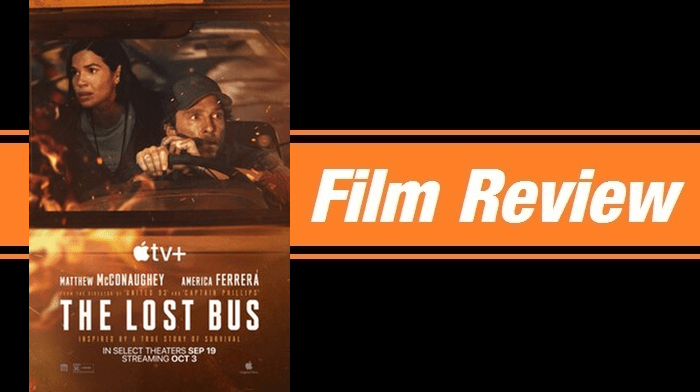
“The Lost Bus” is a survival thriller based on Lizzie Johnson’s Paradise: One Town’s Struggle to Survive an American Wildfire”. Both are about the 2018 Camp Fire in Northern California’s Butte County. The Camp Fire has been called the deadliest and most destructive wildfire in California history. Beginning on the morning of November 8, 2018, the fire burned for seventeen days, fueled by extremely dry conditions and fierce katabatic winds. It resulted in 85 fatalities, over 18,000 structures destroyed, and an estimated 153,000 acres burned.

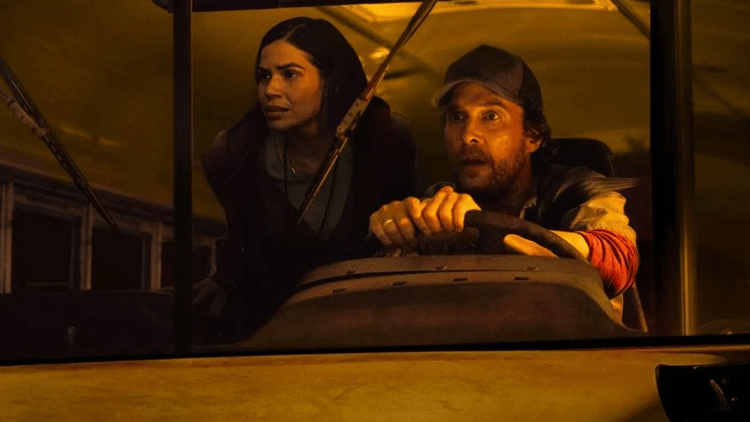
In the movie, Matthew McConaughey offers a wonderfully grounded portrayal of a down on his luck school bus driver named Kevin McKay. Kevin can’t seem to catch a break and it’s taking its toll. He came back to Paradise, California four months earlier when his father died. Now he takes care of his disabled mother Sherry (Kay McCabe McConaughey) while trying to connect with his estranged and rebellious 15-year-old son Shaun (Levi McConaughey).

Image Courtesy of Apple Original Films

Meanwhile at work, Kevin struggles to make enough money to pay for his mother’s treatments. He’s constantly asking his dispatcher and boss Ruby (Ashlie Atkinson) for extra shifts but he’s too far down on the seniority ladder. So Kevin makes do the best he can, running his usually route through the rolling forest-covered North California hills. But his and everyone else’s lives are about to change after sparks from a power line start a fire well outside of town.

It’s here that director Paul Greengrass ratchets up his signature visceral style, creating a palpable sense of realism that’s essential to his storytelling. As high winds and dry conditions turn the small blaze into a raging wildfire, Greengrass combines both practical effects and CGI to visually create an authentic you-are-there experience. It’s energized by the immersive cinematography from Pål Ulvik Rokseth, whose variety of shots add tension and a striking sense of scale.

While Kevin’s personal story unfolds, Greengrass routinely breaks away to show the efforts of the fire battalion led by Chief Ray Martinez (Yul Vazquez). Together with spotters and firefighters both in the air and on the ground, the battalion get to work tracking the fire, assessing the threat, and formulating a plan to contain it. Greengrass presents these scenes like a well-oiled procedural that emphasizes the determination of those putting their lives on the line to save others. It also adds a nail-biting authenticity that makes this story hum.

As far as the human drama goes, it ratchets up as well. With the wildfire bearing down on Paradise, a mandatory evacuation is issued. At Ponderosa Elementary a school teacher named Mary Ludwig (America Ferrera) is caring for 23 stranded children. With no other driver in the vicinity, Kevin agrees to pick them up and get them to safety just as the radio and phones go down. After loading Mary and her students into his bus, Kevin heads for the staging area. But with communications down, Ruby is unable to divert them to the backup safe zone.

Image Courtesy of Apple Original Films

Greengrass and his co-writer Brad Inglesby do a nice job balancing these two unknowingly connected stories of heroism. As Kevin is driving blind through an engulfed hellscape with Mary calming a busload of children, Chief Martinez and his team do everything in their power to get the fire under control. Both offer perspectives on the real-life disaster of distinctly different scales.

The story isn’t without its flaws. It teases us with subplots that mostly up and vanish. In one harrowing sequence a young fireman drives into the mouth of the inferno and attempts to lead a convoy of survivors to safety. Then they disappear and we never see them again. Later, a pack of gun-toting looters attack the bus and then are gone in a flash. You could also make a case that the final 30 minutes drag out a little longer than necessary.

But those things seem insignificant when placed next to the many things Greengrass gets right, starting with how effectively he makes us feel a part of this real-life horror. It’s seen in the way he captures the magnitude of the disaster; how he impresses upon us the grave danger of each situation; in his ability to relay the sheer ferocity of the fire. The visual wizardry is truly breathtaking. It’s so stunningly realistic that we need those moments of humanity which McConaughey and Ferrera organically provide.

VERDICT – 4 STARS

REVIEW: “The Strangers – Chapter 2” (2025)

When the new trilogy from The Strangers film series was announced I was hopeful yet cautious. The three movies were set to be a prequel to the 2008 original film. That movie (written and directed by Bryan Bertino) was a straightforward and genuinely unsettling blending of psychological and home invasion horror. Unfortunately it’s follow-up, 2018’s “The Strangers: Prey at Night” was a considerable downgrade which (as I’ve said in an earlier review) is better left forgotten.

That brings us to the new trilogy, all consecutively shot under the direction of Renny Harlin. Chapter 1 didn’t kick things off on the best note as it stretched about 30 minutes worth of story into a 90-minute feature. To be perfectly honest, the same could be said for “The Strangers – Chapter 2”. But there is one notable and unexpectedly effective difference. Chapter 2 moves away from the home invasion angle and is essentially one extended chase, with the previous film’s formidable final girl on the run from three masked psychopaths.

Image Courtesy of Lionsgate

Madelaine Petsch returns as Maya Lucas, the young woman who barely survived her petrifying encounter with three masked strangers while staying overnight at a secluded Airbnb. Her fiancé Ryan (Froy Gutierrez) was brutally murdered by the strangers and Maya was left for dead. But she was saved by first responders and rushed to the Venus County Hospital. That’s a serviceable summary of “Chapter 1” which immediately sets up its follow-up.

“Chapter 2” begins with Maya recovering in the hospital while mourning the loss Ryan. With the killers still on the loose, she’s understandably fearful for he safety. But the creepy and cryptic Sheriff Rotter (the always beguiling Richard Brake) isn’t much help. Meanwhile her family is still on their way, leaving Maya alone in her hospital room for the night. Enter the three strangers, known in the credits as Scarecrow, Dollface, and Pin-Up Girl, who return to finish what they started.

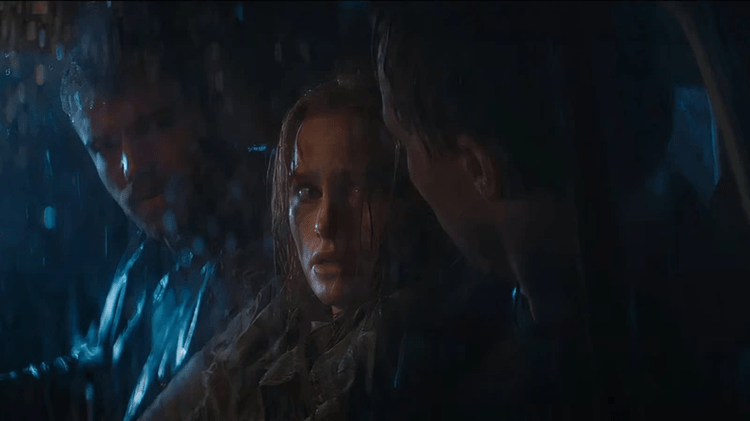
From there the chase begins with Harlin patiently moving us from one location to the next as Maya tries to avoid being butchered by the ax-wielding Scarecrow and his two followers. It starts throughout what has to be the emptiest hospital you’ll ever see. From there we follow Maya out into the rainy darkness where she soon stumbles upon a horse ranch. And it goes on from there. At each stop she encounters eccentric locals and just knowing who to trust is a terrifying challenge.

As Maya’s fight for survival progresses, co-writers Alan R. Cohen and Alan Freedland sprinkle in brief flashbacks that hint at the origins of the three strangers. It’s more eerie than insightful, and it’s hard to know if it will eventually amount to much in a series about the utterly random nature of some violence. But it looks like the plan is to show how a bond formed between this deranged trio. How effectively it will play out is anyone’s guess.

Image Courtesy of Lionsgate

While storytelling isn’t a strength, “Chapter 2” has some genuinely good scenes. There’s a nerve-racking sequence in the hospital’s morgue. And later on there is a terrifically edited scene inside an SUV as a frightened Maya tries to gauge the intent of the four twentysomethings inside with her. Other moments don’t fair as well, such as Maya’s encounter with a glaringly obvious computer generated wild boar. It’s well staged, but the CGI is distracting. Or a scene where she goes full John Rambo and sews up her own stomach wound.

Even with its blemishes, “The Strangers – Chapter 2” is a surprising step up from its predecessor. The movie is essentially three murderous maniacs endlessly pursuing a young woman through a rural backwoods community. Nothing about that sounds remotely original, and it’s hard to make the case that “Chapter 2” has anything new to offer. Yet I can’t deny its entertainment value which is mostly the result of Harlin’s craftsmanship. It’s still hard to figure out what the trilogy is going for. But “Chapter 2” earns enough goodwill to bring me back for “Chapter 3”.

VERDICT – 2.5 STARS

REVIEW: “One Battle After Another” (2025)

It feels as if Paul Thomas Anderson’s “One Battle After Another” runs the risk of facing two different knee-jerk responses, each driven by contrasting views of current events. The angry and cynical-minded folks, who look for politics in everything they watch, might see the film as an dire reflection of a dubious America and an urgent call to action. The equally angry but more defensive crowd, who want to excise politics from everything they call entertainment, might dismiss it as another vain expression of Hollywood’s growing disdain for the country. Whatever.

But then there’s a third contingent – the PTA faithful, whose love for Anderson’s movies transcends politics or worldviews. They find their happy place in everything PTA does and often grade his movies on a curve. For me, there’s a level of self-indulgence that can often plague PTA’s filmmaking and storytelling. It’s an issue that’s noticeable (and by extension, frustrating) in some films more than others. At the same time, Anderson has made one of the greatest movies of our time with “There Will Be Blood”. And the sheer genius of “Phantom Thread” can’t be overstated.

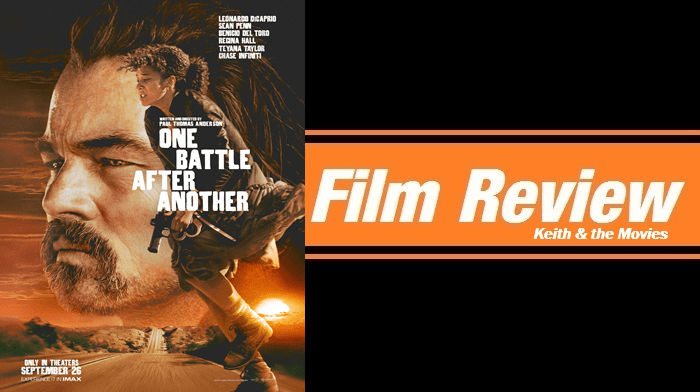
So what to make of Anderson’s latest, “One Battle After Another”? Inspired by Thomas Pynchon’s 1990 novel “Vineland”, this proudly defiant and slightly neurotic concoction has more stuffing than a Thanksgiving turkey. At times it wants to be an action movie. At other times a bonkers black comedy. It even shoots for being a thoughtful daddy-daughter drama. But more than anything it’s a surprisingly one-the-nose political jaunt that only sees our modern times through one restricted lens. And in its desperate efforts to ‘say something’ at every turn, it forsakes simple things like character building and narrative cohesion.

Image Courtesy of Warner Bros. Pictures

The movie’s problems start early and pretty much persist for the duration of the film’s lengthy 160 minutes. First there’s Anderson’s struggle with juggling his film’s abject absurdity and finger-wagging seriousness. The lines frequently blur together, making it too preposterous to be taken seriously and too serious and self-important to be funny. Then there’s Anderson’s chaotic storytelling which bounces us from one point the next while rarely slowing down to let anything develop organically.

The film opens with an extended prologue where we’re introduced to the French 75, a domestic terrorist group hiding behind the gentler title of “revolutionaries”. They’re a sundry yet organized faction with plenty of weapons and all the favorite hashtagged anti-establishment slogans. They blow up buildings, rob banks, and invade outposts (with very little condemnation), all under the emotionally charged leadership of Perfidia Beverly Hills (Teyana Taylor). She has a relatively small amount of screen time, but she ends up driving much of the story in some really bizarre ways.

Perfidia is tough as nails and extremely dedicated to her radical cause. But as we watch, Anderson seems conflicted on how to portray her. For the most part he’s smitten to the point of venerating her despite her unhinged antics which don’t always make sense. Look no further than her wacky first encounter with one of the more ridiculous characters of the year, Colonel Steven Lockjaw (Sean Penn). During a raid on a detention center, Perfidia apprehends Lockjaw. Her bizarre actions trigger some weird psychosexual infatuation within him that sets his course for the remainder of the movie.

The bulk of the story unfolds 16 years later with Perfidia long gone, leaving her tag-along lover and former French 75 member, Bob Ferguson (Leonardo DiCaprio) to raise their daughter Willa (Chase Infiniti). A teenager now, Willa spends more time looking after her perpetually paranoid and stoned father than enjoying her high school years. But their lives are rattled when Bob gets word that Lockjaw has discovered their location. Still driven by his twisted (and quite baffling) obsession with Perfidia, Lockjaw gives orders to kill Bob on sight and take Willa alive.

Image Courtesy of Warner Bros. Pictures

From there Anderson bops across his vision of America with the Bob-Perfidia-Lockjaw triangle in tow. As he does, his heroes are helped by an assortment of allies including a karate teacher who moonlights as a Harriet Tubman for illegal migrants (Benicio del Toro), a former French 75 loyalist (Regina Hall), and a convent of pot-growing nuns. As for PTA’s villains, they’re all very bad and very white. They range from cops, soldiers, and congressmen to the Christmas Adventurers Club, a cartoonishly silly and shallow white supremacist outfit so weakly sketched they would’ve been better left on the cutting room floor.

As for the talent-rich cast, no one is given much room to deliver a truly great performance. DiCaprio is the biggest victim, spending the film’s first half developing a unique and intriguing character only to spend the rest of his time frantically running around and clownishly yelling into oblivion. Del Toro is briefly terrific but is firmly handcuffed to Bob’s erratic story. As for Penn, he does what he’s asked. Sadly for him it results in nothing more than a farcical one-note caricature who’s too vile to be funny and too ludicrous to be menacing. The true bright spots come from Infiniti’s strong feature debut, and Hall who routinely grounds the film in some semblance of reality.

“One Battle After Another” is the kind of movie custom-made for an awards season push. It’s certain to be heralded as a modern “masterpiece”, an “important” film, an “essential” movie of our time, etc. Frankly, it’s none of those things, falling well short of PTA’s finer works. There are a couple of well-staged car chases and an invigorating score from Jonny Greenwood. But the film is 160 minutes of unfocused energy, fueled by plot gimmicks, careless romanticizations, and pulpit pounding that takes lazy potshots at real-world issues rather than actually examining them.

VERDICT – 2 STARS

REVIEW: “Highest 2 Lowest” (2025)

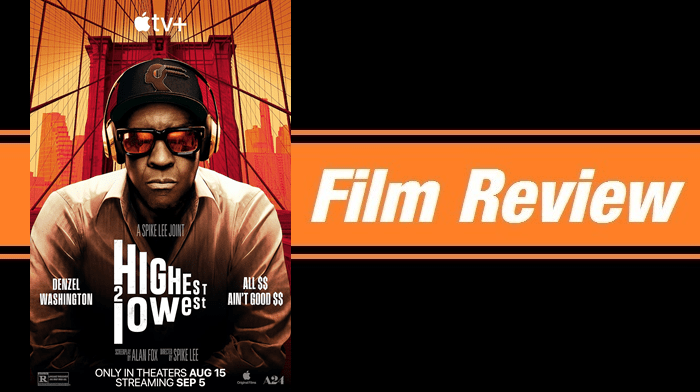
Spike Lee‘s latest joint sees him reteaming with one of the greatest actors of our time, Denzel Washington. “Highest 2 Lowest” is the pair’s fifth big screen collaboration and their first since 2006’s “Inside Man”. With their long overdue reunion it’s pretty clear they haven’t missed a beat. Lee’s direction is imbued with what feels like fresh energy. And the always watch-worthy Washington mixes swagger with solemnity with pitch-perfect savvy.

“Highest 2 Lowest” is an adaptation of Akira Kurosawa’s 1963 classic “High and Low” but reworked for 2025 by Lee and screenwriter Alan Fox. While catching the similarities between the versions is fun in itself, it’s the differences in Lee’s reimagination that make the movie purr. Aside from the many smaller details and style choices, there is the noticeably upbeat and less cynical tenor, the move from Yokohama to a vibrant New York City, the integral role of music in its story, the emphasis on Black culture, and the fascinating alterations to the final act.

But the richness of Lee’s verve could only carry the movie so far without Washington’s invigorating lead performance (among the actor’s best in years). Dripping with charisma that manifests itself in scenes of both grandiosity and subtlety, Washington takes Toshiro Mifune’s voracious shoe executive and fully transforms him into a beguiling modern day music mogul. Through his impeccably precise yet effortlessly smooth performance, Washington conveys a lifetime’s worth of aspiration, struggle, and resilience.

Image Courtesy of A24

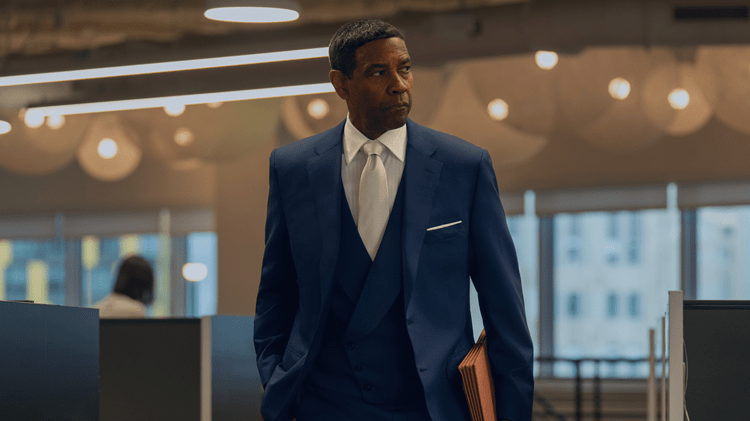
Lee kicks things off with a soaring opening credits sequence featuring rapturous views of New York City capped off by an elegant long zoom to the penthouse balcony atop Brooklyn’s waterfront Olympia Dumbo complex. There stands David King (Washington), a millionaire music executive and founder of Stackin’ Hits Records. Said to have “the best ears in the business”, David spent 25 years building a music business focused on cultivating and promoting black artists before deciding to sell his majority interest.

With his two co-owners on the verge of selling to a rival label, David convinces one of his partners (Michael Potts) to sell him his shares, allowing him to regain controlling interest in the business he founded. But to do so, David is forced to put up his penthouse and art collection to finance the deal, much to the concern of his wife Pam (an excellent Ilfenesh Hadera). While there is some good character work involved, all the early corporate drama is merely setting the table for the next act.

The tone shifts dramatically on the eve of his big business deal after David receives a call saying his son Trey (Aubrey Joseph) has been kidnapped and the ransom is $17.5 million in Swiss francs. It only takes one call from David before the NYPD arrive, led by three detectives (Dean Winters, LaChanze and John Douglas Thompson). They quickly find Trey leading to the reveal that the kidnapper snatched the boy’s best friend Kyle (Elijah Wright) by mistake. Kyle is the son of David’s childhood friend and chauffeur Paul (Jeffrey Wright).

Image Courtesy of A24

One of Lee’s biggest and best changes to Kurosawa’s story involves David and Paul’s relationship. The two friends grew up together on the streets but their lives took different paths. David became a successful self-made entrepreneur while Paul ended up doing prison time. Yet their friendship stayed strong. But that friendship is tested with David’s sudden hesitation over paying the ransom – something he was fully prepared to do when he thought his son’s life was on the line. The thick moral haze only thickens once David’s pending business deal is factored into the scenario.

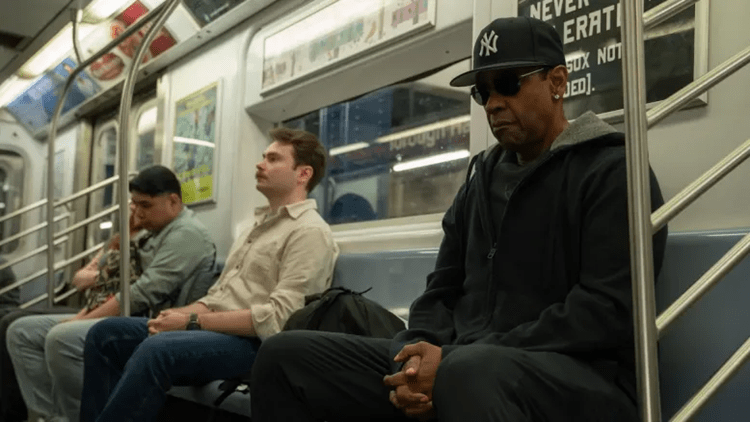
I don’t want to reveal too much, but the tone shifts again with the propulsive third act. After David agrees to pay, he’s instructed by the kidnapper to deliver the money himself. From there the story moves from the posh comforts of the penthouse to the vivid character-rich streets. It kicks off with an exhilarating set piece beginning on the 4 train from Brooklyn to the Bronx before spilling over into a Puerto Rican Day festival powered by a spellbinding street performance from the late jazz legend Eddie Palmieri. It’s a thrilling sequence with the only distraction being Winters and his incessant over-the-top yelling.

There’s so much more to appreciate and glean from Spike Lee’s 24th feature film. There’s his unique spin on Kurosawa’s examination of class. There are his statements on the influence of social media and public perception where “attention is the biggest form of currency”. There’s his admonition on preserving music and culture. Add to it Lee’s spirited perspective, seen most through his freshly polished direction, Matthew Libatique’s dynamic lensing, and the array of sublime performances highlighted by the force of nature that is Denzel Washington. Here’s hoping we see these two together again sooner rather than later.

VERDICT – 4 STARS

REVIEW: “Dolly” (2025)

Rod Blackhurst makes his feature directorial debut with a film that hearkens back to the pulpy horror movies from 1970s which found new life on video store shelves in the 1980s. “Dolly” transports us back to the grindhouse with its noticeably low budget, gritty aesthetic, and unflinching graphic violence. At the same time we see flashes of the same artistic merit that made Tobe Hooper’s “The Texas Chain Saw Massacre” stand out from its contemporaries.

Now I don’t want to get too carried away. “Dolly” isn’t up there with Hooper’s seminal horror classic and I don’t think it’s trying to be. Instead Blackhurst (who also co-wrote the script with Brandon Weavil) embraces his clear inspiration and deep affection for genre films by both paying homage and adding his own deranged flavor. The result is an effectively chilling and delightfully twisted horror throwback that has just the kind of kick genre fans will relish.

Blackhurst and Weavil break their story into seven or so chapters with such titles as Mother, Daughter, Home, Reunion, etc. While it’s hardly significant or even necessary, the chapter structure strangely fits well and adds to the story’s macabre tone. As for the small cast of characters, we meet Macy (Fabianne Therese) and her boyfriend Chase (Seann William Scott) as they’re dropping off his daughter before heading out for a hike in the mountains. But it’s no normal couple’s getaway. Chase plans to ask Macy to marry him. Little does he know, Macy isn’t sure she’s ready to be a wife or a step-mother.

After taking a nature trail through the forest, Chase and Macy arrive at his favorite overlook. But before he can pop the question, Chase breaks his own rule and leaves the trail to investigate the eerie sound of music from a toy radio. When Chase doesn’t return, Macy goes looking for him. But instead she encounters a hulking non-verbal mother figure named Dolly (played by American pro wrestler Max the Impaler) who knocks Macy unconscious and carries her to an old house deep in the woods.

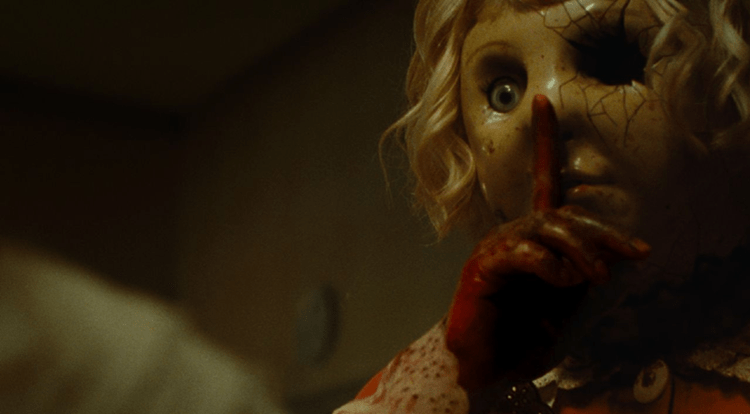
Macy eventually wakes up to find herself in a disturbing situation. She’s in an upstairs nursery, wearing baby girl clothes and awkwardly lying in an oversized bassinet. Just as Macy comes to her senses and begins looking for a way out, Dolly bursts in. She’s an imposing figure, wearing a tattered dress and a crude Porcelain doll head, who wants to raise Macy as her child. It’s a twisted scenario made even more unsettling with the revelation that Macy is the latest of many who have brutally suffered and died by the bloodstained hands of this unhinged ‘mother’.

Much like Hooper’s classic, things only get more depraved and bizarre the longer we stay in the house. Dolly’s delusion starts with pacifiers and baby bottles before devolving into something dramatically more shocking. And her warped motherly instincts are routinely interrupted by unstable fits of self-loathing rage. It makes the unstable Dolly even more terrifying. Meanwhile Therese, channeling her very best Marilyn Burns, shows Macy’s indomitable will to live which fuels her fight for survival, setting up several killer throwdowns with her captor.

“Dolly” was filmed over the course of 19 days on location in Chattanooga, Tennessee. Lovingly shot on Super 16mm, the lo-fi visual style alone has a transportive effect. It shrewdly calls back to the many similar films that paved its way. But it also plays a big part in capturing and sustaining the mood and atmosphere Blackhurst is going for. Equally essential is the assortment of crafty camera techniques he and DP Justin Derry employ including tilt shots, tracking shots, high angles, wide angles, intense close-ups, even a classic iris shot.

“Dolly” flaunts a premise that is as outrageous as it is creepy. It’s not for the squeamish, especially as the horror progressively turns more grisly. Yet there is a darkly comical undercurrent that Blackhurst knowingly embraces. Even with the hints of pitch-black humor, it’s easy to be unnerved by Dolly’s merciless psychosis, her grimy blood-splattered home, and some gnarly practical effects that have no shortage of blood and gore. These things alone meld into something wildly satisfying. But it’s the distinct throwback style that makes this catnip for genre junkies like me.

VERDICT – 4 STARS