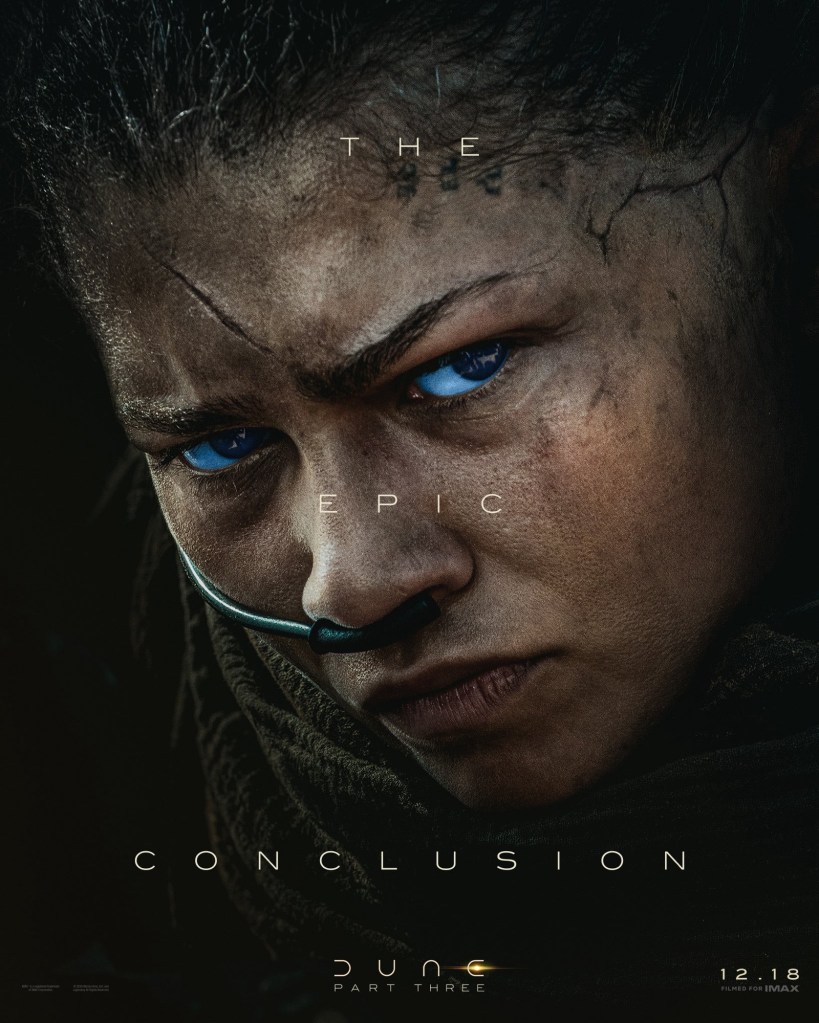
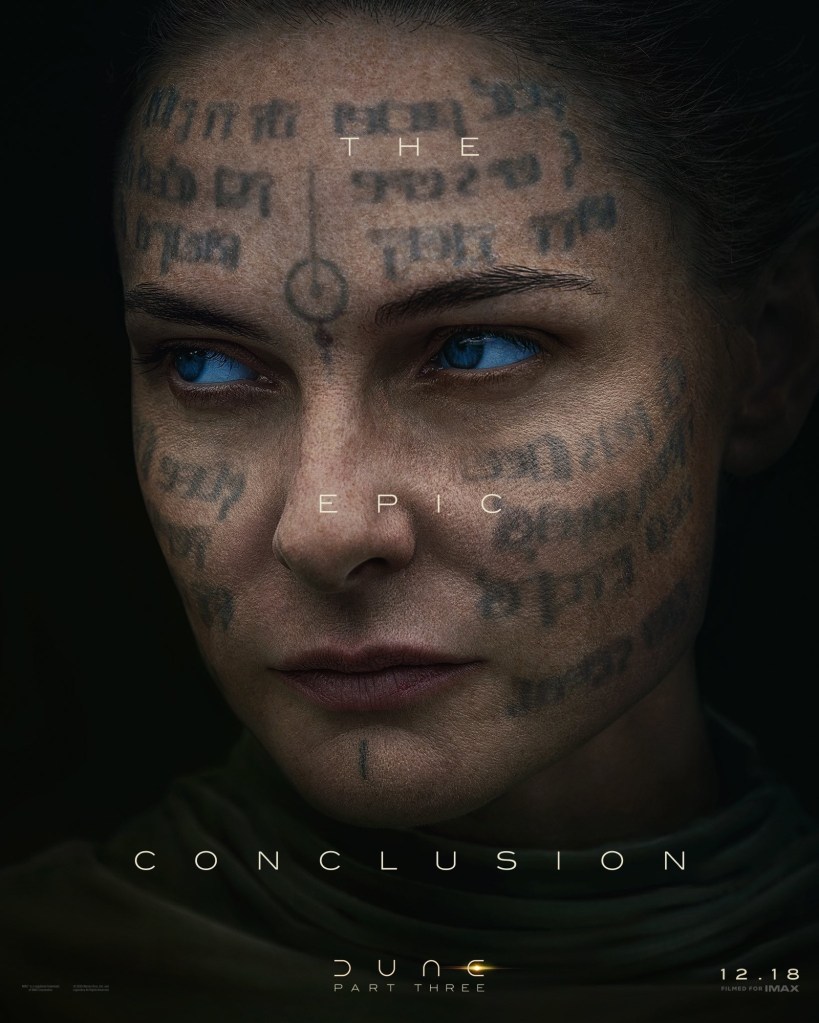
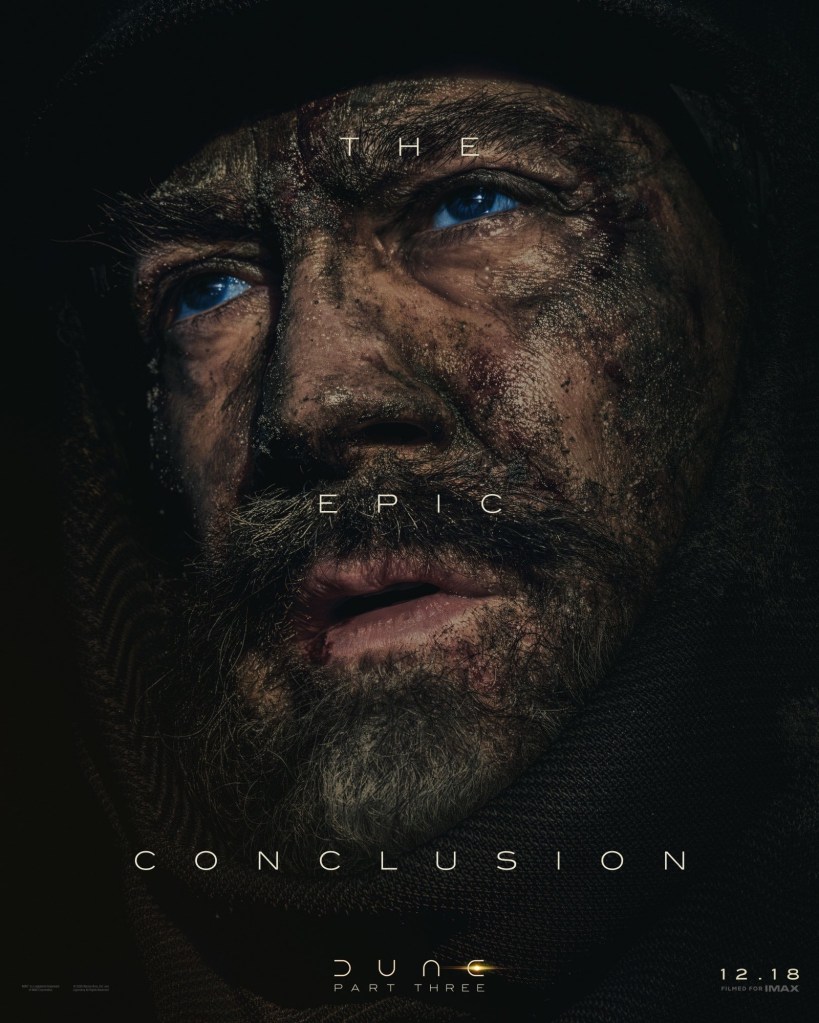
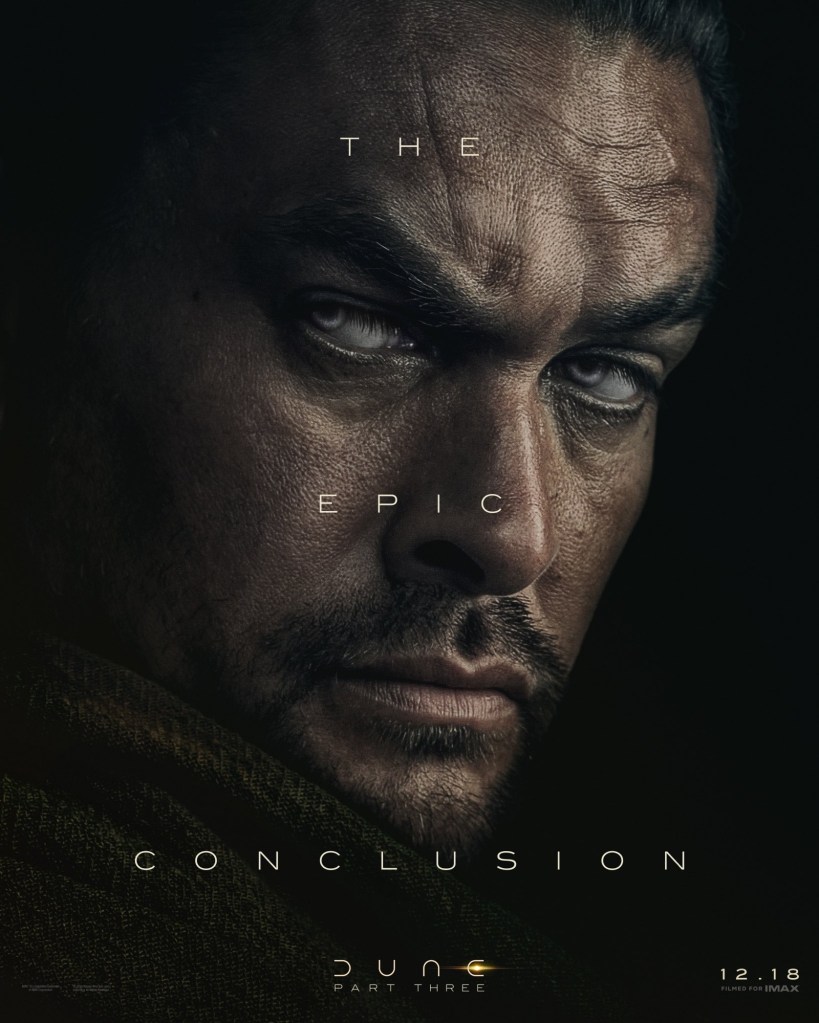
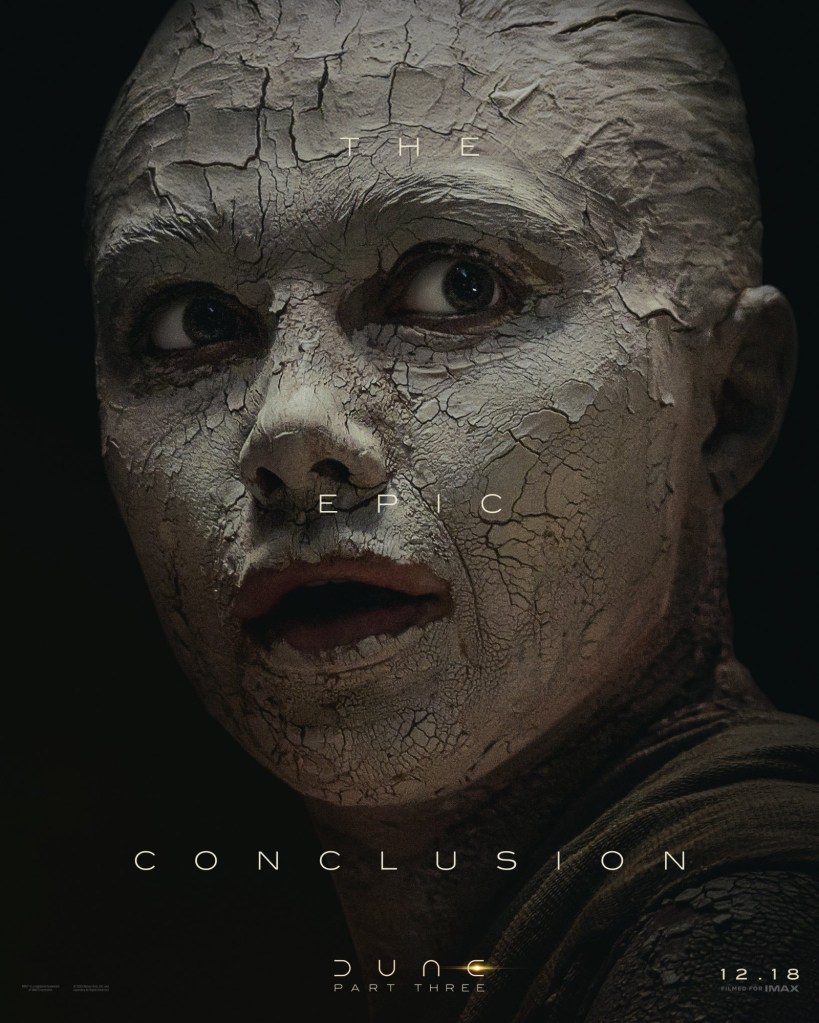
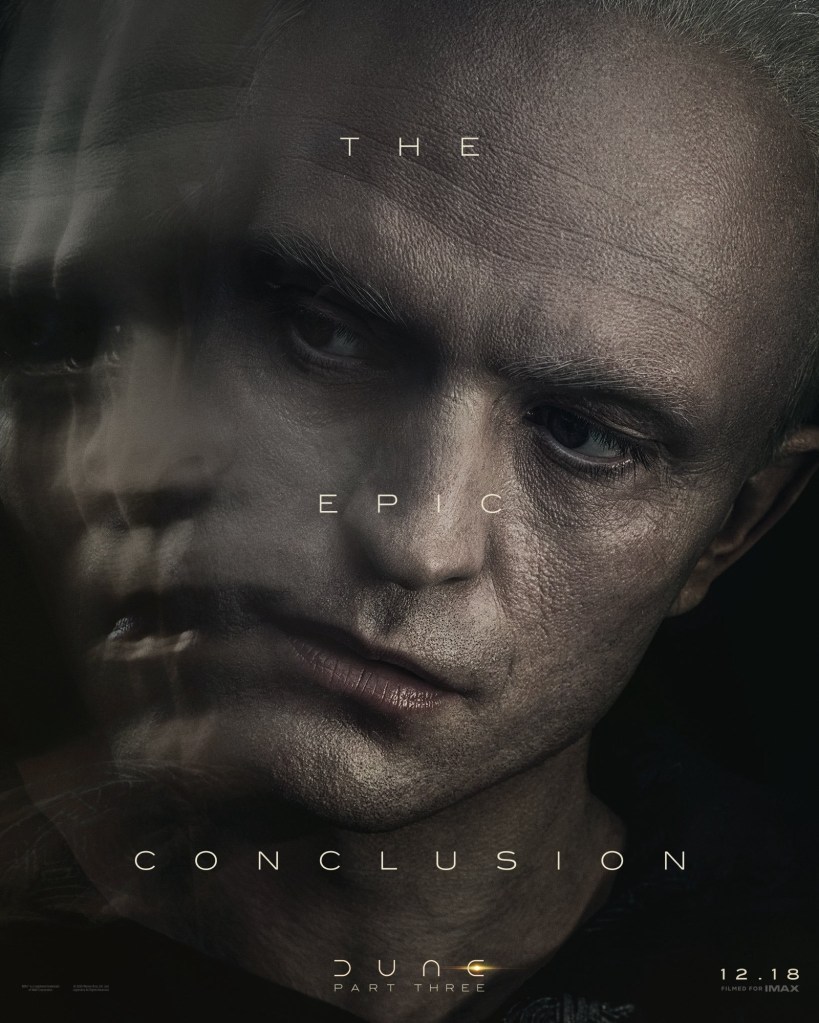
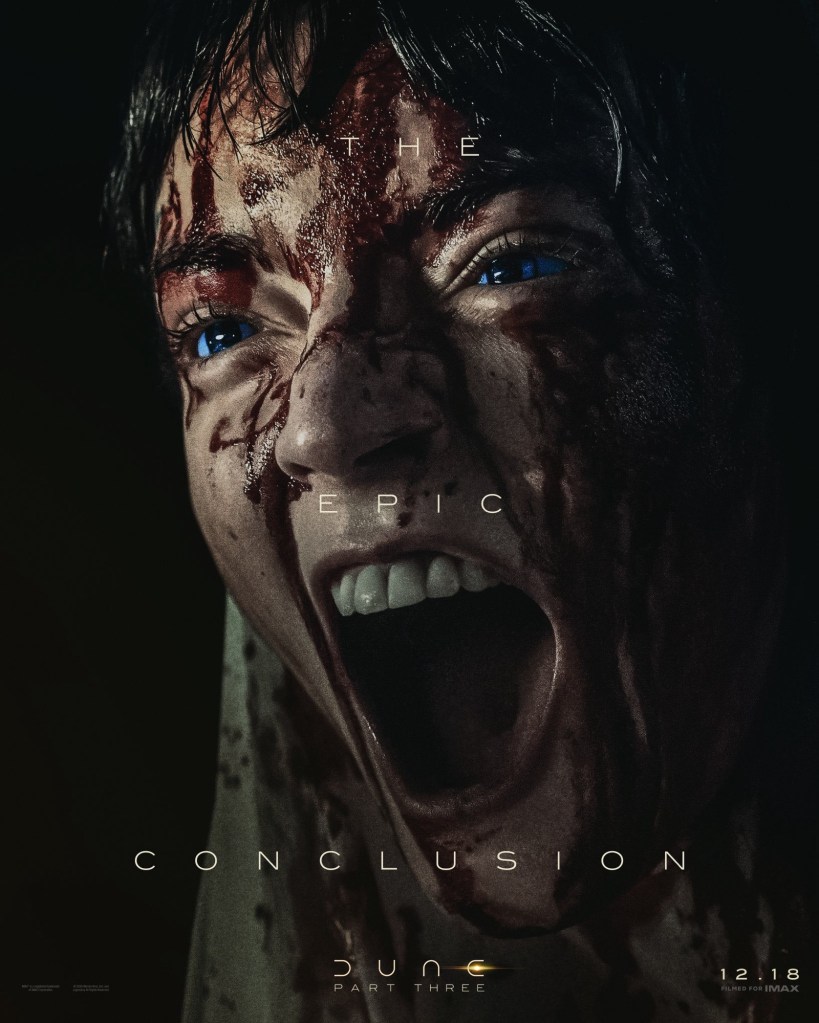
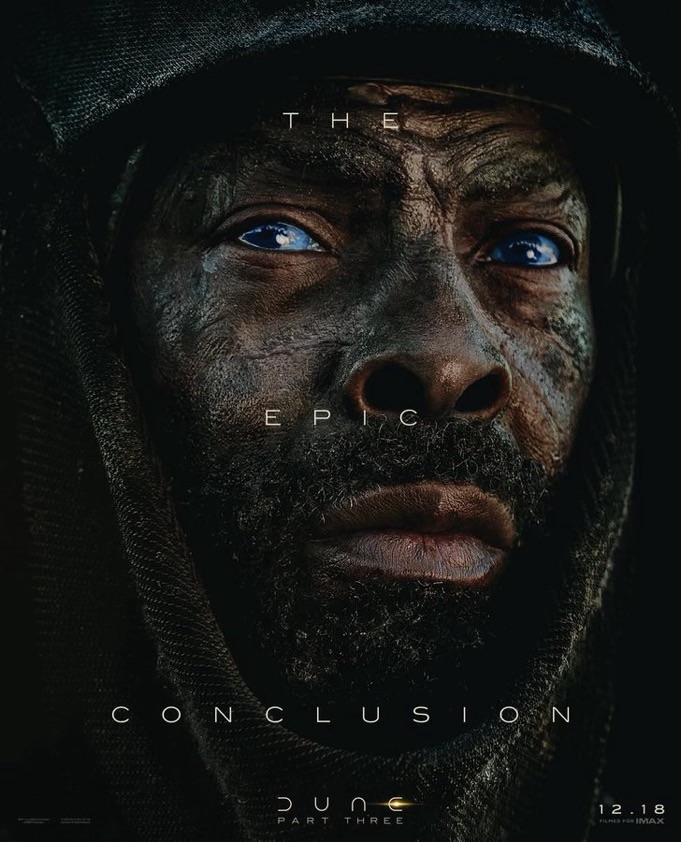
Easily among my most anticipated movies of 2026 is Denis Villeneuve’s “Dune: Part Three”. After two stellar entries into his adaptation of Frank Herbert’s seminal science-fiction classic, Villeneuve wraps up his trilogy with what promises to be one of the biggest films of the year. “Dune: Part Three” brings together a star-studded cast of returning characters and new additions, many of whom get their moment in the exciting first trailer that just dropped.
Written by Villeneuve and Jon Spaihts, “Dune: Part Three” adapts Herbert’s novel “Dune: Messiah”. In the new trailer we’re treated to much of what has made this film series great: terrific characters, stunning visual effects, an immersive world, and what looks to be an absorbing story. Not only will the dark tale of Paul Atreides (Timothée Chalamet) continue on the changing desert planet of Arrakis, but Villeneuve is taking us to the stars. Overall it’s a journey I can’t wait to continue.
“Dune: Part Three” releases in theaters on December 18th. Check out the trailer below and let me know if you’ll be seeing it or taking a pass.
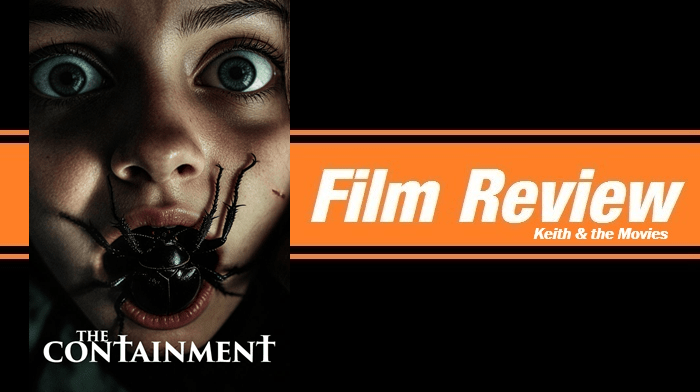
Perhaps more than any other horror subgenre, it’s possession movies that too often find themselves treading the same ground. A prime example is “The Containment”, another possession chiller that hits so many familiar beats that you’ll immediately recognize the tune. It features all the normal tropes that we’ve seen a million times which numbs us to most of its attempts to scare. Yet to its credit, the film throws us an unexpected curveball in the third act that almost saves the day…almost.
From co-directors Jack and Yossy Zagha Kababie, “The Containment” tells a fairly simple story, although it’s one that seems to be missing some key narrative pieces. It’s set in Fayetteville, Arkansas and focuses on a grieving family still reeling after a horrible tragedy. Jules (Charlotte Hunter) is trying to keep things together after her quadriplegic husband kills himself. Their two children are coping in their own ways. The older Caroline (Gia Hunter) has turned rebellious and defiant while her kid brother Don (Gabriel Bonilla) hasn’t spoken since the incident.
Image Courtesy of Level 33 Entertainment
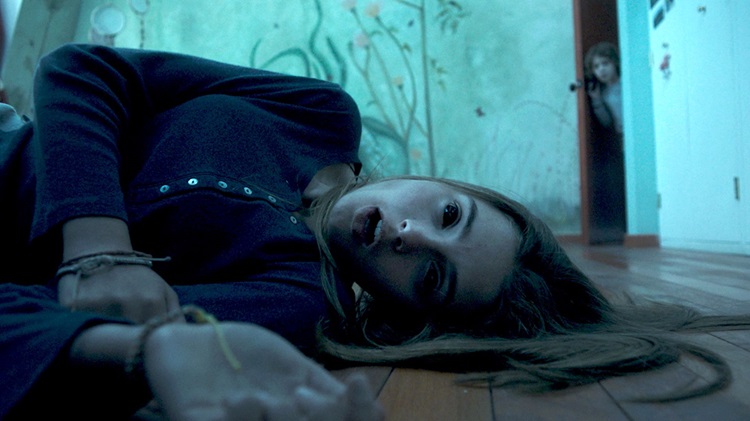
The family dynamic is set up early on and there is no real variation to it for the vast majority of the movie. Instead the three family members remain stuck in the same gear, even when the abovementioned possession comes. Rather than exploring the layers of emotional strain between the characters, we instead watch as the snotty Caroline get snottier, as Jules sorts out an out-of-the-blue and woefully underdeveloped relationship, and as Don remains quiet.
But things do change when a large bug resembling an ancient Egyptian scarab crawls into Caroline’s mouth and down her throat as she sleeps. As bad luck would have it, the scarab thingie is carrying a malicious demonic force that possesses Caroline whenever it feels like it. When it does, we end up getting the whole bit – blacked out eyes, vomiting, levitation, bone-cracking body contortions, speaking in other voices. It’s all there.
Image Courtesy of Level 33 Entertainment
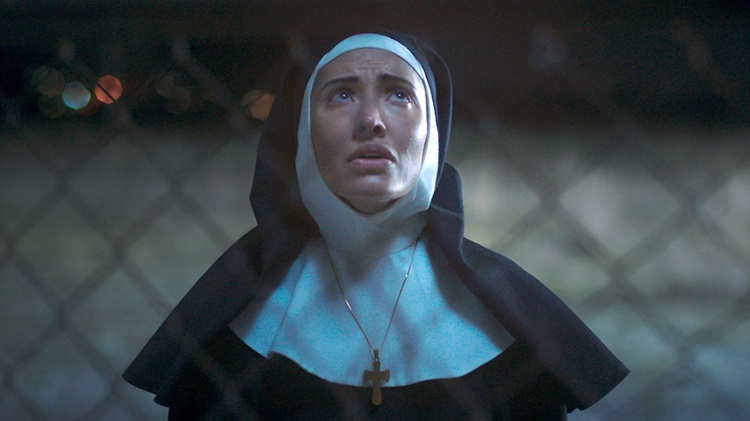
The hospital can’t find anything wrong. A YouTubing demonology expert is a bust. Even the local priest refuses to perform an exorcism. The family’s lone help comes from a lowly nun named Sister Esperanza (Fernanda Romero) who seems to be in way over her head. The story sputters along from there, teasing us with moments that never really deliver the tension or scares we’re looking for. It isn’t until the very end that we get our first surprise – a sinister jolt that broadsides our expectations.
“The Containment” hits us with some stylish visual flourishes and some fairly creepy imagery. But it struggles mightily in distinguishing itself from the countless possession movies that have done the same thing better. The film isn’t helped by the shaky pacing, the lack of scares, and a noticeably dry lead performance. But its the copy-and-paste adherence to the possession movie formula that drags everything down. And even an unexpected kick at the end isn’t enough to bring it to life.
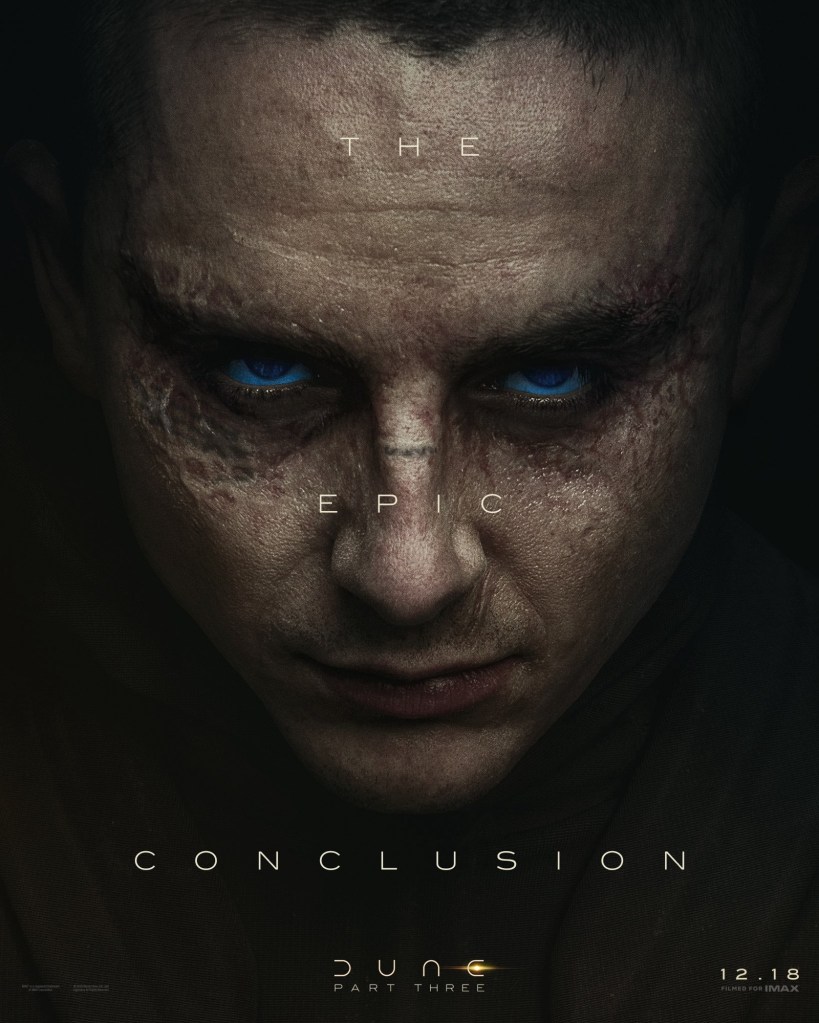
Warner Bros. Pictures has officially started its promotion of Denis Villeneuve’s highly anticipated “Dune: Chapter Three”. Based on Frank Herbert’s 1969 novel “Dune: Messiah”, the sci-fi epic is the final installment in Villeneuve’s brilliant film trilogy. The movie features several returning stars and some exciting new faces. The amazing ensemble includes Timothee Chalamet, Zendaya, Javier Bardem, Rebecca Ferguson, Josh Brolin, Anya Taylor-Joy, Robert Pattinson, Florence Pugh, and Isaach de Bankolé. Jon Spaihts returns to co-write the script, but the movie will be without DP Greig Fraser.
With the first trailer set to be released tomorrow, Warner Bros. is gearing us up by releasing ten awesome new character posters. You can check them out below. What do you think of the Dune film series? Are you excited for “Dune: Part Three”? Let me know in the comments below.
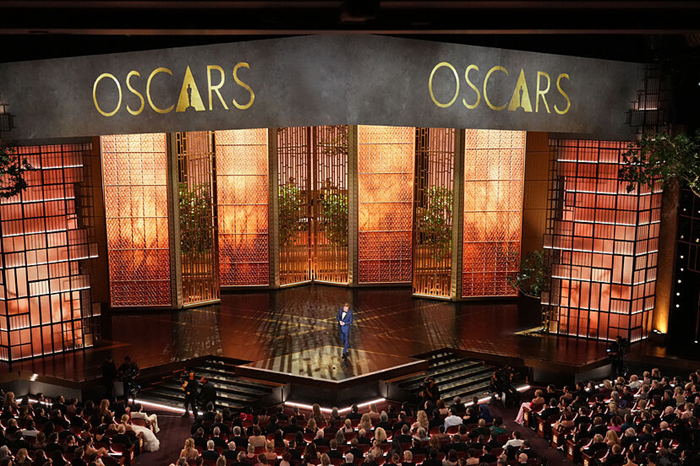
The 2025 awards season mercifully comes to an end (in mid-March 2026!!!) with the 98th Academy Awards. The entire season has been almost robotic in its doting over the same tiny select handful of films. From small critics groups to major awards shows, it’s been the same few winners over and over again. That mostly remained the case with this year’s Oscars although the show did provide a few nice moments and a couple of welcomed semi-surprises.
But enough of the rambling/ranting. As I do every year, here are a few random thoughts on this year’s Academy Awards.
The awards season darling “One Battle After Another” was the big winner and it was no surprise. While some outlets tried hard to manufacture some drama, the voter’s pet’s big night had been preordained. It’s not a good movie, but it checks the right boxes. And it has been the season’s Chosen One since it first screened. Sadly nothing else had a chance.
Of course “One Battle After Another” wins Best Picture which was never in any serious doubt. It had won everything leading up to Oscar night which only shows how programmed these things have become. Even funnier, it’s the third subpar movie to win Best Picture in four years. Yikes.
Staying with the obvious, Paul Thomas Anderson won Best Director for “One Battle After Another”. It feels more like a lifetime achievement award rather a deserving directing win, but whatever.
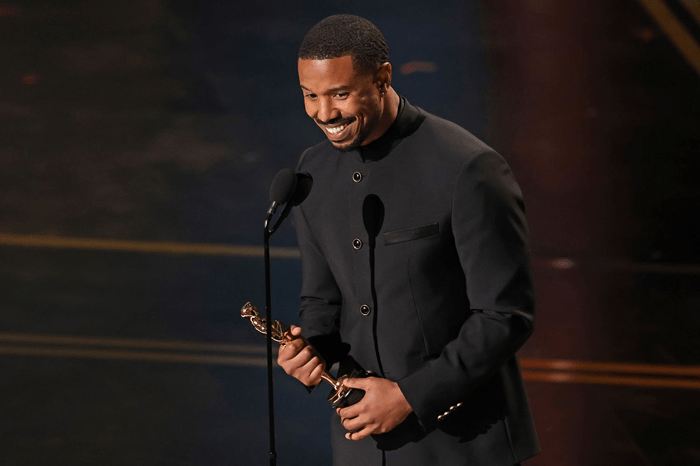
One thing the Academy got right was Michael B. Jordan winning Best Actor for “Sinners”. It’s an utter travesty that Daniel Day-Lewis and Joel Edgerton weren’t even nominated. But Jordan’s performance was right there with them. He was the best choice and the right choice.
The Academy also nailed it by giving Jessie Buckley the Best Actress award. She had been winning big all season, but it was still great to hear her name called. She has been such a delight all season.
To its shame, the Academy sent “Train Dreams” home NO Oscar wins. It was the very best film of the year and the idea of it going home empty-handed (especially considering some of the big winners) is beyond ridiculous yet not surprising.
Not as shameful, Josh Safdie’s “Marty Surpreme” went home with nothing. While it never had much of a chance, its star Timothée Chalamet was once touted as the early Best Actor frontrunner. But that changed quick and now its off to promote the upcoming “Dune: Part Three”.
Host Conan O’Brien kicked off the show with great “Weapons” themed opening sketch that was well produced and absolutely hilarious. It was the kind of opening that really kicked the show off with the bang. I’ve already watched it two more times on YouTube.
Overall Conan’s monologue had some funny bits but it went on for way too long. Twenty minutes was too much, especially when they started cutting acceptance speeches short. C’mon Academy.
So there was actually a tie at last night’s show. It came in the Live-Action Short Film category with the terrific “Singers” sharing the award with “Two People Exchanging Saliva”. It’s only the seventh time in Oscars history that a tie has happened.
“One Battle After Another” also wins the first ever Oscar for Best Casting. I will give it credit for having a lights-out cast. It’s just too bad they didn’t have better material to work with. Most people thought this would go to “Sinners” and frankly it should have.
One of the best wins of the night was in the Supporting Actress category. Amy Madigan takes home the trophy for her bonkers, terrifying, and hilarious performance in “Weapons”. It was unlike anything else we saw all year and deserving of all the awards.
The exact opposite happened in the Supporting Actor category. Sean Penn gave one of the most absurd performances of the year in “One Battle After Another” and was given an Oscar for it – his third. Penn winning over Stellan Skarsgård is insanity and it blows the category’s credibility out of the water.
Just to vent a bit more, Stellan Skarsgård gave one of very best performances of the year in any category. His stunning turn in “Sentimental Value” was another great addition to a career full of stellar work. Yet he has still never won an Oscar. That should have changed last night. Unfortunately Penn’s ludicrous over-the-top theatrics registered more with voters than the raw, authentic humanity that Skarsgård delivered. Go figure.
Predictably “One Battle After Another” won for Best Adapted Screenplay despite being the messiest adapted screenplay out of the nominees. “Train Dreams” should have won, but (once again) nothing else stood a chance.
Equally predictable, Best Original Screenplay went to “Sinners”. It’s a decent win although “Sentimental Value” was by far the best of the group. That said, Ryan Coogler’s acceptance speech was one of the best of the evening. Humble, grateful, and wonderfully grounded. I’m glad he won just for that!
It was great to see “Sentimental Value” win Best International Feature. It was basically pushed aside in every other category, some of which it deserved to win. Thankfully it didn’t go home with nothing.
Cheers to Ludwig Göransson who won his third Academy Award for Best Original Score. This year it was for his incredible work on “Sinners” and (once again) it was well deserved. He is a genius composer who never disappoints. He also gave a terrific acceptance. It won’t be his last.
The In Memoriam segment offered a fitting tribute to the many great talents lost over the last year. I was a tough watch, especially when clips of Robert Duvall, Diane Keaton, Catherine O’Hara, Val Kilmer, and Robert Redford popped up. But couldn’t they have found room for James Van Der Beek, Eric Dane, Brigittte Bardot, and Robert Carradine? Seriously?
Speaking of the In Memoriam segment. It was a really nice moment when various stars from Rob Reiner’s films appeared together on stage to honor the late filmmaker. Billy Crystal, Meg Ryan, Kiefer Sutherland, Wil Wheaton, Cary Elwes, Carol Kane, Kevin Pollack, Kathy Bates, and more were included.
“Frankenstein” didn’t have a shot when it came to the “big” awards even though it deserved it. But it did well in other important categories, winning for Production Design, Costume Design, and Makeup and Hairstyling. It’s a great film and it deserved every win.
“Avatar: Fire and Ash” deservedly won the Oscar for Best Visual Effects. It’s a visually jaw-dropping film that should have been recognized in even more categories.
Sadly the Best Cinematography winner was far from the best cinematography of the year. It went to “Sinners” which is a good looking movie. But no film was as brilliantly shot or used its cinematography as powerfully as “Train Dreams”.
The Oscar for sound went to “F1” which was unquestionably the correct choice. “F1” was an extraordinary cinematic experience and the stunning in-theater sound was a big reason why.
Best Editing went to “One Battle After Another” which was pretty comical considering the film could have desperately used several more trips to the editing room. But it’s hard to go against the trendy pick.
That’s enough rambling about the 2026 Academy Awards. What did you think of the show and this year’s winners? I’d love to hear your thoughts. Also, “Train Dreams” is streaming on Netflix. Go watch it and see how bad the Academy missed its mark. Till next year!
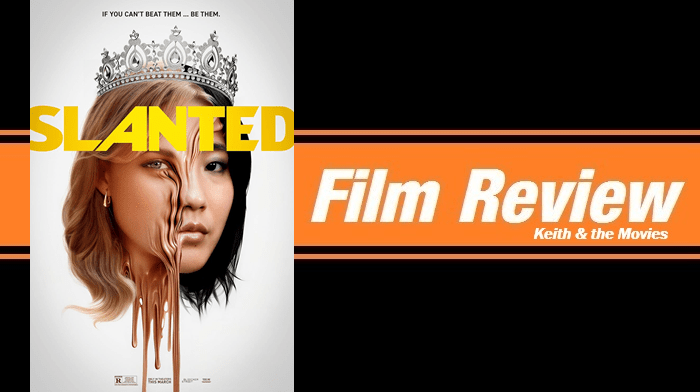
The very concept of “Slanted” put the film in a precarious position from the very start. It’s a deeply personal message movie that doubles as a bonkers social satire and triples as body horror chiller. It’s certainly an ambitious undertaking for writer-director Amy Wang who draws inspiration from her own life experiences and finds catharsis in exploring genres. Unfortunately she struggles to find the right balance, leaving “Slanted” to only go skin deep.
With “Slanted”, Wang has several interesting themes on her mind including identity, culture, and assimilation. More intimately, her film examines insecurity, self-worth, and validation. While nothing feels as thought out as it could be, there are times when Wang hits her marks. But it’s her broader critiques that fall apart, specifically in her observations on whiteness and Americanism. They’re too absurd to be seriously considered and too broad to be insightful.
A key strength of the film is Shirley Chen. She plays Joan Huang, a Chinese-American teen who has grown up on the outside of the popular (and glaringly white) social circles that she desperately wants to be a part of. Joan moved to the United States from China ten years earlier with her father Roger (Fang Du) and her mother Sofia (Vivian Wu). Wang drops them into a caricature of America where city streets are lined with stores like AR-15 Foods, ‘Merica Liquor, Yee-Haw Boots, and Freedom Beans. And where simply being white means you live in some kind of utopian bliss.
Image Courtesy of Bleecker Street
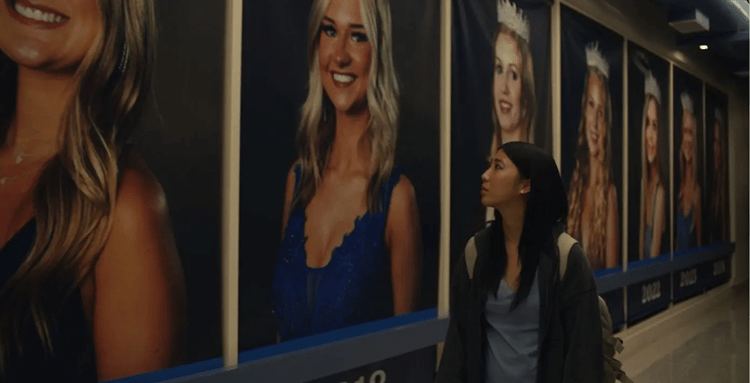
Now in her teen years, Joan attends the whitest high school imaginable where she emulates everything she sees from the popular crowd – their language, their style choices, their obscene self-absorption. She’s especially smitten with the reigning prom queen and social media maven, the insufferable Olivia (Amelie Zilber). At home, her bedroom wall is plastered with pictures of pretty white models plucked from magazines. She pinches her nose with a clothes pin to make it smaller. And she constantly uses cosmetic filters on her selfies to make her look ‘whiter’.
Joan’s obsession with fitting in at school puts a strain on her relationship with her parents. It’s especially difficult with her mother who tries to share their rich cultural traditions but is met with her daughter’s angst-driven indifference. And despite have a very close relationship with her father, Joan does a poor job hiding her embarrassment over his work as a janitor. The inner and outer conflicts provide moments when “Slanted” is at its best. The growing chasm between a daughter and her parents is heartbreaking to watch.
But Joan’s life takes a sudden turn after she gets wind of a mysterious company called Ethnos. They pitch themselves as “a place where we help you reach your true potential”. Joan decides to check out their office where she meets Dr. Willie Singer (R. Keith Harris). He tells her of a groundbreaking new ethnic modification surgery – a two hour procedure that permanently changes the patient’s pigmentation, facial and body features, and even their voice. It other words, it turns them white. “If you can’t beat them, be them,” the smarmy doctor says with a smile.
Image Courtesy of Bleecker Street
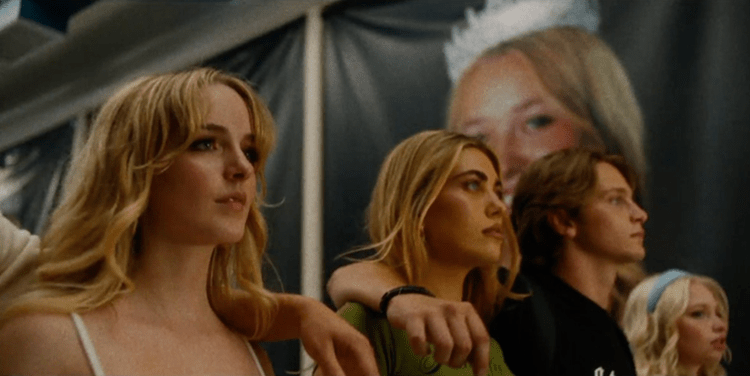
Of course Joan has the surgery and comes out pretty, blonde, and most importantly white. Now played by Mckenna Grace, Joan sets out to live the white life she’s always wanted. But there are speed bumps along the way, namely her parents and her best friend Brindha (Maitreyi Ramakrishnan) who may be the only other person of color left at school. Yet Joan gains the popularity she wanted and is even accepted into Olivia’s clique. But eventually it’s all threatened by some unexpected and disturbing consequences.
As Grace takes the baton from Chen, she adds several new layers to their character. Both give great performances that allow us to fully grasp Joan’s emotional journey. Du and Wu are equally good and in many ways are just as crucial to capturing the human element. Yet none of them can make the overall story crackle the way it needs to. They simply have too much working against them. The script’s shallow treatment of key themes waters things down. The storytelling is all over the map. And even the body horror (once it finally comes) is too tame to register.
“Slanted” does have some respectable creative flourishes, such as the clever shift from a 4:3 aspect ration to widescreen showing Joan’s feelings of confinement to freedom. But neither them, the strong performances, or Wang’s admirable personal investment can overcome the film’s inability to balance its message with either satire or horror. Somewhere in “Slanted” is a really good movie about cultural identity – one willing to go deeper than a cartoonish parody of whiteness and a shallow view of American values.
Frequent readers of this site have probably heard me talk about growing up on the genre-blending adventure movies of the 1980s. Whether it was science-fiction fantasy or classic sword-and-sorcery, if it was on the television I was watching it. And while some haven’t aged as well as others, I still hold those movies in high regard. Perhaps that’s why I get a little giddy whenever I see modern filmmakers tipping their hats to those nearly forgotten genre gems.
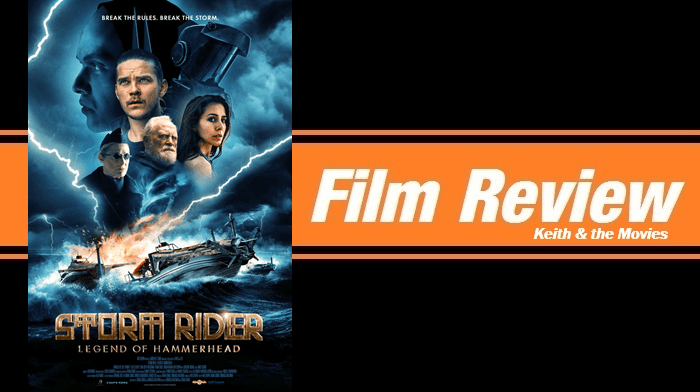
That’s exactly what co-producers, co-writers, and co-directors Domagoj Mazuran and Zoran Lisinac do with their new dystopian sci-fi film, “Storm Rider: Legend of Hammerhead”. Together they build an entirely new world that pulls inspiration from several places yet tells a story very much its own. Even better, Mazuran and Lisinac create a uniquely original mythology that is deep and detailed while maintaining a tight focus. It’s the storytelling itself that’s a little shaky. More on that in a second.
Image Courtesy of Blue Harbor Entertainment
An opening monologue sets things up nicely. The tale is set some 300 years after a catastrophic flood left the earth with nothing but a few scattered islands in an unending ocean. The “old world” with all of its cities, cultures, and knowledge now lays lost at the bottom of the waters. Surrounding what remains is a vast, perpetual, and impenetrable electrical storm that forms an ominous and deadly horizon.
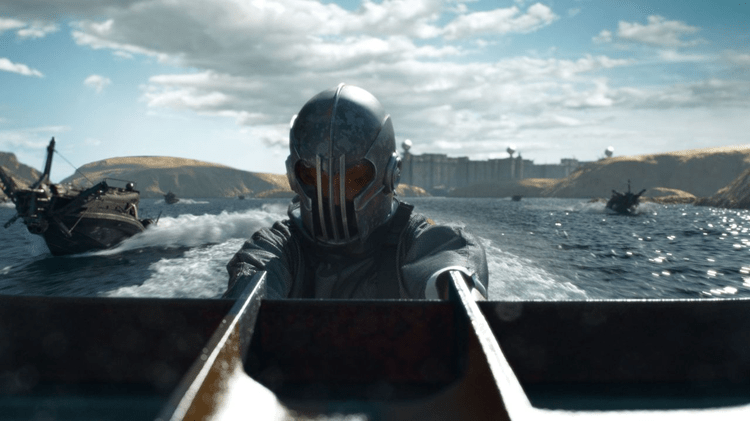
From the ruins, the massive city of Argos was built and ruled by a mysterious group of immortals called the Founders. As sprigs of human civilization sprang from the various islands, Argos became the hub of power and prominence. But with their power came the urge to control. It led the Founders to introduce a perilous annual speedboat race where chosen pilots from each island called storm riders would compete. The victor wins his island’s entry into Argos. But finish last and your island is stripped of its resources and its people cast out.
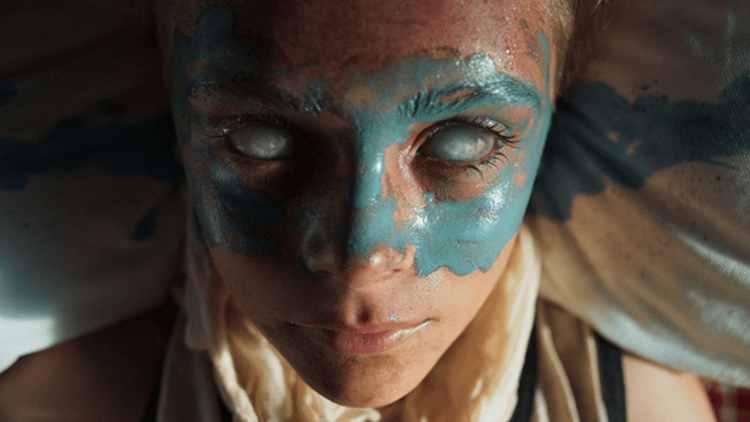
On Fig Island, two young storm riders have dreamed of competing in the race since their childhood. Neb (Marco Ilsø) and Ana (Ivana Dudić) grew up hearing the legend of Hammerhead – an outlaw storm rider who dared to defy the Founders by piloting his boat into the storm to see what secrets may lie beyond. Driven by the same spirit (and some personal motivation), Neb and Ana plan to use their opportunity as riders to pierce the storm in hopes of finding freedom for their people. But the villainous head Founder, Lord Tarus (Gilles Geary) is willing to stop them, no matter the cost.
Several other key characters help fill out the world including Neb’s wise yet nebulous grandfather, Dida (James Cosmo) and Tarus’ top lieutenant, known only as the Baroness (Caroline Goodall). Both clearly know more than they let on, and the secrets they hide play significant roles in the unfolding story. Yet they, like most of the movie’s central players, too often feel like archetypes rather than fully formed human characters.
Image Courtesy of Blue Harbor Entertainment
But the film’s biggest issue is found in its overuse of lengthy exposition, monologues, and narration. Without question, there is some interesting world-building to mine from the MANY explanations we get. But it’s not long before they start zapping the movie of its energy. It doesn’t kill the sheer imagination and craftsmanship at the heart of “Storm Rider”. But there are times when it slows the movie’s momentum to a crawl.
Despite that, Mazuran and Lisinac deserve a lot of credit for this ambitious undertaking. “Storm Rider: Legend of Hammerhead” is a notably fresh and imaginative slice of dystopian sci-fi manages to transport us to a fascinating new world without breaking the proverbial bank. The visuals frequently impress through their combination of real-life locations, imaginative production design, and fusion of practical and digital effects. And while its a bit like “Death Race 2000” meets “Waterworld”, the film dares to take itself seriously, telling a story without winking at the camera every step of the way. That alone is something I can appreciate. In theaters March 13th.