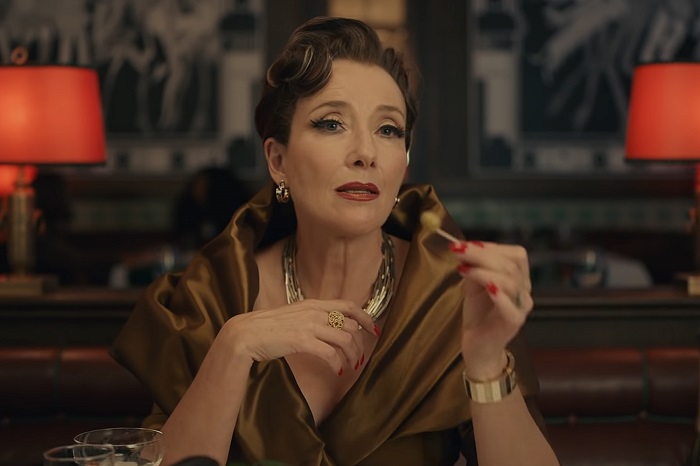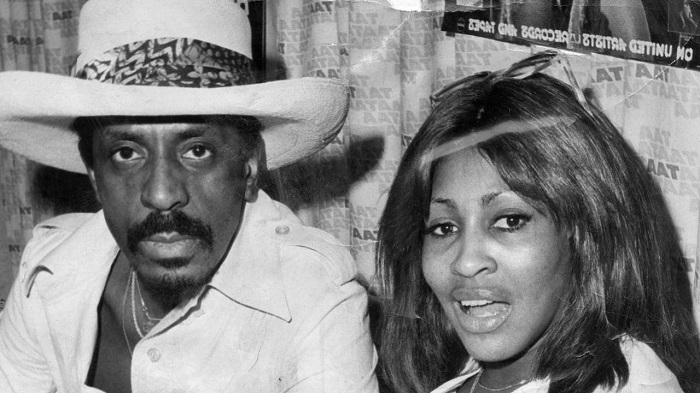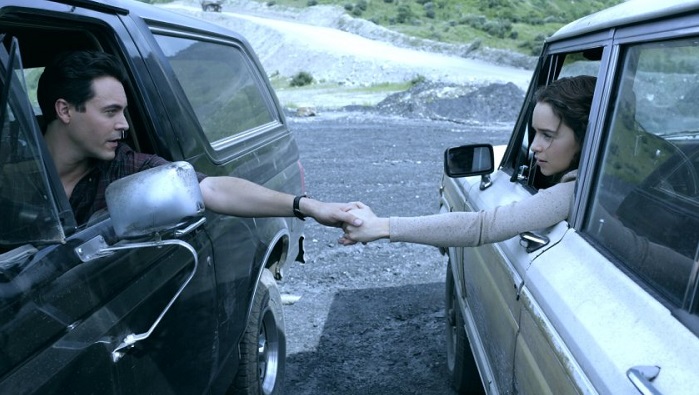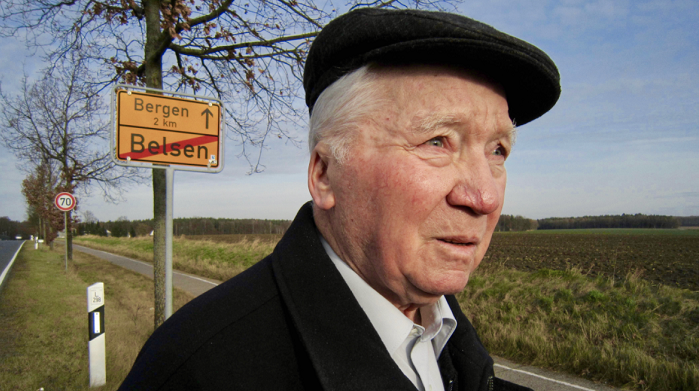
SUNDANCE REVIEW: “Passing” (2021)

SDpassing

Actress Rebecca Hall makes her directorial debut at Sundance with “Passing”, a movie based on Nella Larsen’s 1929 novel. Set predominantly in the Harlem neighborhood of New York City, “Passing” is an elegant and poignant period drama about biracial identity in 1920’s. Hall, who comes from a biracial family, touches on several other more opaque themes. But the film works best as a story of friendship – one marred by jealousy, obsession, and betrayal.

Noticeable right from the start, Hall’s debut employs stunning black-and-white cinematography. It’s not used as a gimmick or a nostalgic choice. The monochrome images have an intriguing symbiosis with the narrative and is thematically in-tune with the type of story being told. Hall also presents her film in a 4:3 aspect ratio that is both beautiful and evocative while feeding the film’s themes of confinement and boundaries. Some scenes utilize the format to relay the idea of being trapped within the life you’ve created. DP Eduard Grau’s images are a huge strength and practically every visual choice was made with meaning in mind.

The film’s title comes sharply into focus during the opening scene. Irene (Tessa Thompson), a biracial woman, walks into a shop with a hat tight on her head and covering a portion of her face. It’s a shop where she would normally be denied entry simple due to her ethnicity. But by ‘passing’ as a white woman she’s able to make her purchase and get out unnoticed. Immediately the theme of suppressing you racial identity is vividly laid out.

Afterwards a parched Irene stops for a drink at a Manhattan hotel. As she nervously waits for the waiter she’s surprised to see Clare (Ruth Negga), an old friend who she hasn’t spoken to in years. Clare is also biracial but has scrubbed out any hint of her true ethnicity. Now she’s ‘happily’ married to a wealthy and garishly racist white man named John (Alexander Skarsgård) who has no idea she is black. So as Irene ‘passes’ just to enter stores or to get a drink, Clare does it for the lavish white-only high society lifestyle.

PASSING

As the two old friends reconnect they begin reevaluating their lives. Clare’s secret visits to Harlem makes her realize how much she misses her people and her culture. Her free-spirited boundary-less personality quickly makes her a hit in the neighborhood and in Irene’s home. Clare relishes the attention. Irene has done everything by the book. She’s married to a hard-working man named Brian (a terrific André Holland). They have two bright children and a nice Harlem home. But for Irene, seeing Clare’s independence and self-assurance highlights her growing feelings of dissatisfaction.

From there the relationships fester with more complex emotions. Hall handles them all with a surprisingly nuanced approach. She doesn’t spell out how her characters feel from scene to scene, instead trusting her performers to convey to us what we need. Yet despite their great work, the emotions can be murky at times. For example Hall tries to wedge in a muddled sexual tension between Irene and Clare, but outside of a few arbitrary gazes there’s nothing there. These moments feel weirdly out-of-tune but it’s not because of the performances. Both Thompson and Negga dazzle, bringing depth and light to their characters. Thompson is more subdued and internal, her character slowly pulled under by a range of suppressed emotions. Negga infuses Clare with her own unique energy and verve despite being seen solely from Irene’s point-of-view. And both actresses give us plenty to ponder and piece together on our own.

“Passing” is an alluring work with great period detail, a delicate attention to character, and an invigorating trust in its audience. As Devante Hines’ delightful piano chords transition us from one scene to the next, Rebecca Hall uses her story to poke at various weighty issues and social constructs. But at it’s core “Passing” is an intimate look at a complicated friendship energized by two absorbing performances. It’s a slow-moving story, even meandering a bit in the middle, but it really comes together in a powerful way, coated in ambiguity and with a final punch that feels inevitable and earned.

VERDICT – 4 STARS

4-stars

SUNDANCE REVIEW: “I Was a Simple Man” (2021)

SDsimple

Dying isn’t simple, is it?” It’s a question that echoes throughout the upcoming drama “I Was a Simple Man”. The film comes from writer-director Christopher Makoto Yogi and had its world premiere at this year’s Sundance Film Festival. Through his film Yogi turns something personal into a uniquely ethereal look at mortality, repression, and reckoning with the sins of your past. But it’s the perspective that’s distinct. Yogi tells the bulk of his story through the mind of a dying man.

“I Was a Simple Man” was inspired by Yogi’s personal experiences of being in the room as his grandfather was dying. The filmmaker recalled his grandfather calling out to people from his past and seeing faces in the room who weren’t there. The film is Yogi’s attempt to not only process what he saw, but to visualize what his grandfather might have been going through.

Set in Hawaii and shot with undeniable heart and pride, the movie makes it a goal to authentically portray Hawaiian culture, blemishes and all. Rather than deal in rose-colored idealism, Yogi simply tells a universally human story that’s still very specific to the islander tradition and way of life. Cinematographer Eunsoo Cho’s camera ensures the island’s natural beauty is never lost on us. But it’s his still observational style, especially in the early scenes, that plants our feet in the culture. The film is a visual feast but also very grounded.

SIMPLE1

The story revolves around an elderly man named Masao (a wonderfully reserved Steve Iwamoto). He lives alone, quietly going about his daily routine. Yet there is a sadness in his eyes, an emptiness linked to a rocky past scarred by loss and regret. He has a family, three kids to be exact, but he’s not close to them. Since the death of his wife Grace decades earlier, Masao has given in to his sorrow and has been content to just let his life play out. “I’m going to drink until I’m very old and eventually I’ll die.”

But now he has reached a different stage of his life. He’s found out he is sick and dying. “I’m not ready,” he tells a concerned neighbor as he begins looking back on the years behind him. But the illness quickly takes its toll and Masao begins seeing a ghost from his past, Grace (Constance Wu) in the same beautiful blue flowery dress from the last time he saw her. Bed-ridden and with little time left, Masao’s mind begins parsing through key moments from his life. We get snippets to when he was young (Kyle Kosaki plays teenage Masao) and first met Grace. The more potent flashbacks feature Tim Chiou as adult Masao in 1959. On the same day many in Hawaii celebrated statehood, Masao was burying his wife leading to his eventual disconnection.

At the same time the film is very much a family drama dealing with heavy themes of resentment, forgiveness, and the thorny ground of familial connections. Yogi uses Masao’s daughter Katie (Chanel Akiko Hirai) and his grandson Gavin (Kanoa Goo) to convey similar yet different family points-of-view. “How am I supposed to care for him when he didn’t care for us?”, an embittered Katie asks. Meanwhile Gavin is not only looking death in the face for the first time, but he’s wrestling with how he’s supposed to feel about a grandfather who has never wanted to be a part of his life.

The fact that “I Was a Simple Man” manages to successfully juggle all of these feelings and ideas is pretty impressive. It speaks to Yogi’s vision and his willingness to take risks in bringing that vision to the screen. The results are both haunting and elegant; beautiful to the eyes and soul. And while Yogi’s restraint can sometimes leave you longing for more emotion, his heartfelt attachment to the material and his culture is evident in every frame.

VERDICT – 4 STARS

4-stars

First Glance: “The Courier”

COURIER

Benedict Cumberbatch leads the upcoming historical Cold War drama “The Courier”. Set in 1960, the film tells “the incredible true story” of humble businessman Greville Wynne. He’s recruited by both MI-6 and the CIA to penetrate Soviet ranks and connect with a Russian mole (Mereb Ninidze) in an effort to bring an end to the mounting Cuban Missile Crisis. Dominic Cooke directs from a script written by Tom O’Connor.

Cumberbatch looks to be a great fit but I’m more intrigued by the supporting cast. I’m always up for watching Jessie Buckley and here she plays Greville’s wife Sheila. And Rachel Brosnahan, who was so good in last year’s “I’m Your Woman”, plays a mysterious CIA operative. And the story looks to be an exciting deep-cover spy thriller, but one with a strong human pulse. Shamefully I’m not that familiar with the true story, but the first trailer has me intrigued to know more.

“The Courier” opens in theaters March 19th. Check out the trailer below and let me know if you’ll be seeing it or taking a pass.

REVIEW: “Herself” (2020)

HERSELFposter

Phyllida Lloyd opens her new film “Herself” with an unforgettable scene that goes from sweet to harrowing in a matter of seconds. Two darling little girls put makeup on their mom, softly giggling with each stroke of rosey red lipstick and gold eyeshadow. Before long the three are dancing in the kitchen, the room full of music, smiles and laughter. Then the music stops as the husband and father enters the room. He orders the girls to go outside and then begins a violent, stomach-churning assault on his wife. The images of it haunts her and us for the rest of the movie.

“Herself” is an interesting mix of clear-eyed movie realism and life-affirming drama. It takes an honest and unadorned look at the lasting effects of domestic abuse and confronts the slow-moving legal system that harshly punishes the victim for signing a form wrong but considers putting children in the custody of the abuser despite clear evidence of his crimes. But the film has another side, one that doesn’t write our world off just yet. One that reminds us there is good out there; that compassionate and empathetic people do still exist.

Irish actress Clare Dunne plays Sandra, the victim of the above mentioned domestic assault. After the distressing opening scene, we see she has left her abusive husband and now works two jobs just to put food on the table for her daughters Emma (Ruby Rose O’Hara) and Molly (Molly McCann). She’s also forced to move from place to place, living in hotels and housing that accepts city assistance. Meanwhile she’s required to keep in touch with her abusive husband Gary who wields his visitation rights like a weapon. But through it all, the film stresses Sandra’s inspiring fortitude and her unbending love for her children.

HER2

Image Courtesy of Amazon Studios

Hungry to provide a more stable life for her daughters, Sandra is inspired by an internet video to build her own low-cost home. But she can’t do it alone. This is where the film’s faith in humanity brings a warm and welcomed ray of light. Sandra encounters a series of people sympathetic to her plight who help her in a myriad of ways. It starts with one of her employers, a widow named Peggy (Harriet Walter) who donates a plot of land. A former contractor named Aido (Conleth Hill) agrees to help with the building and before long other people join the project. Meanwhile Sandra has to dodge stupid government regulations that threaten to upend her hopes of having a house of her own.

Dunne not only delivers an incredibly natural performance but is also given story credit and co-wrote the screenplay with Malcolm Campbell. You sense her passion as much in her writing as in her acting. “Herself” has a lot on its mind and it’s not afraid to look at real-world issues with a critical eye. At the same time Lloyd and Dunne clearly have a belief that there is goodness in the world and they show it without becoming mawkish or stumbling into over-the-top melodrama. And even during its more inspiring moments, there are frequent reminders of the hardships lurking in the background for people like Sandra. “Herself” is now streaming on Prime Video.

VERDICT- 4 STARS

4-stars

REVIEW: “La Llorona” (2020)

LLposter

Whatever you do don’t confuse Jayro Bustamante’s “La Llorona” with 2019’s promising but ultimately disappointing “The Curse of La Llorona”. The two couldn’t be more different, their only real connection being the ubiquitous Latin American folk tale of “The Weeping Woman”. Bustamante has a much more sobering ambition, using the ghostly legend as a means of reckoning with the recent history of violence and injustice in his native Guatemala.

The film opens in the home of Enrique Monteverde (Julio Diaz), a sickly former General of the Guatemalan national army. He’s nearing the end of a highly publicized trial for war crimes, namely the genocide of the indigenous Mayan-Ixil people. The prosecution says that under his command the army killed an average of 3,000 people a month, equal to one-third of the Mayan-Ixil population. The General claims they were all insurgents. But evidence reveal that Mayan-Ixil people had been categorized as “State Enemies”. Even worse, 38% of all victims were children under 12-years-old. This earned him the tag “one of the bloodiest dictators of Latin American history” by local media.

LLORONA1

Image Courtesy of Shudder

He’s found guilty but the regime’s residual powers in government overturn his conviction sparking widespread public outrage. In response the people, specifically those deeply impacted by the atrocities, set up massive demonstrations outside of the General’s mansion. This is where the bulk of Bustamante’s film unfolds as the frail and feeble General holes up with his family, crippled by the affects of dementia and haunted by the sounds of protest echoing in the background. The steady chants are shrewd and ever-present reminders of the sins he refuses to own up to.

While it’s the General and his crimes that set up the story, the main focus is on the women of the house who are forced to navigate the consequences of the patriarch’s actions. They are his solemn yet faithful-to-a-fault wife Carmen (Margarita Kenefic), his conflicted daughter Natalia (Sabrina De La Hoz), and his inquisitive granddaughter Sara (Ayla-Elea Hurtado). Also in the house is Letona (Juan Pablo Olyslager), the General’s loyal soldier and family guard.

So where does the “La Llorona” story come in? When all but one member of his house staff quit, the family find themselves desperate for help. In walks the quiet and reserved Alma (María Mercedes Coroy), a young local with an air of mystery around her. Once she’s hired strange things begin happening in the home, from water faucets coming on by themselves to the faint luring sounds of a woman weeping in the night. You get the sense something otherworldly is going on, but Bustamante maintains a savvy ambiguity and never loses sight of his deeper aim – to lay bare his home country’s bloody and oppressive past.

Cinematically, it all makes for a fascinating genre blend – a crafty and textured mix of supernatural suspense and political drama. The script, co-written by Bustamante and Lisandro Sanchez, doesn’t go for big scares although you can feel the eeriness and unease whenever the General roams the halls of his home in the dark of night following the soft chilling wails. At the same time, the story of a family cracking apart as they face an ugly reality is handled with an emotionally sensitive attention to the characters. And the performances are terrific throughout, with each well-constructed role representing different perspectives that cut to the themes at the film’s center.

LLORONA2

Image Courtesy of Shudder

Another star of “La Llorona” is cinematographer Nicolás Wong who highlights the film’s haunting stillness while creating a real sense of confinement and claustrophobia. There is also a lot of craft in his work. In one of my favorite shots from last year, Wong’s camera puts us inside of the ambulance with the General and his family as they arrive home from his hospital stay. As they approach the mansion the fists of angry protesters bang on the side of the vehicle but Wong’s camera stays inside. What follows is an intense tracking shot as the family and paramedics usher the General’s gurney through a sea of incensed citizens. It’s powerful and harrowing in large part due to Wong’s incredible technique.

At its heart “La Llorona” is a different kind of horror film. While it touches lightly on them, the movie isn’t interested in the genre’s normal ideas of terror and dread. It’s horror comes from a more personal place. “La Llorona” is just as much a revenge thriller, a family reckoning, a political exposé. Ultimately it’s an allegorical call to reflection and a very potent one. It’s meticulous and patient in uncoiling its story and it doesn’t really try to mask its deeper meaning. Instead Bustamante let’s things play out through his characters while ensuring his audience is aware of the more consequential themes he’s dealing with. “La Llorona” is now streaming on Shudder and VOD.

VERDICT – 4 STARS

4-stars

First Glance: “Crisis”

CRISIS

While not as prominent in today’s news headlines as the current global pandemic, opioid addiction is ravaging lives at its own unspeakable rate. The new drama “Crisis” from director Nicholas Jarecki’s (“Arbitrage”) looks to tackle the issue head-on by using its star-studded cast to cover several interconnected storylines. Jarecki’s goal is to show how the epidemic and its devastating effects are impacting every social group and every class. That’s a lot to cover but the first trailer looks promising.

The cast is filled with familiar names and faces, each representing different walks of life and each connected to opioids in one way or another. Gary Oldman plays a principled professor hoping to bring the crisis to light. Armie Hammer is a DEA agent battling the epidemic from the trenches. Evangeline Lily is a frustrated vigilante mother searching for her addicted son. Luke Evans heads a shady pharmaceutical company protecting its billion dollar interests. Add in Greg Kinnear, Michelle Rodriguez, Lily-Rose Depp, and Martin Donovan among others. Strong cast, strong subject.

“Crisis” hits theaters on February 26th and premieres March 5th on VOD. Check out the trailer below and let me know if you’ll be seeing it or taking a pass.