
REVIEW: “Love in the Afternoon”

2017blindspot

Gary Cooper and Audrey Hepburn. Folks, that’s all I needed to hear to be interested in 1957’s “Love in the Afternoon”. And as if I needed any more prodding, this romantic comedy was directed, produced, and co-written by the great Billy Wilder. And then to add even more personal intrigue, “Love in the Afternoon” is set in the magical city of Paris. So you have an unlikely love story filled with good humor, some really strong central performances and the City of Lights. Sounds good.

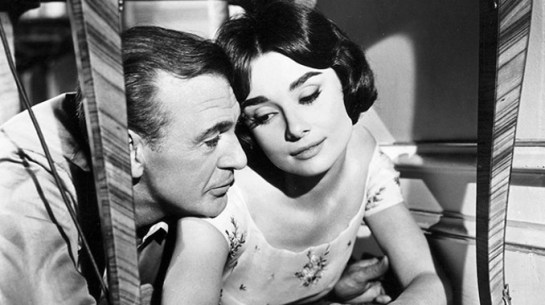
One of the first things you’ll notice when watching the film is the dramatic age difference between Cooper and Hepburn. Cooper was 55 years old at the time and there were some people who had a problem with his casting. Hepburn plays a beautiful (and much younger) girl named Ariane. She lives in Paris with her father Claude (brilliantly played by Maurice Chevalier) who works out of their home as a private investigator. Watching Hepburn and Chevalier is pure joy. They have an adorable father/daughter chemistry which shows itself in her playful curiosity about his work and his father-like encouragement of her cello playing.
LOVE1

One day Ariane eavesdrops as her father reveals to a client that his wife is having a fling with a wealthy American named Frank Flannagan (Cooper). She hears the trysts are taking place in Flannagan’s hotel room and that the husband plans to kill him. The curious and adventurous Ariane decides to go warn Flannagan of his upcoming demise. In doing so she finds herself smitten by the millionaire playboy’s charm. Her innocence and inexperience with love creates new feelings within her. On the other hand Ariane is initially just another victim of Flannagan’s globetrotting womanizing. But she leaves him in the dark about many things including her name and her far-fetched tales of her many boyfriends intrigues him. But is that enough to cure him of his playboy ways?

Wilder does a great job of getting us to love Hepburn and her character. She instantly comes off as pure and sweet and her childlike curiosity is adorable. That’s one reason we dislike Gary Cooper and his Flannagan character. We see that she is enamored with him but he sees her as just another toy. We genuinely worry for her as this unusual story plays out. But Wilder also shows that she’s not just a child with a bout of puppy love. She’s clever and, as Flannagan finds out, she can be abstruse. All of this is key to developing what is a well conceived love story.

This was the first of many screenplay collaborations between Wilder and I.A.L. Diamond. As you would expect from anything that Wilder has a hand in writing, the dialogue is slick and smart and his two lead actors handle it nicely. Hepburn was Wilder’s one and only choice to play Ariane but he wanted Cary Grant to play Flannagan. Grant turned down the role (as he did with several other Wilder offerings) which opened the door for Cooper. I admit, Cooper was an unusual choice and at first I wondered if he was going to fit. But as things move along, I think he captures what the role calls for.
LOVE2

The film also features some good bits of humor. The dialogue itself can be quite funny and there are several running gags that become pretty outrageous. There’s a hilarious reoccurring bit with gypsy musicians who Flannagan pays to play for him whenever he has a woman over. But we later see them popping up in some of the most absurd locations. It’s very funny. I also have to again mention the fun moments between Hepburn and Chevalier. She is her usual peppy and sprightly self. But Chevalier is a real scene stealer and for me some of the best moments featured him on screen.

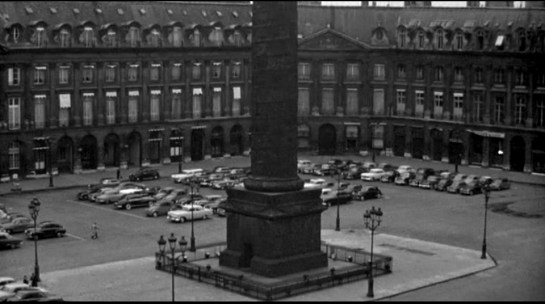
“Love in the Afternoon” is a movie I’m glad I finally caught up with. This is another energetic and intelligent Wilder film that hits the romance and humor it shoots for. “Love in the Afternoon” may not be up there with the great romantic comedies of its time, but it’s still a solid film featuring a wonderful cast, beautiful Paris locations, and a smart director who has no problem putting all of his pieces together.

VERDICT – 4 STARS

4-stars

REVIEW: “Black Panther”

PANTHER POSTER

Over the last several months my thoughts on “Black Panther” went from cautious to optimistic; lukewarm to generally excited. What nearly dampened my enthusiasm was the rabid, unbridled praise from early viewers who were quick to throw out words like “masterpiece” and “the greatest superhero movie ever made”. My personal favorite may be that the film will be “taught in school” and “debated among intellectuals”. Director Ryan Coogler has even been heralded as “the new Spielberg”.

All of this does more to fuel my skepticism than stoke excitement. After all, there are some legitimate reasons to want a film like this to succeed and it seems many are doing their part to ensure the hype is through the roof. But here’s the thing, I don’t need prodding in order to find reasons to be excited: Coogler is a fantastic young filmmaker. I absolutely love the cast. I couldn’t wait to see how cinematographer Rachel Morrison follows up her Oscar-nominated work in “Mudbound”. Ultimately all of the fawning puts undeserved pressure on “Black Panther” which when brought down to reality is an extraordinary genre picture that stands strong on its own merits.

Panther1

With two feature films under his belt (the good “Fruitvale Station” and the even better “Creed”) Ryan Coogler has shown himself to be an astute director with a fresh cinematic perspective. He brings all of that to “Black Panther” which he also co-writes with Joe Robert Cole. His venture into the superhero genre feels epic in scale yet maintains an intimacy that some of Marvel’s other efforts lack. It’s a careful balance that helps the movie excel in a variety of ways.

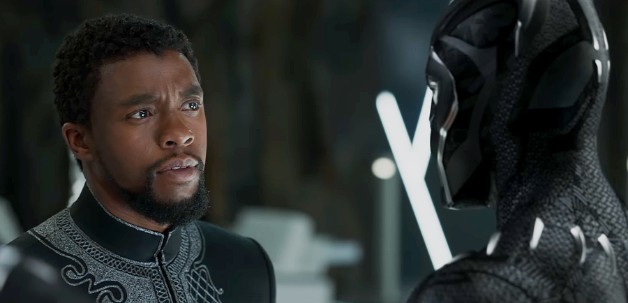
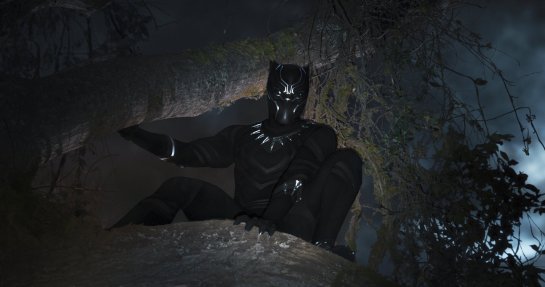
The wonderfully cast Chadwick Boseman returns as T’Challa, a character first introduced in Marvel’s “Civil War”. In that film his father, the king of the small African country of Wakanda, is killed during a terrorist attack in Vienna. “Black Panther” begins shortly after with T’Challa set to take his father’s place as Wakanda’s king as well as its super-powered protector. He’s quickly faced with a host of challenges both from inside and outside of his nation’s secret borders.

PANTHER2

Much like “Wonder Woman” a year ago, “Black Panther” reinvigorates its genre in a number of ways and the two movies share similarities. In that film it was the mythical island of Themyscira that remained hidden and untainted by the outside world. Here it’s Wakanda posing as a poor third-world country but actually rich in energy and technology thanks to a powerful alien mineral known as vibranium which they keep hidden from the rest of the world. Isolationism is one of the many subjects explored as the leaders of Wakanda’s five tribes debate their traditional stance versus a more open-world position. There is no easy answer as I’m sure the inevitable sequels will prove.

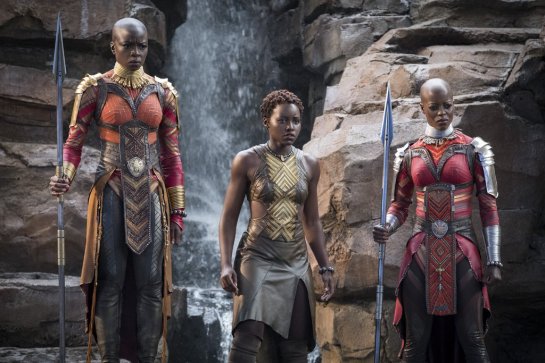
While T’Challa is the centerpiece you could say it’s the supporting characters who make this such a rich and full experience. First you have his allies, a delightful collection of powerful and personality-rich women. Lupita Nyong’o is fabulous as T’Challa’s principled ex-flame and Wakandan secret agent Nakia who’s guided by conscience over crown. Danai Gurira is lights-out as Okoye, leader of the female special forces unit known as the Dora Milaje. Letitia Wright plays T’Challa’s live-wire younger sister Shuri. She’s to her brother what Q is to James Bond. We also get great names like Martin Freeman, Angela Bassett, and Forest Whitaker.

PANTHER4

In the bad guys corner is Ulysses Klaue (Andy Serkis) who knows Wakanda’s big secret and has a sweet tooth for vibranium. There’s something I love about Serkis’ performance that I can’t quite put my finger on. Klaue is as bizarre as he is brutal and you can tell Serkis is having a ball portraying him.

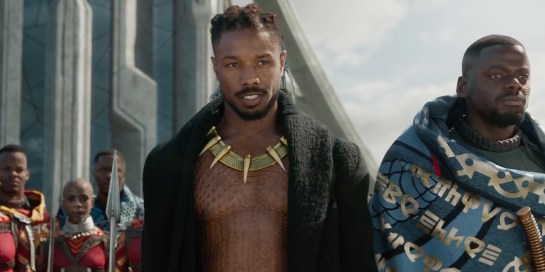
But the name most people will be talking about (and rightly so) is Michael B. Jordan who plays Erik “Killmonger” Stevens. His story is setup in the film’s prologue and comes more into focus as the movie moves forward. As his name denotes, Killmonger has been raised in violence and therefore acts through violence. He is an essential piece to Coogler’s story and offers more complexity than the bulk of Marvel villains we’ve seen. In many ways Killmonger is the product of choices made by others and he is driven by a whirlwind of internal chaos, much of it aimed at Wakanda.

Jordan is an absolute scene-stealer and you get the sense Coogler wants him to be. The two have collaborated on both “Fruitvale” and “Creed” and they definitely operate on the same wavelength. Here the charismatic Jordan brings a swagger to Killmonger as well as a palpable rage which fuels his every move. Ultimately he is a misguided soul yet at the same time a sympathetic one with much more driving him than the generic quest for ‘world domination’.

PANTHER3

In each of his films Coogler has shown a big interest in his characters and it’s no different here. He also gives a lot of attention to visualizing Wakanda as a majestic place full of cultural beauty and aesthetic diversity. Production designer Hannah Beachler and costume designer Ruth Carter make the most with their chunk of the film’s $200 million budget. And it’s all captured through Rachel Morrison’s vibrant camera.

As much as I loved “Black Panther” it isn’t without a few nagging issues. There are plenty of action scenes, several of which are fabulous. But the ending is the only time the movie falls in with the traditional Marvel formula – a massive final battle with a ton of CGI. While some of it is exhilarating, the effects aren’t what you would expect and sometimes come off as a little cartoony. There are also a handful of unanswered questions and a couple of relationships that felt underserved. Minor quibbles in light of what all the movie manages to do right.

PANTHER5

“Black Panther” is indeed a socially relevant movie as many have said and it is so without depending on obvious narrative crutches or hammer-to-the-head sermonizing. It’s socially relevant because it simply is. That may sound a bit tripe, but it’s the best way to state it. The film’s setting, its characters, its conflicts all feel natural and authentic within the world Coogler and company create. The story’s message and underlying themes are rooted in conviction and earnestly explored within the flow of the narrative itself. Really good filmmakers can do that.

In the end “Black Panther” is a rousing success not because critics propped it up or commentators screamed its importance. It’s a success because of the people who made it – immense talents in front and behind the camera who are hopefully opening the eyes of moviegoers and moviemakers. But “Black Panther” isn’t just a cultural statement. It’s a terrific film that energizes a genre as it has a community. Not many movies can say that.

VERDICT – 4.5 STARS

4-5-stars

REVIEW: “Icarus”

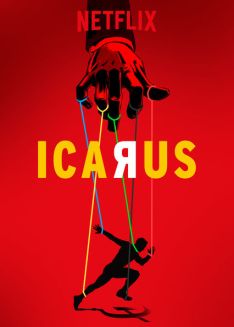
ICARUS POSTERWhen watching Bryan Fogel’s now Oscar-nominated “Icarus” I couldn’t help but think of Morgan Sperlock’s “Super Size Me” but with performance-enhancing drugs replacing McDonalds. At least that’s how it starts. But the further it goes Fogel’s documentary (originally meant to show the effects of PEDs) inadvertently becomes an stunning exposé on how the recent Russian doping scandal was brought to light.
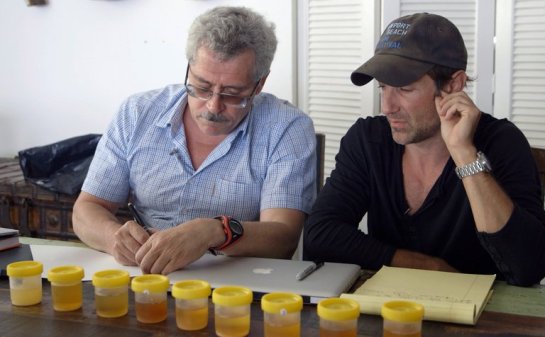

Filmmaker, playwright, and cycling enthusiast Bryan Fogel set out to show how PEDs enhance athletic performance through experimentation. But he also aimed to see if he cover his usage and pass an anti-doping test. Over several months he injected himself with a series of steroids and growth hormones and documented the results.

Fogel’s experiment was first overseen by Don Catlin who founded the first anti-doping lab in the United States. But Caitlin grew uncomfortable with how it might effect his reputation so he connected Fogel to Grigory Rodchenkov, the director of Russia’s national antidoping laboratory. Grigory walks Fogel through a intensive PED regiment and reveals his process for avoiding a positive drug test.

Through their experiment the two men develop a close friendship and Grigory begins sharing the details and inner workings of Russia’s elaborate state-ran doping scheme. He unveils startling information about the Russian Olympic teams and the involvement of the Russian government. Fogel quickly learns he has stubbled into something far more significant and potentially earth-shattering than his original subject.

Icarus1

As “Icarus” moves forward it makes a substantial shift from fairly mundane to thoroughly riveting. The film starts slow as Fogel spends a bit too much time documenting the first stages of his steroid experiment and how it impacts his performance in the Haute Route cycling competition. But it takes an entirely different form the moment Grigory enters the picture.

Fogel comes across as genuinely overwhelmed by the flood of shocking revelation and his film does a great job conveying that nervousness and uncertainty. The sheer magnitude of the scandal and the wide-reaching impact of Grigory’s willingness to go public adds a level of intensity akin to an edge-of-your-seat spy thriller. And despite its slow start, “Icarus” sucks you into the elaborate and dangerous web of scandal that shook the international sports community to its core. At the same time it shines a bright light on the political powers who will use anyone, whether it be Grigory or the hundreds of Olympic athletes, to accomplish their will. And miraculously Fogel just happened upon it.

VERDICT – 3.5 STARS

3-5-stars

REVIEW: “Geostorm”

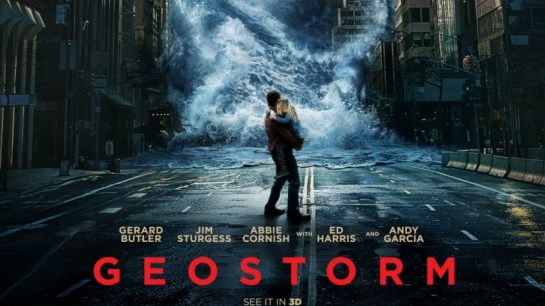
GEOPOSTER

Let’s be honest, movie trailers aren’t always reliable. We’ve all seen trailers that excited us for movies which would eventually let us down. We’ve also watched trailers that didn’t impress only to find the movie to be a pleasant surprise. Neither is true for “Geostorm”. The trailer advertised something dreadful and the movie delivered it. At least they didn’t mislead us.

It’s the distant future of 2019 and the United States has developed an elaborate satellite system as a response to a series of devastating weather disasters. The climate-controlling space contraption is affectionately known as Dutch Boy. The mastermind behind it is none other than Gerard Butler. I guess it makes sense. I mean who else would you call to face hurricanes and typhoons head-on?

GEO1.jpg

Butler plays Jake Lawson, the mastermind behind Dutch Boy until being dismissed due to his problems with authority (reminiscent of every Gerry Butler action movie character). Since then three years have passed and his estranged brother Max (Jim Sturgess) now oversees Dutch Boy. Under his watch a series of deadly weather anomalies occur including a frozen village in Afghanistan and tornadoes of flames in a sweltering Hong Kong. Fearing worst disasters, Max convinces Gerry, errr Jake, to come back and sort out why Dutch Boy didn’t catch the anomalies.

The government launches Jake into orbit where he boards the International Climate Space Station (yep, that’s what it’s called). There he meets his pointedly diverse team of techs to figure out what’s wrong with his baby. Both Jake and Max uncover clues which point to tampering, political corruption, environmental terrorism, blah, blah, blah. And if our brave brothers can’t root out the culprit and fix Dutch Boy in time, a global weather disaster known as a (you guessed it) Geostorm will decimate the planet. Good thing Gerry is on our side.

All of that silliness sets up Gerry’s race against-the-clock space station adventure. Director and co-writer Dean Devlin leans heavily into Butler’s stale action-movie persona not even daring to offer anything new. He’s a tough guy, an anti-authority type, with a good physique and plenty of teeth-grinding one-liners.

GEO2

It’s not much better on earth. Max follows a trail of information that could implicate someone in the president’s cabinet whether it be the Secretary of State (a seemingly bored Ed Harris) or even the Commander-in-Chief himself (an equally disinterested Andy Garcia). Thankfully Max has the help of his Secret Service girlfriend (Abbie Cornish) and her ridiculously deep security access.

While “Geostorm” doesn’t offer an ounce of intrigue (not even accidently), it does give us plenty of big city CGI destruction, corny dialogue, bland stock characters and unintentionally hilarious plot turns. It plods along failing to muster even the slightest bit of energy. That’s usually the death knell for this type of movie. Turns out it’s one of many crippling flaws that contribute to this being a $120 million disaster. At least Gerry’s consistent.

VERDICT – 1.5 STARS

1-5-stars

REVIEW: “ Winchester”

WINposter

The Spierig Brothers are perhaps best known for their Ethan Hawke films “Daybreakers” and “Predestination”. They also directed last year’s “Jigsaw”, a rekindling of the tired “Saw” franchise. Now they give us yet another horror entry with “Winchester”, an intriguing concept that amounts to nothing more than another bland processed genre film.

Inspiration for the story came from the popular legends surrounding Sarah Winchester, a wealthy heiress who inherited a fortune following her husband’s death in 1881. She was also left 50% ownership in her husband’s business – the Winchester Repeating Arms Company. It’s believed that at the time she was the wealthiest woman in the world.

WIN1

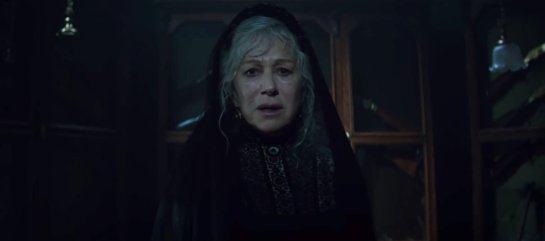
Legends say Sarah believed her family to be cursed by every spirit killed by a Winchester rifle. She purchased a large farmhouse and immediately began spending her inheritance adding rooms to appease the spirits. The labyrinthine house remained in a perpetual state of construction, 24 hours a day, seven days a week until her death in 1922.

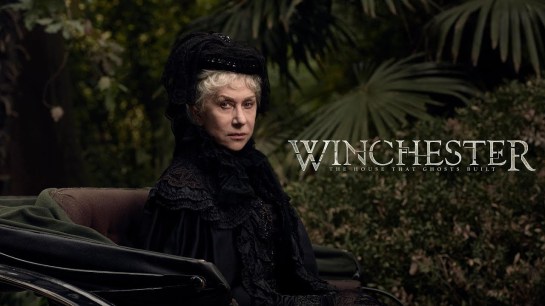
The Spierig’s (who also co-wrote the screenplay) begin their story in 1906. Sarah is played by Oscar-winning gem Helen Mirren (I would love to know how she was roped into this). Believing her to be unfit to run the company, her Winchester co-owners demand Sarah be mentally evaluated. They hire a drug-addicted louse of a doctor Eric Prince (Jason Clarke) to assess Sarah’s frame of mind and render the verdict they’re hoping for.

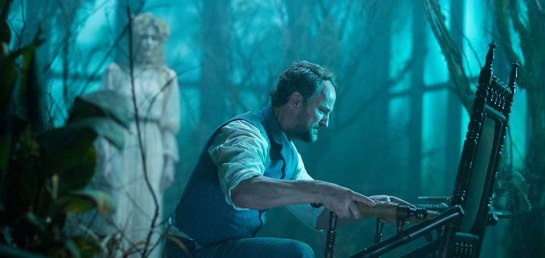
The not-so-good doctor arrives at the seven story, nearly 100 room Winchester estate and over the next several days the skeptical Eric has back-and-forths with the creepy Sarah over the existence of spirits. Aside from that early wrangling we learn they are both grief-stricken souls. Eric aches for his deceased wife while Sarah’s sorrow gives voice to the the film’s bungled gun control message. They are joined in the house by Sarah’s relatives Marion (Sarah Snook) and her son Henry (Finn Scicluna-O’Prey), but they’re mainly just along for the ride and serve as nothing more than plot devices.

WIN2

It doesn’t take a Rhodes Scholar to figure out that the house is indeed haunted yet there is nothing particularly haunting about the house. We get dimly lighted hallways and plenty of dark corners but it’s far from spooky. In the place of terror and dread we get jump scares, an endless parade of tired, uninspired jump scares. In one way I found them helpful. After dozing amid the yawn-worthy exposition and lackluster tension-building, they did jolt me awake a couple of times.

“Winchester” ends up a bizarrely unremarkable slog that takes an interesting idea and does absolutely nothing with it. If you’ve seen even a couple of these types of movies nothing here will catch you off-guard. It’s a houseful of bland characters, toothless ‘horror’ and silly attempts at social commentary. The actors give it their all and no one is phoning it in, but it would help if they had something to work with. “Winchester” is a real snoozer.

VERDICT – 1.5 STARS

1-5-stars

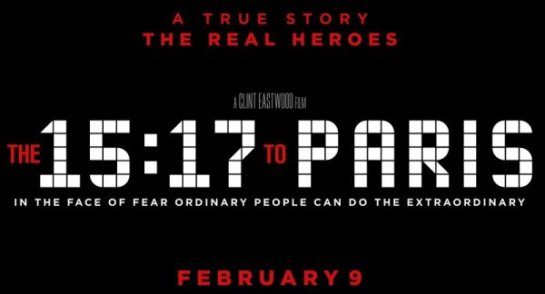
REVIEW: “The 15:17 to Paris”

PARISposter

In a sense “The 15:17 to Paris” is a tough movie to criticize. It’s a biographical drama/thriller based on the true story of three Americans and their tremendous acts of heroism aboard a train bound for Paris from Amsterdam. Here’s the catch, the film stars the actual three heroes playing themselves. Director and producer Clint Eastwood offers them an opportunity to tell their story which is a great thing. But this is no documentary and none of the three are professional actors. This opens the door for criticisms you simply can’t avoid.

The friendships between Spencer Stone, Anthony Sadler, and Alek Skarlatos date back to their elementary school days as rambunctious outcasts. Later the three would go their separate ways, Stone becoming an Air Force staff sergeant, Sadler studying kinesiology at California State, and Skarlatos a National Guard specialist serving in Afghanistan. Despite being separated by thousands of miles they always stayed connected.

PARIS1

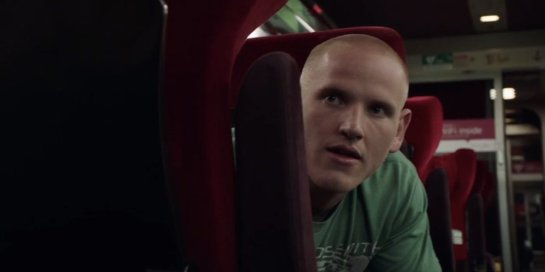
In 2015 the three buddies reunite to backpack across Europe. This eventually (and I emphasize ‘eventually’) leads to what the movie’s title refers to and what we actually see in the trailers. In Amsterdam they board a Thalys train to Paris for the last leg of their trip. Also onboard is a terrorist armed with an assault rifle, a pistol, and nearly 300 rounds of ammunition. The actions of Stone, Sadler, and Skarlatos to thwart the attack would save countless innocent lives.

The film’s advertising leans on the events aboard the train, but the movie itself spends little time there. Eastwood and first-time screenwriter Dorothy Blyskal spend a chunk of the movie highlighting Stone, Sadler, and Skarlatos’ childhood. The young unknowns portraying them flounder mightily. Judy Greer and Jenna Fischer add some acting credentials playing struggling single moms, but even they fall victim to one of the movie’s biggest problems – a script desperately grasping for anything resembling authenticity. Line after line of uninspired dialogue feels as if it’s being read from a page than coming from within the characters.

We see this elsewhere when Stone, Sadler, and Skarlatos take to the screen. They too suffer due to a script which inadvertently accentuates their lack of acting chops. But Eastwood is no help either. His stars could understandably use some direction, but Eastwood seems to be working in a hands-off mindset. That may work with seasoned talent but here it results in performances that are dry, sheepish and borderline excruciating. Toss in tons of cringe-worthy buddy banter and it only gets worse.

The film takes us through a drawn out middle act that turns into some kind of weird European travelogue. I’m pretty sure it’s meant to emphasize the camaraderie between these three pals, but it’s so bland and pasted together with practically no attention given to what makes these guys tick. We get some beautiful sites, two wedged in and then tossed aside female characters, a pointless (and annoying) nightclub scene, and a ludicrous amount of selfies before the three finally board the train.

THE 15:17 TO PARIS

It’s here that the movie finally gets on track (no pun intended). The train sequence unfolds with the right amount of intensity and Eastwood’s camera maneuvers through the tight quarters capturing the terror and the heroism. And interestingly Stone, Sadler, and Skarlatos are at their best in these scenes. Perhaps they feel more in their element or maybe Eastwood is actually offering meaningful direction. It almost saves the movie. Sadly it comes an hour too late.

It’s a chore trying to carve an identity out of “The 15:17 to Paris”. Is it a faith-based drama, a coming of age story, an action thriller? I’m guessing it wants to be a little of all. Unfortunately Clint Eastwood’s finished product is a well-intended but surprisingly awkward misfire. Only the last 30 minutes felt like the tribute these three courageous young men deserved. I really enjoyed the last act and kept thinking to myself that their real story was just getting started. Too bad we couldn’t start there instead.

VERDICT – 2 STARS

2-stars