REVIEW: “Logan”

LOGAN POSTER

It could be argued that Hugh Jackman as Wolverine has been the best bit of superhero casting since this wave of comic book movies started in 2000. Not only does Jackman keenly capture the adamantium-clawed mutant’s look and personality, but he’s been incredibly committed to fleshing out the character through the good movies and even the rotten ones.

“Logan” is the tenth actual X-Men movie and the third Wolverine solo adventure behind 2009’s abysmal “X-Men Origins: Wolverine” and 2013’s surprisingly good “The Wolverine” directed by James Mangold. Mangold returns to direct “Logan” based on a story he began writing following the previous film. After some rather cryptic messaging it was confirmed that “Logan” would be Jackman’s final turn as Wolverine. The star worked closely in development even taking a pay cut to ensure an R-rating, something he and Mangold felt was imperative to the character’s final violent chapter.

LOGAN2

“Logan” could easily be categorized as a superhero western and the influences are everywhere. “Shane” and “Unforgiven” instantly came to mind and readers of the original “Old Man Logan” comic book series will see a handful of similarities.

The film is set in 2029 and there have been no new mutants in 25 years. Logan has been off the grid, making money as a limo driver in El Paso, Texas. He has aged and his body is showing it. The claws don’t pop like they used to, his eye sight is failing, and his healing factor isn’t as effective. Essentially the adamantium inside of him is taking its toll.

He uses the money he makes to take care of his old friend and mentor Charles Xavier (Patrick Stewart) who is kept hidden in an old dilapidated factory just across the US/Mexico border. The ailing Charles is suffering from a form of Alzheimer’s which causes devastating psychic seizures if left unmedicated. Caliban (Stephen Merchant), an albino mutant tracker, helps as a caretaker for Charles while Logan is away.

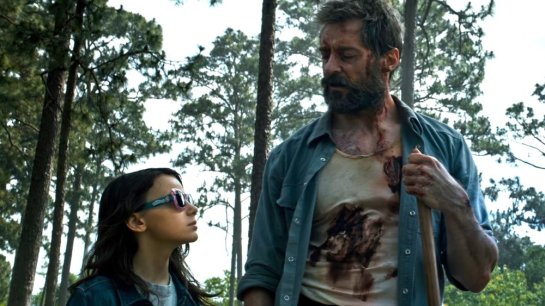
While on the job Logan is approached by a woman beseeching him to take 11 year-old Laura (a fabulous Dafne Keen) away. She tells him of Transigen, an illegal bioengineering lab doing mutant experiments on children. Laura is one of many children set free by nurses but now being tracked for extermination by Transigen. Logan wants no part of it but when events bring Laura and her trackers to his hideout in Mexico a violent exchange ensues and he sees first-hand why Laura is so ‘special’. With Xavier’s prodding they take off with Laura, Transigen not far behind.
LOGAN3

“Logan” is an interesting stew. Fans of the character will find plenty to like as he is let off the proverbial leash in terms of violence. The feral nature of it is fitting in most cases, but there are times when the movie seems to be saying “Look, we’re doing an R-Rated Wolverine picture.” And I would be lying if I didn’t mention a conflict in the handling of the violence. There is an interesting theme on the nature of violence that runs throughout the film. Logan wants no part of it. He tries to abstain from it. His body is breaking down because of it. He’s shown to be mentally scarred from it. He warns Laura away from it even saying “Don’t be what they made you to be.” But while offering this compelling angle on violence, the movie sometimes relishes in its depiction of it. It’s not a big problem but it does mute the film’s message a bit.

You could say “Logan” becomes a road trip movie and along the way we learn that this isn’t a traditional superhero tale. It isn’t as profoundly fresh as its press would lead you to believe, but it does tell a good story. There are no punchy jokes or one-liners. There are no colorful, larger than life characters. Mangold’s tone remains intensely serious and his characters are broken and struggling. Laura represents a glimmer of life – a reminder to Logan and Charles of what they once fought for. It’s an interesting take on the genre. And then there is Jackman who has played Wolverine for 17 years. His passion for the character is undeniable and he ends his run in a fitting and satisfying way. And Mangold’s final shot – it couldn’t be a more perfect ending.

VERDICT – 3.5 STARS

3-5-stars

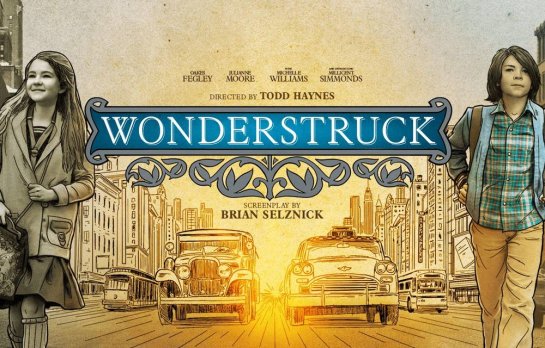
REVIEW: “Wonderstruck”

WONDERPOSTER

It would be wrong to write off Todd Haynes’ delightful “Wonderstruck” as just a kid’s movie. Aside from being terribly reductive, that perspective shortchanges what is a beautifully crafted story and a striking two-headed visual composition that packs one heck of an emotional punch.

“Wonderstruck” is based on the 2011 Brian Selznick novel of the same name. Selznick had previously written “The Invention of Hugo Cabret”, a book adapted to screen by Martin Scorsese (“Hugo”). He also wrote the screenplay for “Wonderstruck” (his first) which is a cleverly layered puzzle featuring two intersecting stories set 50 years apart, the first in 1927 and the other in 1977.

The film starts in 1977 rural Minnesota. A young boy named Ben (Oakes Fegley) lives with his aunt, uncle, and cousins after the tragic loss of his mother (played via flashbacks by Michelle Williams in a small but delicately moving performance). To make matters worse, he loses his hearing in a freak lightning accident. Ben’s longing to know about his absent father existed before his mother’s death. He finds a mysterious book kept hidden by his mom with hints of his father’s life. He sneaks away and embarks on a quest to find his father in New York City – an entirely new world to a small town lad.

WONDER1

A parallel story is set in 1927. A young deaf girl named Rose (played with an infectious sweetness by deaf actress Millicent Simmonds) lives in New Jersey with her strict and abrasive father. Much like Ben she is longing for a parent – in her case it’s her mother (Julianne Moore), a Broadway prima donna more interested in the limelight than her family. But with innocent, childlike naïveté she runs away to New York City in hopes of tracking down the mother who has been away for so long.

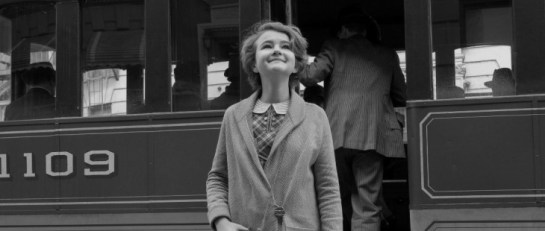
Todd Haynes deftly hops back and forth between these two braided adventures, one never losing its flow to the either. To make it even more impressive, an incredible amount of detail is poured into the individual stories making each feel of its time. Cinematographer Edward Lachman is a true star of the film. He shoots both stories with drastically different styles. Rose’s is shot in gorgeous black-and-white while Ben’s features a color palette pulled directly from the 1970s.

Other things breathe life into the vastly different periods. The costume design is top-notch and it’s given a lot of attention. There is also the way Haynes and company visualize the differences from one era to another economically but also in diversity. And then you have Carter Burwell’s score which is plentiful but never intrusive. It’s especially critical in Rose’s story which is entirely framed as a silent picture. Just as effective to the 70s vibe are the cool musical injections of David Bowie, Rose Royce and Sweet.

WONDER2

As mentioned Rose’s portion of the story is presented as a silent picture. It’s seen in how the scenes are shot and in the steady, mood-setting orchestration. But it also fits the narrative of a young girl who has been deaf her entire life. It offers a sense of perspective and it’s done with grace and thoughtfulness. And over and over the camera captures Simmonds delicate smile and her constant gaze of wonderment. Counter that with Ben’s world rich with big city sound. Only recently deaf, the sounds are still real to him even though he can no longer hear them. His struggle with that is one of the more poignant aspects of his story.

Eventually the two tales connect in a way that could have leaned heavily on overwrought sentiment, but that’s not the case at all. Instead it’s an emotionally justified solution to an exquisitely conceived cinematic puzzle. It’s an ending that feels right for a film that is this earnest. And let me say again this isn’t just a kid’s movie. It’s a very human movie that not only touches your heart but reminds us of why cinema is such an extraordinary form of storytelling.

VERDICT – 4.5 STARS

4-5-stars

Random Thoughts: The 2018 Oscars

RANDOM

I do love Oscar season, but my excitement level for this year’s big show was as low as it has been in decades. One reason is because there was practically no suspense going in. ‘Predictable’ was unquestionably the theme of the night. It also doesn’t help that most of the guaranteed big winners wouldn’t even crack my Top 5 for their categories.

Nonetheless I pushed forward and watched Hollywood’s biggest event. After all it is a tradition at my house. Could I have been wrong? Could the Academy surprise me by going their own way and making the night interesting? Well, NO. For the most part they fell right in line with the other major awards shows. Funny how that works, isn’t it? Nonetheless here are a few random thoughts.

  • Interestingly there wasn’t a runaway winner this year. Well, unless you count “The Shape of Water” which won four Oscars. “Dunkirk” won three and a couple of others grabbed two statues.
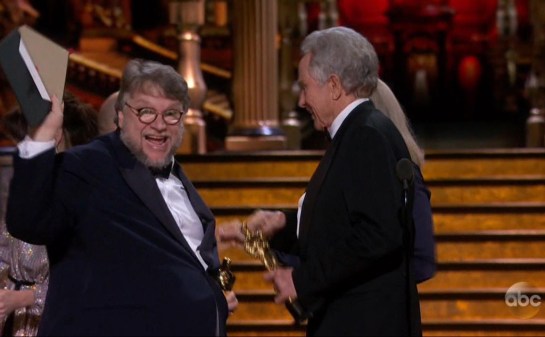
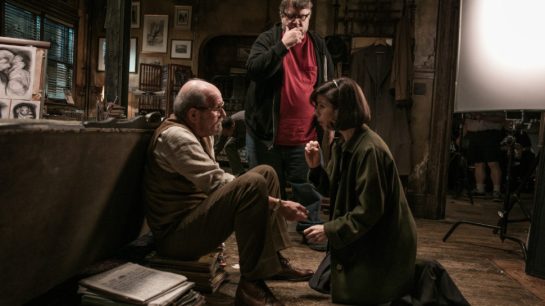
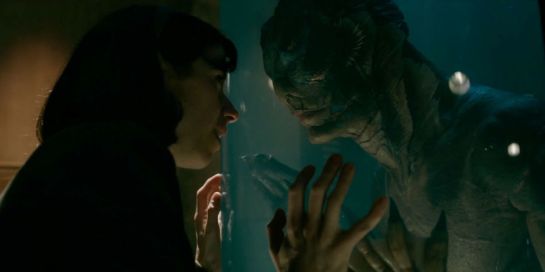
  • And speaking of “The Shape of Water”, it took home the big prize of Best Picture. Of the three obvious frontrunners it had the fewest flaws but not by much. It’s hardly a movie I’ll remember from 2017. But Guillermo del Toro’s slight fantasy romance packed a heavy-handed messaging which the Academy could easily get behind.
  • And to go along with it, del Toro won for Best Director. Literally no surprise but I would have loved to have seen a Christopher Nolan upset win. But ‘surprise’ and ‘intrigue’ weren’t part of the Academy’s game plan.

SHAPE

  • Here’s something cool and interesting: Del Toro’s win marks the fourth time in the last five years that a Mexican has won the Best Director Oscar!
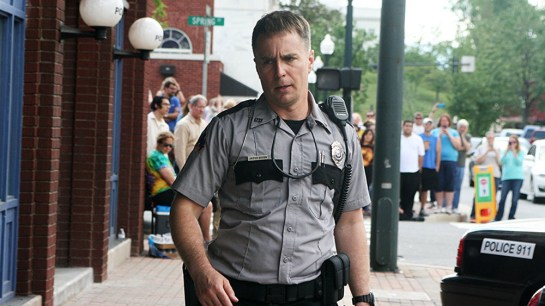
  • The head-scratching Best Supporting Actor category saw Sam Rockwell win for giving a Sam Rockwell performance. He wouldn’t have even made my nomination list but c’mon, you gotta like Sam.
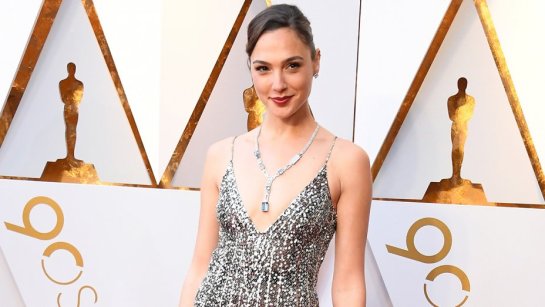
  • I love Gal Gadot and it was great seeing her at the show. I’m thrilled she was asked to present since she certainly wasn’t there because the Academy gave “Wonder Woman” any awards attention.
  • Jimmy Kimmel was pretty bland. A few laughs but quite a few dry spells. He could have shaved off a few minutes from his act and it would have been fine.
  • I mean did we really need a group of us ordinary folks once again being surprised by beautiful movie stars? Sure it’s kinda funny, but for a show pushing four hours…
  • That said, I would be pretty giddy if Gal Gadot, Lupita Nyong’o, Emily Blunt, and Mark Hamill walked into my theater. Just being honest.

GADOT

  • The ‘In Memoriam’ segment was just brutal.
  • Almost as brutal as the musical performances from the Best Original Song nominees. 😬
  • Speaking of the ‘In Memoriam’ video, where the crap was Tobe Hooper and Powers Boothe??? The Academy needs to explain themselves.
  • Have I mentioned how much I love Daniel Day-Lewis. A very humble, unassuming presence. The camera only showed him twice, but both times he seemed quite nervous of the attention. That’s rare to see in those settings.
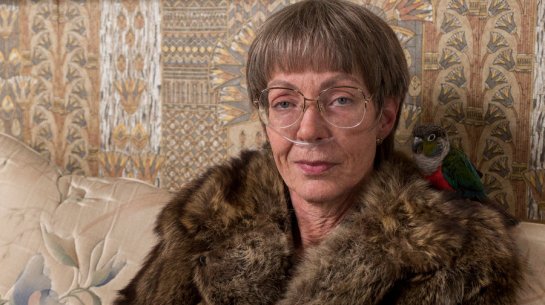
  • Allison Janney wins Supporting Actress for “I, Tonya”. Predictable, expected, no suspense.
  • Great seeing “Dunkirk” win three technical awards. Doesn’t quite make up for the shameful ignoring of it elsewhere in the show. But was anyone surprised?
  • Jordan Peele and “Get Out” wins the Oscar for Best Original Screenplay. Apparently the Academy can overlook some pretty big flaws if you have the right social commentary. And most of those flaws can be traced right back Peele’s screenplay.
  • While I wasn’t a fan of Peele’s screenplay, he did make some history. He is the first African American to ever win in that category. Let that fact sink in for a second.
  • Notice how they place Meryl Streep in the very front row of every Oscars ceremony? Prime seating for maximum attention.

MCDORMAND

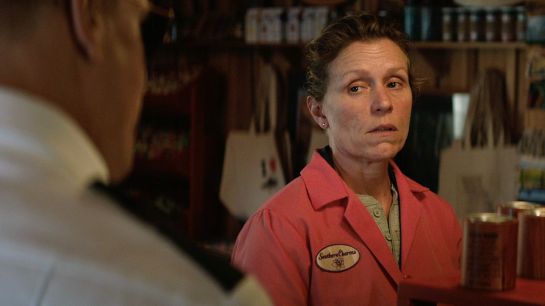
  • Frances McDormand won Best Actress just as she has with every other major award she has been nominated for. Again, isn’t it convenient how all of these groups seem to fall in line with each other? Her speech was manic, scattered and livelier than most of the broadcast. Loved her nod to hubbie Joel Coen.
  • McDormand’s parting two words “Inclusion, Rider” turned quite a few heads. It’s a shame we are in a place where that would even be needed. At the same time it’s potential effect on creativity is curious and a tad concerning.
  • And why not stay on the subject of predictability. Gary Oldman won Best Actor for “Darkest Hour”. I was rooting for Daniel Day-Lewis, but it’s impossible not to see Oldman as deserving.
  • It was a wonderful seeing both Eva Marie Saint and Rita Moreno on stage. It’s nice to see the Academy recognizing stars young and old.
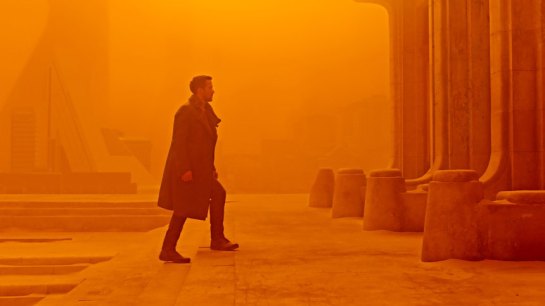
  • “Academy Award winner Roger Deakins”. Talk about something long overdue. It was so good to see Deakins not only finally get an Oscar, but win for some truly brilliant work in “Blade Runner 2049”.
  • While I’m not onboard the Timothée Chalamet hype train, I did love the enthusiasm he showed the entire night. There’s no doubt he loved being there.

90th Annual Academy Awards - Show

  • So is Jodie Foster super short or is Jennifer Lawrence super tall? Maybe both?
  • Wasn’t it kinda weird seeing Kobe Bryant win and get an ovation in light of the #MeToo era? 🤔
  • There was a lot of Academy lip service about “Lady Bird” but Greta Gerwig’s delightful coming-of-age dramedy was completely shut out. Such a shame. Gerwig, Ronan, Metcalf – I would have cheered if any of them had won.
  • As expected the entire broadcast was laced with politics but it all lacked bite. Most of it felt flat and self-indulgent, much like the entire 90th Academy Awards. Here’s hoping for a better show next year.

So I’m with a lot of others, this year’s Oscars was a slog. Remove any suspense and it tends to go that way. Overall a very D+ kind of show. 

Oscar Prediction Time…

OSCARS

I usually just throw out some random thoughts after Hollywood’s big show, but I decided I would join several of my blogging pals and give some meaningless predictions for this year’s Academy Awards. You could say this is an attempt to get myself excited for Sunday’s extravaganza. I’m usually hopping up and down, but my lack of enthusiasm for many of this year’s nominees and the overall lack of any suspense has me a bit….blah.

Nonetheless here we go:

BEST PICTURE

MCDORMAND

WHO WILL WIN: “Three Billboards”

WHO SHOULD WIN: “Dunkirk”

DARK HOUSE: “Get Out”

The smart money says this is a race between “Three Billboards” and “The Shape of Water”. I’m not high of Guillermo del Toro’s visually beautiful but narratively clunky love story. But I thoroughly disliked “Three Billboards” and it’s aimless, morally contradictory story. It’s been winning a lot and it will probably win again. But don’t count out the profoundly mediocre “Get Out”. Both it and “The Shape of Water” seem to have enough political messaging to cover up their significant storytelling issues. At least in the Academy’s eyes.

As for Nolan, let’s face it. Apparently he simply doesn’t make the kind of movies the Academy gives its big awards to. The brilliance of “Dunkirk” has been all but forgotten by voters.

BEST ACTOR

OLDMAN

WHO WILL WIN: Gary Oldman (“Darkest Hour”)

WHO SHOULD WIN: Daniel Day-Lewis (“Phantom Thread”)

DARK HORSE: None (it’s in the bag)

I loved Oldman’s performance as Winston Churchill and I won’t cry if he wins. And while I liked Denzel’s performance more than most people, Day-Lewis swept me away (once again). If he wins it won’t be a “Bon voyage” award. He deserves it. But don’t worry Oldman fans. Gary has this one locked up.

BEST ACTRESS

FRANCES

WHO WILL WIN: Frances McDormand (“Three Billboards”)

WHO SHOULD WIN: Saoirse Ronan (“Lady Bird”

DARK HORSE: None (definitely in the bag)

McDormand was fine in “Three Billboards” despite McDonagh’s queasy writing, but I don’t quite get the adoration. For my money Ronan gave yet another fabulous performance so true in every word and expression. She won’t win (neither will anyone else). This is McDormand’s all the way.

BEST SUPPORTING ACTOR

ROCKWELL

WHO WILL WIN: Sam Rockwell (“Three Billboards”)

WHO SHOULD WIN: Willam Dafoe (“The Florida Project”)

DARK HORSE: None (once again…)

Rockwell has won this at every turn which leaves any intrigue all but nonexistent. Again, Rockwell is fine playing a Sam Rockwell character but it’s far from a Oscar-winning performance. None of the nominated made my Top 5 for the category, but of those nominated I would go with Dafoe’s stellar work in “The Florida Project”. But he hasn’t a chance in the world.

BEST SUPPORTING ACTRESS

Janney

WHO WILL WIN: Allison Janney (“I, Tonya”)

WHO SHOULD WIN: Laurie Metcalf (“Lady Bird”)

DARK HORSE: None…zzzzzzzz

See my comments in the previous category. Janney has won everything and will win here. Metcalf will have to be content with a nomination but her intensely authentic performance deserves the statue. Love seeing Manville and Blige nominated. I would put them both ahead of Janney, but they have no shot.

BEST DIRECTOR

SOW_10268.CR2

WHO WILL WIN: Guillermo del Toro (“The Shape of Water”)

WHO SHOULD WIN: Christopher Nolan (“Dunkirk”)

DARK HOUSE: Jordan Peele (“Get Out”)

Again, Nolan apparently doesn’t make movies the Academy loves. As proof, this is the first time he has EVER been nominated in this category. I’d love to say he would grab an upset win here by del Toro seems to be the frontrunner. I guess directing one-half of a movie well is enough to get a statue.

BEST ADAPTED SCREENPLAY

CALL ME

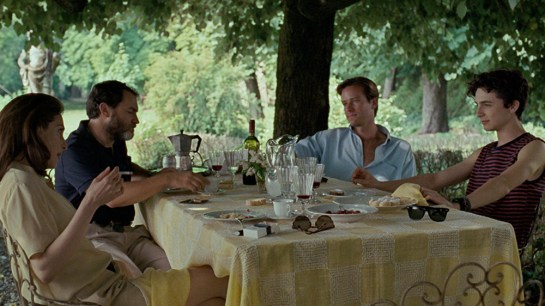
WHO WILL WIN: “Call Me By Your Name”

WHO SHOULD WIN: “Molly’s Game”

DARK HORSE: “Mudbound”

I don’t really think “Mudbound” has a shot but I wanted to mention it somewhere. It certainly deserves consideration. But Aaron Sorkin’s “Molly’s Game” is still tops for me. “Logan” is a neat surprise, but if we’re honest it’s no Oscar-worthy script.

BEST ORIGINAL SCREENPLAY

BILLBOARDS222

WHO WILL WIN: “Three Billboards”

WHO SHOULD WIN: “Lady Bird”

DARK HORSE: “Get Out”

The very idea that Martin McDonagh will win a screenplay award for “Three Billboards” blows my mind. Most of what I despised about the film can be traced back to the screenplay. Yet it will win. Only slightly less mind blowing would be a “Get Out” victory. Don’t count it out. Of those nominated, I’ll be rooting for “Lady Bird”.

BEST ORIGINAL SCORE:

SHAPE111

WHO WILL WIN: “The Shape of Water”

WHO SHOULD WIN: “Phantom Thread”

DARK HORSE: None

Not much intrigue here either. Desplat’s sweet waltzy score will win and I won’t be sad. It’s one of the best parts of the film and that isn’t a slight. I prefer Greenwood’s beautiful and elegant work, but either one is deserving.

BEST CINEMATOGRAPHY

Film/ Blade Runner 2049

WHO WILL WIN: “Blade Runner 2049”

WHO SHOULD WIN: “Blade Runner 2049”

DARK HORSE: “Dunkirk”

Will we all finally get to celebrate a long overdue Roger Deakins Oscar win? I think we will. It’s shameful that the brilliant cinematographer has never won. And as much as I love “Dunkirk” and “Mudbound”, his work in “BR2049” was the cream of the crop. And this won’t be some token win.

BEST VISUAL EFFECTS

WARRR

WHO WILL WIN: “War for the Planet of the Apes”

WHO SHOULD WIN: “Blade Runner 2049”

I will applaud either of these winners. But when it comes to all-around visual effects and how they effect the movie as a whole, I’m cheering for “Blade Runner 2049”.

RANDOM PREDICTIONS

  • BEST COSTUME DESIGN: “Phantom Thread”
  • BEST ANIMATED FEATURE: “Coco”
  • BEST FOREIGN LANGUAGE FILM: “The Square”
  • BEST ORIGINAL SONG: “This Is Me” (“The Greatest Showman”)
  • BEST DOCUMENTARY FEATURE: “Faces Places”
  • BEST FILM EDITING: “Dunkirk”
  • BEST MAKEUP: “Darkest Hour”
  • BEST SOUND MIXING: “Dunkirk”
  • BEST SOUND EDITING: “Dunkirk”

I’ll be doing some live-tweeting on Sunday night. See you there!

REVIEW: “Last Men in Aleppo”

ALEPPOposter

In early 2012 a series of bombings triggered the brutal Syrian Civil War. Some of the fiercest fighting and severest human rights violations took place in Aleppo. Over the next several years the city was decimated, its civilian death toll skyrocketed, and over 500,000 refugees fled the violence. It was once Syria’s largest city, but the war has had a dramatic effect on its standing.

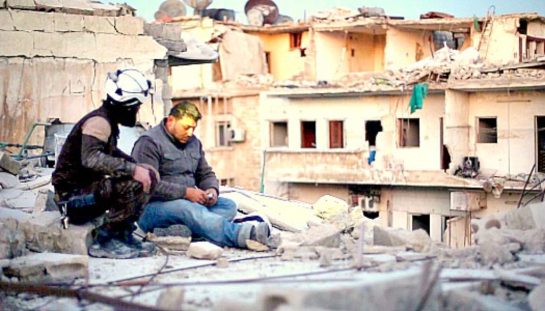
Several documentaries have offered sobering insight to the Syrian Civil War. The latest (and arguably best) is Firas Fayyad’s “Last Men in Aleppo”, recently nominated for an Academy Award for Best Documentary. The film’s follows a handful of men, particularly Khalid, Mahmoud, and Subhi. The three men are leaders of the White Helmets, a group of volunteers who serve as first responders to bombings and civilian evacuations across the city.

ALEPPO1

Fayyad’s film splits its focus between the bravery these men exhibit daily and their inner conflict between staying in Aleppo or getting out with their families. It’s a struggle that we see in some of the film’s quieter moments where Fayyad stills his camera and simply observes the heartfelt conversations these men share. Can they supply a life of normalcy for their family in Aleppo? Can they keep their family safe?

One scene potently captures these questions. Khalid takes his family to a playground where a large group has gathered for an afternoon of fun. It’s a tender reprieve from the bombings and one of the few bright moments we get. But the distant scream of a Russian jet and a radio warning of a potential attack cuts the day short. Khalid scrambles to get his family in their van and away since we learn that bigger groups of people (even civilians) are often targeted. It’s a sobering sequence.

aleppo2

Then you have the intense scenes showing Khalid, Mahmoud and Subhi rushing into the chaos of fresh bombings. They lead their teams in search and rescue attempts, sifting through rubble and ash looking to save anyone they can. Fayyad’s images are raw and unflinching, highlighting the unvarnished ugliness of the attacks and the horrible civilian cost. Some of their efforts end in relief, other times horror.

The film ends with a startling reminder of the perpetual danger the city’s citizens live in and the immense sacrifice of the White Helmet volunteers. Obviously subject matter like this is hard viewing and Fayyad doesn’t cut any corners. Some sequences will leave you speechless and the final moments with undoubtedly stick with you.  There aforementioned rawness of “Last Men in Aleppo” leaves the film a little rough around the edges, but it also keeps it grounded in reality and delivers a truly eye-opening experience.

VERDICT – 4 STARS

4-stars

REVIEW: “mother!”

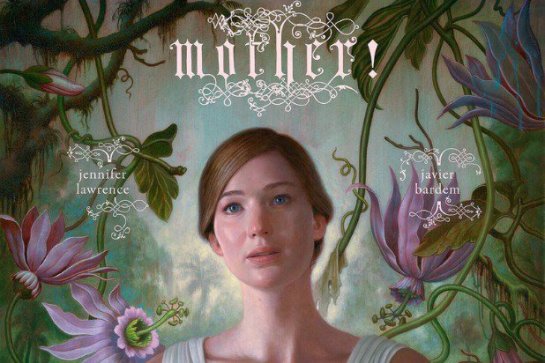
mother poster

Darren Aronofsky’s “mother!” opens with Javier Bardem sifting through the ashes of a burnt out farmhouse and finding a large jewel. He places it on a mantle and within seconds the house is restored. The charred remains give way to a house of color and life. But what does it all mean? Suffice it to say it’s the first of many bits of imagery that makes this more than a routine thriller.

Seemingly divisive by design, “mother!” is unquestionably an Aronofsky movie. I usually find that to be a cause for hesitation, but “mother!” managed to get its hooks in me unlike any of his past films. And it may not be the smoothest ride from start to finish but it does offer plenty to sink your teeth into and ponder afterwards.

It doesn’t take long to notice that “mother!” places symbolism and allegory ahead of plot and character. It quickly becomes an exercise in interpreting Aronofsky’s code instead of following a particular story. For Aronofsky it was an idea birthed from personal rage and his movie allows him to explore it through biblical and environmental metaphors galore. When the pieces fit it makes for some clever yet not always effective messaging.

MOTHER1

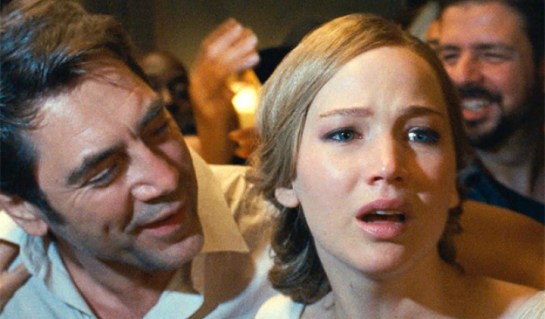
Bardem’s character, listed only as ‘Him’ in the credits, is a poet with a severe case of writer’s block while Jennifer Lawrence plays ‘Mother’, his wife and muse. From the moment Lawrence’s Mother gets out of bed in the opening moments the camera never leaves her side. It follows her around the house using close-ups, over-the-shoulder shots, or shooting her point of view. And other than a couple of brief stops on the front porch, the entire film takes place within their remote Victorian country house.

The film starts with an illusion of normalcy but it slowly unravels beginning with the appearance of Ed Harris. He plays a sickly orthopedic surgeon new to the area. His wife pops up shortly after. She’s played by a wonderfully toxic-tongued Michelle Pfeiffer. The once brooding poet who spent his days staring at a blank page is reinvigorated by their attention and invites the couple to stay. Mother is frustrated by the intrusion and equally upset at her husband’s apathy towards her wishes.

From there things go bananas as the movie gives itself completely to its allegories. It all culminates in a psychotic fever dream of a final act that sees Aronofsky unleashing every ounce of his tortuous fury on Lawrence and her character. In what plays like a relentless symbolic montage of worldly horror and human suffering, the camera still never leaves Mother’s side. It’s an intensely demanding performance and a heavy load Lawrence is asked to carry. And she received a Razzie nomination for it? Give me a break.

mother2

Production designer Phil Messina is tasked with visualizing another of the film’s key characters – the house. Like Lawrence, the large country farmhouse is represented in every shot and had to be designed with that in mind. The narratively essential home was constructed in Montreal, Canada, partially on a set in a field and the rest on a stage. It was meticulously crafted with mood and movement in mind and was shot by Aronofsky regular Matthew Libatique.

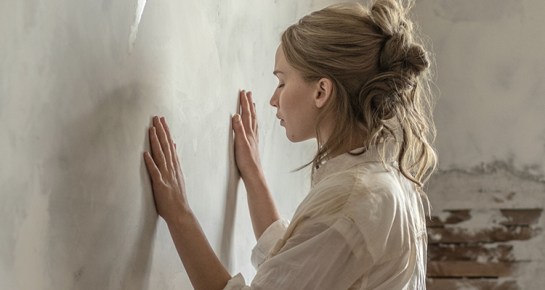
You’ll find clever little touches with symbolic meaning everywhere in the movie. For instance there are several surreal moments where Mother places her hands on the walls checking the heartbeat of the home. Also, mysterious wounds begin to appear around the house. Not all of it makes sense (what is that urine colored Alka-Seltzer she drinks from time to time?) and the final 20 minutes dances dangerously close to unbearable. But that’s kind of the point.

Once movies leave their creators’ hands they often become their own thing. “mother!” benefits from that truth. While Aronofsky has a pointed personal meaning behind it, what you bring to the film will help define it for you. That is its coolest strength and it’s what kept me glued to the screen. Sure, it’s a bit self-indulgent and esoteric to a fault. But it’s also a rare slice of Aronofsky that I found surprisingly satisfying.

VERDICT – 4 STARS

4-stars