REVIEW: “The Zookeeper’s Wife”

zooposter

For decades filmmakers have plowed the dark and savage subject of the Holocaust. Countless movies have been made documenting the heartbreaking atrocities as well as self-sacrificing acts of valor. There are some who feel we are given too many of these films (a form of Holocaust movie fatigue perhaps). It’s a sentiment I can’t say I share especially when filmmakers continue to find deeply human stories and experiences to share.

Such is the case for Niki Caro’s “The Zookeeper’s Wife”. Based on Diane Ackerman’s non-fiction book, this story of Polish couple Jan and Antonina Żabiński is mostly a fact-based account set during the Nazi occupation of Warsaw. Ackerman’s book leaned heavily on the diaries of Antonina Żabiński. Caro and screenwriter Angela Workman are careful to keep the same authenticity in their telling.

zoo1

The film begins just before the September 1, 1939 Nazi invasion. In its idyllic opening scene Antonina (Jessica Chastain) glowingly rides her bicycle through the Warsaw Zoo which she operates with her husband Jan (Johan Heldenbergh). She makes her way to the front gate where people have gathered. She opens the zoo and greets the visitors as they enter.

This opening scene sets up the inevitable clash that comes when the Nazis invade Poland. The zoo is ravaged by aerial bombers and like Warsaw is soon under Nazi occupation. Seeking a way to keep their zoo and with practically no animals left, Jan turns to pig farming as a way to support the German war effort. But in truth it’s a guise to hide the Żabiński’s true conviction – to save as many Jews as they can and right under the Nazi’s noses, particularly that of German zoologist Lutz Heck (Daniel Brühl).

zoo3

On the surface Workman’s script doesn’t place a heavy focus on the horrors that took place. We do get glimpses and often quite potent ones. Yet some feel the film doesn’t go far enough in its depictions of the atrocities. In reality there were quieter stories that required just as much heroism despite garnering little attention. Workman is rightly content to stay within her narrative bounds.

Caro’s direction works much the same. She doesn’t anchor her film in a tortuous visual representation. To the film’s benefit she’s clearly not interested in meeting common war movie expectations. Instead there is a soulful grace to her presentation that oozes empathy yet still manages to be tense and harrowing.

zoo2

Most importantly both Caro and Workman wisely lean on their biggest strength – Jessica Chastain. She gives us an earnest and unassuming Antonina with a strong moral conviction that drives her heroism. Chastain masterfully juggles her character’s fortitude and stoicism with human elements of fear and uncertainty. It’s a delicate balance that makes this portrait of courage all the more inspiring. Chastain’s work is deserving of some genuine Oscar consideration.

Despite its many positives the film’s final act is a bit bumpy. The story darts forward in time more than once and some fairly big developments happen with little attention given to them. It’s easy to follow but it did seem as though the back end was rushed even though it still packed some strong emotional punches. But that doesn’t undermine some wonderful work from a talented group of women. “The Zookeeper’s Wife” may not satisfy those looking for a more visceral experience, but not every Holocaust story requires that approach. Many of these stories weren’t as pronounced, yet they were just as powerful and inspirational. This is such a story.

VERDICT – 4 STARS

4-stars

REVIEW: “The Beguiled”

beguiled poster

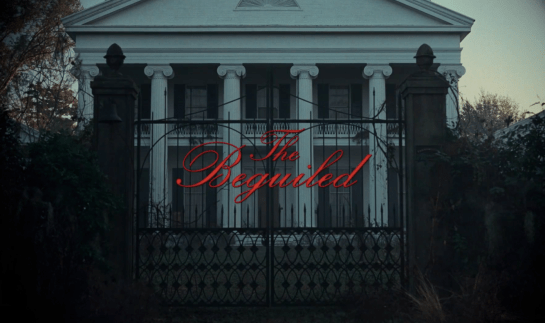
There are so many benefits to going into a movie blind. Such was the case for me and Sofia Coppola’s latest film “The Beguiled”, a movie that made her the second (ever) female to win the Best Director award at Cannes. I had no real reference point. I haven’t read Thomas P. Cullinan’s novel. I’ve never seen the 1971 Clint Eastwood movie. I didn’t read a plot synopsis or a single review prior to seeing it. I’m glad for it and I’m sure it fed into the film’s hypnotic effect.

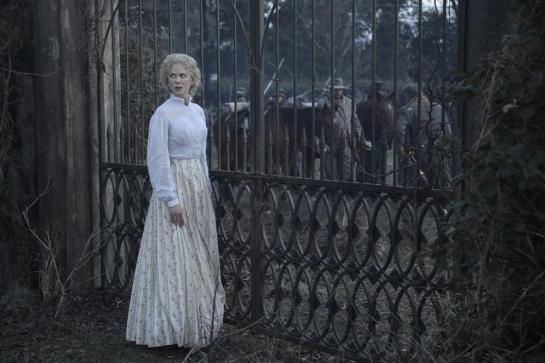
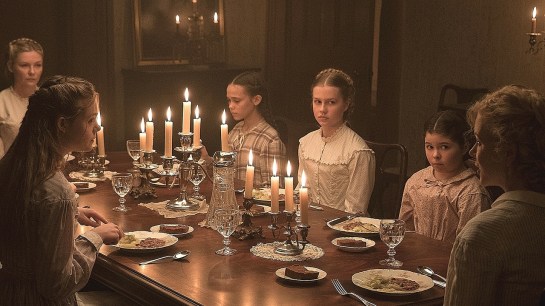
Set in 1864 Alabama and three years into the Civil War, Coppola’s vision for the aptly titled “The Beguiled” is far more focused and contained than expected. The war and its side-effects linger in the background mostly reminding us of its presence through the booming cannon fire in the distance. Instead the entirety of Coppola’s film is restricted to a remote girls school and the drama that unfolds there.

beguiled3

The Southern Gothic vibe is almost immediately noticeable. Both look and tone convey a subtle sense of isolation and unease. From the very start everything feels a bit off-kilter and Coppola’s management of her tight, tense little world keeps it that way.

The characters drive this deftly conceived drama. Nicole Kidman is the right actress to play the school’s wary and stoic matriarch. Kidman’s portrayal reveals someone firmly dedicated yet clearly drained by her responsibilities. Kirsten Dunst is equally good as the school’s doleful teacher who struggles to maintain a sense of belonging. Elle Fanning plays a young free-spirited Southern belle who is as cunning as she is charming. Each, along with four young girls under their care, go about their melancholy day following their same melancholy routine.

But oh how things change when one of the young girls (wonderfully played by Oona Laurence) stumbles across a wounded Union soldier and helps him back to the school. He’s played by Colin Farrell and his presence in the house immediately causes a stir as each woman is forced to deal with their own pent-up frustrations. As he is slowly nursed back to health the character dynamics between him and each individual woman takes their own sensuously wicked turns.

beguiled2

Farrell fits his part well – a good-looking charmer aimed at survival. But despite being a key plot piece, he quickly becomes secondary to Coppola’s greater interest – the female perspective. It’s the women who are the most fascinating as they maneuver between empowerment and outright self-destruction. Coppola’s approach, both as writer and director, handles their emotions more through suggestion than laying things bare. And the slow-burning dramatic fuse makes it all the more compelling.

There are several other pivotal ingredients that Coppola utilizes to great effect. There is the haunting minimalist score from the French band Phoenix. Exquisite costume design from Coppola favorite Stacey Battet. And perhaps the biggest find, cinematographer Philippe Le Sourd. Every frame he shoots features some interesting angle or technique. All of these talents join a stellar cast in realizing Coppola’s tense, simmering vision.

beguiled1

I suppose I should mention the backlash from some who have problems with the film’s avoidance of the slavery issue and subsequent absence of any African-American cast members. There are certainly films where this is a valid gripe. This isn’t one of them. Not every Civil War era movie needs to address the slavery issue especially when the scope of the story being told is so precise. And if Coppola did try and wedge in the slavery issue would it be given the attention it deserves?  Truth is the subtly brewing war inside the walls of the school is far more in focus than the war outside. In fact the isolation of these women is a key point.

Serving as a refuge from the blockbuster-thick summer movie schedule, “The Beguiled” is a refreshing change of pace. Isolation, sexual repression, jealousy, and several other themes are handled with smarts, and Coppola’s understated approach makes it hard to take your eyes off of the film’s steady boil. The slow pace may not work for everyone (there was a moment when I wondered myself), but it never spins its wheels. It keeps moving forward to its fabulous finale which was just icing on the proverbial cake.

VERDICT – 4.5 STARS

4-5-stars

REVIEW: “The Salesman”

SALESPOSTER.png

Asghar Farhadi deserves to be a household name for anyone who claims to love movies. Despite a relatively small filmography, Farhadi has created some of the most magnificently plotted stories consistently grounded in truthful human experience. Add to it a keen technical eye for visual composition that quite frankly is unmatched by most.

Sadly Farhadi still remains an unknown name to too many. His latest picture “The Salesman” won the Oscar for Best Foreign Language Film yet his accomplishment was somewhat drowned out by political posturing and wrangling. I actually heard him casually referred to as “that Iranian director who skipped the Oscars”. That’s a shame.

salesman1

In reality Farhadi is a modern day cinematic master of his craft. “The Salesman” is yet another superbly made film that may not be considered his best, but must every work be compared to another?

“The Salesman” is laced with Farhadi signatures – thorough yet carefully developed characters, strong human and cultural sensibilities, a deeply buried truth boiling under the surface. It’s a template that fits flawlessly with Farhadi’s writing and directing. Here again we see him methodically peeling back layers that reveals faults and arouses suspicions and not only from the characters. We the audience find ourselves being influenced by our impulses to judge.

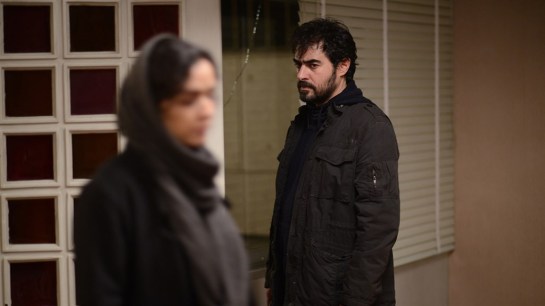
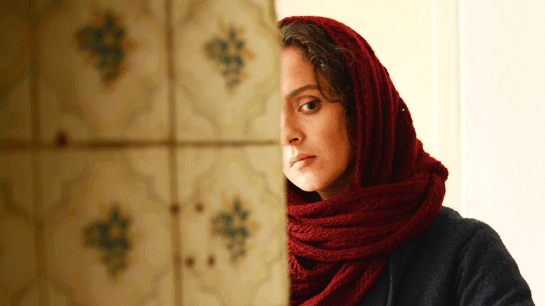
The film focuses on a married couple, Rana (Taraneh Alidoosti) and Emad (Shahab Hosseini). After an earth-shaking mishap threatens the stability of their apartment building, Rana and Emad are forced to find a new place to stay. The two are helped by a friend and fellow stage performer who shows them a place recently vacated. Problem is the previous tenant has left behind a room full of personal belongings.

As with most films the less you know the better, but suffice it to say the story is jolted by a particular event than splinters the narrative in several different directions. Some are diversions, some are unexpected revelations. Regardless Farhadi never loses his focus of navigating through the dense human elements revealed through the testy circumstances.

sales2

Farhadi doesn’t work in caricatures or stereotypes. He creates living, breathing people which make his stories all the more compelling. He allows his characters the space to think, mull, and wrestle internally. Hossein Jafarian’s stellar cinematography is equally vital in relaying the subtle ferocity of emotions that intensify as the story plays out. It also helps to have Alidoosti and Hosseini, two Farhadi regulars in sync with the director’s vision.

There is an fabulous running parallel between the main story and Rana and Emad’s work at a small theater production of Arthur Miller’s “Death of a Salesman”. Farhadi’s skillful treatment is anything but pointless and helps to prod our minds to think more about the film’s meaning. The same could be said for the bulk of his films. They don’t follow any conventional norm or standard. Instead they dwell in realities we all can recognize and demand their audiences to engage them on those levels. “The Salesman” is another example of how engrossing that can be.

VERDICT – 4.5 STARS

4-5-stars

REVIEW: “Fitzcarraldo”

fitzposterI’m not sure you can look at “Fitzcarraldo” without comparing the film’s obsessively tenacious lead character with its equally mulish and unyielding director. In fact the entire production testifies to a specific type of incomprehendible creative madness. Yet without that very madness “Fitzcarraldo”  would have been a lesser movie.
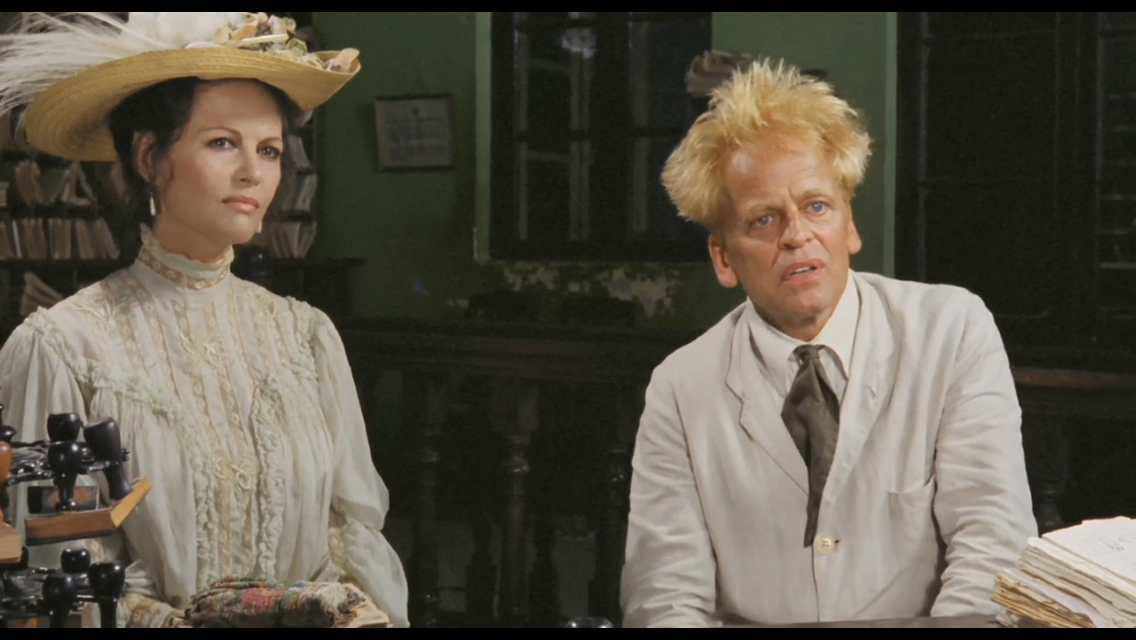
“Fitzcarraldo” was written and directed by Werner Herzog and the making of his film is a legendary story in itself. Herzog was determined to bring as much realism as possible to his picture by steering free of any special effects. This meant shooting in the jungle next to an ongoing border war between Peru and Ecuador. It meant facing natural hardships brought on by shooting on location.But those obstacles would shy in comparison to the human hurdles. Jason Robards was originally cast as the lead character Brian Sweeney Fitzgerald but almost halfway through shooting he contracted dysentery and was flown back to the States. Doctors refused to let him return meaning Herzog had to recast the role and restart shooting from the beginning. Herzog regular Klaus Kinski was given the role which brought a slew of new problems.

Kinski was known for his volatile run-ins with his directors and crew. It was no different here. He repeatedly fought with Herzog and even angered the natives serving as extras (It’s said one of the local chiefs offered to kill Kinski for Herzog). This obviously complicated production in a number of ways, but Kinski’s flirtation with madness is also what made him perfect for the role. His wild, eccentric nature was an ideal fit for a character possessed with realizing his dream of bringing opera to the Amazon.

Fitzgerald (called Fitzcarraldo by locales who can’t pronounce his name) comes across as delusional but he is driven by the best intentions. He’s not a bad guy. He believes in a transcendent quality to opera which could have magnificent effects in the heart of the Amazon. But time and again his optimism and determination crashes into walls of ridicule and disparagement.His one light comes from Claudia Cardinale. She plays Molly, his girlfriend who upholds Fitz with her faith and her money. Kinski and Cardinale couldn’t be more different either in character or real-life personalities yet the two work well together. Molly is a constant encouragement even when Fitz’s dream seems all but squashed.

Herzog’s film makes a dramatic change of direction at the midway mark. Fitz realizes his ice-making contraption won’t fund his opera house so he dives into the region’s one lucrative business – rubber. He purchases a steamboat with a loan from Molly, puts together a ragtag crew, and heads down the Amazon River towards his isolated patch of land rich with rubber trees. There’s a reason the land was previously unclaimed. It’s inhabited by a threatening indigenous people and the path to it is blocked by the dangerous Pongo das Mortes (which tellingly means Rapids of Death). But Fitz has a plan as improbable as his opera dream itself – take his 350 ton steamboat down a branch of the river, literally pull the ship over a hillside and into another river branch that bypasses the deadly rapids.The attempt to haul the massive steamboat over a steep, muddy hill became the film’s signature sequence. Herzog’s insistence on actually doing it instead of relying on special effects became a legendary tale that mirrored the fanaticism of the movie’s lead character. Herzog was convinced his audience would never buy it unless they saw it with their own eyes. The difficulty and frustration it brought often threatened to kill the production, but the end product is a shining example of true movie magic.

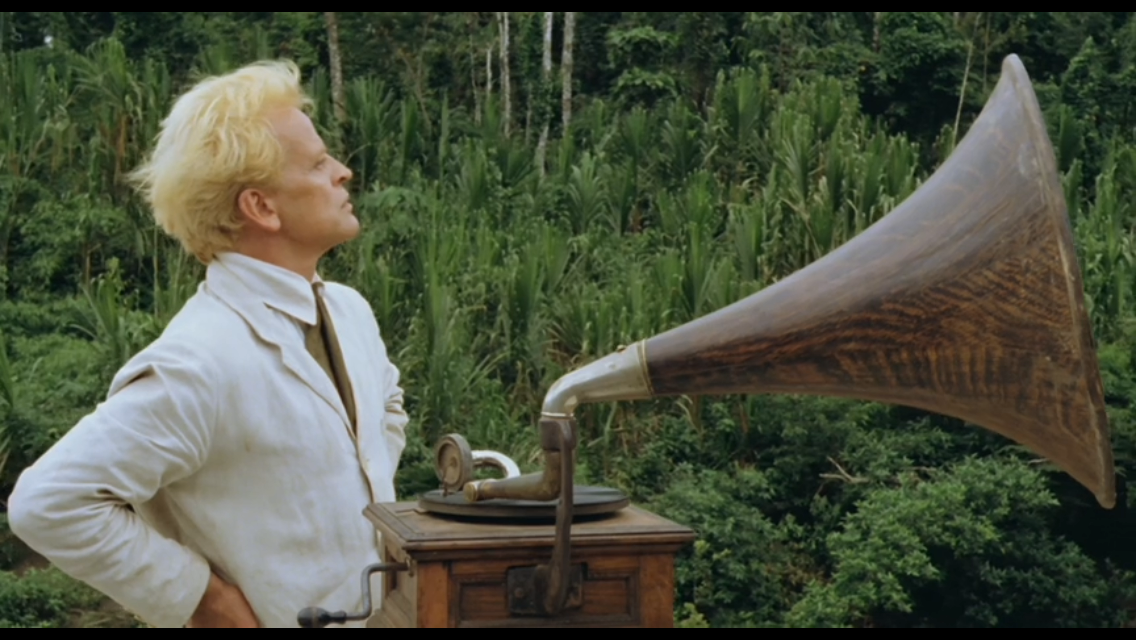
“Fitzcarraldo” and the story of its filming (much of it chronicled in the documentary “Burden of Dreams”) are like inseparable companion pieces. Each reveals unique sides to this fascinating picture yet together they feel undeniably one. And we are the true beneficiaries. Much like the frazzled Fitz himself playing Caruso on his beaten up Victrola record player, we sense there is something special in the art we are consuming. And for that reason Herzog’s intense creative labor and all of the accompanying hardships were worth it.

VERDICT – 4.5 STARS

4.5 STARS

REVIEW: “Les Cowboys”

cowboys-poster

In “Les Cowboys” (or simply “The Cowboys” if you prefer) director Thomas Bidegain attempts to bring a modern French flavor to the John Ford western “The Searchers”. It’s certainly not the easiest undertaking considering the lofty status of the 1956 John Wayne classic, but Bidegain isn’t simply rehashing old material. He has his own story to tell. He just happens to nestle it within this well made homage.

Oddly enough the film begins at an American cowboy festival in France. Yep, a French hoedown complete with Stetsons, Wrangler jeans, line dancing, and the Tennessee Waltz. The entire cowboy fair is a celebration of the American country/western culture and you can’t help but giggle at the entire thing. At the same time it kinda fits with the story that will follow.

cowboys7

This is where we meet Alain (Francois Damiens), his wife Nicole (Agathe Dronne), his teenaged daughter Kelly (Iliana Zabeth), and son Georges (Finnegan Oldfield). They seem like a normal, tight-knit family, well liked by everyone else in attendance. But as the family prepares to leave after a full day of festivities they notice Kelly is missing.

It’s hard to gauge how much more I should say about the story. It takes several dramatic turns and becomes a much different film as it moves forward. Alain’s obsession to find his daughter is both understandable and sympathetic. But it consumes Alain to the point where he loses everything. Bidegain doesn’t give a black-or-white depiction of Alain’s state of mind. Constant dead-ends drive his obsession to darker more complex places.

cowboys1

A significant hunk of the story focuses on Alain’s son Georges. He joins the hunt for his sister, but pulls back after witnessing what it does to his father. Much like his father, his life is dramatically changed due to the disappearance of Kelly. It allows for an interesting conversation on grief, family communication, religion, and more. Bidegain has the writing chops having penned the scripts for “The Prophet” and “Rust and Bone”. Here we get some of the same intriguing character exploration.

I’ve tried dancing around the details of “Les Cowboys” simply because specific details  drastically alter the course of the story. Knowing them in advance would cost the film its edge. As it takes these turns the film ventures into several unexpected areas both narratively and geographically. It can be a bit clunky especially with its use of time lapses and setting changes. But if you’re able to navigate those storytelling hurdles “Les Cowboys” gives you plenty of emotional meat to chew on.

VERDICT – 3.5 STARS

3.5 stars

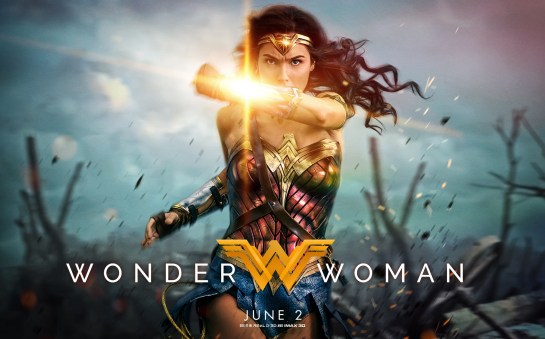
REVIEW: “Wonder Woman”

Wonderposter

You could almost sense the collective exhale from the heads of both DC Films and Warner Brothers – a profound release of sheer relief after seeing the first wave of rave reviews for the latest installment into their DC cinematic universe. It’s a monumental understatement to say, but they needed this. “Wonder Woman” was always rich with potential, but how many times has the same thing been said about other films in the DC fold (I’m looking at you “Suicide Squad”)? Well toss aside your concerns. “Wonder Woman” is not only a great movie, it unquestionably raises the bar for the entire genre.

DC has determinedly pushed forward with their Marvel-like vision despite the steady floggings from critics. Some of the rabid criticisms have been justified but certainly not all of them (Sorry folks, take out your stones, but despite its issues, “Batman vs Superman” wasn’t nearly as bad as the fashionable hate indicates). Still, only a dyed-in-the-wool fanboy would believe DC didn’t have significant ground to make up against its Disney-owned competitor.

wonder3

That’s one reason you could call “Wonder Woman” a game-changer. I don’t want to lean too heavily on that description, but it is a film that’s makes a strong creative statement for DC. It could also be said that it’s better than the bulk of Marvel movies from the past few years. That’s because “Wonder Woman” carves out its own identity while still playing by some of the genre’s basic rules. Sure, it’s another superhero origin story, but it avoids the formulaic quicksand that many recent superhero pictures have fallen into.

“Wonder Woman” has many things that work, but I keep coming back to the word ‘balance’. Director Patty Jenkins (a curious choice at first but one proven to be perfect) skillfully manages her movie in a fashion that never allows it to lean too heavily in one direction or the other. There is just the right amount of humor, just the right amount of suspense, and just the right amount of action. More importantly all of these mechanics work in harmony to serve the characters. So much so that even the seemingly mandatory bombastic finale feels rightly dramatic and laced with more emotional heft than most of these movies give us.

wonder2

An old photo triggers the story of Diana of Themyscira – a beautiful island paradise of high cliffs, lush greenery, and gorgeous waterfalls hidden from the world of man by none other than Zeus himself. As a young girl Diana is the golden child among her people, an all-female warrior race known as the Amazons. The daughter of Queen Hyppolita (Connie Nielsen), Diana grows up desiring to be warrior against the wishes of her intensely protective mother. Hyppolita soon realizes there is no stopping her determined daughter’s will to train.

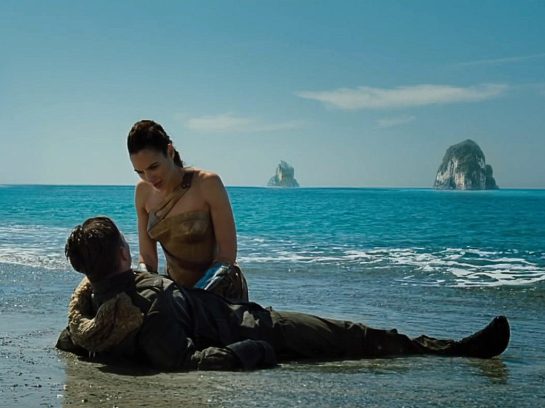
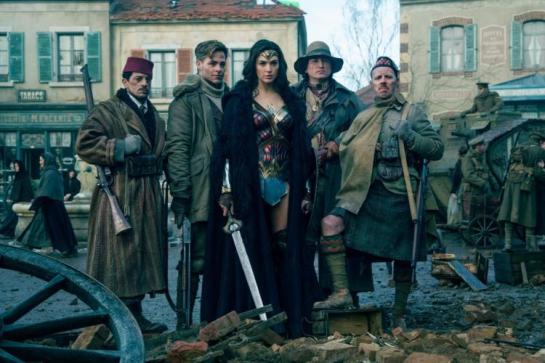
Everything changes when a plane crashes in the ocean near Themyscira’s shore. Diana (Gal Gadot) saves the lone pilot, an American named Steve Trevor (Chris Pine) who happens to be the first man Diana has ever laid eyes on. Trevor tells the Amazons of the violence and carnage just outside their protected home. It’s the waning years of World War I yet countless lives still hang in the balance. Against her mothers wishes, Diana offers to accompany Trevor off the island and to the war front where she believes she can end the war and the suffering.

wonder1

Allan Heinberg handles the writing and, much like Jenkins, keeps everything in balance. A handful of devices will feel familiar but Heinberg keenly keeps them under control. For example we get the often used fish-out-of-water angle which provides some genuine laughs while also holding up a mirror to some society norms worth discussing. Yet it never goes overboard. The same could be said for the Etta Candy character (played by Lucy Davis), Trevor’s loyal and peppy secretary who offers a dash of comic relief. But where many movies would have ran her into the ground, Heinberg and Jenkins stick to the “all things in moderation” idea. Smart move.

Another key to the film’s success is its persistent human-scale vision. While it’s often hard the glean the human element in many of these movies, “Wonder Woman” makes it a focal point. Jenkins shows off a stunningly astute knack for depicting human suffering without reveling in it. As it should, human loss feels significant and is never exploited. At the same time the film asks thoughtful questions about good and evil, not from the upright superhero and devious super-villain perspective, but from the very core of humanity.

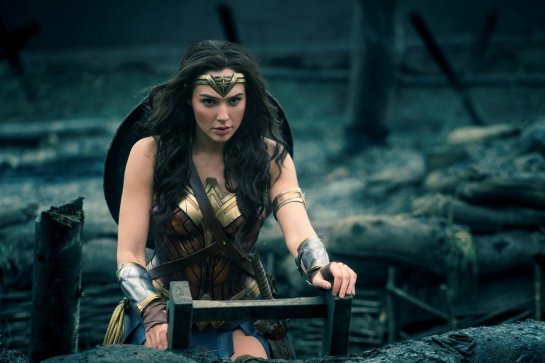
It’s those questions that eventually weigh on Diana. That’s because she is presented exactly as she should be – consistently moral and just. Thank goodness Jenkins and Heinberg steer clear of any modern day tinkering and portray Diana much closer to William Moulton Marston’s original comic book vision. Gal Gadot is an essential ingredient and the strength of her performance shouldn’t be understated. Combined with her amazing physicality, Gadot portrays innocence, confliction, determination, and strength as naturally as the most seasoned actress. From her indomitable warrior gaze to her visible deep-rooted affections, the expressive Gadot serves as a magnificent centerpiece.

wonder4

Lots has been said about a woman finally being given the reins of a superhero movie. I usually don’t get into that yet I also recognize its significance. But for me it’s not just about a woman getting the job. That has happened before with less than stellar results. Instead it’s about a woman getting the job and making a film that is one of the very best of its genre. Patty Jenkins has done just that and if it doesn’t open eyes and open doors I don’t know what will.

“Wonder Woman” stands among the very best of its contemporaries. A visual splendor of precise period recreation and breathtaking superhero action. An emotional exploration of human proclivities towards good and evil and the ugliness of oppression and suffering. And at the center is a character who is a true untarnished hero – easy to care about, root for, and rally behind. “Wonder Woman” never loses that focus which is one of the many reasons it deserves every ounce of praise it has been getting.

VERDICT – 4.5 STARS