REVIEW: “Uncle Drew”

Drew poster

If I were to be completely honest I would have to admit to dismissing “Uncle Drew” from the very first glance. The movie (from director Charles Stone III) had all the markings of a shallow, cameo-clogged sports comedy much like others we’ve seen before. Even worse was the idea of putting tons of makeup and prosthetics on NBA basketball players and casting them over professional actors.

But here’s the funny thing – “Uncle Drew” isn’t half bad. It’s miles from being a great movie, but with so many things working against it right out the gate, it’s genuinely surprising to see it turn out to be as entertaining as it is. A lot of it can be traced to the undeniable fun the cast and crew are having. It’s an enthusiasm that bleeds over into the movie and the audience. It can’t hide every blemish, but it does make for a pretty enjoyable watch.

Drew1

Lil Rel Howery plays Dax Winslow, an ambitious streetball coach with his eyes on winning the Rucker 50 Championship. In case you didn’t know, the Rucker 50 is an annual tournament held at Rucker Park in Brooklyn. Rucker is called “the epicenter of the streetball universe” and the tournament has a prestigious and celebrated history.

For Dax winning the tourney is paramount. First, the $10,000 grand prize will keep him in the good graces of his loud, obnoxious, money-grubbing girlfriend Jess (fittingly played by Tiffany Haddish). Second, it gives him another shot at beating his arch rival and 7-time tournament champ Mookie (Nick Kroll). This year Dax has the team to do it thanks to a young streetball superstar (Aaron Gordon). That is until Mookie sweeps in and steals the team out from under him.

A reluctant but desperate Dax seeks out Uncle Drew (played by NBA star Kyrie Irving), an old man but still a heckuva basketball player and a Rucker legend. Dax convinces Uncle Drew to play but under the condition that it’s with his old team. The two set out on a road trip to ‘get the gang back together’ for one more run at the Rucker. The elderly gang includes Preacher (Chris Webber), Lights (Reggie Miller), Boots (Nate Robinson), and Big Fella (Shaquille O’Neal).

It doesn’t take much imagination to figure out where the movie goes from there. It’s laughably predictable and often uninspired. Look no further than the barbershop and African-American church scenes both of which seem copied and pasted from other movies. But looking for narrative depth and nuance in a film like this is unrealistic. It’s more of a ‘Who’s Who’ of NBA stars and ESPN personalities with a playful sense of humor.

Drew2

So what makes “Uncle Drew” work aside from the aforementioned infectious fun the cast is having? For starters the film is unashamedly good-natured which feels right for this kind of movie. Also, I found the performances of players Irving, Webber, Shaq, Miller, and Robinson to be surprisingly charming. And I admit to laughing at some of the NBA inside jokes – Shaq’s character saying “pass it Kobe” or Chris Webber’s character being told “We got no more timeouts”.

It all makes for a fun little escape with a pretty big heart. Corny, formulaic and unoriginal for sure, but not a terrible way to spend 100 minutes. Not bad for movie inspired by a prankish series of Pepsi commercials.

VERDICT – 3 STARS

3-stars

REVIEW: “The Meg”

Meg poster

One of the good things about seeing “The Meg” is that you pretty much know exactly what you’re going to get. I give the filmmakers credit for not even attempting to hide what they are going for – goofy, preposterous and a whole lot of Jason Statham. It all comes down to whether it has enough fun, humor and self-awareness to keep us onboard.

Statham plays Jonas Taylor, the former head of a deep sea rescue team now ostracized after a mission goes terribly bad. Now, instead of saving people, he spends his days off the grid boozing in Thailand.

Meanwhile a billion dollar research station 200 miles off the coast of China discovers a new ecosystem below the floor of the Mariana Trench. A team descends to explore the discovery but are attacked by something really, really big leaving them stranded and with limited life support. That’s enough to bring back the blackballed Jonas to attempt a daring rescue.

Meg1

“The Meg” opens a bit slowly with the rescue mission which introduces the cast of characters and reveals the not-so-surprising threat. It’s a Megalodon, the mother of all sharks and thought to be extinct for 2 million years. The rescue attempt inadvertently unleashes the beast (gulp) and its up to the team to find a way to stop it. But as Jonas proclaims in one of my favorite cheesy lines “Man versus meg isn’t a fight. It’s a slaughter”. Truer (and cornier) words have never been said.

The second half features director Jon Turteltaub fully embracing the 1950’s monster B-movie blueprint. Things get more absurd, the special effects get a lot bigger, and the story gets even more predictable. That’s not to say it isn’t fun. There are plenty of big popcorn movie moments and silly over-the-top action. And just when you think it’s taking itself too seriously, in drops a timely cheesy line of dialogue or a particularly goofy sequence.

Meg2

A pretty good supporting cast helps navigate the film’s megalodon infested waters. Li Bingbing plays headstrong oceanographer Suyin who runs the research station with her father played by Winston Chao. Rainn “The Office” Wilson pops as the station’s billionaire financier and hit-or-miss comic relief. Cliff Curtis, Ruby Rose and a handful of others fill out the cadre of potential shark food.

While “The Meg” doesn’t exactly burst out of the gate and its balance between serious and self-aware is sometimes off, it still manages to do what it intends. Within its ocean of cliches, one-liners, and ridiculous man vs. sea monster set pieces is a fun and often hilarious bit of throwaway entertainment. Pay no attention to its attempts at feeling and romance. Just stay for the shark and the goofiness that ensues. That was enough for me.

VERDICT – 3 STARS

3-stars

REVIEW: “Night of the Living Dead”

NIGHTposterBIG

In a 2017 discussion of George Romero’s “Night of the Living Dead”, Chicago based film critic Josh Larsen offered some food for thought: can a young modern film fan watch this horror classic for the first time and have the same reaction as moviegoers did during its original 1968 release? Could it possibly have the same impact today as it did then? This has been such an intriguing question to me.

As contemporary viewers we have had the zombie sub-genre clearly defined for us. We know what they are, how to kill them, and we certainly know not to get bitten. The very concept of a zombie no longer carries any shock value. But imagine in 1968. Sure, the idea of the reanimated dead had been around, but the concept of a zombie as explored by horror legend George Romero in “Night of the Living Dead” was both shocking and terrifying.

NIGHT1

While I may not be old enough to have seen it during its original release, my own first experience with “Night of the Living Dead” left a similar mark. It was in the early 1980’s during the first wave of VCR rentals. I’m guessing I was no more than 13-years-old. At that time there was no zombie sub-genre. Zombies had not become the staple of pop culture that they are today. For me they were a new experience – an utterly frightening first encounter that I still remember to this day. Perhaps that is why Romero’s classic is still my favorite horror movie ever made.

Romero’s chilling vision is made even more spectacular when considering his miniscule budget. Made for around $114,000, the money restraints not only shaped the production but also the story itself. Romero and company knew they couldn’t spread their shoot to multiple locations. Instead his story brought the horror to one place – a remote Pennsylvania farmhouse. This serves as the central hub for the conflicts to come from both inside and outside the walls; from the flesh-eating dead and the ___ human characters.

The group of people barricaded inside the farmhouse have no idea what is happening. Much like his characters, Romero leaves the audience in the dark, only feeding us tiny morsels of information as the story progresses. Imagine it through the eyes of a 1968 moviegoer who has no preconceived notions of zombies or their mythology. They can only guess along with the characters who testify to what they have seen with their own eyes and take guesses as to the cause.

One of the most effective means of information (for both us and the characters) comes from a television found upstairs. The group of six watch attentively as emergency newscasts sift through reports and interview ‘experts’ in an attempt at relaying information to the audience. There is also an eerie effectiveness to how the television plays in the background.

NIGHT2

While the zombie threat gathers outside of the house the dynamic inside grows equally tense. Romero’s assortment of compelling characters add an extra layer of drama to the story. It starts with the star Duane Jones who plays Ben. He serves as the backbone, the brains, and in many ways the moral compass of the film. But what is most significant is Romero’s casting of Jones, an African-American, for such a heroic and assertive role. It’s significance may not resonate as much today, but in 1968 it most certainly left a mark.

Film historians and critics have found all sorts of ways to interpret “Night of the Living Dead”. They’ve seen it as representing the Vietnam War, the Civil Rights movement, even a critique of capitalism. All of those are compelling readings, but for me it works best as ground-breaking horror movie that laid a foundation for a sub-genre that is still being built upon today. And each glorious 35mm black-and-white frame represented a bold new step for independent filmmaking and for horror movies in general. Most remarkably, it still holds up as a horror flick and a groundbreaking cinema classic.

VERDICT – 5 STARS

5-starss

5star

REVIEW: “Halloween” (2018)

HalloweenPOSTER

David Gordon Green’s “Halloween” is yet another entry into the four-decade-long slasher franchise sure to drive continuity hounds insane. If you’re into chronology finding a link through every Halloween movie is all but impossible.

Case in point: If you’re loyal to the original order you have “Halloween” 1-6. Maybe you choose the two “H2O” movies which followed the original “Halloween” and “Halloween 2” but nothing after. Then you had Rob Zombie’s completely unconnected reboots simply titled “Halloween” and “Halloween 2”. Now we have a new line that embraces the 1978 original but dismisses everything else. So with it you have “Halloween” followed by “Halloween”. Confused yet?

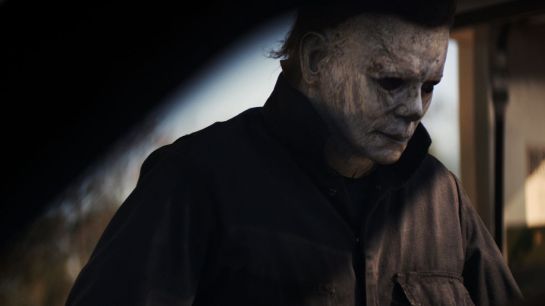
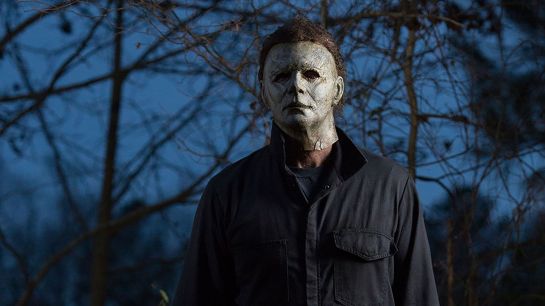
For many people none of that stuff matters much. It’s weird and messy but ultimately it all comes back to the masked butcher-knife wielding antagonist Michael Myers. Green’s “Halloween” aims to bring back the original conflict between Michael and Jamie Lee Curtis’ Laurie Strode. And what better time to do it than the 40 year anniversary of the ’78 John Carpenter classic.

Halloween2

Green was an unusual choice for a “Halloween” movie especially considering some of his raunchy swing-and-misses (“Pineapple Express”, “Your Highness” and “The Sitter”). But since those films he has shown a more intriguing side to his filmmaking (“Prince Avalanche”, “Joe”, and “Stronger”). So having him head a big slasher-horror franchise was intriguing.

In Green’s telling, Michael Myers was captured shortly after the murderous events of the first film (seems like something the audience should get to see but be that as it may). For 40 years since, Michael has been in an institution for the criminally insane under the care of Dr. Sartain (Haluk Bilginer), a former student of Donald Pleasance’s Dr. Loomis with the fascination for Michael’s psychology.

During this same time, Laurie Strode has closed herself off both literally and figuratively. She is a self-described basket case with two failed marriages and a strained relationship with her daughter Karen (Judy Greer) and granddaughter Allyson (Andi Matichak). The mental trauma and understandable paranoia has driven Laurie into seclusion on the outskirts of Haddonfield, barricaded in a fortified farmhouse full of booby-traps and firearms.

The institution schedules to transfer Michael, along with a busload of other patients, to a new facility on Halloween night. How’s that for timing? A crashed bus, a few dead bodies, and guess who is heading back to Haddonfield? And don’t worry slasher fans, Green gives his audience more than enough disposable characters to serve as Michael’s blood-soaked fodder. In fact, practically none of these characters are meaningful other than to raise Michael’s gory kill count and take screen-time away from Curtis who is very good here.

It’s impossible to deny the nostalgia for someone who loved the 1978 film. Green and co-writers Danny McBride and Jeff Fradley are routinely calling back to the original and in many instances borrowing from the very sequels they disavow. So aside from Laurie Strode’s journey and a particularly bizarre middle act twist, much of this movie will feel familiar to franchise aficionados and for slasher fans in general. It does little to differentiate itself.

What’s worse is that the movie just isn’t that scary. It throws in a smattering of jump scares but it’s never able to maintain the tension that John Carpenter nailed so well. I only recall one scene that had me antsy. Even the big finale had all the ingredients for a tense sequence but is drawn out too long before FINALLY giving us the overdue payoff (and it is a very satisfying payoff).

Halloween1

It’s also hurt by the fact that Michael Myers is simply not that interesting. A lot was made of Green’s decision to wipe out Michael and Laurie’s family connection. Here Michael seems aimless, often killing for no reason other than to allow the special effects team to one-up their last kill. And the movie’s weird jabs at humor tend to disrupt the tone (I’m sorry, but potty-mouthed little kids ran their course with me long ago).

Some have called this a horror film for the #MeToo and #TimesUp era. I think that is giving the movie way too much credit. It does aim to put Laurie Strode in the Ellen Ripley and Sarah Connor class. That’s a good thing and the film needed more of her. But that’s as far as the movie goes. It’s still a very basic slasher flick which is good for genre fans but it’s hardly one with a profound social conscience. Still there is definitely fun to be had.

It may sound like I’m down on “Halloween” when actually it works well enough within this 11-movie franchise. Jamie Lee Curtis is excellent and the film excels when she is highlighted. But when you have framed yourself as a direct sequel to an all-time horror classic and you’ve wiped out a lot of the series history it’s easy for us to expect a little more than a standard slasher film. Especially one that is so similar to several of the sequels it set out to replace.

VERDICT – 3 STARS

3-stars

Blind Spot Series – “Picnic at Hanging Rock”

Picnic poster

I’ve always been a fan of Australian filmmaker Peter Weir. A quick scan of his filmography reveals a unique variety of movies. Just consider 1985’s “Witness”, 1989’s “Dead Poets Society”, and 1998’s “The Truman Show”. Since then Weir has made just two other films – one of my personal favorites 2003’s “Master and Commander” and 2010’s excellent “The Way Back”.

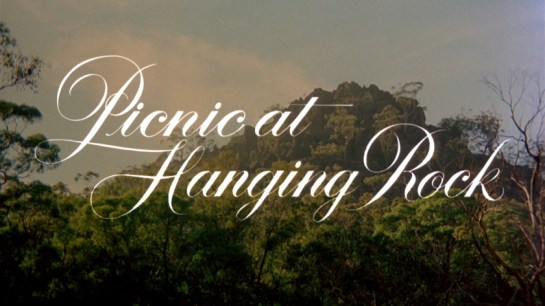
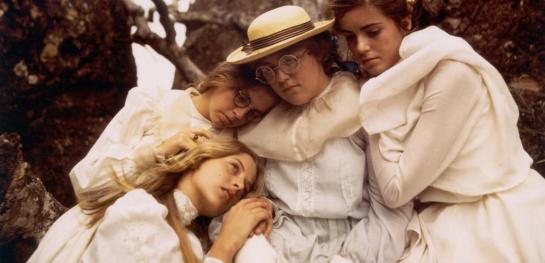
Weir was his busiest during the 1970s when he put out seven movies. Among those was his 1975 mystery-thriller “Picnic at Hanging Rock”. It’s based on a 1967 novel written by Joan Lindsay who left a cloud of uncertainty hanging over her inspiration. Was it based on true events? Did any of this really happen? Weir taps into that same sense of mystery and never tips his hand one way or the other.

PICNC1

The film revolves around the mysterious disappearance of four girls. Set in 1900 Australian, the story begins at a girl’s boarding school as a group of students prepare for a Valentine’s Day outing to a nearby landmark known as Hanging Rock. They are accompanied by their math teacher Ms. McCraw (Vivean Gray) and Mlle. de Poitiers (Helen Morse). Meanwhile the school’s stern disciplinarian headmistress Mrs. Appleyard (Rachel Roberts) informs the quiet, introverted Sara (Margaret Nelson) that she isn’t allow to go.

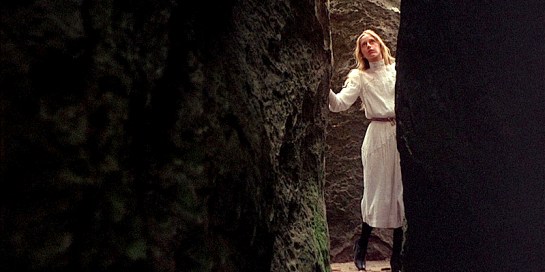
While at Hanging Rock a group of girls go exploring. They are lead by the beautiful and adventurous Miranda (Anne-Louise Lambert). Much like Hanging Rock itself, there is an ethereal aura that surrounds her – an almost heavenly suggestion that contrasts with the ominous foreboding geological formation. Mlle. de Poitiers taps into her mystery when she says “Now I know. I know that Miranda is a Botticelli angel”. It’s a cryptic reference to Italian Renaissance painter Sandro Botticelli. She says this as the curious girls disappear from her sight. They do not return.

PICNIC2

From there the film shifts to the search for the missing girls and the ripple effect it has throughout the school and community. What happened to them? Do some people know more than they are telling? Through this transition we get to know a young Englishman named Michael (Dominic Guard) who grows obsessed with the disappearance. He was among the last to see the group which raises suspicions and adds to the growing concerns of the local authorities.

The intentional ambiguity of the book certainly carries over to the film. When the novel first released it stirred quite the response. The movie rekindled it to a degree. The sheer mystery of the disappearance and the search for answers is fundamental, but Weir makes the emotional aftermath just as compelling. And whether it’s through his camera or Cliff Green’s script, the movie had me in its clutches. I fell into this beautiful nightmare and now I understand why the film is so revered.

VERDICT – 4 STARS

4-stars

REVIEW: “The Guardians” (2018)

GuardiansPoster

As Frenchmen fought on the blood-soaked battlefields of World War I women were often left to maintain their family’s farm and ultimately their livelihood. To do so required backbreaking work tending to cattle, plowing fields and harvesting crops. “The Guardians” is a female-driven French drama offering a fresh wartime story of one such family.

Writer/director Xavier Beauvois highlights the strength and fortitude of a group of women toiling over their family’s farmland from 1915 to 1920. Renowned French actress Nathalie Baye plays Hortense. She’s the matriarch, fearing for her two sons and son-in-law on the battlefront but suppressing her concerns through arduous farm work. By her side is her daughter Solange played by Baye’s real-life daughter Laura Smet.

Guardian1

With the harvest season approaching Hortense and Solange search their local village for a farmhand. The only person they manage to find is 20-year-old Francine (earnestly played by newcomer Iris Bry). She’s quiet and unassuming but a capable and hard-working young woman looking for a semblance of ‘home’. Francine settles in and quickly earns the trust of her employers.

Beauvois puts an emphasis on the labor and the quiet determination with which these women work. This is one of several places where the period detail shines. Every chore, every tool, every technique looks and feels of its time. The same could be said with the way Beauvois visualizes the rural French countryside. Resembling Impressionistic brushstrokes he captures one stunning image after another. Yet despite the portrait-like beauty, there is still no doubt that it is a rugged land.

Guardians2

At first their strenuous day-to-day routine is only interrupted when one of the boys return on furlough. While the brief reunions are joyous, the scars of war are evident and each man has been changed by it. The effects begin to linger even after the men head back to the front making things tougher for Hortense, Solange, and even Francine, with everyone embracing the idea that “everything will be better after the war” but slowing losing their faith in those words.

The slow observant rhythms of “The Guardians” may catch some viewers off guard but hats off to Beauvois for not cutting corners throughout his 140 minutes. Based on Ernest Pérochon’s 1924 novel, the film is a canvas rich with painterly beauty thanks to cinematographer Caroline Champetier. It’s also a stirring World War I era story bathed in humanity and told through great performances, emotive faces and quiet communication. And then there is the subtly tragic story of Francine – the beating heart of the film and proof of an emotional narrative punch that may not be noticeable at first glance.

VERDICT – 4.5 STARS

4-5-stars