REVIEW: “The Accountant”

account-poster

A title like “The Accountant” doesn’t exactly scream action and thrills. Instead it triggers thoughts of financial statements and tax analysis. Not exactly riveting cinema, right? But who says you can’t have a movie with just as many ledgers and spreadsheets as guns and bullets? Okay perhaps that’s an exaggeration, but you get what I mean. The idea is pretty outlandish.

Despite sounding preposterous “The Accountant” is a solid bit of entertainment. It’s a heavily plotted thriller featuring mobsters, hitmen, corporate CEOs, Treasury agents, and of course number crunchers. As it peels back layer upon layer of its story (much of it through flashbacks), it makes a strong effort to cover every base in order to maintain even the smallest level of plausibility. At the same time it’s pretty honest about what it wants to be. It just wants to be a little too much.
The Accountant

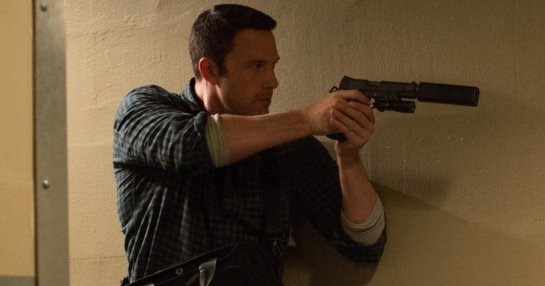
Ben Affleck stars as Christian Wolff, a forensic accountant working out of a strip-mall in Plainfield, Illinois. Christian has high-functioning autism which is detailed through a series of childhood flashbacks. It inhibits his social skills and causes him distress if he is unable to carry out a task to its end. But it also contributes to his accelerated comprehension of mathematics and deduction. The film has a surprisingly warm and respectful touch in its handling of autism and its effects.

Here’s where things take a twist. As an accountant Christian does more than just help farm families with their tax returns. He also traces insider financial fraud for some of the world’s biggest criminal organizations. This attracts the attention of Ray King (J.K. Simmons) of the Treasury Department who blackmails a young Treasury agent (Cynthia Addai-Robinson) into helping locate and identify the man known only as “The Accountant”.

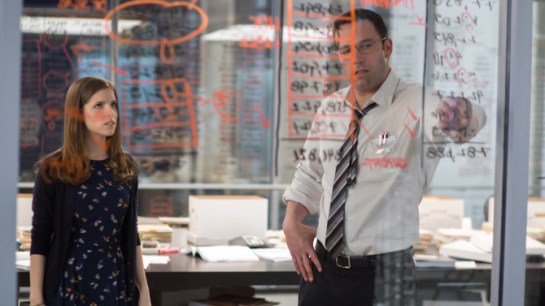
Christian is given his assignments by a mysterious Siri-like voice over the phone. He’s sent to audit Living Robotics after the company’s accountant Dana Cummings (Anna Kendrick) discovers discrepancies with their financial numbers. Christian must maneuver through the relationships of the company’s CEO (John Lithgow), his sister and associate (Jean Smart), and his best friend and company CFO (Andy Umberger). Christian’s discoveries thrusts him and Dana into a web of corporate corruption with violent reverberations. And with his life in jeopardy, Christian reveals yet another layer to his character – a much more lethal layer.
account2

Director Gavin O’Conner’s previous two films couldn’t be more different – the surprisingly great MMA family drama “Warrior” and the not so good Natalie Portman western “Jane Got A Gun”. With “The Accountant” he has a lot to juggle, more than in his previous two films combined. For the most part he keeps the many moving parts and duel storylines in sync. At the same time we get a few too many conveniences that we are supposed to buy into. It also relies too heavily on the flashbacks, most likely a result of simply having too much story to tell.

By the film’s end you almost get the sense that they are teasing a franchise. Several pieces are put in place that invite a sequel. “The Accountant” does plenty right – a good cast with good performances; bursts of intense well-shot action (occasionally laced with bits of dry humor); a dense but thoughtful story. Give me more of that and I will come back for another movie. But here’s a thought, maybe not so thickly plotted next time. More isn’t always better.

VERDICT – 3.5 STARS

3-5-stars

2017 Blind Spot Series: “Umberto D.”

2017blindspot

A perfect introduction to the beauty and potency of Italian neorealism would be a double feature from acclaimed director Vittorio De Sica. His movies “The Bicycle Thief” and this one, “Umberto D.” showcases everything that led the movement to be called “The Golden Age of Italian Cinema”.

Neorealism dealt honestly with Italy’s moral and economic post-World War 2 difficulties. Film’s focused on the hardships facing the working class and explored the deep effects of poverty and injustice. They often explored the everyday suffering and survival of those living under economic stress. De Sica was a pillar of the movement which spanned a ten year period although its influence could be see in movies well past its time.

UMBERTO1

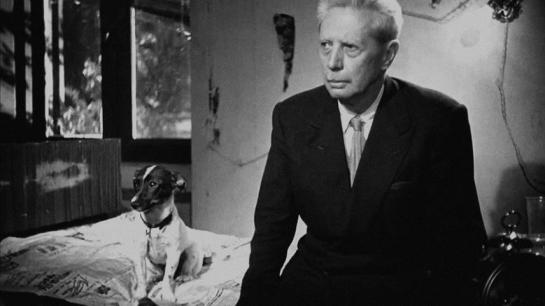
“Umberto D.” is a reference to the film’s main character, Umberto Domenico Ferrari (Carlo Battisti). He’s an elderly man whose only source of income is a small state pension. As we watch we can glean many things about Umberto. He once had a respectable career and made a good living. We see remnants of that life in his tattered suit and topcoat. He took pride in always paying his bills. This is something we see clearly as he struggles to avoid eviction by his mean, condescending landlady (Lina Ginnari).

Umberto’s only family is his loyal dog Flike who he describes as “a mutt with intelligent eyes. The two have a loving relationship and both would be lost without the other. Umberto treats Flike like he would his own child sometimes even skipping a meal so that Flike can eat. To go a bit deeper, we also get the sense that their relationship is what keeps Umberto going. It’s especially evident in one sequence where he loses Flike. His desperation to find his dog is a reflection of his love but also of his need.

One of the many things De Sica does well is capture Umberto’s basic struggle to get by. He does so without manufacturing stakes or relying on heavy doses of melodrama. As the story moves forward De Sica and screenwriter Cesare Zavattini portray a proud man’s battle to maintain some semblance of his dignity. Umberto’s circumstances steadily chisel away at his optimism and self-respect. Even his physical appearance bears the marks of a burdened soul.

UMBERTO2

Not only does the story strip away any hint of artifice, but the characters do as well. As was customary for Neorealism, “Umberto D.” doesn’t feature big stars or accomplished actors. Big actors or big performances ran the risk of drawing attention to themselves. The idea was to keep every bit of the focus on the story being told. Therefore Battisti was cast to play Umberto. It would be his first and only acting role. Ginnari was also relatively unknown as was first time actress Maria-Pia Casilio who plays a naïve young housekeeper.

The story of “Umberto D.” is very simple in scope but powerful in message. Aside from a slow patch or two, it carefully explores a harsh reality that most certainly spoke to the people of its time. More impressive is its ability to still feel strikingly relevant. The heartbreaking story of Umberto and Flike may have originated 64 years ago, but its message doesn’t feel out of our current reach. That’s a testament to its truth and authenticity.

VERDICT – 4.5 STARS

4.5 STARS

REVIEW: “Guardians of the Galaxy Vol. 2”

Guardiansposter

Marvel Studios showed its true muscle in 2014 with “Guardians of the Galaxy”. It was an intriguing undertaking that required either a lot of risk or a lot of confidence. Maybe a little of both. Regardless, the gamble paid off. “Guardians” was a surprise hit and introduced a new set of players to “Phase Two” of Marvel’s cinematic universe.

But why was it a gamble you ask? I wouldn’t go as far as to call the Guardians an obscure band of characters from the comics, but they were a far cry from Marvel’s heavy-hitters. Yet they tossed in  $200 million and hoped their broad vision was established enough to ensure success. It proved to be money well spent. Audiences went wild and the box office results reflected it.

GUARDIANS1

I wish I could say I was onboard the love train, but the first “Guardians” film, while good, wasn’t without problems and it left me with no lasting impression. That’s why I wasn’t gushing with anticipation for its inevitable sequel. But now “Guardians Vol. 2” has landed to equally loud applauds and equally loud “cha-chings”. Once again James Gunn writes and directs a film that works really hard to recapture the offbeat vibe of its predecessor. But at the same time there is a conscience effort to inject more heart into the characters and their storylines. Both attempts are hit-or-miss, but thankfully more ‘hit’ than ‘miss’.

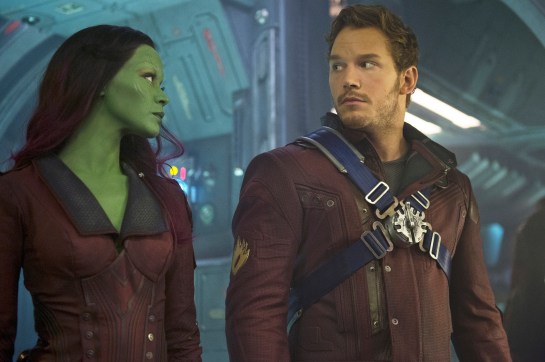
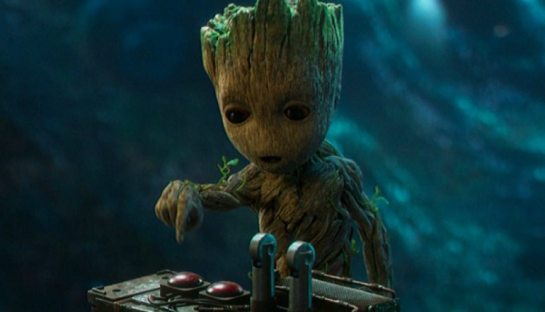
All the main characters return: Chris Pratt’s Peter “Star-lord” Quill, Zoe Saldana’s Gamora, Dave Bautista’s Drax, the Bradley Cooper-voiced Rocket, and the (barely) Vin Diesel-voiced Baby Groot. We are reintroduced to them as they take on a giant space monster as part of a deal with a golden group known as the Sovereigns. But Rocket’s sticky fingers gets them in trouble with the Sovereign leader (Elizabeth Debicki). Just as the Guardians are about to be wiped out they are rescued by a mysterious man named Ego. He’s played by Kurt Russell who I couldn’t help but constantly chuckle at not because he jokes, but because…well it’s Kurt Russell in a very…unusual role.

Guardians2

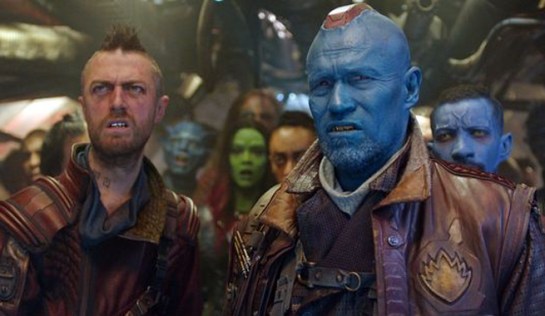
Gunn tosses in quite a few angles. The team gets separated, Yondu returns (via a great supporting performance from Michael Rooker), we get more about the Ravagers, Gamora’s vengeful sister Nebula (Karen Gillan) causes a stink. Impressively, all of these moving parts (plus a few) come together fairly seamlessly. That’s saying a lot because the film sports an insanely busy script. This is made more evident with the movie’s attempt to (for lack of a better word) humanize the characters.

One of my complaints with the first film is that a barely offered any backstory to the characters which truly are the heartbeat of this series. Volume 2 seeks to rectify that to some degree. There are some really nice moments that add some needed depth to this wacky band. The best ones are the smaller insights into some of their pasts which help to explain certain anti-hero ways. Peter and Gamora get bigger backstory treatments, much of which is good, but sometimes a bit on the nose. Still it all works together to feed the film’s biggest running theme – family.

It also seemed like every main character had to be given their own serious moment of self-reflection. It’s here where things get a bit stilted and sometimes downright corny. Some of these scenes work, other times not so much. The same can be said for the comedy. Yes I know the wacky sense of humor is what fans love most about these films. But much like the first one, the jokes sometimes make a splash but a lot of times land with a thud. Ultimately the clever gags get lost among the broader, lamer humor – a potty-mouthed raccoon, jokes about ‘turd’ sizes, etc.  Oh, and then there is the steady 60s and 70s music gag that Gunn milks dry. Hard not to love the tunes though.

guardians3

Much like the first film, I wouldn’t call this film’s antagonist ‘cool’ or particularly memorable. But there is an effort to give this one more weight. It works…kind of. And then there is the ending – the moment when every conceivable rein is handed over to the CGI and sound team. It’s loud, frantic, and it flirts with a “Man of Steel” level numbness. Yes it’s pretty much the common Marvel formula but ‘whew’.

And yet, while issues remain, “Guardians 2” does make strides in the right direction. Attempts to make the characters more than incessant joke boxes pays off (for the most part) and despite the humor’s inconsistency there are some truly funny moments. Also the characters still pack enough charm to hold your affection. The visual effects are a treat (and there are a ton of them). But perhaps what I’m drawn to the most is movie’s cosmic setting. It genuinely feels unique among the huge catalog of Marvel movies. But even with this uniqueness, its playful tone, and fun characters “Guardians 2” follows in the footsteps of its predecessor and still misses the mark of greatness.

VERDICT – 3.5 STARS
3-5-stars

REVIEW: “Diabolique” (1955)

2017blindspot

Henri-Georges Clouzot is a name rarely mentioned among the great French filmmakers. In a way it’s understandable since Clouzot never had the career of a Truffaut, Bresson, Resnais, or Godard. He has never been considered as prominent or as influential. But his signature movies, most notably “Diabolique”, reveal a shrewd cinematic prowess often reserved for the most gifted of his craft.

Clouzot was known for his iron-fisted approach to filmmaking. He was hard on his cast and crew which often led to frustration and animosity. For Clouzot suffering on screen could best be depicted by a suffering cast. He’s been called a tyrannical director who was always angry and who let everyone know who was in charge of the production. But off the set he was different and revealed a surprisingly gentler side.

dio1

Practically all of Clouzot’s films toyed with the darker sides of human nature. Many of his characters were devious and manipulative. Much of his subject matter was dark and depraved, often drawn from his own troubled life experiences. It’s all personified in “Diabolique”, a twisted tale of abuse and betrayal that would fit perfectly among any of Alfred Hitchcock’s movies.

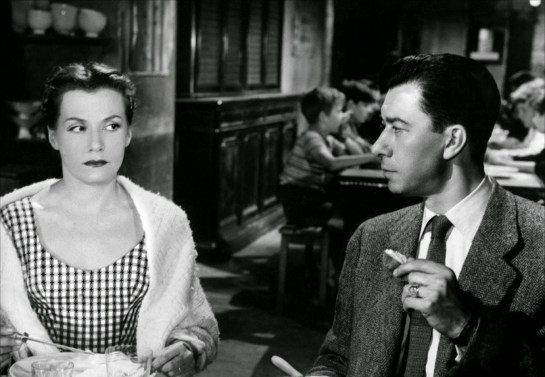
The story revolves around a truly messed up situation. Michel Delassalle (Paul Meurisse) is the headmaster of a boarding school for boys outside of Paris. His wife Christina (played by Véra Clouzot, the director’s wife at the time) actually owns the school but her serious heart ailment and his iron hand keeps her from running the place. To make things weirder, Michel’s mistress Nicole (Simone Signoret) also works at the school. What could possibly go wrong?

dio2

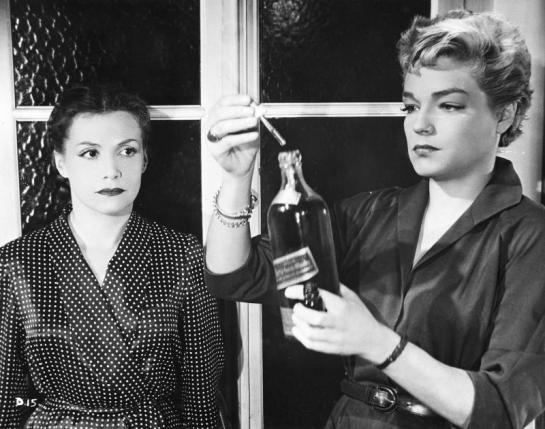
But there’s a twist (one of many), Christina and Nicole are aware of each other and the roles they play in Michel’s life. Michel is a detestable man, not just due to his infidelity. He is demeaning and abusive to both women which sparks an unusual friendship between them. Eventually Christina and Nicole get their fill of Michel’s mistreatment and together they concoct the perfect crime to knock him off.

Clouzot co-wrote the screenplay which is based on a 1951 French novel that Alfred Hitchcock had intended to adapt. Clouzot beat Hitch to the screen rights and his film became a huge box office success. Another spike in the movie’s popularity would come a few years later when Véra Clouzot died of a heart ailment at age 46. But unlike the malicious, self-absorbed Michel from “Diabolique”, Clouzot was devastated and fell into a deep depression. He would only make one more film after his wife’s death.

dio3

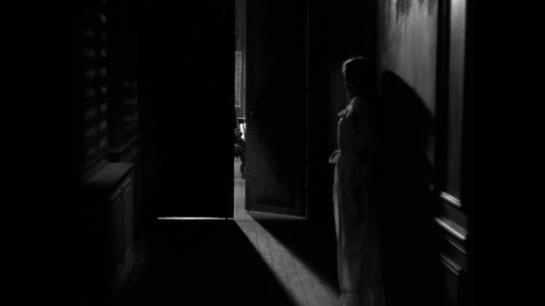
“Diabolique” reveals so many layers as it maneuvers from a domestic drama to a psychological thriller. There are even distinct horror elements that show up the further the story spins out of control. There are a couple of particularly haunting scenes made more effective by Clouzot’s strong visual emphasis. But just as unsettling is Michel’s cruelty which the film never softens or tones down. Call it a collective ugliness that works really well.

Even with the moral muck of its story, “Diabolique” is a delight – a tense thriller boiling with suspense. It’s driven by three wonderful central performances and an artful approach by a director known for his adamant demands from his cast. For Clouzot projecting mood and emotion were pivotal in developing the darker tones of his subject matter. “Diabolique” shows just how effective his approach could be.

VERDICT – 4.5 STARS

4.5 STARS

REVIEW: “The Fate of the Furious”

fate poster

It remains the most unlikely and surprising movie mega-franchise, yet that’s exactly what the “Fast and Furious” films have become. Now we are eight movies in (yes, EIGHT) and it has done nothing to lessen its position as a box office juggernaut. “Furious 8” had a worldwide debut of $532.5 million, shattering the global record for an opening weekend. And after three weeks it has already cleared $1 billion. Not bad for a series once about street racing in Los Angeles.

I heard it speculated that the previous film got a box office boost from being the last installment featuring Paul Walker following his sad, untimely death. That may be selling the franchise short. Since it’s identity shift in 2011’s “Fast Five” the series has steadily grown in budget and gross. “Fate” sports a whopping $250 million budget which helps it follow its successful formula – bigger, louder, and more over-the-top that its predecessor.

fate2

The gang’s all back plus a few (or should I say the family is back since that is the one thin but central running theme). Big names have steadily been added including Dwayne “The Rock” Johnson, Kurt Russell, and Jason Statham to name a few. But this is still Vin Diesel’s show and he returns as Dominic Toretto. Dom is enjoying his honeymoon with Letty (Michelle Rodriguez) in Havana, Cuba. That is until he is confronted by a shadowy cyberterrorist ominously named Cipher (Charlize Theron).

Cipher has a big secret and uses it to force Dom to do her bidding. Doing so requires him to turn on his family and go rogue. Hobbs (Johnson), Letty, Roman (Tyrese Gibson), Tej (Chris “Ludacris” Bridges), and Ramsey (Nathalie Emmanuel) are approached by the mysterious Mr. Nobody (Russell) and tasked with stopping Dom before he enables Cipher to carry out her nefarious master plan.

F. Gary Gray takes the directing baton from James Wan and crafts a FF installment that hits on every cylinder particularly for fans of the series (interesting fact – “Fate” has already become the highest grossing film for an African-American director). Writer Chris Morgan returns and has now written six of the franchise’s eight movies. It can’t be easy for Morgan to meet the ‘bigger, crazier’ expectations nor can it be a breeze for Gray to capture it with such mammoth studio demands. For the most part they pull it off.

fate3

Now don’t get me wrong, “Fate” still requires you to turn off an entire portion of your brain. It’s absurdities can’t be calculated by the human mind. But it works because it maintains a keen sense of self-awareness. It knows it’s nuts and doesn’t shy away from it. In fact it has fun with the craziness of its scenarios. It consistently flashes its vital sense of humor which is absolutely essential. And one thing about it, you can sense everyone on screen is having a blast (I say that despite the much publicized real-life heat between Diesel and Johnson. But don’t worry, all it well now between the two stars meaning a ninth installment is all but assured).

Like most of its predecessors “The Fate of the Furious” is true to its ambitions. Fans of the series are sure to be pleased; detractors will be able to use their same arguments. I tend to enjoy these things. They’re goofy, action-packed, escapist entertainment. That’s why I had a good time with “Fate”. The characters are still fun, the action is a hoot, and the story had enough interesting turns to keep me engaged. Still, let’s be honest, these will never be considered ‘great movies’, but there seems to be enough under the the hood to keep it going. How long it can continue, well, that’s the real question.

VERDICT – 3.5 STARS

3-5-stars

5 Phenomenal “Red” Movies

PHENOM 5

Throughout my many Phenomenal 5 lists I’ve never been beyond putting together lists that are completely random or arbitrary. And why not? It adds to the fun. This is definitely one of those lists. By “Red” movies the criteria is simple – it must be a movie with “Red” in the title. Simple enough. Now obviously there are many films that fit so I wouldn’t call this the definitive list. Still, there’s no denying that these five “Red” movies are certainly phenomenal.

#5 – “Red River”

redriver

Even if you aren’t a fan of Western movies there is so much to love about Howard Hawk’s 1948 classic “Red River”. This story of an arduous cattle drive gone wrong stood out for bucking many of the genre’s common tropes. Sticking with that “out of the norm” uniqueness was John Wayne’s character, a considerably different role for an actor recognized for his rugged heroic manliness. Aside from its new take on Wayne’s persona, it’s also one of his best performances.

# 4 – “The Thin Red Line”

redline

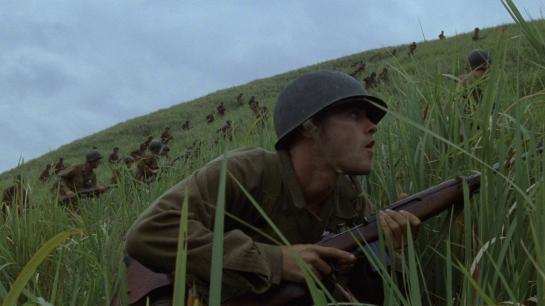
In 1998 Terrence Malick made an epic return to filmmaking after a 20 year hiatus. It came in the form of his ensemble war film “The Thin Red Line”. Armed with an extensive cast and Malick’s incredible eye for visual flair, the movie is unorthodox yet captivating. It features some of Malick’s most stunning imagery and is contemplative even during some of its more intense sequences. The carousel of cameos can be a little distracting, but it doesn’t take away from the film’s visual and narrative power.

#3 – “Red Dawn”

RED DAWN, Charlie Sheen, Patrick Swayze, 1984, (c)MGM/courtesy Everett Collection

Go ahead and laugh at me. Rib me all you want. But I would be dishonest if I didn’t admit that I love 1984’s homeland war movie “Red Dawn”. I’ve often said “Red Dawn” is too easily dismissed by many as some lightweight, teen-oriented fluff. I couldn’t disagree more. Unlike the abysmal remake, the original didn’t turn its kids into superheroes. They were scared, uncertain, and in way over their heads. It was also deeply grounded into the politics of its day which may make it harder for some audiences to embrace. I still find it exciting and entertaining.

#2 – “The Red Balloon”

redballoon

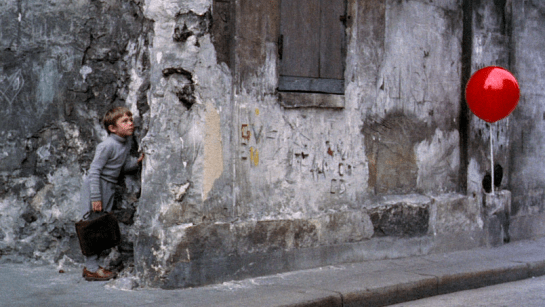
Albert Lamorisse’s 34 minute short “The Red Balloon” from 1956 has several impressive distinctions. Perhaps its best is being the only film short ever to win the Academy Award for Best Original Screenplay. Its simple tale of a young boy and his relationship with a seemingly sentient bright red balloon is both playful and heartbreaking. But there are also several other implications Lamorisse may be dealing with. It’s beautifully shot around Paris’ 20th arrondissement and its dialogue is supplanted by a thoughtful Maurice Le Roux score. Ultimately it is both delicate and brutal in capturing both the joys and sorrows of being a kid.

#1 – “Three Colors: Red”

red1

My recent exploration of Krystof Kieslowski’s Three Colors trilogy was the inspiration of this Phenomenal 5. “Red” was the final film of the trilogy and a perfect ending to Kieslowski’s project. This a film of many moving narrative parts – parallel storylines, deep thought-provoking themes, and thoughtful explorations of the human experience. Two great performances from Irene Jacob and Jean-Louis Trintignant anchor the film and Piotr Sobociński’s gorgeous red-tinted cinematography is warm and meaningful. “Red” is such a rich movie full of intelligence and craft and a great ending to Kieslowski’s brilliant career.

And those are my five phenomenal ‘red’ movies. Agree or disagree? See something I missed? Please take time to share your thoughts below.