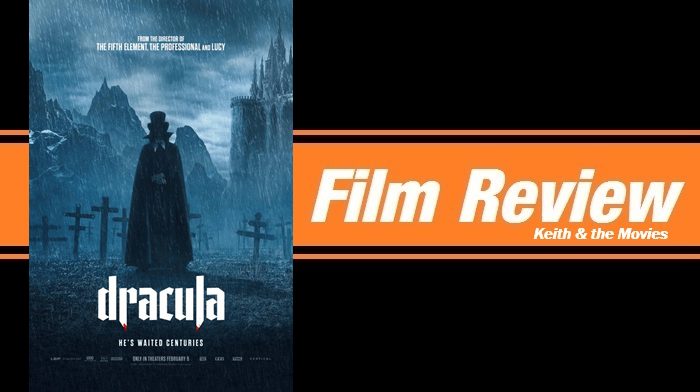
REVIEW: “Dracula” (2026)

The latest cinematic expression of Bram Stoker’s seminal 1897 horror classic “Dracula” is the simply yet fittingly titled “Dracula”. It comes from writer-director Luc Besson who offers up an unconventional reimagining of vampire mythology and the Dracula story itself. He spins a dark tale rooted more in romance than horror. Yet it has splashes of blood, some wild creative strokes, and even injections of humor, all of which make this more than some generic Dracula rehash.

While the core of Stoker’s story remains, the differences in Besson’s retelling come to light frequently and fairly quickly. With its period romance focus comes some unique style choices which work in surprising harmony with the film’s Gothic horror elements. There’s also an interesting thematic shift from science vs. religion to faith vs. apostasy. We also see a chunk of the story taking place in Paris rather than London.

Other differences are more character related. Dracula’s three brides (or sisters, depending on what interpretation you hold) are replaced by comical stone gargoyles which uproots a prominent thematic layer to Stoker’s story yet makes this more of a singular love story. Also absent is Dr. Abraham Van Helsing. Instead we get an unnamed priest from an order of vampire hunters. And there is no Renfield, at least not the version of him we’re used to.

Image Courtesy of Vertical

Besson’s story kicks off with a prologue set in 1480 Eastern Europe. Before setting out to face the invading Ottomans, Prince Vladimir of Wallachia (Caleb Landry Jones) seeks assurance from a high-ranking Cardinal (Haymon Maria Buttinger) that God will protect his precious wife Elisabeta (Zoë Bleu) while he’s in battle. But as she’s being ushered to a safer location, Elisabeta and her escort are ambushed and murdered. A devastated and angry Vladimir abandons God, vowing never to serve Him again until Elisabeta is returned.

400 years later in Paris, Dr. Dumont (Guillaume de Tonquédec) seeks help from the Vatican on a disturbing case that is outside of his expertise. He’s sent a Bavarian priest (played by a magnetic Christoph Waltz) from a group secretly commissioned by the Church. Once there, the priest is escorted deep below the hospital where Dumont introduces him to his patient, Maria (Matilda De Angelis), a volatile and seductive young woman who the priest quickly determines is a vampire.

We learn the priest’s order has been hunting the head vampire for centuries. And that head vampire is none other than Count Dracula, formerly Prince Vladimir. Now 400 years old and a husk of his former self, Dracula stays secluded in his Romanian castle while his “associates” scour the land for his reincarnated bride. But his search takes a turn when a solicitor from Paris named Jonathan Harker (Ewens Abid) pays him a business visit.

Image Courtesy of Vertical

Over the course of his chilling stay at the Count’s castle, Harker shows Dracula a photo of his fiancé Mina (also Bleu) who bears a striking resemblance to his long departed wife. Certain that he has finally found her, Dracula departs for Paris to reunite with his Elisabeta. From there Besson branches out with two storylines that are destined to intersect. One follows Dracula’s venture into Paris as he searches for Mina. The other follows the priest’s investigation as he searches for Dracula.

As Besson’s vision unfolds, it’s hard not to enjoy his nods to the classic story but also his own original reinventions. Nearly every change he makes is there to serve his biggest revision – making this a doomed Gothic love story. Jones is outstanding in portraying Dracula as a creepy yet tragically heartbroken figure rather than a predatory bloodsucking monster. Bleu is a revelation in her crucial dual-ish role. And Waltz is his usual captivating self despite the priest being strangely underwritten in spots.

In addition to the stellar performances, Besson is also helped by Colin Wandersman’s bold cinematography and Danny Elfman’s sweeping score. The period-rich production design and costumes add to the film’s stylish verve. It all enhances this beguiling new spin on Stoker’s classic. It’s chilling, alluring, wonderfully weird, and slyly funny at the most unexpected times. Best of all, it doesn’t try to be the grandest of all Dracula incarnations. The movie is very much its own thing which is a key reason it works so well.

VERDICT – 4 STARS

REVIEW: “Whistle” (2026)

In recent years the first quarter of the movie calendar has become a favorite time to release a slew of new horror movies. Among this year’s batch is “Whistle”, the latest film from director Corin Hardy and his first since 2018’s “The Nun”. It’s a movie that’s full of potential and ripe with the kind of substance that fan’s of the horror genre look for and relish. Sadly it squanders most of that potential in several frustrating ways.

“Whistle” is written for the screen by Owen Egerton who is adapting his own short story. He pens a tale that is built upon a clever idea but is surrounded with a copy-and-paste horror veneer. The generic high‑school milieu, its coming‑of‑age shallowness, one of the most preposterous character angles I’ve seen in years – it all keeps “Whistle” from being scary, interesting, original, or at times even logical.

Image Courtesy of Independent Film Company

“Whistle” opens with a prologue where Pellington High School’s star basketball player Mason Raymore (Stephen Kalyn) is incinerated in the locker room shower after being chased by a terrifying burning figure. It’s a horrific death which is witnessed by several of Mason’s teammates. Hardy uses it to set the table and to prime his audience for what’s to come….sort of.

Six months later me meet Chrys (Dafne Keen), a quiet and reserved teen who just moved to town after a life-changing tragedy. On her first day at Pellington High her cousin Rel (Sky Yang) introduces her to his friends, Grace (Ali Skovbye), Dean (Jhaleil Swaby), and Ellie (Sophie Nelisse). The don’t remotely seem like the kind of kids who would hang out together, but they fit the common horror movie archetypes – the nerd, the blond hottie, the brain-dead jock, and the smart girl.

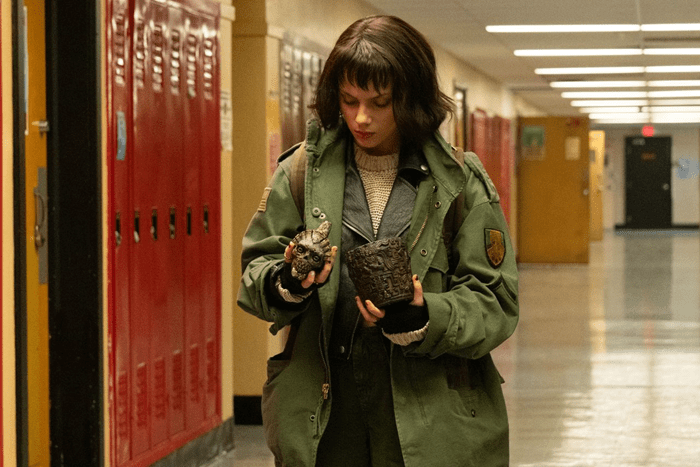
Everyone at school seems to have moved right on from the Mason incident. So much so that no one even thought to clean out his old locker, which is assigned to Chrys. Inside of it Chrys finds an ornate Aztecan whistle which her teacher, Mr. Craven (Nick Frost) immediately takes to study. But the whistle find its way back to the teens who can’t resist blowing it, unleashing an ancient evil entity that curses them all to death.

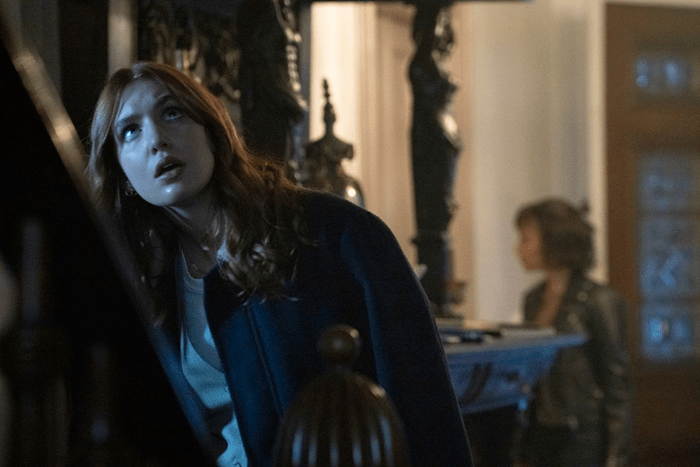
Basically here is how the curse works. Everyone within the piercing earshot of its sound are cursed with facing whatever future death fate has chosen for them. After they “summon” the death, it stalks them, often ending in some gloriously gruesome fashion. Thoughts of “Final Destination” are unavoidable. But Hardy and Egerton have a few of their own cards to play. Regrettably not all of them work.

Image Courtesy of Independent Film Company

While “Whistle” is plagued by several disappointing choices, its most outrageous one comes with the character Noah (Percy Hynes White), a psychotic drug-dealing youth pastor who pops up at the most random times. He’s an utterly weightless inclusion who adds nothing to the movie other than a convenient antagonist. He would be easy to laugh off if not for the decision to wedge him into the film’s climactic ending.

Sadly “Whistle” is yet another trite chiller about a generic batch of kids who pay the consequences for their own foolish curiosity. Despite the film’s efforts, the underdeveloped and weakly defined characters never register beyond surface level. So we barely feel a thing when they are offed in an array of creatively gory ways. And we feel even less during the ludicrous, scare-free big finish and the franchise-teasing mid-credits scene. No thanks. I think one blow of the whistle was enough for me.

VERDICT – 1.5 STARS

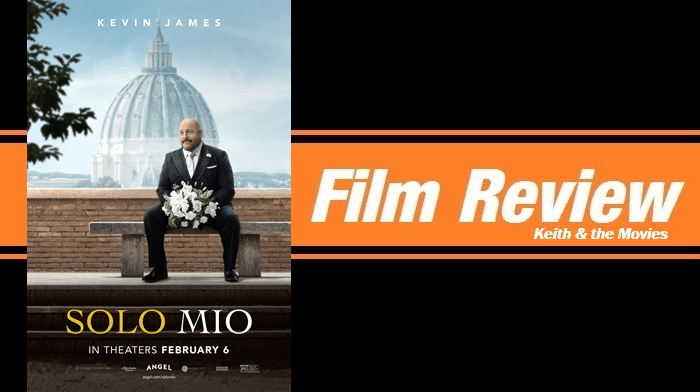
REVIEW: “Solo Mio” (2026)

The romantic comedy has had its ups and downs like any other genre. But more than most, its films often find themselves so beholden to formula that they come across as uninspired retreads. Perhaps that’s why “Solo Mio” is such a breath of fresh air. Set around Rome and Tuscany, “Solo Mio” has a big heart, likable characters, plenty of well-delivered laughs, and more maturity than the standard-issue, run-of-the-mill romcoms of today.

Now don’t get me wrong, I’m not saying it’s “Roman Holiday”. But much liked that beloved William Wyler classic, “Solo Mio” features a similar charm and effervescence while being set to the same vibrant Italian backdrop. Of course the scenery is gorgeous and transporting without becoming a crutch. More surprising is the script which is brimming with humor, warmth, and pathos. But its biggest strengths are its two top performances from Kevin James and Nicole Grimaudo.

The movie comes from the Rhode Island filmmaking collective known as the Kinnane Brothers. Charles and Daniel serve as co-directors and work from a screenplay written by their siblings, Patrick and John. Kevin James pitched in with the script in addition to playing the lead role. Here he moves away from the slapstick silliness that has defined much of his career and gives us something endearing and heartfelt. It’s some career-best work.

Image Courtesy of Angel Studios

James plays Matt Taylor, a 4th grade art teacher engaged to the sprightly love of his life, Heather (Julie Ann Emery). The two plan a storybook wedding in Rome with a lavish Italian honeymoon to follow. But on their wedding day everything falls apart when Heather leaves Matt at the alter. Heartbroken, Matt tries to cancel their big honeymoon plans only to find their “package” is nonrefundable. So he decides to stay in Rome, taking their honeymoon alone with hopes that Heather comes back.

As Matt tries coping with his sadness, he meets two nosy and intrusive newlywed couples at his hotel who take it upon themselves to get Matt back on his feet (much to his chagrin). There’s the well-meaning but overly assertive Julian (Kim Coates) who is celebrating his third marriage to Meghan (Allyson Hannigan). And there’s the henpecked Neil (Jonathan Roumie) who just married his therapist Donna (Julee Cerda). Yep, his therapist.

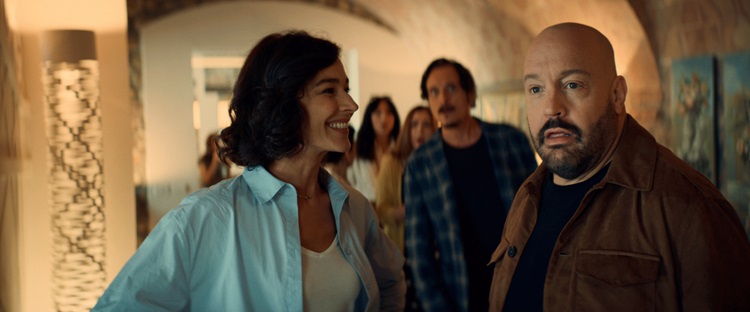
The oddball couples have good intentions. But it’s a fateful visit to a local coffee shop that turns things around for Matt. It’s there that he meets an outgoing barista named Gia (a fabulous Nicole Grimaudo) who notices he is a bit out of sorts. Gia has an infectious personality and an irresistible charm which doesn’t go unnoticed by Matt. But he doesn’t give it much thought. After all, Heather may come to her senses. And how can a man in his 50s start a new relationship from scratch?

Image Courtesy of Angel Studios

But as Matt and Gia keep bumping into each other, a romance blossoms. Sure it’s a predictable turn, but the Kinnanes manage it unexpectedly well. It’s sweet without being schmaltzy and it’s playful without being silly. It’s a grownup relationship with authentic characters we genuinely care about. The lively Gia is a wonderful balance to the listless Matt. And when together, they come to life thanks to the natural, easy-flowing chemistry between James and Grimaudo.

As with any romantic comedy, there is a tension that threatens to uproot the central romance. Here it happens to be secrets that both are holding onto. Yet to the film’s credit, it’s handled in a refreshingly unique and mature way. It’s another welcomed surprise from a movie that speaks about relationships with such honesty – about how old ones can end and new ones can begin, no matter what stage of life you’re in.

“Solo Mio” may not cause a seismic shift in the romantic comedy landscape. But it does show that the genre isn’t out of gas just yet. It doesn’t veer too far away from the popular romcom blueprint. It simply livens things up by telling its own story rather than mimicking other films that came before it. James has never been better and Grimaudo should immediately be put on everyone’s radar. In the end, nearly all the pieces fall into place, making this a delightful, refreshing, and life-affirming crowd-pleaser.

VERDICT – 4 STARS

REVIEW: “Iron Lung” (2026)

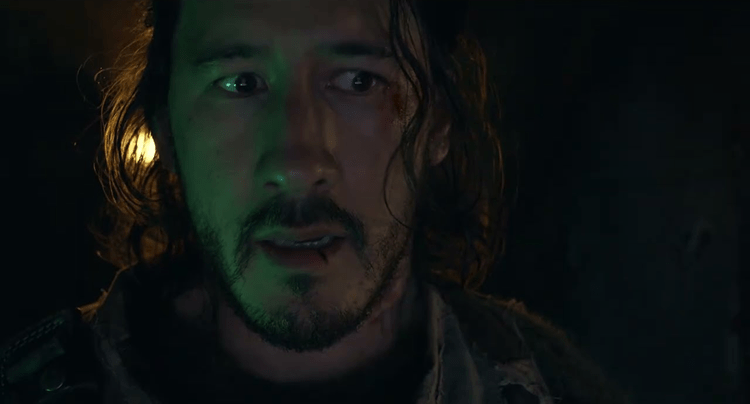
The potential game-changing success of “Iron Lung” has become a compelling story on its own. The science-fiction horror film is written, directed, edited, and produced by Mark Fischbach, a popular YouTuber who goes by the online name Markiplier. He sits as one of the most popular streamers on the platform with over 38 million channel subscribers to date.

Fischbach self-financed “Iron Lung” for $3 million. Even more impressive, he self-distributed his film, initially only negotiating a small release in 60 independent theaters across the United States. He then reached out to his fans who spearheaded a massive grassroots campaign which caught the attention of several major theater chains. As of now, the film is showing in over 4,100 screens worldwide and made over $21 million in its opening weekend.

“Iron Lung” is based on a 2022 indie game developed and published by David Szymanski. It was a first-person simulation horror experience set entirely within a cramped midget submarine. The movie follows suit, keeping us confined inside a small iron shell for the duration of its two hours. The confinement itself is never an issue. But the two-hour runtime is, with Fischbach too often dragging things out considerably longer than he needs to.

The story is set in a distant future where mankind has colonized space. But a catastrophic event called the Quiet Rapture caused all star systems to vanish. Planets, stars, moons – all gone. And nearly all of humanity disappeared with them. The only survivors are the small numbers of people who were onboard space stations and starships. Those remaining desperately do what they can to stave off their extinction.

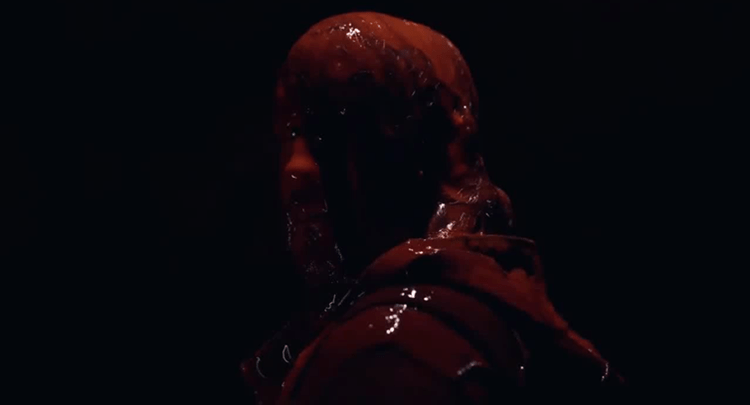
Enter Simon (strongly played by Fischbach), an antsy convict about to go on a dangerous mission as penance for a crime that we learn more about as the movie progresses. His mission is to descend deep into an uncharted ocean of blood on a desolate moon believed to hold information and resources crucial to human survival. His handlers have nothing but surface scans. So Simon is tasked with exploring the deep and photographing his findings in exchange for his freedom.

Simon’s small single-chambered submarine is welded shut and the lone porthole is sealed to prevent leaks due to the ocean’s intense pressure. That leaves him completely blind when submerged. His only means of navigation are his instruments and the crude images of an x-ray camera. His chief handler on the surface is the stern and cryptic Ava (Caroline Rose Kaplan) who barks Simon’s orders through a small speaker while trying to keep him focused.

There’s not a lot in terms of plot, but the first half-hour is riveting both narratively and technically. The early storytelling is equal parts harrowing and mysterious as new revelations raise the stakes while introducing an array of physical and psychological dangers. Tensions simmer, trust erodes, and deeper questions emerge. At the same time, Fischbach impressively acquaints us with the “Iron Lung” vessel, skillfully capturing the claustrophobia and peril through his camera and rich sound design.

But things take a frustrating turn as the film goes beyond slow-burning to meandering. Fischbach stretches his already limited story beyond its bounds, overextending sequences and repeating himself in scenes to the point of tedium. The gaps between new information get wider as Simon slowly navigates an assortment of drawn-out side quests that end up opening more questions than the movie ever answers.

Things do pick up in the final half-hour as Fischbach lets the blood gush (and I say that in its most literal sense). He and his team serve up a gory, blood-drenched ending that’s realized through a series of gnarly practical effects. And though it’s sometimes hard to discern what’s happening amid the dim lighting and shaky camera, the film’s ending goes for the jugular, more so visually than narratively.

In the end there is so much to admire about “Iron Lung” – the concept, the craftsmanship, the ambition, the determination. Markiplier shows some real creative chops, both in front of and behind the camera. Unfortunately the middle-hour’s languid pacing really stymies the movie’s momentum and zaps it of its tension, making the experience more grueling than thrilling. It’s a bummer because somewhere in “Iron Lung” is a tighter and more focused 90-minute movie that I would have loved.

VERDICT – 2.5 STARS

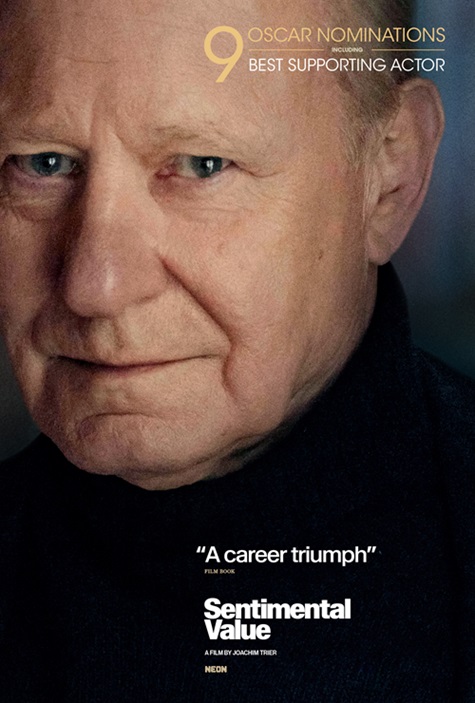
NEON’s “Sentimental Value” Gets New Character Posters

As frequent readers of this site may know, I’m a sucker for character posters. And it’s not often that you see them for emotionally weighty family dramas like “Sentimental Value”. But with the film now showing in select theaters and with it just receiving nine Academy Award nominations, NEON has released four posters of the film’s four Oscar-nominated stars.

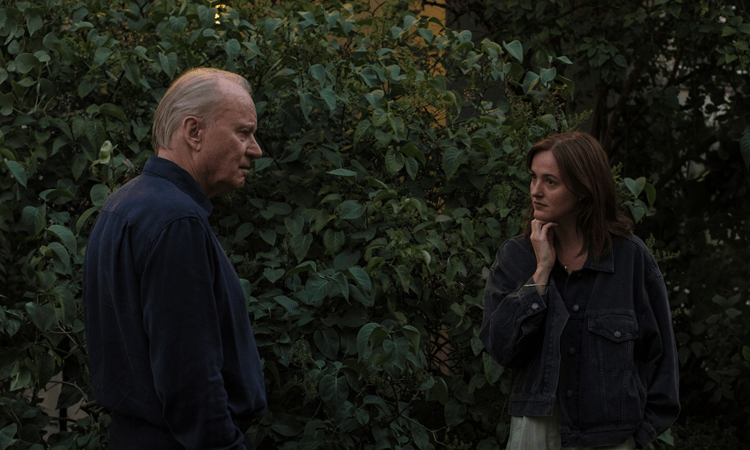
“Sentimental Value” follows a struggling family attempting to reconnect despite years of buried pain and estrangement. Renate Reinsve and Inga Ibsdotter Lilleaas play very different yet very close sisters. Stellan Skarsgård plays their father who suddenly re-enters their lives. And Elle Fanning plays an outsider with a very unique perspective on their relationships. The characters are rich and compelling; the performances are phenomenal and awards-worthy. You can read my full review of the film [HERE].

Check out the new posters below and let me know what you think. And make a point to see “Sentimental Value” in select theaters now.

SUNDANCE REVIEW: “Chasing Summer” (2026)

If you’re familiar with director Josephine Decker’s past work, you might have a hard time believing she’s at the helm of the Sundance comedy “Chasing Summer”. It’s such a dramatic turn from what she’s done previously. And while it’s always commendable to see a filmmaker extending themselves in new directions, the messy misfire that is “Chasing Summer” proves that good results are never guaranteed.

While Decker’s struggles are noticeable, just as much (if not more) of the blame goes to the script, written by the film’s charismatic star, Iliza Shlesinger. Decker never seems to have a firm grasp on the material which starts off strong, but quickly begins to lose its way. It eventually craters thanks to a ludicrous late twist that leaves a plot hole the size of the Grand Canyon. It completely cuts the already wobbly legs out from under the story and its premise.

As mentioned, the film starts out strong by introducing us to Jamie (Shlesinger), a forty-something relief worker who is providing aide to tornado victims in Mississippi. While there, she’s informed by her boyfriend and co-worker that he’s breaking up with her after five years together. Forced to move out and with nowhere else to go, Jamie returns to her small hometown in Texas to stay with her parents over the summer.

Image Courtesy of Sundance Film Festival

The problem is Jamie doesn’t have the fondest memories of her hometown. She hasn’t been back in twenty years, which is when she left after an ugly breakup with her old boyfriend Chase (Tom Welling) led to vicious rumors that ruined her reputation all across their town. But now she’s back and forced to reconnect with her former life which includes old family, old friends, and her old fling.

The movie’s central theme of confronting your former life and re-evaluating your current one plays out in Jamie’s awkward reunions with the people from her past. The best of the lot are her parents, Layanne (Megan Mullally) and Randall (Jeff Perry) who perfectly fit the small town mold while delivering some great laughs. There’s also Jamie’s crass older sister Marissa (Cassidy Freeman) who owns a local roller skating rink. And her three gossipy classmates (Aimee Garcia, Lauren Aboulafia, Lindsey Moore), all married with children. And of course the hunky Chase who is still beloved around town.

But what begins as a screwball comedy throwback turns into something messy, generic, and in some cases utterly baffling. The kink in the storytelling comes when Jamie starts a steamy romance with a local named Colby (Garrett Wareing). He’s some twenty years younger and fresh out of high school, but that doesn’t stop them hooking up and making no real effort to hide it. Age-gap romances are nothing new. But here it’s handled like a clunky teen comedy. Even worse is the preposterous plot twist it leads to which gashes any chance of taking things seriously.

“Chasing Summer” is a head-scratching misfire that consistently seems at odds with itself. It’s a movie marked by early highs, late lows, and a flop of a finish that ends up being its death knell. Decker and Shlesinger’s collaboration begins as the kind of zany comedy anchored enough in the real world to resonate. It ends up being an indistinct and forgettable letdown that seems custom made for streaming. And it’s not the kind of reinvention you hope to see from a filmmaker like Decker.

VERDICT – 2 STARS