
For the sake of clarity, this is not a review of 2012’s “The Hunt”, the superb Danish drama starring Mads Mikkelsen (you can find that review HERE. No, instead this is the 2020 one, you know the self-proclaimed “most talked about movie of the year“. In reality the self-hype is wildly exaggerated. To be honest, I don’t know anyone who is talking about this movie. But I guess you grab publicity wherever you can.
Actually “The Hunt” did have a few people talking late last year when right-leaning critics denounced the movie’s portrayal of rich liberal elites hunting conservatives for sport. Much like the pro-incel nonsense hurled at “Joker”, this too was baseless outrage. But it went away quick, especially after the film was shelved following a pair of deadly mass shootings.

PHOTO: Universal Pictures
But now it’s back, finally receiving its big screen release. It turns out “The Hunt” isn’t a movie worth fussing over. In fact it’s pretty bad, sometimes in a good way but most often not. It’s definitely not the movie the political heads painted it as. It also isn’t nearly as clever or insightful as it desperately wants to be. At times it’s weirdly entertaining and laugh-out-loud funny. But it’s mostly a vulgar mush of satirical comedy and graphic grindhouse gore. And any message it might have is all but lost.
The story is as simple as this: a group of wealthy, big city, liberal elites (led by Hillary Swank) kidnap twelve working class “deplorables”, release them into a remote clearing, and then begin hunting them for sport. But one, a tough-as-nails military vet (Betty Gilpin), turns the table and fights back. The script is from Nick Cruse and Damon Lindelof, supposedly inspired by a 1924 short story. It more closely resembles “The Hunger Games” meets “Hard Target” but in the form of a bad Saturday Night Live sketch.
The paper-thin story builds its characters solely off of stereotypes and extremes. The idea is to poke fun at the inane division that makes up America’s current political climate. Obviously it’s a big part of the satire, but at some point you would like at least a little character depth. They try to slap some on at the end but it’s meaningless. And it doesn’t help that everyone talks like profane brain cell-challenged buffoons. I don’t know if it was an effort to ensure a hard R-rating (the exploding heads and flying viscera had that covered) or just lazy writing.

PHOTO: Universal Pictures
The film is directed by Craig Zobel and its a far cry from his last picture, 2015’s excellent “Z for Zachariah”. Here it’s hard to tell if he’s taking anything seriously or just whizzing through the motions. He does maintain a brisk pace and the film’s 90 minutes seemed to fly by. That’s a good thing because it wouldn’t take much downtime to start poking holes in the story. I think Zobel knows that so he keeps our attention diverted the best he can.
The idea at the core of “The Hunt” is a worthy one. We could certainly use a clear-eyed reminder of how toxic and sectarian our political discourse has become. I’m just not sure this is the movie to do it. The film never sells us on its convictions and often times it seems more interested in being a hyper-violent gorefest. Sure, we get gags about gun control, climate change, racial politics, immigration, and nearly every other issue of the day (I’ll admit some of them are pretty funny). But the filmmakers seem more dedicated to blood-letting than storytelling and by the end the satire is barely visible.
VERDICT – 2 STARS

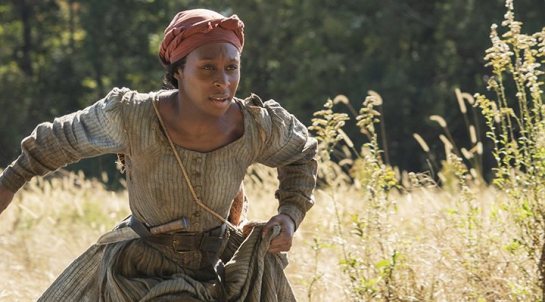
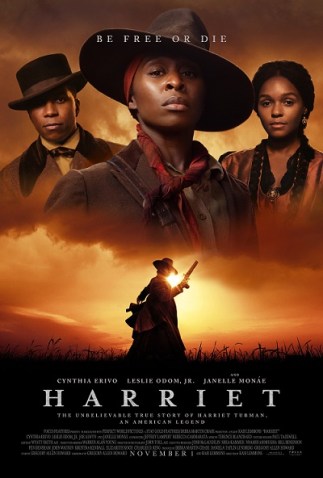 It was in 1849 that Harriet Tubman escaped slavery in Maryland, fleeing 100 miles to the relatively safe city of Philadelphia. She was just 27 years-old. But instead of staying put Tubman returned thirteen times, rescuing approximately 70 slaves including members of her own family. And that’s just a part of her inspiring life story. So how is it she’s just now getting the big screen treatment?