REVIEW: “Hotel Mumbai”

MUMBAIsmall

In November of 2008 ten Pakistani terrorists unleashed a series of attacks across Mumbai, the most populous city in India. Among their targets was a historical train station, a popular cafe, a Jewish community center, and two of the city’s signature hotels. 166 people were killed in the attacks and over 300 were injured.

“Hotel Mumbai” is the feature film debut for its director Anthony Maras. It’s a fictionalized account based on a 2009 documentary short “Surviving Mumbai” and specifically the attack on the Taj Mahal Palace Hotel. The timing of the film’s release is unfortunate considering the still raw and painful emotions following the recent mosque mass shootings in New Zealand. This is certain to effect some perspectives.

HOTEL1

Dev Patel serves as our entry point into a story filled with a wide assortment of characters. He plays Arjun, a waiter at the Taj Mahal Palace Hotel with a wife at home expecting their second child. So instantly we have our first of several rooting interests.

Arjun arrives to work late for his shift which annoys his hard-nosed but respectable boss, the hotel’s head chef Hermant Oberoi (Anupam Kher). Meanwhile newlyweds David (Armie Hammer) and Zahra (Nazanin Boniadi) check in with their newborn baby and young nanny Sally (Tilda Cobham-Hervey). We also meet Jason Isaacs playing a jerky Russian businessman and a hard nut to crack.

Most surprising is the depth Maras gives to the young Pakistani terrorists. We first see them as they arrive by small boat and quickly disperse across the city to their assigned targets. The movie hints at things such as socioeconomic conditions that could have pushed them to such violence but it never goes as far as to make them overtly sympathetic. Just the opposite. They kill without the slightest tinge of conscience. Their demeanors are cold and calloused, their faces blank and emotionless. No theatrics, just a businesslike approach to slaughter. It’s unsettling and chilling to watch.

MUMBAI3

Maras does challenge the audience to look into the face of radicalization. He shows us twenty-somethings from impoverished backgrounds driven by extremism to hate non-Muslim cultures and any semblance of wealth. They are instructed by the disturbing voice in their earbuds coming from a puppet-master known only as “The Bull”. He fuels their hate and wants “the screams of the victims to be heard by the world”. These young men are fanatics who have been weaponized by their handlers to coldly carry out their well-planned atrocities. And they follow with little to no resistance.

Of course most of this is brought to light within the enormous Taj Hotel where terrified staff and guests scramble for safety among the chaos and carnage. Hope is hard to come by especially when we learn how ill-equipped the city was to respond (Mumbai had no tactical units to counter such an attack). But Maras shows amazing acts of kindness and bravery born from the human spirit in the face of such disturbing inhumanity. There is no single hero and thankfully no puffy-chested machismo. Just true-to-life characters with personal stakes trying to survive. We occasionally lose track of some of them, but ultimately Maras does a good job putting us in their shoes.

Hotel Mumbai

There are many instances where “Hotel Mumbai” subverts your expectations whether it’s the disciplined use of the score or its ability to stay true to the horrific violence without always showing the bloodiest results. But there are a couple of times where you can almost see the Hollywood influence creep its way in. The worst is a cringe-inducing scene meant to speak to racial profiling but that comes across as ridiculously scripted and completely false. It literally yanked me out of the otherwise relentless white-knuckle tension.

Predictably some have been quick to dismiss “Hotel Mumbai” as ill-advised and exploitative. I didn’t see it that way. Unflinching and uncomfortably relevant, perhaps. Ill-advised and exploitative, no. Maras and co-writer John Collee did hours of interviews with survivors and witnesses. Much of that is what shaped their story and characters. This is no sanitized account. It’s gritty and admittedly tough to watch. But it could also be one of the more authentic portrayals of its kind. It certainly left me rattled.

VERDICT – 4 STARS

4-stars

REVIEW: “The Hole in the Ground”

HOLEposterMAIN

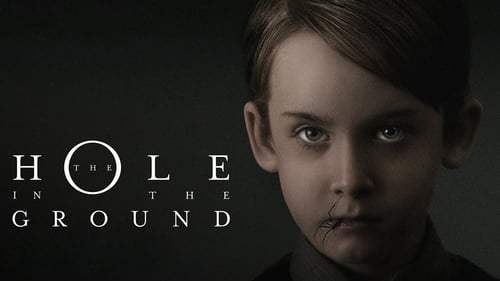
There is a new installment in horror’s intensely popular ‘creepy kid’ sub-genre. It’s “The Hole in the Ground” from Irish writer-director Lee Cronin. His film premiered at this year’s Sundance Film Festival to some nice reactions but it was moody and genuinely chilling trailer that caught my attention.

Seána Kerslake plays Sarah who has moved with her young son Chris (James Quinn Markey) to a remote countryside fixer-upper. We are given the impression she has left an abusive relationship and is looking for a new start for both her and her son. Sarah has found a pocket of friends in the nearby town but it hasn’t been as easy for Chris who struggles to make friends at his new elementary school.

HOLE2

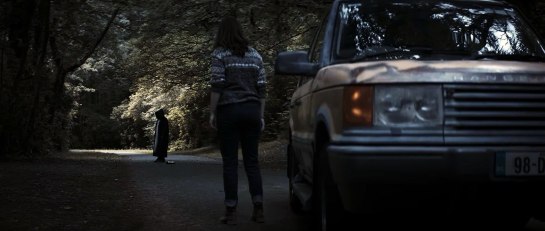
Late one night Chris wanders out of the house and Sarah tracks him into a dense and eerie patch of woods. There she discovers a mammoth (and obviously metaphorical) sinkhole (think Sarlacc pit but about 20x bigger). She fears the worst but then Chris suddenly appears behind her. She takes her son and hurries him back home.

But then things get a little weird. Sarah begins noticing inconsistencies with Chris. As his behavior becomes more peculiar and out of the norm she can’t help but recall an earlier encounter where a demented elderly neighbor (Kati Outinen) who hissed “He’s not your son.” Was the crazy old woman warning her? Is the sinkhole somehow responsible? Is it Sarah who is losing her mind?

Hole1

“The Hole in the Ground” digs deep into the anxieties of parenthood much in the same vein as 2014’s “The Babadook”. In many ways that Jennifer Kent film trained me to be suspicious when watching horror movies featuring a distraught mother with a spooky child. Cronin wants his audience to wrestle with the uncertainty of what we are seeing which is pretty effective for most of the 90 minute running time. It’s only in the last 15 minutes that things are made clear, perhaps even too clear.

One thing is for sure, Cronin has a knack for creating mood and atmosphere. It’s often done through some very clever visual choices (the opening scene of Sarah driving through the countryside is a great example). He is also smart in how he utilizes Stephen McKeon’s haunting score. It’s tense, a bit unsettling, and never overused. It all makes for a satisfying bit of psychological horror that loses a little air with its ending but never loses its ability to manage and maintain a really effective tone.

VERDICT – 4 STARS

4-stars

REVIEW: “High Flying Bird”

BIRDposter

I have to admit I’ve always been a sucker for a good sports movie. Or course the key word is ‘good’. To be honest it’s a film genre that has had more than its share of hard-to-watch stinkers. But when one of these movies hits its mark, regardless of the sport it’s centered around, I’m usually quick to sing its praises.

Steven Soderbergh is the latest to walk the line between a good sports movie and a crappy one. His latest film “High Flying Bird” works from a screenplay by Tarell Alvin McCraney and is loosely based on the 2011 NBA lockout. As a filmmaker who likes to tackle a variety of subjects in a variety of different ways, this is a movie right up Soderbergh’s alley.

HIGH FLYING BIRD

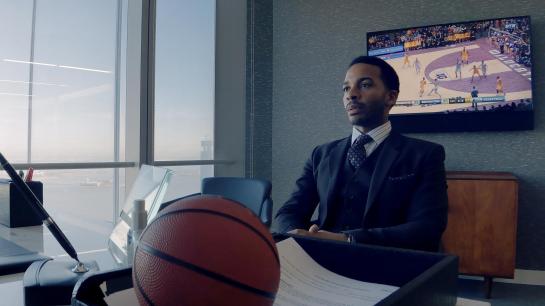
André Holland plays Ray Burke, an industry-wise sports agent working hard to calm his antsy rookie client Erick (Melvin Gregg) during the NBA’s lockout. Ray knows the ins and outs of the business and the longer the work stoppage the deeper it digs into his own pockets. In some ways he resembles Tom Cruise’s Jerry McGuire – headstrong, ambitious, and confident. But Ray is far more cerebral and grounded in the real world.


Ray knows the stakes and he feels the pressure from both his client and his agency. With neither side of the labor dispute budging and negotiations at a standstill, Ray knows he has to do something. He begins by stealthily recruiting a former assistant (Zazie Beetz). He then starts tapping into his connections with the player’s union rep (Sonja Sohn) and the slick-as-silk spokesman for the owners (Kyle MacLachlan). With all the moxie he can muster, Ray puts together a plan that could either end the lockout or his career.

“High Flying Bird” is a very different kind of basketball movie. Soderbergh is much more interested in the business side of the sport than what happens on the court. You also get the sense Soderbergh is intrigued by the racial dynamic between white ownership and the star-studded predominantly black player base. And does he want us to see a real-world reflection in the NBA’s revenue sharing structure? He plays with these ideas without beating us over the head with them – just enough to prod us to think.

This is also the second straight film Soderbergh has shot on an iPhone (the first being last year’s “Unsane” with Claire Foy). It’s a fascinating technique that offers him some obvious freedoms which we see through camera angles, how some shots are framed, and even in how he uses lighting. Just as obvious are the limitations. By necessity most of Soderbergh’s camera craftiness is restricted to closed spaces and in how he shoots characters and conversations. Still it doesn’t undercut the movie’s value as a remarkable piece of minimalist filmmaking.

HIGH FLYING BIRD

“High Flying Bird” has so many things going for it. I can’t say enough about McCraney’s dense Sorkin-esque dialogue. And let me be clear, there is a ton of dialogue. But it works because McCraney and his characters all have something of value to say. And while it may be a tad too wordy, we get a keen insight into who these people are and what makes them tick. You also have a fantastic cast. Holland shows genuine leading man chops while every supporting role feels true to their world (I haven’t even mentioned Bill Duke who is great playing a wise father-figure to Ray).

And then you have Soderbergh, an eclectic filmmaker ever willing to dabble in any genre and toy around with any and all cinematic forms. Here he directs, edits, and shoots his movie while wisely leaning heavily on a robust script and some good performances. It may end up being a little too talky for some people. But for others who appreciate an audacious filmmaker who is impossible to pigeonhole, Netflix has a good one for you.

VERDICT –  4 STARS

4-stars

REVIEW: “Hunter Killer” (2018)

HUNTERbig

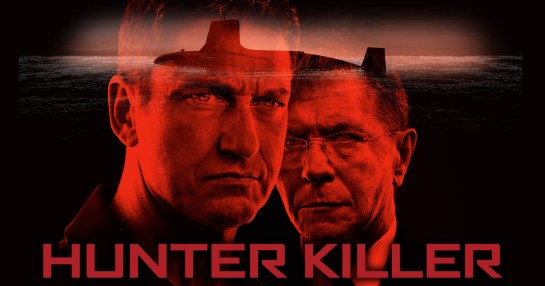
Am I the only one waiting for Gerard Butler to have that Matthew McConaughey-like renaissance? You know, where he lands that one movie that taps back into the talent that we once saw glimpses of before the cavalcade of hard-to-digest slop started churning out? Well, I hate to say it but “Hunter Killer” ain’t it.

Gerry Butler’s movies have almost become an absurd event for me. I would be lying if I didn’t admit to getting some type of weird entertainment value out of them. They’re routinely bad and always offer some level of goofiness to laugh at (most of the time unintentionally). “Hunter Killer” take a different approach. It nearly drowns in its own self-seriousness. That being said, here’s something funny – “Hunter Killer” isn’t as bad as it has every right to be.

HUNTER1

Now let’s not get carried away. This isn’t the movie that puts Butler back on track. Simply put, it’s impossible to take any part of this three-pronged story seriously. And the further you go the more you realize that it’s doing nothing that you haven’t seen many, many times before.

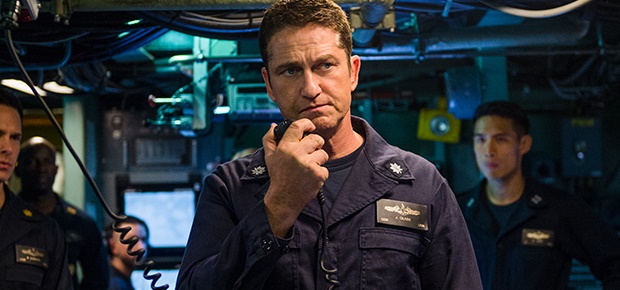
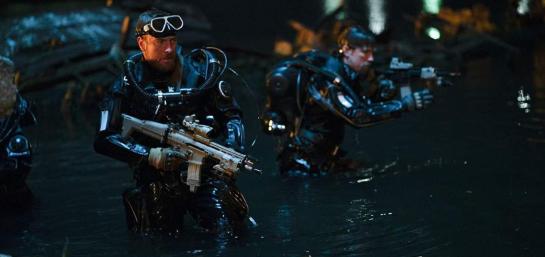
After a United States submarine suspiciously disappears in arctic waters, first-time Commander Joe Glass (Butler) is ordered to investigate. He takes the USS Arkansas and his new crew to do some deep seas super-sleuthing. Not only does he discover the fate of the U.S. sub but he stumbles upon a sunken Russian sub that has been sabotaged from the inside. Among its lone survivors is a dignified Russian Admiral played by Michael Nyqvist.

HUNTER2

Meanwhile a four-man Navy SEAL team covertly airdrops into Russia where they are to secretly observe the goings-on at a suspicious Russian naval base. Their reconnaissance uncovers a coup led by a wild-eyed defense minister (Mikhail Gorevoy), so cartoony he could have been pulled from a late 80s comic book.

The third thread of this story takes place at the Pentagon where government officials scramble to make sense of all the intel pouring in from the Arkansas and the SEAL team. Gary Oldman grabs a quick paycheck as the Chairman of the Joint Chiefs while a stone-faced Common plays an Admiral with the emotional depth of a block of wood. Linda Cardellini gets a thankless role as a security advisor. Their roles consist of expressing various levels of concern as highly dramatic music looms in the background.

HUNTER3

Nothing in this three-story structure works particularly well on its own. You’ll have a hard time finding an original idea or interesting character in any of the scenarios. But when they all come together it does offer up some mindless entertainment. The pacing is good (which is probably a smart thing) and there are a handful of good action sequences that injects a little welcomed energy. We also get another good performance from the late Michael Nyqvist. It’s one of his final roles.

But despite my ability to squeeze a little enjoyment out of “Hunter Killer”, it’s still a movie that sinks more than swims. Pretty much every thing it does is by the numbers and while some of the casting may catch your eye, they’re more or less doing the same – checking boxes and offering up the best super-serious mugging they can muster.

VERDICT – 2 STARS
2-stars

REVIEW: “Happy Death Day 2 U”

HappyPOSTERBIG

Complete with an absurdly funny title and a crazy concept, 2017’s “Happy Death Day” was a nice little surprise. It was a waggish and off-beat horror movie that worked mainly due to it being both subversive and self-aware. It played around with several of the genre’s most familiar tropes and it did so with an ever-present tongue-in-cheek glee.

Now we get the inevitable sequel sporting an even more ridiculous title and taking the story to even more outlandish places. I say the sequel was inevitable because these meagerly budgeted horror films have proven to be a gold mine for producers like Jason Blum. The first film was made for under $5 million and made over $125 million at the box office alone. As I said, inevitable.

Happy1

Jessica Rothe (now 31-years-old but still looking like a college student) returns to play Tree. The key piece from the first film, Rothe is asked to go even further here in terms of balancing the horror and comedy elements. She’s still a lot of fun to watch and is more than able to do most of the heavy lifting.

Tree and her now boyfriend Carter (a returning Israel Broussard) set out to help fellow Bayfield University student Ryan (Phi Vu) who is caught in a time loop much like the one she encountered in the first film. They link Ryan’s situation back to a quantum physics experiment fired off by him and his fellow science geek buddies. They conclude that the only way to fix things is to reenact the experiment, but in doing so Tree finds herself pulled back into her own personal “Groundhog Day” time loop. The film quickly shifts to her as she tries to figure out her predicament.

Happy2

Returning director Christopher Landon (who also writes the sequel) retains the original film’s playfulness while barely keeping it within its genre. It’s weird but this barely feels like a horror movie. There are a couple of jump scares and we’re reminded that you can chew up a lot of screen time by walking slowly down hallways or through darkened rooms. But that’s about it. You could try to fit it into the slasher sub-genre but even that feels like a stretch.

“Happy Death Day 2 U” ends up barely being a horror movie, kind of a comedy, and sort of science-fiction. Its story is goofy (I like to believe intentionally so) and I’m still trying to figure out what the heck actually happened in it. But here’s the funny thing, this peculiar mashup still manages to show its audience a good time. Rothe is an absolute blast. It has a specific story thread that is surprisingly touching. And the movie embraces its goofiness just enough to keep the whole thing afloat. It’s a movie so dependent on its central conceit that I’m not sure where it can possibly go next. But even though this is a pretty fun sequel, you get the feeling they need to come up with something new if they want to keep this series fresh.

VERDICT – 3 STARS

3-stars

REVIEW: “Hereditary”

Hereditaryposter

It’s probably a good indicator that you aren’t in for a happy two hours when the film you’re watching opens with a newspaper obituary. In “Hereditary” it turns out the obit is for 78-year-old Ellen Taper Leigh. It’s the launching point for this stunning and genuinely creepy filmmaking debut.

Writer-director Ari Aster’s fiendishly disturbing film gets under your skin through slow-boiling horror beats while patiently maneuvering its characters through scenes/stages of grief, mental and emotional instability, and finally full-blown terror. It’s one part a heart-wrenching family story, but as Aster begins carefully peeling away the surface layers of his tale, a dark and deeply unsettling heart is revealed.

Hereditary

Toni Collette is extraordinary in the film’s lead role. She plays Annie, an artist who specializes in miniatures many of which are based on her own life experiences. She lives in the mountains with her soft-spoken husband Steve (Gabriel Byrne), their 16-year-son Peter (Alex Wolff) and 13-year-old daughter Charlie (Milly Shapiro). She happens to be the daughter of Ellen Taper Leigh. You remember, the woman from the above mentioned obituary?

As Annie eulogizes her mother at the funeral service it becomes clear their relationship was strained. We also learn Annie’s childhood was tough. Her father battled psychotic depression, her mom had dementia and her brother was a schizophrenic. All of it feeds into the estranged Annie’s frame of mind, but it also feeds into the wickedly uncomfortable horror element that simmers at the core of Aster’s film.

Hereditary2

Plot-wise being intentionally vague is pretty essential. The fewer details you have going in the better the effect. It starts a bit slow as its pieces are put into place, but once the psychological terror begins to uncoil the movie methodically grows more and more discomforting. Aster’s examination of grief and mental illness gets darker and more queasy with every scene.

“Hereditary” is a genuinely terrifying movie, not in the gory gruesome or lazy jump-scare sense. Instead it bores deep down under your skin much in the way Robert Eggers did with his exceptional 2016 film “The Witch”. With fine performances, a strong directorial debut, and soaked in the strategically menacing score by Colin Stetson, “Hereditary” slowly pulls you in before giving your nerves and your senses a good working over. That’s the kind of ‘horror’ that lands with me.

VERDICT – 4 STARS

4-stars