2015 Blind Spot Series: “La Dolce Vita”

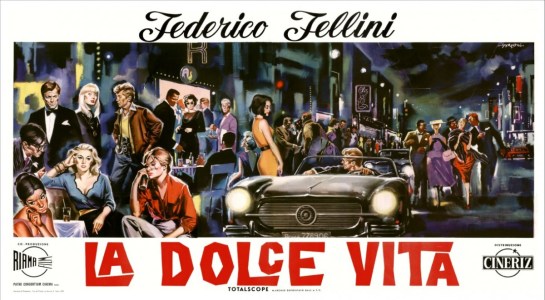
VITA POSTER

For the film’s main character Marcello, La Dolce Vita or “the sweet life” is like a carrot dangling before a horse. It keeps him moving forward while remaining out of reach. Marcello, played with spot-on precision by Marcello Mastroianni, searches for happiness, contentment, and fulfillment – that good life hinted at by the movie’s title. But for him they are unattainable dreams. Or are they unattainable? Are they goals meant only for the more talented and affluent? Are they far-fetched canards that prey on gullible optimists? Or do they really exist if only he were looking in the right places? This is a small handful of the questions asked in “La Dolce Vita”.

Federico Fellini’s seminal classic has been broken down, dissected, and interpreted a number of different ways. The film’s basic structure becomes apparent as the movie progresses. It basically consists of seven independent episodes bookended by a prologue and an epilogue. It’s common timeframe starts at nighttime and then moves to the dawn that follows. Marcello serves as the common link between each episode. Many critics have highlighted the film’s significant sevens: the seven episodes, the seven deadly sins, the seven virtues, etc. This is an intriguing perspective that begs for a more careful examination of the film. Personally I’m more drawn to other concepts and themes that Fellini explores.

DOLCE1

Marcello is our connection, our mooring, the pulsing blood vessel running through the entire film. Early in the movie he comes across as spirited and confident. In the famous opening prologue a helicopter is transporting a huge statue of Christ to St. Peter’s Square. Marcello follows in a second helicopter filming the event, but takes a detour to solicit phone numbers from some rooftop bathing beauties. In the first episode we see him at a lively nightclub where he brushes off the threat of a man who wants to “smash his face” and leaves with a beautiful heiress. In both of these scenes Marcello appears to be self-assured and full of energy.

But as the film moves forward and the layers of the character are peeled back, we see a very different man. Marcello is a tabloid journalist whose work consists of chronicling the escapades of wealthy socialites, pseudo-actors and actresses, and self-indulgent playboys. It’s shallow and unfulfilling work that does nothing to satisfy his desire to be a serious writer. In fact the longer we stay with Marcello, the clearer we sense his growing state of melancholy.

DOLCE3

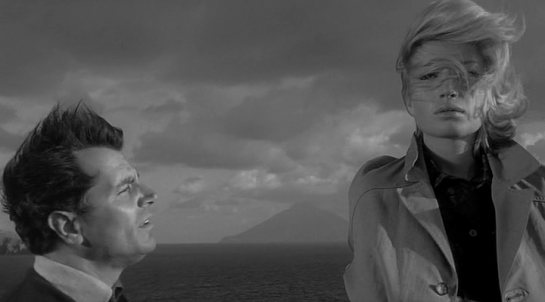
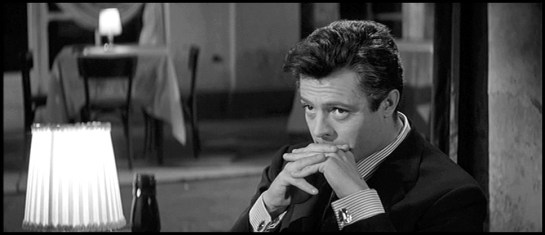
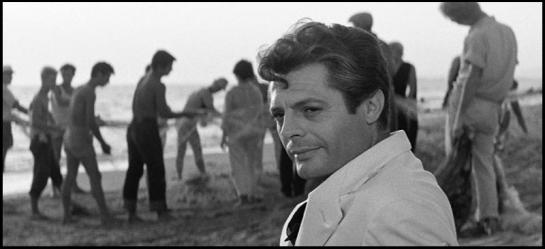
Marcello Mastroianni perfectly displays the suave, voguish facade Fellini is going for. Mastroianni’s handsome face, well-groomed hair, fancy suits, and stylish sunglasses sells us a character who seems cool and satisfied. But we watch him grow more weary and jaded with each passing episode, with each superficial aristocrat he encounters, with every shallow and spurious ‘news story’ he covers. Through Marcello the film builds up a lavish, attractive, self-indulgent perspective and then knocks it to the ground. It tempts us to indulge in the trendy excesses of “the sweet life” while at the same time systematically destroying the very idea of “la dolce vita”.

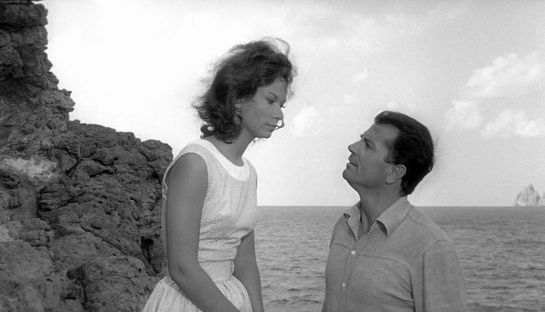
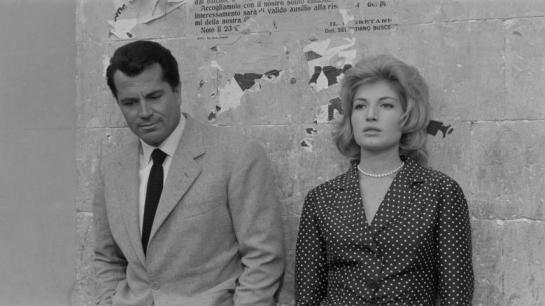
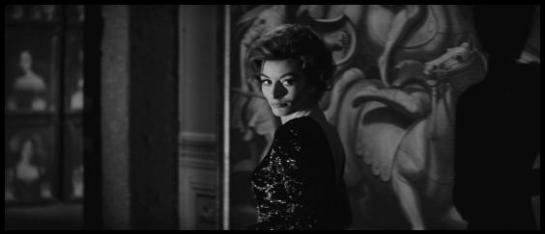
Fellini’s view of the good life and the quest to capture it could be called cynical. But it could be he is pointing to a particular perception of the good life (one that was especially popular in 1959 Rome) and focusing on its seductive dishonesty. The film gives us plenty of great scenes and characters to examine in our search for answers. There is the early nightclub scene and the meeting of Maddalena (Anouk Aimée), a rich and beautiful heiress who sees Marcello as her man of convenience. He clearly has feelings for her, but she basically uses him as her toy.

DOLCE2

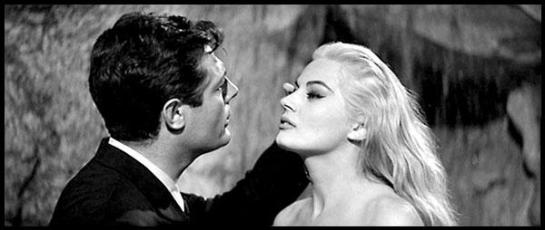
Then there is the famous episode with Sylvia (Anita Ekberg) a ravishing buxom blonde actress from America. She arrives in Rome and Marcello is to report on her stay. Swarmed by obsessed news reporters (it’s from “La Dolce Vita” that we get the word paparazzi) Marcello dismisses Sylvia at first. But soon he falls for the ‘perfect woman’ aura that surrounds her and which culminates in the film’s most memorable moment – wading in the Trevi Fountain. But like waking up from a dream, Marcello’s romantic moment dissolves before his eyes. Again, something else outside of his reach.

Perhaps the most telling is the three-part episode revolving around Marcello’s friend Steiner (Alain Cuny). He’s a wealthy intellectual who represents everything Marcello hopes to be. He’s has a luxurious home, the perfect family, high-class friends. In one scene Marcello and his unstable fiancé Emma (Yvonne Furneaux) attend a party at Steiner’s home. Marcello loves mingling with Steiner’s poet, artist, and intellectual friends and at one point Emma tells him that someday he will have Steiner’s material and social affluence. But in the third act of Steiner’s episode Fellini hits Marcello and us head-on with a not so subtle smack of reality. Another dream crushed under the weight of truth.

DOLCE4

This only scratches the surface of “La Dolce Vita ” and its numerous themes and concepts. I could talk about the scene where Marcello is typing at a seaside cafe and meets a young waitress named Paola – perhaps the one truly innocent character of significance he encounters. I could speak of the episode where Marcello’s father pays a visit. It’s the only clear look we get into Marcello’s past. I could go on and on. Fellini gives us so much to talk about and he never wastes a moment. Every episode and every scene offers something of narrative, thematic, or cinematic value.

I could go on and talk about the incredible visual technique used by Fellini, the diverse and personality-rich locales, the beautifully strategic use of music. With “La Dolce Vita” Federico Fellini has created a masterpiece that feeds off of every aspect of the cinematic experience. He captures your eyes with his entrancing visuals, he sucks you in through his fascinating characters, he challenges you through his intelligent thematic examinations. In a nutshell “La Dolce Vita” is cinema that we don’t see these days. Thankfully Fellini gave us this rich classic that is always worth revisiting.

VERDICT – 5 STARS

REVIEW: “The Lunchbox”

LB

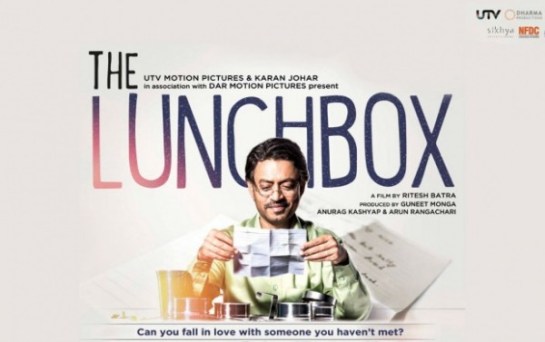
“The Lunchbox” is a breath of fresh air – a smart and thoughtful romantic drama made for adults who are tired of the flimsy, schmaltzy genre norm. Much like the horror and comedy genres of late, romance films have been significantly shortchanged particularly from Hollywood. Lazy writing and poor concepts plague the majority of these movies which have the intelligence and romantic energy of a rock. That’s why I love it when a filmmaker comes in and reminds us of how good these movies can be when done right.

In this case it’s Indian writer and director Ritesh Batra. Several of his short films have hit the festival circuits but “The Lunchbox” is his feature film debut and it’s a good one. This isn’t a standard Hollywood production although it does occasionally dance close to cliche. But Batra always reigns in the material and never crosses the line into contrived and overwrought sentimentality. He handles his story with a delicate and deliberate touch, building up his two central characters and drawing his audience to them.

LB1

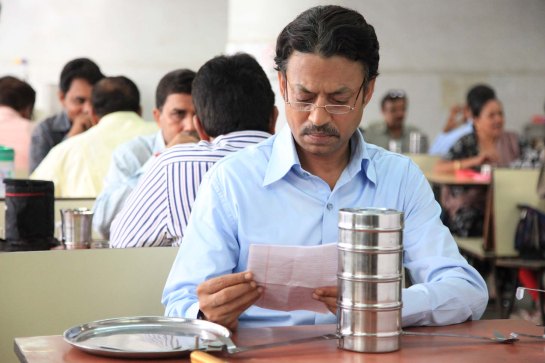
The film takes place in Mumbai and our two main characters are introduced to each other through the city’s renowned dabbawalahs. It’s a complex lunch delivery system where women cook lunches then have them picked up and delivered to workers around the city. Bicycles, scooters, and trains are all used to transport the lunch boxes throughout Mumbai. Ila (Nimrat Kaur) is a wife, a mother, and an excellent cook. She begins sending out a lunch box thinking it will go to her husband. Instead it’s inadvertently delivered to Saajan (Irrfan Khan), a government office worker.

The delivery mistake leads to a back-and-forth correspondence between Saajan and Ila via small notes left in the lunch box. Both are hurting souls who find a type of release through their written conversations. Saajan has been rudderless since his wife died. He’s simply going through life’s motions without anything ahead of him other than his early retirement. Ila is a lovely woman with an adorable daughter, but her husband’s hurtful negligence leaves her feeling alone and depressed. They both are people with significant voids in their lives.

LB2

This could have easily turned into a sappy run-of-the-mill story, but that never happens. Ritesh Batra is very interested in his characters and they never drown in mushy maudlinness. Instead Ila and Saajan are living, breathing people and their lives and emotions never feel scripted. Some of that is due to the heart and authenticity we see in the two lead performances. Irrfan Khan and Nimrat Kaur are superb. But it’s also due to Batra’s commitment to his vision for the film. He is very calculated in his structure and pacing. It’s a slow-building story. The humor is strategic and subtle. The emotions are earned.

In the end “The Lunch Box” encourages us to love and to allow ourselves to be loved. To not be swallowed up by the emptiness of our circumstances, but to open ourselves up to the possibilities still in front of us. These concepts are told to us through a sweet, delicate, and earnest movie from a truly promising first time feature filmmaker. This is a delightful film filled with thoughtfulness and genuine feeling. I knew nothing about “The Lunchbox”. It turned out to be one of my favorite discoveries of 2014.

VERDICT – 4.5 STARS

REVIEW – “Life Itself”

LIFE ITSELF POSTER

A countless number of aspiring couch critics have spoken of the role that Gene Siskel and Roger Ebert played in nurturing their desire for film criticism. The various incarnations of their groundbreaking and one-of-a-kind movie review program entertained, broadened, and inspired generations of film fans. Siskel and Ebert became synonymous with film criticism and while they weren’t the only talented and knowledgeable movie critics during their day, they were instrumental in bringing it to the mainstream and creating a wider appreciation for it as a whole.

I was one of those kids they influenced. It was during the early 1980s that I was first exposed to their weekly television show. I watched them any opportunity I had and I made them part of my weekend. To say I was obsessed would be an understatement and almost instantly I wanted to be a movie critic. Eventually I began to favor Gene Siskel and the way he talked about movies. But over time my appreciation for Roger Ebert and his unmatched knowledge and passion for movies grew tremendously. While we were sometimes at odds concerning things outside the world of cinema, I considered him a wealth of information and his reviews were like fascinating lessons that increased my understanding of movies and of the people of make them. That’s one reason his passing last year had such an effect on so many people.

“Hoop Dreams” director Steve James brings the life of Roger Ebert to the big screen in “Life Itself”, a documentary based on Ebert’s memoirs. It’s a unique but heartfelt mixture of biographical information and poignant emotions. James began his documentary before Ebert’s death and when the beloved film critic passed away James pledged to the family that he would finish his joint venture with Roger.

LIFE ITSELF

“Life Itself” follows Ebert during what turned out to be his final months. We spend a lot of time with him in rehabilitation centers following his debilitating battles with cancer and a fractured hip. Some of what he is going through is sobering and uncomfortable but, as he conveyed to Steve James, to omit the reality would be to do a disservice. His wife Chaz serves as his rock and it is impossible not to be moved by her love and dedication to her husband. I also appreciated the truth that she shares in so many of the interview bits we get.

Throughout the film we get many breaks that look into Ebert’s past. We learn a little about his family and his early forays into the newspaper business. And of course we see his jump into film criticism for the Chicago Sun-Times and eventually alongside his local rival Gene Siskel of the Chicago Tribune. The film has a genuine sense of honesty which shows itself in its dealings with Ebert’s past struggles with alcohol and his off-putting arrogance. But it also reveals deep passions that he possessed and how is life was forever altered for the better when he met Chaz. Personally I was drawn to his relationship with Siskel which was far more competitive and combative in its early stages that I realized. Watching the evolution of their relationship shined a new light on two men who I watched so religiously for so many years.

“Life Itself” is a solid documentary that will certainly appeal to anyone who appreciated Roger Ebert’s work and his contributions to motion pictures. I do think Steve James loses his rhythm midway through the film and his jumps to different events in Roger’s past are jarring due to a lack continuity. But the last act gets back on track and it leaves you with a lump in your throat and an even greater appreciation for a man who meant so much to movies and the art of film criticism. As the final credits scrolled across the screen I reclined in my chair and shook my head. I just can’t believe both Roger and Gene are gone.

VERDICT – 4 STARS

REVIEW: “Le Week-End”

Le_week-end Poster“Le Week-End” was one of my more eagerly anticipated films of the 2014 Spring movie season. My absolute adoration for the city of Paris combined with the intriguing story of a conflicted older couple was enough to get me onboard. This British drama marks the fourth collaboration between director Roger Michell and writer Hanif Kureishi. While I’m not familiar with their other collaborative works, there are undeniable signs of quality and brilliance in “Le Week-End” even though the final product isn’t as captivating as I had hoped.

Jim Broadbent and Lindsay Duncan play Nick and Meg Burrows. In light of their 30th wedding anniversary, the couple takes off to Paris, France – the place of their honeymoon. It doesn’t take long for us to see that their marriage is on life support and Nick especially hopes this trip will resuscitate it. Years of pent-up emotion and complex feelings boil to the surface and Nick and Meg try to navigate the waves the best way they know how.

le-week-end-2

“Le Week-End” isn’t a formulaic run-of-the-mill couples drama. It has a very grounded sensibility and its approach to storytelling is unique. Much like the struggling relationship it depicts, “Le Week-End” features a number of mood shifts and knotty emotional moments. There is a stinging realism to Nick and Meg’s relationship that separates the film from most other movies of this type. The movie also moves at a fairly slow pace and there are moments where nothing much happens. That’s not always a problem but there are times where it works against the picture.

I can certainly appreciate the deliberate pace and the occasional idling that we get throughout the film. On the other hand, there were times when I really wanted the movie to kick into another gear. The very thing that sets it apart from other movies of this type is the same thing that kept me from truly loving the film. I also left with a number of questions that the ending never answered or hinted at. It’s not that it is a terrible ending, but I can’t say it was all that satisfying.

Le2

I can say that Broadbent and Duncan were extraordinary. Both are seasoned performers and their chemistry is spot-on. The way they develop their characters and expose their flaws and frustrations is nearly flawless. Even when the script shortchanges them (and there are a small handful of weird moments), Broadbent and Duncan rise above the material. I also really liked seeing Jeff Goldblum appear as an old acquaintance of Nick’s. He is a fine actor who I believe always adds good moments to a film.

While “Le Week-End” may not be the brilliant film I was hoping for, it’s still an easy movie to recommend. It makes pretty good use of one of the most beautiful cities in the world and the story of Nick and Meg is certainly an interesting one. But I really hoped that Michell would pull more from this magical setting and that Kureishi would give his performers more fluid material. But even these issues can be overlooked to a degree. “Le Week-End” strives to give us a movie that bucks convention and it puts two truly strong performances in front of us. Those are things I can certainly appreciate.

VERDICT – 3.5 STARS

REVIEW: “Life is Beautiful”

LIFE POSTERWho can forget Roberto Benigni’s exuberance upon winning Best Foreign Language Film and Best Actor Oscars for “Life is Beautiful”. His infectious enthusiasm and charm resembled that of the character he played in his wonderful 1997 Italian drama. Benigni’s Best Actor was notable due to the Academy’s usual reluctance to nominate or award performers from foreign films. His win is also considered an upset as he beat frontrunners Nick Nolte and Tom Hanks. Perhaps it was an upset, but to call Benigni’s win undeserving would be untrue. It’s a brilliant performance that serves as the centerpiece for this moving story.

“Life is Beautiful” is essentially broken down into two chapters. The first half starts in 1939 Italy and tells the story of a clownish, good-natured Jewish-Italian fellow named Guido (Benigni) who falls for a lovely upper-class teacher named Dora (played by Benigni’s real life wife Nicoletta Braschi). Guido’s happy and playful demeanor wins over many of the people he encounters and eventually Dora. We watch as he woos her through spontaneous meetings which don’t always sit well with the upper-crust establishment. The two fall in love and soon marry and have a son named Joshua.

The second chapter of the story takes a darker turn. Throughout the first half of the film we get hints to how Europe is changing as World War 2 approaches and anti-Jewish sentiment surfaces. But Guido wants to shield young Joshua from these things and he does it the only way he knows how. He puts on performances and depicts things in comical ways. His goal is to keep his son focused in the goodness and beauty of life. That becomes harder when Guido, Dora, and Joshua are rounded up and taken to a Nazi concentration camp. But even in those brutal circumstances and regardless of the death and misery surrounding them, Guido is determined to safeguard his son through his blithe fictional creations.

LIFE2

“Life is Beautiful” is really a fable. It’s not intended to be a by-the-books depiction of Nazi atrocities in the concentration camps. But some people have criticized Benigni for his incorporation of humor into such a serious subject. I find that to be an unfair objection. At no point does this film make light of the horrors. At no point does Benigni make a joke of the Holocaust or anything related to it. The humor ties in perfectly to the character. Guido isn’t a soldier or a fighter. He uses the only gift he has solely for the purpose of comforting and saving his family. There are several really big laughs but they never do disservice to the characters and they never go outside the bounds of taste and respect.

It’s obvious that the movie could do more to show the brutality and horror of the concentration camps. But not every movie on the Holocaust has to do that especially when they are telling a specific story that doesn’t require it. Benigni does a fabulous job of building his characters and telling his story while planting the reality of their situations in our subconscious. I knew the dangers and I knew the stakes were high. But yet in the midst of that this gentle and uplifting story is told with tenderness and care. And at the film’s center is Benigni’s spirited performance. He is vivacious, loquacious, and almost annoyingly positive especially to cynics like me. But there is nothing false about his performance, just a deep and genuine portrayal of a loving father.

I can see where some people may have problems with “Life is Beautiful”. Its uniqueness and unfettered optimism may be off-putting for those expecting an entirely different type of film. I really enjoyed its heart and I found myself drawn to these authentic characters and the happiness and sorrow they encountered. “Life is Beautiful” may not have the pop to make it stand out as a classic, but it is still a wonderful look at love, life, and the human spirit.

VERDICT – 4.5 STARS
REVIEW: “Last Love”

Last Love PosterIt’s easy to dismiss a movie like “Last Love” as lightweight and forgettable. It’s not loud or showy nor is it anything new or profound. It’s a movie that you will either latch onto and enjoy or fail to connect with and be utterly bored. Sometimes we get movies like that – films that you either connect with or you don’t. I definitely connected with this 2013 drama written and directed by Sandra Nettelbeck. It also goes by the title of “Mr. Morgan’s Last Love”, but regardless of what you want to call it, it’s an intimate and earnest examination of lost love, fractured families, and the will to live.

The story’s initial plot point puts the film somewhere in between Pixar’s “Up” and Michael Haneke’s “Amour” (a sharp contrast, I know). The great Michael Caine plays a retired philosophy professor named Matthew Morgan. In the film’s first scene we see him sitting at the bedside of his deceased wife in their Paris apartment. Three years pass and Matthew has fallen into a suicidal state of depression. But his life takes an enigmatic turn when he meets a compassionate young Parisian woman named Pauline (Clémence Poésy). She adds a new element to his life that he can’t define. The two strike up a sweet relationship that could potentially fill the overcast voids in their lives.

“Last Love” is based on Francoise Dorner’s novel “La Douceur Assassine”. Nettelbeck’s adaption takes several creative liberties that adds new dimensions while still capturing the charm of the book. Her film is slow-moving and unfolds at a pace that may not suit some people. It worked for me mainly due to the two main characters. I truly cared about Matthew and Pauline and I was drawn to their unlikely relationship. The two share similar feelings of isolation and loneliness and each see things in the other that they want. It’s both lovely and gloomy. It’s desperate and hopeful.

Last Love

As you would expect, Michael Caine is fabulous. He gives a sincere and nuanced performance that is capped with a stinging realism. He demands an emotional commitment from the audience. Caine makes us feel for him and hope his situation improves. But things get worse when Matthew’s two kids arrive from America to check up on him. His son Miles (Justin Kirk) is a smug jerk who is clearly harboring anger from a past experience. Matthew’s daughter Karen (Gillian Anderson) is a self-absorbed and disrespectful snot who feels inconvenienced by having to check on her father. Both Kirk and Anderson are very good and they add a whole new layer to Matthew’s state of being.

But for me, the most captivating performance came from Clémence Poésy. The versatile French actress is essential to the story’s effectiveness. We learn a few details about her character but in many other ways she is a mystery. Her compassion and exuberance are intoxicating but they mask a deeper yearning. In some ways Poésy gives us a character just as sad as Matthew. She is such a good actress and she is the one asked to navigate the trickier character developments. She does so with ease.

“Last Love” is a poignant film about lost souls desperate to plug holes in their lives. It’s charming, sweet, somber, and heartbreaking. Now it does dip its toes into the pool of sentimentality on a few occasions. I’m also struggling with my feelings about the film’s ending. There’s no twist or ambiguity. I’m just not sure how I feel about it. But I do know that I really liked this film. I was unquestionably drawn to the characters, I loved the Paris setting, and the heartfelt story carried me through till the end. This was a small 2013 film seen by few, but it caught my eye and I’m glad it did.

VERDICT – 4 STARS