REVIEW: “Labor Day”

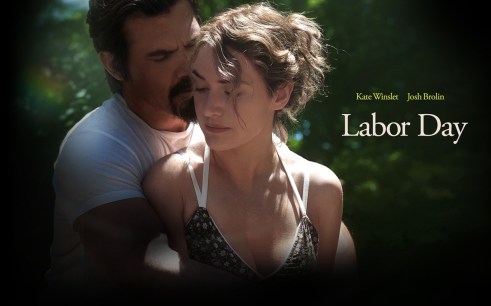
LABOR POSTEREven though the plot of “Labor Day” sounds like something plucked right out of Lifetime’s primetime television lineup, I was still optimistic considering the talent involved in the project. I greatly respect Jason Reitman as a screenwriter and a director. It also features Kate Winslet and Josh Brolin – two very capable performers who have done some great work during their careers. But I approached the film with a level of skepticism. Could Reitman deliver an intelligent romantic drama or would it be formulaic mush befitting a Harlequin novel?

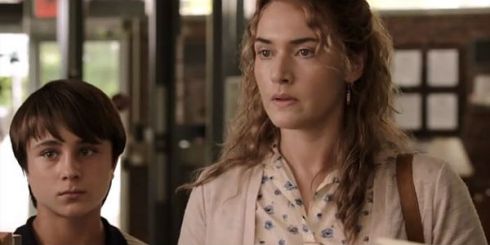
First the story. The film takes place in the fictional town of Holton Mills, New Hampshire during a hot Labor Day weekend in 1987. 13-year old Henry (Gattlin Griffith) is a sweet and responsible boy who takes care of his severely depressed single mother Adele (Winslet). A number of terrible misfortunes have left her an emotional wreck so much so that their once-a-month trips to the supermarket triggers her anxiety. During one of those trips they encounter an escaped and injured felon named Frank (Brolin) who “convinces” them to drive him to their home. Once there he hopes to lay low until his wounds heal and he can skip town.
LABOR1

As every trailer and television commercial has already shared, Frank isn’t a terrible guy. We get some threatening vibes from him, but as escaped convicts doing time for murder usually go, he is pretty docile. He quickly connects with Adele and Henry, filling all sorts of fatherly and husband-like voids in their lives. He begins fixing things around the house, he teaches Henry how to throw a baseball, and a romance is sparked with Adele. The three create a beautiful fantasy-like world within the homeplace, but right outside is the reality of Frank’s past and his status as a wanted man.

In lesser hands this could have ended up a mushy, clichéd mess. Fortunately Reitman handles the material in a way that keeps that from happening. But not completely. There are a few incredibly sappy bits that hit us head-on. For example there is one scene where Frank reveals his culinary aptitude. In it we get a sequence ripped straight from the signature scene in “Ghost” except here the clay is replaced by peaches. We also get some schmaltzy lines of dialogue such as Frank saying in just the right romantic tone “I’ve come to save you Adele”.

There are also a couple of narrative choices that didn’t really work for me. There is an odd little diversion that gets into Henry’s pubescent struggles. Through it we meet an eccentric young girl who serves as his introduction to puberty. Both she and the entire story angle is underdeveloped and tacked on. We also get the old tried-and-true method of telling Frank’s backstory through a series of random flashbacks. They get the job done but it is a pretty conventional approach.

LABOR2

But despite all of these jabs I’ve thrown its way, “Labor Day” still manages to work. Other than the few hiccups, Reitman creates a small-scale intimacy that I connected with. Most importantly he gives us three main characters that we genuinely care about. This is important because when the film stumbles I still wanted to stay with these characters. I also love how Reitman uses the camera. He frames some beautiful shots and I love his visual perspective. And of course there are the two lead performances. Winslet has always been great at playing women in some form of anguish. Here she does it again with striking authenticity. Brolin’s rugged looks and charming sincerity are perfect for the role and helps their chemistry.

So clearly “Labor Day” has some issues but it also has some undeniable strengths. It can be a little too sappy and the melodrama can be extremely heavy. But it also has a sweet story with a lot of heart at its core. It all comes down to your ability to just go with it and get lost in the story. If you’re able to do that there is enough here to like. If you can’t then more than likely the film’s flaws will be all too glaring.

VERDICT – 3 STARS

REVIEW: “Lee Daniels’ The Butler”

BUTLER POSTER

Lee Daniels’ 2013 drama “The Butler” is very loosely based on the life of Eugene Allen, an African-American man who served as a White House butler for 34 years before retiring in 1986. During those years Allen served under 7 different presidents and became a beloved member of the White House staff. “Lee Daniels’ The Butler” is built on these handful of facts but goes on to invent its own story which is sometimes too overt and preachy but at other times intensely powerful.

In the film Cecil Gaines (Forest Whitaker) is the main character. His life is quite different from the real life of Eugene Allen. Cecil grows up on a cotton plantation and endures plenty of horrors. But a series of fortunate events sees him eventually being hired as a butler to the White House during the Eisenhower administration. During his years at the White House huge nation-changing events occur which not only effect the presidents he serves but his family at home.

Butler2

Speaking of his family, Lee Daniels and screenwriter Danny Strong go heavy on the dramatic family dynamics. His wife Gloria (Oprah Winfrey) is a boozing shrill whose attitude can change in a second. His oldest son Louis (David Oyelowo) is a disgruntled young man who would rather be proactive in the fight for equality. His youngest son Charlie (Elijah Kelley) is the fun-loving baby of the family who enlists to go to Vietnam. They are all built for high drama and we get plenty of it. Some of it really works on an emotional level. Other times it feels contrived and utterly predictable.

The film seeks to create a historical profile chronicling race relations in the United States. Much of this is done surrounding the Louis character. He ends up going to a college down south where he partakes in various action groups. This leads to protests, arrests, and even encounters with the Klu Klux Klan. There are moments where the tension is incredibly well developed and the discomfort of what you’re watching is powerful. But there are also a few things that I couldn’t quite shake. For example Louis happens to be present at so many of the events that made headlines from the Alabama bus firebombing to the assassination of Martin Luther King, Jr. His presence certainly helps out the story but feels more or less like plot devices.

THE BUTLER

But it’s Cecil who is the real attraction and Whitaker is amazing. He is the real heart of this picture and watching him age as the film moves forward makes you feel as if you’ve been on a journey with him. It is hard to gauge at times what Daniels thinks of the character but I thought he was compelling. I also loved the work of David Oyelowo. The 37-year old actor actually first appears as a teenager and is very convincing. But he’s even better as his character springboards into some of the film’s more powerful scenes. The supporting cast is strong and features Cuba Gooding, Jr., Terrence Howard, Lenny Kravitz, and Vanessa Redgrave just to name a few. Then there is the unusual assortment of actors who play the presidents. The strongest performances come James Marsden who plays Kennedy and Alan Rickman who plays Reagan. Perhaps the weakest is Robin Williams who is oddly cast as Eisenhower.

Even with the film’s ambition and deeply moving moments, “The Butler” still comes across as a big Hollywood piece. That’s not always bad. There are several big moments that work very, very well. But the further I got into the movie the more it felt scripted. Unlike the more raw and organic “12 Years a Slave”, this film seems to be more dependent on plot gimmicks and melodrama. It also can’t help but get a tad political specifically in the final third of the film. Still, I can’t downplay the great work by the cast led by Forest Whitaker. He’s simply brilliant. I also really enjoyed the smarter and more focused scenes which can be both inspirational and challenging. I just wish we had been given a few more of them.

VERDICT – 3 STARS

REVIEW: “Lords of Dogtown”

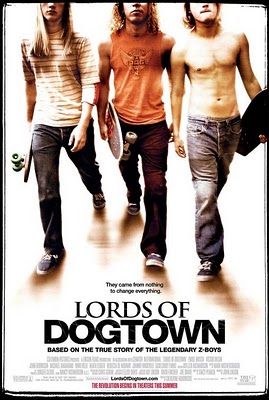
Dogtown posterOn the surface “Lords of Dogtown” isn’t a movie that would normally appeal to me. But underneath my speculative blanket of low expectations lies an entertaining and compelling story based in a world that is totally new to me. And while it does fall victim to a few missteps in its second half, “Lords of Dogtown” ends up being a well made biopic of sorts that features some really good performances.

The film is set in Santa Monica, California during the early 1970’s and follows three boys who become skateboarding legends. Stacy Peralta (John Robinson), Tony Alva (Victor Rasuk), and Jay Adams (Emile Hirsch) are young teens who love to surf and skate. They are encouraged to try out a new skateboard designed by a local surf shop owner and board designer Skip Engblom (Heath Ledger). They form a team under Skip’s leadership and begin taking area competitions by storm. This leads to a level of success and pressure that the boys never expected.

As I mentioned “Lords of Dogtown” is a biography. Known as The Z-Boys, Peralta, Alva, and Adams gained celebrity in their local community and have been catapulted to legendary status by those who know skateboarding. As with every biopic there is that question of what is accurate and what was added. But it’s interesting that the story was written by Stacy Peralta himself which I think brings a lot of life to the film. I found a clear and evident personal connection brought to the characters that I attribute to Peralta. From their early mischievous troublemaking to their later struggles brought on my conflicting personalities and fame, the characters feel real and authentic, at least through most of the film.

I also give a ton of credit to director Catherine Hardwicke. Her presentation of this wild and frenetic world is spectacular. Her cameras are always catching great shots through cool movements and clever angles. She also does a wonderful job of making you feel you’re in that era. The outfits, the cars, the lingo, the fantastic soundtrack – it’s all used seamlessly to recreate a highly believable 1970’s. It’s one of the movie’s strongest points.

DOGTOWN

The performances from the three young stars are also impressive. They each handle the material very well as they take their characters through stages of adolescent playfulness, poor decision making, troubled home life, and more. Of the three it’s Hirsch who shines brightest. Unfortunately all fall victim to a few missteps in the writing later in the film but overall they’re very good. But for me the real star was Heath ledger. He is brilliant as Skip Engblom – a complicated and layered character to say the least. Ledger loses himself in the performance and he owns every scene he is in. In fact, an acquaintance of the real Skip Engblom stated that it was eerie how accurate and precise Ledger’s performance was.

Now if only I could end the review here and say that “Lords of Dogtown” is a perfect and flawless movie. Unfortunately I can’t. Everything in the film clicks right up until the third act. To be honest, it’s hard to put my finger on where things stray off. But things do start to feel a bit conventional and the story direction feels a bit fabricated. The authenticity that fuels most of the film gives way to a handful of plot devices that just felt off. It suddenly begin to feel like a movie, so much so that I begin questioning some of the things from earlier in the movie.

“Lords of Dogtown” does lose some steam towards the end. Yet as the credits were rolling I realized how much I liked the film. It may feel a little too polished for some and a little too abrasive for others. But I found it easy to overlook the problems and embrace the compelling story of these three friends. And considering how low my expectations were, well lets just say that made it all the more enjoyable.

VERDICT – 3.5 STARS

Classic Movie Spotlight: “Le Samourai”

Classic Movie Spotlight

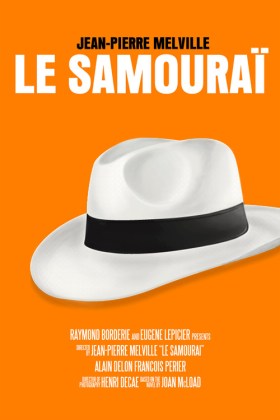
SAMUROI PosterLe Samourai” begins with a perfect tone-setting scene. As the opening credits flash by we are treated to a wide still shot of an old meager apartment saturated in dark and gloomy grays. At the center of the shot is a bird hopping around in its cage. And almost unnoticeable is a man laying on his bed blowing gentle bursts of smoke from his cigarette. He blends in perfectly with his shadowy, unassuming abode. This scene, like the entire movie, could be descibed as spellbinding. It captures our attention and keeps us absorbed through its quiet and meticulous artistry. It’s the perfect opening.
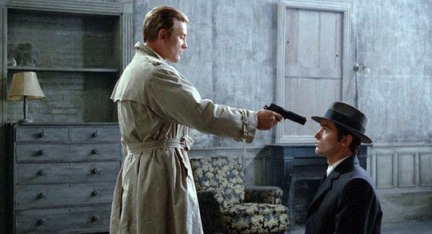
After the final opening credit the man rises from his bed fully clothed. He walks to the door of his apartment stopping only to put on his khaki overcoat and to carefully place and adjust his gray fedora on his nicely combed black hair. We immediately sense that he was waiting for a specific time and that he has something important to attend to. His name is Jef Costello (Alain Delon) and he’s a pretty tough cookie. We quickly learn that he is a hired killer and he’s very good at his job. There’s a precise and proven procedure that he follows and he takes us through it step by step.

He leaves his apartment building and moves through the streets of Paris before furtively stealing a car. He gets the plates changed, new papers, and a weapon. After that he gets his alibi in order by visiting the beautiful Jane (played by Alain’s real life wife Nathalie Delon). After that he’s ready for what should be a quick and clean contract. He heads to Marty’s nightclub where his target is located but this turns out to be a tougher job than he anticipated. A police roundup, double-crossing, and a ton of heat tests Jef like never before.

“Le Samourai” was directed by the great Jean-Pierre Melville. Melville, who would only make three more films after “Le Samourai” due to his untimely death at age 55, was a lover of 1930’s and 1940’s American crime pictures and you can see those influences in much of his work. But Melville would add his own stylistic twist to his storytelling which would go on to influence new generations of filmmakers. Melville was also a fan of Alain Delon and he used him in his films whenever the opportunity presented itself.

LE SAM 1

Delon is perfectly cast as Jef Costello. Delon was a handsome and popular actor whose stone-faced expression and scarred chin gave him the look the part needed. In fact he never smiles throughout the entire film. He’s all business. Delon was born in a suburb of Paris and was an unruly fellow through his childhood and even into his French military service. That changed when he was finally discovered by a talent scout while on a trip to Cannes. I can’t help but think that his past may have contributed to his sleek and tempered performance.

There are so many great touches and techniques in Melville’s direction and he gives us several unforgettable scenes. For me none are better than a fascinating sequence on the Paris Metro. The police decide to tighten the screws on Jef by monitoring his every movement. Jef who knows the Metro like the back of his hand heads underneath the city in an attempt to lose his tail. But undercover officers are everywhere relaying his movements from train to train. Jef struggles between awareness and paranoia as he tries to decipher who is tailing him as he skips from one Metro stop to another. It’s a brilliantly conceived and constructed sequence.

It was hard for me not to be enthralled with “Le Samourai”. The sparse dialogue is carefully reserved for specific scenes and the camera tells a lot of the story. I can see where that approach may lose some people but for me it was clever and effective. It took me a while to get around to seeing this film and that’s a shame. It’s a stylish yet classic cinema piece that has had it’s share of imitators since its 1967 release. If you haven’t seen it, don’t wait as long as I did.

VERDICT – 4.5 STARS

REVIEW: “The Lone Ranger”

Lone Ranger poster

“Pirates of the Caribbean” set in the old west. It’s an unavoidable comparison. It’s also a very accurate description of Gore Verbinski and Jerry Bruckheimer’s “The Lone Ranger”. Johnny Depp again takes center stage and is the ringleader of this wacky and sometimes absurd action adventure. The ingredients are all here. A charismatic and eccentric lead, a fun and action-packed story model, and a filmmaking team who has experienced success before. Maybe that’s why the end result is so disappointing.

As a kid I loved the old television reruns of The Lone Ranger starring Clayton Moore and Jay Silverheels. Well let me say that it didn’t take long for me to see the mammoth sized differences between this film and the great original material. I mean to call this film a reimagining would be a gross understatement. There is almost no similarity between these film and the classic story other than the name and some of the basic cosmetics. There is the white hat and white horse. There are silver bullets and the black masks. There are also a few familiar names and familiar plot points. But you’ll be hard pressed to find many other resemblances. Who knows, maybe that’s where the first of the film’s many missteps begins.

Lone Ranger 2

Now I wasn’t expecting this to be an ultra-serious tribute to this classic character. Again this is from the makers of “Pirates of the Caribbean”. But I also didn’t expect it to be so drastically different and so blasted silly. It starts with the Lone Ranger character himself. Armie Hammer seems completely lost at times playing a character who is a bumbling oaf from the first time we see him until the final credits. The character has good intentions but he’s a far cry from the heroic masked administrator of justice I was hoping for. Hammer’s performance doesn’t help. He struggles through a ridiculous and sometimes numbingly lame script that drags him through a plethora of slapstick and oddball humor that admittedly works on occasions. But more often than not it lands with a thud and Hammer just can’t sell it.

The nuttiness isn’t just confined to Hammer and the lead character. Johnny Depp’s Tonto is in many ways a Native American Jack Sparrow. He channels his famed pirate character in a variety of different ways and I found myself laughing out loud on several occasions. But he also has his share of ludicrous, over-the-top moments. And that can be said for the entire film. It has several eye-rolling moments that are so insanely absurd that they’re impossible to digest. But it also sharply turns in other directions. “The Lone Ranger” has some jarring tonal issues. One minute horses are standing up in trees wearing cowboy hats and the next has a character cutting out and eating a human heart. The movie is literally all over the map.

But perhaps it’s biggest sin is that it’s just so boring in the middle. It starts with a some promise and there are hints of a good story throughout the picture. But soon the film bogs down in a mire of drab and pointless plot. There’s an underwritten and poorly serviced romance. There are throwaway characters such as Helena Bonham Carter’s ivory-legged brothel head whose story would better serve on the cutting room floor. Then there is the film’s general snail paced way of telling the main story. It takes way too long and it becomes a test of endurance just to make it through the arduous 2 hours and 30 minute running time.

Lone ranger 1

But I have to say that the big finale saves the film from being a total disaster. The huge set piece is quite the spectacle and I remember perking up the moment that the William Tell Overture suddenly kicked in. The ending almost feels like its own little short film. It doesn’t feel anything like a Lone Ranger sequence and there isn’t a semblance of realism to be found. But it is insanely entertaining if you can accept its cartoonish and exaggerated approach and go with it. For me it was easily the best part of the film even with its absurdities.

There are some beautiful locations and some of the action is really good. There are moments where the wacky humor works very well. I also enjoyed seeing an assortment of my favorite supporting actors (William Fichtner, Tom Wilkinson, Barry Pepper, and James Badge Dale) even if their roles aren’t particularly well written. But in the end “The Lone Ranger” loses itself in its overbearing insanity and bloated, uneven plot. It never feels like a western and it never knows when to end. What really stinks is that this could’ve been a really good summer movie. Instead it’s $250 million dollars worth of mediocrity and a waste of some really good talent. I may be wrong but I would think Disney would want more from such an investment.

VERDICT – 2 STARS

“Life of Pi” – 3.5 STARS

LIFE OF PIE POSTER

“Life of Pi” is a movie I could never get excited about seeing. During several trips to the theater I tried to muster up enough interest to cause me to see it but it was tough. I wasn’t convinced of the story and I’m not the biggest fan of Ang Lee. It finally took strong reviews from several of my movie blogging buddies and the large number of Oscar nominations it received to get me to check it out before it left the big screen.

“Life of Pi” is based on Yann Martel 2001 novel which was considered by many to be an unfilmable book. The project passed through the hands of several different writers and directors before finally resting with Ang Lee directing and David Magee handling the script. This was a highly ambitious work requiring a clear vision and a large number of special effects artists to make it the jaw-dropping visual experience Ang Lee was shooting for. There’s no doubting that this is a major cinematic accomplishment and even though I may not have responded as strongly as others, I was still very impressed with what the filmmakers were able to do.

“Life of Pi” is a story of religion and faith. It’s not a story of a religion or a specific faith. No, it plays it safe by just speaking to the power of faith in God while never clearly defining the God it speaks of. I guess you could say that the movie isn’t in the business of proselytizing and it steers clear of that through the very tidy character of Piscine “Pi” Patel. The movie begins with a novelist, hungry for inspiration for a new book, visiting an adult Piscine (Irrfan Kahn) after being told he had a good story to tell. Piscine begins sharing his incredible story which we see through flashbacks.

LIFE OF PIE

We first see Piscine as a child living at the zoo ran by his parents. He changes his name to Pi after facing a year’s worth of ridicule over his real name from his classmates at school. Pi grows up to be a very smart and spiritual young man. At 13-years old, he is introduced to Christianity which he adds to his Hindu upbringing. Later he adds Islam into the mix to complete his unique theological perspective. Pi’s father wants him to be more of a rationally thinking person and ends up teaching Pi some lessons that change his view of the world. At age 16, Pi and his family are forced to close down the zoo, sell their animals, and move to Canada. They hop aboard a Japanese freighter with some of their animals in tow and head across the Pacific.

While at sea a monstrous storm hits which capsizes and sinks the huge vessel. For me this was one of the most visually stunning sequences in the entire picture. Pi manages to get to a life boat but his family and everyone else onboard are killed. But he’s not alone on the small boat. A crippled zebra, a baboon, a vicious hyena, and a huge bengal tiger known in their zoo as Richard Parker are also with him. The natural chain soon kicks in and Richard Parker and Pi are the only two remaining. The bulk of the film follows the two in their attempt to survive. Suraj Sharma plays the 16-year old Pi and he is really good. Sharma went through a lot of physical preparation for this role including ocean survival training. He also had the tricky task of acting with and reacting to a tiger that wasn’t there. It’s a great performance.

The movie becomes one part survival story and another part spiritual journey although I would argue that the spirituality takes a backseat until the end of the picture. It becomes more of a subtle and subconscious component of the film as things move forward. The relationship between Pi and Richard Parker becomes the driving force of the story. They begin as predator versus prey but soon becoming territorial enemies. It’s pretty fascinating to watch Lee and Magee take both of these characters down to the most basic animalistic survival instincts. You would expect it from Richard Parker but Pi finds himself fighting against these impulses. He learns it will take more than that if they are to survive their ordeal.

Life of Pie 2

A lot has been said about the visual experience that “Life of Pi” provides. I have to admit, at times it can leave you speechless. There are some beautiful shots in the film soaked in vivid colors and framed with such imagination. The animation involved in bringing Richard Parker to life is something you just have to see. I was blown away. But I have to say what I liked in the film could have been done without 3-D. Now don’t get me wrong, the 3-D is better than 90% of the stuff that comes out today. But after all I heard, I expected something that would knock my socks off. It does have a handful of dazzling 3-D moments but I think the movie would be just as visually stimulating in bright and clear digital.

I do have another gripe. I couldn’t help but feel the movie begin to lose me a little after Pi and Richard Parker had been lost at sea for a while. It seems like the movie took too much time in progressing their relationship and moving towards the finale. The survivalist element was quite good but eventually I did start hungering for some type of conclusion. But when it did come to an end, I felt it wrapped everything up in a smart, emotional, and thought-provoking way.

So while I may not be as crazy about “Life of Pie” as some of my moviegoing friends and the Academy, I still really appreciate what Ang Lee was able to accomplish. There’s a lot of creativity and skill on display. And while I felt the story did play it safe, it also asked some questions that many movies seem afraid of. That’s something else I can appreciate. “Life of Pi” wouldn’t have cracked my top 10 list of 2012 movies, but it’s a very good film and I am really anxious to revisit it.