“TO ROME WITH LOVE” – 2 STARS

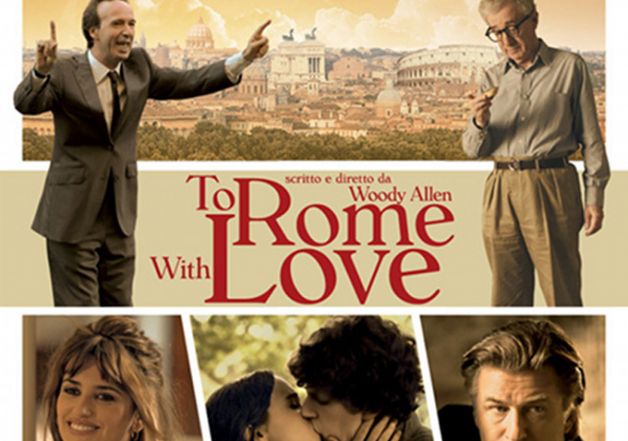
I’ve never been a big Woody Allen fan. But my appreciation for his filmmaking grew with last year’s amazing “Midnight in Paris”, a fantastic film that was wonderfully written, genuinely funny, and purely magical. Allen’s European tour continue’s with “To Rome With Love” yet another romantic comedy taking place in one of Europe’s most beautiful cities. “To Rome With Love” is a collage of individual stories about a number of different people and their relationships, their predicaments, and their quirks. It starts by capturing some of that same magic that made “Midnight in Paris” such a strong film but the second half of the movie runs off the rails and the result is an uneven and ultimately disappointing result.

The different unconnected stories battle for screen time and all start on the right track. In one, Haley (Allison Pill), an American tourist visiting Rome meets, falls in love with, and is soon engaged to a local hunk named Michelangelo (Flavio Parenti). After her parents fly over to meet his parents, her father (Woody Allen), who compares his recent retirement to a premature death, thinks his career is rejuvenated after discovering Michelangelo’s shower singing father (Fabio Armiliato). In another story, Roberto Benigni plays a mundane and predictable husband and father who suddenly becomes the object of immense fame and notoriety over nothing more than what type of underwear he wears and how he likes his toast.

In yet another story Alec Baldwin plays John, a middle-aged architect back in Rome visiting the neighborhood where he once lived as a young man. He bumps into Jack (Jesse Eisenberg), a young architect living in Rome with his girlfriend Sally (Greta Gerwig). Their relationship is strained when her best friend Monica (Ellen Paige) flies in to visit from the states. John follows Jack around everywhere sounding off warnings about his budding relationship with the flakey Monica. And then there are the reserved small-town newlyweds (Alessandro Tiberi and Alessandra Mastronardi) who arrive in Rome where the husband hopes to get a job from his wealthy family. Through several off-the-wall events, the two are separated in the city and each find their love for the other challenged by the people they meet including a  prostitute played by Penelope Cruz. This was easily the weakest story of the four.

These four storylines stay within their own individual walls and they never intersect with each other. As I mentioned they each start strong and Allen packs a lot of good laughs particularly the first half of the movie. At first I really thought Allen was doing something clever and crafty with the four stories. The film addresses an interesting array of issues and the characters are actually quite intriguing up to a point. But things begin to slowly turn sour and not only does Allen’s story fly wildly out of control but many of his characters become pretty pathetic individuals who depict the movie’s warped and cynical view of love, devotion, and relationships. Several of the characters are faced with sexual temptations and ultimately fall prey to them, some with almost no meaningful struggle of conscience. Other storylines become preposterous which is ok if you’re going somewhere with it. And while I definitely laughed at some of the over-the-top gags, keeping my loosely attached interest intact  hinged on the idea that Woody was doing more with these self-indulgent characters and outlandish situations than what we were seeing. As it turns out he really wasn’t.
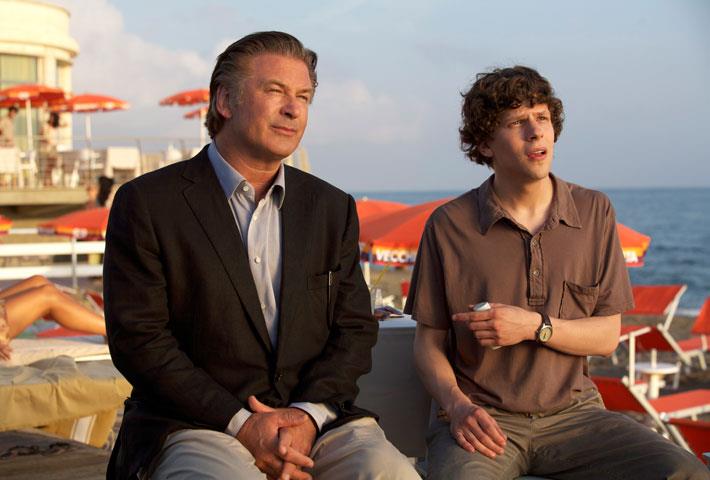
As I’m sure you noticed, Allen still has a knack for attaching great talent to his productions. There’s not a bad performance in the entire film and the actors almost pull it off even when the material goes south. Woody Allen himself delivers some of the film’s biggest laughs while portraying the same neurotic and pessimistic character as in his other roles. Speaking of neurotic, but on a much smaller scale, I also really enjoyed Eisenberg’s performance as well. But the biggest star of the film may be the city of Rome itself. Allen truly has an affection for Rome and he goes to great lengths to show its history, beauty, and romantic charm. While Rome certainly doesn’t take on main character status as Paris did in “Midnight in Paris”, it’s still a key ingredient in giving the movie the romantic vibe its shooting for. In fact, for me the movie loses most of its sense of romance with the exception of the charming city that’s present in almost every scene. Even when I was growing detached from the stories, Allen’s camera would capture a location in Paris that sucked me back in.

“To Rome With Love” is truly a story of two halves. The first half of the movie was an absolute blast even though some of the four stories were more interesting than others. But in the second half of the movie I sat in the theater noticing that I hadn’t laughed in some time. As I slowly lost interest in the characters I began noticing that Allen really wasn’t going anywhere with the film. There’s no clever or memorable twist. It spits and sputters to its finale and by the end I was asking myself how Allen could have made two halves so totally different. I also wasn’t all that interested in Allen’s seemingly loose ideas of love, fidelity, and trustworthiness and in this case it hollowed out his characters with the exception of those in Haley and Michelangelo’s story. For some, the spectacular location and the number of funny moments will be enough to carry the picture. But for me it was terribly uneven and it ends up tearing down everything it itself creates. In fact, “To Rome With Love” feels like a film that needed another year of writing and production. The rushed results were nothing short of disappointing.
REVIEW: “Thor”

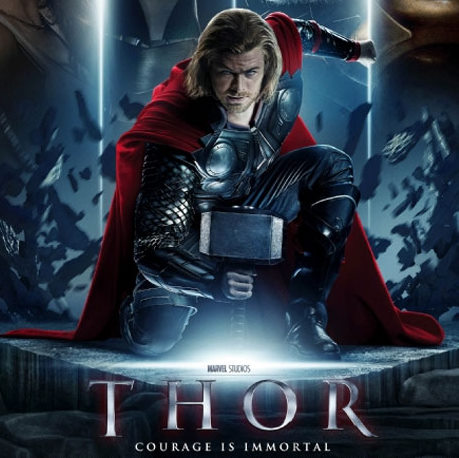
The summer of 2011 was all about superheroes. The summer movie season started with “Thor”, the first of four superhero film’s that were released between May and July of 2011. The idea of a Thor movie changed hands multiple times but Marvel Studios would finally green-light the project after the strong success of the Iron Man film. “Thor” was another movie that led to this week’s much-anticipated Avengers movie.

Of the four big superhero releases that year, I always felt “Thor” had the biggest chance fir failure. While I understood how a great picture could be made considering the wealth of quality source material available, I couldn’t help but question how it would look on-screen. I was thrilled to see that it’s a cleverly crafted film and Marvel Studios did a nice job placing it in the hands of director Kenneth Branagh. Now Branagh wasn’t the first name that I thought of when it comes to directing superhero movies. He’s better known for his Shakespeare movie adaptations but don’t let that scare you away. He does a great job here with some tricky material.

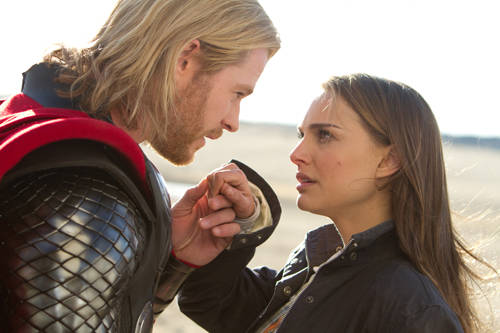
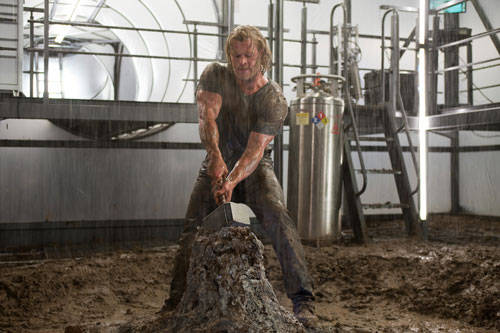
Australian actor Chris Hemsworth plays Thor, the tough but brash god of thunder and heir to the throne of Asgard who is banished to earth after bringing war to his home and losing favor with his father, Odin (Anthony Hopkins). Thor’s banishment opens the door for his brother Loki (wonderfully played by Tom Hiddleston), also known as the god of mischief, to rise to power. Upon crashing down to earth, Thor is found by a group of scientists led by Jane Foster (Natalie Portman) who can’t determine whether Thor is from another “realm” or truly insane. To make things worse, Thor finds himself to be without  Mjolnir, his mystical hammer and ultimate power source, making his ability to return to Asgard virtually impossible.

Perhaps the greatest thing about Thor is that it’s just so much fun. For me personally, it was a fantastic movie theater experience. The cast is having fun and easily passes it on to us. Of course it’s filled with spectacular action sequences and special effects but also the perfect amount of humor that never goes too far. The movie never takes itself too seriously and that’s a key to it’s success. “Thor” sticks close enough to the comic book source material to satisfy any fanboy like me but also has a strong mass appeal that anyone could easily appreciate. I also loved the portrayals of Thor’s great assortment of side characters such as Heimdall, Volstagg, and Sif. Almost everything works well. There are moments that had me wanting to clap and others that had me laughing out loud. It’s that well done.

Hemsworth really brings it with his performance. He proves to be a great casting choice and his bulked up, Norse warrior look combined with a genuinely funny, self-deprecating humor does Thor justice. Portman, fresh off of her Academy Award win, is also very good as Jane Foster. She has a nice, believable chemistry with Hemsworth that’s pretty easy to buy into. Hiddleston’s Loki was one of the trickiest roles (no pun intended) but he pulls it off masterfully and Hopkins is as strong as always. I also enjoyed Jaimie Alexander’s Sif. Unfortunately she isn’t given much to do and I would have loved to have seen more of her in the picture.

There isn’t a lot to say negatively about the film but I do have to mention the 3-D. There are very few scenes that really stand out and at the end of the day the 3-D seems tacked on and pointless. As is the case with many conversions, it adds a darker look to the screen and I could have done without it completely. I also wasn’t really taken Kat Dennings’ Darcy Lewis character. She’s mainly in there for comic relief and honestly some of her lines are pretty funny. But I could think of a few better ways to use that screen time. But these things do nothing to ruin what’s a really good film.

“Thor” was a great start to the summer season and a true accomplishment for fans of the comic book movie genre. It’s strong cast is complimented by a well written story and sharp direction. As I mentioned, it never takes itself too seriously but does have enough drama to draw you in. It trips up in a few small places but as a whole “Thor” was a joy. As a comic book fan it met nearly every expectation I had. It’s an obvious attempt to start yet another Marvel movie franchise and ties in nicely to the upcoming Avengers film. It moves at a perfect pace and maintains a great balance between it’s parallel stories. It a fun, exciting, and often hilarious popcorn picture that I’m ready to see again.

VERDICT – 4 STARS

REVIEW: “To Kill A Mockingbird”

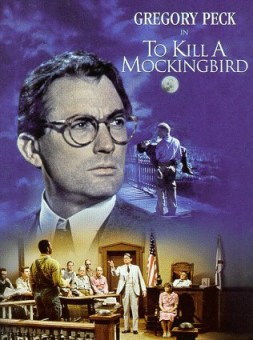
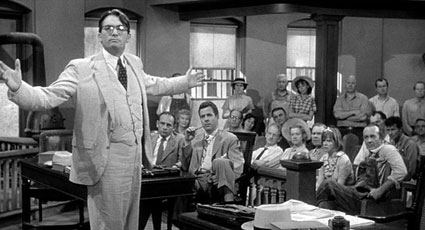
Classic Movie SpotlightMOCKINGConsidered an American movie classic, “To Kill a Mockingbird” is one of the best films to come out of the 1960’s and features what many consider to be Gregory Peck’s finest performance. It was nominated for eight Oscars, a winner of three, and was listed in The National Film Registry in 1995. In many ways “To Kill a Mockingbird” is a time capsule. Each time I watch it I’m transported back to a time that in many ways was kinder and gentler but not without its own open wounds. What’s most impressive is that it manages to do this without ever feeling unimportant or dated. It feels just as powerful and relevent now as it did when I first saw it.
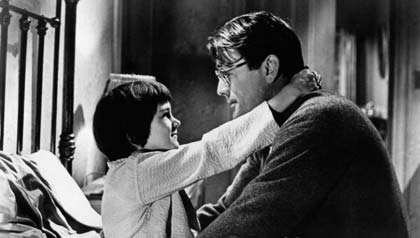
The movie is based on the Pulitzer Prize winning novel by Harper Lee about the small town of Maycomb, Alabama during the 1930’s. Gregory Peck plays Atticus Finch, a town lawyer and a single father of two young children. Atticus is asked to represent Tom Robinson (Brock Peters), a black man who is accused of beating and raping a white woman. Atticus believes in the judicial process and believes Tom to be innocent. But even before the trial, many in the town have already judged Tom to be guilty and tensions soon reach the boiling point.

Peck won the Best Actor Oscar for his performance and many have said it was because of the striking similarity between him and his Atticus character. Atticus is a true man of character and integrity. He stands up for what’s right and tries to instill that same principle in his children. But while the trial and the fallout is a key part of the story, it’s not the main part. The movie’s bigger focus is on Atticus’ children, his son Jem (Phillip Alford) and his daughter Scout (Mary Badham). We first see them in all their innocence, from their imaginative playtime to their light-hearted mischief. Jem and Scout just live their life with a care-free child-like approach that I was really, really drawn into. Perhaps the wonderful portrayal of their innocence helps make what comes later so much more powerful.

At its core, “To Kill a Mockingbird” is about the loss of innocence. Eventually things unfold through the eyes of the children that reveals to them the darker and more troubling aspects to the world they live in. As the town begins to react to the alleged rape and the tensions leading up to the trial date rise, the kids see things that leave them confused and often times scared. The way director Robert Mulligan switches his camera to the children as they’re watching these harsh and disturbing things unfold is beautifully executed yet so heart-breaking. But yet it’s true and authentic. Unfortunately, as kids we’ve all had those moments. Moments when we realized that the world wasn’t just about tire swings and ice cream. Moments that we see the dark side of society and the people around us. But that’s also when the light shines the brightest and for these kids, their father Atticus was certainly a shining light.
There are several other smaller but equally enthralling side stories and side characters in the movie. Jem and Scout make friends with a young boy named Dill (John Megna) who comes to visit his Aunt Rachel each summer. I loved Dill and the three have some great scenes together including their investigations into Boo Radley, a mysterious crazy man who is believed to only come out of his creepy broken-down house after dark. Robert Duvall plays Boo in what was his big screen debut. I also loved Jack K. Anderson’s performance as Bob Ewell, the slimy and disgraceful father of the rape victim. He’s a despicable man and his vitriol hatred makes him an easy character to dislike. Everyone is well cast and the performances are spot-on.

I also loved the way the film visually captured the 1930’s Depression-era South. By the end of the film you really feel as though you know Jem and Scout’s neighborhood as if it were your own. The subtle things such as porch swings, school attire, and southern accents all give the movie such a homey and believable feel. But the movie doesn’t shy away from the deep racial divide and clear bigotry that was a problem at that time. It shows a warped and broken social structure that put personal hatred above justice and makes no apologies. We see this in not only the story itself but also in the striking visual details as well.

 I think my only real issue with “To Kill a Mockingbird” was with the courtroom scene. Now don’t misunderstand me, it was a great extended scene. But it felt to me like something was missing. With a couple of exceptions, there wasn’t a lot of emotion or intensity. It also seemed as though everything moved and flowed perfectly with nothing to buck the plans of the defense or the prosecution. Now I understand that the courtroom scene itself wasn’t intended to be the centerpiece of the picture. But I really felt it could have had a little more “pop”. That said, Peck was fantastic in the scene and his questioning of Bob Ewell and Tom Robinson were fantastic moments in the film.

“To Kill a Mockingbird” does so many things right that it’s easy to overlook the small faults. Peck certainly deserved his Oscar as he is brilliant playing, as many believe, himself. Atticus Finch really touched me especially as a father trying but failing to shield his kids from the sick side of the world they live in. That father/children relationship really, really worked for me. But the movie also had so many other components that resonated with me and that’s another reason it’s so good. It’s a multifaceted story that’s told with a great visual and technical style and that isn’t ashamed to address the deep-rooted problems of that day. It’s been called “timeless” and I have to agree. It never gets old and it still has the same effect on me today as it always has.

VERDICT – 4.5 STARS

“TINKER, TAILOR, SOLDIER, SPY” (2011) – 4 STARS

Bringing “Tinker, Tailor, Soldier, Spy” to the big screen was a pretty tough challenge. The movie is adapted from John le Carre’s complex 1974 spy novel of the same name. In 1979 it was adapted for television in the form of a seven part mini-series. So trying to condense the story down to two hours while maintaining its tense spy thriller feel was quite an undertaking. But hats off to director Tomas Alfredson and screenwriters Bridget O’Connor and Peter Straughan for not only pulling it off but for delivering a deep and enthralling picture.

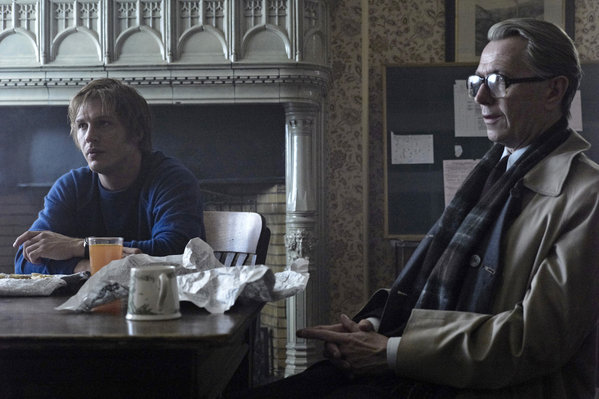
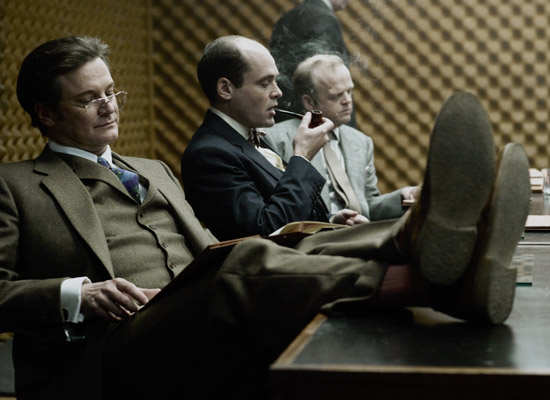
I was first attracted to “Tinker, Tailor, Soldier, Spy” thanks to its stellar cast. The film features a veritable who’s who of british actors. Any movie that features the incredible talents of Gary Oldman, Colin Firth, Tom Hardy, Mark Strong, John Hurt, Toby Jones, and Ciaran hinds (who is actually Irish) is automatically off to a good start. Some of my favorite actors are in this bunch and here they really shine. Each perfectly relay the antsy Cold War paranoia that this type of movie calls for. Not one performance is disingenuous or fake. In many ways you can call this an acting clinic.

The film takes place in the early 1970’s. George Smiley (Oldman) is called back to British Intelligence, also known as “The Circus”, to root out a high level “mole” who is believed to be leaking highly classified intelligence to the Russians. One year earlier Smiley along with his boss Control (Hurt) had been forced out after a botched assignment caused the capture of an agent (Strong) in Hungary. Since Control has been removed, the Circus is being run by Percy Alleline (Jones). Working alongside Alleline is Bill Haydon (Firth), Roy Bland (Hinds), and Toby Esterhase (David Dencik). Smiley puts together a team to help find the mole. An important piece of the puzzle is an agent named Ricki Tarr (Hardy). Tarr is the one who made the allegation of a mole and may have even more information that could bring everything to light. Smiley must sift through the misdirections and false leads to find the identity of the mole and the four Circus higher-ups are prime suspects.

“Tinker, Tailor, Soldier, Spy” rewards patience. It’s a story that unfolds through a slow leak of clues and cleverly timed flashbacks. It’s a complex and layered story that requires a lot of attention and that could be what attracts many people to it (myself included). On the flip side I can see where some may be dissuaded after seeing the story as a muddled, convoluted, and almost laborious exercise. I’m not going to lie and say I completely grasped everything I was seeing. It did take a few rewinds and a little research to really put everything together. In some ways that did take away from the experience but on the other hand everything was presented. While it’s deliberate and sometimes dry, O’Connor and Straughan’s script is tight, structured, and clearly intends to make the audience work right alongside of Smiley.

Another thing you will instantly notice is the careful attention to the look and presentation of the movie. Alfredson’s direction is quite good and the mood and tone is just right. The movie is saturated with blues and greys that creates a cold, sullen atmosphere. The steel-faced agents are in a constant state of seriousness to the point that any smile automatically evokes suspicion from the audience. Oldman’s understated performance is pitch-perfect. Smiley is tired and worn but committed and resolved. His weathered poker-face hides his thoughts and intentions from the other characters and from us. Even Tom Hardy’s strange-looking blonde wig seems perfectly in tune with the picture.

This isn’t a spy movie in the same vein as James Bond or Jason Bourne. I’m certainly no expect of being a secret agent but this feels as real and grounded as any spy movie I have seen. It’s slow-moving and sometimes difficult to navigate but it’s also smart and completely engaging. It’s top-tier cast makes things even better and the movie would be worth seeing just for the wealth of acting talent involved. “Tinker, Tailor, Soldier, Spy” isn’t a film for everyone. But I found myself completely invested even if it did take a little work to get the full thrust of the story.

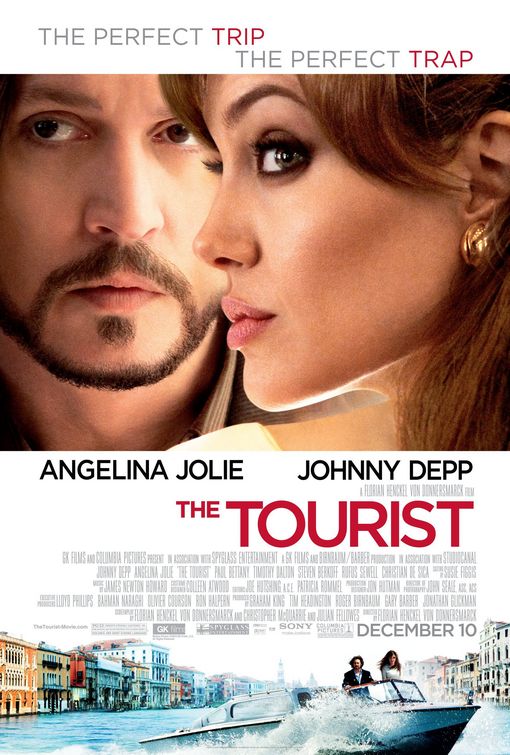
“THE TOURIST” – 2 STARS

You would think a movie starring Johnny Depp and Angelina Jolie, two of the biggest movie stars in Hollywood, would give us fun and charismatic performances even if the material wasn’t the best. Perhaps one of “The Tourist’s” biggest letdown is that it features two of the flattest performances of these two actors careers. Combine that with a rather inconsistent and preposterous story and you have a film that isn’t nearly as good as it should have been.

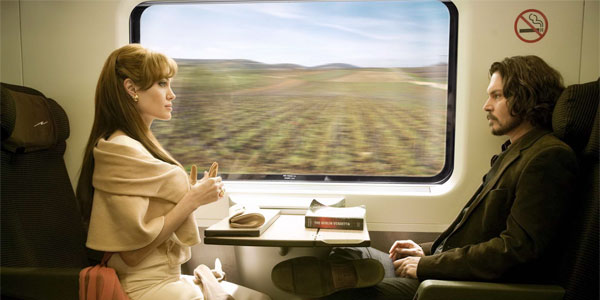
The movie begins with the French police following a woman named Elise (Jolie) who, after receiving a letter from a mysterious man known as Alexander Pearce, hops a train and heads to Venice where the two will rendezvous.  Once onboard she targets and manipulates an American math teacher and tourist named Frank (Depp) who she uses as a decoy to knock her pursuers off track. After arriving in Venice, Frank soon finds himself being pursued by Reginald Shaw (Steven Berkoff), a gangster who has mistaken him for Pearce. Also in the mix is John Acheson (Paul Bettany), an Inspector from Scotland Yard who is after Pearce as well. From there the movie becomes a rather absurd picture that lacks any real pizzaz.

 The story tries to be both a comedy and a thriller but it never fully succeeds at either. It’s attempts at comedy are so underplayed that they are virtually nonexistent. It’s two big twists/revelations do nothing to make it a quality thriller. It’s lack of identity is made worst by the complete lack of chemistry between Jolie and Depp. Both feel like cardboard cutouts and it’s impossible to buy into any real attraction between the two. It’s hard to believe I’m calling a Johnny Depp performance lifeless but here he’s utterly emotionless. Jolie spends most of her time making seductive faces for the camera and seems just as cold as Depp. I don’t want to assume this was just a cash grab especially since these two actors are pretty sought after but it certainly feels like it.

One thing you have to give “The Tourist” is that it’s beautifully filmed by cinematographer John Seale. Whether it be the streets of Paris, the French countryside, or waterways of Venice, Seale captures the sheer beauty of these European locales and I have to admit, it really drew me in. And while the story is full of holes, it’s really quite harmless and there are moments that I found entertaining. But even with its good-looking cast and locations, “The Tourist”  is too shallow, too flat, and ultimately forgettable.

REVIEW: “The Taking of Pelham 123” (2009)

I bet these guys didn’t expect their day to go like this? That seems to be a reoccurring question in Tony Scott’s “The Taking of Pelham 123”, a stylish but sometimes preposterous remake of the 1974 film. At its core this is a pretty formulaic, run-of-the-mill action thriller that takes no chances but also never wastes a moment. It moves at a quick and fluid pace which makes overlooking it’s shortcomings a little easier but not impossible.

“The Taking of Pelham 123” has all the bells and whistles of a Tony Scott production. The quick camera jerks, clever angles, and showy pyrotechnics work well to create an intense environment. In fact often times his camera adds more tension than the screenplay can muster. Scott has a recognizable style and can sometimes be called self-indulgent. He flirts with that label here but as a whole his high-tech machinations work just fine. It often times overcomes the story which is pretty basic material.

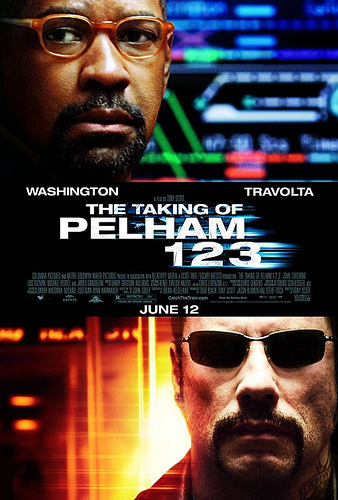
The movie starts with four heavily armed men walking into a New York subway station and taking control the Pelham 123 train. The film won’t do anything to enhance your view of post-911 security. There’s no elaborate well executed plan at work. The hijackers simply walk in and take the passenger-filled train. The leader is a man we come to know as “Ryder” played by John Travolta. Sporting a crew cut and fake neck tattoo, Travolta is clearly having fun with the role even though he goes a little over the top sometimes. “Ryder” soon contacts the Subway Control Center and connects with dispatcher Walter Garber (Denzel Washington), a middle-aged husband and father of two who ends up completely out of his element. Washington has played some rough and tough roles but he also has a wonderful knack for playing these “everyday man” characters. Here he’s subtle yet expressive and I loved watching how he handles the role. John Turturro is good as a head hostage negotiator and James Gandolfini is fine as the mayor even though his character is pretty poorly written.

Pelham

While the story is fast paced and it does have its moments of tension, sometimes it’s just plain silly. For example we get a key scene involving an accidental sniper rifle discharge due to a rat bite and there’s a head-scratching sequence involving the cops transporting ransom money through the city. It’s beautifully filmed but utterly ridiculous. The story is also fairly conventionally and predictable. But the movie is also let down by a really flat and lifeless ending. It seems hurried and it packs absolutely no punch whatsoever.

In spite of the movie’s flaws, Tony Scott manages to pack some entertainment into this linear, straightforward action thriller. Washington and Travolta’s CB radio chemistry is compelling even if they aren’t saying much and Scott’s cinematic style gives the story energy and drives the tension in the scenes that do work. But the sub par material is too much to overcome. I especially hate to see such a strong Denzel performance go to waste but in reality there just isn’t enough here to make this anything more than an average movie.

VERDICT 2.5 STARS