REVIEW: “The Master” (2012)

The last time we saw acclaimed director Paul Thomas Anderson was in 2007 with his sensational drama “There Will Be Blood”. With it he solidified his position as a film critic favorite. Now he’s back with his next movie, “The Master”. As with every other feature film Anderson has made, he both wrote and directed this audacious drama that bounces between captivating and utterly frustrating. There are some award-worthy performances and loads of ambition, just as you would expect from a PTA feature. But while there were moments where I couldn’t take my eyes off the screen, there are others where the story bogs down in the deliberate pacing and slight self-indulgence. Nonetheless Anderson presses all the right critic’s buttons so this will has a good chance to be an awards season contender.

No one can deny Anderson’s filmmaking skills. “The Master” looks every bit of an epic, landmark film. There are a number of scenes that stand out due to their framing and camera work alone. Anderson uses several amazing tracking shots, sometimes shifting focus three or four times while still maintaining a single fluid shot. He also uses several fantastic locations which he captures through his stylish and precise lensing. I also have to mention the way he recreates America in 1950 both narratively and visually. The wardrobes, hairstyles, furnishings, etc. all fit perfectly, right down to the smallest details. Anderson takes no shortcuts on selling the audience on the period and that’s one of the reasons it’s so easy to connect with the story.
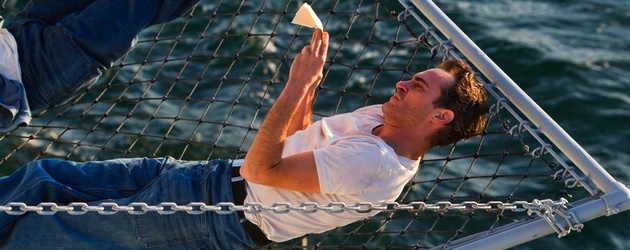
It’s in this 1950 America that we are introduced to Freddie Quell. He’s played by Joaquin Phoenix who gives the performance of his career. While not as breathtaking as Daniel Day-Lewis in “There Will Be Blood”, Phoenix is magnetic portraying a man emotionally scarred from his time in World War 2, or at least that’s what I presume. Freddie’s life is in shambles. He’s a raging alcoholic who resorts to drinking his own concoctions made from paint thinner and any other chemical he can get his hands own. He also has a twisted sex disorder that pops up here and there. His alcoholism is destroying his life and ends up playing an important part in the film. On the other hand, his sex addiction felt terribly underwritten and is only explored by adding a handful of uncomfortable scenes that quite frankly I could have done without. But as I said, Phoenix is brilliant and should be in prime position for an Oscar nomination.

Freddie ends up crossing paths with the charismatic leader of a group called “The Cause” named Lancaster Dodd (wonderfully played by Philip Seymour-Hoffman). Dodd is a self-proclaimed philosopher and intellectual with a steady and devoted group of followers. He also has a way with words which draws Freddie to him and his movement. Dodd takes a special liking to Freddie, at one point calling him his guinea pig but clearly growing more fond of him. Dodd is able to suppress Freddie’s mental issues to the point where Freddie begins to buy into his teachings. But his inner turmoil resurfaces on several occasions making him more and more conflicted.
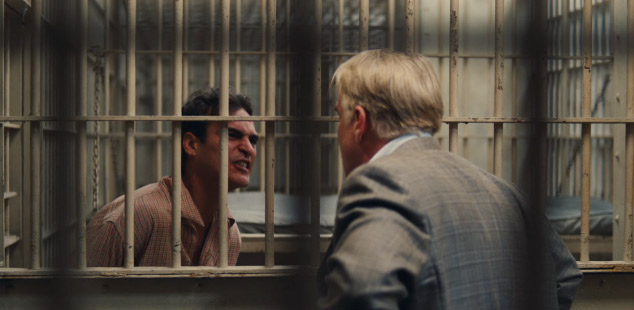
The story often moves with an amazing rhythm and Phoenix and Hoffman share some mesmerizing scenes together. But for such a hyped picture, I was surprised to see the overall lack of plot. “The Master” features some of the best scenes you’ll see in the theaters this year, but honestly, there’s not a lot that happens within the film’s long running time. But a bigger problem with “The Master” is that for the entire film Anderson keeps the audience at arm’s length from what we are seeing. We’re never allowed to fully get to know the characters who truly are the driving forces behind the entire story. Anderson wants us to do a lot of guesswork and come to our own conclusions. But for me, a little less ambiguity and more intimacy with the characters would have been a big plus.

Overall there is a lot to like about “The Master”. Anderson’s style of filmmaking is about as good as you will find and it really stands out here. The movie looks and feels right at home in post-World War 2 1950 and the cinematography will blow you away. The film is also helped by tremendous performances from Phoenix and Hoffman and I didn’t even talk about Amy Adams’ strong work. Expect to hear all of their names when the Oscar nominations are announced. But while Anderson’s story is good, it doesn’t pack the punch that it’s going for. While it’s fascinating to watch these characters, I couldn’t help but want more. That, combined with a few pacing issues and a couple of scenes it could have done without, keep this from being the Best Picture frontrunner many are touting it as.

VERDICT – 3 STARS

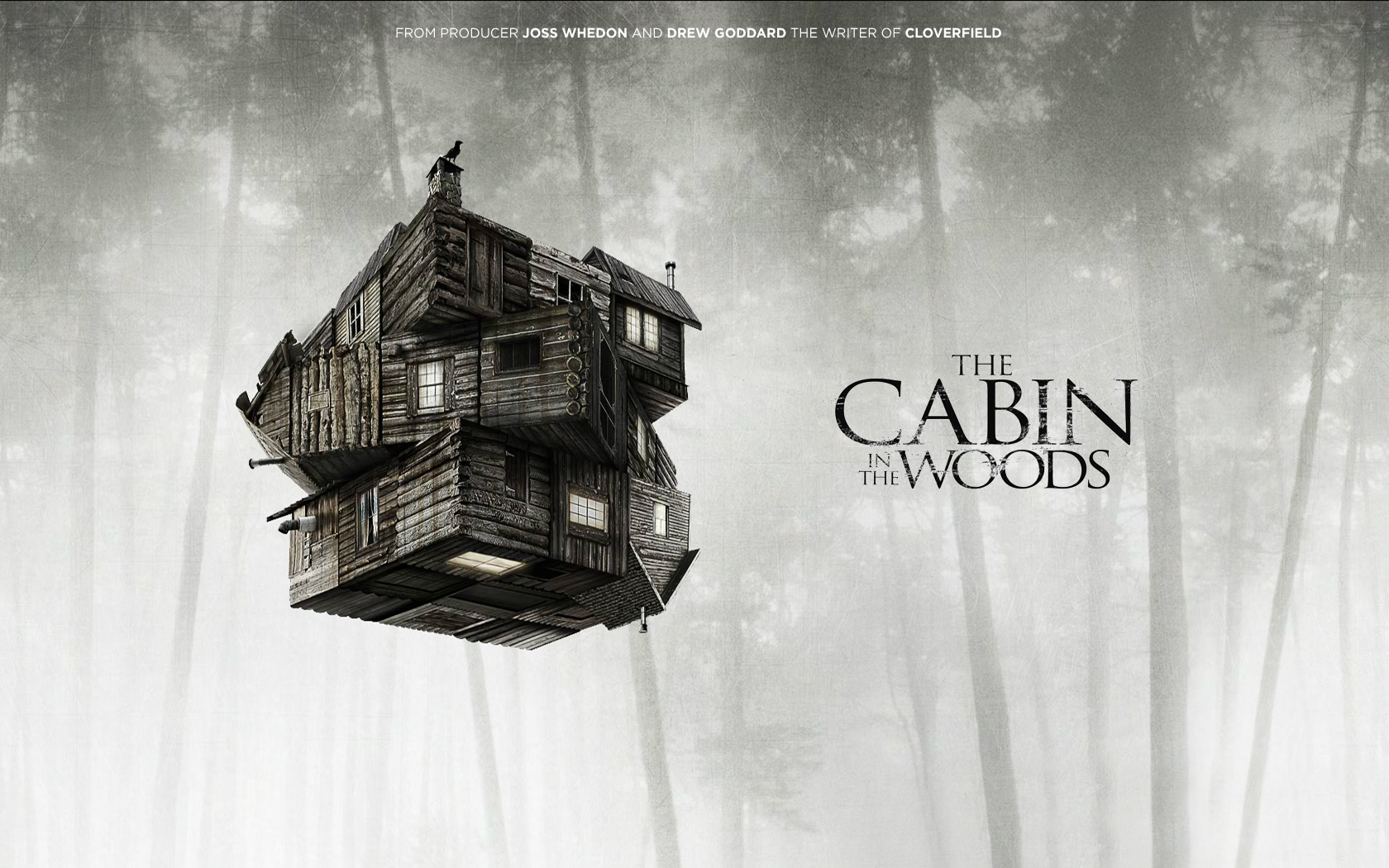
“THE CABIN IN THE WOODS” – 3.5 STARS

I love a good horror movie. But there’s no denying that the horror genre has been struggling and just isn’t as strong as it used to be. Well leave it to Joss Whedon and Drew Goddard to take the genre, turn it on its head, and give it a good shake. Their film “The Cabin in the Woods” is far from conventional even though it certainly starts that way. But the fact is Whedon and Goddard are setting up the audience for what turns out to be a horror comedy that ranges from satirical to a full-blown critique of what the horror genre has become. Goddard directs, Whedon produces, and both write this bit of welcomed freshness that isn’t a perfect film but it certainly works on many levels.

It’s impossible to watch “The Cabin in the Woods” without seeing tips of the hat to several horror movie classics. You’ll also quickly recognize many of the same tropes and devices used in the genre for years. Whedon and Goddard dabble in the familiar territory of slasher movies, zombie flicks, ghost stories, torture porn, and even creature features. But its simply impossible to go into much detail without spoiling the film. Let’s just say that all of these ingredients fit very well into what “The Cabin in the Woods” is trying to do. And trust me, you’ll start out in very familiar territory but things quickly change as the story progresses.

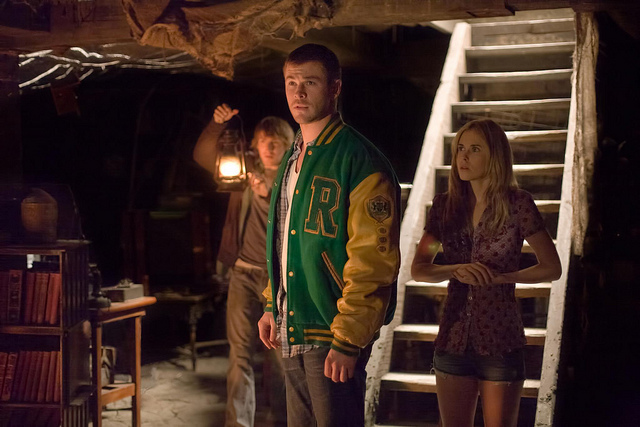
Tell me if you’ve heard this before: five college friends set out to a remote cabin in the woods for a weekend of partying and frolicking. We have the big jock (Chris Hemsworth), the sultry blonde (Anna Hutchison), the studious good guy (Jesse Williams), the dope head (Fran Kranz), and the straight-laced, level-headed heroine (Kristen Connolly). These are all characters we’ve seen over and over in horror films. But here they are used intentionally and with good reason. Obviously their little getaway isn’t going to end well and we get little hints of that along the way. As things begin to go bad, we see these characters making some of the same bone-headed decisions that they always make in these pictures. But the bigger difference here is with the consequences and more specifically who’s behind them. That’s as far as I’m willing to go in describing the story. It’s best to go into the film simply knowing that there is more to it than what you’re introduced to. Just know that things go nuts in the final act and the audience, especially horror fans, will find it an entertaining challenge to process all that we are given.

But the movie does have a few issues that keep it from being a great film. The most glaring issue for me was with the gaping plot holes scattered throughout the story. There were instances where the film changed course while leaving unfinished business behind . There are also a couple of times where certain characters drop off the map. I know I’m being incredibly vague here for fear of spoiling things, but let’s just say the story requires you to sometimes brush aside what seems like useful information. The ending also requires a very abrupt acceptance of what you’re seeing. Don’t get me wrong, it’s lots of fun and it will have you wanting to watch the movie again. But it’s so out-of-the-blue that when the credits start to roll you have to accept what you’ve seen and just go with it.

I didn’t mention one of “The Cabin in the Woods” strongest features – it’s humor. There are some really funny moments in this picture and I found myself laughing out loud on more than one occasion. On the flip side, the movie isn’t scary at all which I found to be a bit disappointing. But then I asked myself if Whedon and Goddard cared if it was scary or not. In the end, this is one part homage and one part critique of a genre that has seen better days. Looking at the movie from that perspective makes it a very satisfying horror experience. And even though it stumbles with its storytelling in a few places, the undeniable freshness, good humor, and blood-soaked final act make it all worthwhile.

REVIEW: “Red Dawn” (1984)

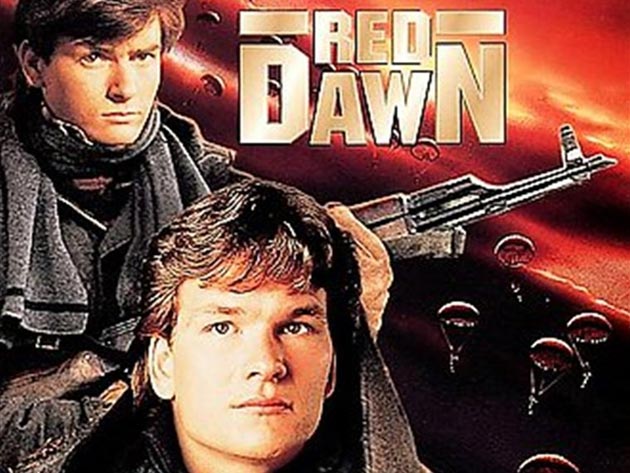
I’m not sure if there was any movie in the 80’s that I watched more than “Red Dawn”. How my VHS copy was able to withstand the multiple viewings during my teen years is beyond me. This 1984 war film from director John Milius is a unique, almost “what if” story anchored in 1980s world politics. With the trailer of the upcoming remake already released, I felt it was the perfect time revisit what was one of my favorite movies of its decade. “Red Dawn” was a popular movie that stirred lots of conversations particularly for those craving something political to harp on. It was also criticized for its violence which at that time was considered heavy. In fact, the movie has the distinction of being the first film to receive a PG-13 rating from the MPAA.

But how is the movie itself? Even more interesting, how does “Red Dawn” hold up after all these years? I thought a cool way to help me determine this would be to watch it with my son and see how he responded after his first viewing. It was pretty telling to see him have a similar reaction to the one I had over 25 years ago. For my son, it was an exciting action movie. For me, it’s still a really good film built around good characters that holds up exceptionally well. For those looking, there are certainly things to nitpick. But I find the film’s few weaknesses easy to overlook considering how well conceived and well structured the movie is. And even after all these years I found myself excited when I was supposed to be excited and emotional when I was supposed to be emotional. For me it still pulls the right strings.

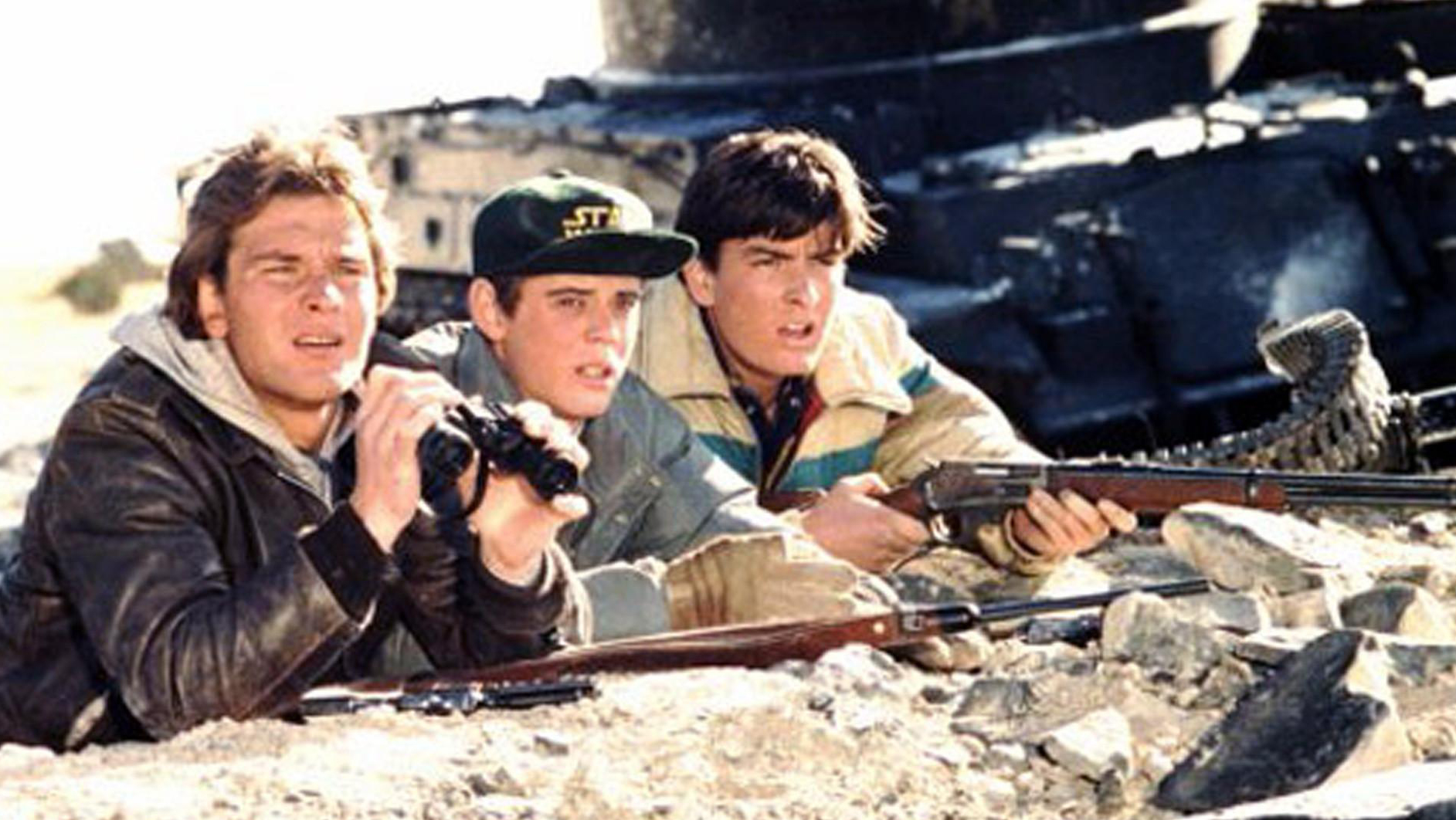
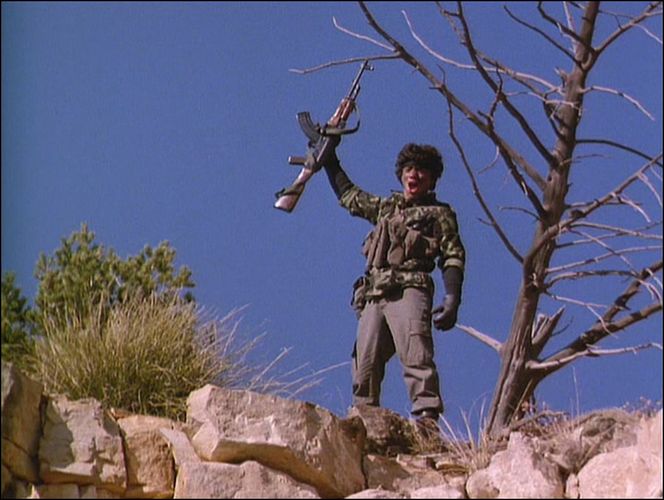
“Red Dawn” begins with one of my personal favorite openings of any movie. It doesn’t waste time and gets right into the meat of the story. In the small town of Calumet, Colorado, Jed Eckert (Patrick Swayze) drops his younger brother Matt (a sane and stable Charlie Sheen) and friend Aardvark (Doug Toby) off at school. It’s just another normal September morning. But later during history class, their teacher notices a large group of paratroopers landing outside. He walks out to see what’s going on and is shot dead as the students watch from inside. The paratroopers then open fire on the school as kids scramble to get away. Jed drives up amid the chaos and picks up Matt and Aardvark along with Robert (C. Thomas Howell), Daryl (Darren Dalton), and Danny (Brad Savage). The boys tear through town and then head for the mountains to hide out.

One of the most compelling things about the story is that these are just kids. We’re constantly reminded that we aren’t dealing with trained soldiers but kids who are suffering through fear, panic, and eventually loss. In fact, after seeing the new trailer, one of my biggest concerns about the upcoming remake is that the kids come across as a cool special ops-like team. But a big part of what propels the original is their fear – fear of their circumstances, fear of losing their families, fear of death. But they are forced to overcome their fears and when the harsh reality of this new war-torn country shows itself to them, they’re forced to grow up fast.

As the movie unfolds, the kids have to fight back. There’s no deeply strategic military influence to their actions. It’s strictly guerilla warfare against what we find out are Russian and Cuban forces. They take on the moniker “Wolverines”, named after the school’s sports mascot, and begin complicating things for the enemy army by attacking caravans, freeing prisoners, and sabotaging strategic checkpoints. The action is very well done and it progresses from bows and arrows and hunting rifles to mounted machine guns and RPGs. But what’s really impressive is how the group progresses. The way it’s presented, I had no trouble believing that these kids had adapted as the stakes got higher. Sure, some of the shouts of “Wolverines” are cheesy, but the action is thrilling and it’s truly pertinent to the story.

The boys end up taking on the two granddaughters of a local rancher, Erica (Lea Thompson) and Toni (Jennifer Grey). At first there is some tension between the girls and the guys but soon they’re fighting right alongside of each other. They also are joined by a United States Air Force pilot (Powers Boothe) whose plane is shot down in their area. He gives them a better understanding of the gravity of the war as well as some much-needed experience that pushes their “operation” a little further. These characters mix in well and it doesn’t take long before you actually feel invested in them as well. They each have their place in the story and I still found myself caring for them especially when things begin to go bad for the group.

The entire idea behind “Red Dawn” can certainly be viewed as preposterous. But there is still a grounded and sincerely human element to the film that doesn’t feel a bit outlandish. Again, the politics of the 80’s and the international tensions of the time plays a key part in setting up the story and understanding them will definitely make the movie feel more real. But overall this is an action picture. It takes an intriguing story built around an interesting concept and some good chemistry and creates a movie that feels very 80’s-ish while also still holding up today. I’m still skeptical about the remake, but I have no qualm with calling the original “Red Dawn” a really good movie.

VERDICT – 4.5 STARS

4-5-stars

“THE FIVE-YEAR ENGAGEMENT” – 2 STARS

Let me start off by saying that I went into “The Five-Year Engagement” at a slight disadvantage. Unlike many people today, I’m not a fan of Judd Apatow, his films, or most of his usual collaborators. Apatow frequently works with the same casts including Seth Rogen and Jonah Hill – two actors that I instantly avoid, as well Will Ferrell who I feel is terribly overrated. This particular Apatow production stars another favorite of his, Jason Segel who’s nowhere near as annoying as Rogen and Hill, but has never really blown me away either. But I was encouraged to give the movie a try after seeing Emily Blunt’s named attached. I think she’s a fabulous and underrated actress who also has a knack for humor. Unfortunately, despite her wonderful performance and occasional hilarity, “The Five-Year Engagement” is a sluggish and often times erratic romantic comedy that had me checking my watch numerous times.

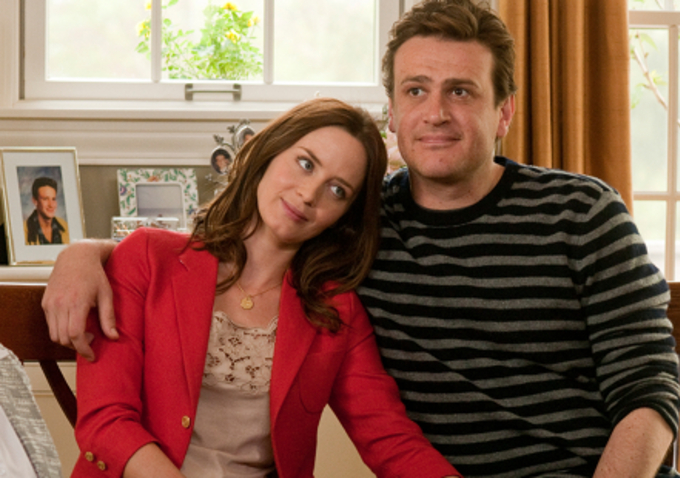
The film was directed by Nicholas Stoller who also co-wrote the story along with Segel. At it’s core it’s a fairly basic rom-com but with genuine promise. Segel plays Tom Solomon a chef at a fancy San Francisco restaurant. Those familiar with Segel will recognize this character from several of his other pictures. Tom is a dorky but easygoing guy. After a year together, Tom proposes to his girlfriend Violet (Blunt), a psychology graduate who is desperately hoping to be accepted by Berkley for doctoral studies. It doesn’t take us long to see where the story is going. The two begin planning their wedding but soon Violet receives a letter saying she has been accepted by the University of Michigan. The two push back their wedding and Tom sacrifices a chance to be the head chef at a new restaurant to relocate to Michigan.

While in Michigan Violet’s career takes off while Tom grows more and more disenchanted with his job at a sandwich shop. A wedge (that you can see coming a mile away) forms in their relationship and soon her career desires and his hatred for living in Michigan leave them questioning whether they were ever meant to be. Blunt and Segel have a nice chemistry even though there were a few scenes where I couldn’t help but question the authenticity of their relationship. Segel gives a solid performance all while hitting the same notes over and over. Blunt is fantastic and her character has more depth and range than any other in the film. There are several times where their jovial playfulness cracked me up. There are also some more serious scenes where the two work off each other exceptionally well. Then there are the few instances where their relationship feels completely manufactured. This can be attributed to what I think is the biggest problem with this film – the writing.

Segel and Stoller’s story runs into a wall at about the 80 minute mark. With a running time of over two hours, “The Five-Year Engagement” lumbers along to the point where I was taking the movie’s “5 Year” title seriously. Segel and Stoller cram way too much into the film, dragging things out and apparently leaving nothing on the cutting room floor. They take the basic plot points and draw them out well beyond what’s necessary. There were several times where I was so ready for them to move on to the next part of the story. They also stray off into some fairly weird directions. For example, in a dark comedy turn of sorts, Tom becomes this deranged mountain man type. It happens out of the blue and is over before you know it. Overall, the plodding pace and unneeded deviations end up squashing whatever charm and affection the movie builds up.

I also struggled with the erratic use and styles of humor. Now don’t get me wrong, there were instances where I laughed pretty hard. Many of these instances were due to some quirky, out-of-the-blue moment that hit just right. But there’s no real flow to the comedy and many of the gags fall flat. I mentioned the dark comedy turns, but there are also dashes of slapstick and the unfortunate and unfunny raunchy gutter humor that Apatow productions just can’t seem to steer away from. I can think of several of these scenes that added nothing to the movie and that could have been sacrificed for a tighter and more concise story.

“The Five-Year Engagement” has the premise for a smart and entertaining romantic comedy but the overindulged writing and poor execution causes it to fall short. It’s a shame because Blunt is wonderful and her performance feels wasted. But I did find some laughs and our couple do have some good moments on-screen. There are also some good supporting roles that help the movie along as well as some rehashed roles that we’ve all seen before. But in the end it’s the writing that lets the movie down and that may surprise those people who are big fans of these guys.

REVIEW: “Fright Night” (2011)

Hollywood is head-over-heels in love with remaking movies from the 80’s right now. So far we’ve had everything from “Footloose” to Total Recall” remade with a modernized story and gloss. Many more already have release dates or are in production. As someone who grew up in the 80’s watching the original pictures, I’m still waiting for one of these recent remakes to really blow me away and make it feel worthwhile.

So along comes “Fright Night”, a 2011 version of the 1985 vampire film that I truly loved. The original was a fun and occasionally creepy horror flick that played around with elements of vampire, werewolf, and haunted house movies. It had its share of old-school special effects and classic horror cheese while also maintaining a thoroughly compelling narrative. So I had a natural curiosity and concerns about the remake. Would the Hollywood modernization process be able to capture what made the original so entertaining? Well, not exactly.

The remake’s story is built upon the clever premise of the original “Fright Night” film. Charley Brewster (Anton Yelchin) and his mother Jane (Toni Collette) live in a small suburb of Las Vegas. An attractive single man named Jerry Dandrige (Colin Farrell) moves into the house next door. Over time we find out that Dandrige is a vampire and Charley, his mother, and his girlfriend Amy (Imogen Poots) are right in his new neighbor’s crosshairs.

There aren’t many other significant ways that this “Fright Night” resembles the original. One of my biggest disappointments with this film was with how little effort went into building more tension between Charley and Dandrige. The original spent a lot of time with Charley trying to convince his mother, friends, and the police that his neighbor was a killer responsible for the disappearances of many area women. This made for several creepy confrontations between the two. This version gives us only a scene or two of this, choosing instead to jump headfirst into more action-based horror that seems specifically designed for 3D rather than deeper storytelling.

Charley’s predicament is so dire that he seeks the help a Las Vegas horror illusionist Peter Vincent (David Tennant). This Peter Vincent is a boozing, profane, and abusive jerk void of any of the sympathetic charm that made Roddy McDowall’s character so memorable. There was nothing at all in this character that was the least bit interesting. To be fair, it’s not that Tennant’s performance is bad. This is a writing issue that’s a direct result of a story direction choice. This is an instance of modernizing a great character from the original story with pretty poor results.

The movie is plagued by several fairly generic characters outside of Charley. Poots is good as Charley’s girlfriend but she isn’t given much to do. Charley’s mom is about as shallow as they come and then there are a couple of his friends that are just thrown in. Then you have one of the first film’s more memorable characters “Evil” Ed (this time played by Christopher Mintz-Plasse). Here he’s actually developed into a fairly sympathetic character before quickly being thrown aside. Farrell is fun and sometimes charismatic, but he’s only asked to talk in a creepy tone, wipe his mouth and lick his fingers after “feeding”.

The special effects were a big part of what made the first film such fun. It had some over-the-top gore but it fit in perfectly with the story. Here the effects are fine although in several places the CGI is clearly evident. And with the exception of a pretty spectacular car chase sequence, there isn’t much that has stuck with me. And this leads into the fact that this “Fright Night” just isn’t scary at all. There are a couple of loud jump scares but in terms of actual creepiness, nope.

I know it seems like I made a lot of comparisons between the original movie and this new version of “Fright Night”. I try not to do that. Maybe I’m just too big of a fan of the original to help myself. But I also think this film has flaws that keep it from being as good as it could be. The decision to spend far more time on horror-based action actually strips the picture of the spookiness that made the first picture so much fun. It’s not boring and there are a few good laughs scattered throughout. There’s also a fantastic cameo from Chris Sarandon (Dandrige from the first film) that really hit the spot. But in the end, I’m still waiting for an 80’s remake to blow me away.

VERDICT – 2.5 STARS

REVIEW: “House on Haunted Hill” (1959)

I’ve recently spent a lot of time concentrating my movie watching on the horror and science fiction movies of the 1950s. This has proven to be a wonderfully entertaining project that’s allowed me to revisit movies I haven’t seen since I was a child as well as see new films that have been a joy to discover. Such was the case with William Castle’s “House on Haunted Hill”, a movie that I had heard of but never had the opportunity to catch up with. Now after finally seeing it, I can honestly say that I was thoroughly entertained. It’s a solid mixture of eerie tension and classic camp presented through a simple yet effective story.

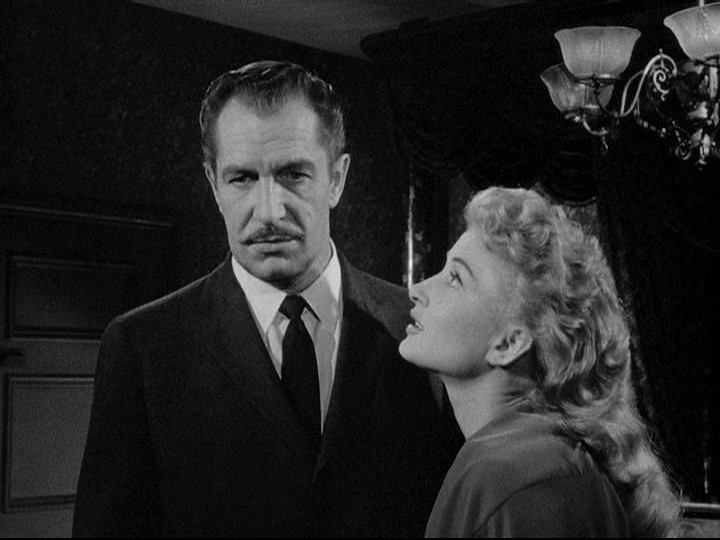
The great Vincent Price stars as a mysterious millionaire named Frederick Loren. Imagine that, Price playing a mysterious character. Loren has rented a house with a very violent history and has invited five individuals to spend the night there. He bribes each with the possibility of making $10,000 each. All they have to do is live through the night. The entire thing is painted to be some type of twisted party for his wife Annabelle (Carol Ohmart). But soon the guests are terrorized by several unexplained occurrences and they begin to question whether or not the house is haunted or if they are in the middle of something much more sinister.

Of course we ask ourselves why these people would ever agree to come to such a creepy place to begin with. But in the opening of the movie, as the five are each brought to the house in their own hearse, we learn that each has their own important need for the money. As the story unfolds, I found myself being suspicious of several of the people while never being able to finger any of them. That’s a mark of good, suspenseful storytelling. Now I have to admit, as with many of these movies I kept thinking of better methods the group could use to ensure their survival. But that’s nitpicking. Afterall, wouldn’t things be really boring if they all used their brains?

The movie has several creepy effects that I must admit were quite gruesome considering the time the movie was released. Admittedly there were also some dated special effects that I couldn’t help smile at, but that were also part of the charm of watching these classic horror pictures. Castle’s inventive techniques were quite clever despite the small budget he had to work with. The atmosphere is pitch perfect and I found it easy to get lost in the spooky old house where the entire movie takes place.

Castle was known for his affection for horror and his numerous low-budget B-movies became a fixture in 1950s cinema. One thing that audiences often times experienced when watching one of Castle’s pictures was some type of theater gimmick. When “House on Haunted Hill” was released, moviegoers were treated to a floating skeleton that floated across the theater during a certain moment in the film. While we don’t get to experience that type of old-school fun when we watch the film, it’s still a highly entertaining piece of classic horror filmmaking wrapped up in a tight, compact 75 minute package.

“House on Haunted Hill” is a great example of how much fun the horror films of that period could be. Sure there’s some cheesy, stilted dialogue, the story is simple, and the effects aren’t going to satisfy someone expecting the best. But it’s a lesson in classic horror led by the master himself, Vincent Price. And considering much of the so-called “horror” that we get today, this was even more refreshing.

VERDICT – 4 STARS