REVIEW: “Companion” (2025)

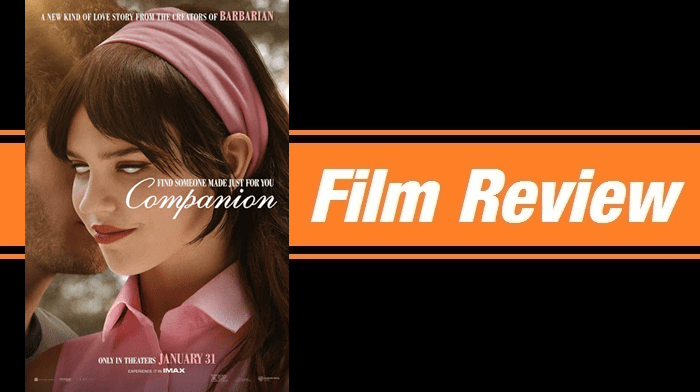
The new horror film “Companion” is the latest entry into the ever-growing artificial intelligence genre. Much of what has come down the assembly line has been throwaway entertainment (“M3GAN”, “Subservience”, etc.). But occasionally we get something interesting and unexpected. “Companion” falls somewhere in between. It has just enough creative juice to stand out from the crowd. Yet it’s not as original or insightful as it clearly wants to be.

“Companion” is the feature film debut for writer-director Drew Hancock. His movie falls in line with several others from this current phase of modern horror that simply aren’t that interested in actual scares. “Companion” isn’t the slightest bit creepy, chilling, or unsettling. In fairness, Hancock doesn’t hide his intentions. He’s just as much interested in delivering a black comedy and a twisted revenge fantasy. So don’t go into it expecting to be on the edge of your seat.
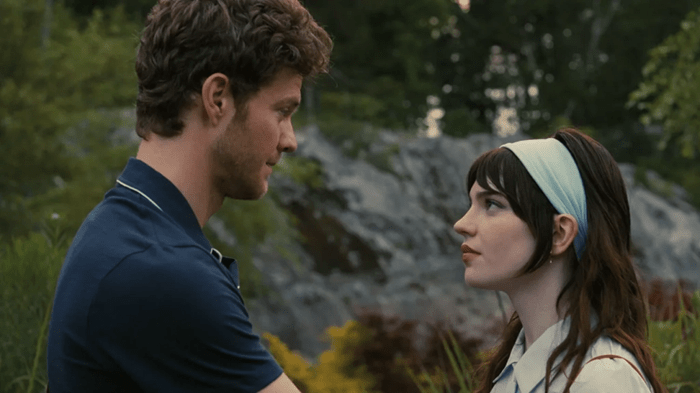
Image Courtesy of Warner Bros. Pictures

Unfortunately as Hancock admirably attempts to corral all of his ambition, his film stumbles in areas that are hard to miss. For starters, “Companion” begins with what would have been quality table-setting if its first major reveal hadn’t been routinely spoiled during its promotion. Yet to the movie’s credit, it still manages to entertain while we wait for its story to catch up with what we already know.

But as the story progresses you begin to see its seemingly tight story slowly begin to unravel. By the end the movie struggles to stay on the rails, hampered by glaring plot holes and leaving us with obvious questions that never get unanswered. Meanwhile its overall message is a familiar one that hinges on a few popular well-worn themes without really expressing anything about them that we haven’t seen before.

The story centers around a group of friends who gather at a secluded lake house for a weekend getaway. They’re possibly some of the dumbest characters you’ll encounter on a screen this year. The lone exception is the sweet yet timid Iris (Sophie Thatcher) who arrives with her boobish boyfriend Josh (Jack Quaid). Waiting for them at the house are Josh’s friends Kat (Megan Suri) and her Russian sugar daddy Sergey, and Eli (Harvey Guillén) who brought along his significant other, Patrick (Lukas Gage).

It’s best that you know as little as possible going in. But since it was such a big part of the promotion I’ll go ahead and say it – we learn pretty early on that Iris is actually an AI-driven robot that Josh purchased from a tech company. He’s able to control her through an app on his phone that allows him to adjust everything from her intelligence to her affection to her aggression. Here’s the catch – she doesn’t know she’s a robot which means she doesn’t realize the emotions she feels is little more than programming.

Image Courtesy of Warner Bros. Pictures

But everything comes to light when an act of violence leaves one person dead. Soon after, a shocked Iris learns the truth about her existence. She also learns that Josh and his friends aren’t who she thought they were. Wacky plot turns and lukewarm reveals follow, sometimes making sense but not always. And as more twists are thrown at us, things only get sillier and bloodier. Of course that’s not always a bad thing. But here, none of it feels rooted in anything worthwhile.

There’s enough bonkers material in “Companion” to make for some breezy entertainment and Hancock smartly (and thankfully) moves us along at a fairly swift pace. But it’s hard to turn a blind eye to its shortcomings which only seem to mount the farther we go. And there’s not enough meat to its message or satirical bite to give the story the punch that it desperately needs. “Companion” is in theaters now.

VERDICT – 2.5 STARS

REVIEW: “Shutter Island” (2010)

“Shutter Island” is a film that usually gets tossed aside when discussing the greater movies of filmmaker Martin Scorsese. But since first seeing it in the theater during its original 2010 release (three times actually), I’ve stood firmly by my assertion that it’s absolutely top-tier Scorsese. I loved everything about it then, and I’ve found that it still holds up to repeat viewings. The cast, the script, the costumes, the production design, and (of course) the direction are all top-notch.

Adapted from the novel by Dennis Lehane, “Shutter Island” (at the time) marked the fourth collaboration between director Martin Scorsese and Oscar-winner Leonardo DiCaprio (they would re-team in 2013’s “The Wolf of Wall Street” and their latest, “Killers of the Flower Moon” is due out next year). Here Scorsese delves into the psychological thriller genre while also brilliantly injecting elements of horror and even classic noir. It all fits great with the cool period setting and the overall captivating premise.

Image Courtesy of Paramount Pictures

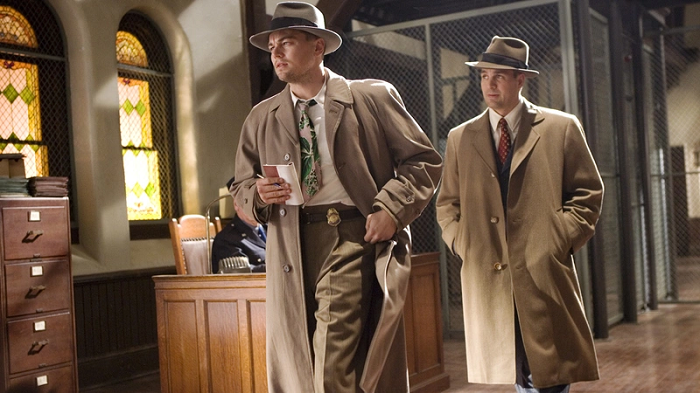
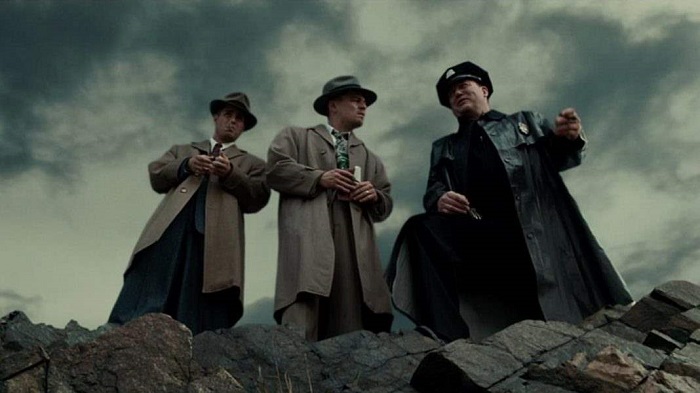
DiCaprio plays Federal Marshal Teddy Daniels, who is summoned to Ashecliffe Hospital on Shutter Island in Boston Harbor. It’s a mental hospital for the criminally insane where a patient has recently gone missing. Teddy is accompanied by his new partner Chuck (Mark Ruffalo) to investigate the disappearance, but they’re immediately met with a lack of cooperation. Teddy grows increasingly impatient, particularly with the facility’s head psychiatrist, Dr. Cawley (Ben Kingsley). To complicate matters, Teddy is being haunted by recurring dreams of his wife (Michelle Williams) who we learn died two years earlier.

Scorsese is meticulous and deliberate in unfolding the many layers of the story (written by Laeta Kalogridis), often focusing on misdirection more than a straightforward narrative. He sends us in several different directions but never gives us any firm footing until the end. And as usual for Scorsese, he never does anything without a purpose or reason. Whether it’s metaphorical, revelatory, or a simple homage, his scenes are filmed with specificity and intent. If you fail to soak in the details there’s a good chance you may miss much of what he’s going for.

In a movie like this, the less you say about the story the better. But as the mystery uncoils, Scorsese reveals as much through his camera as through the script. The riveting cinematography (from Quentin Tarantino regular Robert Richardson) helps make the island one of the most effective supporting characters. Peddocks Island in Boston Harbor was used for the haunting, panoramic shots of Shutter Island and was particularly effective in setting the tone in the chilling opening sequence. From there, the camera steadily works to immerse us deeper and deeper into the story’s dark and unsettling setting.

Image Courtesy of Paramount Pictures

As for the performances, DiCaprio delivers what is one of my favorite performances of his to date. He’s handed some challenging and emotionally heavy material, and he nails it. Ruffalo, Williams, and Kingsley along with Emily Mortimer, Patricia Clarkson, Jackie Earl Haley, and John Carroll Lynch make for a stellar supporting cast. We even get the late great Max von Sydow is small yet terrific role playing a creepy German doctor with a mysterious presence. Scorsese is known for surrounded himself with quality performers, and it’s certainly no different here.

“Shutter Island” was one of the best films of 2010, and it remains among my favorites from Martin Scorsese. It’s impossible to restrict it to any one genre, it maintains a wonderfully eerie tone, and the direction and visual energy is sublime. Scorsese takes us on an emotional ride that can be hard to watch especially as truths are slowly unearthed. The movie does require patience, but the payoff, both narratively and cinematically, makes every second of this extraordinary film worthwhile.

VERDICT – 4.5 STARS

REVIEW: “Au revoir les enfants” (1987)

REVOIRposter

“Au revoir les enfants”, which means “Goodbye Children”, is a 1987 Oscar nominated drama from French filmmaker Louis Malle. This autobiographical film is unquestionably Malle’s most personal project and its story is taken from actual events of his childhood. He wrote, produced, and directed this stirring film that grounds its storytelling in authenticity and in earned emotion.

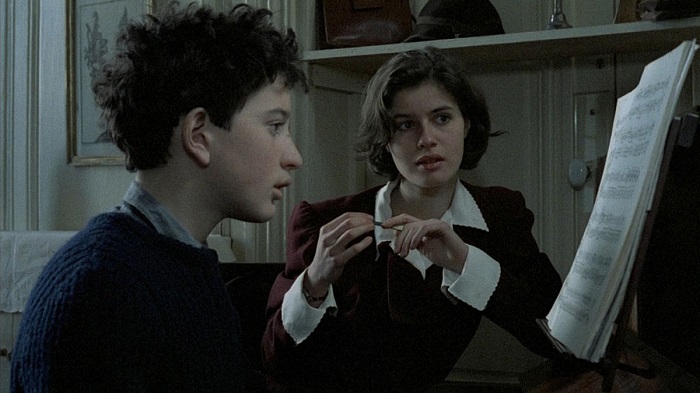
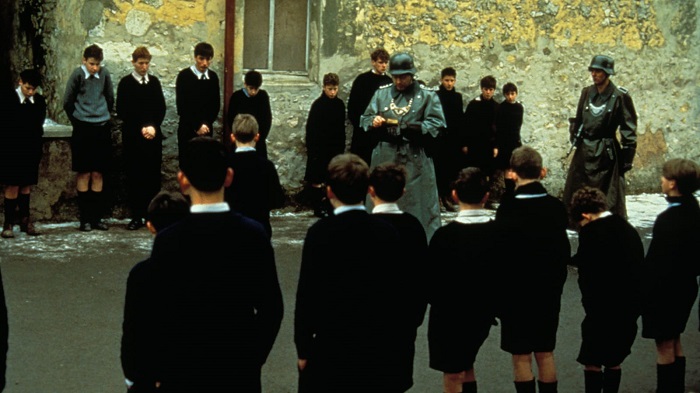
The film is set in 1944 and almost all of it takes place at a Catholic boarding school in Nazi-occupied France. Children are sent to the school by wealthy parents in hopes of protecting them from the dangers of the war. One such student is young Julien (Gaspard Manesse). He is respected by the other kids but he’s still a bit of an outsider. He would prefer to read novels and learn piano rather than the usual horseplay the boys engage in. He’s tough and strong-minded but we also see a tender and somber side to him as well. He doesn’t like being away from home and he never seems completely happy at school.

Revoir1

Things at the school change when three new students are introduced. One is Jean Bonnet (Raphaël Fejtö) a quiet and unassuming boy who is quickly assimilated into the school’s routine. Jean is teased and picked on, sometimes by Julien, but he soon finds his own small place to fit in. Over time Julien becomes fascinated with Jean due to his talents in math and music. Julien is also curious after noticing several differences in how Jean is treated by the school’s headmaster and teachers. Despite some contentious early dealings, the two boys develop a respect and friendship which makes the film’s later turns all the more crushing and heartbreaking.

There are several things that stand out about Malle’s technique. First off he’s not the least bit interested in the normal Hollywood-style melodrama or cliches. He doesn’t milk emotion or stage scenes in ways that feel false. Instead he puts great emphasis on the natural flow of school life in its purest form. You get a sense that he is recollecting and expressing things to his audience. These kids look, feel, and act like kids both through their virtue and their degeneracy. Malle wants us to believe what we are seeing because it’s true and personal to him.

REVOIR2

Another interesting thing is how the war quietly lingers in the distance for most of the film. It rarely makes its presence known other than through the occasional air raid sirens which the children hardly take seriously. But it is definitely there and we get a handful of strategic scenes that serve as a reminder. And as the film moves forward the boys are faced with several war-related moral quandaries that reveal the darker and more upsetting side of their world. It is through these moments that we the audience fully realize the loss of innocence particularly with young Julien.

It’s impossible to watch “Au revoir les enfants” without being deeply moved by its poignant story and obvious personal touch from Louis Malle. It’s a meticulously crafted film that builds up our emotional connection to the characters and then crushes them on the rocks of cold reality. The movie looks at the time and events through the eyes of these boys and it never loses that point-of-view which is vital to the story’s power. It’s such an amazing movie and a beautiful piece of film history.

VERDICT – 4.5 STARS

TEST star

REVIEW: “Love in the Afternoon”

2017blindspot

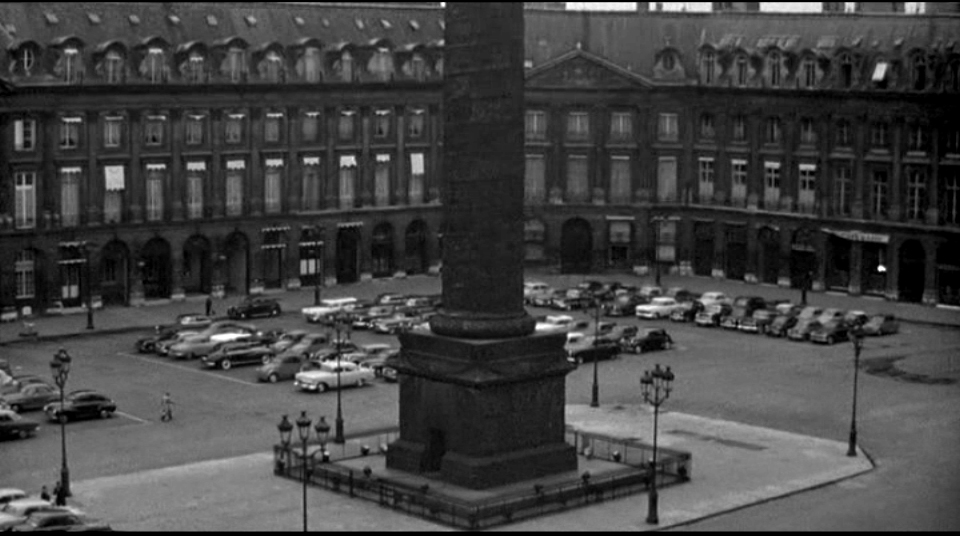
Gary Cooper and Audrey Hepburn. Folks, that’s all I needed to hear to be interested in 1957’s “Love in the Afternoon”. And as if I needed any more prodding, this romantic comedy was directed, produced, and co-written by the great Billy Wilder. And then to add even more personal intrigue, “Love in the Afternoon” is set in the magical city of Paris. So you have an unlikely love story filled with good humor, some really strong central performances and the City of Lights. Sounds good.

One of the first things you’ll notice when watching the film is the dramatic age difference between Cooper and Hepburn. Cooper was 55 years old at the time and there were some people who had a problem with his casting. Hepburn plays a beautiful (and much younger) girl named Ariane. She lives in Paris with her father Claude (brilliantly played by Maurice Chevalier) who works out of their home as a private investigator. Watching Hepburn and Chevalier is pure joy. They have an adorable father/daughter chemistry which shows itself in her playful curiosity about his work and his father-like encouragement of her cello playing.

LOVE1

One day Ariane eavesdrops as her father reveals to a client that his wife is having a fling with a wealthy American named Frank Flannagan (Cooper). She hears the trysts are taking place in Flannagan’s hotel room and that the husband plans to kill him. The curious and adventurous Ariane decides to go warn Flannagan of his upcoming demise. In doing so she finds herself smitten by the millionaire playboy’s charm. Her innocence and inexperience with love creates new feelings within her. On the other hand Ariane is initially just another victim of Flannagan’s globetrotting womanizing. But she leaves him in the dark about many things including her name and her far-fetched tales of her many boyfriends intrigues him. But is that enough to cure him of his playboy ways?

Wilder does a great job of getting us to love Hepburn and her character. She instantly comes off as pure and sweet and her childlike curiosity is adorable. That’s one reason we dislike Gary Cooper and his Flannagan character. We see that she is enamored with him but he sees her as just another toy. We genuinely worry for her as this unusual story plays out. But Wilder also shows that she’s not just a child with a bout of puppy love. She’s clever and, as Flannagan finds out, she can be abstruse. All of this is key to developing what is a well conceived love story.

This was the first of many screenplay collaborations between Wilder and I.A.L. Diamond. As you would expect from anything that Wilder has a hand in writing, the dialogue is slick and smart and his two lead actors handle it nicely. Hepburn was Wilder’s one and only choice to play Ariane but he wanted Cary Grant to play Flannagan. Grant turned down the role (as he did with several other Wilder offerings) which opened the door for Cooper. I admit, Cooper was an unusual choice and at first I wondered if he was going to fit. But as things move along, I think he captures what the role calls for.

LOVE2

The film also features some good bits of humor. The dialogue itself can be quite funny and there are several running gags that become pretty outrageous. There’s a hilarious reoccurring bit with gypsy musicians who Flannagan pays to play for him whenever he has a woman over. But we later see them popping up in some of the most absurd locations. It’s very funny. I also have to again mention the fun moments between Hepburn and Chevalier. She is her usual peppy and sprightly self. But Chevalier is a real scene stealer and for me some of the best moments featured him on screen.

“Love in the Afternoon” is a movie I’m glad I finally caught up with. This is another energetic and intelligent Wilder film that hits the romance and humor it shoots for. “Love in the Afternoon” may not be up there with the great romantic comedies of its time, but it’s still a solid film featuring a wonderful cast, beautiful Paris locations, and a smart director who has no problem putting all of his pieces together.

VERDICT – 4 STARS

4-stars

REVIEW: “What We Do in the Shadows”

SHADOWS poster

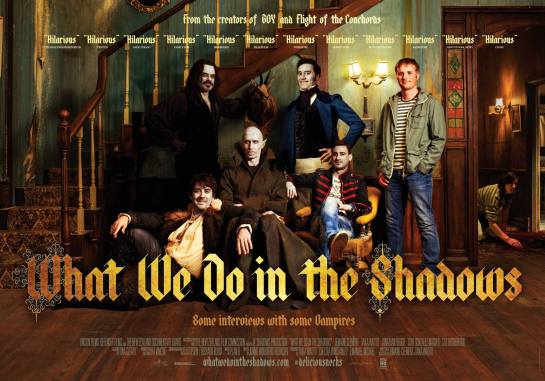
These days good comedies are a rarity which makes finding one all the more special. The genre’s landscape is overloaded with obnoxious raunchy comedies and shallow Sandler-esque toilet humor. If you aren’t a fan of those two brands finding an enjoyable modern comedy may be a chore. But “What We Do in the Shadows” is one of the rare exceptions – a highly original comedy that is also smart in its open embrace of absurdity.

Calling the film “smart” may be stretch for some, but I think the filmmakers are devilishly perceptive. Co-writers, co-directors, and co-stars Taika Waititi and Jemaine Clement are very well aware of the type of humor they are employing. The Wellington, New Zealand duo create a concept so ridiculous on the surface yet pulsing with focused energy and a satiric edge. It shows smarts in its concept, smarts in its execution, smarts in its structure, and perhaps most importantly smarts in its ability to maintain a genuinely funny premise from start to finish.

SHADOW1

While pondering a way to describe the film I kept coming back to ‘a vampire mockumemtary meets “The Real World”. It presents itself as a found-footage reality show and/or documentary. The first thing we see is a cheap, grainy production graphic from “The New Zealand Documentary Board”. From there we are immediately injected into the world of four vampires living together in a Wellington flat. Our perspective is through the lens of a documentarian’s camera.

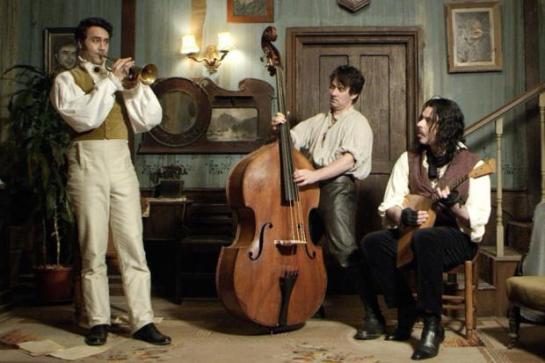
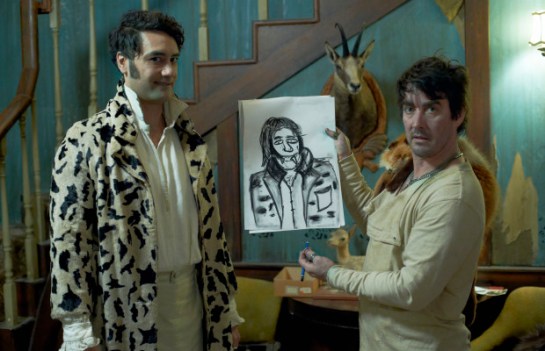
First we are introduced to the four vampires. The 379 year-old Viago (Waititi) is a good-hearted 16th century neat-freak. Vladislov (Clement) is an 862 year-old medieval fashionista. Deacon (Jonathan Brugh) is the youngster of the bunch – 183 years-old and a bit of a rebel. And then there is 8,000 year-old Petyr (Ben Fransham) who hisses more than speaks and has an uncanny resemblance to Count Orlok from “Nosferatu”. All four are uniquely funny which makes their quirky camaraderie a real treat.

It doesn’t take long to recognize the vibe Waititi and Clement are shooting for. The dry, deadpan humor. The constant awareness and conversations with the camera. The straight-faced approaches by the actors regardless of a scene’s nuttiness. All of it contributes to a movie which genuinely feels like a reality show or a documentary. It just happens to be spotlighting vampire roommates from different eras with very limited connections to the modern world outside their doors.

SHADOW2

Occasionally they go out to enjoy a socially awkward night on the town. Other times we see them having a “flat meeting” to discuss house duties. There are an assortment of camera confessionals talking about everything from lost loves to frustrations with roommates to favorite torture practices. And there are several funny bits after the boys are introduced to the wonders of YouTube, eBay, and Skype. Most of these scenes are given to us in pinches which are the perfect portions. They also toss in a very small handful of side characters who serve the story nicely.

“What We Do in the Shadows” is such a breath of fresh air. It’s a comedy that consistently delivers laughs without clinging to unfunny cliches or the hot current genre trends. Rarely does the movie miss a beat and its cleverness shows itself in a host of ways. It is subtly subversive, subtly satirical, and openly absurd. Waititi and Clement craft one very funny movie that clearly isn’t a film for the movie masses. I can see some people rolling their eyes and some people dismissing it altogether. I found it to be a hysterical reminder that there are comedies willing to do their own thing and do it very well.

VERDICT – 4.5 STARS

TEST star

REVIEW: “Into the Storm” (2014)

STORM POSTER

Tornadoes and heavy CGI devastation. “Into the Storm” put all of its eggs (and money) into that basket and hoped it was enough to win an audience. With a budget of $50 million and a box office take of $160 million I would say the movie more than accomplished its goal. Less discerning fans will leave satisfied with the numerous twisters and their swirls of dirt and debris. But if you happen to be looking for anything more than that “Into the Storm” will leave you wanting.

The story follows a couple of groups in and around the small town of Silverton, Oklahoma. One is a group of storm chasers led by Pete (Matt Walsh). He is a veteran chaser who is also working on a documentary, but the storms haven’t been good to him. He’s desperate to track down a tornado and he has brought in meteorologist Allison Stone (Sarah Wayne Callies) to help. She’s on a short leash especially after missing a recent storm and costing Pete some good footage. Pete reluctantly follows Allison’s storm tracker hunch and they head to Silverton.

STORM1

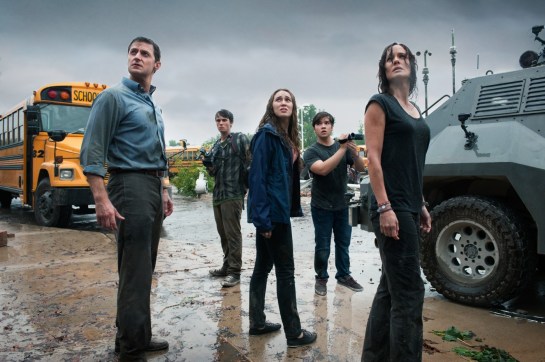
In Silverton school vice-principal Gary Fuller (Richard Armitage) is a widower and father of two high school boys. Donnie (Max Deacon) is his more quiet and reserved son. Trey (Nathan Cress) is his more obnoxious younger brother. Neither have had the best or most open relationship with their father since their mother died. It won’t help matters that Donnie shirks his duties of filming a graduation ceremony to help the girl of his dreams with her video school project.

As you can guess a massive storm front comes through spawning a number of tornadoes in Silverton. The movie takes us back and forth between our two groups as they encounter one destructive twister after another. Eventually both groups come together and must survive the queen mother of all tornadoes. I know this is true because one character actually says something like “It’s the biggest tornado ever”. This movie does that a lot. We aren’t allowed to glean information for ourselves. Everything is spelled out for us. Also don’t expect to find interesting and compelling characters. Everyone feels unoriginal and scripted. But to be fair plot, dialogue, and character development aren’t priorities here.

STORM2

“Into the Storm” partially redeems itself with its visual presentation. It’s hard not to be impressed with the CGI twisters blowing down trees, tearing through buildings, and slinging 18 wheelers like footballs. The special effects are thrilling, well conceived, and very satisfying. Clearly a huge hunk of the budget went towards the visuals and that’s okay. Most people will see the movie for Mother Nature’s spectacle and it doesn’t disappoint. The only thing that hampers the looks of the film was the decision to go the found-footage route. It’s implementation is clunky, annoying, and quite frankly I’m tired of the gimmick.

At a brisk 89 minutes “Into the Storm” doesn’t exhaust its welcome. It aims for one rather uninspired target and for the most part it hits it. In that regard I had fun with it. But the overly familiar characters, the bland and sometimes silly dialogue, and the plot’s lack of any originality whatsoever makes this just another run-of-the-mill disaster movie. And this leads me to a question: Can we not have a smart and engaging weather based disaster flick? I don’t know, maybe rain, wind, and intelligent creative writing don’t mix.

VERDICT – 2.5 STARS