REVIEW: “Labor Day”

LABOR POSTEREven though the plot of “Labor Day” sounds like something plucked right out of Lifetime’s primetime television lineup, I was still optimistic considering the talent involved in the project. I greatly respect Jason Reitman as a screenwriter and a director. It also features Kate Winslet and Josh Brolin – two very capable performers who have done some great work during their careers. But I approached the film with a level of skepticism. Could Reitman deliver an intelligent romantic drama or would it be formulaic mush befitting a Harlequin novel?
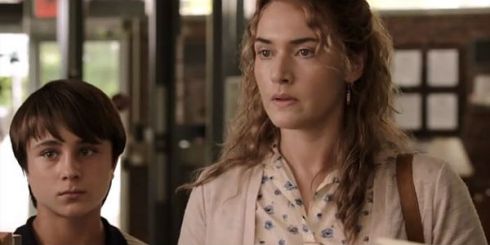
First the story. The film takes place in the fictional town of Holton Mills, New Hampshire during a hot Labor Day weekend in 1987. 13-year old Henry (Gattlin Griffith) is a sweet and responsible boy who takes care of his severely depressed single mother Adele (Winslet). A number of terrible misfortunes have left her an emotional wreck so much so that their once-a-month trips to the supermarket triggers her anxiety. During one of those trips they encounter an escaped and injured felon named Frank (Brolin) who “convinces” them to drive him to their home. Once there he hopes to lay low until his wounds heal and he can skip town.

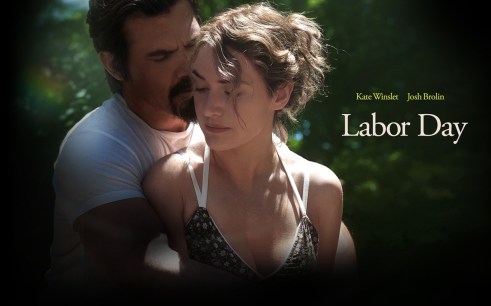
LABOR1

As every trailer and television commercial has already shared, Frank isn’t a terrible guy. We get some threatening vibes from him, but as escaped convicts doing time for murder usually go, he is pretty docile. He quickly connects with Adele and Henry, filling all sorts of fatherly and husband-like voids in their lives. He begins fixing things around the house, he teaches Henry how to throw a baseball, and a romance is sparked with Adele. The three create a beautiful fantasy-like world within the homeplace, but right outside is the reality of Frank’s past and his status as a wanted man.

In lesser hands this could have ended up a mushy, clichéd mess. Fortunately Reitman handles the material in a way that keeps that from happening. But not completely. There are a few incredibly sappy bits that hit us head-on. For example there is one scene where Frank reveals his culinary aptitude. In it we get a sequence ripped straight from the signature scene in “Ghost” except here the clay is replaced by peaches. We also get some schmaltzy lines of dialogue such as Frank saying in just the right romantic tone “I’ve come to save you Adele”.

There are also a couple of narrative choices that didn’t really work for me. There is an odd little diversion that gets into Henry’s pubescent struggles. Through it we meet an eccentric young girl who serves as his introduction to puberty. Both she and the entire story angle is underdeveloped and tacked on. We also get the old tried-and-true method of telling Frank’s backstory through a series of random flashbacks. They get the job done but it is a pretty conventional approach.

LABOR2

But despite all of these jabs I’ve thrown its way, “Labor Day” still manages to work. Other than the few hiccups, Reitman creates a small-scale intimacy that I connected with. Most importantly he gives us three main characters that we genuinely care about. This is important because when the film stumbles I still wanted to stay with these characters. I also love how Reitman uses the camera. He frames some beautiful shots and I love his visual perspective. And of course there are the two lead performances. Winslet has always been great at playing women in some form of anguish. Here she does it again with striking authenticity. Brolin’s rugged looks and charming sincerity are perfect for the role and helps their chemistry.

So clearly “Labor Day” has some issues but it also has some undeniable strengths. It can be a little too sappy and the melodrama can be extremely heavy. But it also has a sweet story with a lot of heart at its core. It all comes down to your ability to just go with it and get lost in the story. If you’re able to do that there is enough here to like. If you can’t then more than likely the film’s flaws will be all too glaring.

VERDICT – 3 STARS

REVIEW: “The Act of Killing”

KILLING POSTER

A film like “The Act of Killing” is almost indescribable. It is strikingly unique and it certainly can’t be labeled or put in a box. Director Joshua Oppenheimer calls his film a “documentary of the imagination”. It’s bizarre, unsettling, and at times impossible to comprehend. It’s horrifying, repulsive, and unflinching in its focus. It’s an overused statement but “The Act of Killing” is unlike anything you have seen before and digesting what we are fed isn’t all that easy.

To understand this documentary you must first look back to 1965 in North Sumatra, Indonesia. A splinter group’s failed coup d’état led to a military takeover of the government. The new leadership blamed the Indonesian Communist Party (PKI) and soon sanctioned the wholesale massacre of communists across the region. But the killings weren’t restricted to alleged communists. There were also brutal mass murders rooted in racism and religion. It is said the killings have been overlooked in most Indonesian history books and by the international community, yet a CIA report called them “one of the worst mass murders of the 20th century”.

killing1

With that historical backdrop in place, the film spotlights some of the authors of the murders and we are told of their atrocities from the men themselves. Anwar Congo and Adi Zulkadry went from movie theater ticket scalpers to heads of military death squads responsible for thousands of brutal killings in 1965 and 1966. Even more appalling, they have never been punished or even found guilty of any crime. In many ways they are celebrated among the ignorant or sympathetic. These are the men we spend two hours with in “The Act of Killing”. Their words, their candor, their lack of remorse, their impunity. These men openly discuss their parts in the anti-communist purge in uncomfortable detail and often with smiles on their faces.

These men also have an unusual infatuation with western cinema which finds its way into the movie on several occasions. They constantly refer to themselves as ‘gangsters’, a term stemming from their love of American gangster movies. But it also seems that some of their real-life killings were patterned after these films. Anwar especially seems to treat the title of gangster as a badge of honor.

Killing2

But their love for movies also plays into the stories they tell. Throughout the documentary we listen in on pointed and detailed recollections of some purely evil murders. But these men also tell their stories through dramatic reenactments for the cameras intended to glorify their atrocities. Their scenes borrow from their favorite mob movies, westerns, and musicals. It’s these uneasy sequences of boastful self-aggrandizement that reveal the true evil dwelling within these people. As we get deeper into the movie the reenactments become more bizarre and surreal possibly a result of Anwar’s desire to squash any feeling of guilt that may be surfacing.

It took Joshua Oppenheimer over five years to make “The Act of Killing” and during that time he accumulated 1200 hours of footage. The result is a potent exposé that unveils one of the darker secrets of our world. I knew nothing of this horror which made the film all the more enlightening and disturbing. At times I did feel disconnected from the more absurd and unintelligible mini-productions from Anwar and company. But there are far more times where I sat in silent shock due to what I was watching. This is audacious filmmaking and there are several scenes carved into my memories. I would be surprised if others didn’t have that same experience.

VERDICT – 4 STARS

REVIEW: “August: Osage County”

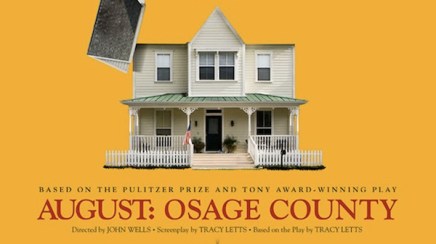
AUGUST POSTER

“August: Osage County” is a hard pill to swallow. It’s based on a Pulitzer Prize-winning play of the same name and could be categorized as a dysfunctional family drama with pinches of dark comedy. It features a star-studded cast led by Meryl Streep and Julia Roberts and a premise that may have a lot of appeal to some audiences. But underneath all of the big acting from big stars lies a coarse and abrasive film that never knows when to pull back the reins. It ends up being a movie I could never wrap my arms around.

Tracy Letts (who also penned the play) writes the screenplay and John Wells (better known for his television work) directs the film. It’s set in Osage County, Oklahoma during a sweltering hot August. Violet (Streep) is a mean and contentious women suffering from mouth cancer and a heavy addiction to pain pills. Her husband Beverly (Sam Shepard) is a calmer sort who seeks refuge in his books and liquor. One day Beverly hires a caretaker for his wife and soon after disappears.

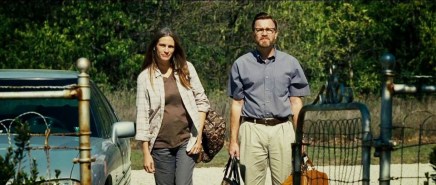
AUGUST1

Distraught over her husband’s disappearance, Violet calls in her family and a parade of family dysfunction follows. First to arrive is her sister Mattie Fae (Margo Martindale) and her husband Charles (Chris Cooper). Shortly after, Violet’s three daughters come. Barbara (Julia Roberts) is a shrill carbon copy of her mother. She’s at odds with her mom for leaving home and moving to Colorado. Karen (Juliette Lewis) is the spacy middle daughter who hasn’t been home in years. And there is Ivy (Julianne Nicholson), the youngest daughter and the only one who lives close to home. Each of these characters have a wheelbarrow full of flaws and baggage that all comes into play as the film moves along.

But if that assortment of maladjusted individuals wasn’t enough, we also have Barbara’s husband Bill (Ewan McGregor) who apparently has an eye for younger women and their daughter Jean (Abigail Breslin) who is bearing the fruits of their horrible parenting. Then there is Karen’s fiance Steve (Dermot Mulroney), a phoney and moral-free Florida businessman. Oh and then there is Charles and Mattie Fae’s awkward son Little Charles (Benedict Cumberbatch) who may have a weird little secret.

It’s almost impossible to like any of these people. With the exception of the caregiver, practically every character reveals an appalling secret, spits out hateful insults, or does something vile. And the film is relentless. It bludgeons you to death with one dysfunctional family scene after another. I found it to be smothering. The story never allows any breathing room or provides any variation with its characters. And the constant barrage of bad behavior and disgraceful revelations is a bit ridiculous. It’s as if Letts wants to trump one disgraceful act or insult with another. And so on and so on…

AUGUST2

Again, the cast is a laundry list of big names and the performances are good. However many of the scenes are so big and the characters so loud that it can be difficult to really appreciate the performances. It’s one of those cases where the material hurts what the actors are doing. Streep is fine as the venom-tongued Violet but she is so big and brash. It’s definitely how the character is written but Streep does her share of scene chewing. Julia Roberts has been applauded for her work but it too is a loud and showy performance. Roberts is never overmatched by the character and she shows brilliance in some scenes. But the character is crassly written and some of her dialogue is so over the top. The other performances aren’t getting the same attention, but they’re generally good when the screenplay allows them to be.

I’ve heard that the stage version of “August: Osage County” is very good. Sadly I don’t think it has translated well to the big screen. This is a crude and unyielding adaptation that has a powerful and potent potential. The idea is appealing and every so often we get glimpses of what I hoped the film to be. Unfortunately I was put off by these characters, their endless dysfunction, and their profane spite. This was a tiresome watch and tough movie to endure. It’s a shame because with this much talent I was expecting more.

VERDICT – 2 STARS

REVIEW: “Fruitvale Station”

FRUITVALEPOSTER

For those who may not know, “Fruitvale Station” is a docudrama based on the shooting death of 22-year old Oscar Grant by a Bay Area Rapid Transit police officer. The shooting took place on January 1, 2009 and was caught on numerous cell phone videos from witnesses. The incident would spark protests, unfortunate rioting, and dialogues about a number of feelings and concerns. Some have said this is was a racially motivated crime. I’m not sure there is definitive proof of that. Others have said the shooting resulted from Grant resisting arrest. I don’t think there is any way this tragedy can be fully placed on Oscar Grant’s shoulders. One thing is for certain, a young African-American man, a father, lost his life and it should have never happened.

“Fruitvale Station” marks the filmmaking debut from Ryan Coogler. He was drawn to the story and spent time with Grant’s family in order to develop a deeper more human profile. Coogler stated “I wanted the audience to get to know this guy, to get attached, so that when the situation that happens to him happens, it’s not just like you read it in the paper, you know what I mean? When you know somebody as a human being, you know that life means something.” It’s a smart approach that gives the film a real emotional kick. But some have criticized the overly sympathetic portrayal of Oscar saying that is glosses over some of his real personal and legal problems.

Fruitvale

When you go in the docudrama direction, especially when tackling such a potent incident, you open yourself up that kind of criticism. I did feel Coogler was softening the edges a bit in order to draw more empathy from the audience. That said, it never took away the hurt I felt for the family, the discomfort of watching the police aggression, or the sadness brought on by Oscar’s death. The film does a good job of drawing those emotions from us. Is the film emotionally exploitative at times? I think so. A few scenes are a bit heavy-handed and a more seasoned filmmaker would have probably avoided them. Still the overall impact of the film is strong despite these issues.

This movie is a remarkable feature film debut for Coogler but he’s not the only revelation found in “Fruitvale Station”. 26-year old Michael B. Jordan is excellent. Known mainly for his work in television and in last year’s “Chronicle”, Jordan has caught a lot of attention playing Oscar Grant. There is a raw authenticity to what he is doing on screen that works perfectly with the role. He’s joined on screen by Academy Award winner Octavia Spencer who also helped produce the film. She plays Oscar’s mother and once again she is very good. Melonie Diaz does great work as well playing Oscar’s wife Sophina.

Minus a few small stumbles, which can be expected from a first time filmmaker, “Fruitvale Station” is still an emotionally powerful film that puts a spotlight on an unfortunate tragedy. Coogler makes a strong directorial debut but Michael B. Jordan also makes a statement in what should be a breakthrough performance. Even though I felt slightly manipulated as the story was moving along, the tense and gutwrenching ending was no less devastating. In the end this movie works, and it’s impossible not to be effected by it.

VERDICT – 4 STARS

REVIEW: “Blue Jasmine”

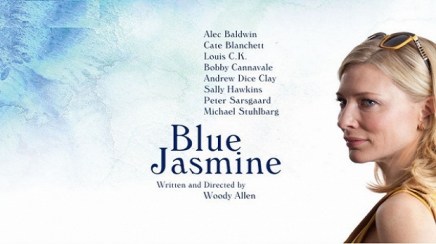
BLUE poster

Each year has its share of certainties: we grow a year older, we have to pay our taxes, my sports teams disappoint me, and Woody Allen puts out a new movie. Now that doesn’t mean that every one of Allen’s films are masterpieces (ala “Midnight in Paris”). In fact some of them are just dreadful (ala last year’s “To Rome with Love”). But one thing about the bad ones, you always know the next film is only a year away. And maybe, just maybe, Allen will land one of the real gems he’s capable of making.

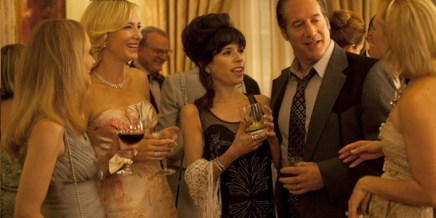
Here’s the good news – “Blue Jasmine” is one of the good ones. This character study touches on a number of subjects from business ethics to family troubles to rabid consumerism. At the center of it all is a captivating performance by Cate Blanchett. She plays Jasmine Francis, a New York socialite whose posh lifestyle collapses when her crooked husband is arrested and loses their fortune. Penniless and without a place to go, Jasmine flies to San Francisco and moves in with her estranged working-class sister Ginger (Sally Hawkins). It’s here that she must learn to start a new chapter of her life or drown in her despair of leaving the affluent upper crust.

BLUE1

To go further, Jasmine is a wreck. She’s coming off of a nervous breakdown, she pops anxiety pills like candy, and she has an affinity for heavy drinking. She still carries her spoiled and privileged attitude which clashes with her new destitute reality. And all of this is brought on by her lousy husband. We see the events leading to Jasmine’s fall from luxury through several cleverly incorporated flashbacks. We watch her husband Hal (Alec Bladwin) and his penchant for women and shady business deals while she lives in a diamond-studded state of naïveté. She’s content with living high on the hog while asking no questions whatsoever. That proves to be a costly mistake, both mentally and monetarily.

Jasmine’s snooty ego doesn’t fit well with the circle of people she is introduced to in San Francisco. This class clash is the prominent focus for most of the film. This is also where we meet the film’s fantastic assortment of side characters. Hawkins is great as Jasmine’s kindhearted sister and I really liked Bobby Cannavele as her blue-collar beau hunk boyfriend. We get Michael Stuhlbarg as a lovestruck dentist and Peter Sarsgaard pops up as a wealthy businessman with political aspirations. But the biggest treat was Andrew Dice Clay. Yes you heard me, Andrew Dice Clay. Gone is the loud obnoxious standup routine. Here he plays a humble, hard-working fellow that you can’t help but sympathize with. And it’s all because of the unbelievable turn from Dice Clay. He was completely natural and restrained. Brilliant work.

BLUE2

But the true star is Cate Blanchett who undoubtedly gives one of the year’s finest performances. There are bits of subtle humor that are sprinkled in throughout her story. But she’s more of a sad, self-destructive woman who has no sense of direction or belonging. Blanchett visualizes her struggles through every fidget, every bead of sweat, and every outburst. She’s not a likable character by any stretch but she’s simply mesmerizing. Blanchett gives a performance that is getting some Oscar hype. Personally I think it demands an Oscar nomination.

It’s clear that “Blue Jasmine” was influenced by other films. For example if you listen closely you can hear “A Streetcar Named Desire” passing in the distance. But Woody Allen has always been a filmmaker who treasures inspiration and when he is on his game he can truly deliver. This is really good material handled by an excellent cast including a surprise performance from Andrew Dice Clay and some of the best work of Cate Blanchett’s career. “Blue Jasmine” may not stay with you for a long time nor be considered among Allen’s very best by the bigger fans of his work. For me it really worked and it’s definitely good Woody Allen.

VERDICT – 4 STARS

REVIEW: “Grown Ups 2”

GROWN UPS POSTERWhy would I subject myself to the torment of watching “Grown Ups 2”? Am I a glutton for punishment? Did I actually think this would be a watchable film? I mean let’s be honest, Adam Sandler hasn’t made a good movie in years and the first “Grown Ups” picture was a laborious exercise in stupidity. So there’s no reason to think this would be a funny and entertaining comedy, right? Or is there? After all it did rake in nearly $250 million at the box office. Oh who am I fooling? “Grown Ups 2” is yet another painfully bad film that I think goes down as one of Sandler’s worst (and that’s saying something).

Where do I begin when a movie is this terrible? How about with the opening scene which clearly tells you what you are in store for. Sandler wakes up one morning to find a huge deer in his bedroom. He scares the deer causing it to urinate all over his face. This sequence is out of the blue, amateurish, and embarrassingly unfunny. Actually that’s a good way to describe this entire movie. I know Sandler has a following and many people subscribe to this brand of humor, but I would rather have my eyeballs dug out with an ice cream scoop than to sit through this torture again.

There are so many egregious problems with this movie. Let’s start with the biggest issue – it’s not the slightest bit funny. I may be wrong but the object of most comedies is to make the audience laugh. If that is a key measurement of success “Grown Ups 2” fails miserably. I sat stone-faced through the majority of the film’s 100 minutes only slightly grinning on a couple of occasions. The humor is ostensibly juvenile and astoundingly idiotic. Sandler and his co-writing compadres seem to have no idea on how to conceive or setup a gag. Instead they wallow in cheap, lazy, and overused nonsense that have become signatures of Adam Sandler movies. For example take Sandler’s infatuation with toilet humor. We get farting, urinating, projectile vomiting, picking and eating from a belly button. All of this lowbrow garbage that serves as a substitute for actual good writing.

GRown Ups

Another glaring flaw is the complete and utter lack of a plot. I’m still stunned at the absence of any cohesive and coherent story. It’s kind of like a series of poorly conceived comedy sketches pasted together to form a storyline. The problem is nothing ever happens. It’s as if Sandler is more interested in creating a playground for him and his buddies. He tosses in several weird and awkward cameos and small roles from the likes of Shaquille O’Neal, Adam Samberg, Steve Buscemi, Stone Cold Steve Austin, Taylor Lautner, Dan Patrick, and several more. Perhaps the filmmakers thought that drowning us in these appearances would divert our attention away from the absence of a decent narrative. It didn’t work.

I suppose Sandler, David Spade, Chris Rock, and Kevin James were trying to make another movie about childhood buddies and their middle-aged lives. Yet it’s interesting that these characters have become more childish and imbecilic in the three years since the first film. But I don’t think anyone involved really cares. There’s no sense of shame whatsoever. With an $80 million budget, this was clearly a cash-in for the whole bunch.

Remember I described the first scene of the movie? Well the final scene features a man passing gas on his wife. Do you get the gist of what “Grown Ups 2” is all about? This film incited more facepalms and head-shakes than laughs and the script feels like something Sandler could have scribbled on the palm of his hand. There isn’t an ounce of creativity, originality, or intelligence and if they weren’t making millions of dollars I would be embarrassed for everyone involved. Instead they are laughing all the way to the bank, and I promise you they were laughing a lot more than I was.

VERDICT – 0.5 STARS