REVIEW: “Oz: The Great and Powerful”

Oz poster

Talk about a daunting task. You had to know at the outset that anyone attempting to make a prequel to the “The Wizard of Oz ” had to be prepared to face their share of analysis and scrutiny. The 1939 Victor Fleming film has long been revered as a timeless classic. So many hold dear the story of a homesick Dorothy and her little dog Toto who are whisked away to the magical land of Oz. So my big question going in was if “Oz: The Great and Powerful” could recapture the fantastical look and charm found in the original film? My biggest concern? Was this going to be another monotonous CGI-laden snoozer in the same vein as Tim Burton’s “Alice in Wonderland”?

First off I think the approach taken by “Oz: The Great and Powerful” was a smart one. Director Sam Raimi and company didn’t try to reconnect with the beloved classic characters of the first film. Instead they focus on Oscar Diggs and how he went from a ragtag traveling circus magician to being Emerald City’s Wizard of Oz. That idea offered plenty of potential for me and eventually I found myself attracted to this film. But as I sat down in my comfy theater seat, bookended by my two excited young children, I was once again faced with the same creeping concerns. Could Raimi actually pull this off?

OZ3

Most of the reviews I’ve read have been positive but not really enthusiastic. To be honest I’ve struggled gauging my own enthusiasm as well as deciding how many passes to give the film for its shortcomings. But in the end I found myself appreciating a lot more of what the movie accomplishes and the measurement of fun I had outweighed any of the film’s flaws for me. I would never be silly enough to put it on par with the 1939 movie, but I can gladly say there’s more to this film than you may think.

James Franco plays Oscar Diggs, a struggling small-time magician for the Baum Brothers traveling circus (a fun tip of the hat to L. Frank Baum, the author of the original “Wizard of Oz” children’s book series). Oscar is a self-centered huckster who’s more focused on fame and his warped view of greatness than what really matters in life. We quickly see that the trail of deception he leaves in his real life mirrors that of his performances on stage. He’s a scoundrel and there’s not much to like about him. Of course considering the type of movie this is, it becomes pretty obvious that his redemption lies ahead. But the real interest is in following him on the journey he must take to get there.

la_ca_0226_oz

After some mischievous trickery during a stop in Kansas, Oscar ticks off the circus’ strongman and has to make a run for it. He hops in a hot air balloon and takes off but as luck would have it he’s sucked right into a tornado which transports him to the wonderful land of Oz. Sound familiar? Once there he finds out that Oz is facing a dark and dangerous threat. Oscar is perceived to be the fulfillment of a prophecy stating that a wizard would come to rid Oz of an evil wicked witch. It’s here that Oscar must choose whether to follow the path of his own self-indulgence or be willing to sacrifice for the greater good of the people. It’s a familiar struggle often seen in movies, but I love the way it works here especially considering this is a family film. It doesn’t bury or sugarcoat his moral dilemmas but it makes him face them in a way that’s satisfying for me as an adult as well as for my two kids.

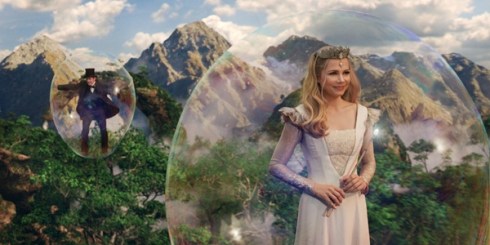
Of course Oscar meets a variety of characters along the way including a winged monkey named Finley (Zach Braff) who becomes his comedic but tender sidekick and three witches, Theodora (Mila Kunis), Evanora (Rachel Weisz), and Glinda (Michelle Williams). His biggest challenge with them is figuring out who he can trust. Perhaps my favorite character he encounters is China Girl (Joey King), a china doll whose legs have been broken. It’s her story that I found to be the most moving of the entire picture. Oscar comes across her in the remains of her porcelain village. Everyone and everything is broken after a vicious attack by the wicked witch and she’s left alone. There’s a wonderful scene where Oscar fixes her legs with what he calls “magic in a bottle” (it’s simply glue). What makes the scene so good is that it mirrors an earlier scene at the circus where a young handicapped girl, a believer in Oscar’s magic, asks him to make her walk. Of course he can’t but this time he gets a chance to. It’s one of the first moments where we see a bit of the good in him.

OZ2

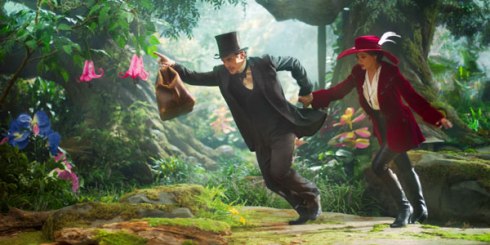
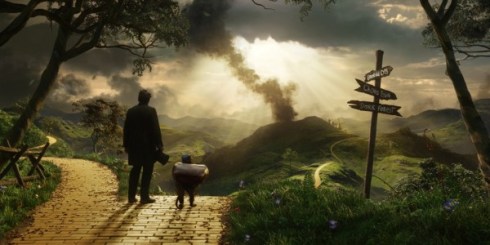
The story progresses and maintains a fairly predictable narrative. But it always provided an interesting turn and never allowed itself to get weighted down. But the story is just one component of the film. Many people were just as anxious to see how the film works visually. There are several techniques used to bring Oz to life. One of the best involves the shift from the black-and-white 4:3 ratio during the early circus scenes to the vibrant widescreen color we see when Oscar arrives in Oz. Both are extremely effective especially the earlier sequence which really captures the time period. But it’s in Oz where the visuals both wow and sputter.

Most of the time Oz looks tremendous with its profound colors and fantasy landscapes. But there were moments where the heavy coats of CGI were just too much. There were also a few CGI animations that were glaringly obvious. And then there’s the makeup. I was really anxious to see the wicked witch especially after being teased by her in the trailers. The first glimpse we get of her is a shadow on the wall. We get the classic hat, the pointy nose and protruding chin – everything I wanted. The problem is the shadow doesn’t match the face we get later on. During the close-ups she looks off. Her round face and silky-smooth green skin resembled something off of “The Mask”. On the other hand some of the effects were stunning. The best example is China Girl. From the way the light bounces off of her to her fluid motions, she’s a sight to behold. And for me that’s the case with most of this movie. It’s looks pretty amazing.

OZ4

I also have to mention the performances. I was pretty impressed with most of the work we see. James Franco was an interesting choice as Oscar but I think he does a good job. There were some scenes where he didn’t quite fit but there were others where I couldn’t imagine anyone handling them better. Overall I felt Franco was the glue that held everything together. If his performance fell short, so with that movie. Thankfully that wasn’t the case at all. Williams and Weisz were quite good and there are several fun familiar faces in smaller roles. But I have to admit I struggled with Kunis’ performance. I really felt she was all over the map and this was a role that was too big for her. Not big in terms of weighty, but it’s clearly something outside of her comfort zone and she’s unable to keep a level of consistency.

There are several other things I liked about the film from different nods to the 1939 movie to Sam Raimi’s own unique touches. For example his affection for horror is shown in a couple of scenes plucked straight out of “Evil Dead”. And of course there’s the great cameo by Raimi’s best buddy Bruce Campbell. All of these things help make this an enjoyable picture. It doesn’t completely cover up the movie’s predictability, Kunis’ sketchy performance, or the visual hiccups, but I was thoroughly entertained. Even better, “Oz: The Great and Powerful” is a rare family film that doesn’t strictly cater to one group or another and doesn’t fall into the trappings of so many of these movies. That alone makes it worth my money.

VERDICT – 4 STARS

REVIEW: “Roman Holiday”

Classic Movie Spotlight

roman_holidayI don’t mean to be repetitive. But at the risk of sounding like a broken record, they just don’t make romantic comedies like this anymore. This 1953 classic from director William Wyler is a beautiful blueprint for a genre that seems to struggle with making quality movies these days. “Roman Holiday” brings together the always good Gregory Peck and the adorable Audrey Hepburn in a film that could almost be considered a fairy tale story. But while the film embraces some of the elements that make a good romantic comedy, it dodges a few of the conventions which have become all too familiar.
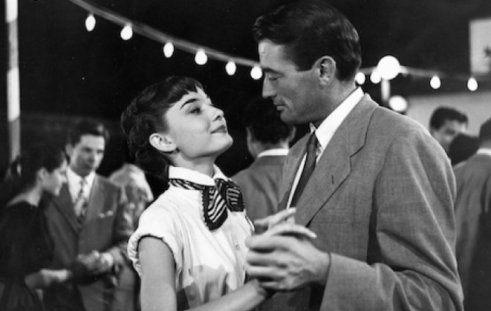
“Roman Holiday” was the star-making role for a young Audrey Hepburn. After appearing in several smaller roles this was a bigger performance that caught the world’s attention. A lot of that attention is because of Gregory Peck. Peck was instrumental in getting Hepburn’s name out there after realizing she was going to be big. Interestingly enough Peck wasn’t Wyler’s first choice. The director first sought after Cary Grant but Grant turned it down after reading the script. Peck once said that anytime he received a comedy script he knew Grant must have turned it down first. Well I don’t think anyone is griping about how things turned out. Peck and Hepburn have a charming chemistry as they explore the unique relationship between their characters.

The story for “Roman Holiday” was written by Dalton Trumbo but it was credited to Ian McClellan Hunter. Trumbo was one of the Hollywood Ten and was blacklisted for his communist ties and failure to cooperate with Congress. It was during that time that he penned the story. To make things even more interesting, “Roman Holiday” won the Academy Award for Best Story (as the category was known at the time). Hunter would accept the award but it was Trumbo who earned it. Only in 2011 was full credit given to Trumbo was his work on the film.

ROMAN1

His story follows Ann (Hepburn), a princess of an unmentioned country who is on a European tour stop in Rome. Ann is young and adventurous and she wants to experience the life outside of her closed in ornate walls. She’s tired of the strict itineraries and stuffy hobnobbing so one night she lets out her frustrations. The royal family doctor gives her a sedative to calm her down but before it can kick in, she sneaks out of the embassy to experience the sites and sounds of Rome. An American reporter named Joe Bradley (Peck) stumbles across Ann sound asleep next to a fountain. He doesn’t recognize her at first but after a comical series of events he learns her identity and sees her as a big story that could eventually land him back in New York.

Joe doesn’t let Ann know that he recognizes her and Ann tries to keep her identity secret. He calls a photographer friend of his Irving Radovich (Eddie Albert) to secretly capture some photographs of Ann for their big story while the three of them spend a playful day exploring Rome. Of course Joe begins to have feelings for Ann. I mean who wouldn’t? This is Audrey Hepburn were talking about. He’s faced with the decision of caring for her or cashing in his feelings for a big payday. It’s such a wonderful story filled with good humor and a lovely romance. Hepburn and Peck light up Rome with Albert playing the tag-along who gets in some good laughs.

“Roman Holiday” was shot in Rome, something that you didn’t see a lot of during that time. Unlike now where on location shoots are the norm, then it was a pretty special thing to have such an extensive shoot especially I’m a city like Rome. It was a brilliant decision. The city and all its beauty is on display throughout the film and Wyler treats Rome like one of the film’s characters. But it’s a supporting character. The city shows itself often but always as a support for the bigger love story. There are several magical scenes with Ann and Joe at some of the city’s major locations. One of my favorites is a playful moment at The Mouth of Truth monument. Peck pretends as if his arm is stuck in the mouth of the monument and he lets out a scream. Hepburn new nothing of this little gag. Only Peck and Wyler were in on it. It genuinely startled Hepburn who let out a loud scream of her own. It was completely spontaneous and Wyler was able to capture it therefore requiring only one take.

ROMAN2

“Roman Holiday” ended up with 10 Academy Award nominations. I mentioned Trumbo’s win but that wasn’t the biggest story. Audrey Hepburn, a relatively unknown actress at the time, would take home the Best Actress Oscar. This catapulted her into the spotlight and opened the door for her to star in several of my favorite classic films. Peck was right with his appraisal of the young beauty and she was always appreciative. They remained close friends for the rest of their lives. Their admiration for each other and their friendship translated into their performances and they give us a truly memorable screen couple.

I still love “Roman Holiday”. It’s a beautifully filmed movie that tells a wonderful story through some top-notch performances. The Rome locations provide such a pleasing sense of place and even in black and white Wyler gives you a very real feel for the city’s allure and vibrancy. It’s also one of those movies with several scenes that you’ll never forget. It’s easy to get lost in “Roman Holiday” and as an avid movie watcher that’s what I want. I want to be swept away by an interesting story about interesting characters. And in a romantic comedy I want to care about what I’m seeing. I want the story to be smart, the humor to be sharp, and the romance genuine. We get all of this and more in “Roman Holiday” which is one reason this great film has stood the test of time.

VERDICT – 4.5 STARS

THE END

“The Raven” – 2 STARS

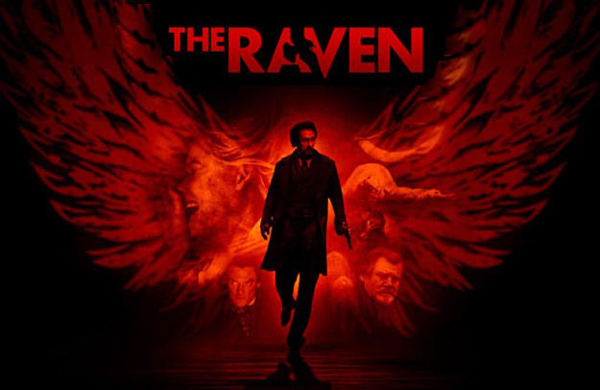
THE RAVEN POSTER

Have you ever had a movie that you didn’t really respond to but you had a hard time pinpointing why? This is the case with me after watching the 2012 period thriller “The Raven”. This is a movie that intrigued me from the start although I did keep it at an arm’s length. While the components for a unique crime thriller seemed to be there, I still never felt myself drawn to hurry up and see it. So as you can see, my fence straddling with “The Raven” started early. Well now I have seen this widely slammed movie. Is it as bad as the vast majority of critics made it out to be? I don’t think so. But unfortunately it’s missing some major pieces that are vital in making this kind of movie work.

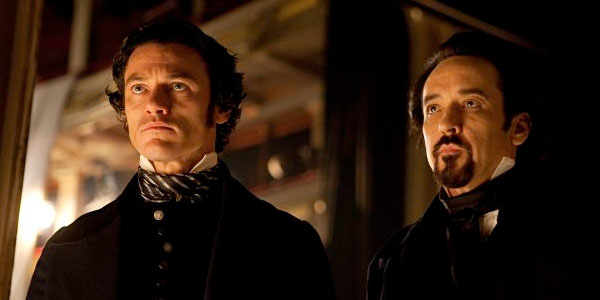
In case you don’t know the story, it’s set in 19th century Baltimore, Maryland. A brutal and grisly double murder puts the police on the trail of a serial killer who patterns his crimes after the short stories of Edgar Allan Poe. Lead Detective Fields (Luke Evans) at first suspects the eccentric Poe (John Cusack) but eventually calls on him to help in the investigation. It’s a cat and mouse game as the two sift through the clues left at every new and horrible crime scene, each tied in to Poe’s writings.

The stakes are raised for Poe after his fiancé Emily (Alice Eve) is kidnapped and used as a pawn by the killer. Now this is a direction the story takes that should give the movie some emotional kick but that’s not the case at all. Poe and Emily’s relationship is cold and lifeless. They try to throw in some tension with Emily’s father (Brendan Gleeson) who despises Poe, but that does little to liven things up. Emily’s capture does lead to some of the movies most intense moments. But the underplayed romance between her and Poe strips the movie of a genuine and much needed sense of urgency.

RAVEN 2

I guess that leads into where my real problems lie with “The Raven”. It moves at a sharp pace. It captures the dark and moody tone that it’s going for. The crime scenes are perfectly unsettling. But in the end so much of the story feels manufactured. The relationships feel manufactured. The urgency feels manufactured. Even the ending feels manufactured (and a bit unsatisfying as well). But perhaps the biggest sin this movie commits is its overall lack of suspense. It’s hard to call a thriller a success if it lacks suspense. “The Raven” desperately tries to muster some but I don’t ever remember feeling it at any point in the movie.

I think “The Raven” is a movie that has some good ideas, but it doesn’t do much with them. It’s not a sloppy or lazy picture. But it also fails to step outside the bounds of conventionality, something that the material afforded them the chance to do. Now it’s decent enough to keep you in your seat, but it never does anything to put you on the edge of it. Again, I guess that’s where my biggest problem lies. There’s nothing suspenseful that grabs you and keeps you glued to the screen. That’s what I want from a thriller and I just didn’t get enough of it here.

“West of Memphis” – 4 STARS

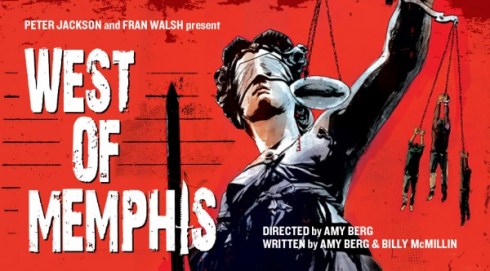
Memphis Poster

I’ve watched several documentaries over the years but I’m not nearly as well versed in them as I should be. To showcase my negligence even more, I don’t think I’ve ever watched a documentary in the theater. That finally changed with my viewing of “West of Memphis”, a film that looks at the 1993 murders of three 8-year boys in West Memphis, Arkansas. The case has seen a resurgence of media attention, much of it due to the HBO “Paradise Lost” trilogy and now this film. There have also been a vocal group of movie actors, directors, and music stars who have rallied to defend the three men convicted of the murders.

Usually when I see entertainers latch themselves onto high-profile news stories like this, I’m a little skeptical. To be quite honest, seeing Eddie Vedder, Henry Rollins, and the Dixie Chicks chiming in can sometimes do more to push me away than draw my interest. But “West of Memphis” is much more than a group of self-important celebrities posturing for attention (although there is some of that in the film). I found it to be an interesting documentary that had me challenging popular thoughts as well as weighing the wealth of new evidence and theories surrounding the case.

I was a 22 year-old Arkansan when the three young boys, Steven Branch, Christopher Byers, and Michael Moore were found murdered. Their bodies were discovered underwater in a drainage ditch, all three were nude, hog-tied, and showed signs of mutilation and sexual abuse. It was a horrific crime scene and the murders, the investigation, and the court cases captured the attention of the entire state of Arkansas. At the time, the buzz surrounding the events was enormous. And even now, after all these years, I like many other Arkansans who are old enough, still remember the details surrounding the sickening homicides and the highly publicized arrests and convictions that followed.

Memphis 1

The film starts by going back over the case. It uses archived news footage and interviews to lay out the disappearances and subsequent discovery of the three children’s bodies. I found this to be the most impressive and effective part of the entire film. With amazing care and precision, director Amy Berg resets the table for those familiar with the case and gives a history lesson to those who aren’t. She captures the tension and emotion that soaked the entire community during the time. She also does a wonderful job of bringing the audience into this simple blue-collar part of the country. The film instantly refreshed the timeline in my mind and almost immediately my heart was once again heavy for these families that suffered such terrible losses.

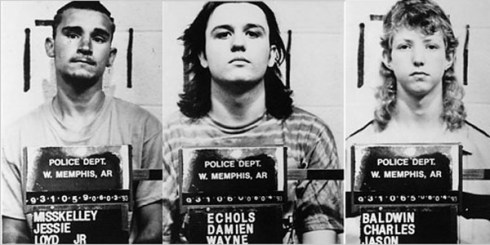
But the documentary quickly shifts to its main focus – the three young men convicted of the murders. Known as the West Memphis Three, Damien Echols, Jessie Misskelley, and James Baldwin were teenagers at the time they were arrested and convicted for the murders. Misskelley and Baldwin would receive life sentences while Echols, the perceived leader of the group, received the death penalty. They would spend 18 years in prison before a movement would arise and promote new evidences that some believe prove their innocence. “West of Memphis” clearly has a slant and a motive behind it. In fact Damien Echols is one of the film’s producers so I was questioning how objective and forthcoming the film would be.

The film’s defense of the West Memphis Three begins with attempts to discredit the police’s questioning of the suspects particularly during a confession made by Misskelley. It then attempts to show mistakes and flaws in the prosecution’s handling of the case as well as forensic incompetence my the state medical examiner. Now some of the filmmaker’s arguments raise some interesting questions, but others don’t seem to hold water. I also found it interesting that the film leaves out some of the more important questions surrounding the three teens, their statements, and their behavior during the investigation and trials. But even though I wasn’t completely sold on the filmmaker’s defense, they do offer up enough compelling questions to cause you to believe there may be a reasonable doubt.

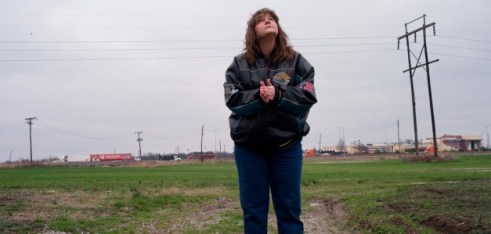
Memphis 2

But then the film takes another interesting turn. It removes the focus from the West Memphis Three and places it on Terry Hobbs, the stepfather of Steven Branch. It begins by linking new forensic evidence to him as well as documenting inconsistencies in his own story. The film also shows several interviews with people who speak of Hobbs’ past, his personality, and of inconsistencies that may implicate him in the murders. This is where I really found myself questioning the credibility of the state and the prosecution of the West Memphis Three. I did find it interesting that the film used some of the same tactics that it confronts the earlier prosecution of using. Uncorroborated statements, out-of-the-blue accusations, and questionable witnesses. But there are also several pieces of fascinating information that bruises Hobbs’ credibility.

All of this leads to the reason I really appreciated this documentary. The filmmakers have a strong and obvious opinion but they lay out enough facts, bits of evidences, and testimonies to allow the audience to decide for themselves. I was thoroughly engaged and constantly found myself moving from one side to the other while trying to deduce what was truth and what wasn’t. I also appreciated how the film moved at a crisp and fluid pace as it went from one investigative premise to another. Well, except for the end where the filmmakers go to great lengths to make heroes out of the West Memphis Three. If they are innocent, they should have never been unjustly convicted. That’s a travesty. But aside from the murder accusations, these weren’t the best of kids especially Echols and to place them on a pedestal felt a bit uncomfortable.

At just under two and a half hours, “West of Memphis” does get a little long-winded. It could have trimmed down the attempts at credibility through celebrity appearances and some of the prison scenes meant to endear Echols to the audience. But these shortcomings did little to hurt the overall effect of the picture. It’s an impressive piece of investigative filmmaking and it had me completely involved. I questioned the prosecution. I questioned the detectives. I questioned family members. I questioned the West Memphis Three. So after all the compelling food for thought, what’s my conclusion? I still don’t know who killed those three little boys. And without a doubt that’s the saddest thing of all.

“The Intouchables” – 4.5 STARS

INTOUCH poster

Rarely does a movie blatantly push all of my buttons yet completely win me over. That’s the case with the French drama The Intouchables. This is an irreverent and unashamed movie that aims to be a crowd pleaser and boy was it. It was a huge box office smash after its November 2011 release in France and eventually opened in the United States in 2012. But some critics have dismissed the film for its pandering to audiences and many critics who gave it positive reviews still spoke against its aim at broad appeal. But it doesn’t stop there. In absurd attempts to malign the film some critics have even deemed the movie to be racist and utterly offensive. Well this may not be the most well written quick response to these objections but I’ll say it anyway – Give me a break!

I have absolutely no problem with a movie aiming to be a crowd pleaser if it’s a good movie. The Intouchables is a very good movie and it works because of a smart and often times hilarious script and two fantastic lead performances. While it certainly goes for the feel-good emotion it also makes no apologies for its brash and playful handling of subjects that are often treated gingerly. For me that wasn’t a point of criticism. Instead it was fresh and new and one of the film’s several strong points. And the racism accusations defy reason. I’m not going to start breaking down plot points that prove the absurdity of the argument but let’s just say the film never promotes or depicts anything that led me to believe it was the slightest bit racist.

INTOUCH2

Now to the story – Olivier Nakache and Éric Toledano both wrote and directed this story of a wealthy quadriplegic man named Philippe (François Cluzet) and his new caregiver Driss (Omar Sy). The film starts with the two men speeding down a Paris street in Philippe’s Maserati. It’s obvious to us that the two have developed a bond and a friendship. From there the movie tells us their story through a one long flashback which begins with Philippe’s search for a new caregiver. A line of applicants sit in his lavish Paris mansion and among them is Driss. The other applicants are well dressed and educated in home care but all lack experience and some are just buffoons. Driss on the other hand is only there to get a signature to show he applied for the job and therefore qualify for a benefit. Fed up with waiting he barges in and gives a pretty brash “interview”.

Eventually Philippe hires him against the wishes of his staff. They find Driss to be loud and obnoxious but Philippe is looking for someone who doesn’t pity him and makes him feel alive. That’s the bond that fuels their relationship. The bulk of the film focuses on these two men and their improbable friendship. Both have their own set of issues and both find a release in the other. This is what I really responded to and not once did I find their relationship disingenuous or fabricated. I loved their playful banter and I appreciated how Philippe’s handicap was never used as a melodramatic pawn to anchor the narrative. Instead the film attempts to make him a real person to us. Yes he’s sympathetic but we also see him as experiencing life with the help of Driss.

The bigger reasons all this works are the two lead performances. Cluzet and Sy are brilliant and watching them play off each other is great entertainment. I found both performances to be full of sincerity and perfectly suited for the material. I had seen Cluzet in a handful of other French films including the more recent “Little White Lies” so his strong work here didn’t surprise me. But I was surprised at just how good Sy is. It’s really a big performance but it works very well. And I was blown away by his comedic timing, something that seems completely natural to him.

INTOUCH1

This leads me to another of The Intouchables strong points – the script. Nakache and Toledano put together a fantastic story that’s a great mix of heartwarming drama and hysterical comedy. For me it was the comedy that shined the brightest. Cluzet and Sy were great but a key reason for that was the well written screenplay. I loved the steady flow of humor and I have to say I haven’t laughed this much at a movie in a long time. But even the dramatic moments were strong and I was just as invested in them as anything else. They’re thoughtful and well conceived and aside from the occasional scene of contrived sentimentality it all comes together perfectly, just as you would hope it would.

There are several other things that I really loved about the film from the supporting work of Audrey Flouret and Anne Le Ny to the the beautiful piano driven score by Italian composer Ludovico Einaudi. But I think you get the point. Suffice it to say The Intouchables was a fantastic experience from its brilliant opening to its satisfying final scene. It’s an example of smart and capable filmmaking that can make you laugh as well as tug at your heartstrings. Yes it’s sometimes a bit showy and yes it sometimes plays to the masses, but I could care less. As long as it’s a good film I’m fine with it.

Check out my review of another solid French drama, “Girl on the Bridge“.

THE THURSDAY THROWDOWN – SISKEL vs. EBERT

The Throwdown

One Thursday of each month is Throwdown day at Keith & the Movies. It’s when we take two movie subjects, pit them against each other, and see who’s left standing. On these Thursdays we’ll look at actors, actresses, movies, genres, scenes, and more. I’ll make a case for each and then see how they stand up one-on-one. And it’s not just my opinion that counts. I’ll share my take and then open up the polls to you. Visit each time for a new Throwdown. Vote each time to decide the true winner!

So many of you were like me and grew up watching Gene Siskel and Roger Ebert go back and forth on their 30 minute movie review program. Their show first took form in the mid 70s but it really took off during the mid 80s and since then has gone through several title changes and eventually new hosts. But the show’s true heydays were from the mid 80s through the 1990s when Siskel and Ebert argued and sparred over movies every week. They each approached their opinions of movies differently and their tastes were also often times at odds. That made for great television and both helped make film criticism what it is today. But as you know this is The Throwdown. That means I’m putting these two movie critic icons up against each other. So who did you side with the most? Who was the better critic? Was it Siskel or Ebert? As always, your votes decide!

GENE SISKEL vs. ROGER EBERT

SISKEL VS EBERT

Gene Siskel was born in Chicago and ended up landing a job at the Chicago Tribune in 1969. His film critic career launched thanks to a small local PBS movie review show where he first teamed up with Roger Ebert. Siskel had a wide range of movie favorites including Woody Allen and Martin Scorsese pictures. But I also remember him for his unpredictability. He often times would surprise you with the variety of movies he would like. I also loved the way he worded his reviews. He took the funniest jabs at movies he didn’t like and had a hilarious way of pushing Ebert’s buttons. He was calmer but razor-sharp and the way he dissected a film was both thought-provoking and often times hysterical. I still love listening to his takes and he remains one of my favorite film critics of all time. Sadly he passed away in 1999 due to complications from a cancerous brain tumor. He’s still missed to this day.

Roger Ebert’s film critic career dates all the way back to 1967 when he began writing movie reviews for the Chicago Sun-Times. In addition to his column he would go on to author numerous books including a yearly annual. He also became the first movie critic to ever win a Pulitzer Prize. But it was his television collaboration withe Gene Siskel that really catapulted him into the spotlight. Ebert was the more boisterous of the two and seemed to lose his temper more which made for some wonderful television. He’s very outspoken in his criticism or praise of a film and you can’t help but to be enthralled in his opinions even if they sometimes seem wildly inconsistent. Yet even when Ebert gets worked up, you can always sense the true passion he has about movies. Roger Ebert was a perfect opposite to Gene Siskel and even though you have to wade through some pretty outlandish stuff from him, he continues writing and reviewing films for movie fans even today.

Now its in your hands. Who gets the “Thumbs Up”? Is it Gene Siskel or Roger Ebert? Vote now on the poll below and please share your thoughts and comments on these two great movie critic icons.