Ten of the Greatest Beards in the Movies

FAIL

Who doesn’t love sporting a cool beard? Well, aside from any female readers I may have. Beards have a pretty interesting history when it comes to movies. So for no rational reason other than entertainment value I thought it would be fun just to look at 10 movie beards that have stood out to me. And let me tell you, just sticking with 10 was a chore in itself. Anyway, here we go…

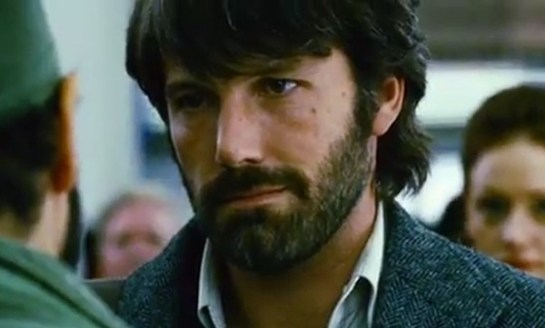
#10 – The Retro 1980 Beard (Tony Mendez – “Argo”)
ARGO

Ben Affleck’s Oscar winning “Argo” had a great opening, a great cast, and a great story. But it also features a Ben Affleck beard that hearkens back to the 1980’s. It is a bit jarring when you first see Ben in his mass of facial hair. But it actually fits well in the setting especially when combined with the bushy mop he is also sporting.

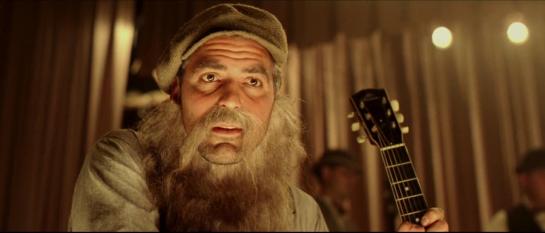
#9 – The Overtly Obvious Fake Beard (Everett – “O Brother, Where Art Thou?”)
O BROTHER

We have seen George Clooney in beards on multiple occasions but never in something that looked straight off of Duck Dynasty. Well that is what we get in the Coen Brothers deep south comedy “O Brother, Where Art Thou?”. Trying to hide your identity but also singing on a big public stage isn’t the smartest idea. Luckily Everett and his friends have the worse faux beards you’ll ever see.

#8 – The Sick, Twisted Evil Guy Beard (Calvin Candie – “Django Unchained”)

Calvin Candie

Leo DiCaprio has played a number of roles and many of them featured bits of facial scruff that had me wondering if he could even grow a full beard. Well he shut me up with his pointy bad boy beard in “Django Unchained”. His Calvin Candie is mean to the bone and a thoroughly detestable human being. But that beard he sports is unique even in a film full of bearded brethren.

#7 – The Wise Old Wizard Beard (Gandolf – “The Lord of the Rings”)
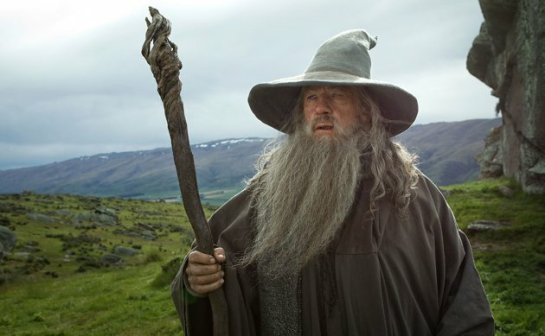
Gandolf

I mean come on, when it comes to memorable movie beards how can you not include Gandolf and his massive mane? The Gray and white beard as sported by Ian McKellen is picture perfect as a wise old sage with a bit of magic on the side. It’s as much a part of the character as is his powers and who would ever want to see a clean cut Gandolf? Nope, not me.

#6 – The Surly Wild West Beard (Rooster Cogburn – “True Grit”)

GRIT

When the Coen Brothers decided to remake “True Grit” I thought it was an interesting choice for them. But so many of the components worked well including Jeff Bridges as the surly, cantankerous Rooster Gogburn. His unkept ratty beard actually had many similarities with the character himself. How many times does he scratch his beard during some scenes? It makes sense. I mean who knows when he washed it last?

#5 – The ‘It’s Fur, Not a Beard’ Beard (Scott Howard – “Teen Wolf”)
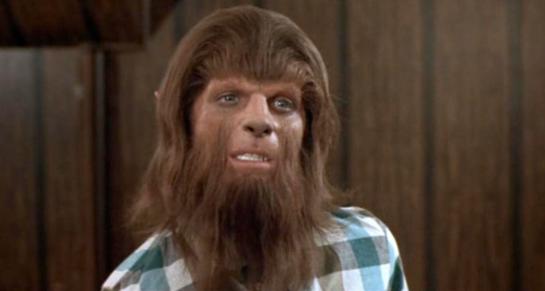
Teen WOlf

When you think back on it “Teen Wolf” was one preposterous movie. But oddly enough and despite something inside of me telling me different, it’s an entertaining flick that feels right at home in the crazy 80’s. The story is obvious – an awkward young teen (Michael J. Fox) turns into a werewolf and becomes the social hit of his school. It starts with facial hair which we all know makes you more popular in school, right? Well for him it didn’t stop there.

#4 – The Blood-Soaked Battlefield Beard (Leonidas – “300”)
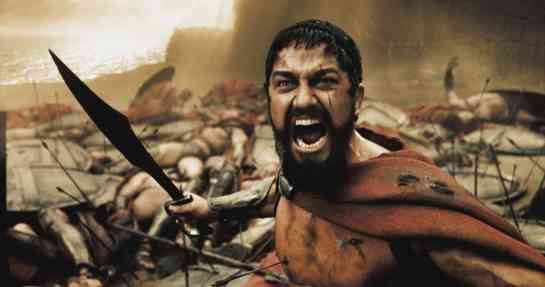
300

Okay, whether you appreciated “300” or not you have to admit that those were some pretty tough Spartans. There is a violent and bloody artistry to the battle scenes in “300” as this group of outmanned Spartans battle an entire Persian army. But with a tough and powerful leader like Leonidas, armed with his chiseled six-pack abs and jet black warriors beard, even I (minus the six-pack and jet black beard) would run out and die in battle.

#3 – The Suave Euro Beard (Hans Gruber – “Die Hard”)

HANS

In all of movie history I don’t know if you’ll find a more suave and chic main villain than Hans Gruber. He is smart and calculated. He is thorough and precise. He has an appreciate for good food and fine suits. He sports well groomed hair and and an even better groomed beard that screams “in fashion”. It’s impossible not to be impressed with Hans even while he is shooting your boss, blowing up the building, and taking you hostage.

#2 – The Crazed Stranded on a Deserted Island Beard (Chuck Noland – “Cast Away”)
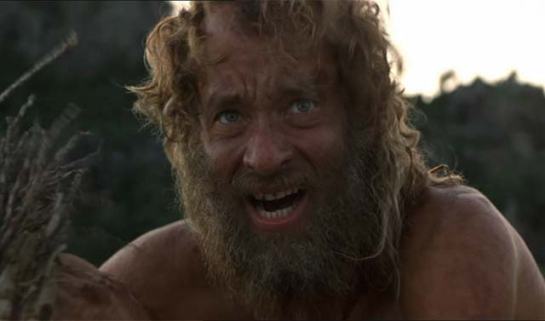
Cast Away

What a metamorphosis! In “Cast Away” Tom Hanks goes from well groomed and clean cut to looking like a wild man raised by a pack of wolves. But lets be honest, it is with good reason. I mean lets see how you would look after being stranded on a remote island for over four years with no razor or shaving cream. Regardless it is a beard that is unforgettable whether it’s because of its craziness or because it’s on Tom Hanks.

#1 – The ‘Because I’m Clint Flipping Eastwood’ Beard – (Blondie – “The Good, the Bad, and the Ugly”)
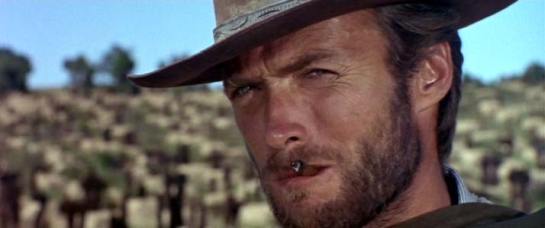
CLINT

Clint Eastwood is the man. I know that sounds silly, but Clint has been the quintessential movie tough guy for more than four decades. My first exposure to that gravely voice and patented Clint squint came in Sergio Leone’s “The Good, the Bad, and the Ugly”. The film is Clint Eastwood in a nutshell – tough as nails, quick with his sidearm, wearing a menacing serape, and of course that tough guy beard. He didn’t support it as much after the spaghetti westerns, but this tough guy look is how I first got to know him.
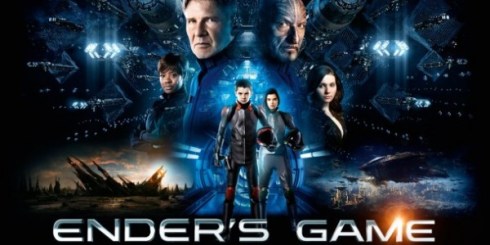
REVIEW: “Ender’s Game”

Enders game Poster

It would be easy to lump “Ender’s Game” in with the current trend of science-fiction films centered around young people. These movies seem to be popular now and modern Hollywood has shown it will milk popular trends dry. But while “Ender’s Game” has several elements that puts it in this category, it also does somethings that sets it apart. It is a movie with a thinly-veiled message, but it’s also a fun bit of science fiction that doesn’t always feel original but still works as a whole.

Asa Butterfield, who I loved as the wide-eyed title character in Martin Scorsese’s “Hugo”, plays a young prodigy named Andrew “Ender” Wiggin. After months of observation, he is sent to an advanced battle school by Colonel Graff (Harrison Ford). The school is the first step in preparing the kids for war with an alien species known as the Formics. 50 years earlier the Formics attacked Earth but were finally repelled by the heroic and sacrificial acts of a now iconic soldier named Mazer Rackham. The military believes another alien attack is inevitable so they plan to strike before the aliens do.

ENDERS2

The film follows Ender and a number of other kids through various stages of Battle School. You see apparently these video game savvy youth have acquired a better skill set for the video game-like combat of the future. As Ender advances he encounters an assortment of new kids, some of which are characters we’ve seen in movies a hundred times before. For example, there is an adolescent “Top Gun” rivalry that was just too corny to buy into. All of this is going on under the watchful eye of the cold, businesslike Colonel Graff and his counterpoint Major Anderson (Viola Davis) who is more interested in the children’s emotional well-being.

The story builds and builds towards the seemingly inevitable war to come. Ender develops a few close relationships with fellow cadets including an outgoing girl named Petra. She’s played by Hailee Steinfeld, one of my favorite young actresses in Hollywood. Ben Kingsley also pops up in the second half of the film with an interesting role and a face full of tattoos. The performances from all who I’ve mentioned are solid. I’m really impressed with Butterfield and Steinfeld, both of whom know how to handle themselves in front of the camera. Some of the other young actors, not so much.

ENDERS1

While I liked the story of “Ender’s Game” as a whole it does run into a wall about two-thirds of the way through. It begins to feel as if it is repeating itself (with slight advancements of the plot) at certain junctures. I eventually found myself ready to move past Ender’s training and get to the big finale. It certainly does come with some big special effects and a few rather disorienting twists that took a minute or two to soak in. Some interesting ramifications and personal conflicts follow which I thought was a neat way to end the story.

Maybe I shouldn’t say “end the story” because “Ender’s Game” is clearly set up with a franchise in mind. The final scene leaves no doubt about that. I would check out another chapter of this story although I’m not sure how compelling the new direction might be. As for this first installment, it is a fairly satisfying bit of science fiction that walks the tricky line of trying to appeal to youth and adults alike. For the most part it succeeds. It’s not a movie I would rush to see again, but it is a film I can appreciate.

VERDICT – 3.5 STARS

REVIEW: “Amador”

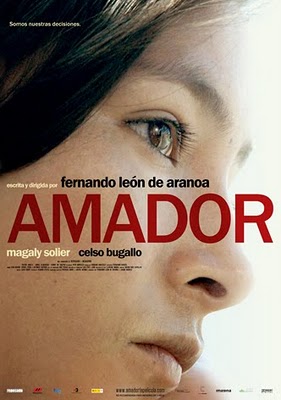
AMADOR POSTERThere’s an intriguing, poignant, and fairly bizarre idea at the center of the 2010 Spanish drama “Amador”. Marcela (Magaly Solier) is a woman struggling to find an ounce of happiness in her life. Her husband Nelson (Pietro Sibille) has promised her the world including owning her own flower shop. But he seems content with running a second-hand flower business out of their tiny apartment. He sends out cheap laborers to get discarded flowers from dumpsters. He then picks out the salvageable ones, prunes them, sprays them with floral air freshener, then sells them on the street. It’s quite a concept but its far from what Marcela wants.

One day Marcela packs her suitcase and leaves a note for Nelson telling him she’s leaving. But while waiting at the bus stop she collapses. It turns out she’s pregnant. Knowing she can’t handle a baby on her own, she heads back home before Nelson arrives. She never tells Nelson her initial plans and even more, she doesn’t tell him she’s pregnant. This gets into one aspect of this movie that drove me crazy. Marcela never tells anyone anything! This leads to several predicaments that could have been avoided with better judgement and better communication.

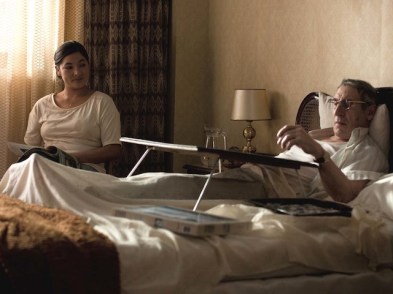
Things get tougher when the couple’s refrigerator goes out leaving them with no way to refrigerate their flowers. With no money for a new one, Marcela is forced to take on another job as a caregiver for a sick, bedridden elderly man named Amador (Celso Bugallo). She’s hired by Amador’s daughter who seems to see her father as a burden. She leaves a phone number and medication instructions then leaves. Marcela cooks Amador’s meals, gives him his pills, does his laundry, and eventually forms a connection with him, something he grows to appreciate. But Amador’s declining health soon leads to several decisions that carry all sorts of moral implications.

AMADOR

There are many things that this film does right. Unfortunately there are several stumbling blocks that keeps me from being able to fully embrace it. It’s hard to get into one of my problems without wandering into spoiler territory. I’m not going to do that, but let me just say there are some breaks from logic that were tough for me to get past. There’s a big turning point midway through the movie that effects the rest of the story and adds an interesting dynamic to what we’ve seen so far. But with it comes some head-scratching questions that the film tries to but never adequately deals with. I spent a lot of the second half of the film focusing more on these gaping illogical holes than on the actual story.

Another problem is with the handling of the Marcela character from writer and director Fernando León de Aranoa. She is incredibly passive when it comes to her situations and decision making. It’s another movie example of how a little communication could solve a lot of the problems that come her way. We also spend a lot of time just watching Marcela think, stare, and look concerned. And trust me, I mean A LOT of time and it ends up bogging the movie down a tad. Now I can’t really fault Solier’s performance. She’s very good here. But de Aranoa chooses to keep his camera in her face for long stretches and directs her to be slow and deliberate with almost everything she does. This did eventually slow things down a little too much for me.

If you can wade through the intentional deliberate pacing and forgive a couple of obvious plot holes, there is a lot to like with “Amador”. There’s such a great concept at the heart of this stor. I also think Marcela is a fascinating character and I particularly enjoyed her candid and often times amusing conversations with Amador. With a little better direction and a sharper script it could have been even better.

VERDICT – 3 STARS

REVIEW: “Prisoners”

Prisoners poster

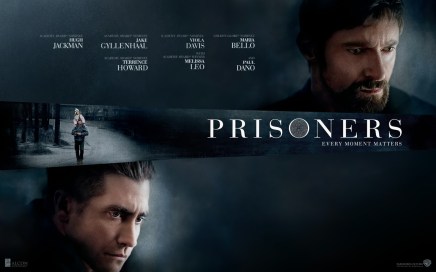
There isn’t an ounce of Hollywood spectacle or flash in “Prisoners”. Instead Canadian director Denis Villeneuve (in his American movie debut) creates an intense and methodical thriller rooted in an uncomfortable realism. The story is bleak and unsettling and hope, much like the cold wet weather, deteriorates as the movie takes one emotion turn after another. It’s powerful stuff brought together by an impressive and capable director, a phenomenal cast, and a really strong script.

The story revolves around the abduction of two young girls in a working class Pennsylvania town. The parents, Keller and Grace Dover (Hugh Jackman and Maria Bello) and Franklin and Nancy Birch (Terrence Howard and Viola Davis) go through a whirlwind of ever-changing emotions and developments. Detective Loki (Jake Gyllenhaal) is a determined yet complex officer with a stellar reputation for solving cases. Paul Dano plays the chief subject who has the mind of a 12-year old. Melissa Leo plays his mother. The story features several misdirections and twists, each effecting these characters in an assortment of different ways.

prisoners1

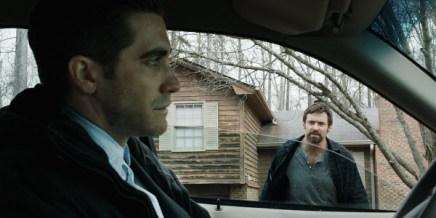
You can’t talk about “Prisoners” without focusing on the stellar cast. Jackman gives the performance of his career. He peels back the layers of conflicting emotion and exposes a vulnerability that I’ve never seen from him. He causes you to feel sympathy for the character while also making you shudder at his actions especially when the chief suspect is released for lack of evidence. I also feel this is some of Gyllenhaal’s best work. I’ve always been mixed when it comes to his acting prowess but he’s so good here. Sporting a threatening neck tattoo and slouchy top-buttoned shirt, you always get the feeling he has some baggage he’s struggling with.

There is also a great sense of place throughout the entire film. The rain, snow, and cold weather plays an ever-present role and the locations set things firmly in a blue-collar Northeastern environment. The great cinematographer Roger Deakins gets a ton of credit for that. His camera seems perfectly in tune with the moods of each scene and he gives us several unforgettable shots. It’s his first work since “Skyfall” and he once again shows that he is a true master of his craft.

Prisoners2

“Prisoners” can at times be uncomfortable for a variety of reasons. Of course the child abduction aspect isn’t something anyone is comfortable with. But there is a sly cleverness to how the movie deals with human nature particularly the thirst for revenge. We see how the emotionally compromised can be consumed by their sorrow and resort to terrible things. But is there a time when certain tactics are justified? Are their instances where you would do the same thing? These are interesting questions and the movie lets you decide the answers yourself.

“Prisoners” offers some slick foreboding, crafty twists, and a satisfying ending. An A-list cast masterfully handles the material and the look and tone of the film is just right. The sharp direction works in conjunction with a smart script to create a visceral experience that will stick with you. It does get a tad heavy at times and the running time is a bit long, but it still is one of the better and more intense thrillers of late.

VERDICT – 4 STARS

REVIEW: “The Heiress”

HEIRESS POSTER

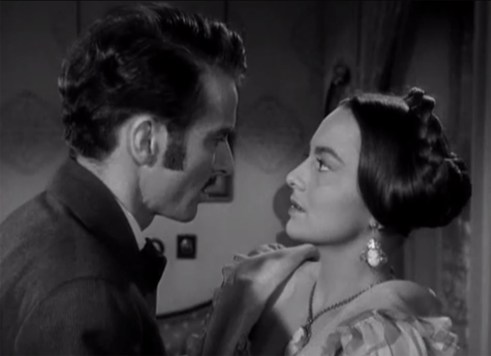
At times William Wyler’s “The Heiress” comes across as an extravagant stage production. That makes sense since it was adapted from the popular 1947 Broadway play. But the original story actually came from the the 1880 novel “Washington Square” by Henry James. Husband and wife playwrights Augustus and Ruth Goetz brought James’ book to the stage and were later convinced to write the film’s screenplay. Their familiarity with the material and their mellifluous writing style mixed perfectly with Wyler’s perfectionism. The result was a highly acclaimed that still garnered critical praise and several Academy Awards.

In many ways the film’s star Olivia de Havilland can be thanked for making the movie happen. She went to see the play based on a recommendation and before it was even finished she was making calls. She first convinced the wonderful William Wyler to direct the film. He was instrumental in getting studio support and in convincing Augustus and Ruth Goetz to write the script. Montgomery Clift added another popular face to the production and the wonderful Ralph Richardson, who had taken part in a London stage version, was also cast.

Heiress2

The story is set in 19th century New York City and focuses on a plain and reserved young woman (de Havilland) from the upper-class Washington Square neighborhood. She lives with her wealthy and proper father (Richardson) who does a poor job of hiding his disappointment. Her shyness and naivety draws her father’s insults and disenchantment and her feelings of self-worth are practically nonexistent. But their relationship takes a worse turn when she starts a relationship with a charming young man named Morris (Montgomery Clift). Her father thinks Morris is after her inheritance and he certainly doesn’t believe she’s capable of attracting a decent man. This three-way conflict makes up the core of this story.

“The Heiress” is unquestionably talky, but when the script is so fluid and its placed in the hands of such great performers, it’s easy to get lost in it. The Goetzs have no problem moving the story from stage to screen and Wyler’s directorial fingerprints are everywhere. His calculated long takes and his precise attention to detail are just some of the things you’ll notice. The film moves at a wonderful pace and it always keeps its focus. It also takes some pretty heavy subjects and treats them with respect.

HEIRESS1

And then again you have the marvelous performances. Olivia de Havilland is nothing short of fabulous and she would go on to win her second Academy Award for her performance. Ralph Richardson is simply perfect as the arrogant aristocratic father. His well-spoken eloquence and tinge of snobbery is exactly what the role demanded. And then we have Montgomery Clift who I think does marvelous work. Apparently he didn’t think so. It’s said that Clift disliked his performance so much that he left the premiere before the film ended. That is definitely a case of being your own worst critic because I thought he was excellent.

“The Heiress” is a true motion picture classic and it is crafted by the talents of some of the best filmmakers and performers to ever work in the business. It has a very stagey feel and rightfully so. But it’s great drama that dissects and exposes its characters while telling a dense and emotional story. This film may not draw the attention of some modern moviegoers but it should. If you love movies, treat yourself by seeing “The Heiress”.

VERDICT – 4.5 STARS

REVIEW: “Camera Buff”

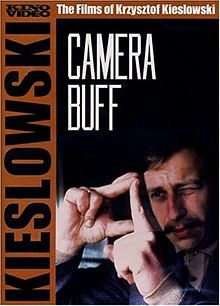
Camera Buff poster“Camera Buff” is a 1979 film from Polish director Krzysztof Kieslowski about an eccentric and reserved man and his infatuation with his newly purchased movie camera. Jerzy Stuhr brilliantly plays Filip, a loving and content husband who spends two weeks worth of salary on a small 8mm video camera in order to film his new baby girl. Filip is a nervous, circumspect man who you feel is perfectly happy with his quiet and confined life.

But things change when a local Communist Party boss assigns him the task of filming a celebration at the plant where he works. Filip reluctantly agrees. His film is deemed a success and eventually is entered into a competition at an amateur filmmaker’s festival where it wins third place. Filip’s films become his obsession and he grows impervious to the destructive effects that his new addiction is having on his crumbling marriage. He also fails to understand the serious consequences of unbridled enthusiasm.

In Camera Buff”  Kieslowski touches on numerous weighty subjects including the oppressive nature of communism. The film takes place in Communist Poland sometimes during the 1970′s and you can really sense the heavy authoritarian feel. From the cinematography to the conversations, I really felt as if there was a bigger, ever-present enemy lurking in the background. Not just an enemy to the people but to their freedom of creation and expression. It’s brilliantly realized.

Camera Buff

Kieslowski also does a remarkable job showing the power of filmmaking. For example, Filip makes a film about a “dwarf” who has been working at the factory for years and is nearing retirement. We see the power of film as the man tells Filip how deeply moved he was by it. One of Filip’s neighbors seriously struggles with the death of his mother but recalls that Filip filmed him and his mom in a happier time. Filip shows him the film and it gives him a much needed level of comfort and peace. These things fuels Filip’s love for filming but it also clouds his vision and keeps him from seeing the damage it’s doing to his home life.

“Camera Buff” deals with an assortment of other themes and does so very effectively. As the film progressed, it had me wondering if I was witnessing a young filmmaker realizing and finding his dream or watching an obsessed husband and father heading down a path of self-destruction. The movie is marked by an amazing performance by Stuhr, a stimulating story, and strong direction, both handled by Kieslowski. It doesn’t shy away from emotional or even provocative material and is nearly perfect in it’s execution. This is a magnificent film and a nice introduction to Kieslowski’s work for anyone who hasn’t seen his pictures.

VERDICT – 4.5 STARS