
REVIEW: “A Christmas Story Christmas” (2022)

Our family loves Christmas time. And like many families, we have our favorite holiday traditions. Among them is watching Christmas movies. Promptly starting the Friday after Thanksgiving, we kick off our Christmas movie watching season. Of course we have our favorites, from silly yuletide romps like “Elf” and “National Lampoon’s Christmas Vacatiom” to perennial classics like “Miracle on 34th Street” and “It’s a Wonderful Life”. We adore them.

But we always save one of our very favorites to last. A movie we’ve seen too many times to count. One that’s infinitely quotable and hilarious from start to finish. One with so many terrific characters who you learn and love by name, and just as many endearing moments that make the movie memorable. I’m talking about Bob Clark’s delightful 1983 treasure, “A Christmas Story”. Loaded with charm, humor, heart, and tons of holiday cheer, “A Christmas Story” has only grown in popularity over the years. And now, nearly 40 years later, the movie is getting a proper follow-up.

My immediate reaction to the news of a sequel was “Gulp”. Is this something we really need? Do we really want them tinkering with something many of us love so much? As it turns out, “A Christmas Story Christmas” (not the easiest title to recite) is its own little treat. Is it as good as the 1983 film? Of course not, nowhere close. But that’s an unfair comparison. It’s not aiming to equal its predecessor. Instead, director and co-writer Clay Kaytis sets out to honor “A Christmas Story” by tapping into the characters, style, and tone which made that film great.

Image Courtesy of Warner Bros. Pictures

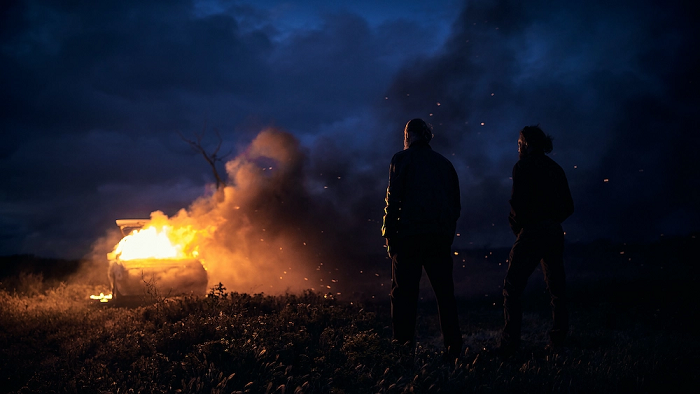
Without question “A Christmas Story Christmas” is made for fans of the original film, and you can tell it from the very start, as the old classic Warner Bros. logo fades away and we’re greeted by the familiar chimes of “We Wish You a Merry Christmas“. There’s the exact same opening credits fonts, and of course that signature narration (a different voice of course, but later it’ll make sense why). Fans will immediately recognize these callbacks, and there will be countless others in the forms of locations, lines of dialogue, and of course the characters. One of the biggest treats is seeing nearly all of the original cast return to their roles.

The story is set in December of 1973. When we last saw Ralphie Parker he was a bespectacled young boy from Hohman, Indiana who had just received the greatest Christmas gift he would ever receive – “an official Red Ryder Carbine Action 200-shot Range Model air rifle”. Years later, Ralph (a returning Peter Billingsley) lives in Chicago with his wife Sandy (Erinn Hayes), son Mark (River Drosche), and daughter Julie (Julianna Layne). He’s spent the last year writing what he believes is “the next great American novel”, but he’s set himself a deadline. He made a deal with Sandy that he has to be published by the end of the year or he would pack up his dream and re-enter the rat race.

Unfortunately things aren’t looking good for Ralph. He has sent his 2,000-page manuscript (yes, you read that right) to 16 publishers and 15 have said “no thanks”. But his writing takes a backseat after he gets a phone call no one wants to receive. It’s his mother who tells him his father (unforgettably played in the 1983 film by the late Darren McGavin) has passed away. Ralph is crushed. So he and his family load up in their ’66 Plymouth and head for Hohman. Upon arriving they’re greeted by the warm welcome of Ralph’s mom (Julie Hagerty, taking over for Melinda Dillon who retired from acting 15 years ago).
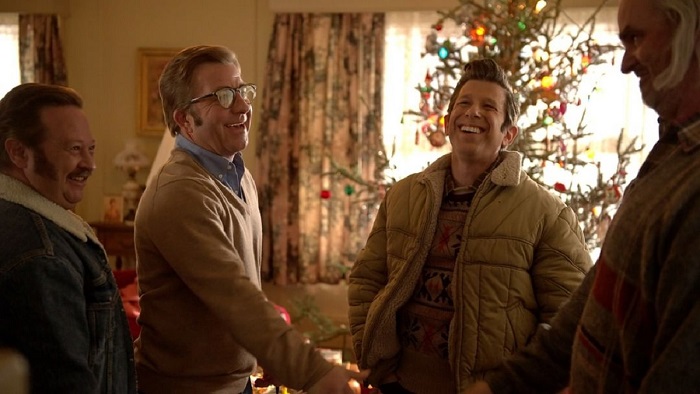
Image Courtesy of Warner Bros. Pictures

Ralphie expects to help his mother make funeral arrangements, but she has something else in mind. Reminding him how much his father loved Christmas, she decides to delay his funeral until after the holiday. She tasks Ralph with making sure this is the best Christmas ever – a most fitting way for them to honor his Old Man. Here’s the thing, he only has five days to pull it off. But ever the daydreamer, Ralph finds inspiration and is determined to give his family the kind of Christmas that would make his dad proud.

As the story scoots along we’re reintroduced to several familiar faces. Of course there’s Ralph’s kid brother Randy (Ian Petrella) who’s a traveling businessman and a bit of a flake. And who can forget his best buddies, Flick (Scott Schwartz), who now runs a bar passed down from his dad, and Schwartz (R.D. Robb), who still lives with his mom and spends most of his time running up its tab at Flick’s Tavern. We even get some moments with those pesky hillbilly neighbors the Bumpass family. So many other things bring fun memories gushing back, such as the familiar details of Ralph’s old Cleveland Street house and the “tinkling display of mechanized, electronic joy” in the window at Higbie’s Department Store.

But what makes the movie more than a simple nostalgia trip is how it repeatedly returns to its emotional core. Namely, the loss of a beloved father and a son trying to cope. This really comes to light after Ralph’s mom asks him to write his father’s obituary. Yes, Kaytis and company unashamedly taps into what people love about “A Christmas Story”. But it also has a heart of its own. It makes for a truly enjoyable mix. And if people will avoid the temptation to needlessly compare the two, they’ll find this to be a pretty irresistible sequel and quite the “Christmas Story” companion piece. “A Christmas Story Christmas” premieres November 17th on HBO MAX.

VERDICT – 4 STARS

REVIEW: “Black Panther: Wakanda Forever” (2022)

If the Marvel Cinematic Universe ever needed a jolt it’s now. While the box office and streaming juggernaut is still widely popular and hugely profitable, its current phase (Phase IV for those keeping up) is a far cry from the propulsive and cohesive MCU of old that culminated in “The Avengers: Endgame”. Since then, the MCU has been branching off into so many directions and have forgotten about coherence and continuity (yes, I know Kevin Feige and company have a blueprint they’re following, but that doesn’t change how these movies and streaming shows feel).

Quite frankly, the MCU needs a kick in the pants; a boost of adrenaline to get it out of this current malaise where everything feels so lightweight, segmented, and directionless. Earlier this year Sam Raimi tried with the deliciously chaotic and gonzo “Doctor Strange and the Multiverse of Madness”. But predictably it was met with some push-back (it was too dark. it was too violent, it was too “out there”). The dreadful “Thor: Love and Thunder” only exacerbated the MCU’s problems. And now we have the long-awaited “Black Panther: Wakanda Forever”, a movie full of unenviable challenges. Could it be a cinematic return to form for the MCU, or would its emotional baggage be too much to overcome?

For some people, all they really needed was for “Wakanda Forever” to handle Chadwick Boseman‘s passing well. If the movie did that, it would earn enough goodwill that the rest wouldn’t really matter. In a way that’s understandable. The loss of Boseman hit hard and is still felt by many. Director Ryan Coogler had to deal with it, both in reality and within the context of the “Black Panther” character. That’s no easy task. But Coogler does his best, creating something that’s a memorial to both T’Challa and Chadwick Boseman himself. He also provides a cathartic release for audiences and the cast alike. Something that’s needed before he or we can move forward.

Image Courtesy of Marvel Studios

“Wakanda Forever” begins by immediately tackling the T’Challa issue. Rather than using CGI to recreate the character or framing his death through a some big action encounter, Coogler and co-writer Joe Robert Cole attribute it to an “undisclosed illness”. It’s undeniably vague and the lack of detail is pretty hard to look past. Still, I didn’t mind how Coogler chose to handle it under the circumstances. It hits pretty hard, especially when we’re reintroduced to the Wakandans as they try to cope with the loss of their king and protector.

The story quickly shifts to one year later as T’Challa’s mother, Queen Ramonda (an excellent Angela Bassett) works to lead the wounded and mourning Wakanda. Meanwhile, her daughter, the tech savvy Princess Shuri (Letitia Wright), is burdened with guilt, feeling she should have been able to use her know-how to save her brother. As they try to navigate this difficult time individually and collectively, Wakanda finds itself a hot topic on the global stage. Various nations are pressuring Ramonda to share their vibranium, the strongest metal in the world which Wakanda kept hidden until the events of the previous film. And with word of Black Panther’s death getting around, some are trying to take it by force.

With a new vibranium-detecting machine in their possession, the US government locate a potential vibranium deposit on the ocean floor. A mining expedition is sent out, but during their operation the entire team is attacked and killed by blue-skinned warriors led by Namor (Tenoch Huerta Mejia), the king of an underwater civilization who, like Wakanda, hides from the outside world and also possesses and protects vibranium.

The brainiacs at the CIA wrongly conclude it was the Wakandans who sabotaged their mission. Meanwhile an angry Namor blames Wakanda for drawing the outsiders to their vibranium in the first place. He approaches Ramonda and Shuri to voice his displeasure and inform them of his plan to find and kill the inventor of the vibranium-detecting machine, an MIT student named Riri Williams (Dominique Thorne). He gives them a choice. They can either join him against the surface world, or he and his warriors will attack Wakanda.

Needless to say the story has a lot going on. While the loss of T’Challa looms over the entire movie, there are also introductions of new characters and new worlds, global politics and at-home tension. It ends up being a little too much as the movie feels needlessly overstuffed even at 160 minutes. Much of it comes from the insistence on franchise service. Take the Riri Williams (aka Ironheart) inclusion. She’s a decent enough character and Thorne’s performance is fine. But here she’s little more than a plot device, and here mainly to promote her upcoming Disney+ streaming series.

Image Courtesy of Marvel Studios

The biggest new addition is Namor, a classic comics character with a lot of potential within the MCU. In many ways he’s Coogler’s Killmonger 2.0 – an antagonist with a fairly similar backstory rooted in pain and oppression. Both Namor and Huerta Mejia’s performance start a little soft. But he toughens up later and really embraces the villain role. He’s particularly strong in the action scenes, proving Namor to be a formidable foe.

But the movie can’t fully shake its nagging issues. Some of photography is dark and murky, specifically in Namor’s Mayan-inspired underwater home Talokan (DC and Aquaman had dibs on Atlantis). Also, at times the blue skin of Namor’s warriors doesn’t always look convincing. And while I loved going back to Wakanda, here it’s missing a lot of the detail that made the 2018 film so transporting. It doesn’t quite feel like the same place. Storywise, there’s several strangely rash decisions and knee-jerk reactions. And after some good tense buildup, the ending feels a bit too tidy.

Some of these are small gripes on their own, but they add up. Still Coogler and company deserve credit for facing some really big challenges head-on. And while the heartache is intense, Coogler does more than ride a wave of sentiment and emotion. There are some storytelling issues, the film starts to drag in the middle, and it definitely misses Chadwick Boseman’s quiet dignity and gravitas. But I loved the thorny politics that play out within and between the two vibranium empowered nations. Plus, the introduction of Namor teases some pretty exciting things. And considering how light and breezy the recent MCU has felt, it’s nice and refreshing to get something more serious-minded. “Black Panther: Wakanda Forever” is in theaters now.

VERDICT – 3.5 STARS

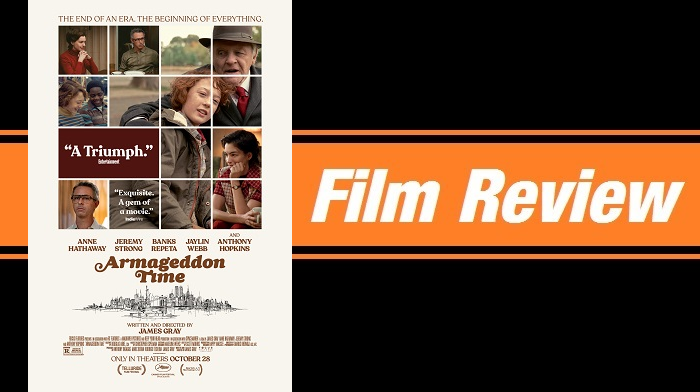
REVIEW: “Armageddon Time” (2022)

(CLICK HERE to read my full review in the Arkansas Democrat-Gazette)

One of the biggest satisfactions from James Gray’s new coming-of-age drama “Armageddon Time” is unpacking it afterwards – peeling back the layers and sorting through the various memories the filmmaker attempts to explore. If only watching the movie carried the same sense of fulfillment. Despite being a deeply personal film for Gray, it doesn’t always feel like it. Some scenes unquestionably bear the filmmaker’s mark. Others have an overly familiar studio product feel. Still, it does have its saving graces.

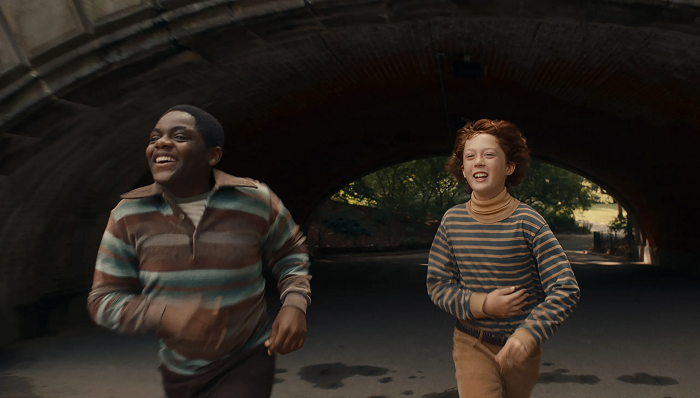
“Armageddon Time” is heavily influenced from Gray’s childhood growing up in Queens, and he does a good job recreating that time and place. Opening in 1980, this memoir of sorts begins in a public classroom on the first day of school. Paul Graff (Banks Repeta), an 11-year-old aspiring artist and class clown, meets and befriends his new classmate Johnny (Jaylin Webb), a fellow disruptor working on his second year in sixth grade.

The two boys have an interesting dynamic. Paul is Jewish-American and comes from a fairly stable working class family. Johnny is one of the few Black kids in the school and lives with his ailing grandmother. The roots of their mischievousness is dramatically different, yet both find a partner in crime in each other. But that doesn’t mean they’re good together which leads to a nagging conflict within the movie.

Image Courtesy of Focus Features

Gray has a hard time balancing our sympathy with the boys’ delinquency. We feel for them whenever we’re shown the harsher side of their upbringing. But their blatant disrespect and troublemaking (which steadily worsens whenever they’re together) doesn’t exactly have the effect Gray is shooting for. The most compelling aspect of their relationship is in how differently the two are treated for their misbehavior, whether it’s by their teacher, Mr. Turkeltaub (Andrew Polk) or the cops. This is where the film’s sometimes shaky racial politics is its most effective.

The scenes at Paul’s home play like a tapestry of memories that Gray has passionately stitched together. Paul’s family are proud but insular Jewish liberals who happily take snide shots at Ronald Reagan every time he pops up on the television, yet are blind to their own racism that surfaces whenever they talk about “the blacks.” His uptight mother, Esther (Anne Hathaway) is the president of the PTA and absorbed in her desire to run for the school board. His hard-shelled father, Irving (Jeremy Strong) is a repairman with a notable bad temper but who may be a good guy underneath (It’s hard to tell. He’s haphazardly written and more of a sketch than a portrait). Then there’s Paul’s one-note jerk of an older brother Ted (Ryan Sell) who attends a private high school and does nothing more than antagonize.

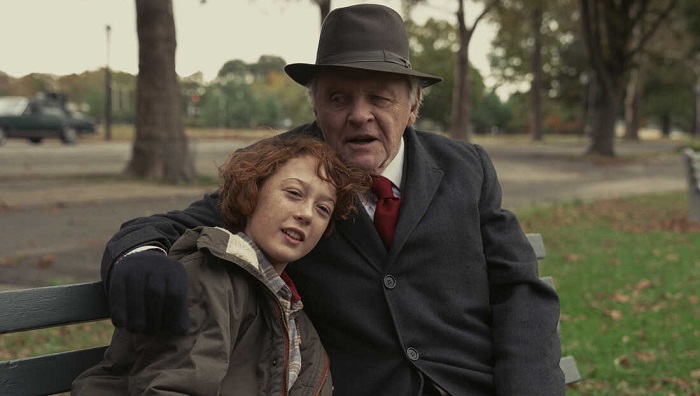
While Paul is cold to his mother (something vaguely explained but not in a satisfying way) and fearful of his father (which is realized through one particularly harrowing scene), the lone family member he’s closest to is his grandfather, Aaron (Anthony Hopkins). Paul is honest and open with his grandpa. And much like the boy, we light up whenever Hopkins shows up on screen. The film’s most tender and heartfelt moments feature Hopkins and his signature blend of charisma and warmth. And Aaron may be the movie’s most interesting character, with wisdom and perspective shaped by his family’s history with the Holocaust.

Image Courtesy of Focus Features

The film’s flaws are more pronounced in the second half as Johnny’s story fades to the background, and Gray ventures off into other thematic weeds. A chunk of it follows Paul as he’s sent to the uppity Kew-Forest prep-school, where businessman Fred Trump (John Diehl) sent his children, future president Donald and US Appellate Judge Maryanne (played briefly by Jessica Chastain). Gray uses these scenes to highlight the era’s class and race clash, attempting to connect it to the Reagan years and more lazily the Trump presidency. But it’s more vague assertions than thoughtful consideration.

It culminates in an unfortunate final scene that’s well-intended but ends up making Johnny’s entire story a means to give Paul (and perhaps Gray himself) this big moment of self-congratulatory clarity. It’s a sour note to end on, and one that leaves you reconsidering some of the weightier stuff that came before it, particularly in its dealings with race.

In the end, Gray simply has too much on his mind and gets trapped in between reflecting on his childhood and offering a politically-charged critique. There’s some material there for each, but not enough to juggle both. It’s hard to stay connected emotionally, despite another sterling and impactful performance from Anthony Hopkins. And in terms of its messaging, “Armageddon Time” remains surprisingly inert, and no amount of shallow sermonizing and self-implication can give it the heft it’s so desperately after. “Armageddon Time” is now showing in select theaters.

VERDICT – 2 STARS

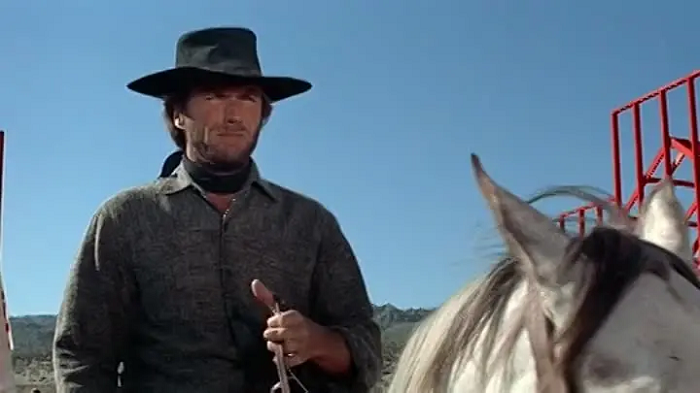
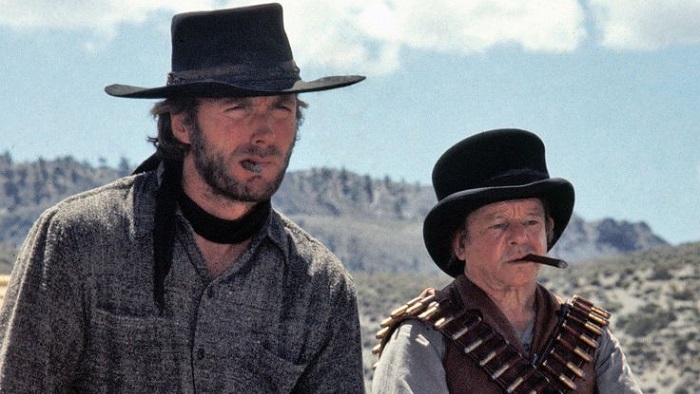
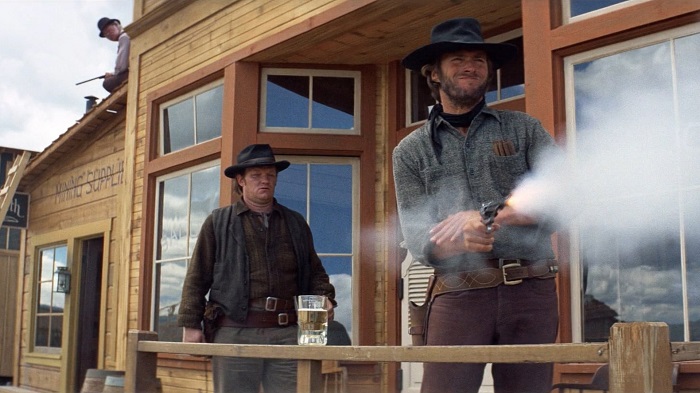
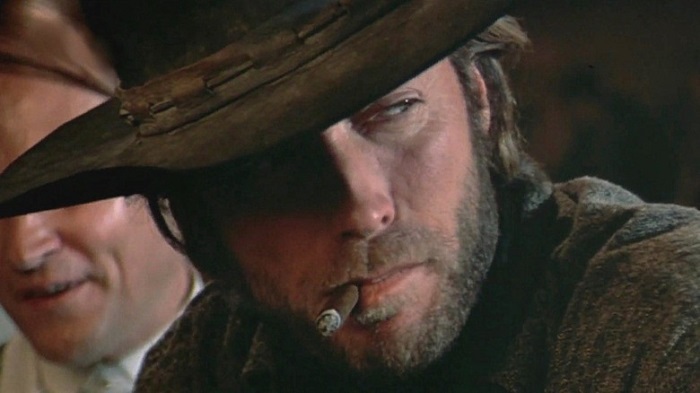
New on Home Video: “High Plains Drifter” (1973) 4K UHD

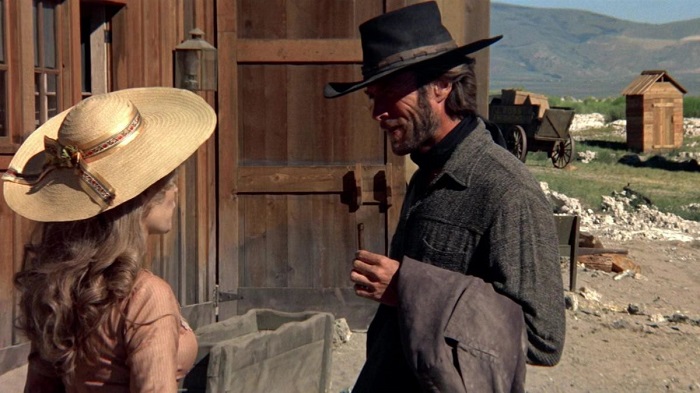
Kino Lorber Studio Classics is giving a beloved Clint Eastwood Western the 4K UHD treatment. “High Plains Drifter” is both directed by and stars Eastwood. He plays a mysterious stranger who drifts into a small mining town to dole out his own brand of justice. Heavily influenced by his spaghetti western trilogy with the great Sergio Leone, “High Plains Drifter” shares many similarities with his ‘Man With No Name’ films. Yet the movie has its own distinct identity in large part thanks to Eastwood’s terrific direction.

This new 4K UHD of “High Plains Drifter” hits shelves NOVEMBER 22, 2022. See below for a full synopsis and breakdown of the bonus features.

OFFICIAL SYNOPSIS:

Year: 1973

Rating: R

Runtime: 105

Director: Clint Eastwood

Starring: Clint Eastwood, Marianna Hill, Verna Bloom, Mitchell Ryan, Geoffrey Lewis, Jack Ging

THEY’D NEVER FORGET THE DAY HE DRIFTED INTO TOWN! From Clint Eastwood, the acclaimed director/star of The Outlaw Josey Wales, Pale Rider, Unforgiven, Million Dollar Baby, Gran Torino and The Mule, comes this western masterpiece and homage to his “The Man with No Name” legend. Eastwood portrays a mysterious stranger who emerges out of the heat waves of the desert and rides into the guilt-ridden town of Lago. After committing three murders in the first 20 minutes, The Stranger is hired by the town’s citizens to protect them from the three vengeful gunmen about to be released from jail.

Eastwood’s second film as a director is a tribute to his three spaghetti western classics with the great Sergio Leone, and features a strong supporting cast that includes Verna Bloom (Medium Cool), Marianna Hill (The Baby), Mitchell Ryan (The Hunting Party), Jack Ging (Play Misty for Me), Geoffrey Lewis (Every Which Way but Loose), Anthony James (In the Heat of the Night), John Hillerman (Blazing Saddles), John Quade (Breakheart Pass) and Billy Curtis (The Terror of Tiny Town). Beautifully shot in CinemaScope by Bruce Surtees (Dirty Harry) with a great screenplay by Ernest Tidyman (The French Connection) and a memorable score by Dee Barton (Thunderbolt and Lightfoot).

BONUS FEATURES:

DISC 1 (4KUHD): Brand New HDR/Dolby Vision Master – From a 4K Scan of the Original Camera Negative | NEW Audio Commentary by Film Historians Steve Mitchell and Nathaniel Thompson | Audio Commentary by Filmmaker Alex Cox | 5.1 Surround and Lossless 2.0 Audio | Triple-Layered UHD100 Disc | Optional English Subtitles

DISC 2 (BLU-RAY): Brand New HD Master – From a 4K Scan of the Original Camera Negative | NEW Audio Commentary by Film Historians Steve Mitchell and Nathaniel Thompson | Audio Commentary by Filmmaker Alex Cox | LADY VENGEANCE: Interview with Actress Marianna Hill | HELL TO PAY: Interview with Actor Mitchell Ryan | THE BARBER OF LAGO: Interview with Actor William O’Connell | A MAN NAMED EASTWOOD: Vintage Promo in HD | TRAILERS FROM HELL Episodes with Josh Olson & Edgar Wright | Poster and Image Gallery | TV & Radio Spot | 2 Theatrical Trailers | 5.1 Surround and Lossless 2.0 Audio | Dual-Layered BD50 Disc | Optional English Subtitles

REVIEW: “The Stranger” (2022)

Actor, director, producer, screenwriter, and playwright Thomas M. Wright helms “The Stranger”, a new psychological crime thriller inspired by the real-life police investigation into the murder of 13-year-old Daniel Morcombe. In 2003, young Morcombe was abducted while waiting at a bus stop. Eight years later, police arrested Brett Peter Cowan and charged him with Morcombe’s murder. Cowan was eventually sentenced to life imprisonment.

“The Stranger” is based on Kate Kyriacou’s non-fiction book “The Sting: The Undercover Operation That Caught Daniel Morcombe’s Killer”. Wright fictionalizes the intense undercover sting operation that eventually brought the killer to justice. Out of respect for the family, all the real names were changed and the movie (thankfully) makes no attempt at recreating the boy’s death. Instead it stays focused on the police officers – those working covertly in the field and those working behind the scenes putting the pieces together in order to build a case. It does move to its own unique gritty rhythm. But once you get in step with it, it’s hard to turn away.

Image Courtesy of Netflix

Wright’s story takes place in 2010, some eight years after the abduction and murder of a young boy James Liston. The police suspect a man named Henry Peter Teague (a cryptically chilling Sean Harris) but they lack the evidence for a conviction. So they set up a Mr. Big operation. That’s when the police create an elaborate ruse meant to fool their suspect into making a confession. It often consists of undercover cops creating a fake organized crime ring and then luring the suspect to join. They then build a relationship with the suspect in hopes of earning their trust.

Joel Edgerton plays a cop going by the assumed name Mark Frame who works in the Undercover Crimes Unit of the Western Australian Police. He’s good at his job and committed to every case. But it’s starting to take a toll. We get references to stress, depression, and trouble sleeping. He’s haunted by terrifying dreams, often connected to his work. And we see him laboring at home to be the best father he can be to his young son.

A fellow deep-cover officer named Paul (Steve Mouzakis) strikes up a conversation with Henry Teague on a late-night bus ride. Paul offers to let Henry in on some small jobs for the make-believe gang he works for. Henry accepts and is introduced to Mark who who takes him under his wing. Mark’s job is to loosen Henry up over time and get him to start talking. But this proves to be difficult and taxing. Since Henry is considered too dangerous for densely populated areas, Mark is ordered to isolate him. But that leaves Mark unprotected and unobserved (aside from his unreliable recording gear). Exasperated and worn down, it becomes a question of whether or not Mark can keep it together long enough to get the confession they need.

Image Courtesy of Netflix

While Mark works in the field, Wright routinely cuts back to Detective Senior Constable Kate Rylett (Jada Alberts). Her side of the story plays as a serious-minded police procedural as she works to put together a case against Henry that will stick. While her scenes feel a bit underserved, they’re still compelling and Wright uses them to offer us another side of the police-work that goes into cases like these.

As “The Stranger” shows, this kind of cop work changes people, and Mark is no different. Is it the prolonged close proximity to evil? Is it the crushing stress? Is it the feeling of isolation? Wright shows how all three wear down his lead character. And Joel Edgerton is essential to conveying Wright’s message, thoroughly convincing in his portrayal of a tortured man slowly losing his edge. It’s a central piece of this understated yet gripping thriller; a key ingredient that makes this cold, moody, and evocative slow-burn work so well. “The Stranger” is now streaming on Netflix

VERDICT – 4 STARS

REVIEW: “Room 203” (2022)

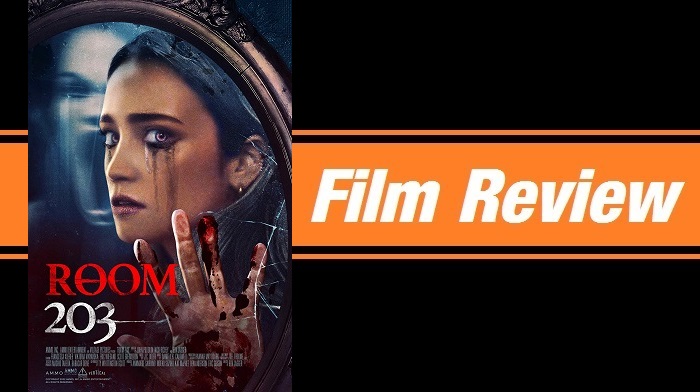
Something creepy is going on in room 203. And wouldn’t you know it, that’s just the apartment that two lifelong friends move into in this interesting horror film from director Ben Jagger. Based on a Nanami Kamon’s novel of the same name, the Japanese horror influence can be seen all over “Room 203”. You see it most in the slow, patient tension-building and in how its scares are often rooted in the psychological as much as the supernatural. And of course mood and atmosphere are essential.

But what surprised me most about “Room 203” was its welcomed patience. The trio of co-writers (Jagger, John Poliquin, and Nick Richey) clearly have something sinister at the center of their story. But they’re very deliberate and take their time getting there. In fact, for most of the second act, “Room 203” is more of a mystery movie than straight-up horror. Perhaps it’s a constraint brought on by the strict COVID-19 safety protocols and a limited budget. But it feels like a gutsy creative choice – one that works both for and against the film.

Image Courtesy of Vertical Entertainment

Shot and (I think) set in Shreveport, Louisiana, the movie introduces us to Kim (Francesca Xuereb), a journalism major ready for her first year of college, and her best friend Izzy (Viktoria Vinyarska), a boisterous aspiring actress. The two friends come with their own sets of baggage. Kim is at odds with her disapproving parents who see Izzy as a bad influence. Izzy is still struggling to cope with the death of her mom – a loss that took her to some dark places.

Problems aside, Kim and Izzy are all set to become roommates, renting an apartment together in a historic former commerce building. Upon arriving at the property they’re greeted by their pasty-faced and glaringly weird landlord, Ronan (Scott Gremillion) who shows them #203. It’s a dated but cozy pad with “vintage” furnishings and accented by a beautiful but strange stained glass window. He wraps up his tour with a warning, “The basement is off limits to residents”. That’s always an indicator that we’ll end up there at some point.

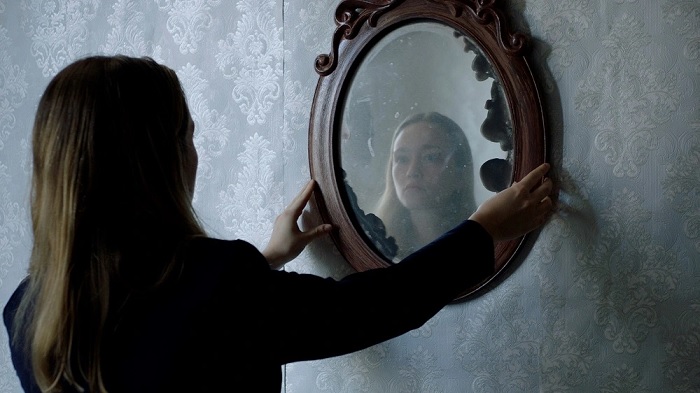
The one detail Ronan left out was the apartment’s blood-soaked history (It’s no wonder rent is so cheap). Of course it soon comes to haunt the new tenants. Before long Kim and Izzy begin noticing a rash of unexplainable occurrences. There’s the ugly hole in Kim’s bedroom wall and the growing stench emanating from it. There’s the appearance of an old necklace and music box – totems that are clearly channeling some kind of malevolent force. And then there’s Izzy’s sudden sleepwalking (that’s never good, especially in a horror movie).

Image Courtesy of Vertical Entertainment

Kim begins suspecting something’s not quite right with the apartment and recruits the help of her fellow journalism student and potential love interest, Ian (Eric Wiegand) to help her dig deeper into the building’s history. Along the way, Jagger sloooowly ratchets up the horror elements, never shying away from using a number of well-known horror tropes – figures scampering by in the shadows, mysterious foul smells, creaking floors, milky eyes, etc.

In a way I really appreciated the slow-burn and how it gave the characters more room to develop. But the movie does reach a point where the wait for the horror to kick in starts to feel long. And like so many other movies in its vein, “Room 203” leaves a lot of questions unanswered. But these are hardly dealbreakers, and the movie’s strong points are enough to offset, and in several cases overcome, its shortcomings. “Room 203” is now streaming on Hulu and on VOD.

VERDICT – 3 STARS