“Once Upon a Time in Hollywood” – The Accusations, Criticisms, and Controversies

ONCEposter

SPOILER WARNING: If you haven’t seen “Once Upon a Time in Hollywood” be warned.

Quentin Tarantino movies are no strangers to controversy and you could say the notorious filmmaker has courted that kind of attention throughout his career. Sometimes his provocations are potent and edgy. Other times they are rooted in ridiculous amounts of excess and overindulgence. So the fact that people are talking about his new film is no surprise.

What does surprise me is the sheer volume of outrage sparked by “Once Upon a Time in Hollywood”, a movie I stand by as Tarantino’s tamest, most mature, and (shockingly) most compassionate film to date. Yet the accusations are serious, troublesome, and (if true) cause for serious concern. Some have branded the film racist, misogynistic, even deeply conservative (gasp). Others have went as far as to say it condones/defends violence against women while pointing fingers at the ‘whiteness’ and ‘maleness’ not only the lead characters but also of those who defend the film (my wife loved it too, so there’s that).

These accusations are weighty enough to warrant respectful consideration especially considering Tarantino’s not-so-spotless track record. So I’m not into berating different opinions or other readings of his latest movie. But I do profoundly disagree with the majority of these particular criticisms, not because I’m a white male whose thought process is defined and controlled by those characteristics. But because I believe the movie itself offers some significantly different readings of its ‘controversies’. Here are some of them…

FINAL SPOILER WARNING: Plot details ahead……

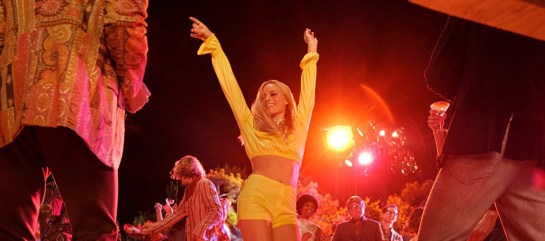
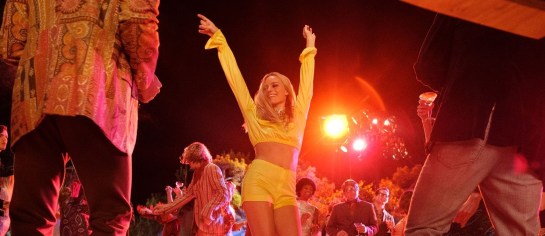
Sharon Tate: Complaints about Sharon Tate’s inclusion in the film were almost immediate. Many felt it was insensitive but over time the issues have evolved. Now most of the criticism is in how little dialogue Margot Robbie is given and how “pointless” Tate is to the story, both things rooted in Tarantino’s chauvinism. Actually Tate’s role is far from pointless and her sparse dialogue makes sense considering (1) This isn’t a movie about Sharon Tate and (2) Her character has a very unique (and I would argue beguiling) role to play in the film.
ONCEsharon

Not to rehash my review, but Sharon Tate is as much of a symbol as a character. In the film Tate represents innocence, goodness, and compassion. She is a constant ray of light and Tarantino shoots her with an ever-present glow. I found Robbie to be very effective in conveying these ideas. Interestingly, her vitality and optimism stands in sharp contrast to the darkening societal backdrop. And there is a looming sense of dread as history tells us where her story is heading. And about that…

The Ending: There are so many elements to Tarantino’s ending that I love. First, it’s essential to know that so many of his movies take place in alternate realities. These worlds he creates look like ours and often function like ours, but they are hardly beholden to our rules. And Tarantino has shown an affection for taking dark points in history and turning the tables. In “Django Unchained” the slave bests the slave owners. In “Inglourious Basterds” the Jewish-American militia bests Hitler and his generals.

He employs the same idea in “Once Upon a Time in Hollywood”. In this world the Manson family members (one male, two females) are brutally beaten and burned before ever reaching a pregnant Sharon Tate and her friends. It’s an intensely graphic sequence with a dash of absurdist comedy tossed in. Yes, it was at the hands of two men, but for me this wasn’t Tarantino flipping his nose at violence towards women. It’s an alternate take on what was in reality the savage and unrepentant slaughter of five innocent people. It’s the Tarantino twist of really bad people getting their comeuppance.

One of the sweetest things about this ending is how it attempts to distance Sharon Tate from what culture always associates her with – victimhood. In Tarantino’s timeline Tate isn’t forever connected with the Manson family. She still has a future, a career, a baby to give birth to and raise. Again, she is a symbol of hope and this film hope doesn’t die on the Manson family’s blade. And that final crane shot showing Sharon and her friends coming out to meet Rick really drives this home.

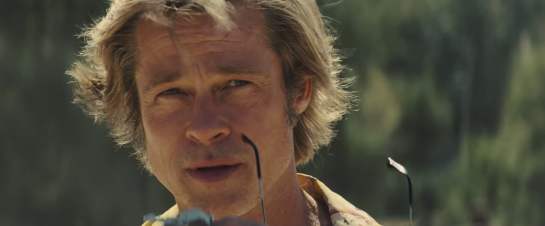
Cliff Booth: For me, Brad Pitt absolutely steals the show and I found his Cliff Booth character to be the most intriguing of all. But some see him as yet another example of  the film’s misogyny. Much of that comes from a single question the movie doesn’t clearly answers – did Cliff kill his wife?
ONCEbooth

Tarantino sets his audience up to draw their own conclusions. If you buy that Cliff is a cold-blooded killer then naturally the character and how he is depicted will be problematic. But the movie doesn’t offer definitive proof. In fact, I would say it offers more reasons to believe that things aren’t so black-and-white. Does the movie exonerate him? No it doesn’t. But it doesn’t convict him either. His angle could just as easily be about Hollywood gossip, blacklisting, etc.

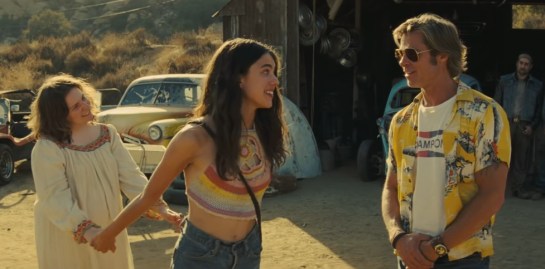
And think of his other actions throughout the film that would seem to clash with those of a cold, calloused murderer. He’s friendly, laid-back, and easy-going. He’s loyal to his friend, ever content, and a constant encourager. He turns down the sexual advances of an attractive minor. He cares enough to check on an elderly friend who may be in trouble at Spahn Movie Ranch. Once again, you could view it all through a misogynistic lens, but for me it’s tough to reconcile that reading with the character we get on screen.

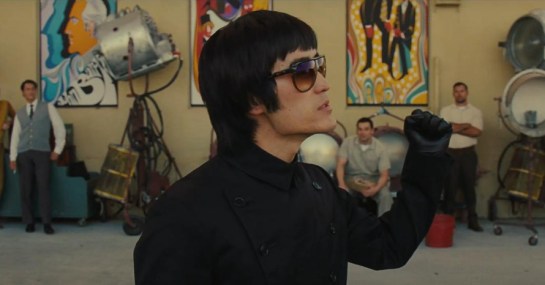
Bruce Lee: I have to admit this one surprised me a bit. The movie has been called insensitive, disrespectful, and in some cases racist for a particularly funny scene between Cliff and Bruce Lee (remarkably played by Mike Moh). In the sequence we see a cocky Lee holding court on a studio backlot. Cliff calls him out and the two engage in a silly hand-to-hand challenge. It ends in a draw and the whole thing plays out as a big gag. But some have taken Lee’s depiction in the film seriously. Respectfully this includes his daughter Sharon.
ONCE LEE

First, it’s key to recognize that the entire scene is framed as a recollection. Sure, it’s meant to show that Cliff could hold his own with one of the greatest, but it’s still his recollection of the encounter from his point of view. Second, this isn’t the only time we see Bruce Lee in the film. There is a brief but tender moment between him and Sharon Tate that shows a side of the martial arts star dramatically different from what we see in Cliff’s memory. So it makes sense that one scene is a guy’s silly memory to the time he duked it out with Bruce Lee while the other shows a truer and more compassionate representation of who he really was.

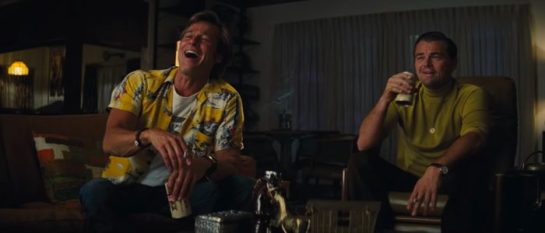
Once again Tarantino is a filmmaker who too often provokes these types of conversations. It’s a shame because I do believe “Once Upon a Time in Hollywood” is a truly great film. And I’m no Tarantino apologist (as followers of this site certainly know). But his latest movie has stoked a fascinating array of interpretations. For what they’re worth, these are mine. Nothing more, nothing less. So, what say you?
ONCE laugh

First Glance: “The Irishman”

IRISH

It goes without saying that a new Martin Scorsese movie that brings together Al Pacino, Robert DeNiro, Joe Pesci, and Harvey Keitel is destined to grab attention. It certainly grabbed mine when it was first announced months ago. The film is considered a passion project for Scorsese and currently sits as the most expensive movie the acclaimed filmmaker has ever made.

The first trailer has landed ahead of the film’s upcoming debut at the New York Film Festival. First impressions – it looks very much like a classic Scorsese picture and it looks like the $200 million budget went to good use. Intriguing period recreation and a stellar cast back in their comfort zones is more than enough to get me onboard.

“The Irishman” is set for a theater release but the size has yet to be clarified. Netflix owns the rights so it should be available to stream later this year. Check out the trailer below and let me know if you’ll be seeing it or taking a pass.

REVIEW: “Stockholm” (2019)

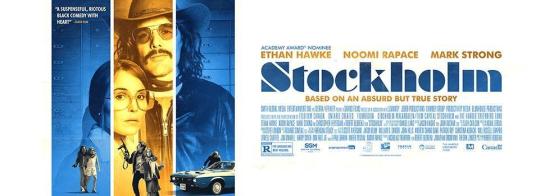
STOCKposter

“Stockholm” begins by informing us it is “based on an absurd but true story”. Truer words have never been spoken. This off-beat movie from writer-director Robert Budreau is one part heist film, one part black comedy and all parts utter absurdity. I think that’s why I liked it as much as I did.

The film is set in 1973 Stockholm, Sweden and is based on an article written by Daniel Lan for the New Yorker magazine. It tells of a bank heist where the hostages begin to sympathize and side with their captors giving rise to the condition known as Stockholm Syndrome.

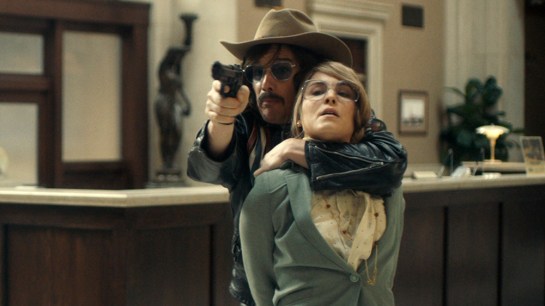
STOCK1

Ethan Hawke adds yet another fresh and fun role to his resumé. He plays a rather doltish American named Lars who we first see arming himself with a submachine gun, a really bad wig, and an even worse jacket. He then moseys into a Stockholm bank for what looks like your prototypical stick-em-up. But we immediately begin noticing Lars isn’t your ordinary robber and he has more things on his mind other than money.

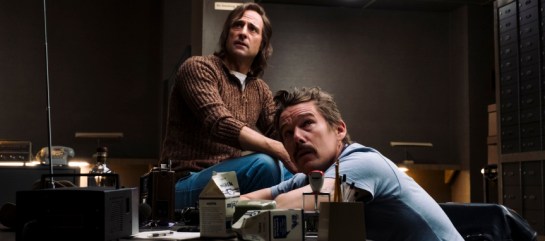
Enter the canny yet hilariously reckless Police Chief Mattsson (Christopher Heyerdahl) who immediately pulls out the hostage situation playbook. He starts by contacting Lars and getting his list of demands. They include $1 million and for his best friend and former cellmate Gunnar (Mark Strong) to be brought to the bank. Oh, and “a Mustang 302 like Steve McQueen had in Bullit” (actually McQueen drove a 390 V8 Mustang GT but Lars isn’t exactly the sharpest knife in the drawer).

STOCK2

Inside the bank Lars takes a liking to cashier Bianca (Noomi Rapace) and the whole Stockholm Syndrome link is made. But don’t expect the movie to explore that link too deeply. Budreau isn’t that interested in the psychology. Instead he embraces the nuttiness of his story and gives the hilarious Hawke and subtly funny Strong some pretty good material to play around with. Plus, there are a handful of cheeky gags about the police and the media that land really well.

“Stockholm” ends up being a fairly light indie comedy that could probably dig a little deeper into its story and characters but seems perfectly content to just have fun. To be honest, that’s one of the things I like about it. It’s a breezy and often silly heist flick that is completely comfortable with itself. And Ethan Hawke continues his extraordinary run of solid and surprisingly varied performances.

VERDICT – 3.5 STARS

3-5-stars 

First Glance: “The Lighthouse”

LIGHTHOUSE1

Robert Eggers blew me away with his 2015 debut feature “The Witch”. It was a period horror picture that showed the filmmaker’s incredible knack for tone management and methodical tension-building. His latest film looks to be offering a different twist on the horror genre but with the same visual ambitions and gripping atmosphere. I can’t wait.

“The Lighthouse” debuted at Cannes to strong reviews and A24 has just released an exciting new trailer. In it we see Willem Dafoe and Robert Pattinson as lighthouse keepers on a remote island who appear to be slowly descending into a haze of madness. It looks to be a performance-heavy movie with a striking monochrome palette full of deep shadows and moody detail.

“The Lighthouse” hits theaters October 18th and hopefully its release won’t be too limited. Check out the trailer below and let me know if you’ll be seeing it or taking a pass.

REVIEW: “Escape Room”

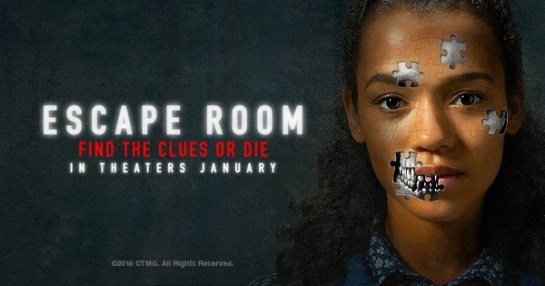
ESCAPEposter

Hollywood has discovered a goldmine in modestly budgeted yet surprisingly lucrative horror-thrillers. Production companies such as Blumhouse can churn these films out at little cost and make a ton of money in return. These movies never end up among the highest grossing films, but they draw a big enough audience to earn substantial profits.

“Escape Room” is one of 2019’s addition to this popular sub-genre. With $155 million earned against a meager $9 million budget, it’s not only considered a box office success, but you can be sure that a sequel is already in the works. Whether that’s a good thing…we’ll get to that later.

Escape1

On sheer concept alone it’s hard to avoid instant comparisons to the “Saw” franchise. “Escape Room” isn’t as gruesome or grisly and it’s distinctly aimed at the PG-13 crowd. But its basic idea must have been inspired in some degree by the eight-film (so far) “Saw” series.

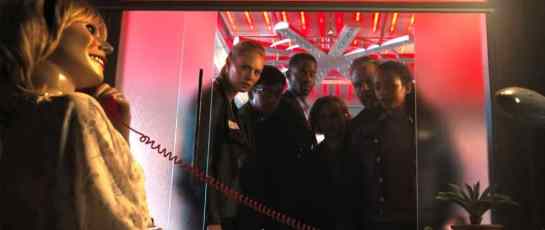
In Chicago six total strangers from various walks of life each receive a mysterious puzzle box. Inside is an invitation to an Escape Room challenge where the winner will receive $10,000. College student Zoey (Taylor Russell), daytrader Jason (Jay Ellis), stockboy Ben (Logan Miller), truck driver Mike (Tyler Labine), Army vet Amanda (Deborah Ann Woll), and video-gamer Danny (Nik Dodani) all arrive at the address provided and are ushered into a waiting room. And wouldn’t you know it, the waiting room is actually the start of the game.

Basically it works like this, each booby-trapped room features a host of hidden clues that reveal how to escape to the next room. Oh, and failure to do so within the set amount of time has fatal results. Along the way we learn the strangers were chosen for a reason and they share a rather unique bond. But as more of their individual personalities surface, teamwork turns into survival of the fittest.

Escape2

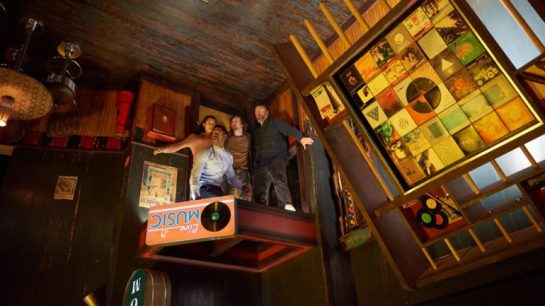
There really isn’t much more to “Escape Room” than that. Yes, each room becomes more challenging (and more deadly). Yes, a little more is revealed about the characters and the thread that binds them. Yes, some rooms are clever and visually captivating and director Adam Robitel does some interesting stuff with his camera particularly in playing with perspective. But the movie eventually runs out of ideas and ends up beating the same drum as it hops from one room to the next.

And then you get to the final act where the whole thing flies completely off the rails. You learn early on to switch your brain off, but even that can’t cover the ludicrous finale. Things get so ridiculous and we’re asked to buy into the wackiest ending and sequel setup. If you don’t think about “Escape Room” you could probably find some decent throwaway entertainment. But once you look even an inch below the surface, the whole thing comes unglued.

VERDICT – 2 STARS


2-stars

REVIEW: “Once Upon a Time in Hollywood”

POSTER

You can say this about Quentin Tarantino – he’s consistent. His settings and timelines may change, but regardless of the movie you still see a filmmaker unshakably devoted to his style. It’s so pronounced that you’ll hardly see him step outside of his self-defined box or sway too far from his brand. Take his recent conversations about making a Star Trek movie. Right off the bat he confirmed to Empire magazine that his version would be replete with profanity, a needless addition but a glaring Tarantino trademark.

I doubt any of that will be a problem for die-hard Q.T. fans and I can understand why. But as someone who feels his stories are often smothered by his style, it makes it easy for me to keep my expectations in check whenever a new Tarantino movie arrives. His 9th film (10th by release, but whatever) comes in the form of a retro la-la land fairytale set in the waning days of Hollywood’s Golden Age and our country’s perception of innocence. It’s a movie full of surprises, none bigger than this – I kinda love it. And let me get this out of the way – I think it’d Tarantino’s best film.

ONCE1

“Once Upon a Time in Hollywood” walks in several of Tarantino’s familiar footprints. It’s set within an alternate timeline, it’s a compendium of the filmmaker’s favorite classic cinema pastiches, and it sports a fascinating array of unique and often eye-popping characters. It isn’t much interested in plot. Instead Tarantino’s focus is on these characters and recreating 1969 Los Angeles with an obsessive level of detail.

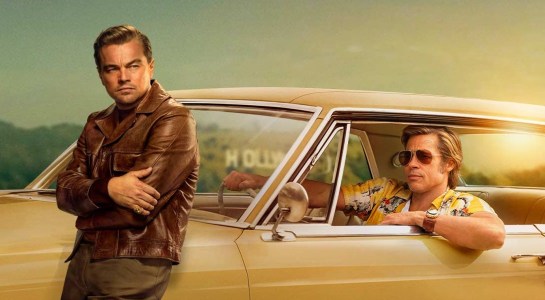
Leonardo DiCaprio stars as fading TV star Rick Dalton and Brad Pitt plays his reliable stunt double and best friend Cliff Booth. The two are drawn from an era where actor and stuntman worked closely together both on and off screen. If Rick loses an acting gig so does Cliff. And Cliff not only takes Rick’s lumps on camera but he’s his chauffeur, gopher and overall handyman.

Television westerns were Rick’s ticket to stardom (Tarantino’s flashbacks to Rick’s former hit show “Bounty Law” are spot-on and so much fun). But as Hollywood transitions to a new era, Rick senses the industry leaving him behind. Instead of adapting he spends much of his time boozing and feeling sorry for himself. Enter the easygoing Cliff, a good listener and even better encourager.

ONCE2

As with other Tarantino films, “Once Upon a Time” routinely sees fiction intersecting with fact. An example, Rick lives in a nice house at the end of Cielo Drive in Benedict Canyon. Many will remember that street name from the horrific Manson Family murders. Rick’s new neighbors are indeed filmmaker Roman Polanski (Rafał Zawierucha) and his wife, rising Hollywood star Sharon Tate (played with an effervescent beauty by Margot Robbie).

Much has been made of Robbie’s lack of dialogue, but her portrayal of Sharon Tate has a very unique role to play. In many ways she stands as a symbol as much as a character. She represents innocence, goodness, and compassion. Tate is a constant ray of light and Tarantino shoots her with an ever-present glow. That’s why we’re hit with a looming sense of dread when we get those few glimpses of Charles Manson (Damon Herriman) or when Cliff gives a young hippie hitchhiker (Margaret Qualley) a ride to Spahn’s Movie Ranch. We know what history says and where things are heading.

ONCE3

As for the leads, “Once Upon a Time” is a very character-driven movie and Tarantino gives his two biggest stars plenty of meaty material to chew on. DiCaprio goes wild in a role that’s big and showy in the same way many Tarantino roles are. Still there are layers of sadness and insecurity that DiCaprio absolutely nails. But it’s Pitt who steals the show. Not only does he look the part with his sun-bleached hair and leathery good looks, but he’s tempered, laid-back, and easy for us to connect with (despite a few potential skeletons in his character’s closet).

The film does feature some of the same Tarantino vices that we seem to get in all of his pictures. For example he has this weird fascination with profanity. He doesn’t use it for realism or emotional effect. It’s something woven so tightly into the fabric of his style and he can’t seem to break away from it. Because of that many the characters across his movies often talk alike and sound alike.

Once4

Tarantino does indulge himself a little too much specifically during a long sequence on the set of Rick’s new western. Admittedly, it’s kind of fascinating watching Tarantino essentially shoot a TV show within his movie. It’s also a segment that features several good moments including Luke Perry’s final appearance and a fabulous performance from 10-year-old Julia Butters (she’s a revelation). But it still feels detached from the film’s other moving parts.

It’s hard to imagine a better looking film in Tarantino’s catalog (bold statement, I know). Every scene gives you an image worth setting your eyes on or a detail that in some way calls back to 1969. You get his nostalgic visual splurges often rooted in his pop-culture fluency. Whether it’s a Sgt Fury and his Howling Commandos comic on a coffee table or DiCaprio’s Rick grafted into a scene from “The Great Escape”. And of course there is the sheer technique seen throughout the entire movie. My favorite may be Tarantino’s knack for tracking shots best seen in a neon-bathed nighttime drive down the Sunset Strip and a subtly unnerving pan of Spahn’s Ranch.

ONCE5

So much else could be said about the rip-roaring soundtrack filled with songs of the period that haven’t been played to death in other films. About Tarantino’s surprising restraint even among such nostalgic excess and the unexpected splash of maturity seen most in his treatment of his characters. And how about the plethora of great cameos from Al Pacino, Kurt Russell, and Zoe Bell just to name a few. We could even talk about how Tarantino’s ending (in its own twisted way) offers us something his films rarely give – a glimmer of hope.

I can see “Once Upon a Time in Hollywood” getting criticized from both sides. Tarantino stalwarts who come to the movie hungry for his traditional pomp and shock may be disappointed in how little they get. Those looking for a more traditional narrative may find the movie too messy and light on plot. Me, I love how this film manages to avoid many of Tarantino’s self-induced trappings while still being unlike anything else you’ll see in the theater this year. And while I still grumble at some of his style choices, I can’t deny being completely absorbed in this crazy yet magnificent cinematic concoction.

VERDICT – 4.5 STARS

4-5-stars