One More Look at “Star Wars: The Last Jedi” and the Luke Skywalker Controversy

Luke1

The “Star Wars” fanbase has never been short on strong opinions and impassioned points of view. Sometimes that can be a wonderful thing. Other times, not so much. That has never been more true than with Rian Johnson’s “The Last Jedi” and more specifically its handling of the iconic Luke Skywalker character. And with the Johnson-less “The Rise of Skywalker” about to hit theaters and Last Jedi apologists already sharpening their blades, what better time to look back at one of the film’s biggest stirs.

“The Last Jedi” has been criticized for a number of issues, and in many cases deservedly so. But no issue has infuriated a portion of the fan base as much as the film’s portrayal of Luke. The meat of the argument revolves around how different Luke is in TLJ compared to where he was at the end of the original trilogy. Many feel it completely butchered the character and killed any semblance of the Luke they grew up with. I actually see it a little differently.

“Star Wars” was a huge part of my childhood and my passion goes back to 1977 with the release of the original film. So I’m not some “lightweight” or “casual” fan. While I respect those who feel differently, personally I had no problem with how Luke was handled and here’s why. First of all it treats Luke like a human being who despite having immense powers still has genuine and relatable feelings. It’s tempting to look at him as an unshakable superhero of sorts and I suppose Johnson could have made him a dry old sage spouting the same Jedi wisdom. But clearly a lot has happened in his life since the end of “Return of the Jedi” and his bitterness and frustration is a very human reaction.

And remember, the Jedi’s track record isn’t exactly spotless. It was the Jedi who allowed (among other things) the rise of Anakin (a.k.a. Darth Vader) right under their noses. Yes I know he was eventually instrumental in bringing balance, etc., but the Jedi made some pretty bad calls that carried some hefty consequences. Now combine that with Luke’s own tendency to be both emotional and impulsive. Once again, you can imagine a scenario where frustration and bitterness could set in.

Then you have the big revelation. Let me go ahead and say right here [SPOILERS ARE AHEAD]. Many people hate the very notion that Luke would strike down a young Kylo in cold blood. I get that but that perspective overlooks something critical – the revelation is told twice through two very different perspectives. In Kylo’s version we see a cold and determined Luke who is only stopped by Kylo’s quick reaction. But in Luke’s telling we learn that he stopped before going through with it. He caught himself and you can instantly see the shame and remorse on his face. As he himself said “It passed like a fleeting shadow.” And remember what I said above – he has a history of being impulsive. He did the same thing with Vader on the Death Star, coming mere inches from destroying his father in a rage only to catch himself and come to his senses.

I do agree there are some things about Luke in TLJ that confuses and other things that deserve more satisfying answers. TLJ throws out some ideas but doesn’t exactly go far enough with them. Yet ultimately I liked the complexity TLJ brought to Luke’s character. He isn’t a one-dimensional carbon copy of other Jedi who have come before him. He’s still passionate, at times borderline impetuous, but steadily moral and upright. He’s no coward. He has simply lost faith in the Jedi way and one could argue for good reason. But as the wonderfully wise Yoda reveals, even the best of us can still learn and grow. It’s part of being human.

But what would I know. I always was a Han guy.

Now what say you?

LUKE2

REVIEW: “Just Mercy” (2019)

MERCYposter

Destin Daniel Cretton’s filmmaking career has been on quite the upward trajectory. He earned a lot of attention with his 2013 indie drama “Short Term 12”. He was given a bigger budget and a meatier cast for his 2017 followup “The Glass Castle”. In 2021 he’s set to enter the big budget Marvel Universe as director of “Shang-Chi and the Legend of the Ten Rings”. But before that, he has an upcoming movie that’s definitely worth some attention.

Cretton’s new film is “Just Mercy”, a legal drama based on the memoir of tireless civil rights attorney Bryan Stevenson. It centers around Stevenson’s early work in Alabama during the 1980’s, specifically on the case of Walter McMillan, a wrongfully accused black man sentenced to death for the killing of a young white woman. Cretton’s film offers no frills, no excess, no attempts to push the envelope. It’s very focused on good old-fashioned storytelling and as a result this powerful story is given the attention it needs.

MERCY1eeee

Michael B. Jordan plays Stevenson, fresh out of Harvard Law School and eager to make a difference. He leaves his home in Delaware and moves to Montgomery County, Alabama (which is ironically where Harper Lee penned her classic “To Kill a Mockingbird“). He had previously went there to serve an internship and it left a profound impression. Now as a full-on attorney he returns to offer legal assistance free of charge to death row inmates in need of it.

With the help of a local true believer Eva Ansley (played by Cretton favorite Brie Larson) Bryan is able to launch his Equal Justice Initiative. But the ‘good ol’ boy’ justice system doesn’t take kindly to Bryan’s meddling especially when he takes the case of Walter McMillan (who is better known around town as Johnny D). He’s played by a dialed-back Jamie Foxx who gives one of his best performances in years.

Despite there being an overwhelming lack of evidence, Walter was sentenced to death in 1987. Over the next few years he would remain in prison following one failed attempt after another at securing him a new trial. It takes some work, but the understandably cynical and jaded Walter finally agrees to let Bryan take over his case. But as countless obstacles arise, Bryan learns that getting a black man off of death row is no easy task, especially in such a racially-charged environment.

Cretton rarely veers from the McMillan case but one instance where he does happens to be the film’s most powerful scene. It involves Rob Morgan’s heartbreaking portrayal of a Vietnam vet suffering from PTSD. He too is on death row for planting a bomb that inadvertently kills a young girl. Morgan is a natural and shows us a man tortured by what he has done but also clearly suffering from post-war trauma. It leads to a devastating sequence that is Cretton’s best work to date.

MERCY2

“Just Mercy” digs deep into the blatant injustices and frustrating roadblocks put up by the local authorities. There’s no help from the newly elected district attorney (Rafe Spall) who is more concerned about soiling his reputation with the community than considering Bryan’s motions. Even game-changing revelations about the prosecution’s key witness (played by a terrific Tim Blake Nelson) isn’t enough to tip the racially-biased scales.

It all makes for a troubling and eye-opening examination of institutional racism from a time not so long ago (keep in mind this isn’t set in the 1960’s). The movie doesn’t feel particularly fresh or new but it’s unwavering in its honesty and dedication to its characters (with the exception is Larson’s Eva who is terribly underdeveloped). And I can already hear some criticizing it for not being “angry enough”. But in reality not every film needs to scream from the rooftops. Sometimes simply letting a story speak truth for itself is just as effective.

VERDICT – 4 STARS

4-stars

First Glance: “Promising Young Woman”

WOMAN

While she has received a fair amount of critical acclaim over her 15 year career, I still feel Carey Mulligan is an often underappreciated actress. A quick look over her filmography reveals a fairly diverse selection of roles. But her new film “Promising Young Woman” sees her tackling something unlike anything she has played before and I’m pretty excited.

The first trailer for the film dropped recently and it leaves quite the impression. It looks to be putting a unique spin on the revenge thriller genre and it comes from first time writer/director Emerald Fennell. Mulligan seems to be exploring some pretty dark territory but there also seems to be a touch of pitch black humor as well. I’m really anxious to see how this thing turns out.

“Promising Young Women” is set to debut at Sundance in January. Then look for it to hit theaters April 17, 2020. Check out the trailer below and let me know if you’ll be seeing it or taking a pass.

REVIEW: “Uncut Gems” (2019)

UNCUTposterMAIN

I can’t tell you the last time I was genuinely curious about an Adam Sandler movie. Maybe 2002 with “Punch Drunk Love”? His latest man-child venture, the blandly titled but propulsive “Uncut Gems”, reminds us that when given the right kind material Sandler is more than capable of keeping your attention. And he certainly keeps you watching here even when other elements of the film test your endurance.

“Uncut Gems” comes from the directing duo of Josh and Benny Safdie. The pair also co-wrote the film along with Ronald Bronstein. It doesn’t take long to notice the movie doesn’t have much in terms of narrative. The Safdies seem far more interested in breaking the single movie f-bomb record than really putting together a compelling plot. Obviously I’m being a little facetious, but with the exception of a character or two, no one can hardly utter a line of dialogue without it. It’s a pretty big distraction.

The story is as simple as this: Sandler plays Howard Ratner, a sleazy jeweler working in New York’s Diamond District who owes some really bad people a lot of money (for what, I don’t know). We do learn he is a compulsive high-stakes sports gambler and he’ll pawn off anything for money whether it belongs to him or not. We end up following him around for over two hours as he works different angles to try and score some cash to pay off his debt. It requires a lot of lying, a lot of yelling, and a lot of avoiding various people he owes.

UNCUT1 eeee

Howard thinks he has found the answer to all his problems when he gets his hands on a rare Ethiopian opal which he values at $1 million. Normally that would be an incredible score, but Howard fails to consider his one biggest hurdle – himself. He’s a natural screw-up and after one irresponsible act here and a poor choice there he finds himself deeper in trouble than he was before.

The Safdies do try to add a little depth to Howard by throwing in some scenes with his estranged wife (Idina Menzel) and kids. To no one’s surprise they don’t like him very much since he’s proven himself to be self-centered and unreliable. About the only person who does is his girlfriend-on-the-side Julia (Julia Fox) who he secretly shares an apartment with. She’ll pretty much help him with anything and forgive him regardless of what he does.

None of the family scenes add much other than to establish his credentials as a crappy husband and father and also that he is Jewish. But again, the Safdies aren’t too concerned with that. They’re all about propelling forward at an adrenalized fever-pitch. The film’s aggressive pacing is relentless. There’s no nuance or complexity. It simply wants you to grab hold and brace yourself as it bulls forward. Stop to look for more and you’re going to be disappointed.

UNCUT GEMS

One of the film’s big upsides is Darius Khondji’s kinetic cinematography. Khondji has shot several films I truly love including “Se7en” with David Fincher, “Midnight in Paris” with Woody Allen, and “Amour” with Michael Haneke. Here he creates a gritty, street-level aesthetic that maintains this steady fluorescent glow. He uses tight closeups and assertive camera movements which gives the movie some extra kick.

Many have mentioned anxiety and frazzled nerves when talking about “Uncut Gems”. I didn’t really have that kind of reaction. Instead I found myself asking more questions than I should have. How has Howard not been arrested? How has he not been killed? How does he still have a business? How is he still married? How can so many people be swindled (either emotionally or in business) buy such an obvious scumbag? I guess you could argue that Howard is shrewd and charismatic. But in “Uncut Gems” all we see is him consistently failing. But again, the Safdie’s are more interested in the ride.

So if you’re into what the Safdies are doing you’ll probably love this. But for others it will be similar to colonoscopy we see at the very beginning – extremely unpleasant. Sandler’s character may not be the best company, but his performance is solid. All of them are including from Lakeith Stanfield and NBA star Kevin Garnett. But I think you could make a case that this film wants to be off-putting. If so, mission accomplished.

VERDICT – 2.5 STARS

2-5-stars

REVIEW: “A Hidden Life” (2019)

HIDDENposter

It’s probably safe to say that Terrence Malick is an acquired taste. Many sing the praises of his eloquent visuals and deeply meditative style of filmmaking. Yet I know others who find his films to be boring, overly long, and essentially plotless. While the boring part is up for debate, it’s kinda hard for even the most ardent Malick apologists to argue against the other two points.

At the same time those are some of the Malickian trademarks I love most. With the exception of his last two feature films, I tend to enjoy Malick’s lengthy, extensive meditations. Sure, there are times when you would like to see him surrender more control to his editor. But when he’s hitting his marks I find his work to be breathtaking. And even though plot is hardly his focus, he has such command of his own unique visual language that it’s easy for me to get lost in the artistry.

RG-10_00660.NEF

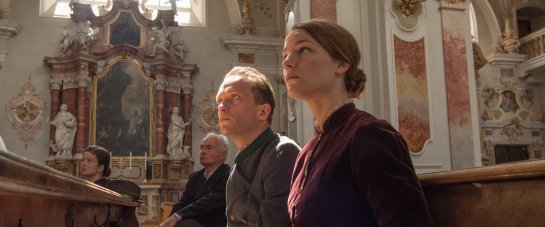
His latest film “A Hidden Life” is certainly lengthy, clocking in at a hefty three hours. But it does see Malick going a slightly different route by following a more structured narrative. The film is still filled with his signature contemplative voice-overs and captivating gazes across divine landscapes. But it also sees him focused on telling a more traditional story, one of righteousness versus evil, which is served by all of the distinct flourishes we have come to expect.

“A Hidden Life” tells the true story of Franz Jägerstätter, a conscientious objector who refused to fight for Nazi Germany or pledge his loyalty to Hitler. Inspiration was taken from a collection of Jägerstätter’s letters to his wife from prison compiled and edited by theologian Erna Putz. In the process of telling this profoundly moving story of quiet resistance, Malick delivers his most deeply spiritual exploration since “The Tree of Life”. And through this cinematic journey he begs us, not just to see, but to feel the love, fear, pain and longing through this central couple.

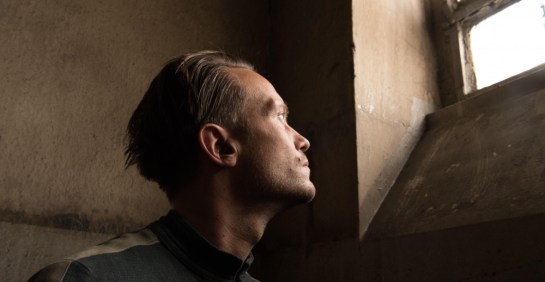
Franz is played by August Diehl whose tender minimalism gives us clear insight into his character’s soul. Everything is well when we first meet Franz. He lives with his wife Fani (Valerie Pachner) and their three daughters in the small village of Radegund cozily nestled in an Alpine valley in northern Austria. It’s a hard-working life but one filled with beauty, love, and contentment. Malick’s opening act is exquisite, full of warmth and images which remind us that no other filmmaker’s camera is as in tune with the majesty of nature as his. But the imagery is not without purpose. It’s meant to help convey the idea of serenity and happiness. “We lived above the clouds,” Fani recalls.

HIDDEN4

One afternoon their halcyon existence changes when Fani hears the distant hum of plane engines over their valley. War has come and brought with it fear and uncertainty. Franz willingly accepts the call for a brief stint of military training, but he quickly begins questioning what he sees as an unjust war. “What has happened to our country?” he asks Fani in one of the many letters Malick will incorporate into his film for the rest of the way.

Franz returns to the valley carrying the weight of his convictions. How could he fight in a war built around unspeakable evil yet call himself a servant of Christ? What should he do if draft papers come his way? How will standing up for his beliefs effect those whom he loves? The joy that once filled his heart gives way to worry, uncertainty, and inner-conflict. Many of the villagers turns against him and his family branding them traitors. Franz seeks counsel from the church but is told by the bishop (compromised by his own fear) “You have a duty to the fatherland. The church tells you so.”

As a literal and metaphorical storm brews in the distance it becomes clear that bad news is on the way. Franz is called to active duty and ordered to report to the Wehrmacht garrison in Enns. But after refusing to take the Hitler oath he is immediately thrown into prison. Fani, back home tending to the farm and taking care of their daughters, is notified of Franz’s arrest and through a series of letters the two begin dealing with their circumstances. It’s here that Malick captures an even deeper expression of their faith and love for one another.

HIDDEN3E

Malick’s sweeping impressionistic gaze does more than just capture stunning scenery. It’s true he and cinematographer Jörg Widmer swoon over snow-capped mountains, cascading waterfalls, and lush green valleys. But here it’s more than simple musings on nature. Early on the scenes help convey love, peace, and happiness. But later with Franz in prison and Fani laboring in the fields, the scenery (though still exquisite) looms in the background like a haunting memory. Again, unlike some of his recent films, Malick uses his intensely visual approach (along with James Newton Howard’s elegant and gentle score) to feed the narrative and bring life and depth to his characters.

“A Hidden Life” is a Terrence Malick movie through and through. Stirring and meditative, intimate and challenging. But here he is guided by one man’s inspirational journey. Malick gives us a three-dimensional portrait of a rare type of hero, told through a true story of faith, family, and the unquenchable human spirit in the face of tremendous persecution. Malick’s storytelling methodology may still be an issue for those with little patience. But I was spellbound from the very start and found this to be one of the most soul-stirring movie experiences of the year.

VERDICT – 5 STARS

5-starss

5star

REVIEW: “Bombshell”

Bombposter

The story of the women from Fox News who stood up to and took down powerful CEO Roger Ailes is one worthy to be told. These women not only exposed Ailes’ abusive conduct towards them, but they also put a spotlight on workplace sexual harassment particularly in the world of television media. And if there is one thing we’ve learned since it’s that this industry-wide problem needed to be uncovered.

“Bombshell” (one of the most overused words in America’s current political landscape) sets out to tell the story of three woman (two real and one fictional) and their roles in bringing down Ailes. They are prime-time anchor Megyn Kelly (Charlize Theron), morning show host Gretchen Carlson (Nicole Kidman), and young producer/aspiring anchor Kayla Pospisil (Margot Robbie).

BOMB3

Ever since seeing the first full trailer I’ve had a lingering question: Was this going to be an empowering expose on sexual harassment or a Fox News hit-piece? “Bombshell” ends up somewhere in the middle which is frustrating. Too much time is wasted on frivolous pop-shots with no bite whatsoever. Take the seemingly endless parade of impersonations. Sean Hannity, Bill O’Reilly, Geraldo Rivera, Neil Cavuto, the list goes on and on. It results in these constant cartoonish diversions from what should be the real focus of the story.

This gets to my biggest beef: the movie is too interested in superfluous things to really dig below its rather familiar surface. It seems content to simply touch on the things we already know instead of pulling back the curtain to reveal something new and insightful. It’s a shame because the inspirational story of women rising up against a corporate media powerhouse like Ailes deserves more than a few strokes from a broad brush.

Despite being the catalyst for the case against Ailes, we get to a point where Kidman’s Gretchen Carlson is more or less tossed to the back burner. Instead the film mostly focuses on Megyn Kelly as she wrestles with stepping out and giving some big-named support to Carlson’s claims. It’s uncanny how much Theron looks the part but her voice-work is a little more inconsistent. Sometimes you think it’s actually Kelly speaking while other times Theron sounds like she’s doing an impression with a head cold.

BOMB1

A lot of time is also spent with Margot Robbie’s Kayla, a fictional/composite character who could best be described as a naive, sexually confused, Christian conservative (how’s that for covering all of your bases) who has long dreamed of working at Fox News. She becomes buddies with Kate McKinnon’s Jess, another fictional addition who has a deep, dark secret: she’s a closet Hillary Clinton supporter. Okay, so she actually has a bigger secret but it feels completely tacked-on and it’s used in the shallowest of ways.

Of course everyone answers to Roger Ailes who basically pulls all the strings and has a direct line to every control room in the building. He’s played by an entertaining John Lithgow who is full of bile and bluster. But for the most part he’s a fairly one-note character with teases of complexity but not much more. It’s another side effect of the movie’s compulsion to put its focus elsewhere instead of digging into its key characters.

The scattershot script is from Charles Randolph who co-wrote “The Big Short”. Here he and director Jay Roach recycle a lot of the visual pomp and style from that film and others like it: snappy narration, breaking the fourth wall, and so on. It’s an approach that simply doesn’t feel fresh anymore and it makes it even tougher to take the film seriously. Sometimes a movie is better off without all of the extra flash. Especially with a subject like this that deserves the extra attention.

BOMB2

Instead we get 15 to 20 minutes on Donald Trump and his Twitter squabble with Kelly during the 2016 presidential primaries. We get a one-dimensional, undercooked fictional character who is given considerably more time than the woman who actually jump-started the whole thing. And of course there is the steady procession of performers appearing as Fox personalities whether they have anything meaningful to offer the story or not.

So we end up with a frustrating movie that certainly sees itself as empowering while at the same time giving the real women who fought this fight the surface-level treatment. Would a female writer/director team have served this story better? Possibly. Maybe they would have spent more time digging into the real story and more importantly exploring the women who made the story so important and worth telling.

VERDICT – 2 STARS

2-stars