REVIEW: “Chappaquiddick”

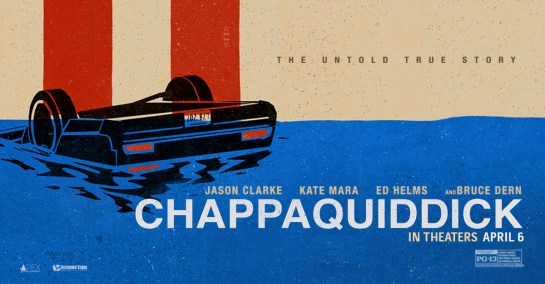
ChappPoster

On July 18, 1969, Massachusetts Senator Edward “Ted” Kennedy left a party on  Chappaquiddick Island with Mary Jo Kopechne. A short time later Kennedy drove his mother’s 1967 Oldsmobile off Dike Bridge and into Poucha Pond. Kennedy escaped but Kopechne was trapped in the submerged vehicle. Kennedy would leave the scene and not report the accident until the next morning after the car and Kopechne’s dead body had been discovered.

“Chappaquiddick” from director John Curran is the latest look into the scandal that was forever a stain on the legacy of Ted Kennedy. Writers Taylor Allen and Tyler Logan scoured over transcripts featuring key players including Kennedy himself speaking under oath. Leaning heavily on court records and testimonies along with the indisputable facts of the case allowed for their script to be more than conspiracy theories and character assassination as a few have claimed.

Chapp1

Jason Clarke gives not only one of the best performances of the year but one of the most surprising as Ted Kennedy. You immediately notice how distinctly in tune he is with his character. He manages a very measured performance, playing Kennedy in a way that never projects judgement. He portrays Kennedy as a complex man. At times immature and naive. Other times self-serving and calculated. But in the few moments where he is forced to emotionally reckon with what’s happened Clarke doesn’t spell out the genuineness of the remorse.

Curran moves the story along at a good pace, quickly getting to the infamous Chappaquiddick incident then navigating the decisions that immediately followed. You could call Ed Helms the moral conscious of the film. He plays Kennedy’s cousin Joe Gargan who along with US Attorney General and Kennedy confident Joe Markham (Jim Gaffigan) are the first people Teddy contacts after the wreck. They push Kennedy to report the accident to authorities, something history informs us never happened until the next day.

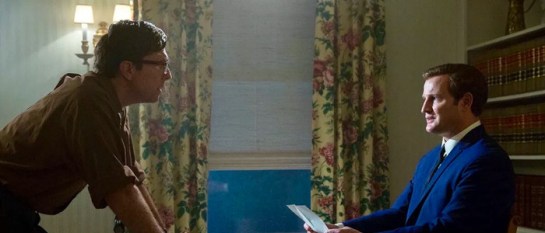
A big hunk of the film focuses on the aftermath, specifically political damage control. As Kennedy wages an internal struggle with telling the truth, or at least their “version of it”, an entourage of lawyers and analysts diligently work to quell any public outrage and protect the family name. There are some really good scenes as they hammer out strategies and navigating Kennedy’s sketchy timeline of events.
Chapp2

Attempts at empathy can be found in the few scenes of Kennedy family drama but unfortunately these are easily the movie’s weakest moments. Bruce Dern dials it up as Kennedy patriarch Joseph P. Kennedy Sr. who was paralyzed and wheelchair bound following a severe stroke. The filmmakers leave no ambiguity in Kennedy Sr’s lack of confidence in his son and they present the strained relationship as a heavy weight Teddy’s neck. But where most of the film comes across as strikingly authentic, the handful of scenes between Clarke and Dern feel too contrived. One line early in the film is broader but more effective at conveying the tension. An interviewer asks Ted “What’s it like walking in a shadow?” He promptly ends the interview and walks away.

The true cleverness of “Chappaquiddick” is seen in how it moves with Kennedy’s evolving story in a way that by the end of the film we are still unclear on what’s the truth. It also presents a slice of the Kennedy mystique within American culture. When the partygoers on Chappaquiddick Island are told about the accident the next morning and about the death of their friend and colleague, the first words of response are “What do we need to do now? What do we need to do to help the Senator?” It’s as if Mary Jo Kopechne lost out to the Kennedy family name. In a very perceptive way this movie finally gives her a voice.

VERDICT – 4 STARS

4-stars

REVIEW: “You Were Never Really Here”

NEVERposter

With “You Were Never Really Here” writer-director Lynne Ramsay (“We Need to Talk About Kevin”) makes a forceful statement. Not just to her own individual talents as a filmmaker, but to the female perspective and the powerful jolt it can give a genre. By genre, I would call her latest film an action/revenge thriller although even giving it a label feels like a disservice to Ramsay and the plethora of cool ideas she is working with.

Ramsay adapts “You Were Never Really Here” from Jonathan Ames’ 2013 noir novella. At only 95 pages, the novella is both brisk and brutal, an equally fitting description of Ramsay’s movie. Not a second of the taut, economical 90 minutes is wasted and within its framework is a level of craftsmanship and unique storytelling prowess that leans heavily on mood and immersing us through our senses.

NEVER1

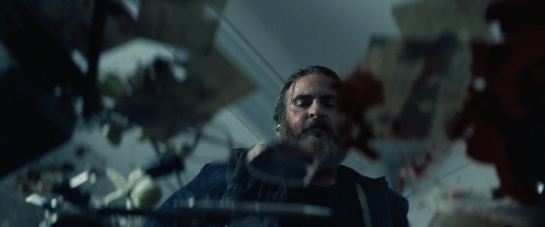
Look no further than the opening scene, a tightly edited collage of sound and images that introduces us to Joe (a burly and bearded Joaquin Phoenix). We learn he is a hired gun who specializes in retrieving the young daughters of wealthy, prominent parents from sex trafficking rings. He works off the grid and in his own moral mélange of brutality and compassion. Ramsay only feeds us bits but Joe’s scar-riddled body and glazy worn eyes speak volumes.

When not embedded in New York’s sordid underbelly, Joe cares for his elderly dementia-stricken mother (played by Judith Roberts). Phoenix, the definition of committed and uncompromising, seamlessly moves back-and-forth between these two contrasting worlds. In one scene he’s wiping off a blood-soaked hammer and shortly after polishing silverware and singing a song with his mother. And when Ramsay pushes us deeper into Joe’s head we witness suicidal impulses and traumatic flashbacks to his childhood and military service. They come in startling quick bursts making them all the more unsettling.

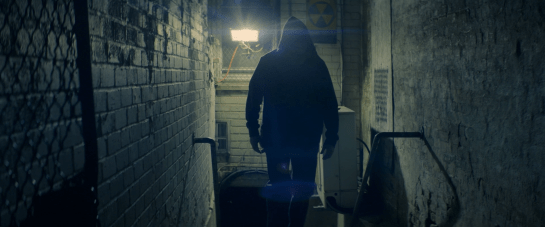
Things get even uglier when Joe takes a job to find a State Senator’s daughter (Ekaterina Samsonov) only to run face-first into unexpectedly deeper levels of depravity and corruption. The story grows darker (there is rarely any light to begin with) and the bloodshed amps up. But Ramsay doesn’t revel in the violence nor exploit it for effect. Joe, her principle subject, is a child of violence and his dark psychological journey is often defined by it. While at times graphic, most of the killing happens just off camera or from strategic perspectives – a cracked mirror on a ceiling or through surveillance cameras. It certainly doesn’t mute the savagery.

Never2

Ramsay’s style of filmmaking has a fascinating synergy with this material. She often tells her stories through vivid imagery and pulsing sound design instead of a more traditional narrative structure. This is what keeps “You Were Never Really Here” from falling in with more conventional genre pictures. Her camera works like a gritty kaleidoscope, creating and maintaining an essential mood and intensity. Jonny Greenwood’s menacing score is filled with eerie strings and synthesized chords as if pulled from the cracked psyche of its lead character. It all works together in a twisted hypnotic harmony.

At the 2017 Cannes Film Festival “You Were Never Really Here” received a seven-minute standing ovation. Awards went to both Ramsay (Best Screenplay) and Phoenix (Best Actor). I understood why after first seeing it. But it was my second viewing that I was able to fall in with the film’s unique rhythms. And while Joe isn’t necessarily a character you want to spend time with nor is this a comfortable world to be in, Lynne Ramsay keeps our eyes glued to every frame.

VERDICT – 4.5 STARS

REVIEW: “Rampage” (2018)

RampagePoster

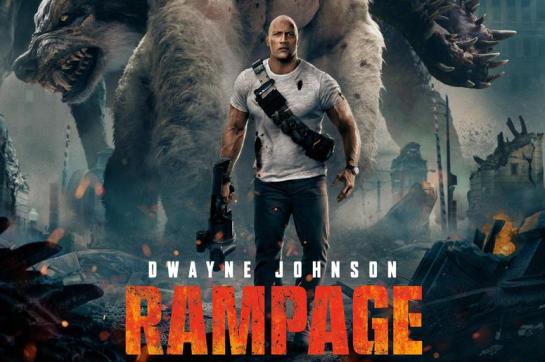
I wonder how people know that Dwayne “The Rock” Johnson’s monster-thriller “Rampage” is actually based on a video game first released to arcades in 1986? I remember it well. As someone who spent a lot of time as a kid in that lively arcade culture, I was never the biggest fan of the “Rampage” video game. I can honestly say I like the movie adaptation even less.

Johnson is a hardworking guy as evident by his fifteen feature films since 2013 (mostly big-budget blockbusters) in addition to his ongoing HBO television series. Most of his movies are built around his infectious personality and charisma. Admittedly I often find that to be enough for me to enjoy his movies to some degree. Despite all the charm Johnson musters, it still isn’t enough to save “Rampage” from its plethora of problems.

Rampage2

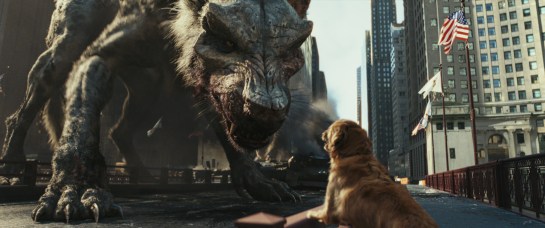
The setup goes like this: a mutated lab rat destroys a space station owned by Energyne Corporation sending debris crashing through Earth’s atmosphere. Some of the wreckage is contaminated by a mysterious pathogen which causes mutations upon impact with the surface. By mutations I mean a giant alligator in Florida, one mean flying wolf in Wyoming, and a gentle albino gorilla in San Diego.

The gorilla’s name is George and he resides in a wildlife sanctuary after being saved from poachers by his beefy Primatologist buddy Davis Okoye (Johnson). As with the other mutations, George begins to grow at an alarming rate and quickly becomes more aggressive. Okoye is contacted by an ex-Energyne geneticist (Naomie Harris in a thankless role) who reveals the nefarious plans of the company’s diabolical CEO (an on the nose Malin Åkerman). You guessed it, the pathogen will be sold as a biological weapon to the highest bidders.

The tonal gymnastics kicks up a notch when Davis tries to stop a now free roaming George, tries to stop the monster-sized wolf and gator, and tries to stop an evil corporate head. That’s a lot of stopping to do even for The Rock. During this chunk of the movie things constantly bounce around between playful and ultra-serious. Jeffrey Dean Morgan shows up in full-blown Negan mode (see “The Walking Dead”) as a secret government agent who’s not buying into Davis’ story. Morgan is obviously having fun and his character adds some much-needed levity.

RPG202_166.tif

“Rampage” sports some nice special effects but there isn’t much past that. As much as I tried to connect, the film was too much of a slog. Aside from Morgan most of the humor falls flat (a reoccurring lazy and unfunny gag between Davis and George must have been ripped from “Every Which Way But Loose”. It was funnier in the Clint Eastwood picture). Even worse, the characters are uninteresting and there is no suspense whatsoever.

This is the third film director Brad Peyton has done with Dwayne Johnson and easily their weakest collaboration. But it’s not all on Peyton. The bulk of the problems with “Rampage” lie with the script. Four writers are credited (or to blame, depending on your perspective) with putting this hodgepodge together. It simply doesn’t work on so many levels. And if someone like me with a deep affection for old-school creature features can’t find much to get excited about, that’s not a good sign.

VERDICT – 1.5 STARS

1-5-stars

REVIEW: “Mission: Impossible – Fallout”

MISSIONposter

What started as a successful but slightly schizophrenic pet project has evolved into one of my very favorite movie franchises. Aside from the common thread of their high-profile star, the first three “Mission Impossible” installments couldn’t feel more different. It was mainly due to having three very different directors, each with their own unique stamp. While I enjoyed each of them to varying degrees, it was still tough to put a finger on what the series wanted to be.

That started to change with “Ghost Protocol” from director #4 Brad Bird. It put pieces in place and set the table for director #5 Christopher McQuarrie and what would be the best “MI” movie to date. “Rogue Nation” not only felt connected to its predecessor beyond Tom Cruise’s presence, but it was incredibly well made and left audiences with a much clearer vision of what the franchise is shooting for.

Mission2

Fans of “Rogue Nation” rejoice. Christopher McQuarrie breaks the revolving director trend and returns for “Fallout”, a movie that ups the ante in terms of breathtaking action yet still tells a thrilling story that well serves its fabulous band of characters.

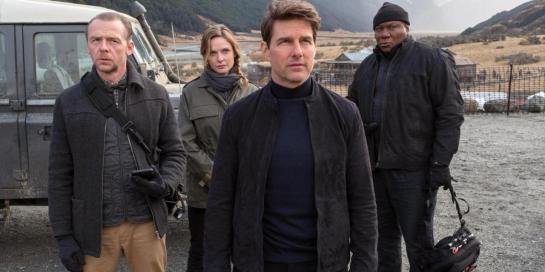
McQuarrie has been working towards “Fallout”, building its framework for several films now. He did uncredited rewrites for “Ghost Protocol”, co-wrote “Rogue Nation”, and handles the entire script for “Fallout”. This is his baby and he knocks it out of the park. Of course Cruise returns along with mainstays Ving Rhames and Simon Pegg. Also back is Rebecca Ferguson who debuted and stole the show in “Rogue Nation”.

Mission3

In a prologue 56-year-old (but far from looking it) Cruise’s Ethan Hunt is informed that three plutonium cores have been stolen by a terrorist group calling themselves The Apostles. They are an offshoot of the Syndicate (see “Rogue Nation”) ran by a mystery man named John Lark. Ethan calls in his IMF cohorts, the neurotic Benji (Pegg) and easy-going Luther (Rhames), to help regain the cores, but the mission goes awry and the plutonium heads to the black market.

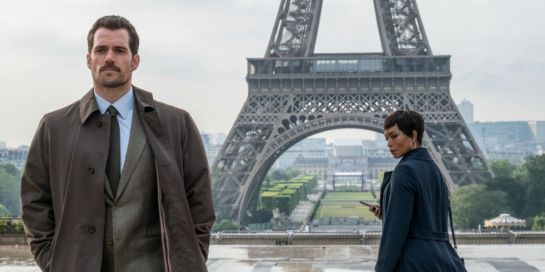
Ethan is able to track the plutonium to Paris where a transaction is set to take place near the Grand Palais. Before he can head that way freshly christened CIA Director Sloane (Angela Bassett) orders him to take along Agent Walker (Henry Cavill), a CIA ‘observer’ and Sloane’s own personal “hammer”. Basically he’s sent to make sure the mission succeeds whatever the cost. As Cavill says in his wriest and driest voice “That’s the job.”

Mission1

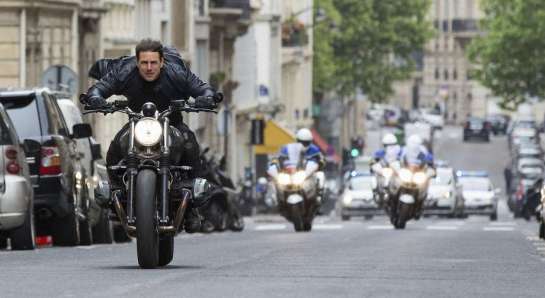
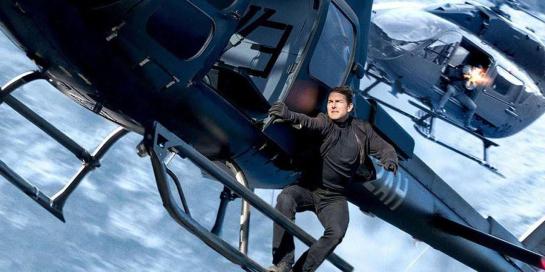
If you follow the series you know the story can’t possible stay in one location. In addition to Paris we make stops in Belfast, London, even Kashmir (played by Norway). Along the way we get a white-knuckled motorcycle chase around the Arc de Triomphe, a foot race across London rooftops (which actually resulted in Cruise breaking his ankle), a mind-blowing helicopter duel through the snow-capped mountains of Kashmir, just to name a few. The action sequences are nothing short of exhilarating, mostly done through traditional stunt work and practical effects. The touches of CGI make a handful of scenes even more breathtaking. And what’s best is McQuarrie shoots them with visual coherence. No indecipherable shaky cams and quick cuts. It’s something to behold.

But “Fallout” is more that credits-to-credits action. McQuarrie threads these sequences together with a classic-style spy story full of twists, double-crosses, intersecting plotlines and of course one big nuclear threat. In the middle of it all is returning “Rogue Nation” baddie Solomon Lane (Sean Harris), an anarchist with a personal axe to grind with the current world order and with Ethan Hunt. His two-headed mantra “The greater the suffering, the greater the peace” is just as much directed at Ethan as to the world system. Adding another kink is the resurfacing of Ilsa Faust (Ferguson), once out of the game but now back in and with her own mysterious agenda.

Mission4

McQuarrie moves us through his wonderfully knotty plot at a crackling pace, tossing us enough twists and turns to ensure there is no downtime for measuring if every piece lines up perfectly. But it’s smart enough to keep us locked in and constantly guessing. And Cruise remains the heart of the franchise. His insane physicality and daredevil willingness to risk life and limb for every shot has never been more evident. But it’s the character-centric moments that speak volumes. He’s still a vulnerable hero, even a bit naïve. And more than any other “M:I” installment, “Fallout” centralizes his unshakable moral code as key component of not just this film but the entire series.

“Mission: Impossible” continues to be the rare film franchise that actually gets better with age. “Fallout” makes no attempt to reinvent the wheel. Instead it takes the best elements of its predecessors and then cranks the dial past 10. Cruise and company’s ability to consistently up their game has culminated in this action movie masterclass that earns every ounce of acclaim it’s getting. Knowing their history I’m definitely onboard for more. But if the next movie’s mission, should they choose to accept it, is to top “Fallout” it could truly prove to be impossible.

VERDICT – 5 STARS

5-starss

5star

REVIEW: “Skyscraper”

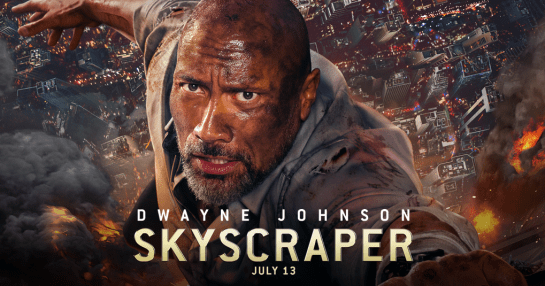
SKYSCRAPERposter

Expectations are a funny thing, especially when talking about a movie like “Skyscraper”. After seeing the trailers I could never shake my “The Rock versus a Skyscraper” impression. I fully expected a movie cheesier than a block of Velveeta. But after seeing the film I can honestly say I was wrong…sort of.

Now don’t misunderstand me, there is still cheese. And “Skyscraper” never quite breaks out of its genre mold or shakes free from its conventional and predictable blueprint. Once it gets rolling you pretty much know what you’re in for. But it’s easily an above average popcorn flick that surprised more than expected.

SKY1

In the prologue an FBI raid goes terribly wrong and Hostage Rescue Team leader Will Sawyer (Dwayne Johnson) is seriously injured. He loses his leg but meets his future wife Sarah (Neve Campbell) as a result. Ten years later the two are married with two kids and soldier-turned-family man Will manages his life as an amputee while running a small independent security company.

Will and his family travel to Hong Kong after an old FBI buddy (Pablo Schreiber) helps him get a shot at a potentially huge contract. The job is as a security consultant for a 3,500 foot state-of-the-art skyscraper called The Pearl. It’s the brainchild of a Chinese entrepreneur (Chin Han), complete with its own energy source, a massive botanical garden with its own waterfall, and a large residential section. It’s essentially a city in the sky. Will is brought in to give The Pearl a thorough security examination before it can be opened to the public.

But as John McClane can attest, oh those pesky terrorists. While Will is working offsite, the crime syndicates send their extortion handler Kores Botha (Roland Møller) and his band of mercenaries to infiltrate The Pearl. A few double-crosses and one large fire later, and the terrorists have control of the skyscraper with Will’s family trapped inside. I shouldn’t need to tell you where it goes from there.

The glaringly obvious “Die Hard” inspiration goes without saying, but I also couldn’t help but see glimpses of “The Towering Inferno”. Writer-director Rawson Marshall Thurber uses elements of those movies but shakes them up a bit. He does the same with Johnson (the two previously worked together on the 2016 comedy “Central Intelligence”). Thurber dials back the witty charm and downplays the buff action hero persona. Johnson does good with the more dramatic material he is given.

SKY2

Several other things impressed me about “Skyscraper”. The film makes a conscience effort to respectfully represent disability and the reactions from those communities have been heart-warming. Will’s disability is never seen as a weakness. It actually saves his life on multiple occasions. Most importantly it isn’t used as a narrative gimmick. There is also a strong message of family that I responded to. Again, at times cheesy, but still a welcomed ingredient.

So yes, “Skyscraper” was a nice surprise and certainly a step up from Johnson’s last blockbuster effort. It’s still very much light popcorn entertainment with a predictable framework and the type of crowd-pleasing you expect from these things. Also don’t expect a Hans Gruber-like villain. We get nothing close. But I won’t lie, I was with this movie all the way through and it’s a nice addition to the filmography of Hollywood’s hardest working guy.

VERDICT – 3.5 STARS

3-5-stars

Retro Review: “Mission: Impossible” (1996)

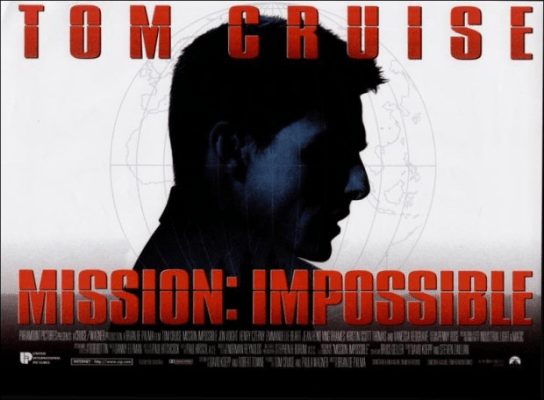
Mission Poster

Paramount Pictures had repeatedly tried and failed to adapt the “Mission Impossible” television series to the big screen. Tom Cruise loved the show as a kid and began working on his vision for it. He believed so strongly in the project that he made it the first film developed under the banner of his fledgling production company. The two came together and in 1996 this unique interpretation hit theaters.

The first signal that “Mission Impossible” aimed to be different came with the signing of director Brian De Palma. Though not unfamiliar with studio blockbusters, De Palma came to the film with his own peculiar sensibilities. You see it on the technical side with his extreme closeups and fascinating camera perspectives. But also through his deconstruction of the popular long-running TV series and its characters. That’s what prompted the biggest response from fans of the show.

Mission1A

Obviously “M:I” launched Cruise’s upstanding Ethan Hunt character, less sexualized than James Bond but with the same unflinching moral code. The film begins with Ethan as the frontman for a covert IMF (Impossible Missions Force) mission in Prague. A very good Jon Voight takes over for Peter Graves as John Phelps, the team leader who sends his team to nab a top secret list of undercover IMF agents from the U.S. Embassy before it falls into the wrong hands.

Things go terribly wrong, a mole is unearthed and Ethan finds himself in the crosshairs of IMF director Kittridge (Henry Czerny) who brands him Public Enemy No. 1. He seeks out the help of fellow disavowed agents Luther Stickell (Ving Rhames) and Franz Krieger (Jean Reno) to root out the mole and clear his name. The wonderful Vanessa Redgrave plays a crafty arms dealer, Emmanuelle Béart plays a mysterious IMF agent, and even Emilio Estevez pops up as a not-so-superhacker.

It was interesting to rewatch “M:I” in light of how we routinely see these types of movies today. It’s a blockbuster uninterested in franchise blueprints, shared universes, or other big budget considerations. Those things weren’t as prevelant at the time which allowed for De Palma to play with his Hitchcockian and genre thriller influences.

Mission2

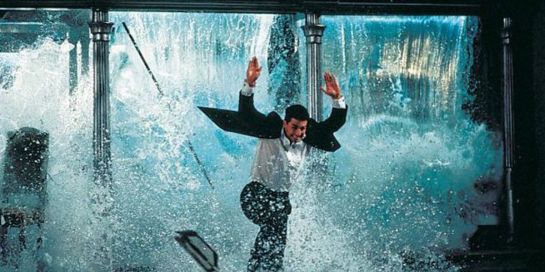
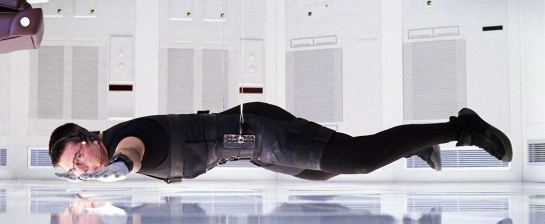
I still remember the initial reactions from people I knew who didn’t quite know what to make of it. The big finale aside, “Mission Impossible” subverted the blockbuster at nearly every turn. Now keep in mind it was 1996. It shared a big chunk of the summer box office with “Independence Day”, a movie all about fast-paced action and large-scale destruction. “M:I” had a much different idea. Build quiet and focused sequences where a simple bead of sweat can create white-knuckled tension. Of course the famous train sequence showed De Palma could also go big and the scene was a unknowing prophecy of what the franchise would become famous for.

Over time I’ve grown to appreciate this movie more and more. Of course the irony of it all is that this weekend the sixth installment in the “Mission: Impossible” series hits theaters. A subversive first film that went out of its way to break the blockbuster mold birthed a multi-billion dollar franchise. But just like the original, the series has consistently differentiated itself from most other big properties and it has only gotten better. Much of that is due to a perceptive Tom Cruise and he certainly got things started on the right foot.

VERDICT – 4 STARS
4-stars