REVIEW: “Columbus”

COL POSTER

A mere 40 miles south of Indianapolis is the quirky city of Columbus, Indiana. In many ways Columbus is like any other modestly populated city – it has its schools, churches, and key industries as its financial backbone. But this city of 45,000 people sports one unique distinction. It is the home for an amazing variety of modernist art and architecture.

This provides the setting for the aptly titled film “Columbus” – the impressive debut feature from Kogonada. Known only by his first name, the Korean-born Kogonada previously worked as a video essayist spotlighting legendary auteurs from cinema’s rich history. A quick gander at his website reveals not just an understanding of his subjects (Bresson, Godard, Kubrick just to name a few) but also a genuine passion for their visions and techniques.
COL1

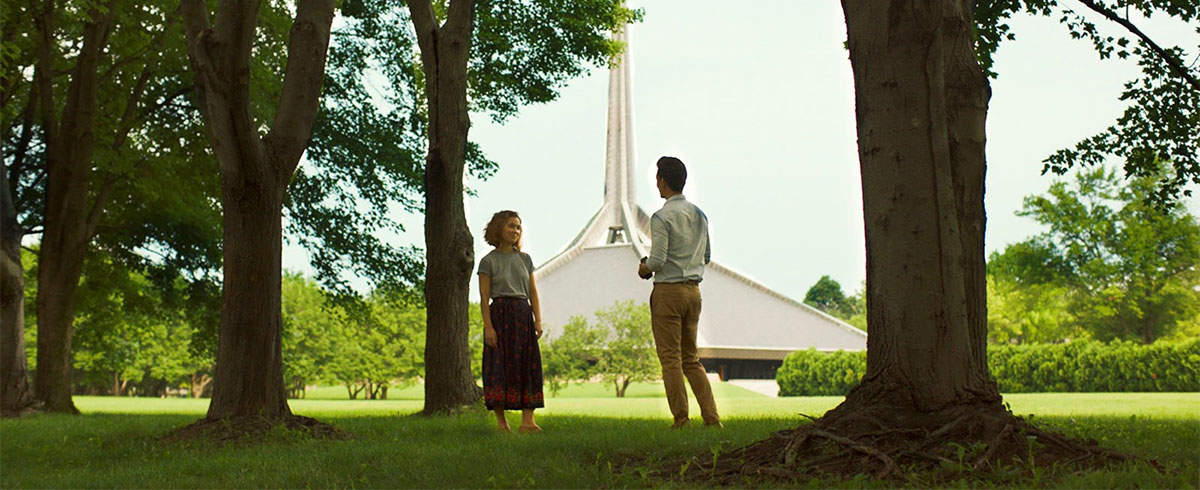
Kogonada brings that knowledge and affection to “Columbus” which he directed, wrote and edited. His appreciation for the city’s architectural heritage is just as evident and it’s captured in nearly every frame. Whether Kogonada is shooting Columbus City Hall, North Christian Church, Irwin Union Bank, or the Robert Stewart Bridge, he and cinematographer Elisha Christian use each modernist structure to subtly establish personality and emotion.

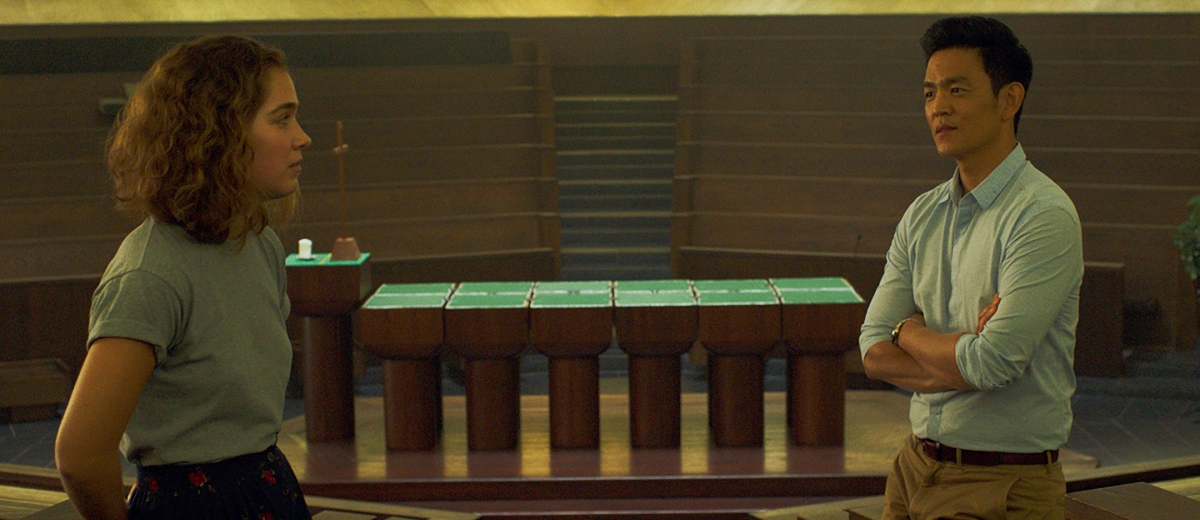
But this isn’t simply a Travel Channel city tour. Kogonada’s use of architecture is full of purpose, but the heart of the film is found in the two main characters – two polar opposites bruised by their own personal circumstances. Casey (Haley Lu Richardson) is a Columbus native and recent high school graduate who works at the local library. She’s bright and ambitious but her dreams are tossed aside because of her obligations to her troubled mother (Michelle Forbes). Jin (John Cho) works as a literature translator in Korea but is called to Columbus after his estranged father falls into a coma.

Clearly influenced by Linklater’s “Before” trilogy and with the minimalist strokes of a Jarmusch film, the story has these two strangers meet and a relationship is slowly formed. Similar to Jesse and Celine in “Before Sunrise”, Casey and Jin are cracked open through a series of conversations that occur as the two stroll across Columbus. Between their musings on Saarinen, Pei, and Weese are the more personal and revealing exchanges that gradually endear them more to each other and to us.
COL2

While the framework may not sound highly original, the film avoids all of the traditional story beats you might expect. It’s sometimes tempting to allow our expectations to get ahead of a story, but Kogonada doesn’t leave much room for that. There is always a hint of uncertainty with these two characters and their unique relationship. This leaves the audience guessing.

One thing that differentiates “Columbus” from the “Before” films are the scenes when Casey and Jin are apart. More than mere filler, these moments give form to the conversations the two have together. We get a better understanding of Casey through her modest and worrisome home life with her mom or her discussions with her neurotic friend and co-worker Gabriel (nicely played by Rory Culkin). For Jin its the quiet alone time wrestling with how he should be feeling or reflections with his father’s longtime assistant (Parker Posey). These scenes are elegantly composed and never feel false or contrived.

But the most potent ingredients are the two lead performances. Cho is a natural at subtlety – somber, reserved and authentic at every turn. But it’s Richardson who steps out as a true revelation. She’s an incredibly expressive actress and we never see her overplay a scene or oversell an emotion. She conveys an effortless charm and sincerity that instantly captures our sympathies. It’s an eye-opening performance.

COL3

There is a soulful longing in both Casey and Jin – two hurting people from very different places forced to put their lives on the back burner. In one scene Kogonada has them wrestle with the question – is there a healing power to architecture? What seems like an absurdity may not be so far-fetched. It’s architecture that first connects these two wounded souls and it lingers in the background during each of their conversations.

Perhaps Kogonada’s camera answers that question for us. There is a therapeutic quality to his perspectives. His camera rarely moves and he communicates plenty through every carefully composed shot. And while “Columbus” highlights the allure of architecture, it just as much showcases the fine art of cinema in what is one of the most striking debuts in decades. Kogonada is a filmmaker to watch.

VERDICT – 4.5 STARS

4-5-stars

Relay Race – The 10 Best Christmas Movies

CHRISTMAS

As I was visiting the site of one of my favorite long-time movie bloggers Nostra (My Filmviews) I noticed he had revived a cool feature of his – the movie relay race. And then another respected long-time movie blogging buddy Mark (Marked Movies) had joined it and tagged me as next in line. There is no way I could pass that up especially considering the topic – Christmas movies. You can see Nostra’s original lineup HERE and below you can see the current lineup following Mark’s addition and subtraction.

Not sure how it all works? Here’s a rundown from Nostra himself:

The rules are, just like the past relay races, very simple: The list has 10 Christmas movies (in random order) and when the baton is handed over to a new blogger, he or she has to remove one title of the list (with an explanation why) and add one new title. Once that is done a new blogger is contacted who will take the baton and run with it, doing the same (you can reinstate a title which has been previously removed). As Christmas is in three weeks I want to ask you to publish your entry as quickly as possible to make sure the list changes as much as possible before the 25th of December. Add the logo of this relay race to your post and also add links to those who came before you making it easy for everyone to find all the entries.

So here is the list of the 10 Best Christmas Movies as it stands now:

HOME ALONE

HOME

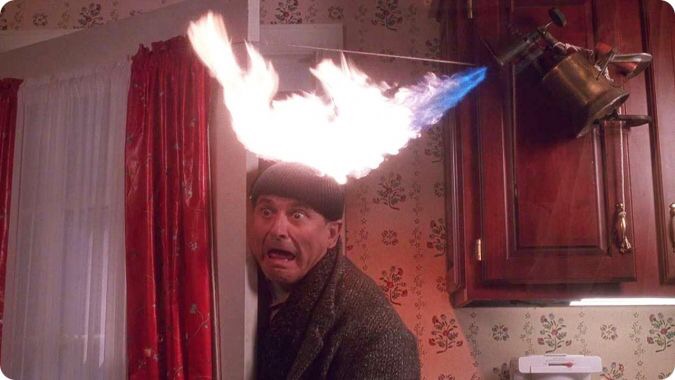
There are a number of Christmas films that I actually watch annually and Home Alone has been one of my favorites for years. This film, written by John Hughes, has all the elements to amuse and get you in the mood Christmas. And Joe Pesci and Daniel Stern are of course hilarious when the “Wet bandits” Harry and Marv.

ELF

ELF

The film is almost fifteen years old, but the timeless story of a grown man who grew up among the elves and heads to New York, looking for his father, still is very funny and entertaining. Will Ferrell is the perfect “man child” and the short animated parts are a pleasure to watch. A real Christmas classic.

A MUPPET CHRISTMAS CAROL

MUPPET

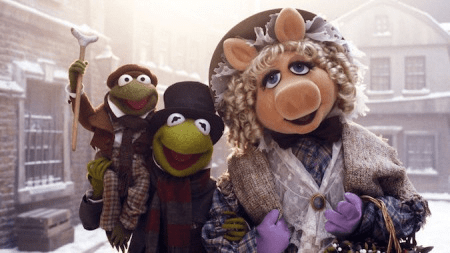
Although Charles Dickens story has been translated to film many times, this version is still my personal favorite. A film with a lot of atmosphere and the warmth of the Muppets.

DIE HARD

DIE HARD

Every year people argue whether or not Die Hard can be labeled a Christmas film. Yet it is very simple: Although there is a lot of action, the story takes place around Christmas. And Bruce Willis might play his best role ever.

BAD SANTA

BAD SANTA

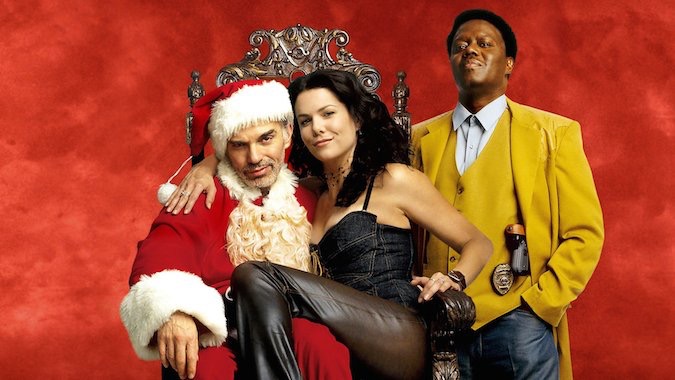
Almost everything that Christmas should not be and therefore wrong at the same time, but fun.

GREMLINS

GEMLINS

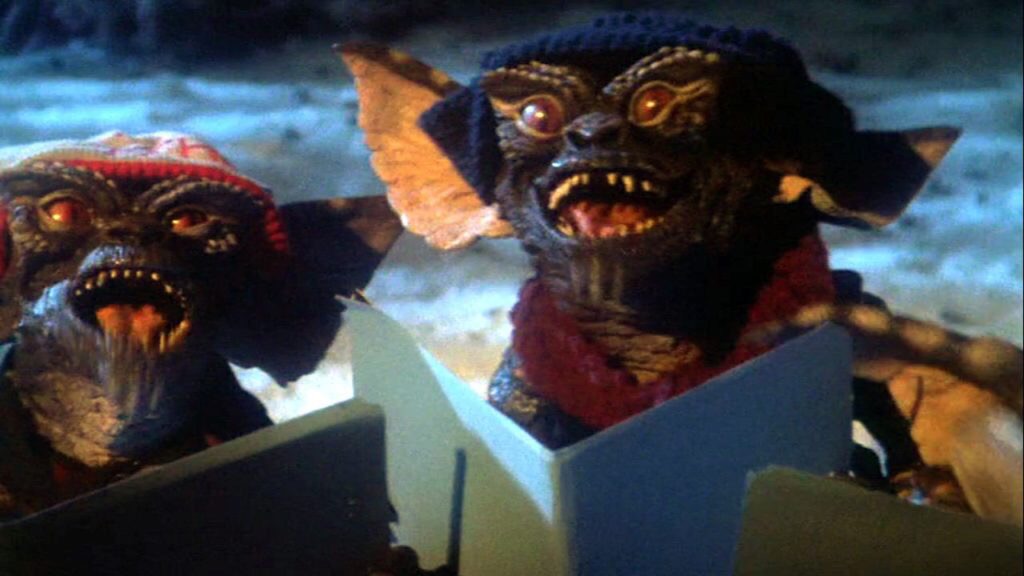
Although you might not associate this horror comedy with Christmas immediately, this film is set during this period and the gremlins even sing Christmas songs. A title that can not be missed.

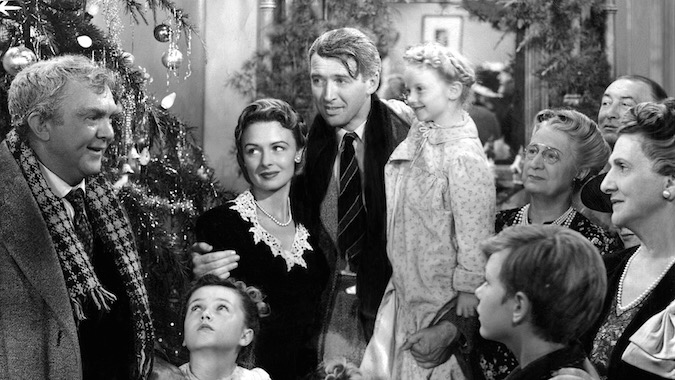
IT’S A WONDERFUL LIFE

WONDEFRFUL

It’s a Wonderful Life is a movie which is watched by lots of people every year. Rightly so, because it is a beautiful film that fits the Christmas period.

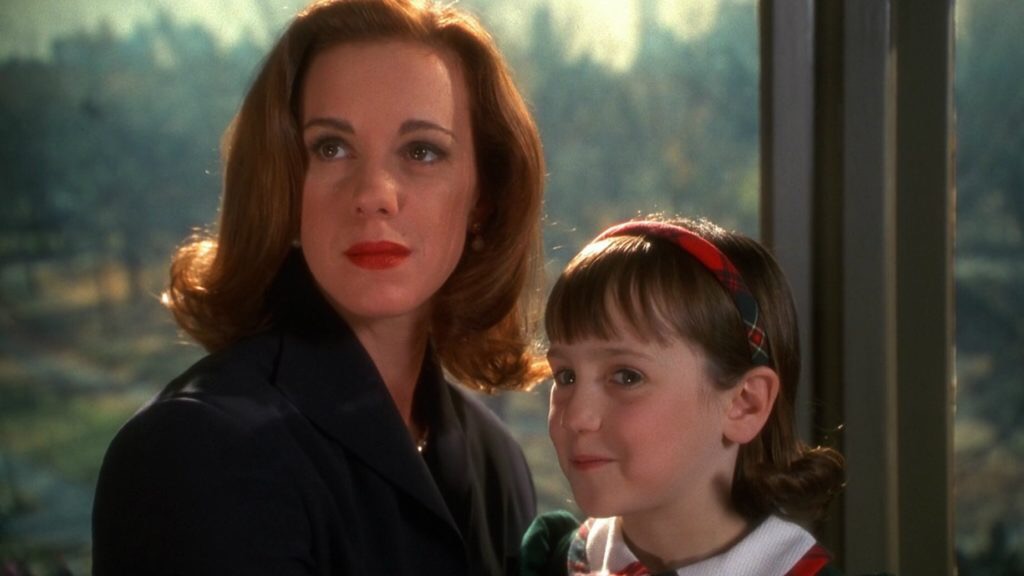
MIRACLE ON 34TH STREET

MIRACLE

Another title that I have to think about immediately during this period. Although the opinions are divided which two of the two versions is the best.

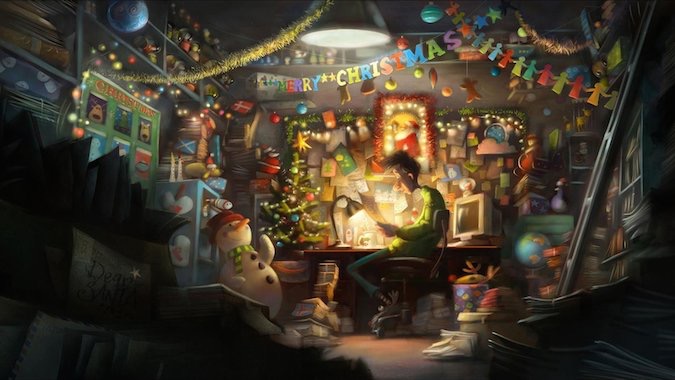
ARTHUR CHRISTMAS

ARTHUR

The clumsy son of Santa, Arthur, has to make sure that a forgotten package is delivered on time, doing this together with his grandfather. A very nice film from Aardman studios (also responsible for the Wallace & Gromit films).

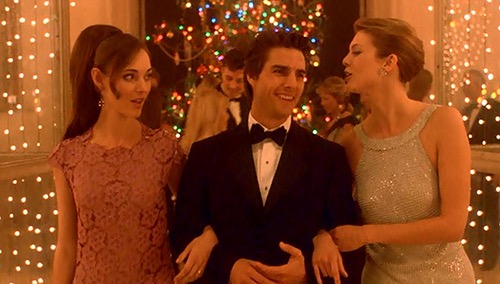
EYES WIDE SHUT (Mark’s addition)

EYES

I’m using the same argument here that many Die Hard fans cling to. The story is set during the festive season and, in actual fact, most if not all scenes are introduced by depicting a Christmas tree. It’s fair to say, that it’s dark psychological mystery isn’t exactly in tune with the Christmas cheer but if Die Hard can be tenuously linked to this joyful season then so can Kubrick’s masterpiece.

Deciding what to remove was a painful task. I first considered tossing out “Miracle on 34th Street” and replacing it with the 1947 original which I feel is the true treasure of the three versions. But ultimately it came down to a film I genuinely can’t stand. Therefore bye-bye “BAD SANTA“!

What am I replacing it with?

A CHRISTMAS STORY

RALPHIE

Few films have defined my Christmas movie watching like Bob Clark’s delightful “A Christmas Story”. Sure, I gets overplayed during the season, but it is such a fabulous concoction filled with humor and heart. So many memorable scenes, so many memorable lines, so many memorable characters. This one simply has to be here.

So now I pass the yuletide baton to my friend Ruth over at Flixchatter!

REVIEW: “Mudbound”

MUDBOUND POSTER

Over the last few years there have been several prominent movies dealing with the issue of slavery or the racial aftermath that reverberated for decades. Movies like “12 Years a Slave”, “Selma”, and “The Birth of a Nation” each had their strong points, but also fell victim to certain creative and narrative choices of their directors.

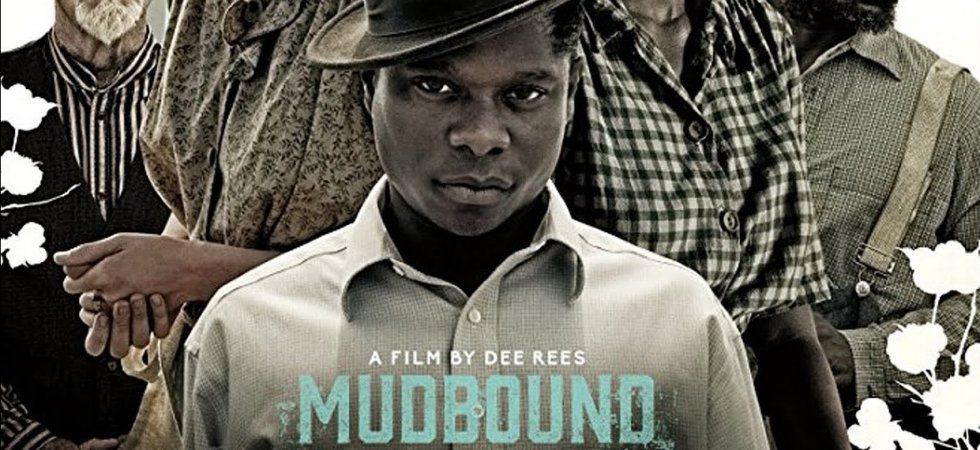
Enter “Mudbound” from director and co-writer Dee Rees. “Mudbound”, based on Hillary Jordan’s 2008 debut novel, is a period drama set in the Mississippi Delta during the 1940s. The story deals with a variety of potent issues – racism, poverty, and PTSD just to name a few. Rees’ adaptation gives them all form through an intensely honest and clear-eyed perspective.

MUD1

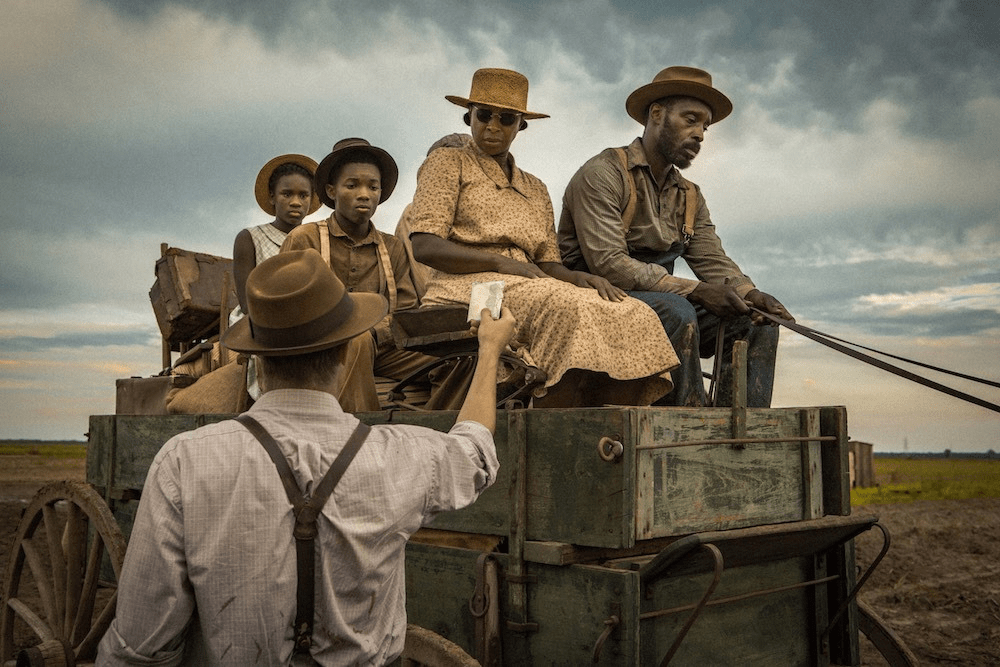
Rees anchors her film in the right place – with her characters. “Mudbound” is essentially the story of two families. Henry McAllan (Jason Clarke) marries Laura (Carey Mulligan) in 1939 and soon moves her, their two daughters, and his racist father (Jonathan Banks) to a Mississippi farm he abruptly purchased. Hap Jackson (Rob Morgan giving some of the year’s finest supporting work) is a tenant farmer whose family has worked Henry’s newly acquired land since his grandfather was a slave. Hap dreams of owning his own farm but always puts the aspirations of his kids ahead of his own.

Both families are compelling but in dramatically different ways. Each face the brunt of harsh deep south poverty and both face it the best way they know how. But their struggles and circumstances couldn’t be more different both inside and outside of their homes. And despite their mutual see-through pleasantries and respect, the sting of a morally corrupt social order is felt in nearly every conversation the two families share.

Mudbound3

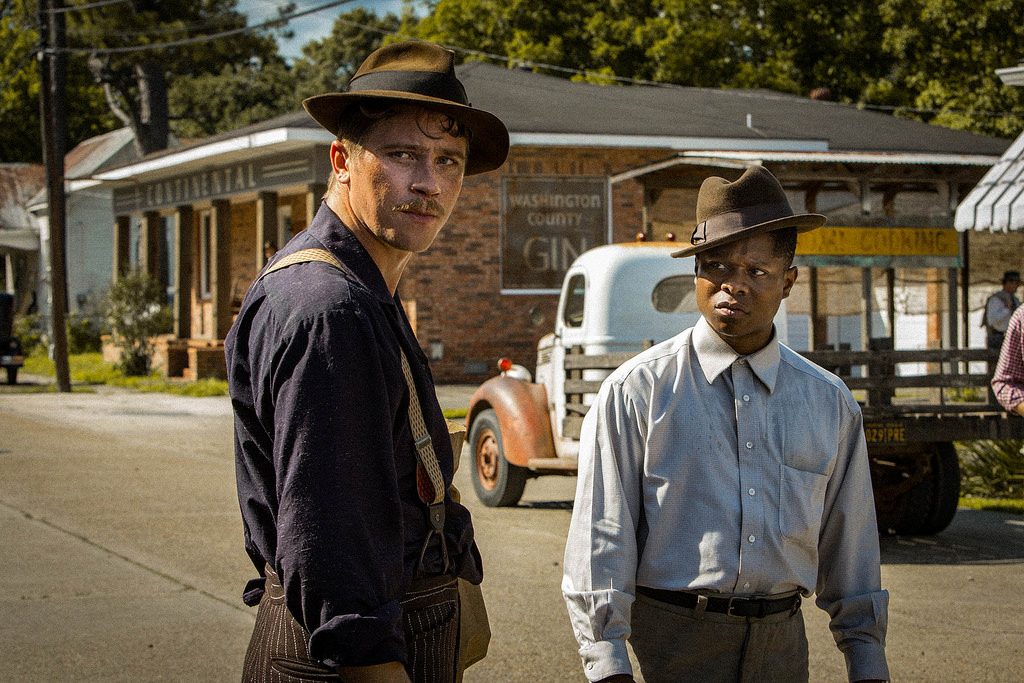
But there is one earnest thread that connects them. It comes in the form of Henry’s younger brother Jamie (Garrett Hedlund) and Hap’s oldest son Ronsel (Jason Mitchell). Both young men return to Mississippi after fighting in Europe during the final days of World War II. They both are scarred from the war and find solace in their new friendship which bucks the gross social norms of their small town. While their relationship offers a little light in a period of darkness, it potentially sets in motion trouble that will ripple through both families.

Another key element is the setting which Rees portrays with gritty realism. There is no luscious coat of studio paint. The land isn’t glamorized through cinematographer Rachel Morrison’s camera. Instead the beauty is in the authenticity and how the characters perceive it. It’s a fittingly unpolished presentation of a land aching almost as much as the people tending it.

Not all the visuals are as impressive. The action scenes featuring Jamie as a pilot aren’t very convincing and clearly didn’t get much attention. But this is such a minor complaint considering Rees and company nail the important stuff – the characters. “Mudbound” digs deep into their individual psyches often giving them their own moments of narration to express their feelings and perspectives. It’s a risky narrative technique but Rees weaves it seamlessly throughout the story.

MUDBOUND2

And then you have the acting featuring an entire cast in top form. I mentioned Ron Morgan but there is also Mary J. Blige who gives an eye-opening performance as Hap’s wife Florence. Mulligan, Clarke, and Hedlund each fall right into their characters and the period, and there is a particularly vile (and that’s a compliment) performance from Banks.

“Mudbound” debuted on Netflix with practically no theater release to speak of (minus a handful of screens). Some speculate this could hurt the film come Oscar time. I hope that’s not the case. This film deserves to be in the conversation. It’s a difficult movie but an honest one that isn’t afraid to examine the stains of our past earnestly and without manipulation. It’s handling of poverty, hardship, self-destruction and family dysfunction also wields a piercing edge. It all works together in a deeply penetrating harmony and with striking authenticity that pulls you into this troubled period and never lets you go.

VERDICT – 4.5 STARS
4-5-stars

REVIEW: “Walking Out”

Walkingposter

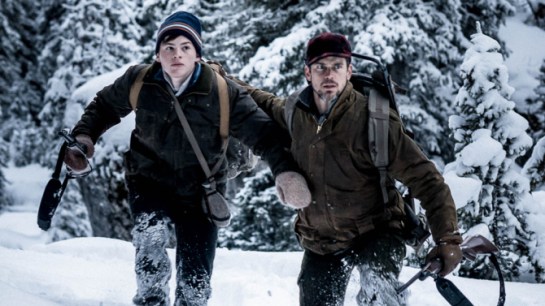
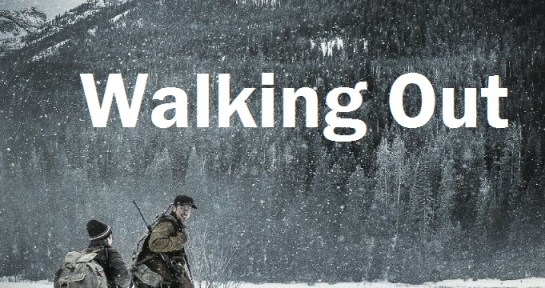
“How was your year”? It’s the first question Cal has for David his teenaged son who just flew in for a winter hunting trip. It’s the first of many signs revealing a disconnect between father and son who rarely see each other following Cal’s divorce from David’s mother. David lives with her in Texas. Cal lives in a secluded cabin in the mountains of Montana.

Twin brothers Alex and Andrew Smith directed and wrote the screenplay for “Walking Out”, an adapatation of a David Quammen short story. You could say it is a poignant family drama masquerading as a survival thriller. This story of a hunting trip gone bad certainly has all the elements tense survival tale. But even during those moments it’s the unfolding family dynamic that gives it all such meaning.

Walking1

Cal is played by Matt Bomer, an unexpectedly nice fit. There’s a lot we aren’t told about Cal. Why does he live like a hermit? What does he do for a living? Why did he and David’s mom divorce? What little bit we know is picked out of conversations with David and occasional flashbacks to when Cal hunted with his dad (played by Bill Pullman).

David is wonderfully played by Josh Wiggins. It’s such a genuine performance and a genuine character. David would much rather play on his cell phone than trod through the snowy wilderness. He’s a kid any viewer could recognize – awkward and a bit aloof. He is certainly out of his element in Montana. But at the same time he wants to be please his father and be close to him.

The chemistry between Bomer and Wiggins is a big reason this film works. For nearly half of the film the two make their way to the remote hunting grounds high up in the mountains. During this time we see both the compassion and contention that defines their relationship. But when the inevitable happens and something goes terribly wrong we see a necessary evolution of their relationship.

Walking2

“Walking Out” offers an interesting exploration of the father/son dynamic. For example it plays with the idea of sons becoming their father. We see it in how during the hunt Cal assumes the role of his father (who we see during the flashback sequences). And after the incident we see David doing something similar and becoming more like his father. This is one of several themes the Smith brothers play around with. There’s nothing deeply profound, but interesting nonetheless.

The film’s title makes the impending peril obvious, but the buildup of the two main characters and their strained relationship gives form to the danger once it hits. The mountainous wilderness is shot in a way that makes it both menacing and breathtaking. The further they get from civilization the more beautiful and treacherous the land becomes. It becomes a powerful supporting character and a perfect setting for this modest yet satisfying picture.

VERDICT – 4 STARS

4-stars

REVIEW: “Justice League”

JUSTICE POSTER

Going back to the start of the 2017 movie year “Justice League” gave us two of the easiest things to predict. First, “Justice League” would (one way or another) get a lot of attention for Warner Brothers. Second, the majority of film critics wouldn’t like “Justice League”. Okay, perhaps the second prediction was a bit cynical, but lets just say with one prominent exception (this year’s “Wonder Woman”) critics haven’t responded well with the DCEU’s approach.

DC films have a much different flavor than their rival, Disney-owned Marvel. Marvel movies tend to be lighter and often poke fun at themselves for their overall absurdity, so much so that several of their films could be called all-out comedies. DC movies are darker and considerably more serious. In many ways they are more like their comic book inspirations in how they tonally treat their stories. Therefore critics who have a hard time taking comic books seriously equally struggle with DC’s movies.

Justice1

Contrary to some, I’ve enjoyed the DC formula (minus “Suicide Squad”) and for the most part “Justice League” sticks to it. Yet this movie is far from humorless and there’s no denying that the creative heads have made it a point to inject some laughs (to a fault). But some of the serious tone and dire threat is still there, just to a slightly lesser degree.

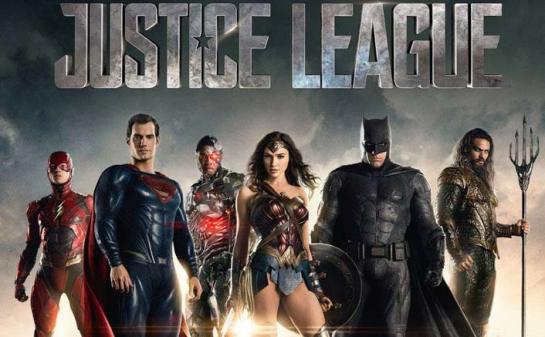
The story begins with the world still mourning the death of Superman (Henry Cavill). In his absence an increase of crime can be seen from city to city. Fear sets in which attracts the attention of an interdimensional conqueror Steppenwolf (Ciarán Hinds) and his army of parademons. Recognizing the weakened earth’s vulnerability, Steppenwolf sets out to resume his centuries-old hunt for three powerful energy sources called Mother Boxes.

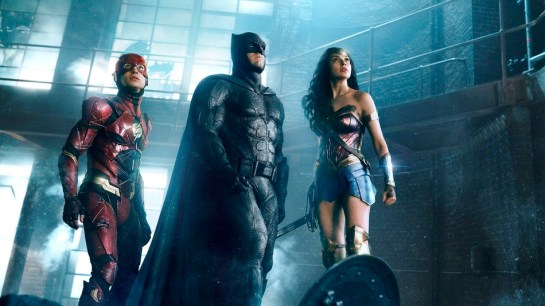
Batman (Ben Affleck) is the first to get a whiff of the impending invasion. Superman’s death and the reality that he can’t handle it alone drives Bats to contact Wonder Woman (Gal Gadot) to help him form a team. Enter Arthur Curry a.k.a. Aquaman (Jason Momoa), Barry Allen (Ezra Miller) also known as The Flash, and Ray Fisher who is called Cyborg. Each have their own demons that keep them on their own, but each are faced with personal trials that eventually bring them together.

Justice3

Returning director Zack Snyder’s vision once again plays with a lot of moving parts but manages to keep them all within a cohesive working universe. Several smaller characters with connections to past films return – Amy Adams as Lois Lane, Diane Lane as Ma Kent, Jeremy Irons as Alfred, Connie Nielsen as Hyppolyta, J.K. Simmons as James Gordon. They never feel wedged in and each have their moments that serve the story well.

Oscar-winning screenwriter Chris Terrio (who worked with Affleck on “Argo”) wrote the screenplay based on a story he developed with Snyder. But Snyder left the project in post-production following the heart-breaking loss of his daughter. Joss Whedon came aboard to finish up and received a screenplay credit. The trio work hard to balance the fantastical with the human element. Sometimes the get it right, sometimes not so much. Some personal stories are better and more fleshed out than others. Perhaps the most surprising is Cyborg – a failed experiment whose story pulsates with a Frankenstein’s monster vibe. Fisher is excellent at juggling the proper amounts of sorrow and anger. Ezra Miller is the wide-eyed comic relief who dances close to the line of overkill but never crosses it. That said it still feels like there is more to their stories that needs to be told.

As for the big guns, Affleck has the dark brooding side of Bruce Wayne down and (for better or worse) he’s not asked to do much beyond that. While I’m ready for the character to show a tad more life, I do like how he is written here. He’s older, tired, and unsure of himself. He knows he can’t lead a team and we get a good sense of that internal struggle. Gadot’s Diana hits nearly every note that has made her the star of the DCEU. She’s strong, courageous, and upright yet she too sports her own personal scars. Then there is Cavill’s Superman, long accused of being dry and lifeless (I’ve never fully agreed with that take). We see him in the trailer and I won’t go further than that, but I’ll say this is a strong depiction of what makes Superman great.

Justice2

“Justice League” isn’t without its issues. It has been difficult for comic book movies of all sorts to truly nail their villain and it’s no different here. There is actually a cool otherworldly background alluded to but ultimately Steppenwolf comes off as a little thin. You’ll easily recognize him as the familiar cosmic threat here to take over our planet. There is more just under the surface but we never get a good enough taste. There are also instances where the CGI and green-screen backgrounds are far too obvious. The bulk of the action is fun, but those instances do stick out.

It was no surprise that “Justice League” was met with the same consternation as “Batman vs. Superman”. And even though it addresses many of the complaints hurled at its predecessor, “Justice League” and its audacity to take itself and its story seriously is sure to set the film up as a fashionable punching bag. It’s unfortunate because this is a solid DCEU installment that expands the established characters, introduces compelling new ones and does some nifty world building. It will do nothing to win over those uninterested in the DCEU or the superhero genre as a whole. But for fans, especially those who want something that doesn’t strictly adhere to the Marvel formula, “Justice League” is a fun ride.

VERDICT – 3.5 STARS

3-5-stars

REVIEW: “The Unknown Girl” (2017)

UnknownPoster

Few modern filmmakers capture my attention quite like the Dardenne brothers. It’s not due to some pronounced signature style or showy big budget crowd-pleasing. Instead it is the undeniable naturalism that is found in each of their movies. Their stories are true to life and delve into an assortment of moral conflicts all while remaining free of narrative gimmicks or shiny Hollywood gloss.

Luc and Jean-Pierre’s latest “The Unknown Girl” checks all of the above boxes. It’s story revolves around a young doctor named Jenny. She’s played by Adèle Haenel whose striking performance comes across as almost Bressonian. It’s quiet yet at the same time it brims with intensity, not from any thundering dramatic force or narrative machinations. Instead it comes from the sheer authenticity of the performance.

Unknown1

Jenny works at free clinic in a blue collar neighborhood but has recently been accepted to a lucrative doctors position with a prominent medical group. With her career and future set, Jenny finishes out her final days at the clinic treating familiar patients and training an insecure intern named Julien (Olivier Bonnaud). Late one evening the buzzer sounds at the front door as Jenny and Julien prepare to leave for the day. Already an hour past closing time, Jenny chooses not to answer it – a decision that will come back to haunt her.

The next day Jenny learns that an unidentified immigrant teenaged girl was found dead nearby. The clinic’s security cameras reveal that it was the girl who had frantically rang the buzzer the night before.   Jenny is shaken by the news and by the guilt of her own negligence. In a quest for atonement Jenny sets out to discover the girl’s identity and to find out what happened to her.

For Jenny it becomes an obsession rooted in finding justice for the young woman but also in obtaining some semblance of personal closure. The Dardenne’s use her obsession to dig deeper into the weakened economic and social structure of Liége, Belgium, a field they have plowed numerous times before. The brothers have always had a keen sensibility towards working-class issues and plights. Here it’s explored through every location Jenny visits in her search for information. We also see it in the various lower-income patients Jenny sees. Some are dealing with social service cutbacks, some with illegal documentation, even addicts wanting fake prescriptions. None are glorified or demonized. They are simply observed through an real-life lens.

unknown2

A bit more about Adèle Haenel. Her performance and its importance to the film cannot be overstated. She is in practically every frame of the movie and there is such an emotional subtlety in her portrayal. It makes sense. She once tells Julien “A good doctor has to control his emotions”. But the further her search for answers goes she finds it harder to abide by her own rule. Also, despite her one moment of compromise, Jenny is a true organic heroine. It’s seen in her heartfelt desire to identify the girl and in the compassion she has for every patient she sees. Haenel makes it real for us.

“The Unknown Girl” certainly has its place in Luc and Jean-Pierre Dardenne’s catalog. As with their past films, its potency comes from its firm anchor in reality. We get thoughtful scrutiny of the medical, economical, and social systems without being preachy or heavy-handed. Instead the Dardennes simply depict true life and allow it to speak volumes. That’s the cinematic world they work in and Adèle Haenel fits beautifully on their canvas.

VERDICT – 4.5 STARS
4-5-stars