REVIEW: “First They Killed My Father” (2017)

firstPOSTER

Throughout her 15 year career Angelina Jolie has been called many things – actress, sex symbol, humanitarian, one-half of the ridiculously over-publicized, paparazzi darling “Brangelina”. But not enough people have considered her prowess behind the camera. Through four directed films she has shown a sharp awareness of technique but never quite hit her stride. That changes with her fifth film, “First They Killed My Father”.

This piercing historical thriller is an adaptation of human rights activist Loung Ung’s memoir of the same name. In her book Ung, a childhood survivor of the brutal Pol Pot dictatorship, tells the heart-wrenching story of growing up during the Khmer Rouge reign. For the film she collaborated with Jolie in writing the screenplay.

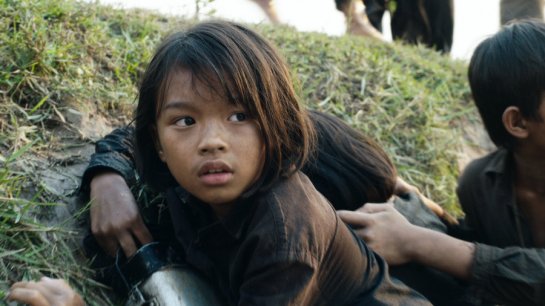
A brief but pointed newsreel introduction lays the foundation for Cambodia’s vulnerability and the subsequent rise of the Khmer Rouge. From there we move to  April, 1975. We meet Loung as a fun, precocious 7 year-old (played with such vivacity and emotion by Sreymoch Sareum). As the daughter of a government official she lives a privileged life with her loving parents and six siblings in Phnom Penh. But her world is forever turned upside down when the Khmer Rouge take control and forcibly evacuate the entire city.

First1

Loung and her family leave with nothing but necessities. They join floods of people, now refugees in their own country, on what some journalists and historians have described as a death march. For Loung’s family it’s particularly stressful. Her father (played with such warmth by Kompheak Phoeungas) is an instant target due to his government ties. This makes every checkpoint or encounter with a Khmer Rouge soldier a harrowing experience.

In a bit of ominous foreshadowing the film’s title looms over a good portion of the story and is an indicator that the road ahead of this family will be a difficult one. Much like the memoir it’s based on, the movie puts us behind the eyes of young Loung. Many films have told their story from a child’s perspective, but not many have done it as well as Jolie does here. You genuinely feel Loung trying to make sense of all she is witnessing and experiencing. You also feel Loung’s love for her family by the way they are often filmed from her perspective. It’s especially evident with her father who Jolie often frames with a childlike adoration. Loung’s love for her family is a fundamental ingredient to the story.
first2

Visually Jolie intentionally understates the brutality and violence choosing to allow it to burn just outside of our sight. It keeps our focus on the characters but also leads to some of the film’s most stunning photography – breathtaking overhead shots that briefly pull us out of Luong’s head to give us a broader picture of the horror. Later in the film the violence comes more into focus as it becomes more of a reality for Loung. Jolie shoots it careful and with great effect. And even beyond the violence, there are so many powerful images captured by cinematographer Anthony Dod Mantle (know most for his collaborations with Danny Boyle).

Jolie should also be commended for her deep desire for authenticity. It led her to film on location in Cambodia. She also used Cambodian actors and actresses as well as the native language of Khmer. All great decisions which puts us the viewers in the proper mindset to take in this story as we should. The film comes across as truly Cambodian in its respect and passion. In fact the film is Cambodia’s submission to the Academy Awards for Best Foreign Language Film.

In new Cambodia they’ll be no banking, no trading, no private property. No Rich, no poor. No class. We are all the same now.” This one of many lines of propaganda we hear shouted out by Khmer Rouge soldiers. We know it’s a lie. So do Loung’s parents. Yet they are powerless to do anything. That may be the greatest tragedy. As a kid it wasnt a history class that first educated me on the Khmer Rouge and the atrocities committed by their hand. It was a movie – 1984’s powerful “The Killing Fields”. Now I feel another movie is reopening my eyes. Jolie’s film has been simmering in the back of my mind for days. I want to see it again. Sure it’s a difficult watch, but some stories need to be etched into our brains. I would argue this is one of them.

VERDICT – 4.5 STARS

4-5-stars

REVIEW: “Only the Brave”

BRAVEposter

If you aren’t familiar with the story of the Granite Mountain Hotshots but plan on seeing “Only the Brave”, do yourself a favor and don’t read up on their story before seeing the movie. It’s worth it just to experience the fullness of the emotional gut punch this film packs. I had not heard of  these brave men who fought wildfires on the frontlines. I’m certain that’s why this movie provoked such a powerful response from me.

“Only the Brave” could have been several things under that familiar guise of “based on a true story”. It could have been some big studio action movie with more CGI than human element. It could have been a cliché-riddled buddy survival-thriller that Hollywood has produced by the dozens. To be honest I was expecting a bit of all that. What I got was a movie far more interested in its characters than I expected it to be. It isn’t perfect, but when focused on the right stuff (which is more often than not) it reveals a depth that will surprise a lot of people (including me).

Brave2

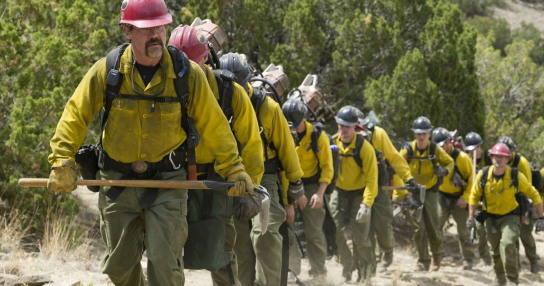
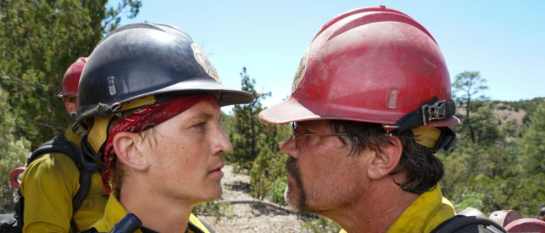
Eric Marsh (Josh Brolin) heads a team of firefighters in Prescott, Arizona. They are a top-notch group who find themselves constantly brushed aside by higher ranked elites. Sick of the federal bureaucracy and lack of progress for his crew, Eric seeks the help of mentor and former firefighter Duane Steinbrink (Jeff Bridges). Because of Duane’s pull a portion of the film deals with the team earning their elite certification and becoming the Granite Mountain Hotshots.

The reason this is even the slightest bit interesting is because of the characters. The writing team of Ken Nolan and Eric Warren Singer put the bulk of their focus on two of the firefighters, Brolin’s Eric and Brendan “Donut” McDonough played by a very convincing Miles Teller. Donut is a stoner looking to turn his life around following the birth of his daughter. Eric sees him as a kindred spirit of sorts hinting at some baggage looming from his past. Team-wise there is some strong supporting work James Badge Dale who plays Eric’s reliable second-in-command and Taylor Kitsch, a bit of a flake but a good-hearted one and always dependable in the field. The other firemen aren’t given much attention yet they still feel integral and important.

A lot of time is given to the team chemistry both in the field and away from it. There are plenty of good scenes that show the camaraderie of this tight-knit unit. At the same time the writers occasionally overdo it with some of their banter which I think is meant to be stereotypical “guy talk”. At times it gets a bit silly and perhaps even offensive (depending on your perspective).

Brave1

But we really see these characters open up in the scenes where these men step away from their firefighting. Eric’s story is especially compelling because we get Jennifer Connelly who is excellent playing his wife Amanda. She spends more time with the horses she nurses back to health than her husband who is always away on duty. Over time we begin to sense the stress it has on their relationship. Connelly shrewdly maneuvers through Amanda’s slowly shifting emotions never hitting a false note. She’s so good in the scenes she is given and has a great chemistry with Brolin.

All of this relationship building and character development fuels the final act which, despite some predictable narrative setup, has a profound dramatic kick. Director Joseph Kosinski needs no manipulation or gimmickry because by this point his characters are in a good place and he has the emotional heft of the true events to carry his ending. And by the end I not only knew about the Granite Mountain Hotshots, but I had an intense respect for them and their loved ones.

VERDICT – 3.5 STARS

REVIEW: “Happy Death Day”

HAppyposter

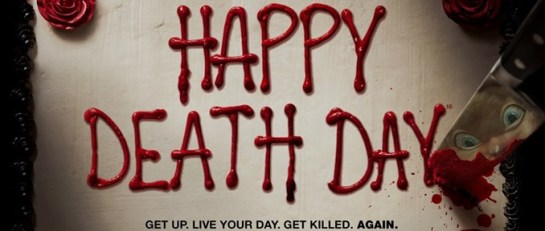
If you’re like me it’s tempting to dismiss this movie because of its title alone. It sounds like the straight-to-video B-movie horror that often found its home on the back shelves of those 80s video rental stores. But in truth that’s part of the craftiness at the center of “Happy Death Day” – a playfully subversive horror film that has a field day toying with familiar tropes that have defined a genre.

Writer Scott Lobdell (known for his work in comic books) pens a script that may best be described as “Groundhog Day” meets “Scream”. This wacky genre blend plays out far better than it may sound and it makes “Happy Death Day” a hard movie to pigeonhole. Case in point, Lobdell and director Christopher Landon are mainly focused on making a horror-comedy, but you could also call it college campus satire, a romcom, and even a life-affirming morality tale. It’s far from revolutionary, but there is much more to this movie than you would expect.

Happy1

Jessica Rothe plays the snooty and loose-living ‘mean girl’ Theresa “Tree” Gelbman who wakes up in the unfamiliar dorm room of sweet, unassuming ‘nice guy’ Carter (Israel Broussard). Unable to remember anything from her previous night of partying, Tree storms out and begins her normal routine of berating or belittling the people in her life. But her day doesn’t have a happy ending. On her way to a party she is stalked and murdered by a killer in a black hoodie and a baby mask.

Now enter the “Groundhog Day” conceit. The moment of her death she suddenly wakes up in Carter’s room yet again. She’s met with the same response from him and everyone else she encounters. She quickly realizes she is replaying the same day. This happens again and again, with her dying at the end of each day regardless of her efforts to avoid it.

At a point during this time loop we see a transformation take place both in the story and in Tree. She turns from novice scream queen to super sleuth and the film becomes more of a murder mystery as she works to reveal her own killer. The list of suspects is long, filled with people Tree has mistreated or offended. She focuses each replayed day on a new potential suspect and as she goes down her list she begins to learn some not so flattering things about herself.

Happy2

Rothe (perhaps best known for her bit part as one of Emma Stone’s roommates in “La La Land”) may be the biggest reason to see this film. I’m pretty sure she is in every single scene and it’s not the easiest role to tackle. She’s asked to stretch herself out in several different directions. Perhaps the most surprising element to her performance is her sharp comedic chops. I can see this opening up some new doors for Rothe.

While the script is clever and the performances are good, I don’t want to oversell “Happy Death Day” or leave the impression that it is some kind of seminal groundbreaker for the horror genre. It definitely utilizes some of the same tropes it pokes fun at and the whole thing is unquestionably silly. But the tongue-in-cheek approach by the filmmakers and their willingness to laugh at themselves makes this a better experience than the corny title would have you believe.

VERDICT – 3.5 STARS

3-5-stars

REVIEW: “Saw”

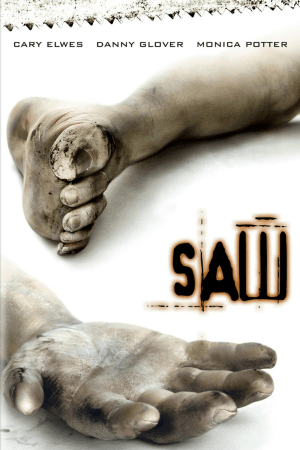
saw posterHere’s some useless information you may not know about me – I’ve never seen any of the “Saw” movies. At least not in their entirety. I’ve seen bits and pieces here and there but not enough to tell them apart or to even care. Frankly it’s a brand of horror that doesn’t appeal to me and what I’ve seen has given me no reason to spend my time on them. Yet that’s exactly what I did.

I decided to watch 2004’s “Saw” for several reasons. 1) It’s the Halloween season and what better time to catch up on some horror movies. 2) I discovered that the original “Saw” marked the feature film directorial debut for James Wan, the man behind the two “Conjuring” films which I happen to really like. 3) “Jigsaw”, the eighth film in the franchise (yes I said eighth), came out over the weekend. 4) It just happened to be on television.

Despite my general apathy for this franchise it has been incredibly successful. Starting in 2004 one “Saw” movie came out every year for seven years. Each film was made with a tiny budget yet each cleared $100 million at the box office with the exception of one. But it all sprang from Wan’s film which turned out to be a tad smarter and craftier than I expected.

The “Saw” franchise is synonymous with the term “torture porn” and deservedly so. But that’s a title earned by the sequels. Wan’s film is an exception. It’s unquestionably a horror film, but it’s just as a much a suspenseful mystery told with a surprising Hitchcockian flavor. Now don’t get me wrong, “Saw” doesn’t break new ground nor is it particularly good. But it is a far cry from what the franchise would become.

saw1

A huge part of the movie takes place in one space – a filthy rundown bathroom. Inside two men wake up with no prior knowledge of how they ended up there. They are chained to walls opposite of each other and between them lies a body in a pool of blood. We learn the first man is Lawrence (Carl Elwes), a successful oncologist, husband, and father. The younger man is Adam (screenwriter Leigh Whannell), a streetwise photographer.

With seemingly no connections, the two try and piece together who put them in the room and why they are there. This is the basis for the mystery aspect of the story.  The horror side comes from Lawrence and Adam’s efforts to escape. There are some pretty graphic scenes but more of the focus is on the psychological. None of it is particularly scary but it’s just engaging enough to keep your attention. Danny Glover pops up as a police detective whose own case intersects with this one. Monica Porter is good playing Lawrence’s wife Alison.

saw2

While a chunk of the film takes place in the bathroom, we spend a lot of time with Glover as well. Unfortunately his hunt for truth is fairly generic. There is also a lot of narrative backtracking through flashbacks that Wan leans heavily on. For the most part it works but it also feels like a necessary device. And while all the story pieces do eventually fit together, there is still a lot that we are expected to simply accept.

“Saw” is an interesting debut from James Wan. It should be commended for attempting to tell a compelling story and for extending itself beyond its tiny budget. But despite its good efforts “Saw” never fully clicks. It’s a far cry from the ridiculous gore-soaked torturefest the franchise has since become, but it still isn’t particularly good horror. At the same time it is a bit better than I expected.

VERDICT – 2.5 STARS

REVIEW: “Get Out”

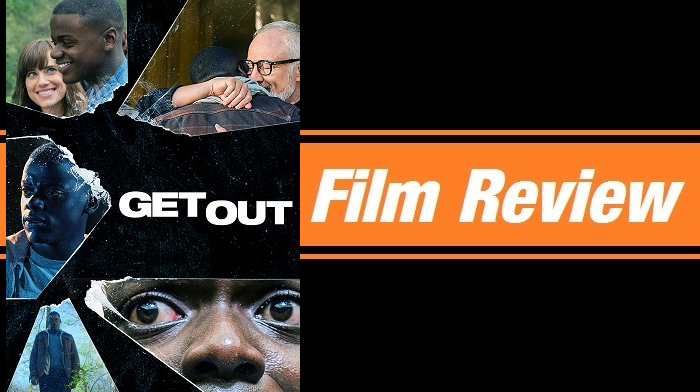
Comedian Jordan Peele’s directorial debut “Get Out” has certainly reeled in a ton of high praise. The former Comedy Central sketch series star also wrote the screenplay for this wild mish-mash of genres, influences, and ideas. Peele clearly aims to make a movie that can be several different things at once (one of his film’s strengths). But I’m not sure any of the film’s multiple identities are all that strong.

Many have called “Get Out” a horror-comedy and that seems fitting enough. Problem is you may have to strain to find it either funny or scary. The humor ranges from conventional to glaringly satirical. It leans especially hard into its biting social/racial satire, some of which is genuinely funny. But it can be either too silly or too on-the-nose. Then you have the horror element which teases but never fully delivers. I feel Peele is making a subconscious play intended to make us fear what the film is implying more than what it is showing. I like that idea, but even it is subverted by the shaky attempts at humor and the overall absurdity, especially in the final act.

The film starts with promise – a startling opening sequence showing a young Black man walking through a (presumably) white upper-class neighborhood. It’s late at night and the young man is searching for an address. A car creeps up behind him causing him to nervously change course. The inevitable interaction that follows makes a powerfully strong statement as well as launches the story in a compelling direction.

Get1
Image Courtesy of Universal Pictures

There is a very “Guess Who’s Coming to Dinner” meets “The Stepford Wives” vibe from there. It starts by introducing us to a young photographer named Chris (Daniel Kaluuya) who agrees to meet the rich parents of his white girlfriend Rose (Allison Williams). As they pack for their weekend visit Chris asks, “They know I’m Black, right?” Rose reassures him, even tossing out that her parents would have voted for Obama in for a third term. If that’s the case, clearly nothing could go wrong, right?

The two travel to the secluded countryside estate of Rose’s parents (shrewdly played by Bradley Whitfield and Catherine Keener). Their visit coincides with an annual house party her parents throw for their posh, powerful (and white) acquaintances. As the collection of stiff, suit-and-gown bluebloods meet Chris they seem impervious to their racial insensitivities (we get several goofy lines about liking Tiger Woods and Black being “in fashion“).

On one hand Peele is doing something crafty underneath these peculiar interactions. They actually have purpose. On the other hand it’s hard to believe someone wouldn’t see through all the weirdness and (as the title says) get out of there. This is stressed even more by the groundskeeper Walter (Marcus Henderson) and the housekeeper Georgina (a wonderful Betty Gabriel). Both are Black and seem to exist in a freaky trance-like state. Again, how anyone would stick around is beyond me. But to be fair, horror movies often ask you to simply go with things like this.

Get2
Image Courtesy of Universal Studios

Aside from a handful of intriguing bits, things finally begin to simmer in the final act right up until its wonky blood-soaked ending. The finale features a crazy tonal shift which is sure to satisfy crowds but feels jarring and out of sync with the rest of the film. Peele flirts with going in a more gonzo direction which would have been a lot of fun. Instead he chooses a more traditional horror route that could be taken a number of ways from ridiculous all the way to borderline offensive.

There are several other issues that hold the film back. One is Daniel Kaluuya’s performance. Yes, I know he has been universally praised, but for me he gives two very different performances. The first half of the film features a flat, low-key Kaluuya who relies on the same puzzled expression over and over again. The second half sees him open up and his performance moves from bland to really good. Other problems tie into Peele’s script. There are numerous gaping holes in the logic and some laughable conveniences. There is also a key moment where Peele completely tips his hand too early and ends up seriously undercutting the tension in what should have been his film’s signature reveal..

It would be dishonest not to admit to being surprised at the profound adulation for “Get Out”. I do understand why people like it. It explores some meaty themes and there are some truly interesting narrative angles. I think that’s why I found myself so frustrated at its uneven execution. You can see the ingredients for a better film sprinkled throughout. Ultimately it’s a perplexing first feature for Peele – one that shows him to be a promising young filmmaker with big ideas, but one who may need to work on how he his handles them.

VERDICT – 2.5 STARS

2-5-stars

REVIEW: “1922”

1922 poster

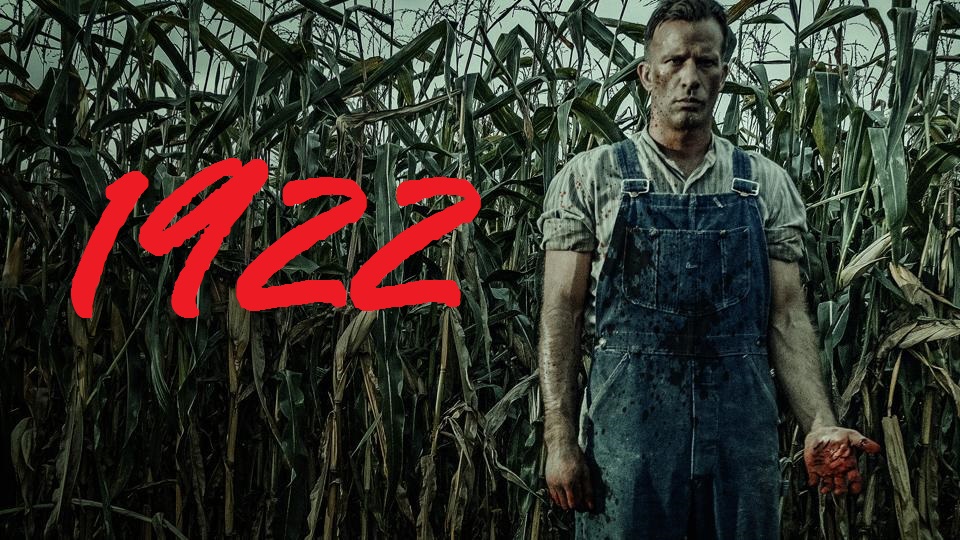
“I believe there’s another man inside every man – a stranger, a conniving man”. This early line of dialogue in Zak Hilditch’s “1922” sets the table for this simmering psychological horror-thriller. It taps into the mentality of the film’s fascinating lead character and lays the parameters for the mental chaos that follows.

You could call 2017 the year of the Stephen King adaptations. “It” stands as one of the top grossing movies of the year. “The Dark Tower” not so much. Then came the Netflix originals – “Gerald’s Game” and now “1922” which is based on 117 page short story published by King in 2010.

19221

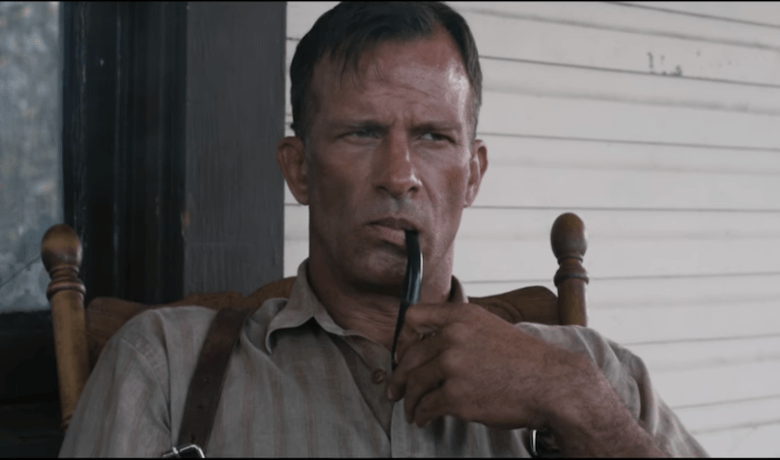
The story begins with a grizzled man writing what he calls his confession. The man’s name is Wilfred James (played by Thomas Jane in an eye-opening performance). He is a farmer from Hemingford Home, Nebraska and as he writes it becomes clear he is mentally frail and devoured by guilt. The bulk of the story is framed by his confession which takes us back via flashback to the events which led to his current state.


Wilfred’s farm consists of 80 acres passed down to him by his family. (In one very telling line he writes “In 1922 a man’s pride was his land”). His wife Arlette (Molly Parker) owns 100 acres of adjacent land willed to her by her father. She’s grown dissatisfied with farm life and wants Wilfred to sell their land and move to Omaha where she can pursue her dream of opening a big city dress shop. The tension between their perspectives becomes obvious and their teenaged son Henry (Dylan Schmid) finds himself caught in the middle.

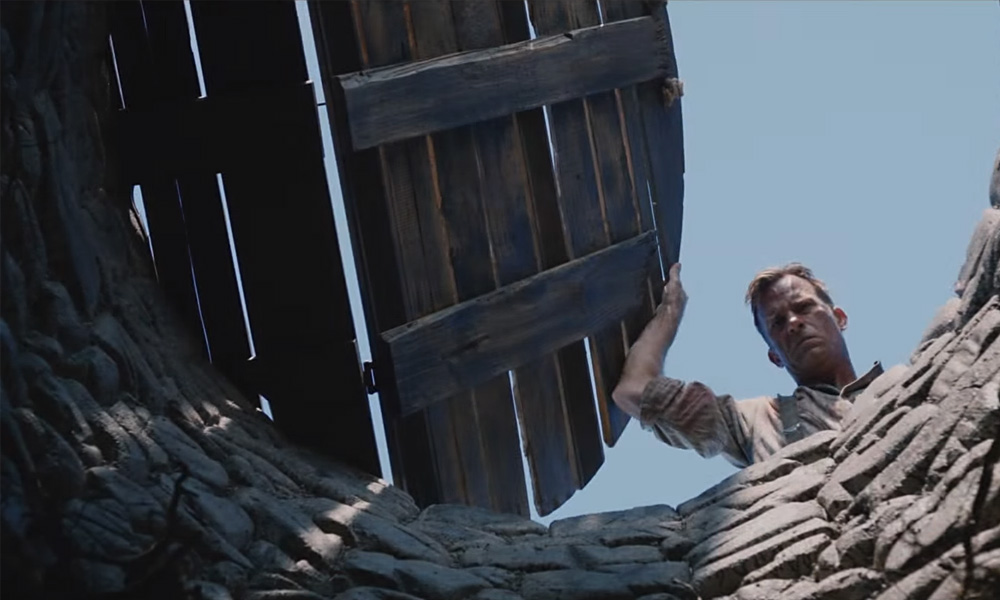
“The conniving man” within Wilfred devises a plan to kill Arlette and manipulates Henry into helping by exploiting his son’s affections for a neighbor’s young daughter. In Wilfred’s mind he can cover every angle to keep his crime hidden. In another revealing line he writes “In those days a man’s wife was a man’s business”. But Wilfred can’t perceive every consequence of his actions much less how they will effect both him and Henry. And he certainly doesn’t anticipate the weight of guilt that pushes him closer to his breaking point.

Hilditch’s direction is a wonderful compliment to King’s biggest storytelling strengths – developing slow-burning tension and eerie, uneasy moods. “1922” leans heavily on atmosphere which is captured through Ben Richardson’s crafty camera and Mike Patton’s haunting score. Hilditch shrewdly utilizes both to suck us into this twisted nightmare of Wilfred’s own making.

19222

But the biggest strength of the film lies in Thomas Jane’s standout performance. His stunning portrayal seems yanked right out of early 20th century middle America. Jane’s weathered, tanned face reveals a man who works the earth. But several other touches help give this character life. It could be something as simply as a squint of his eye or a draw of his mouth. It’s seen in his handling of small town period vernacular and his distinctive enunciations. It’s mesmerizing work that shouldn’t go unseen.

“1922” is a movie that gets under your skin. It maintains a menacing vibe from start to finish without ever relying on overused gimmicks or formulas. It may be a tad too slow for some, but its steady sense of discomfort and dread had me hooked. And then you have Jane who loses himself in the lead role and delivers a transformative authenticity that results in a character who is both disturbing and spellbinding. He’s very good as is this movie which nicely blends classic King with a nice touch of Hitchcock. That’s a really good recipe.

VERDICT – 4.5 STARS

4-5-stars