REVIEW: “The Circle”

CIRCLE poster

Nestled somewhere deep inside of “The Circle” lies an interesting concept for a movie. Maybe it was bad creative choices. Maybe the Dave Eggers novel didn’t translate well from book to screen. I’m guessing it’s a combination of both that shortchange this film adaptation. There are certainly some filmmaking decisions that don’t pan out and you would like to think the tech-heavy story is better explored in Eggers’s novel (which I haven’t read).

“The Circle” is directed by James Ponsoldt who also wrote the screenplay along with Eggers. Their story tinkers with modern themes of privacy, interconnectivity, and even Information Age totalitarianism to a degree. It all sounds nice a relevant. Problem is it’s all squished together in a half-baked of soup of clumsy execution, unbelievable story angles, and underdeveloped relationships.

CIRCLE1

Emma Watson plays Mae Holland, an aimless twenty-something stuck working a crummy job, driving a crummy car, and with a crummy social life. Things perk up when her best friend Annie (Karen Gillan) gets her an interview at The Circle, a Silicone Valley tech corporation in the mold of Apple, Google, etc. Mae gets hired (to what position I still haven’t figured out) and is soon grafted into the company’s cultish hipster culture.

Tom Hanks plays Eamon Bailey, the company’s Steve Jobs-ish CEO who has his predominately millennial employees under his charismatic spell. He opens the door for Mae to climb the corporate ladder by becoming the face of his push for more control of the world’s information. Mae’s rise makes her a celebrity on campus but distances her from her family and friends.

A key conflict in the film pits Mae’s old personal life again her new life of success and popularity at the Circle. The film struggles to make Mae’s personal life worth caring about. Her parents are played by Bill Paxton and Glenne Headly, the two genuine characters in the entire movie. Paxton’s Vinnie struggles with MS while Headly’s Bonnie is his strong supportive caregiver. They are easy to care for but much of that comes from the real life circumstances. Both Paxton and Headly died this year adding an extra emotional punch to these final performances.

“The Circle” tries to offer up a thought-provoking critique but ultimately it’s more goofy than provocative. First off it’s simply impossible to believe in The Circle as an actual organization and it’s even harder to believe in the many characters who bought into it. And in this world don’t underestimate the power of the frownie face emoji in foreign policy. And then you have Mae stepping out and becoming ‘transparent’. It’s meant to be a big deal step forward when it’s nothing more than a souped up YouTube channel

CIRCLE2

Several other things stand out. Ellar Coltrane (“Boyhood”) plays Mae’s shy childhood friend. They do some interesting things with his character before it runs off the rails but it’s hard to enjoy it because Coltrane’s performance is so bad. And then you have John Boyega, a welcomed addition but he the story completely wastes him.

Despite its many sour notes “The Circle” isn’t unbearable. It moves along pretty well and it keeps your attention. But I wonder if that’s due to good filmmaking or to my bubbling curiosity that just couldn’t wait to see where this mess would go next. Regardless of what it teases, “The Circle” doesn’t really go anywhere and that may be its biggest flaw – lots of potential, practically all of it wasted.

VERDICT – 2 STARS

2-stars

REVIEW: “Alone in Berlin” (2017)

berlinposter

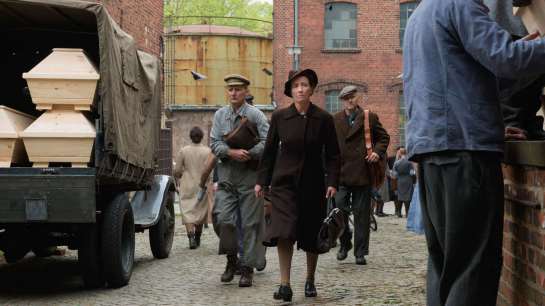
For me the strengths of Vincent Perez’s “Alone in Berlin” are fairly obvious – a unique and heart-wrenching true story and two superb acting talents as its leads. That was more than enough the keep me attached to this slow-boiling World War 2 drama.

Brendan Gleeson and Emma Thompson play Otto and Anna, a German husband and wife living in 1940 Berlin. The two are devastated upon receiving the news that their only son Hans is killed during battle. His death puts stress on their already dry marriage and each mourn in their own lonely way. But their loss also gives them a new perspective on the growing war unfolding around them.

berlin22

As the Nazi influence begins to reflect across Berlin the couple witness things that intensify their repulsion and disillusionment. Otto begins writing anti-Nazi messages on postcards and secretly leaving them all around the city. At first it’s a therapeutic emotional release to help him cope, but soon it also becomes about duty. And when Anna joins him, their dangerous quest expands while also bringing them closer together as husband and wife. It gets even riskier when the Nazi’s hire a principled German police detective (Daniel Brühl) to track down those responsible.

First the performances, it should surprise no one that both Gleeson and Thompson are wonderful. Gleeson conveys the emotionally worn Otto through his tired, somber eyes and dispirited mannerisms. Thompson portrays Anna as a determined woman but one who clearly feels the weight of her sorrow. Their performances are so rich and grounded that you never doubt either character or any of their motivations. Brühl is also good in a role that he has played before.

berlin2

For the most part the story steers clear of depicting the war’s atrocities. They are mostly handled from a distance. But in the handful of scenes where they do hit the screen, the impact is effective. Some who yearn for a harsher visual representation of the horrors may find Perez’s film too sanitary. It’s a response I’ve seen towards other films that sought to tell a more confined, individual story. I don’t agree. Perez keeps his focus on his two central characters and the film is better for it.

One gripe is that the film moves a bit slow at times and it often relies to heavily on its two leads. But that doesn’t make it any less inspirational and heartbreaking. “Alone in Berlin” tells a poignant story that is unique and authentic. As a fan of films set in this period, I was plenty satisfied with what Perez and company deliver and hopefully more people will give it a look.

VERDICT – 4 STARS

4-stars

REVIEW: “The Girl with All the Gifts” (2017)

GIRLPOSTER

It seems that every year or so we get a zombie movie that attempts to bend the crowded genre in a new direction. I’m talking about movies like “Zombieland”, “Train to Busan”, and even Schwarzenegger’s “Maggie”. This year’s entry is “The Girl with All the Gifts”, a wickedly crafty zombie flick that twists the genre’s rules and packs more brains than you may think (and no, that’s not an attempt at zombie humor).

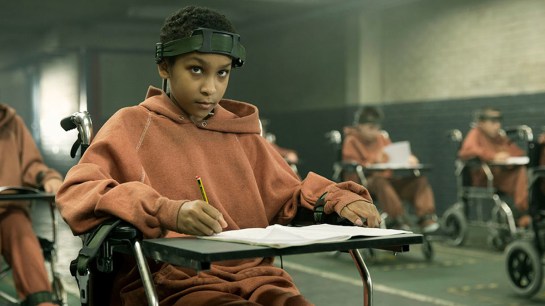
The tone is set in the opening scenes. The setting is an underground military base just outside of London. Director Colm McCarthy’s camera leads us down a dreary hallway lined with cells, one belonging to a young girl named Melanie (Sennia Nanua). A blaring alarm pierces the halls and we watch Melanie walk over and sit in a wheelchair. Armed soldiers open her cell and fasten the multiple restraints. They wheel her down the hall to a ‘classroom’ with other constrained children. It’s an eerie, uncomfortable opening that lays the groundwork for us.

GIRL1

You see, these kids are unique – a new breed if you will. I’ll let you find out how, but they are of special interest to the military facility. Melanie is the brightest among the ‘students’ and maintains a sweet demeanor regardless of the interaction. Some treat her well, such as her kind and caring teacher Helen (Gemma Arterton). Others are cold and indifferent. Take Dr. Caldwell (Glenn Close in her creepiest role in years) who basically sees the kids as lab rats. Offering a third perspective is Sgt. Parks (Paddy Considine), the military leader who is constantly leary of the threat these kids may pose.

These four are forced together when zombies (affectionately called “hungries”) penetrate the facility. They escape the base and head for London but (as you can guess) finding refuge is easier said than done. You could be tempted to say this becomes a standard zombie survival story at this point. Those elements are certainly there, but the movie has much more in mind.

McCarthy along with writer M.R. Carey play with the zombie movie model and employ many of its tactics. But at the same time they seem more interested in creating moral tension between the characters by forcing them to face complicated dilemmas that don’t have the easiest answers. We too are asked to wrestle with these things and come to our own tough, murky conclusions.

Nowhere is this better illustrated than with Melanie herself. The film walks a clever tightrope in its presentation of her. On one side is the genuinely innocent, lovely young girl who we have immense sympathy for. On the other side is something dangerous, ferocious, and potentially deadly. We fear her and are charmed by her at the same time. We hear her tender, sweet voice coming from her horrifying blood-stained mouth. It’s an unsettling tension the film creates and maintains throughout. Young Sennia Nanua is a key ingredient. Her tough, committed performance is vital both to the character and the movie.

Even with its tiny budget of around $5 million, “The Girl with All the Gifts” offers up an experience that should please both those who love zombie flicks and those who want more to chew on (figuratively of course). There is enough originality to make it feel fresh and it’s plenty creepy enough to make you squirm. That’s what I’m looking for in a “zombie movie”.

VERDICT – 4 STARS

4-stars

REVIEW: “Finding Oscar” (2017)

OSCARposter

Some of my favorite documentaries are ones that dispel ignorance, most notably my own. I’m not talking about the minutia of any given subject. I’m referring to an ignorance of significant events, subjects or people who I should know about. I love the ones that educate, enlighten and expose. Sure, like any film, some docs have trouble melding movie with message. But the good ones find all sorts of ways to inform minds and provoke a response.

“Finding Oscar” is one of those good ones. The film documents the search for justice for the Dos Erres massacre which took place during the decades-long Guatemalan civil war. Director Ryan Suffern explores the dynamics of the bloody war which raged between the government and leftist guerillas. He then puts his focus on the 1982 massacre that took place in the small village of Dos Erres. From there the film highlights the work of a small but determined group of people set on uncovering the truth behind Dos Erres and bringing to justice those responsible. And the secret to doing it may lie in tracing one of only two known survivors – a missing boy named Oscar.

OSCAR1

The story of Dos Erres is potent and distressing on its own. It was a poor isolated village with no means of outside communication, yet we learn from a former villager that life there was “good”. A guerilla attack in the region left 21 government soldiers dead and guns and ammunition were stolen. President José Efraín Ríos Mont deployed the elite special forces commandos known as Kaibiles to Dos Erres which he believed to be guerilla sympathizers.

On December 6, 1982 the Kaibiles entered the village dressed as guerillas and slaughtered every man, woman, and child. The lone exceptions were four children – two boys and two girls. The scope of the barbarism was appalling and included brutal killings and rape. The four surviving children were taken by the Kaibiles. The two girls were raped and strangled to death a few miles from the village.

The lone exceptions were four children – two boys and two girls who the soldiers took with them. Both girls were raped and strangled to death a few miles outside of their village. The two boys were separated and raised by two of the same soldiers who took part in the massacre. One of those boys was named Oscar.

“Finding Oscar” doesn’t shirk on the details of what happened in Dos Erres. It leans on multiple sources to paint a bloody unsettling mental portrait of what took place. It’s not easy to watch, but it is necessary. The film also examines the political climate which led to Ríos Mont staying in power. It was during the height of Cold War paranoia and United States foreign policy often went through that prism. The film doesn’t shy away from America’s culpibilty in keeping the Guatemalan military regime in power.

oscar2

Then you have the group of dedicated individuals resolute in their quest to bring the Dos Erres truth to light. Included is a determined family advocate, a forensic anthropologist, and a young Guatemalan prosecutor. Through years of devotion and through drastically different avenues their search leads to the two young boys who survived the atrocity in particularly to Oscar. Can they find them, the only true witnesses to the horrors that took place.

Dos Erres wasn’t the only massacre of the Guatemalan civil war, but it is certainly one deserving to be brought to light. And as it is, hopefully it draw attention to what happened there, they lives that were forever effected, and those responsible. That is what “Finding Oscar” wants to accomplish and it succeeds. It skillfully balances its many efforts to cover this multi-faceted subject. The results are powerful and gut-wrenching. Yet even among such grim savagery, we do see exercises in courage by those fighting for justice and closure. Such welcomed inspirations from this tough but beautifully made picture.

VERDICT 4.5 STARS

4-5-stars

REVIEW: “The Glass Castle”

GLASSposter

While walking out of my screening of “The Glass Castle” I immediately pulled out my phone and began perusing opinions on a certain red vegetable movie review aggregate (or fruit depending on your culinary or botanical lean). I had avoided reading reviews but knew reactions were all over the spectrum. Sure enough some have heralded it as “one of the best films of the year” while others have called it “unpleasant”, “lumbering”, “tiresome”, and so on.

So where do I land on “The Glass Castle”, a film based on Jeannette Walls’ best-selling memoir about her nomadic childhood and the family dysfunction she endured. I never found it lumbering, tiresome, or even unpleasant outside of when it was meant to be. At the same time its inconsistencies and messiness keeps me from embracing it as one of the year’s best.

glass1

The movie is co-written and directed by Destin Daniel Cretton whose previous film was the intimate and tightly-made “Short Term 12”. “The Glass Castle” is much more wide-open in its attempt at covering a lot of ground. It hops back-and-forth in time stopping at significant points in Walls’ childhood and mixing them in with her  story as a young adult out on her own.

Brie Larson plays the twenty-something Jeannette living in 1989 New York City. Her determined quest for independence took her away from her harsh family situation and she now writes for a newspaper and has a fiancé (Max Greenfield). But despite her new life, she can’t completely escape the scars from her past, and the internal connection to her family inspires a longing for the idyllic life she dreamed of as a child.

Woody Harrelson plays her father Rex, and through every time hop we see the same complex and deeply flawed man. Harrelson is given the bigger, louder role and his performance is spot-on. But it’s the movie’s depiction of Rex that’s problematic. There’s an effort to sell him as both a charming free spirit and a despicable father. The problem is most attempts at a positive reflection simply don’t work. In fact many of the tender moments are found in scenes where Rex is feeding his children’s imagination in order to hide their poverty and/or lawbreaking – situations he is responsible for.

GLASS2

To go further, the negative reflections of Rex are profoundly more prevalent and overpowering. I found it difficult to see him as anything other than a violent, abusive alcoholic and a generally repugnant human being. Naomi Watts plays Jeanette’s mother Rose Mary, and she just seems along for the ride. She does nothing to curb Rex’s behavior and at times is just as abusive and negligent as her husband. There are moments where Cretton creates some genuine sympathy for these two characters, but I found myself too turned off by their actions to be sympathetic. They are appalling individuals.

Here’s the thing, I’m fine with the movie presenting them this way especially if it’s key to the story being told. But the ending undercuts the rest of the film, and it asks too much of the audience. I won’t spoil anything, but it’s here that the film’s earlier attempts at creating a compassionate side of Rex simply don’t hold weight. If more time had been given to his complexity over his repugnance it could have worked. Instead we have an element of the story that feels short-changed and a final act that needed much more attention to be effective.

GLASS3

There is also a general problem with tone. At times it’s wildly inconsistent. Make no mistake, there are some very disturbing and effective scenes that deal with abuse. But there are also these jolts of humor, mostly involving the Rex character, that are hard to figure out. It works when portraying him as an eccentric, but not so much when the humor crosses over into the abusive scenes. At my screening I’m not sure the audience knew when to laugh. There were several instances where some people were laughing and others groaning in disgust all during the same scene.

“The Glass Castle” is a tough experience to define. It’s depiction of the dark side of Janet Walls’ painful childhood is clear-eyed, visceral and hard to watch. But it badly undersells a significant part of this profoundly penetrating true story. Larson and Harrelson are excellent and the movie’s boldness in tackling the subject matter is commendable. Despite the tonal shifts I was onboard for most of the way. But reconciling the bulk of the film with the tidy ending is something I still haven’t been able to do. I can’t help but believe the book offers up a better, more emotionally satisfying balance.

VERDICT – 2.5 STARS

2-5-stars

REVIEW: “Pilgrimage” (2017)

PILposter

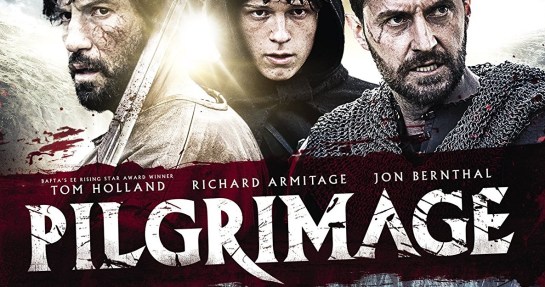
For those few folks needing more proof (assuming they still exist) that big budgets aren’t essential to good moviemaking, I present to you Brendan Muldowney’s “Pilgrimage”, a beautiful and propulsive medieval thriller anchored in 13th century European complexity and brutality. With a meager budget of just over $5 million, “Pilgrimage” looks and plays out better than many of its higher-priced counterparts.

The movie’s Crusade-era setting is an intriguing place in itself – a land filled with volatility and hostility. Just on the outskirts of the many conflicts we meet a small group of monks living on the western coast of Ireland. They are approached by Brother Geraldus (Stanley Weber), sent at the behest of the Pope to retrieve and escort back to Rome an ancient holy relic being guarded by the monks. This quest (subtly reminiscent of Peter Jackson’s “The Fellowship of the Ring”) becomes the centerpiece for Muldowney’s movie.

pil1

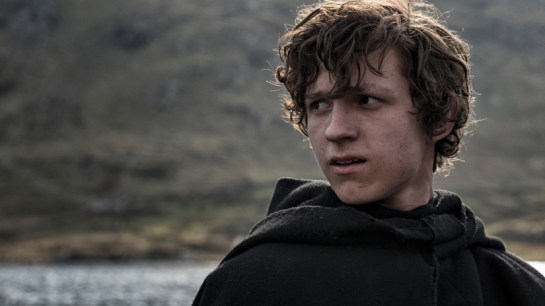
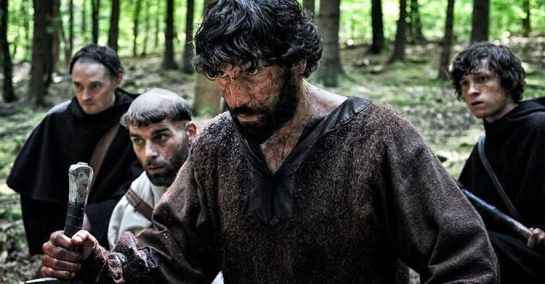
Four of the Irish monks are sent to escort Geraldus. Among those chosen is Brother Diarmuid (Tom Holland), a young novice who has never known life outside the monastery, the wise elder Brother Ciaran (John Lynch), and a mute (Jon Bernthal) who has faithfully served the monastery since mysteriously washing ashore a few years prior.

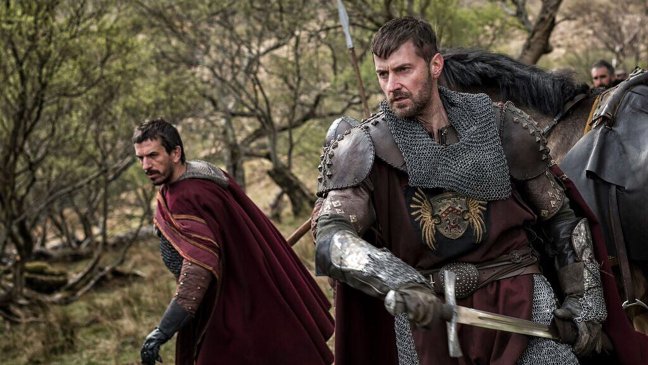
The group’s cross-country venture takes them through lands filled with factions hungry for control. They encounter one such faction led by Sir Raymond (Richard Armitage) a soldier and a loyalist to his king. At the urging of his father, Raymond and his men agree to escort the brothers and the relic across the treacherous island. What follows is an arduous and sometimes brutal pilgrimage that stretches each of these men to their limits.

PIL2

“Pilgrimage” is more than a simple “quest movie”. Writer Jamie Hannigan’s story tests each character by fire – in many cases spiritually and in all cases physically. There is a steady examination of both the strength and weakness of faith, whether it be faith in God, faith in Rome, or faith in a king. And it’s fascinating to watch the film explore the contrasts between the natural and the supernatural, divine providence and unmitigated chance, men of the cloth and men of the sword. At times I wished it went deeper, but there was never a time when I wasn’t absorbed.

It isn’t just the historical setting that’s so potent. The way Muldowney and cinematographer Tom Comerford shoot the film is just as puissant. Ominous skies filled with boiling clouds and vast landscapes as beautiful as they are dangerous. And then you have the bursts of violence that gruesomely clash with the monks’ pursuit of piece and piety. They are brutal reflections of the real world outside of the monastery – a revelation of reality young Brother Diarmuid quickly becomes acquainted with.

pil22

And what a stellar cast. This is Holland’s story and he continues to define himself as one of our best young actors. Weber, Armitage and Lynch are all very good. But it’s Jon Bernthal who steals the show. He is mysterious and subdued (he actually took a vow of silence to prepare for the role of a mute). But there is also a blistering ferocity to his performance that that adds yet another layer to his character and the movie.

Made with a small budget and shot in thirty days, “Pilgrimage” sleekly maneuvers through its limitations instead of succumbing to them. One one side it’s a driving medieval action thriller. On the other side is a story that delves into the various shades of faith found within the spiritual (“We are not alone. We are never alone. Have faith”) and the carnal (“Before one can plant new flowers one must cut away the weeds”). I was caught up in it from start to finish and was surprised at how much it gave me to chew on. A second viewing only confirmed my enthusiasm.

VERDICT – 4.5 STARS

4-5-stars