REVIEW: “The Mummy” (2017)

mummy poster

One of the most popular (and priciest) trends in today’s movie culture is the shared cinematic universe. Easily the biggest belongs to Marvel Studios. DC Films is following behind them. And then outside of the superhero genre you have 2014’s “Godzilla” and this year’s  “Kong: Skull Island”, the first two films in Legendary’s MonsterVerse.

The more recent entry into this craze comes from Universal Pictures. It’s called the Dark Universe and it’s meant to be a shared-world revitalization of the classic Universal monsters. Some couldn’t care less. As a fan of those great oldies I was anxious to see what they would come up with.
mummy1

“The Mummy” is the first film to get the reboot treatment and serves as the launching point for the Dark Universe. It’s essentially an origin story but one that doesn’t resemble either the Boris Karloff classic or the more fun-loving Brendan Fraser films. It’s definitely its own thing but defining it beyond that isn’t that easy. Is it an action movie? Is it a horror movie? Is it a Tom Cruise vehicle? Yes to each but especially the third.

Cruise is clearly the centerpiece which works for and against the film. I still like him as an actor and he brings an unquestionable star power to the movie. On the other hand maintaining that star power sometimes outshines everything else. His character resembles roles he has played variations of in other films and he is intent to stick with that type. So much so that when this particular character flirts with some interesting new directions he never goes all the way.

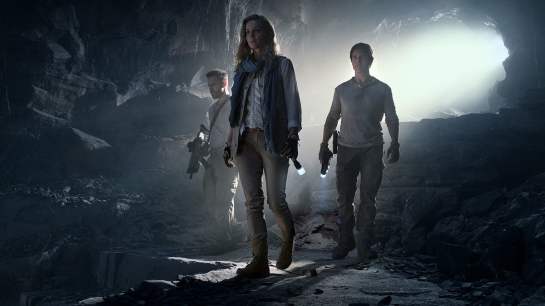
After an obligatory prologue the film introduces us to Cruise’s character Nick. He’s a sergeant with the U.S. military who has a side gig as a soldier of fortune. He and his stereotypical sidekick (played by Jake Johnson) nab artifacts and sell them on the black market. While in Iraq the two stumble across the ancient tomb of Ahmanet (Sofia Boutella), an Egyptian princess who sold her soul to Set, the God of Death (see the aforementioned obligatory prologue). They extract the sarcophagus with the help of Jennifer Halsey (Annabelle Wallis) a spirited archeologist and Cruise love interest.

mummy2

As you can guess they manage to release Ahmanet (aka the Mummy) and computer-generated death and destruction follow. Nick becomes her conduit, Russell Crowe pops up as Dr. Henry Jekyll, Cruise gets a running scene, and a not-so-likely sequel is set up. Here’s the thing, in between that titillating synopsis are moments of good ol’ corny fun. And there are a couple of action sequences that are pretty exciting. But there is just as much that doesn’t work – the goofy humor, a bad ‘return from the dead’ angle inspired by “An American Werewolf in London”, and any attempt at romantic tension.

In the end “The Mummy” is a generic middle-of-the-road movie. I don’t think it’s as bad as many critics say and it’s certainly not as good as a studio would want. It simply has no true identity. It’s all over the map in terms of tone and quality. With big names already signed up for Dark Universe installments – Javier Bardem’s Frankenstein, Johnny Depp’s The Invisible Man, Angelina Jolie’s (rumored) Bride of Frankenstein – it’s clear Universal has big plans. You would think the franchise launching point would be given a little more attention.

VERDICT – 2.5 STARS

2-5-stars

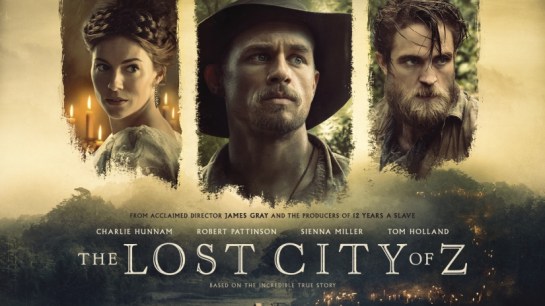
REVIEW: “The Lost City of Z”

zposter

“He’s been rather unfortunate in his choice of ancestors.” We get this key line of dialogue early on in James Gray’s masterful biographical adventure “The Lost City of Z”. This snide, condescending jab is aimed at the film’s lead character Percy Fawcett and surprisingly it gives a ton of insight into what makes this complex fellow tick.

Percy Fawcett was a British officer, geographer, and eventual South American explorer. His intriguing life was made all the more fascinating by his mysterious disappearance in the Amazon during a 1925 expedition to find a long-lost ancient city. Many theories blossomed concerning his vanishing but there has never been any concrete evidence to help determine his fate.

z2

James Gray writes and directs this sweeping epic that’s based on David Grann’s 2009 book. As with his previous film 2014’s “The Immigrant”, Gray exhibits  a strickingly classical form of filmmaking and an impeccable eye for period detail. There is an undeniable familiarity with many of his visual and narrative choices, yet he stays away from common cliches and he’s not afraid to hold a magnifying glass to subjects glossed over in similar movies.

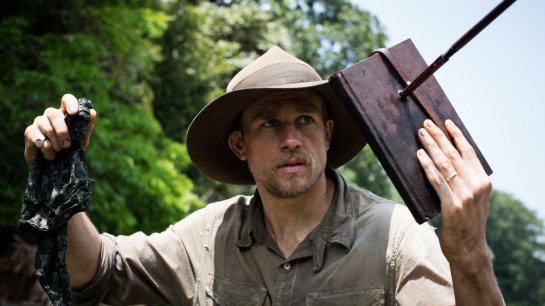
Fawcett is played with sturdy authenticity by Charlie Hunnam whose performance travels the spectrum from dashing and gentlemanly to rugged and determined. We first meet him in 1905 where he is stationed in Ireland but called to London to meet with the stuffy heads of the Royal Geographical Society. He’s offered an assignment that would allow him to redeem his family name and finally earn officer decoration that has unfairly been denied him due to his father’s (wisely unexplored) past transgressions. The mission – represent the British government as a neutral party in surveying and mapping the border between the warring Brazil and Bolivia.

z3

Fawcett agrees but it will require him to be away from his young son and wife Nina. She’s played by Sienna Miller who is very good here. Nina is a strong progressive type but is also supportive of her husband. She vanishes for a good chunk of the film but plays a more significant part in the second half. We also get Robert Pattinson in another absorbing yet slightly underutilized role. He plays Corporal Henry Costin, a man familiar with the Amazon who faithfully accompanies Fawcett on his mission.

Upon getting wind of an alleged lost city somewhere deep in the Amazon, Fawcett is driven to push further into uncharted territory to prove its existence. Gray does several interesting things here. The dangers of the land grow more and more evident yet Gray and cinematographer Darius Khondji offer a unique perspective. Often the dangers are camouflaged by a liberating sense of calm and beauty captured through the camera. I don’t mean to say it’s romanticized. In fact at times it feels downright tranquil – the result of a crafty visual touch that puts us in tune with Fawcett’s point of view.

z1

It’s also interesting to watch Gray tilt the Fawcett character towards madness without ever letting him topple over. Both script and performance move him dangerously close to the mental edge, but he never ceases to be sensible and empathetic. Hunnam is a perfect canvass for this, equally balancing Gray’s call for rationality and obsession. And despite the film’s massive scale, it always maintains an intimacy with its lead character.

“The Lost City of Z” is as beautiful and mysterious as the isolated world it explores. You can’t help but see shades of Herzog’s “Aguirre, the Wrath of God” and “Fitzcarraldo”. Even touches of John Huston come to mind. Yet remarkably James Gray has created a movie that feels completely of itself. It’s his best film. It’s Hunnam’s best performance to date. It’s one of my favorite movies of the year.

VERDICT – 4.5 STARS

4-5-stars

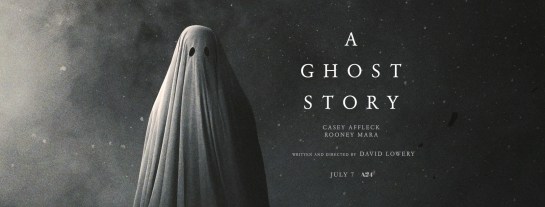
REVIEW: “A Ghost Story”

GHOSTposter

When looking at the last three feature films from writer/director David Lowery you’re immediately struck by how dramatically different one movie is from another – 2013’s romantic crime thriller “Ain’t Them Bodies Saints”, last year’s Disney fantasy adventure “Pete’s Dragon”, and now his latest film, a meditative supernatural drama “A Ghost Story”.

Lowery’s dabbling in new areas of cinema makes sense. Throughout his time in filmmaking he has worn many hats – writer, director, editor, cinematographer, producer, and even actor among other things. So it’s no surprise seeing him try something new. But “A Ghost Story” (which he writes, directs, and edits) is so  unique and, quite frankly, unlike anything I’ve seen in a long time.

ghost1

As is always the case, the less you know about the film the better, but it rings especially true here. Still it should be said that “A Ghost Story” flips any genre norm on its head. There is nothing conventional or routine about it. Some are certain to check out before it’s done. Lowery is okay with that. In an interview with Yahoo! Movies, he stated that he hopes audiences will stick with it, but knows some will not. Thankfully it didn’t influence his creative choices otherwise “A Ghost Story” wouldn’t be the daring, profound experience it is.

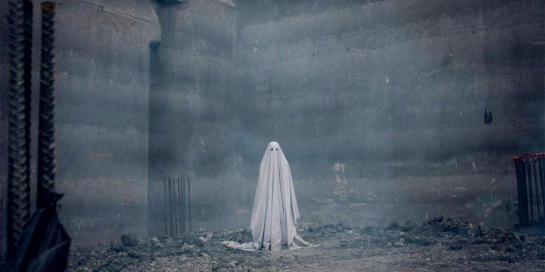
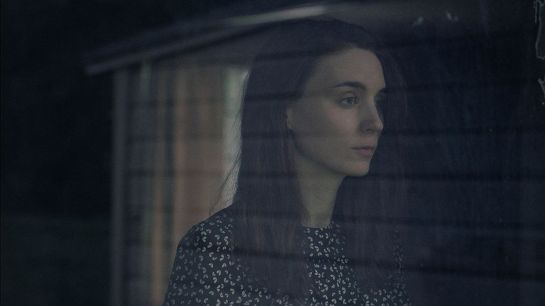
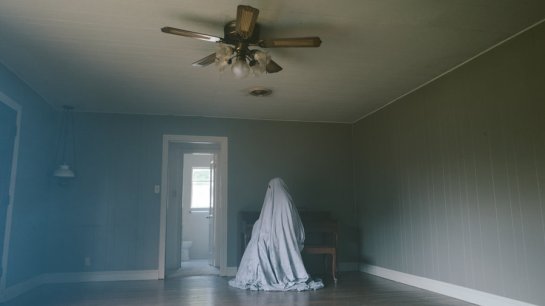
The film reunites Lowery with Rooney Mara and Casey Affleck (from “Ain’t Them Bodies Saints”). We never know the names of their characters, only that they are a husband and wife living in a modest suburban home. Their lives are shattered when Affleck’s character is killed in a car wreck. We wakes up as an invisible white-sheeted ghost and returns to his home. There he observes Mara’s character navigate through her various stages of grief.

Mara’s work here is quiet but astounding. It’s light on dialogue, soulful and evocative. Lowery often puts his camera in the observer’s role, leaving it on her through long extended takes. Many times the ghost stands silently in the background watching her every move and emotion. Throughout these scenes the film’s mood steadily grows heavier. Yet it’s not without humor. The absurdity of the ghost costume (a long white sheet with two cut-out eyeholes) is an intentional move. Lowery has described humor as a great “gateway emotion”. The costume is a wacky but welcomed entry point.

GHOST2

This is also where Lowery begins to play around with time, something that becomes more pronounced as the story progresses. We see it through the unfolding narrative but also in the incredibly clever construction of individual scenes. It’s even relayed through some aesthetic choices. For example the entire film is presented like a vintage snapshot – squared borders with rounded edges. The framing is reminiscent of something pulled out of time.

Around the midway point the film makes a notable but fluid shift that challenges the audience on an entirely different level. The mournful, tragic mood doesn’t go away, but Lowery expands his interest beyond a simple exploration of love and loss. We are never spoon fed the meaning to everything we see. Instead we’re prodded to react to and interpret the movie for ourselves. As we do, the haunting, meditative atmosphere remains with the exception of one scene, a half-drunken nihilistic party lecture. It is the single longest sequence of dialogue in the entire film. Unfortunately it pulled me out of the movie’s carefully maintained tone. But only briefly.

ghost3

And then you have Daniel Hart’s fabulous score. It’s easily my favorite of the year so far. There are many moments where Lowery leans heavily on the music and often puts it in the place of dialogue. It’s a brilliant composition of emotions that ranges from eerie and haunting to tranquil and calming. Hart has worked with Lowery on his previous two films and their incredible chemistry is beyond question.

“A Ghost Story” isn’t for everyone and I’ll be interested to see how people react. I was under its spell from the start and found it to be both beautiful and tragic. Its story is patient and personal; its presentation audacious and impressionistic. And I was captivated by David Lowery’s unwillingness to embrace our expectations. This is the story he wanted to tell and it turns out to be one of the year’s biggest surprises and delights.

VERDICT 4.5 STARS

4-5-stars

REVIEW: “Frantz”

FRANTZposter

François Ozon’s quiet but stylish drama “Frantz” is an exquisitely made film that dares you to try and define it only to end in a place far more intimate and straightforward than I expected. It cracks open the doors to our imagination and invites us to peep in, get a glimpse and overthink. But ultimately it’s the film’s simplicity that makes it such a touching melodrama.

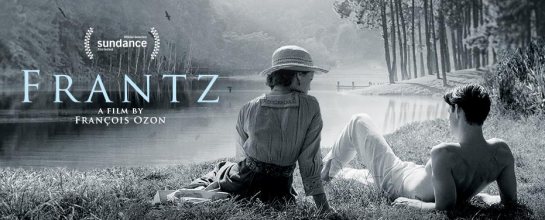
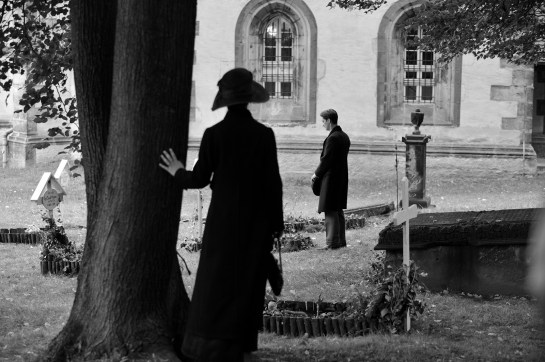
The story begins in Quedlinburg, Germany, 1919. World War I has just ended. The wounds are still fresh and the effects still reverberate through the town. A young woman named Anna (Paula Beer in a breakout performance) takes flowers to the grave of her fiancé Frantz, a German soldier killed in the war. At the cemetery she witnesses an unknown man leaving flowers on her husband’s grave. His name is Adrien (Pierre Niney) a Frenchman from Paris.

FRANTZ1

The next day Adrien shows up at the home where Anna lives with Frantz’s parents Hans and Magda Hoffmeister. A grief-stricken and bitter Hans (Ernst Stötzner) kicks him out upon hearing he is French. Anna convinces the Hoffmeister’s to invite Adrien back since he seems to have a connection with Frantz. When Adrien returns he tells them of his close friendship with Frantz. He talks about the time they spent together and the places they went. For Anna and the Hoffmeisters it’s therapeutic and they befriend Adrien much to the dismay of the townsfolk.

But it becomes clear that Adrien isn’t telling them everything. In fact he’s harboring a burdensome secret which is at the heart of why he came to Quedlinburg. Ozon gets in no hurry to reveal it which is one of the film’s strengths. It gives the director room to explore other ideas. Like its inspiration, Ernst Lubitsch’s “Broken Lullaby”, the story has a well handled anti-war subtext as seen in the anti-French sentiment that still permeated much of Town, some of it rooted in xenophobia and some in unbridled grief. But later Ozon holds the same mirror up to the French.

FRANTZ2

The film eloquently veers back-and-forth between being a suspenseful mystery and an aching love story. Themes of truth, grief, forgiveness, reconciliation, and independence are significant to the plot and given a lot of attention. But then you have Ozon’s subtle riddles and red herrings that would have brought a smile to Hitchcock’s face. It all gives “Frantz” some intriguing and unexpected layers.

Visually “Frantz” is a delight. The use of black-and-white and the occasional shift to color are more than gimmicks. They relay tone and mood from the director but more importantly perspective from the characters. It’s a tricky yet perfect fit for this moving period story. Some may be encouraged to offer more speculation than interpretation. The story opens itself up for that. But for me the best interpretation of “Frantz” is the simplest and most straightforward. It puts Anna in the spotlight which for me made the film more poignant and emotionally satisfying.

VERDICT – 4.5 STARS

4-5-stars

REVIEW: “War for the Planet of the Apes”

war poster

You would be tempted to call it the anti-blockbuster franchise if it wasn’t made up of three sure-fire blockbusters. Still it’s a label that seems to fit the newest “Planet of the Apes” prequel/reboot series. It has all the big budget bells and whistles yet there is clearly more going on underneath the blockbustery surface and it’s not hard to recognize its attempts at more provocative explorations.

Despite the rousing critical praise (for the most part) it has received, my relationship with the series is a weird one. Both of the previous films, 2011’s “Rise of the Planet of the Apes” and 2014’s “Dawn of the Planet of the Apes”, are really good movies that have their own nagging missteps. But despite their issues, each film had its hooks in me enough to leave me genuinely excited for its follow-up. So that brings me to the latest installment that continues the Caesar trilogy and the trend of awkward movie titles – “War for the Planet of the Apes”.

WAR1

For some (unfortunately), how condemning or forgiving they are may depend on which political magnifying glass they choose to look through (yes, I’ve actually seen this ). Much like the previous two films, “War” has statements it wants to make. And much like the previous films, those statements are often thought-provoking and occasionally a tad heavy-handed. But messaging has never been the problem. Instead it was a handful of story angles that would sometimes trip them up. Nothing major, but they are there. For the most part “War” rights those issues.

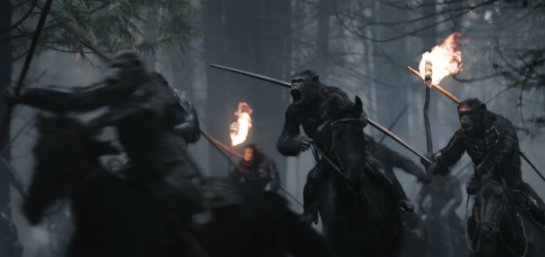
“Dawn” ends with Caesar, the leader of the ape clan, acknowledging that war with the humans is all but inevitable. “War” begins with an explosive sequence revealing Caesar’s prophecy to be true. Troops from a military group calling themselves Alpha-Omega launch a sneak attack on an ape base in the forest. Returning director Matt Reeves’ staging of this sequence is exquisite. It’s beautifully shot and incredible to watch. There is also a lot of information we can glean concerning what’s to come.

Tired of the heavy casualties, Caesar (magically played by a returning Andy Serkis) moves from revolutionary to Moses figure and agrees to lead the apes out of the forest and to an isolated spot across the desert. Before they can leave they are hit by Apha-Omega and Caesar has a face-to-face with their leader Colonel McCullough (Woody Harrelson). The attack is repelled, but for Caesar the results are intensely personal. He commands his clan to head for the desert while he seeks revenge, accompanied only by three of his most loyal (and insistent) friends.

war3

It’s here that “War” really hits its stride. The group’s effort to track down McCullough leads them north where they encounter several characters both human and simian. None are better than Steve Zahn who plays Bad Ape, a chimpanzee who lived in the Sierra Zoo prior to the Simian Flu outbreak. Zahn does a lot of interesting things both comically and dramatically. It’s a well-balanced character and performance that never pushes the ‘comic relief’ role too far.

Staying with performances, it has taken time for many people to warm up to Andy Serkis’ style of acting, but by now his unique skills as an actor should be beyond doubt. There is simply no one better at what he does. This is evident by his work in “War” which is the pinnacle of everthing he has done in the Caesar role. It’s Oscar caliber stuff. If only the Academy will take notice.

war2

The story pulls its influences from a wild assortment of films. Early resemblances to old school westerns like “The Outlaw Josey Wales” give way to shades of “The Great Escape” once the film shifts to what is essentially a prison movie. This is also where it loses a bit of its momentum and stretches out about fifteen minutes too long. Allusions to the Holocaust and concentration camps are effective yet it’s a fairly dramatic shift that takes too much time to develop and play out. And back to influences, it doesn’t take much of an eye to notice the similarities between Harrelsen’s McCullough and Brando’s Kurtz from “Apocalypse Now”.

“War” finally gets back on its feet and the pulse-pounding finale feels just right. The film ends with the story and franchise in strong place. Of course it won’t stay there. Another film is already said to be in the works. As for this installment, I feel it’s the best of this new series and despite its lag in the middle it avoids the narrative hiccups from the past film. More importantly it does justice to this central character who we’ve spent so much time with and genuinely care about.

VERDICT – 4 STARS

4-stars

Remembering Sam Shepard…

Sam Shepard, Q&A

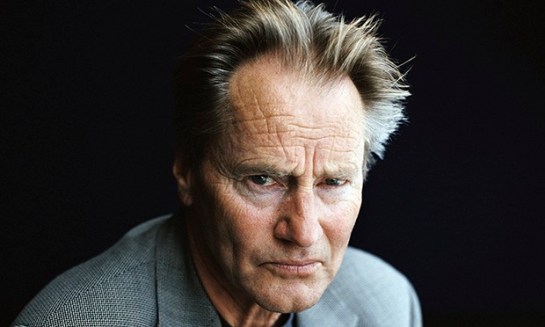
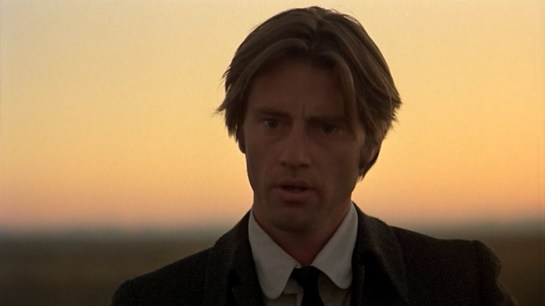
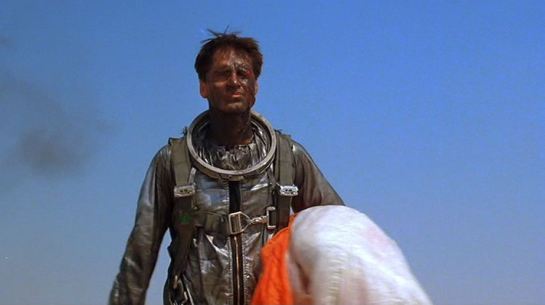
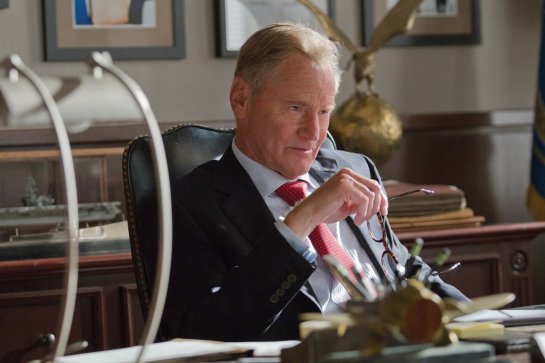
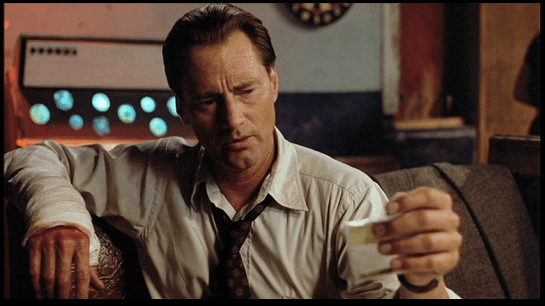
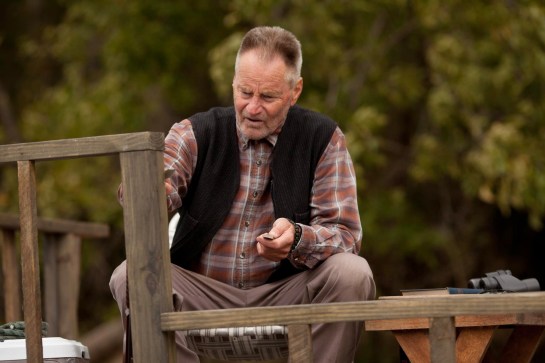
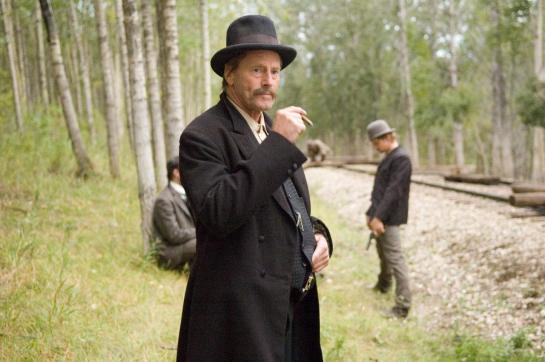
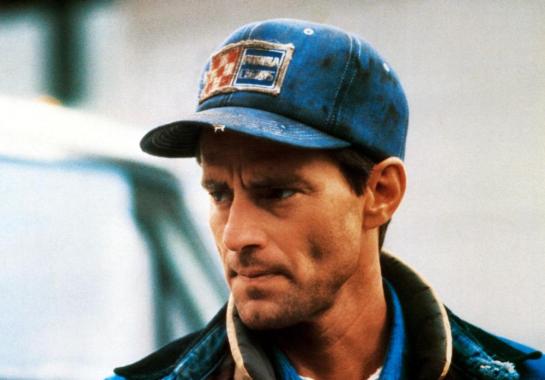
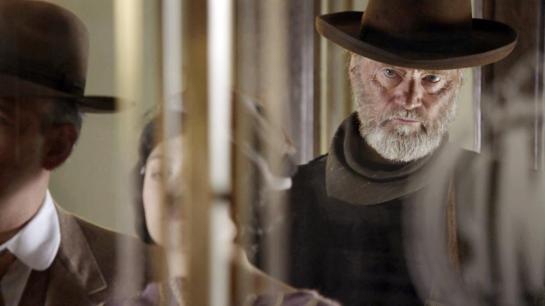
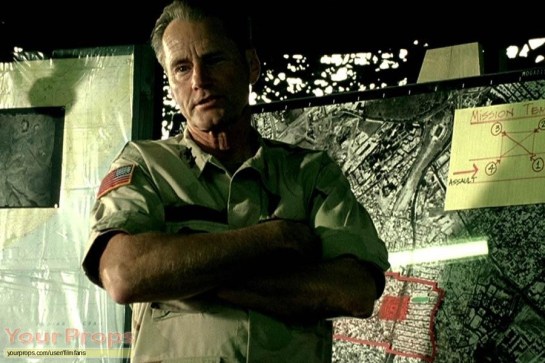
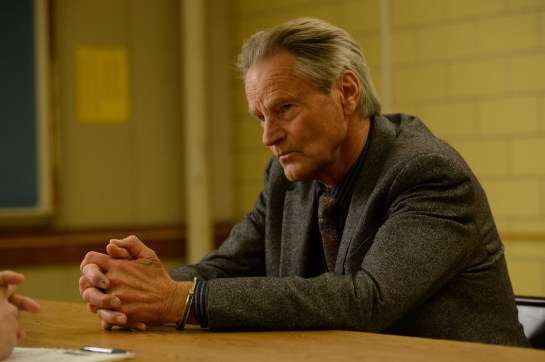
Yesterday was a tough day for lovers of cinema. First there was the passing of the wonderful Jeanne Moreau. Later we heard the news that the great playwright and actor Sam Shepard had died. Shepard penned over forty plays and appeared in over fifty films. He received the Pulitzer Prize for Drama and has been nominated for an Academy Award. There was a gritty authenticity to most of Shepard’s roles and he made acting appear effortless. He was still working until recently when his health prohibited it. He passed away July 31 due to complications from Lou Gehrig’s disease. He was 73.

SHP-Days

“Days of Heaven”

SHP-rightstuff

The Right Stuff”

SHP-SafeHouse

“Safe House”

SHP-Thunderheart

“Thunderheart”

SHP-mud

“Mud”

SHD-assassination

“The Assassination of Jessie James by the Coward Robert Ford”

M8DCOUN EC010

“Country”

MCDBLAC EC045

“Blackthorn”


SHP-bhd

“Black Hawk Down”


MIDNIGHT SPECIAL

“Midnight Special”