REVIEW: “Hacksaw Ridge”

hacksaw-poster

You might say Hollywood’s selective forgiveness hasn’t fully extended to Mel Gibson. While the transgressions of many stars have been hypocritically swept under the rug, Gibson has remained a Hollywood pariah due to his vile alcohol-related incidents of nearly ten years ago. Despite apologies, treatments, and the support of close friends like Jodie Foster, Whoopi Goldberg, and Robert Downey, Jr., it has been tough road back into movies for Gibson. But the early responses to his new film “Hacksaw Ridge” may be a sign that Tinseltown is finally giving him a second chance.

Hollywood has tried to tell the incredible story of Desmond Doss for decades. Screen rights to the story have swapped hands numerous times and multiple producers have attempted to get the project off the ground. Mel Gibson was first approached to direct the film in 2004. He would turn down the offer twice before accepting some ten years later. “Hacksaw Ridge” would be Gibson’s first directed movie since 2006’s “Apocalypto”.
hacksaw3

The story of Desmond Doss is astonishing. In April of 1942 Doss enlisted in the Army but refused to carry a weapon due to his deeply held religious convictions. Despite early criticisms and persecution, Doss worked his way up to Corporal and was a field medic during the bloody Battle of Okinawa. He became the first conscientious objector to receive the Medal of Honor.

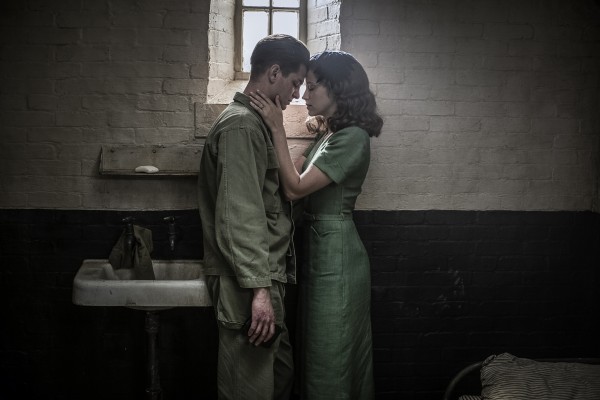
Andrew Garfield plays Doss and is tasked with carrying the bulk of the film on his shoulders. Garfield is an actor who has always flown a bit under the radar despite some strong performances. In “Hacksaw Ridge” he brings the audience through several portions of Doss’s life. We see his early life at home and his tumultuous relationship with his war-scarred, alcoholic father (played with bruising realism by Hugo Weaving in some of the year’s best supporting work). We watch his courtship with a local nurse named Dorothy (played by a radiant and warm Teresa Palmer). The next stop is boot camp where Doss’s convictions raises the ire of his unit especially his superiors Sgt. Howell (Vince Vaughn) and Capt. Glover (Sam Worthington).

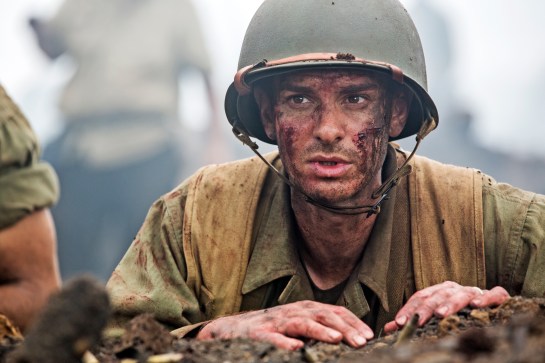
And then there is the final act which is dedicated to Doss’s heroism at Okinawa where some of the most ferocious fighting of World War 2 took place. From the first shot fired, the film presents the battlefield violence vividly and in a manner reminiscent of the D-Day sequence in “Saving Private Ryan”. Mel Gibson is no stranger to depicting the brutal nature of combat and it is especially effective here considering the harsh reality it’s based on. Make no mistake, it’s bloody, unflinching, and harrowing.

hacksaw2

Some have found Gibson’s intense war violence at odds with his story of a pacifist. I couldn’t disagree more. Yes, the battle scenes are brutal and graphic but not without reason. You see, in the middle of the blood, the bullets, and the dizzying madness of war is Desmond Doss who personifies grace in the face of violence, life in a sea of death. Gibson contrasts the horrors of war with the heroism of Doss in such a way as to make his protagonist’s light shine even brighter. There is no glorification of war. These soldiers are in a picture of hell. The only light for them and the audience is Desmond Doss. It’s all incredibly effective.

“Hacksaw Ridge” was made with a fairly modest $40 million budget (quite modest compared to the $165 million price tag for the week’s other big release, Marvel’s second tier “Doctor Strange”). But as you would expect from Gibson, the movie looks like a billion bucks. The superbly shot battle scenes aside, Gibson’s traditionalist sensibilities show up in how he shoots everything else which is a perfect fit for this particular film. It’s easy to get lost in the period he visualizes.
hacksaw1

But I have to get back to Garfield whose work in this film should catch a few eyes. His accent may require an adjustment, but he fully commits to his character and his performance is full of authenticity and earnestness. The movie simply wouldn’t work without him. And it certainly helps to have great supporting work especially from Hugo Weaving (Oscar nomination perhaps). I also loved Palmer who at times seems plucked right out of a 1940’s movie. Worthington is solid and Vaughan surprised me. There are also nice performances from Luke Bracey as the unit’s alpha male and Rachel Griffiths as Doss’s mother.

The story of Desmond Doss is both incredible and inspirational. “Hacksaw Ridge” tells the story well and never wavers from its central theme of believing in and staying true to your convictions even in the face of intense adversity. It’s never preachy in its presentations of one man’s beliefs, but it also never wavers in portraying them for what they are. And that’s what you expect from Mel Gibson  – a filmmaker of great vision and conviction who may have finally found the forgiveness he deserves. I hope so. “Hacksaw Ridge” shows he still has an amazing gift and an insight into filmmaking that many in the business simply do not possess.

VERDICT – 4.5 STARS

4.5 STARS

REVIEW: “Free State of Jones”

free-state-poster

There are moments in the historical war picture “Free State of Jones” where everything feels right – from its impassioned story to its artful attention to period detail. But then there are times when the flow of the narrative falls apart and the filmmakers seem to be biting off more than it can chew. Such is the dilemma with this riveting yet frustrating Civil War era mini-epic.

Oscar nominated writer Gary Ross pens the screenplay and directs this fictional story based on the historical account of Newton Knight, a southerner who led a group of deserters and escaped slaves up against the confederacy. Ross focuses on Newton and his impact on Jones County, Mississippi from the height of the Civil War through to the Reconstruction Era. Ambitious and  thoughtful, but a bit more than his film can handle.

jones1

A perfectly cast Matthew McConaughey plays Newton. McConaughey almost naturally projects what you need from this character – scraggly unkept beard, tired and worn face, seamless southern drawl. We first see him performing his field medic duties for the Confederates at the Battle of Corinth. His war-weariness and disillusionment finally reach their boiling points and he leaves his unit. Wanted as a deserter, Newton is forced to hide in the swamps where he befriends a group of escaped slaves.

Their numbers begin to grow as more deserters break ranks and seek refuge in the swamps. Ross settles here a bit and builds some relationships particularly between Newton and a young house slave named Rachel (warmly played by Gugu Mbatha-Raw). We also see a growing unease as desperate Confederates begin ransacking local farms and stealing crops to supply the failing war effort. Newton’s newly founded militia fight back across southeastern Mississippi until the war ends in 1865.

From there Ross ventures into the Reconstruction Era which is where his story begins to lose its footing. The smoothly paced narrative gives way to a chopped up historical checklist of events that are interesting but terribly underserved. Post-war subjects such as local manipulation of slavery laws, freedman voter registration, KKK violence and democratic election fraud are addressed by title cards or brief segments. The story is constantly leaping forward in time never staying on a subject for more than a few minutes. It leaves the impression that Ross ran out of time, ran out of funds, or maybe both.

jones2

It’s really a shame because Ross doesn’t shy away from the issues be it southern slave persecution or northern indifference. But he skims over the latter stuff leaning on didacticism over drama. The final third ends up being the film equivalent of history CliffsNotes. And there are instances where time could have been used better. We get a series of flash-forwards to a court room sequence some 85 years into the future. It’s not that effective and it took time away from more interesting parts of the story.

Newton Knight has remained a controversial figure. While Ross portrays his legitimate heroic side, he strategically prunes a portion of Newton’s personal life that you could call objectionable. After the war Newton lived on a farm with his wife AND his common-law wife (the Rachel character). He had fourteen children between the two women. This other layer of Newton would have been fascinating to explore. Then again the film struggles to cover everything it does include. But when it is on point “Free State of Jones” is a well-made film that’s both gripping and informative.

VERDICT – 3 STARS

REVIEW: “The Innkeepers”

innkeep-poster

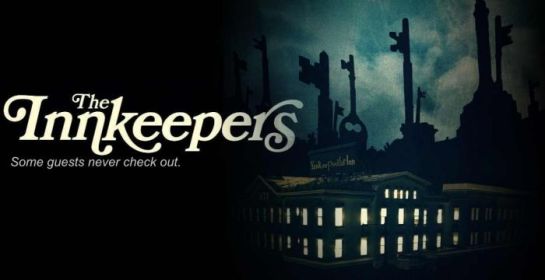
Ti West followed up his eye-opening “The House of the Devil” with another foray into the horror genre. “The Innkeepers” follows in its predecessor’s footsteps by taking familiar horror movie  ideas and freshening them up. It has the same appreciation for the genre that was so evident in “House” while also defining a new set of boundaries for itself.

While making “The House of the Devil” Ti West stayed at the Yankee Peddler Inn in Torrington, Connecticut. During his stay he was inspired to make “The Innkeepers”. The 52 room classic colonial styled inn (with its own rumors of paranormal activity) was the perfect setting for West’s old-fashioned ghost story. And from the opening credits the inn is established as one of the film’s most intriguing characters.

innkeep1

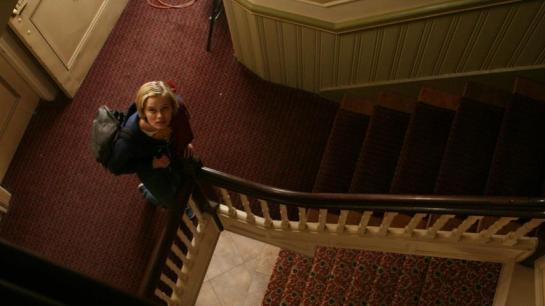
As the story goes the Yankee Peddler Inn is a few days away from closing its doors. The last of the staff members are Claire (Sara Paxton) and Luke (Pat Healy) who also moonlight as ghost hunter wannabes. The two are fascinated with the inn’s rumored haunted past and since there is little else to do they spend their uneventful hours looking to prove the stories true. The only other people in the inn are a mother and her two children and a former actress turned psychic (played by Kelly McGillis).

“The Innkeepers” is the epitome of slow-burning. But where “House” used its slower pacing to build tension, this film doesn’t. At least not in a steady sustained way. That proves to be a hurdle the movie can’t cleanly clear. After an interesting setup the story parks itself and then barely creeps to its intense climax. Deliberate pacing isn’t a bad thing especially when you’re giving audiences l something to cling to or embrace. “The Innkeepers” struggle to supply that.

inn2

But while a chunk of the film meanders a bit, it isn’t a complete slog. Claire and Luke are fun characters even if their conversations often go nowhere. There are also a handful of scenes that are pretty tense. They do a good job of building anticipation which is why I wanted more out of them. And I have to mention the inn itself and the way West and cinematographer Eliot Rockett shoot it. Each frame is filled with character and atmosphere and once things finally ratchet up the inn’s presence is amplified even more.

“The Innkeepers” was filmed on a shoestring budget. In order to save money West had the cast and crew both shoot and stay in the actual Yankee Peddler Inn – a decision that had its positives and negatives. It’s an interesting side story for a film loaded with promise but shackled by a script that’s just a tad too lean. There are several gaps where absolutely nothing of interest takes place which is frustrating considering there are frightening moments and several other things the film does well.

VERDICT – 3 STARS

3 Stars

REVIEW: “The House of the Devil”

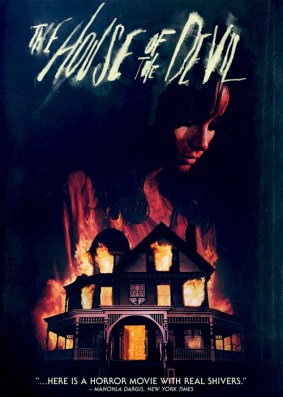
house-posterTi West has a clear grasp of the guiding principle for many classic horror films – the anticipation can be just as satisfying as the payoff. He takes that thought to heart in his 2009 film “The House of the Devil”. It’s a slow-boiling horror picture focused on building the audience’s dread and prodding their imaginations. West is deliberate with what he feeds us which is just fine since he creates a boatload of suspense in the process.
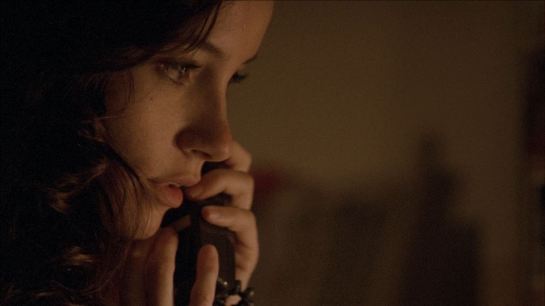
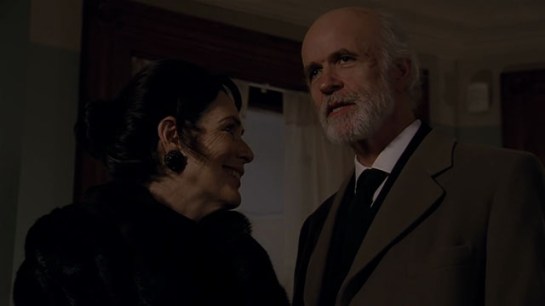
The main character is cash-strapped college sophomore named Samantha (Jocelin Donahue) who needs money for a new apartment. She responds to a flyer requesting a babysitter on the night of a rare lunar eclipse. Samantha’s best friend Megan (played by the always lively and true Greta Gerwig) drops her off at the large Victorian home of Mr. Ulman (Tom Noonan) and his wife (Mary Woronov). It so happens that the home is down an isolated wooded road AND next to a cemetery. Warning signs aglow.

The gentle voiced but creepy Mr. Ulman springs a surprise on Samantha – something he failed to mention in the flyer. I’ll let you find out what it is for yourself, but she only agrees to stay after he quadruples her pay. The Ulman’s head off to their eclipse-watching gathering leaving Samantha in charge, along with her intense curiosity and active imagination.

house1

West plants here for a bit allowing the tension to build and then slowly simmer. As Samantha begins exploring the house we gain an ominous feeling of dread. We watch knowing all along something is going to happen. Even when Samantha pops on her headphones and playfully dances around to The Fixx’s “One Thing Leads to Another” (an amusingly appropriate title) we still are waiting for something terrible to occur. That’s something the good horror pictures of the 70s and 80s did well.

West has that same knack. Even though he is often playing with familiar ideas within the horror genre, he clearly knows what makes these films work. Some examples: He spends time developing the central character. Samantha isn’t a flimsy, disposable protagonist. He also understands the effectiveness of well-managed music. Jeff Grace’s Carpenter-esque score is a perfect complement and West knows how to employ it. And then there is his selective use of gore. The corn syrup does eventually flow, but this is far from some splatter-a-minute gorefest. Again, the focus is more on getting to the payoff. But that doesn’t mean the payoff isn’t a nostalgic bit of old-school fun.

house2

Another treat is the 80s setting. My wife and I had such fun seeing who could notice the most references to the decade. Feathered hair, high-waist blue jeans, friendship bracelets, and of course a Sony Walkman as big as a brick. West even shoots with 16mm film which makes it seem even more of a movie of that time.

“The House of the Devil” features an old-fashioned quality that I love, but it’s much more than just a nostalgic piece. It’s a genuinely tense throwback to the classic horror idea of doing the basic things really well. It also plays around with several subgenres and shakes them up just enough to add a unique flavor to the movie. All of these good ingredients mix well with West’s undeniable craft making this a real treat for horror fans.

VERDICT – 4.5 STARS

4.5 STARS

REVIEW: “In a Valley of Violence”

valley-poster

Apparently 2016 is a breakout year for Ethan Hawke westerns. Okay, so I’m being a tad facetious, but the 45 year-old Austin, Texas native has released two westerns over the last few months. The first was the crowd-pleasing shoot-em-up remake of “The Magnificent Seven”. And then there is this film, the much leaner and less serious “In a Valley of Violence”.

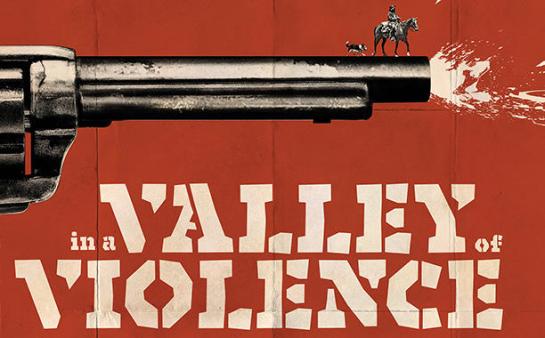
The film is written, edited and directed by Ti West, a filmmaker most known for his small, fresh takes on the horror genre. West has much the same goal in mind here, but at the same time this is a clear-coated homage plump full of familiar western tropes. West’s tongue-in-cheek handling of the material enables his celebration of the traditional western to also feel surprisingly fresh.

valley1

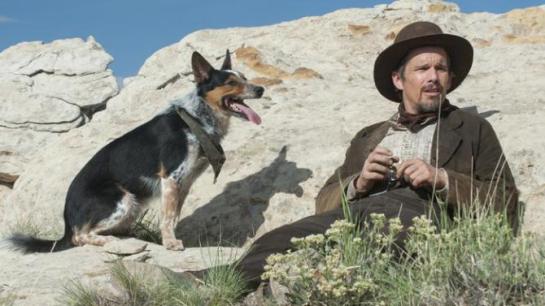
“In a Valley of Violence” proclaims the age-old prophecy (or at least it should be an age-old prophecy if it isn’t) – don’t come between a man and his dog. That’s exactly what happens when a drifter named Paul (Hawke) and his dog Abbie come across the small, rundown town of Denton on their way to the Mexican border. Denton is clearly a dangerous place as evident by its scarcity of citizens and its boarded-up church. But Paul needs supplies so he moseys into town.

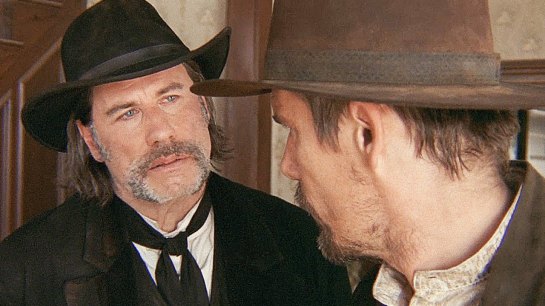
And can you ever stop in a small western town without hitting the local saloon? Paul does that very thing and has run-in with a drunken hothead named Gilly (James Ransone). Words are exchanged, a punch is thrown, Gilly’s nose is broken, and the town’s Marshal Clyde Martin (John Travolta) sends Paul on his way with a warning never to return. Sounds fair enough, but it wouldn’t be much of a story if ended on that note. Things sour and we see the violent side of Paul that has been simmering under the surface.

The story doesn’t stray too far from the traditional western revenge tale, but Hawke and Travolta both energize it with some really good performances. There is also some really good supporting work from Taissa Farmiga (younger sister of actress Vera Farmiga). She plays a young woman who helps run the town’s hotel and sees Denton for the unruly dead-end that it is.

valley2

It’s an enjoyable small cast who seem to have fun with West’s material particularly the humor. Despite its ominous threatening title, “In a Valley of Violence” is surprisingly funny. Some of its laughs come at the most unexpected times and range from subtle to absurdity. It never goes far enough to turn this into a spoof, but it does keep things light even when the tension amps up.

Despite its violence and dedication to formula, West and company (wisely) never take their movie too seriously. Even when it’s moving by the numbers, it remains quirky enough to feel slightly off-center. Appropriately shot in 35mm and featuring a sparkling Jeff Grace score, the film looks and sounds as it should which will endear it to genre fans. But most impressive is its ability to embrace the conventional and set our expectations only to then shake things up just enough for us to see things through a new lens. That makes this film too appealing to pass up.

VERDICT – 4 STARS

4 Stars

2016 BlindSpot Series: “Who’s Afraid of Virginia Woolf?”

woolfposter

When Edward Albee’s play “Who’s Afraid of Virginia Woolf?” landed in 1962 it set Broadway ablaze. Its scorching, abrasive story of a middle-aged couple’s volatile marriage won Tony Awards but was stripped of its Pulitzer Prize for Drama due to its controversial content. It was perceived as a story that could be told on Broadway but could never be filmed due to the infamous Production Code.

But things were changing in Hollywood. Screenwriter Ernest Lehman was determined to keep the play’s coarse language and twisted sensuality in hopes of capturing the same initial shock of Broadway. He succeeded and “Who’s Afraid of Virginia Woolf?” is now known as one of the key movies of the 1960s that led to the abolishment of the Production Code. The movie became one of only two films to receive an Oscar nomination in every eligible category (the other being “Cimarron” from 1931).

woolf1

Real life husband and wife Richard Burton and Elizabeth Taylor were cast to play George and Martha, a venomous, hard-drinking couple in marriage turmoil. George is an apathetic associate history professor at a small college. Martha is the bitter malcontent daughter of the college’s Dean.

After a late night campus party, Martha invites a young couple to their home for a nightcap. The guests are Nick (George Segal), a hunky newly-hired biology professor, and his mousy, reserved wife Honey (Sandy Dennis). George and Martha begin a caustic back-and-forth verbal assault. At first Nick and Honey are terribly uncomfortable by what they witness, but their hosts seem impervious to their rudeness or damaging words. At one point George flippantly explains “Martha and I are merely exercising, that’s all.”

woolf2

As more alcohol is consumed the conversations grow more toxic and soon the young couple find themselves caught up in George and Martha’s games of emotional destruction. Through various stages of drunkenness the four scratch and claw at every sensitive scar revealing deep-rooted anger and boiling secrets from their pasts. Lehman’s script is deeply loyal to Elbee’s story. Within it no feelings are protected and no verbal assault is too vicious.

The film marked the directorial debut of Mike Nichols who was nominated for an Oscar but lost out to Fred Zinnemann (but no worries, Nichols would win the following year for “The Graduate”). Nichols wisely takes a more conservative approach to this material, trusting his four key players and allowing them to do most of the heavy lifting. But that doesn’t mean Nichols vanishes into the background. His hand is seen in several strategic camera techniques ranging from shot framing to camera movement. His direction never overshadows the dialogue, but there are instances where he accentuates it.

woolf3

But when people talk of “Virginia Woolf” the performances most always top the conversation. The film earned Elizabeth Taylor her second Best Actress Oscar. Taylor dove headfirst into her character, gaining 30 pounds for the role, wearing a wig, and doing anything to shed her image as a beautiful movie star. Burton is equally good and brings a bruising passive-aggressive apathy to his character. Albee originally wanted James Mason but later admitted Burton was fantastic. Both Segal and Dennis also received Oscar nominations (Dennis winning her category) and each add their own unique and specific component to this dysfunctional tale.

There is simply no denying the strengths of “Virginia Woolf”, but your overall enjoyment may depend on your tolerance levels. This is 135 minutes of relentless verbal and mental cruelty. It’s a mean, acidic, piercing drama featuring one combustible scene after another. But the longer you stick with it the more layers are stripped away from the characters – the more we learn about them. And eventually the film asks if we are so different. Perhaps George said it best when watching Honey scratch the sticker off a bottle of brandy – “We all peel labels.” How true it is.

VERDICT – 4 STARS

4 Stars