REVIEW: “Darkest Hour” (2017)

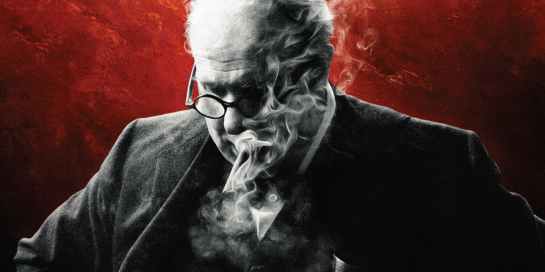
DARKESTPOSTER

Lest anyone be confused (and I highly doubt they will be) this is not a review of the atrocious doomsday alien invasion thriller from 2011. Instead this is director Joe Wright’s biographical wartime drama based on Winston Churchill’s early days as England’s Prime Minister. Quite a difference, right?

In early May of 1940 Hitler’s army has made major advances and now stands at the Belgian border preparing to push through in their efforts to conquer what remains of Europe. On May 9th a frustrated British Parliament demands the resignation of Prime Minister Neville Chamberlain due to his weakness in the face of the rising Nazi threat.

DARKEST1

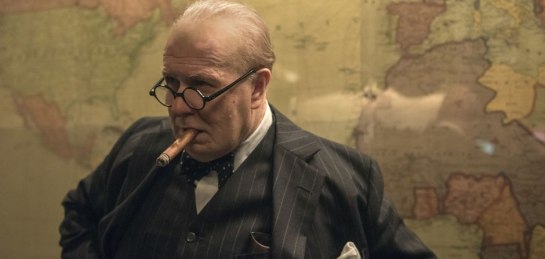
Behind the scenes Chamberlain (Ronald Pickup) and his followers are still pulling the political strings. With the backing of King George (played by a perfectly tempered Ben Mendelsohn), Chamberlain seeks to put in someone who will continue to push his agenda. But it becomes clear there is only one man the divided parties will accept – Winston Churchill (Gary Oldman).

By now there should be no one doubting Gary Oldman’s tremendous range. He’s played a drugged-out dirty cop, a Russian terrorist, and a corrupt U.S. congressman. He’s played Sid Vicious, Lee Harvey Oswald, Count Dracula and now Winston Churchill. Thanks to the miracle of makeup and prosthetics as well as Oldman’s innate attention to detail, you instantly buy into this particular portrait of Churchill. The barely recognizable but thoroughly captivating Oldman delivers an Oscar-ripe performance that draws from his varied skill set.

The script is from Oscar-nominated screenwriter Anthony McCarten whose previous work was the acclaimed Stephen Hawking biopic “The Theory of Everything”. Here he pours everything into his lead character. He gives Oldman plenty of opportunities to sink his teeth into the role without resorting to gimmicky “Awards-worthy” big moments. Also McCarten is smart enough not to overextend his story. This isn’t meant to be a comprehensive biopic and the film’s tighter focus works.

DARKEST2

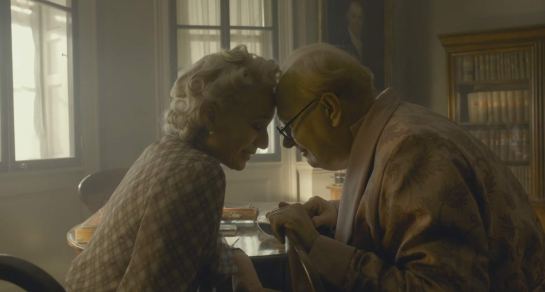
A good chunk of the movie highlights the political wrangling Churchill faced by his opposition who desperately wanted peace talks with Hitler. It begins to feel a bit drawn out but most of it is pretty fascinating. And I really enjoyed the personal moments we get especially between Churchill and his wife Clementine (wonderfully played by Kristin Scott Thomas). There is also the relationship between Churchill and Elizabeth Nel (Lily James), a young typist who eventually became his personal secretary. Their scenes are nicely done and offer a window into a different side of Churchill.

“Darkest Hour” maneuvers through Churchill’s appointment to Prime Minister, the political tensions that undoubtedly wore him down, the looming Nazi threat, and Operation Dynamo which saw the evacuation of over 300,000 troops stranded on the beaches of Dunkirk. But the movie never loses sight of the personal side of this larger than life character. At the same time Joe Wright offers up compelling and timely lessons on conviction, persuasion, and the power of bipartisanship – all things our current governments could learn from.

VERDICT – 4 STARS

4-stars

REVIEW: “The Bachelors”

BACHposter

Kurt Voelker’s “The Bachelors” opens with a father walking into his son’s bedroom in the middle of the night. He sits on the edge of the bed and says to his groggy son “I can’t stay here anymore.” Even without context this simple line of dialogue packs the emotional heft that is threaded throughout this entire film.

“The Bachelors” is a movie about grief which is nothing spectacular or especially new. But Voelker (who both wrote and directed the picture) does something many of these explorations miss. He never loses sight of the human element or the importance of conveying truth in every relationship. Whether he’s juggling drama or comedy, his characters and their emotions always feel genuine.

Bacheors1

The father is Bill (J.K. Simmons) who recently lost his wife to cancer after 33 years of marriage. It’s an extraordinary performance by Simmons who maintains a steady heartbreaking tenderness. It’s not nearly as flamboyant or showy as his Oscar-winning performance in “Whiplash” but just as impressive in a much more measured way.

Bill packs up and moves with his son Wes (Josh Wiggins) to southern California where he hopes a change of scenery will do him good. Wes is equally sympathetic as a teenager who not only loses his mother but also his father to a worsening state of depression. On top of that he’s forced to move to a new town and a new school with new friends. There is an almost natural shyness to Wiggins that comes through in his acting. We saw in “Walking Out” from earlier this year and now here. His understated approach is serves his character which make later scenes when his emotions boil over more effective.

The coming-of-age side of Voelker’s two-headed story has its moments. Many of them are between Wes and a beautiful but troubled wild-child named Lacy. She’s portrayed by Odeya Rush who played a similar role in Greta Gerwig’s “Lady Bird”. The two are designated homework partners which allows their unconventional relationship to take form. Wes’ time with his two new outsider friends is a little more hit-or-miss. Some of their banter is funny but other times seems too contrived for the moment.

BACH2

The other side of Voelker’s story consistently surprised me especially in how deep it was willing to dive into the area of depression. I wasn’t expecting it. There are no soft perspectives or dulled edges. Simmons doesn’t ‘go big’ to add a dominating dramatic effect to the issue. His performance is mannered yet emotionally rich and always believable. There are some wonderful and revealing scenes between Simmons and Harold Perrineau who plays his therapist. And also with Julie Delpy who plays a math teacher who takes an interest in Bill.

The film’s ending could be misconstrued as too tidy, but I was never left with that impression. I think the struggles still ahead of this father and son are implied but Voelker offers us hope. And we want that for these characters. We want it to work out. We want them to heal. We want all of this because Voelker does such a good job making us care for them. That sympathetic and emotional connection he creates is more than enough to carry us through this delightful yet poignant story.

VERDICT – 4 STARS

4-stars

Top 10 Films of 2017

BEST17

It’s hard to believe it’s that time again – the time of the year where critics and bloggers throw together lists of the movies they felt shined the brightest during the past year. Sure, some turn their noses at these things, but I’ve always enjoyed them. Why not take time to promote the movies you feel were the real treats of the past 365 days. So here we go, reflecting back on 2017 and sharing my picks from what the year had to offer (At least out of what I’ve seen. Sadly, frustrating release schedules means some much anticipated films have yet to open near me. “Phantom Thread”, “Hostiles” and “The Post” head that list).

As always I’ll begin by showing some love to the fine movies that just missed my top 10. Here are my #11 – 20 picks:

  • #20 – “Pilgrimage”
  • #19 – “Roman J. Israel, Esq.”
  • #18 – “Star Wars: The Last Jedi”
  • #17 – “The Bachelors”
  • #16 – “Lady Bird”
  • #15 – “Frantz”
  • #14 – “Wonderstruck”
  • #13 – “Molly’s Game”
  • #12 – “The Beguiled”
  • #11 – “Maudie”

And now my Top 10 films of 2017..
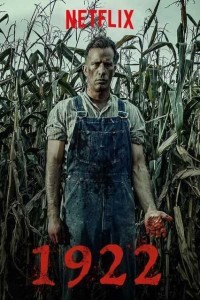
1922#10 – “1922” There were plenty of surprises in 2017. In fact it was the surprises that saved the movie year for me. Perhaps the biggest one came in the small psychological horror film “1922” based on a Stephen King short story. Thomas Jane (in what may be my favorite performance of the year) plays a struggling Nebraska farmer at odds with his wife over keeping their land or moving to the city. Writer/director Zak Hilditch crafts a movie that gets under your skin and maintains a menacing vibe from start to finish without ever relying on overused genre gimmickry. It may be a tad too slow for some, but its steady sense of discomfort and dread had me hooked. What a year for Netflix.


UNKNOWN GIRL#9 – “The Unknown Girl” The Belgian sibling duo of Luc and Jean-Pierre Dardenne have become some of my favorite filmmakers. There is an unvarnished naturalism in their handling of their characters, their circumstances, and the moral quandaries they face. All hold true in “The Unknown Girl”, a mesmerizing drama and personal journey veiled as a murder mystery. The Dardenne’s focus their real-world lens on a young doctor played with a magnetic measured intensity by Adèle Haenel. Her striking performance is almost Bressonian in its quiet authenticity – a perfect match for the Dardenne’s style.


GHOST#8 – “A Ghost Story” David Lowery’s meditative supernatural drama was unlike anything else I saw in 2017. There is nothing conventional or routine about Lowery’s film or his approach to storytelling and that’s part of its allure. “A Ghost Story” surprises at so many levels. It may be the seismic yet effective narrative shift midway through the movie. Or maybe the amount of emotion we get from Casey Affleck under a bedsheet. Or Rooney Mara’s soulful, evocative performance despite having little dialogue. I found it all to be both beautiful and tragic. Its story is patient and personal; its presentation audacious and impressionistic. It all had me under the film’s spell from the start.
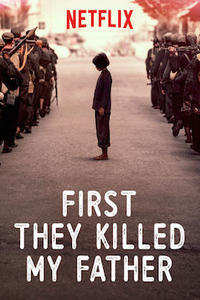
 

FIRST#7  – “First They Killed My Father” Through four films Angelina Jolie has shown a sharp awareness of technique but has never quite hit her stride. That changes with her fifth film, “First They Killed My Father”. It’s a heart-wrenching true story of a young girl growing up during the Khmer Rouge reign in 1970s Cambodia. Jolie’s commitment to authenticity pays off. The movie was shot in Cambodia, with Cambodian performers, and uses the Khmer language. Also many films have told their story from a child’s perspective, but few have done it as well as Jolie does here. The true story in incredible, Jolie’s pacing is perfect, and the cinematography is stunning. It’s a difficult movie to watch but it’s an absolute must-see.
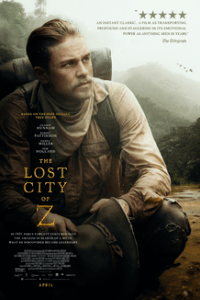
 

CITYZ#6 – “The Lost City of Z” James Gray’s masterful biographical adventure “The Lost City of Z” didn’t get a ton of buzz, but it is a film that has stuck with me since my first viewing. Its story of British officer, geographer, and eventual South American explorer Percy Fawcett is fascinating on its own, but Gray’s storytelling is just as absorbing.  You can’t help but see light shades of Herzog’s “Aguirre, the Wrath of God” and “Fitzcarraldo”. Even touches of John Huston come to mind. Yet remarkably James Gray has created a movie that feels completely of itself. It’s his best film. It’s Charlie Hunnam’s best performance to date. It’s easily one of my favorite movies of the year.
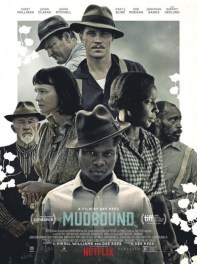
 

MUDBOUND.png#5 – “Mudbound” Over the past few years there have been several movies willing to deal with slavery and the racial aftermath that reverberated for decades. “Mudbound” is the best of them. Set in the Mississippi delta during the 1940s, “Mudbound” tells the story of two families bound by the rugged farmland they work. Co-writer and director Dee Rees brilliantly portrays the harshness of the period setting while her shrewd handling of the racial climate is powerful and authentic. “Mudbound” is a devastating movie with a bold perspective, great performances throughout, and a young filmmaker with an incredible eye and great understanding of her material. The results are superb.


WONDER#4 – “Wonder Woman” DC’s attempts to match Marvel in the superhero genre haven’t been warmly received (sometimes unfairly but I’ll leave that be). “Wonder Woman” was the injection their shared universe needed. Director Patty Jenkins brings a fresh sensibility and perspective to the genre while still capturing what makes these comics-to-screen adventures so much fun. And of course there is Gal Gadot who not only makes Wonder Woman her own, but gives her more depth than I expected. And that’s what made this film one of the best of its genre – a protagonist with powers that leave us in awe but genuine emotions we can relate to.
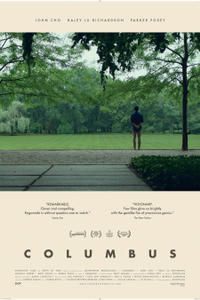
 

COLUMBUS#3 – “Columbus” One of the great surprises of 2017 was “Columbus” and its first-time feature filmmaker Kogonada. Rarely does a first film feature such a deft handling of story and visual technique. Set among the modernist architecture of Columbus, Indiana, Kogonada elegantly and meticulously composes shot after shot that are stunning but never without purpose. They always serve the beautiful but quietly devastating story of two wounded souls played by John Cho (who is fantastic) and Haley Lu Richardson who turns out to be a true revelation. It all melds into one of the most soulful experiences of the year and one of the strongest filmmaking debuts in decades.
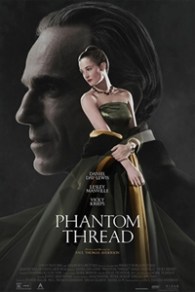
 

PHANTOM#2 – “Phantom Thread” While I’ve always appreciated Paul Thomas Anderson’s talents as a filmmaker I often find myself mixed on his movies (“There Will Be Blood” aside). That’s certainly not the case with “Phantom Thread”, a masterful mixture of story and craft from a filmmaker perfectly in tune with his vision. Add in three superb performances led by the always spellbinding Daniel Day-Lewis (supposedly his last performance). The camerawork is exquisite, Jonny Greenwood’s score is intoxicating, the costume design is breathtaking and Anderson’s script is both beautiful and wildly unpredictable. Whether you’re an Anderson fan or not, “Phantom Thread” shows why he is considered among the great American directors.
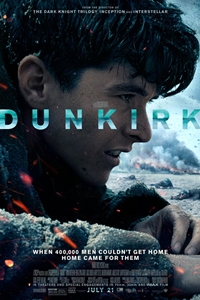
 

DUNKIRK#1 – “Dunkirk” In my mind Christopher Nolan has established himself as the premier big budget filmmaker of our time. Time and time again he has delivered fascinating cinematic experiences that make their own rules. “Dunkirk” is one of his best. This World War II action film honors an incredible true story by creating some of the most harrowing war sequences ever put to film. It fluidly moves between land, air, and sea campaigns while also using time in clever unexpected ways. But perhaps the most surprising element to “Dunkirk” is the emotional punch it packs. It’s not delivered through backstory or heavy plotting. The emotion builds through the intense visceral experience we share with the characters. The vividness of Nolan’s presentation puts us on that beach, aboard the boats, or in the planes. It’s a masterclass of filmmaking and storytelling.

Now it’s your turn. What did I get right? Where did I go horribly wrong? Please share your thoughts and your picks in the comments section below.

BlindSpot Review: “Grave of the Fireflies”

GRAVEPOSTER

In the final months of World War II American planes began a bombing campaign across the mainland of Japan. Incendiary bombs were dropped on over 60 cities and estimates are as high as 500,000 civilian deaths. This provides the setting for the powerful 1988 animated war drama “Grave of the Fireflies”, a movie I shamefully hadn’t seen until recently.

The film comes from the acclaimed Japanese animation team Studio Ghibli. It was written and directed by one of the studio’s founders Isao Takahata and based on a Akiyuki Nosaka autobiographical short story. Numerous offers were made to Nosaka to adapt his story to a live-action movie, but he felt none could do justice to the deeply personal story. Takahata approached Nosaka with storyboards and a fresh idea – make an animated adaptation. Nosaka was surprised and convinced by the concepts and Studio Ghibli was given the rights.

GRAVE1

The opening scene immediately sets the tone for the film and identifies it as something significantly different than more traditional animated features. It’s a moving bit of foreshadowing which shapes our mental and emotional approach to what’s to come. I’ll leave it there because it truly is something you should take in for yourself (for those who haven’t seen it).

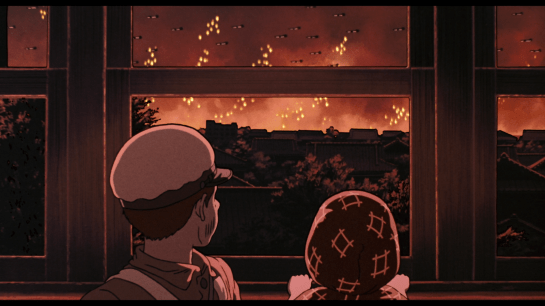
From there the story is told in flashback form. It focuses on a fourteenish boy named Seita and his 4 year-old sister Setsuko. It’s 1945 and the two live in Kobe, Japan with their mother while their father is away fighting the war with the Imperial Navy. One morning the sounds of air raid sirens pierce the sky. Seita sends his ailing mother to the bomb shelter and straps Setsuko to his back. After grabbing some belongings Seita runs outside to see incendiary bombs falling from the sky, almost beautiful in their decent. But on impact they ignite the entire neighborhood – houses, schools, stores, and many residents are incinerated.

Seita and Setsuko manage to survive but their mother is fatally burned. In one of the film’s many crushing scenes Seita finds his mother in a makeshift hospital and makes the decision not to tell Setsuko. It’s such a well constructed scene that doesn’t exploit the emotions of the moment. It lets them play out as naturally as anything you would see in a live-action rendition. The entire film handles the material with this type of reverence and sincerity.

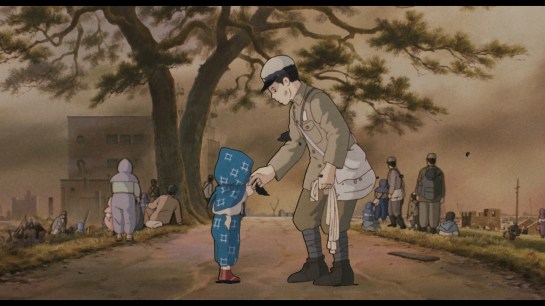
With nowhere to go Seita and Setsuko’s story ultimately becomes one of survival. Without a home or parents they stay for time with their cruel and exploitative aunt. But soon they are driven away and once again find themselves on their own. Seita takes on the responsibility of caring for Setsuko himself. They essentially create their own little world and sustain it the best they can. Despite the harsh reality they face we also get scenes of them having fun as children do. Seita’s heartwarming compassion and sacrifice for his sister shows in the actions he takes. Setsuko’s love for her big brother comes through in every word or expression she shares with him. And as their circumstances grow more grim, they never lose their shared bond.

GRAVE2

Takahata doesn’t shy away from the horrors of the bombings or the aftermath, but he doesn’t dwell on them either. Sobering glimpses jar us back to the reality these children face and we are never allowed to forget it. But every image is meaningful and effective. There is also practically no context given to the war, the two sides or their ideologies. Takahata isn’t interested in that even though the framework of the story may lead you to believe he is. His vision for the story is far more intimate and personal.

“Grave of the Fireflies” packs quite the emotional wallop. Writing on the conscientious yet more conventional animated films, Roger Ebert observed “they inspire tears, but not grief”. There is a lot of truth to that and it gets at what makes “Grave of the Fireflies” so special. It does more than ‘tug at your heartstrings’. It evokes deeper and more complex emotions. It does indeed give grief a powerful cinematic form. And even if (like me) you struggle with the animation style, the pure potency of the story and the care with which it is presented on screen trumps any hesitation you may have. The movie will not only move you, it will affect you, and that is one of the best compliments it can receive.

VERDICT – 4.5 STARS

4-5-stars

REVIEW: “Star Wars: The Last Jedi”

JEDI poster

The mammoth success of 2015’s “The Force Awakens” shouldn’t have surprised anyone. Star Wars fans had ten years of anticipation built up since the last movie and when Disney purchased the property from George Lucas they immediately began touting a new installment. Now just two years later (not counting last year’s stand-alone film) an incredible $450 million for the latest episode’s opening weekend indicates the fire hasn’t died down one bit.

“The Last Jedi” is the eighth film in the series proper, the ninth Star Wars film overall. And while it has been intensely popular and profitable, the reactions have been all over the map. Some have heralded it “the best Star Wars film since Empire” while others are petitioning Disney to have it removed from canon. Regardless of where you land, everyone has to agree that “The Last Jedi” continues the franchise trend of epitomizing the ‘space opera’ concept.

JEDI3

J.J. Abrams hands over the reins to Rian Johnson who both writes and directs episode VIII. Johnson has shown himself to be an intriguing filmmaker as evident by his movies “Brick” and the sci-fi mindbender “Looper”. But a Star Wars film is an entirely different animal, heavy with high expectations and an extremely passionate (and vocal) fanbase.

Johnson’s story offers franchise fans plenty to smile at and just as much to chew on. Several scenes call back to the original trilogy and the inspiration is undeniable. “The Force Awakens” not so subtly but effectively followed the blueprint of 1977’s “A New Hope”. You could say Johnson’s film is a melding of “The Empire Strikes Back” and “The Return of the Jedi”. The structure of some scenes are so similar you can’t help but recognize it.

But fear not, this is no ‘copy and paste’ rehash. Johnson has numerous fresh strokes and narrative angles that makes “The Last Jedi” feel completely of its own. Some of Johnson’s decisions have stoked the ire of certain fans, but he’s clearly trying to develop his own take on the universe. Because of this a couple of characters handed off by Abrams don’t quite get the attention. Is it because they don’t completely fit within Johnson’s vision? I’m not sure.

JEDI1

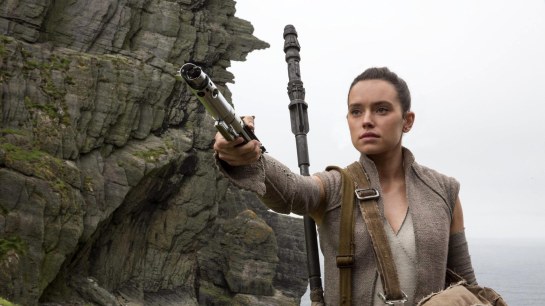
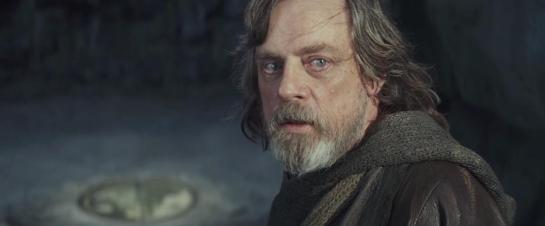
“The Force Awakens” ends with Rey (Daisy Ridley) finding Luke Skywalker (Mark Hamill) on a remote island. Johnson drops his anchor and spends a lot of time on the island with Rey trying to convince Luke the Rebel Alliance needs him. She also seeks his help in understanding the Force and the powers she has discovered. But Luke has become a disillusioned hermit conflicted about his own legend and convinced the time of the Jedi has passed. Hamill’s performance may be his best yet and Ridley is such an asset. The two share several good scenes – some funny and some emotional.

Elsewhere in the galaxy the young rebellion led by General Leia (Carrie Fisher) is forced to evacuate their base after Kylo Ren (Adam Driver) and the menacing First Order arrive. The pursuit that follows takes a big chunk of the film and includes the return of impetuous hot-shot pilot Poe Dameron (Oscar Isaac), former stormtrooper turned resistance superstar Finn (John Boyega), and droid-of-all-trades BB-8. Fisher brings out a whole new layer of humanity to Leia that’s hinted at in the previous film but truly realized in this performance (sadly her last following her recent passing). Speaking of new layers, Kylo Ren has several of them and Johnson has made him into the most intriguing character of the new series.

“The Last Jedi” is the longest Star Wars film by a good 15 minutes and unfortunately you can tell. The first half has some big moments but it’s also a bit slow getting its footing. Johnson spends a tad too much time on the island only giving us baby steps of progression with Luke and Rey until finally getting in gear in the second half. The pursuit segment also has some stumbles particularly involving a side mission with Finn and a new character Rose (Kelly Marie Tran). Aside from some pretty obvious logistical issues, their mission lacks energy and only exists because of a pointless story angle involving another new face Admiral Holdo (Laura Dern). She is without question the most poorly conceived character of the new trilogy. This mission also features a pretty bad CGI-heavy chase sequence that felt completely out of sync with the rest of the movie.

JEDI2

At the same time there are many more things Johnson gets right especially in the second half where the intensity really amps up. I especially love the stress on characters and the personal bonds many of them share. And there is also the connections between the old and the new. I’ll be intentionally vague but this can be tricky ground for a filmmaker. Johnson nails it and none of these moments feel contrived or meaningless. Some had me wanting to cheer. Others brought tears to my eyes. The film also ends with an exhilarating final sequence that leaves the story in an interesting place, ready to be picked up in Episode IX.

I can certainly understand fans having a lot of questions. I do myself. But that’s a big part of the fun when it comes to a Star Wars movie – wondering and speculating. “The Last Jedi” has some early pacing issues and a few things that simply don’t make sense. But it’s still a fantastic Star Wars experience filled with excitement, emotion and nostalgia. It also features a few of those truly great moments that franchise fans will forever link with this film. I know I won’t forget them and my inner fanboy is getting a bit giddy just thinking about them.

VERDICT – 3.5 STARS


3-5-stars

REVIEW: “Roman J. Israel, Esq.”

ROMAN POSTER

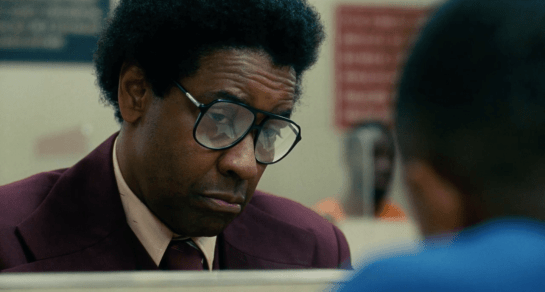
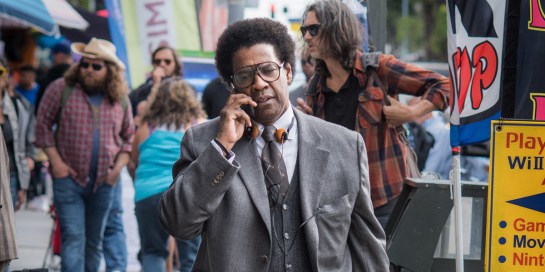
Some actors work on a higher and entirely different plane than others. I’m convinced Denzel Washington is one of those actors. Over the years Washington has shown himself to be in tune with his craft. So much so that even when the material he works with may not be the strongest, he has a way of making it better. Take his new film “Roman J. Israel, Esq.”, a legal drama that could have collapsed at several points yet you have Washington, injecting every scene with life.

That’s not to take away from writer/director Dan Gilroy. He wrote the part specifically for Washington and he’s well aware that his star is the linchpin. Similar to Gilroy’s first turn as directing, 2014’s “Nightcrawler”, this is an engaging character study and morality play revolving around an intriguing central character. It’s a great fit for Washington who enjoys digging deep into his roles. For Roman he gets to go full throttle.

ROMAN1

For 36 years Roman J. Israel has worked as the behind-the-scenes brains of a small, two-man Los Angeles firm. He’s an earnest go-getter with a photographic memory and an impressive history of civil rights defense. He’s also a bit of a wild card which has kept him in the office instead of the courtroom.

Washington pulls everything out of this fascinating, off-kilter character and then adds some flavor of his own. His Roman is rich with personality and is always operating within his own world. His eccentricities are evident from his lumbering stroll, unfashionable wardrobe, retro headphones, or his strong affection for peanut butter sandwiches. But it’s when Washington and Gilroy give him a voice that his peculiarities shine.

When his boss (who is also the face of the firm) suffers a heart attack, Roman is ready to take the helm, but he is blindsided when secrets begin to surface regarding his boss’ practices. Even worse, Roman learns the firm has been left in the hands of an ambitious hot-shot attorney George Pierce (Colin Farrell). With no plans to keep the practice running, George offers Roman a job at his big downtown firm out of pity. Strapped for cash Roman accepts, but in doing so is put face-to-face with the very things he has crusaded against.

ROMAN2

Gilroy’s story puts Roman through some pretty tough situations which compound his frustrations. Does he stay true to his convictions or does he give in to the hand he has been dealt? Carmen Ejogo plays a civil rights activist who is intrigued and inspired by Roman. In many ways she plays his conscience – a representation of the ideals he has held close. Both she and Farrell offer up some good supporting work.

“Let us be enraged by injustice but not destroyed by it.” It’s a Bayard Rustin quote framed on the wall of Roman’s meager apartment. We revisit it a couple of times, each with a more stinging relevance than the last. It gets at the core of Roman J. Israel, a man of dignity but idealistic to a fault. Gilroy and Washington deftly open up this character’s quirks and complexities, and even when the narrative begins to wander Roman is still the focus. That alone was more than enough to keep me glued to the screen.

VERDICT – 4 STARS

4-stars