Cinema Snapshot

“Cinema Snapshot”

20140417-090852.jpg

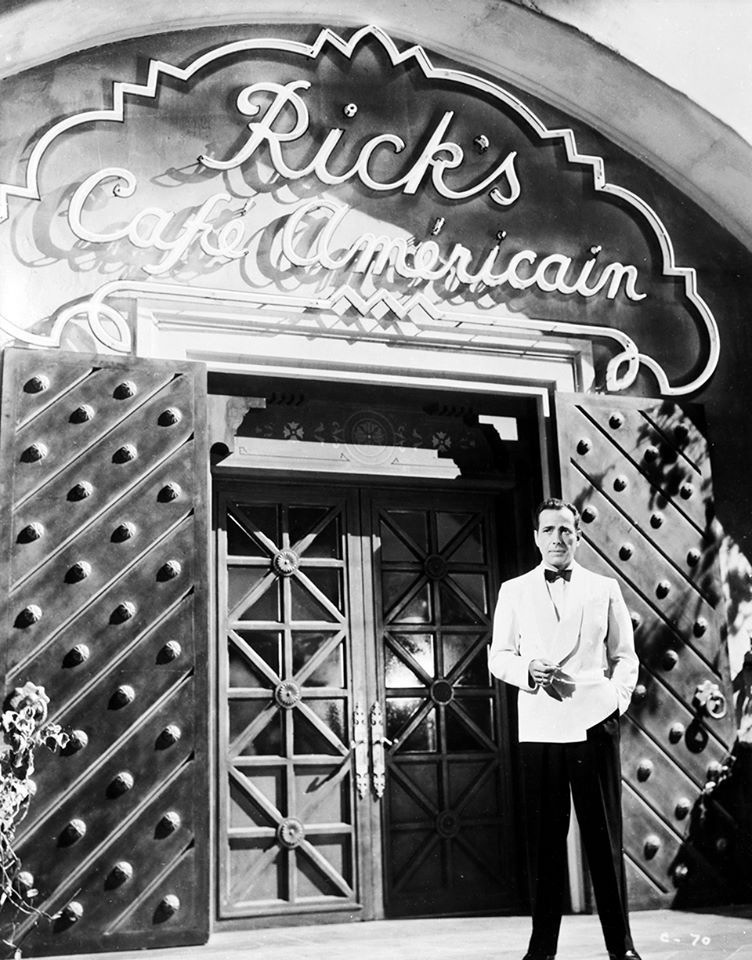
Rick’s Café Américain – “Casablanca”

“Casablanca” (1942)

Rick’s Café Américain is the most memorable location in the classic “Casablanca”. American expatriate Rick Blaine (Humphrey Bogart) keeps his club successful by catering to a wide-ranging clientele. Whether its German Nazis and the sympathetic Vichy French or an assortment of smugglers and gamblers, Rick stays in business by embracing neutrality and adhering to his one policy – “I stick my neck out for nobody”.

Rick’s Place is a bustling den of music, socializing, and backroom gambling. He doesn’t allow the politics or divisions of war in his front door but as tensions rise in the area he finds himself in a precarious position. Things are complicated even more by the surprise appearance of old flame Ilsa (Ingrid Bergman) and her resistance leader husband Victor Laszlo (Paul Henreid) who is on the run from his Nazi pursuers. All of this makes things around Rick’s Café Américain very interesting.

REVIEW: “Draft Day”

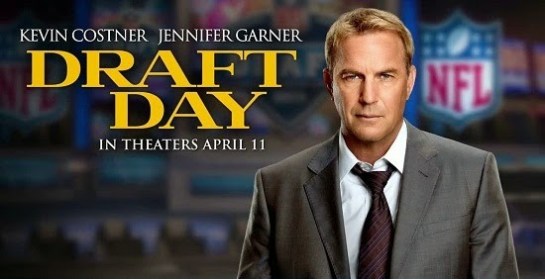
Draft Day Poster

Kevin Costner’s 2014 movie trifecta continues with “Draft Day”, a football film about the back room wranglings leading up to and during the NFL draft. This certainly isn’t the first sports movie focused on the front office instead of on the field. Think “Moneyball” with helmets and shoulder pads. The two films actually have a lot in common. Both feature two strong central lead performances and both give cool cinematic insights into a little known side of their sports.

Interestingly its similarities to “Moneyball” could be perceived as a bigger weakness. Both movies revolve around an audacious and headstrong team leader who bucks the system and conventional sports wisdom to build “his team”. They face constant resistance from ownership, scouts, and everyone in between yet stake their job on their faith in their system. It’s impossible not to see the resemblance.

Draft Day 1

But despite the similarities “Draft Day” still manages to feel like its own movie. In reality football has become America’s #1 sport so much so that even the NFL Draft has become must watch television for fans. That hectic and intense timeframe is the setting for director Ivan Reitman’s movie. Costner plays Sonny Weaver, Jr., the general manager for a Cleveland Browns team mired in an extensive losing stretch. With only hours remaining until the start of the draft Sonny is facing immense pressure from the owner (Frank Langella) to make a big splash. He’s also butting heads with a newly hired coach (Denis Leary) and a fan-base desperate to win.

Sonny’s personal life is equally stressful. His secretive romantic relationship with a front office coworker named Ali (Jennifer Garner) has taken an unforeseen turn. He wrestles with the shadow of his recently deceased father – a well-respected former coach for the Browns. He also struggles under the weight of everyone’s expectations in light of his own inadequacies. The movie never dives deep into any of these personal issues, but we get just enough of them to flesh out Sonny and make him more than a stereotypical sports character.

The meat and potatoes of the movie is football but you don’t have to be well versed in the sport to understand what’s going on. That said, understanding the landscape and the relationship between college football and the NFL gave me a deeper appreciation for the story. I loved the manipulative and sometimes vulturous back-and-forths between GMs, each hungry to get the best deal. Then there is the turbulent draft preparation which is itself fascinating even without this stories added drama. All of this clicks and even when you know the movie is stretching it is still a ton of fun.

DRAFT DAY

But the biggest strength of the film is Kevin Costner. Talk about a strong performance. Costner reminds us why he became such a huge star. It’s a completely seamless and effortless performance that reveals so many of the characteristics and contradictions of this character. I also really love Jennifer Garner here. In the past she has been an actress I have never given much attention. Here she is razor sharp and she is a welcomed strong and confident female character. Even Denis Leary, an actor I normally dislike, is really good and I never get tired of watching Frank Langella. And then of course there is the assortment of mandatory football related cameos sprinkled throughout the film. Some are really cool while others are really obvious.

“Draft Day” could be accused of being too safe and by-the-book. It also follows several familiar sports movie tropes that you will immediately recognize. But the movie never chokes itself on them and it remains compelling throughout. The story is crisp and exciting even in its unique setting and overall it is loads of fun. But Costner is the shining light and watching him work here makes me so happy that he is back on the big screen. Simply put it’s one of my favorite performances of the year so far and it made “Draft Day” all the more interesting.

VERDICT – 4 STARS

Movie Bloggers Roundtable

BANNER

The Movie Bloggers Roundtable is a new feature where I join up with four esteemed movie bloggers and we share our thoughts on a certain subject. Everyone on the panel will share their thoughts and feelings on the topic of the day and then we share them with you. The panel may change from post to post and hopefully we will get a wide range of opinions and perspectives.

Today’s roundtable discussion is a simple one but also one that I find very intriguing. Both Wes Anderson and Paul Thomas Anderson have movies due out in 2014. Both have received praise for their very unique styles of storytelling. So today we are going to focus on these two top-tier filmmakers. Joining this roundtable is Charles from Cinematic Film Blog, Caitlin from Heart of Cinema, Josh from J.James Reviews, and Nostra from MyFilmviews. Now I can easily say that I LOVE THESE BLOGGERS and if you haven’t been frequenting their sites you should. So this week’s question is a simple one:

Paul Thomas Anderson or Wes Anderson?

ANDERSONS

Keith (Keith & the Movies)

There were many things that drew me to asking the question. For me, both Wes Anderson and Paul Thomas Anderson are clearly and unquestionably talented filmmakers. They each know their craft and whenever their names are attached to a project it deserves attention. That being said, the two couldn’t have more different styles. PT Anderson takes a more salty, unflinching, and sometimes downright dirty approach to storytelling. Many of his films combine a rawness and eloquence – a combination that would otherwise seem impossible. Characters play a big role in a PT Anderson film and while I don’t always care for them, he has a way of making them compelling. Unfortunately for me not all of PTA’s pictures work in every regard. Take his highly praised “The Master”. It is a film featuring three entrancing performances but the story itself sputters under the director’s indulgence. I see that in other PTA films as well.

Then there is Wes Anderson, a gutsy filmmaker with a dedication to his unique style that could be perceived as overindulgent itself. Personally I find Wes Anderson’s style and method of storytelling to not only be unique but refreshing. He is a rare filmmaker who can actually make funny movies, something that has become a rarity these days. But there are always reocurring themes, some of them fairly dark, that Wes Anderson is able to poetically meld with his offbeat humor. Then there is his visual style which shows itself in odd period designs, a fascinating color palette, and careful attention to detail. All of these things come together to form truly satisfying cinematic experiences that I look forward to each time they hit the big screen.

So Paul Thomas or Wes? The funny thing is my favorite movie from either of their filmographies is unquestionably the brilliant “There Will Be Blood”. But when it comes to the films they have made and their individual cinematic styles the choice for me is an easy one. Wes Anderson makes me laugh, he makes me think, and he always makes me love being a movie fan. He may never direct a $800 million summer blockbuster but that is fine with me. He makes movies that I care about and I’m always wondering what he has in store for us next.

Charles (Cinematic)

Over the past two decades, few directors have created the impact in the movie world as the two Andersons (Paul Thomas and Wes). Both Andersons emerged in the mid-90s with big dreams set on filmmaking. Paul Thomas Anderson had gone to New York University to leave only after a few days after finding disgust with his film professors, deciding it was best to learn by himself. Wes attended the University of Texas where he met Owen Wilson, who co-wrote and starred in many of Wes’ projects. Paul and Wes’ first theatrical releases (Hard Eight and Bottle Rocket) came out around the same time (1996, though Hard Eight debuted at Cannes that year and entered screens in 1997). While neither picture was a box office hit, they helped launch both directors to greater funding for their sophomore projects. Paul Thomas Anderson’s follow-up to Hard Eight, Boogie Nights, a Martin Scorsese-Robert Altman-ish look at the adult film industry back in the 70s and 80s, brought the director to the film spotlight, with comparisons being made to GoodFellas and Short Cuts. Wes Anderson’s second picture, Rushmore, a coming of age story based on Wes’ and Wilson’s high school experiences, took a quirky look at teenage adolescence and became the template for the director’s future projects.

Since then, the two Andersons are certainly among the most influential people in contemporary cinema. Their style is so unique and just about impossible to imitate (how many filmmakers could make a picture in the same vein as There Will Be Blood or Moonrise Kingdom). While neither Anderson has received wide mainstream acceptance, both have proven themselves to be master directors.

While I’m a big fan of Wes Anderson and love the wildly idiosyncratic worlds he constructs, Paul Thomas Anderson would get my vote as the best filmmaker working today. Paul hasn’t made a single movie short of greatness and ambition. Even if you don’t like the unexpected climax of Magnolia or the dream-like pace of The Master, there’s no denial that Paul Thomas Anderson has put a hell lot of effort into his work. Wes has always been consistent as well and I will defend him to the edge (even The Life Aquatic with Steve Zissou, which I think is criminally underrated), but his movies don’t quite stir me up emotionally as Paul Thomas Anderson’s work.

Caitlin (Heart of Cinema)

Wes Anderson vs Paul Thomas Anderson seems like such a hard choice because of their completely different approaches to film-making. I love Wes Anderson’s style and aesthetic approach to his films – the use of colour/props/scenery/costume is all unique and instantly recognisable. On the other hand, Paul Thomas Anderson is clearly far less eccentric, more concerned with drama and strong characters (particularly in The Master and There Will Be Blood). I appreciate both styles and part of me thinks it is an impossible task to separate the two simply because of how different they are.
If I had to pick just one though, I think I would go with Wes – just because I can’t really think of anyone with a style like his whereas PTA could probably be compared in more ways to other directors. Wes is so distinctive and fun and I don’t think he lets the style overtake the substance with his films. There is always a good story and good cast behind the colour and eccentricity. Plus, I adore The Royal Tenenbaums and will never forget watching it for the first time!

Josh (J.James Reviews)

Wes Anderson or Paul Thomas Anderson? When Keith first asked the question, I had an immediate reaction: “Wes, obviously. No one would select Paul Thomas.” Then, while trying to explain my answer, I compared the two directors’ filmographies. While I haven’t yet seen Wes’ newly released The Grand Budapest Hotel (2014) or PTA’s There Will be Blood (2007), I have seen the rest of their movies. I initially thought to argue that Wes’ best and worst are better than Paul Thomas’. Except I can’t honestly do so. While The Royal Tenenbaums (2001) and Moonrise Kingdom (2012) are truly terrific, so are Boogie Nights (1997) and Punch Drunk Love (2002). Plus, The Life Aquatic with Steve Zissou (2004) is probably a little worse than Magnolia (1999), though neither movie is bad, per se. Nor can I argue that Wes gets better performances from actors, or that he’s artistically superior. Both directors generate note-perfect performances from their cast. Just as both always use their medium deftly, to further their story and help cement intended emotion.
In other words, both Andersons are remarkable filmmakers whose films I always appreciate and often adore. Still, I prefer Wes. Why? It must be personal preference. In the end, I simply enjoy Wes’ quirkiness, humor and wit more than I enjoy Paul Thomas’ psychological acuity, nuanced characters and observational style. I cannot fairly say one is better than the other, but I can argue that one of them entertains me more. It mightn’t be the best reason, but it is the only one I have.

Nostra (MyFilmviews)

Answering the question which director I’d prefer is a difficult one, but not for the reason you might think. The reason why is a simple one: a couple of years ago I wasn’t a fan of either of these directors. Sure I enjoyed PT Anderson’s Magnolia (which I still plan on rewatching), but I never was as mesmerized by Boogie Nights as others had been. His Punch-Drunk Love (2002) I did not finish watching and although I have seen both his latest two movies, There Will Be Blood and The Master I will have to admit that I was not crazy about them. They are both beautiful movies to look at, but their stories are of the type you would mainly see in older movies. They remind me strongly of something Lawrence of Arabia, wanting to present something epic with a pacing we are not used to anymore. Although others might look forward to seeing his next movie Inherent Vice I will eventually will be checking it out, but won’t be in a rush to do so.
Then there is Wes Anderson. Except for Bottle Rocket I have seen all his feature films, but the movies he became big with were not the movies I got anything out of. Rushmore bored me, The Royal Tenenbaums and The Life Aquatica with Steve Zissou were simply too weird for me. It is with The Darjeeling Limited I slowly started enjoying his work and I feel that he has grown as a director in his career by making his movies more accessible. Although weird, Fantastic Mr. Fox, was a great movie. When I saw Moonrise Kingdom at a festival for the first time I realized that he is now a movie maker whose work I really appreciate. You will be able to recognize his style instantly: The way the camera moves, the use of color, constructed sets, symmetry. With the Grand Budapest Hotel it seems that all those elements came together perfectly and to me that movie is already one of my favorites this year.
So PT Anderson or Wes Anderson? I guess the answer is clear. Especially with his later work I think Wes Anderson makes movies I get a lot more enjoyment out of and in the end that is why I watch movies. Of course there is a time and place for watching the type of movies PT Anderson makes, but if you would put me in an empty cinema and force me to watch a movie from either director I would not have to think for very long.

So what is the consensus?

4 of 5 chose Wes Anderson over Paul Thomas Anderson

FOX DANCE

I want to thank Charles, Caitlin, Josh, and Nostra for participating in this second Movie Bloggers Roundtable. You have heard our thoughts, now we want to hear yours. Do you like the feature? More importantly, which of these two fantastic filmmakers do you prefer and why? I’m a bit surprised at the outcome. How about you? Please share your thoughts in the comments section below.

REVIEW: “Butch Cassidy and the Sundance Kid”

BUTCH POSTER

After its release in 1969 “Butch Cassidy and the Sundance Kid” made a lot of money and garnered a lot of critical praise. It’s been called the ultimate buddy movie and some give it credit for reinventing the Western genre for a new generation. It received a total of seven Academy Award nominations, winning four of the golden statues and it has been lauded by many as a bonafide classic. But over the years there have been a few critics who have looked at the film through a more critical lens. Could it be that “Butch Cassidy and the Sundance Kid” hasn’t aged well or are there some legitimate issues that have always been there?

For me “Butch Cassidy and the Sundance Kid” is a terribly uneven film in several ways. It features several great and truly memorable moments but it also has stretches of redundancy which grinds things to a halt. Then there are lines of dialogue that are crisp and snappy but others that are glaringly lame or simply don’t feel like they belong in a western of its time. This movie rides a tonal roller coaster which made it feel a bit scattered and difficult to take seriously.

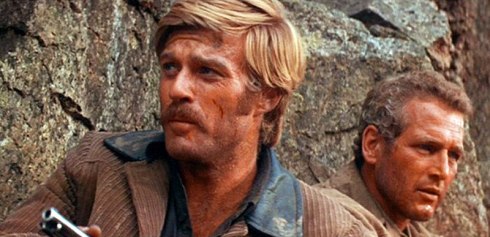
Butch1

Paul Newman was a megastar at the time and he was intended to be the centerpiece playing Butch Cassidy. This annoyed Steve McQueen who was set to play Sundance. After a disagreement over who got top billing, McQueen said adios which opened the door for a young Robert Redford. This turned out to be Redford’s star-making role and his performance was the standout. Newman is obviously a fine actor but surprisingly I didn’t see the usual charisma he brings to a role. Newman certainly has his moments but I feel he could have offered more especially considering the substantial investment in him.

Things certainly start off on a high note. We get a great scene showing Sundance being accused of cheating at a card game (a scene which features Sam Elliot’s big screen debut). There’s also a fun bit where Butch and Sundance return to their gang’s hideout and face a small mutiny (In the movie they were called The Hole in the Wall Gang because Cassidy’s real gang name The Wild Bunch was the title of the Sam Peckinpah film also due out that year). After squelching the uprising, the gang takes to holding up trains. The first robbery goes well but after botching their second attempt in a hysterical sequence, Butch and Sundance find themselves being pursued by an über-posse put together by a wealthy railroad tycoon.

Up to this point everything is popping. The movie sets itself up well and with the exception of the well-known bicycle scene filmed to B.J. Thomas’ “Raindrops Keep Falling on My Head” (which I feel is overly long and oddly out of place), it’s impossible not to be taken in by the story. But then the movie hits a wall. We get a long, drawn out series of shots features the pair on the run from the posse of all posses. We see them riding across the Badlands, running up rocky cliffs, and then stopping to see if they have lost their pursuers. With a near mystical-like presence, the posse is always in the distance. We go through this cycle several times before finally moving in a new direction.

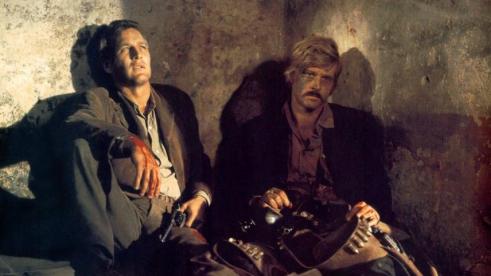
Butch2

Realizing the severity of their wanted status, Butch and Sundance round-up Etta (played by Katharine Ross), a young lady with an unusual relationship with the boys, and the three head to Bolivia. Once there the story follows almost the same blueprint as the first half – some really funny moments, some memorable scenes, and a dull stretch. And that is what makes “Butch Cassidy and the Sundance Kid” such a hard film to score. It has those times where it’s an absolute blast. It has its funny moments and the chemistry between Newman and Redford shines at certain points. Conrad Hall’s Oscar-winning cinematography is outstanding and it’s hard not to be smitten by the look of the film as a whole.

Unfortunately it’s hard for me to overlook the inconsistencies found in “Butch Cassidy and the Sundance Kid”. There are some obvious missteps which make me question how this film can be considered an all-time classic. But it certainly isn’t a terrible movie and I definitely recommend seeing it. Redford’s star launched from this flick and it still made a significant mark on movie history. It’s just not a movie that will find its way into my pantheon of all-time favorites.

VERDICT – 3 STARS

5 Phenomenal Movies from 1987

PHENOM 5

As a kid of the 80’s I have enjoyed these looks back at that wonderful decade. I grew up watching a lot of films during those years and they provided us with some true classics. Some 80’s movies have aged really well while others haven’t. Then there are those that actually have gotten better. So now we are up to 1987, a year that brought a ton of fun genre films and some of my personal favorites. As always, since we are looking at a full year of movies I wouldn’t call this the definitive list. But there’s no denying that these five films from 1987 are absolutely phenomenal.

#5 – “Wall Street”

I’ve never been the biggest Oliver Stone fan but his 1987 gem “Wall Street” is still a movie that I can turn on at any time and watch. A lot of it has to do with Michael Douglas’ Oscar-winning performance as the classic character Gordon Gekko. Douglas dominates every scene he is in and his Gekko character is as mesmerizing as he is devious. Charlie Sheen is great as Bud Fox, a young broker who quickly learns that shortcuts and trampling over others may get you some quick money but there are always consequences. The movie also boasts a fine supporting cast including Martin Sheen, Hal Holbrook, James Spader, and the great Terence Stamp. I love “Wall Street”.

#4 – “The Untouchables”

In 1987 Brian De Palma gave us the crime thriller “The Untouchables”. Kevin Costner, who also starred in another 1987 favorite of mine “No Way Out”, plays Elliot Ness and the film is loosely based on the real Ness’ pursuit of Al Capone in gangland Chicago. Costner is solid and he is surrounded by a strong cast including Andy Garcia as a young trainee who is chosen for Ness’ task force and Robert DeNiro who is a lot of fun as Al Capone. But there is no one better than Sean Connery who plays a seasoned and honest Irish cop who not only helps Ness in his pursuit of Capone but mentors him as well. Connery deservedly won the Academy Award for the performance. The movie looks great, is filled with gritty period action, and moves at a sizzling pace. It’s a film that is still fun to watch.

#3- “The Lost Boys”

Talk about a different take on vampire movies. “The Lost Boys” was a great mix of horror and comedy and was by far the best movie from ‘the two Coreys’. Corey Haim plays Sam. He moves to Santa Carla, California along with his mother Lucy (Dianne Wiest) and his older brother Michael (Jason Patric) to live with his grandpa. The problem is Santa Carla has a serious vampire problem. Michael gets involved with four local teen bikers led by David (wonderfully played by Keifer Sutherland) who turn out to be, you guessed it, vampires. What makes the movie work so well is that it never takes itself too seriously. While it certainly has horror elements it’s also genuinely funny especially after we’re introduced to the Frog brothers, comic book store owners by day, vampire hunters by night. A wonderful cast, some creepy moments, and some great laughs.

#2 – “Predator”

Look, I make no apologies for being a fan of the cheesy, over-the-top, action genre that was big during the 80’s. But John McTiernan’s “Predator” was different on many levels. Arnold Schwarzenegger’s special forces team are sent into the dangerous Central American jungles to find out what has happened to a missing chopper. The movie follows some of the typical but fun formulas of the action genre but things change dramatically when an alien hunter shows up. Schwarzenegger, who was never accused of being a strong actor, is actually quite good here. The special effects are fantastic and the film features one of the single greatest military action sequences in movie history. Throw in Alan Silvestri’s unforgettable score and you have what I think is one of the best action movies of the 80’s.

#1 – “Raising Arizona”

With all of the quirky movies that Joel and Ethen Coen have given us since 1987, none show their wacky sense of humor better than “Raising Arizona”. This hysterical film centers on a habitual convenient store robber (Nicolas Cage) and his police officer wife (Holly Hunter) who come up with a hair-brained plan to take a baby from a wealthy couple who just had quints. Cage is simply perfect for the role and unlike most of his recent work, he really sells his character. The Coen’s unique brand of comedy is stamped all over this picture from the region specific humor to the hilarious array of side characters that pop up along the way. Also add in some incredibly funny work from John Goodman, William Forsythe, Sam McMurray, Frances McDormand, and Trey Wilson. “Raising Arizona” is still as funny today as it was when I first saw it. This brilliantly written and masterfully directed picture was only the Coen’s second film but it clearly revealed that the brothers would be a fantastic creative force for a long time. That’s shown to be true.

There they are – five phenomenal films from 1987. Now I have several others I could add to this list right now – movies I truly love and that have stuck with me over the years. What about you? What would be your favorite films of 1987?

REVIEW: “The Grand Budapest Hotel”

Budapest Poster

When Wes Anderson releases a movie it’s almost like an event for me. I’m such a fan of his work and I enjoy each visit I make to his unique and eccentric world. Finally his latest film “The Grand Budapest Hotel” made its way to my area. After a grueling wait the film finally cured my impatience but did it meet my ridiculously high expectations? I’ve come to expect so much from Anderson’s movies and my lofty expectations seem almost unfair. And perhaps those same expectations contributed to my somewhat cold and indifferent reaction to this film.

“The Grand Budapest Hotel” features so many signature trademarks of other Wes Anderson films. We get the quirky period design, an assortment of offbeat characters, a host of stylistic visual flourishes, and a level of expected absurdity. All of those things are present here and they all work to the film’s advantage. These are some of the fingerprints I want to see all over a Wes Anderson movie. But there were other signatures that injects his movies with their own personality and vibrancy that I found missing in this film.

Budapest3

The story is told in a fractured style but the vast majority of it takes place within a fictitious Eastern European country during 1932. We are introduced to Monsieur Gustave H. (Ralph Fiennes), the concierge of The Grand Budapest Hotel during its glory days of luxury and prominence. Gustave is meticulous in his running of the hotel and his love for extravagance is only outdone by his adoration for strong cologne and for his elderly clientele. The story becomes a murder mystery after one of his close acquaintances Madame D (Tilda Swinton) is found dead and Gustave becomes the key suspect. It also becomes a heist film and of course a comedy.

The film is also loaded with a massive number of side characters. Some are like Fiennes and new to Wes Anderson’s world while others are old faithful stalwarts who find their way into nearly every one of his movies. Toni Revolori plays a young lobby boy named Zero who becomes Gustave’s protégé and faithful sidekick. Adrien Brody plays Dmitri, the son of the murdered Madame D. Willem Dafoe plays a grunting snaggletoothed hitman. I could go on and on listing small characters who service the story (some better than others). They are all sprinkled onto stylistic canvases that include an alpine village, a prison, and of course The Grand Budapest itself. There is truly an artistry to the entire visual presentation and all of that worked for me.

But what was it about the film that at first held me at arm’s length? Why didn’t I have the same wonderful experience as I usually have with Wes Anderson pictures during a first viewing? First off I just didn’t find it as funny as I had hoped. Certainly there were moments where I laughed but as a whole the dry humor wasn’t that effective. Even the crowd I watched with had their giggles held to a minimum. This film was also coarse and crasser than most of Anderson’s other pictures. Much of it is played for laughs but I found it to be distracting and it felt as though Anderson, normally known for his creative freedom, was really stretching.

Budapest2

Another missing component for me was the deeper emotional thread that every Anderson film has had. For example in “The Royal Tenenbaums” you have the destructive results that a father’s behavior has had on his family. In “The Darjeeling Limited” you have three separated brothers each carrying the baggage of their father’s death. “Moonrise Kingdom” features two kids with no stable adult presence in their lives. They find their refuge by running away together. The same thing applies to “Rushmore” and “The Fantastic Mr. Fox”. Anderson has always had a knack for presenting a deeper and more piercing subject and effectively surrounding it with humor. Every sense of that is vague and almost absent from this entire film. He does tinker with a few themes via the impending war that lingers in the background, the desires for the nostalgic “better days”, etc. But none of these stood out to me at all.

This is the first screenplay that Anderson has written by himself. Does that play into the things I found lacking? I don’t know, perhaps. Anderson is also often accused of going overboard with his eccentric style. I’ve never found any merit to that accusation but this is the first film where there just might be. Could that be linked to Anderson’s solo screenplay? Again, I don’t know. What I do know is that there were parts of this film that really worked and after a second viewing I definitely began to appreciate the film more. At first “The Grand Budapest Hotel” didn’t fully work for me. It definitely comes more into focus the more times you see it.

VERDICT – 4 STARS