
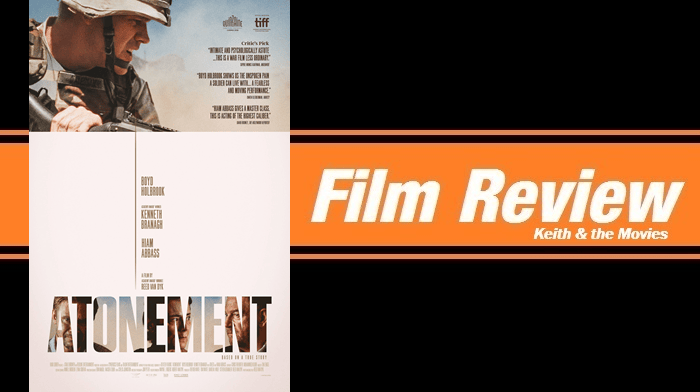
The emotionally charged war drama “Atonement” takes three unique perspectives on one violent tragedy and weaves them into a story that shows there are no easy paths to absolution. Three compelling central characters, portrayed through three equally compelling performances, explore the collateral damage of war, which isn’t something left on the battlefield. Instead, the scars are often permanent and the effects can impact generations.
This is the kind of weighty subject matter at the core of “Atonement”, a film based on a 2012 New Yorker article of the same name by Dexter Filkins. It’s the first feature for writer-director Reed Van Dyk, although you wouldn’t know by this overall impressive debut. His grounded and layered storytelling matches well with his sharp visual eye and keen instincts. And it helps to have three central performances that cut to the hearts of the characters and the devastating calamity that will forever link them.
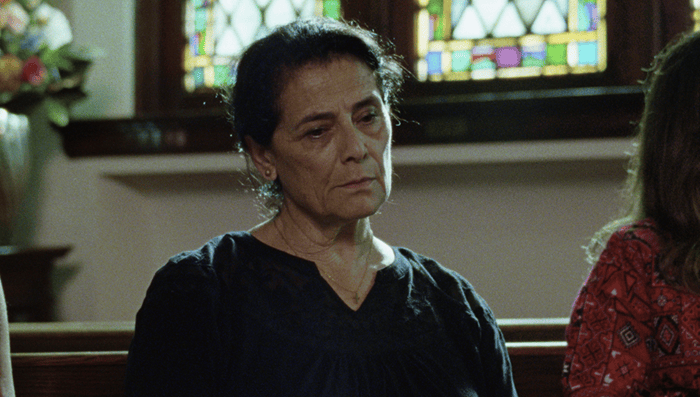
Opening his film in 2003 Iraq, Van Dyk begins by introducing us to the Khachaturians, a local Iraqi family going about their routine despite the tightening tensions all around them. Three generations fill their spirited home in Baghdad, including Mariam (Hiam Abbass), the stabilizing force in this tight-knit family. But after an explosion goes off near their home, the family loads up their cars and heads across town to safety. Or so they believe.
Elsewhere in the city, Second Lieutenant Lou D’Alessandro (Boyd Holbrook) and his company of US Marines are called to offer support for a squad taking fire near a Baghdad police station. While on a rooftop exchanging gunfire with the Iraqi militia, Lou sees two cars approaching a roundabout. The militia were known for hijacking vehicles, so his company’s orders are to fire on any vehicle that refuses to stop. So they do. But instead of the enemy, it’s the frightened Khachaturian family who accidentally drive into the chaos. As a result, Mariam’s husband and two adult sons are mistakenly shot and killed.
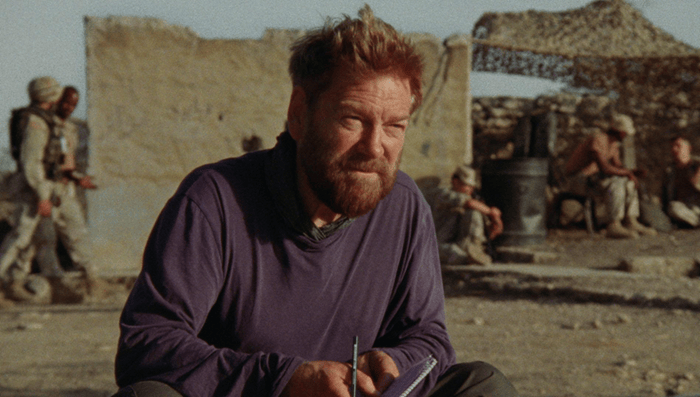
The third person in this uniquely connected trio is Michael Reid (Kenneth Branagh), a New York Times war reporter stationed in Baghdad. He gets word about the tragedy and sets out to interview the family and soldiers involved. His findings inspire an article that will eventually become a crucial narrative device within the storytelling. While Holbrook and Abbass are the emotional centerpieces, the ever reliable Branagh could be considered the glue that holds the story together.
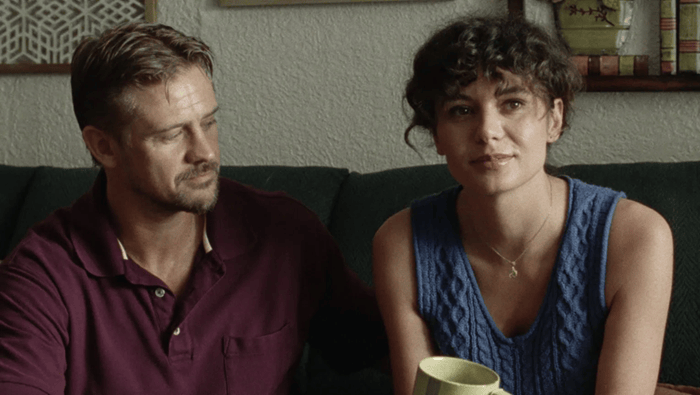
Ten years after the tragedy, Lou is living in San Diego where he operates heavy machinery by day and works event security at night, all while attempting to get into law school. But his war-torn psyche keeps pulling him back to that day in Baghdad. After coming across the article, Lou reaches out to Michael to see if he could broker a meeting with Mariam who now lives in Glendale with her daughter Nora (Iraqi-Dutch actress Gheed) and Nora’s husband Asaad (Majd Eid).
Van Dyk’s buildup is superb, remaining intensely character focused throughout. It begins with the crushing opening, where his staging of the violence is centered on emphasizing the people involved rather than thrilling the audience. It’s even more affecting ten years later. Holbrook offers a powerful and moving portrayal of a restless veteran tormented by guilt. Abbass works in a different tenor but is equally effective. She gives a quiet yet unflinching performance, masterfully conveying the toll that years of grief can take. Yet her Mariam also possesses a near divine measure of grace. It leads to an internal conflict that Abbass navigates with a striking precision.
With “Atonement”, Van Dyk doesn’t just tackle tough themes. He poses meaningful questions and trusts his audience to engage with them. Never is this seen more than in the film’s understated yet powerfully allegorical final shot. It potently punctuates a movie of such rich humanity and honest emotion. One that doesn’t shy away from the reality of its subject matter. And one driven by three awards-worthy performances and an exciting first-time director who has made one of the year’s best films.
VERDICT – 4.5 STARS


